



Dr. Jules Marien
@marienj.bsky.social
Postdoc in biophysics/biochemistry working on the interaction between the phosphorylated Tau protein and microtubules. Molecular dynamist. Tamer of IDRs and IDPs since 2022
(They/Them)
https://scholar.google.com/citations?user=4S1QUPgAAAAJ&hl=fr
(They/Them)
https://scholar.google.com/citations?user=4S1QUPgAAAAJ&hl=fr
Reposted by Dr. Jules Marien

The missing link between biomolecular condensates and amyloid fibrils https://www.biorxiv.org/content/10.64898/2026.01.27.702026v1
January 29, 2026 at 10:48 PM
The missing link between biomolecular condensates and amyloid fibrils https://www.biorxiv.org/content/10.64898/2026.01.27.702026v1
Reposted by Dr. Jules Marien
Transforming macromolecular structures into simulations of self-assembly https://www.biorxiv.org/content/10.64898/2026.01.27.702082v1
January 29, 2026 at 12:46 AM
Transforming macromolecular structures into simulations of self-assembly https://www.biorxiv.org/content/10.64898/2026.01.27.702082v1
Reposted by Dr. Jules Marien

Disordered but Different: The Unique Characteristics of Intrinsically Disordered Regions in Human Transcription Factors https://www.biorxiv.org/content/10.64898/2026.01.27.700206v1
January 29, 2026 at 12:31 AM
Disordered but Different: The Unique Characteristics of Intrinsically Disordered Regions in Human Transcription Factors https://www.biorxiv.org/content/10.64898/2026.01.27.700206v1
Reposted by Dr. Jules Marien
PySteMoDA: An Open Source Python Package for the Analysis of Steered Molecular Dynamics Simulations Data https://www.biorxiv.org/content/10.64898/2026.01.26.699872v1
January 28, 2026 at 9:47 PM
PySteMoDA: An Open Source Python Package for the Analysis of Steered Molecular Dynamics Simulations Data https://www.biorxiv.org/content/10.64898/2026.01.26.699872v1
Reposted by Dr. Jules Marien

New preprint led by Fan Cao & Giulio Tesei
We present a data-driven “stickiness” scale for amino acids in intrinsically disordered proteins 🍝, learned from SAXS data on 115 proteins. The scale captures effective residue interactions without conflating size and strength
doi.org/10.64898/202...
We present a data-driven “stickiness” scale for amino acids in intrinsically disordered proteins 🍝, learned from SAXS data on 115 proteins. The scale captures effective residue interactions without conflating size and strength
doi.org/10.64898/202...

January 28, 2026 at 7:10 AM
New preprint led by Fan Cao & Giulio Tesei
We present a data-driven “stickiness” scale for amino acids in intrinsically disordered proteins 🍝, learned from SAXS data on 115 proteins. The scale captures effective residue interactions without conflating size and strength
doi.org/10.64898/202...
We present a data-driven “stickiness” scale for amino acids in intrinsically disordered proteins 🍝, learned from SAXS data on 115 proteins. The scale captures effective residue interactions without conflating size and strength
doi.org/10.64898/202...
Reposted by Dr. Jules Marien
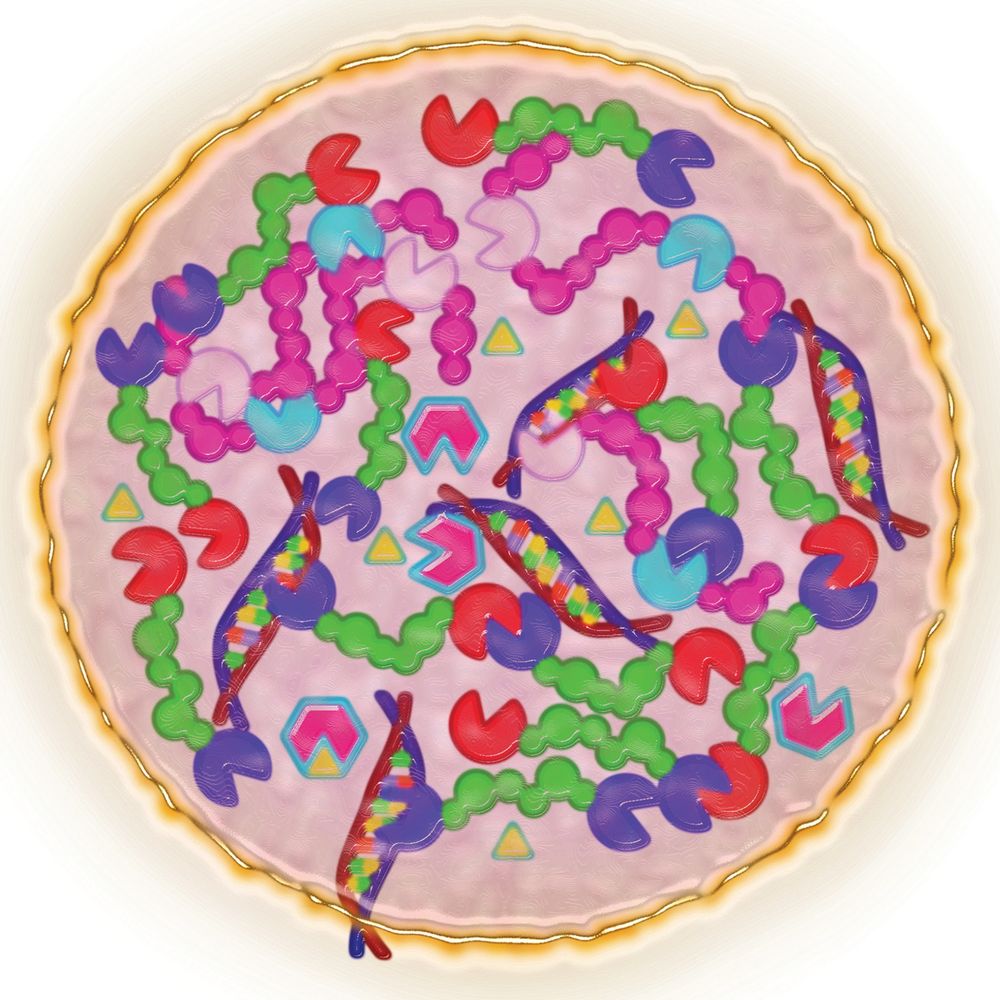
(Part 1/2) Excited to share our recent work done by Postdoc Dr. Anupam Mondal, in collaboration with Prof. Marcos M. Pires from the University of Virginia, is now out in Nature Communications (www.nature.com/articles/s41...).

January 27, 2026 at 3:34 PM
(Part 1/2) Excited to share our recent work done by Postdoc Dr. Anupam Mondal, in collaboration with Prof. Marcos M. Pires from the University of Virginia, is now out in Nature Communications (www.nature.com/articles/s41...).
Reposted by Dr. Jules Marien

Et parmi les 72 femmes dont le nom sera bientôt inscrit sur la Tour Eiffel, deux grandes figures historiques de l'IBPC : Marianne Manago et Alberte Pullman ! 🎉

Tout est parti d’une question posée par une touriste : pourquoi n’y a-t-il aucun nom de femme parmi les savants gravés sur la Tour Eiffel ? Cette absence, longtemps considérée comme normale, est en passe d’être corrigée.
➡️ https://l.franceculture.fr/PpE
➡️ https://l.franceculture.fr/PpE

January 27, 2026 at 9:44 AM
Et parmi les 72 femmes dont le nom sera bientôt inscrit sur la Tour Eiffel, deux grandes figures historiques de l'IBPC : Marianne Manago et Alberte Pullman ! 🎉
Reposted by Dr. Jules Marien

New preprint with @invemichele.bsky.social, Sandro Bottaro, Kamil Tamiola, and @lindorfflarsen.bsky.social on transiently structured states of IDPs sampled in atomistic simulations with enhanced sampling and integrated with experimental data.
Third preprint of the year is from @julianstreit.bsky.social who, with our collaborators at Peptone, show that multithermal On-the-fly Probability Enhanced Sampling (OPES) enables efficient generation of atomistic ensembles for disordered peptides and proteins 🍝
www.biorxiv.org/content/10.6...
www.biorxiv.org/content/10.6...
January 21, 2026 at 6:01 PM
New preprint with @invemichele.bsky.social, Sandro Bottaro, Kamil Tamiola, and @lindorfflarsen.bsky.social on transiently structured states of IDPs sampled in atomistic simulations with enhanced sampling and integrated with experimental data.
Reposted by Dr. Jules Marien

Please check out our new review on the disorderly🍝 side of molecular circadian timing⏰.
It was so fun to write the review with @idpemery.bsky.social !
It was so fun to write the review with @idpemery.bsky.social !

Disordered, but rhythmic: Intrinsically disordered protein regions (#IDRs) play a key role in the #circadian clock. 🕙🌀 In a timely (ahem) Review, Emery Usher & Jacqueline Pelham (@pelhamjackie.bsky.social) discuss the role of IDRs in clock proteins.
#IDP #IDR Read here: shorturl.at/QsTaa
#IDP #IDR Read here: shorturl.at/QsTaa

January 20, 2026 at 4:44 PM
Please check out our new review on the disorderly🍝 side of molecular circadian timing⏰.
It was so fun to write the review with @idpemery.bsky.social !
It was so fun to write the review with @idpemery.bsky.social !
Reposted by Dr. Jules Marien
Reposted by Dr. Jules Marien
First preprint of the year, led by Junjie Zhu from Haifeng Chen’s lab
Extending Conformational Ensemble Prediction to Multidomain Proteins and Protein Complex
doi.org/10.64898/202...
Extending Conformational Ensemble Prediction to Multidomain Proteins and Protein Complex
doi.org/10.64898/202...

January 16, 2026 at 5:08 PM
First preprint of the year, led by Junjie Zhu from Haifeng Chen’s lab
Extending Conformational Ensemble Prediction to Multidomain Proteins and Protein Complex
doi.org/10.64898/202...
Extending Conformational Ensemble Prediction to Multidomain Proteins and Protein Complex
doi.org/10.64898/202...
Reposted by Dr. Jules Marien

I am very excited to share our pre-print that was just released on the bioRxiv entitled "Biomolecular Condensates Dictate the Folding Landscape of Proteins" doi.org/10.64898/202...
Very grateful for @jerelleaj.bsky.social and the members of the Joseph Group for their support on this project! (1/4)
Very grateful for @jerelleaj.bsky.social and the members of the Joseph Group for their support on this project! (1/4)
January 14, 2026 at 9:10 PM
I am very excited to share our pre-print that was just released on the bioRxiv entitled "Biomolecular Condensates Dictate the Folding Landscape of Proteins" doi.org/10.64898/202...
Very grateful for @jerelleaj.bsky.social and the members of the Joseph Group for their support on this project! (1/4)
Very grateful for @jerelleaj.bsky.social and the members of the Joseph Group for their support on this project! (1/4)
Reposted by Dr. Jules Marien

How does protein folding change inside biomolecular condensates?
Our new preprint put forwards a framework for predicting this!! 🥳🥳🥳🥳 work by the talented @nathanieldhess.bsky.social
Our new preprint put forwards a framework for predicting this!! 🥳🥳🥳🥳 work by the talented @nathanieldhess.bsky.social
I am very excited to share our pre-print that was just released on the bioRxiv entitled "Biomolecular Condensates Dictate the Folding Landscape of Proteins" doi.org/10.64898/202...
Very grateful for @jerelleaj.bsky.social and the members of the Joseph Group for their support on this project! (1/4)
Very grateful for @jerelleaj.bsky.social and the members of the Joseph Group for their support on this project! (1/4)
January 14, 2026 at 9:22 PM
How does protein folding change inside biomolecular condensates?
Our new preprint put forwards a framework for predicting this!! 🥳🥳🥳🥳 work by the talented @nathanieldhess.bsky.social
Our new preprint put forwards a framework for predicting this!! 🥳🥳🥳🥳 work by the talented @nathanieldhess.bsky.social
Reposted by Dr. Jules Marien
Biomolecular Condensates Dictate the Folding Landscape of Proteins https://www.biorxiv.org/content/10.64898/2026.01.12.699095v1
January 14, 2026 at 4:49 AM
Biomolecular Condensates Dictate the Folding Landscape of Proteins https://www.biorxiv.org/content/10.64898/2026.01.12.699095v1
Reposted by Dr. Jules Marien

We resolved the molecular architecture of a condensate—inside cells. 🤯 By combining in situ cryoET with multiscale simulations, we show how a single point mutation modifies molecular interactions, shifts the condensate’s material properties, and alters its biological function. Preprint 👇

We are excited to share our new preprint which is now available to read on biorXiv: doi.org/10.64898/202... 🎉🎉🎉
January 13, 2026 at 6:33 PM
We resolved the molecular architecture of a condensate—inside cells. 🤯 By combining in situ cryoET with multiscale simulations, we show how a single point mutation modifies molecular interactions, shifts the condensate’s material properties, and alters its biological function. Preprint 👇
Reposted by Dr. Jules Marien

New preprint!🚨 We're finally able to sample secondary structure in coarse-grained simulations of IDPs! 🍝🍝🍝 With an AI-based prediction of NMR chemical shifts in CG simulations, we correct dynamics on the fly, making secondary structure emerge as dictated by expts😍! www.biorxiv.org/content/10.6... 🧵👇

Capturing secondary structure in coarse grained intrinsically disordered proteins with simulations driven by chemical shifts.
A major challenge when investigating intrinsically disordered proteins (IDPs) pertains to understanding how secondary structure formation across otherwise disordered ensembles, relates to function. Wh...
www.biorxiv.org
January 7, 2026 at 7:03 AM
New preprint!🚨 We're finally able to sample secondary structure in coarse-grained simulations of IDPs! 🍝🍝🍝 With an AI-based prediction of NMR chemical shifts in CG simulations, we correct dynamics on the fly, making secondary structure emerge as dictated by expts😍! www.biorxiv.org/content/10.6... 🧵👇
Reposted by Dr. Jules Marien
New paper is out !
We show that all classical phosphorylation forcefields that we tested lead to an overbinding of phosphate groups to bulk sodium (Na+) and potassium (K+) cations.
This assessment has serious implications for MD simulations of phosphorylated proteins !
doi.org/10.1021/acs....
We show that all classical phosphorylation forcefields that we tested lead to an overbinding of phosphate groups to bulk sodium (Na+) and potassium (K+) cations.
This assessment has serious implications for MD simulations of phosphorylated proteins !
doi.org/10.1021/acs....

Sticky Salts: Overbinding of Monovalent Cations to Phosphorylations in All-Atom Force Fields
Phosphorylation is a major post-translational modification that is involved in the regulation of the dynamics and function of intrinsically disordered proteins (IDPs). We recently characterized a phen...
doi.org
December 6, 2025 at 1:43 PM
New paper is out !
We show that all classical phosphorylation forcefields that we tested lead to an overbinding of phosphate groups to bulk sodium (Na+) and potassium (K+) cations.
This assessment has serious implications for MD simulations of phosphorylated proteins !
doi.org/10.1021/acs....
We show that all classical phosphorylation forcefields that we tested lead to an overbinding of phosphate groups to bulk sodium (Na+) and potassium (K+) cations.
This assessment has serious implications for MD simulations of phosphorylated proteins !
doi.org/10.1021/acs....
Reposted by Dr. Jules Marien
En 2026 le blog #TOTProts fera une petite pause, mais il y aura quelques rediffusions avec les plus belles cartes postales vintage de ma collection.
Et en janvier, on commence l'année avec une famille de protéines dans la lune : #FunScience #Vulgarisation
topoftheprots.com/2023/09/04/l...
Et en janvier, on commence l'année avec une famille de protéines dans la lune : #FunScience #Vulgarisation
topoftheprots.com/2023/09/04/l...

January 5, 2026 at 8:29 AM
En 2026 le blog #TOTProts fera une petite pause, mais il y aura quelques rediffusions avec les plus belles cartes postales vintage de ma collection.
Et en janvier, on commence l'année avec une famille de protéines dans la lune : #FunScience #Vulgarisation
topoftheprots.com/2023/09/04/l...
Et en janvier, on commence l'année avec une famille de protéines dans la lune : #FunScience #Vulgarisation
topoftheprots.com/2023/09/04/l...
Reposted by Dr. Jules Marien
APE1 Coordinates Its Disordered Region and Metal Cofactors to Drive Genome Surveillance https://www.biorxiv.org/content/10.64898/2025.12.28.696760v1
December 29, 2025 at 12:16 PM
APE1 Coordinates Its Disordered Region and Metal Cofactors to Drive Genome Surveillance https://www.biorxiv.org/content/10.64898/2025.12.28.696760v1
Reposted by Dr. Jules Marien
Integrating NMR restraints into coarse-grained simulations: toward accurate conformational ensembles of complex protein systems https://www.biorxiv.org/content/10.64898/2025.12.22.695971v1
December 24, 2025 at 5:48 PM
Integrating NMR restraints into coarse-grained simulations: toward accurate conformational ensembles of complex protein systems https://www.biorxiv.org/content/10.64898/2025.12.22.695971v1
Reposted by Dr. Jules Marien

MONDE·T: A Database and Interactive Webserver for Non-Canonical Amino Acids (ncAAs) in the PDB https://www.biorxiv.org/content/10.64898/2025.12.21.695100v1
December 24, 2025 at 2:47 AM
MONDE·T: A Database and Interactive Webserver for Non-Canonical Amino Acids (ncAAs) in the PDB https://www.biorxiv.org/content/10.64898/2025.12.21.695100v1
Reposted by Dr. Jules Marien
Characterizing the fragmentation of AlphaFold predictions https://www.biorxiv.org/content/10.64898/2025.12.19.695436v1
December 22, 2025 at 4:46 AM
Characterizing the fragmentation of AlphaFold predictions https://www.biorxiv.org/content/10.64898/2025.12.19.695436v1
Reposted by Dr. Jules Marien
Fold or flop: quality assessment of AlphaFold predictions on whole proteomes https://www.biorxiv.org/content/10.64898/2025.12.19.695427v1
December 22, 2025 at 5:46 AM
Fold or flop: quality assessment of AlphaFold predictions on whole proteomes https://www.biorxiv.org/content/10.64898/2025.12.19.695427v1
Reposted by Dr. Jules Marien

Ever wondered how many bins to choose when making a histogram of data? The answer is that you shouldn't choose a number of bins yourself! ☄️ #astrocode
Here's a little notebook explaining how to make less biased histograms:
Here's a little notebook explaining how to make less biased histograms:

Making histograms is a common way to estimate the true density distribution of a sample. But how can we choose the number of histogram bins? And if we get fancy and use kernel density estimation (KDE)...
Making histograms is a common way to estimate the true density distribution of a sample. But how can we choose the number of histogram bins? And if we get fancy and use kernel density estimation (K...
gist.github.com
December 19, 2025 at 9:19 AM
Ever wondered how many bins to choose when making a histogram of data? The answer is that you shouldn't choose a number of bins yourself! ☄️ #astrocode
Here's a little notebook explaining how to make less biased histograms:
Here's a little notebook explaining how to make less biased histograms:
Reposted by Dr. Jules Marien
InterMap: Accelerated Detection of Interaction Fingerprints on Large-Scale Molecular Ensembles https://www.biorxiv.org/content/10.64898/2025.12.15.694195v1
December 18, 2025 at 3:48 AM
InterMap: Accelerated Detection of Interaction Fingerprints on Large-Scale Molecular Ensembles https://www.biorxiv.org/content/10.64898/2025.12.15.694195v1