




Lukas Groschner
@lukasgroschner.bsky.social
Brains, biophysics, behaviour
https://www.groschner-lab.org
https://www.groschner-lab.org
Reposted by Lukas Groschner

Come join us to work on building AI for biosensor design!

Biosensors help scientists understand the brain & body like never before, but building one can take years. Researchers Alison Tebo & Srinivas Turaga at HHMI's Janelia Research Campus are using AI to build a tool that will vastly speed biosensor development for all scientists: hhmi.news/4rdhvNt

January 26, 2026 at 3:09 AM
Come join us to work on building AI for biosensor design!
Reposted by Lukas Groschner
Paper out now in eLife: DANCE. We combine machine learning with accessible hardware to quantify Drosophila social behaviors.
Low-cost behavioral rigs are not a compromise, they are a design philosophy. Accessibility changes the questions we can ask.
elifesciences.org/articles/105...
Low-cost behavioral rigs are not a compromise, they are a design philosophy. Accessibility changes the questions we can ask.
elifesciences.org/articles/105...
December 30, 2025 at 7:13 AM
Paper out now in eLife: DANCE. We combine machine learning with accessible hardware to quantify Drosophila social behaviors.
Low-cost behavioral rigs are not a compromise, they are a design philosophy. Accessibility changes the questions we can ask.
elifesciences.org/articles/105...
Low-cost behavioral rigs are not a compromise, they are a design philosophy. Accessibility changes the questions we can ask.
elifesciences.org/articles/105...
Reposted by Lukas Groschner
Excited for the publication of our recent work on how pyramidal cells shape the identity of interneurons in the Cortex! Big shout out to @artofbiology and Sherry Jingjing wu! www.nature.com/articles/s41...

Pyramidal neurons proportionately alter cortical interneuron subtypes - Nature
Pyramidal neuron-driven mechanisms actively promote the survival and terminal differentiation of their associated interneuron subtypes.
www.nature.com
January 22, 2026 at 5:05 PM
Excited for the publication of our recent work on how pyramidal cells shape the identity of interneurons in the Cortex! Big shout out to @artofbiology and Sherry Jingjing wu! www.nature.com/articles/s41...
Reposted by Lukas Groschner

🧬 Minisymposium deadline extended!
Good news for prospective organizers: new submission deadline is now 31 Jan 2026 (AoE).
A few extra days to finalize your proposals for ECMTB 2026 in Graz!
📅 July 13–17, 2026 | 📍 Graz, Austria
Details → ecmtb2026.org/call-for-contributions
Good news for prospective organizers: new submission deadline is now 31 Jan 2026 (AoE).
A few extra days to finalize your proposals for ECMTB 2026 in Graz!
📅 July 13–17, 2026 | 📍 Graz, Austria
Details → ecmtb2026.org/call-for-contributions

European Conference on Mathematical & Theoretical Biology 2026
ECMTB is coming to Graz, Austria in July 2026. Registration and Call for Contributions are open!
ecmtb2026.org
January 21, 2026 at 1:46 PM
🧬 Minisymposium deadline extended!
Good news for prospective organizers: new submission deadline is now 31 Jan 2026 (AoE).
A few extra days to finalize your proposals for ECMTB 2026 in Graz!
📅 July 13–17, 2026 | 📍 Graz, Austria
Details → ecmtb2026.org/call-for-contributions
Good news for prospective organizers: new submission deadline is now 31 Jan 2026 (AoE).
A few extra days to finalize your proposals for ECMTB 2026 in Graz!
📅 July 13–17, 2026 | 📍 Graz, Austria
Details → ecmtb2026.org/call-for-contributions
Reposted by Lukas Groschner
The second paper from the lab is now available on bioRxiv: www.biorxiv.org/content/10.6...
We discovered that cannibalistic behavior in fly larvae is social-context dependent. Larval groups avoid dead conspecifics; individuals show high attraction. They only do it when no one is watching 😉
We discovered that cannibalistic behavior in fly larvae is social-context dependent. Larval groups avoid dead conspecifics; individuals show high attraction. They only do it when no one is watching 😉

January 21, 2026 at 12:29 PM
The second paper from the lab is now available on bioRxiv: www.biorxiv.org/content/10.6...
We discovered that cannibalistic behavior in fly larvae is social-context dependent. Larval groups avoid dead conspecifics; individuals show high attraction. They only do it when no one is watching 😉
We discovered that cannibalistic behavior in fly larvae is social-context dependent. Larval groups avoid dead conspecifics; individuals show high attraction. They only do it when no one is watching 😉
Reposted by Lukas Groschner

📣 Planning to attend the joint ECMTB-SMB conference in Gratz? Need final support?
Applications for the Landahl Travel Awards from @smbmathbiology.bsky.social are now open!
The closing date is 𝟏𝟓 𝐌𝐚𝐫𝐜𝐡 𝟐𝟎𝟐𝟔.
🔗 smb.org/Landahl-Trav....
Applications for the Landahl Travel Awards from @smbmathbiology.bsky.social are now open!
The closing date is 𝟏𝟓 𝐌𝐚𝐫𝐜𝐡 𝟐𝟎𝟐𝟔.
🔗 smb.org/Landahl-Trav....
Society for Mathematical Biology - Landahl Travel Awards
smb.org
January 16, 2026 at 8:45 AM
📣 Planning to attend the joint ECMTB-SMB conference in Gratz? Need final support?
Applications for the Landahl Travel Awards from @smbmathbiology.bsky.social are now open!
The closing date is 𝟏𝟓 𝐌𝐚𝐫𝐜𝐡 𝟐𝟎𝟐𝟔.
🔗 smb.org/Landahl-Trav....
Applications for the Landahl Travel Awards from @smbmathbiology.bsky.social are now open!
The closing date is 𝟏𝟓 𝐌𝐚𝐫𝐜𝐡 𝟐𝟎𝟐𝟔.
🔗 smb.org/Landahl-Trav....
Reposted by Lukas Groschner

www.cell.com/cell/fulltex...
We had a lot of fun working on this project (led by Itzel Ishida, not on bluesky). Some interesting highlights from the paper -
We had a lot of fun working on this project (led by Itzel Ishida, not on bluesky). Some interesting highlights from the paper -

Neuronal calcium spikes enable vector inversion in the Drosophila brain
In the fly central complex, PFNa neurons switch from firing classical sodium spikes
when depolarized to firing non-canonical T-type calcium spikes when hyperpolarized.
This bidirectional spiking allow...
www.cell.com
January 6, 2026 at 4:35 PM
www.cell.com/cell/fulltex...
We had a lot of fun working on this project (led by Itzel Ishida, not on bluesky). Some interesting highlights from the paper -
We had a lot of fun working on this project (led by Itzel Ishida, not on bluesky). Some interesting highlights from the paper -
Reposted by Lukas Groschner
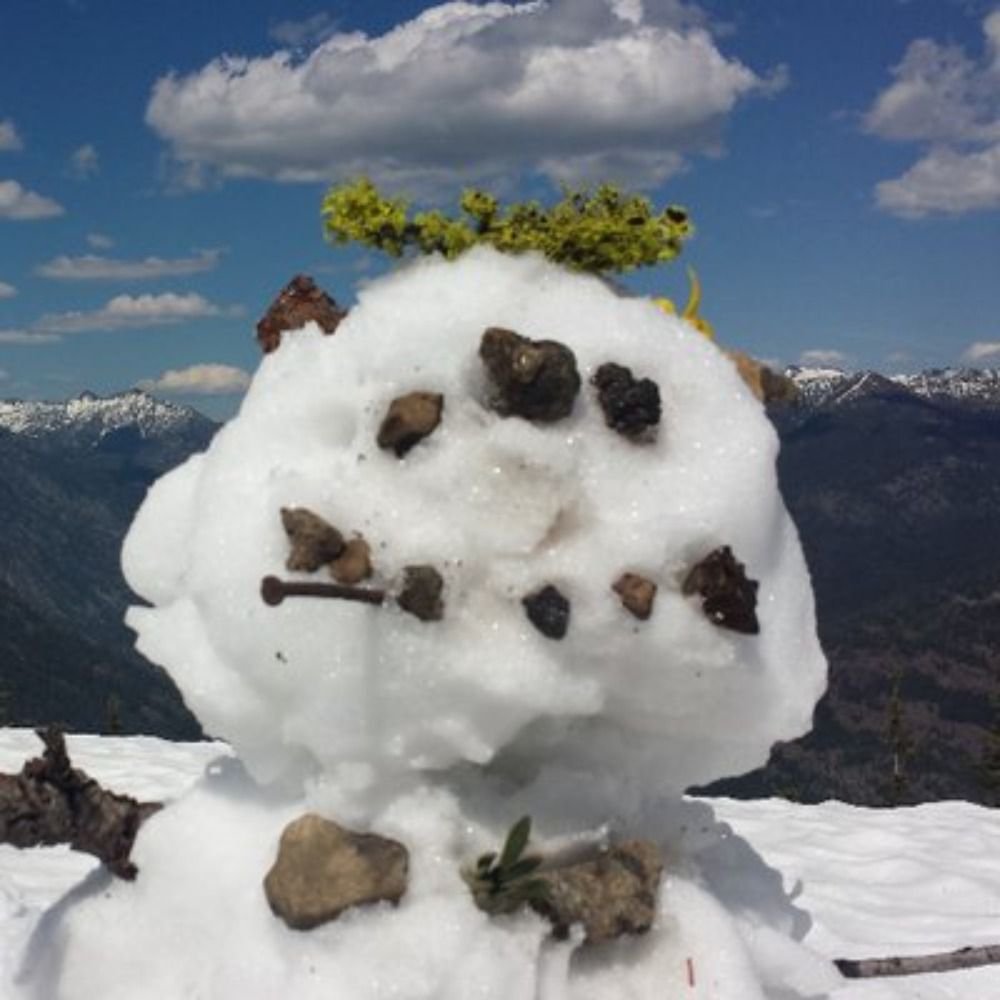
0.00003 foot tall xmas tree from a Drosophila flight steering muscle 🎄
image by @anne-sustar.bsky.social
image by @anne-sustar.bsky.social

December 24, 2025 at 11:34 PM
0.00003 foot tall xmas tree from a Drosophila flight steering muscle 🎄
image by @anne-sustar.bsky.social
image by @anne-sustar.bsky.social
Reposted by Lukas Groschner
📢 Join us, the Haberkern lab, @uni-wuerzburg.de for a postdoc studying neural circuit mechanisms of navigation. You’ll spearheading neurophysiology experiments on our brand new 2P!
⏳ Apply by 28th February 2026
Details: www.haberkernlab.de/docs/ENPostd...
#neuroscience #academicjobs #postdoc
⏳ Apply by 28th February 2026
Details: www.haberkernlab.de/docs/ENPostd...
#neuroscience #academicjobs #postdoc

December 23, 2025 at 11:27 AM
📢 Join us, the Haberkern lab, @uni-wuerzburg.de for a postdoc studying neural circuit mechanisms of navigation. You’ll spearheading neurophysiology experiments on our brand new 2P!
⏳ Apply by 28th February 2026
Details: www.haberkernlab.de/docs/ENPostd...
#neuroscience #academicjobs #postdoc
⏳ Apply by 28th February 2026
Details: www.haberkernlab.de/docs/ENPostd...
#neuroscience #academicjobs #postdoc
Reposted by Lukas Groschner

Very proud of this new paper from the lab! Work by the magnificent Andrea Adden and many brilliant collaborators illuminate how moth and butterfly brains have evolved in light of different ecologies. Freely available here: rdcu.be/eVR3B; @lundvision.bsky.social @biologylu.bsky.social

December 22, 2025 at 4:24 PM
Very proud of this new paper from the lab! Work by the magnificent Andrea Adden and many brilliant collaborators illuminate how moth and butterfly brains have evolved in light of different ecologies. Freely available here: rdcu.be/eVR3B; @lundvision.bsky.social @biologylu.bsky.social
Reposted by Lukas Groschner
Carolin Warnecke together with Hanna, Dennis, Bene & Kerstin from my lab show that re-exposure to reward diminishes multiple associated olfactory memories.
We’re hiring 2 postdocs—DM/email me for details. #Postdoc #Hiring
www.sciencedirect.com/science/arti...
We’re hiring 2 postdocs—DM/email me for details. #Postdoc #Hiring
www.sciencedirect.com/science/arti...

Re-exposure to reward re-evaluates related memories
To adapt behavior in changing environments, animals must continuously re-evaluate previously learned associations. This flexibility of memory systems …
www.sciencedirect.com
December 20, 2025 at 6:49 PM
Carolin Warnecke together with Hanna, Dennis, Bene & Kerstin from my lab show that re-exposure to reward diminishes multiple associated olfactory memories.
We’re hiring 2 postdocs—DM/email me for details. #Postdoc #Hiring
www.sciencedirect.com/science/arti...
We’re hiring 2 postdocs—DM/email me for details. #Postdoc #Hiring
www.sciencedirect.com/science/arti...
Reposted by Lukas Groschner

I am super happy to share that our project on training biophysical models with Jaxley is now published in Nature Methods: www.nature.com/articles/s41...

Jaxley: differentiable simulation enables large-scale training of detailed biophysical models of neural dynamics - Nature Methods
Jaxley is a versatile platform for biophysical modeling in neuroscience. It allows efficiently simulating large-scale biophysical models on CPUs, GPUs and TPUs. Model parameters can be optimized with ...
www.nature.com
November 13, 2025 at 12:38 PM
I am super happy to share that our project on training biophysical models with Jaxley is now published in Nature Methods: www.nature.com/articles/s41...
Come join us in July 2026 for the 14th European Conference on Mathematical & Theoretical Biology in Graz, Austria!
Registration opens now: ecmtb2026.org
#ECMTB’26
@smbmathbiology.bsky.social
Registration opens now: ecmtb2026.org
#ECMTB’26
@smbmathbiology.bsky.social

European Conference on Mathematical & Theoretical Biology 2026
ECMTB is coming to Graz, Austria in July 2026. Registration and Call for Contributions are open!
ecmtb2026.org
November 11, 2025 at 6:47 PM
Come join us in July 2026 for the 14th European Conference on Mathematical & Theoretical Biology in Graz, Austria!
Registration opens now: ecmtb2026.org
#ECMTB’26
@smbmathbiology.bsky.social
Registration opens now: ecmtb2026.org
#ECMTB’26
@smbmathbiology.bsky.social
Reposted by Lukas Groschner

We’re hiring! 🚨
Assistant Professor (TT) in Theoretical or Computational Biological Physics @univmiami.bsky.social 😀
Come build the future of interdisciplinary biophysics with us!
Apply by Dec 15 → tinyurl.com/5n9bk836
#Biophysics #PhysicsJobs #AcademicJobs #UMiami
Assistant Professor (TT) in Theoretical or Computational Biological Physics @univmiami.bsky.social 😀
Come build the future of interdisciplinary biophysics with us!
Apply by Dec 15 → tinyurl.com/5n9bk836
#Biophysics #PhysicsJobs #AcademicJobs #UMiami

November 8, 2025 at 5:54 PM
We’re hiring! 🚨
Assistant Professor (TT) in Theoretical or Computational Biological Physics @univmiami.bsky.social 😀
Come build the future of interdisciplinary biophysics with us!
Apply by Dec 15 → tinyurl.com/5n9bk836
#Biophysics #PhysicsJobs #AcademicJobs #UMiami
Assistant Professor (TT) in Theoretical or Computational Biological Physics @univmiami.bsky.social 😀
Come build the future of interdisciplinary biophysics with us!
Apply by Dec 15 → tinyurl.com/5n9bk836
#Biophysics #PhysicsJobs #AcademicJobs #UMiami
Reposted by Lukas Groschner
Apply to become a CSHL-Simons Fellow in Neuroscience!
Run your own lab, pursue bold ideas, join a highly collaborative community!
All areas including experimental or computational neuro, including NeuroAI & systems
PhD required; ≤~1 yr postdoc
www.cshl.edu/about-us/car...
Run your own lab, pursue bold ideas, join a highly collaborative community!
All areas including experimental or computational neuro, including NeuroAI & systems
PhD required; ≤~1 yr postdoc
www.cshl.edu/about-us/car...
Fellows Positions | Cold Spring Harbor Laboratory
CSHL Simons Fellow in NEUROSCIENCE Cold Spring Harbor Laboratory (CSHL) is seeking to fill a Cold Spring Harbor Laboratory Fellow position in the area of NEUROSCIENCE (experimental and/or computationa...
www.cshl.edu
October 24, 2025 at 7:16 PM
Apply to become a CSHL-Simons Fellow in Neuroscience!
Run your own lab, pursue bold ideas, join a highly collaborative community!
All areas including experimental or computational neuro, including NeuroAI & systems
PhD required; ≤~1 yr postdoc
www.cshl.edu/about-us/car...
Run your own lab, pursue bold ideas, join a highly collaborative community!
All areas including experimental or computational neuro, including NeuroAI & systems
PhD required; ≤~1 yr postdoc
www.cshl.edu/about-us/car...
Reposted by Lukas Groschner
Exciting news for #drosophila #connectomics and #neuroscience enthusiasts: the Drosophila male central nervous system connectome is now live for exploration. Find out more at the landing page hosted by our Janelia FlyEM collaborators www.janelia.org/project-team....

Male CNS Connectome
A team of researchers has unveiled the complete connectome of a male fruit fly central nervous system —a seamless map of all the neurons in the brain and nerve cord of a single male fruit fly and the ...
www.janelia.org
October 5, 2025 at 3:40 PM
Exciting news for #drosophila #connectomics and #neuroscience enthusiasts: the Drosophila male central nervous system connectome is now live for exploration. Find out more at the landing page hosted by our Janelia FlyEM collaborators www.janelia.org/project-team....
Reposted by Lukas Groschner

📢 🚨 Technical Assistant Opportunity in Neuroscience 📢 🚨
Join us at @lmumuenchen.bsky.social and support research on how neural circuits 🧠 drive adaptive behavior!
⏳ Deadline: 15. November 2025
Learn more and apply: www.fens.org/careers/job-...
Join us at @lmumuenchen.bsky.social and support research on how neural circuits 🧠 drive adaptive behavior!
⏳ Deadline: 15. November 2025
Learn more and apply: www.fens.org/careers/job-...

October 13, 2025 at 6:03 AM
📢 🚨 Technical Assistant Opportunity in Neuroscience 📢 🚨
Join us at @lmumuenchen.bsky.social and support research on how neural circuits 🧠 drive adaptive behavior!
⏳ Deadline: 15. November 2025
Learn more and apply: www.fens.org/careers/job-...
Join us at @lmumuenchen.bsky.social and support research on how neural circuits 🧠 drive adaptive behavior!
⏳ Deadline: 15. November 2025
Learn more and apply: www.fens.org/careers/job-...
Reposted by Lukas Groschner

We are recruiting PhD students! Join us in exploring the multiple dimensions of biological intelligence at our international and fully funded graduate program IMPRS-BI in the Munich area, Germany!
🔔 Application period: 1 October to 10 November
🧪 Apply here: imprs-bi.mpg.de
🔔 Application period: 1 October to 10 November
🧪 Apply here: imprs-bi.mpg.de

October 1, 2025 at 7:44 AM
We are recruiting PhD students! Join us in exploring the multiple dimensions of biological intelligence at our international and fully funded graduate program IMPRS-BI in the Munich area, Germany!
🔔 Application period: 1 October to 10 November
🧪 Apply here: imprs-bi.mpg.de
🔔 Application period: 1 October to 10 November
🧪 Apply here: imprs-bi.mpg.de
Reposted by Lukas Groschner
🚨Preprint🚨
What started as an attempt to compare CT scans of diverse fly brains, ended up a new concept for analysis & segmentation of difficult tomographic data. No ground truths, no training, just maths. This is TopoTome, topological data analysis of 3D images
www.biorxiv.org/content/10.1...
What started as an attempt to compare CT scans of diverse fly brains, ended up a new concept for analysis & segmentation of difficult tomographic data. No ground truths, no training, just maths. This is TopoTome, topological data analysis of 3D images
www.biorxiv.org/content/10.1...

September 30, 2025 at 9:58 AM
🚨Preprint🚨
What started as an attempt to compare CT scans of diverse fly brains, ended up a new concept for analysis & segmentation of difficult tomographic data. No ground truths, no training, just maths. This is TopoTome, topological data analysis of 3D images
www.biorxiv.org/content/10.1...
What started as an attempt to compare CT scans of diverse fly brains, ended up a new concept for analysis & segmentation of difficult tomographic data. No ground truths, no training, just maths. This is TopoTome, topological data analysis of 3D images
www.biorxiv.org/content/10.1...
Reposted by Lukas Groschner
How is valence computed in the brain? Check out our new preprint about a single cell that integrates excitatory and inhibitory input across modalities according to valence and impacts behavioral decisions. An exciting collaboration across many labs. Enjoy reading!
www.biorxiv.org/content/10.1...
www.biorxiv.org/content/10.1...

A multisensory, bidirectional, valence encoder guides behavioral decisions
A key function of the brain is to categorize sensory cues as repulsive or attractive and respond accordingly. While we have some understanding of how sensory information is processed in the sensory pe...
www.biorxiv.org
September 27, 2025 at 5:46 AM
How is valence computed in the brain? Check out our new preprint about a single cell that integrates excitatory and inhibitory input across modalities according to valence and impacts behavioral decisions. An exciting collaboration across many labs. Enjoy reading!
www.biorxiv.org/content/10.1...
www.biorxiv.org/content/10.1...
Reposted by Lukas Groschner

Open Call for Expressions of Interest: become a Max Planck Director & redefine what’s possible in science! We offer scientific independence, long-term stable funding & exceptional infrastructure. Lead your own department & open new frontiers of research. Apply by 31 Oct 2025 → www.mpg.de/directors

Directors
The Max Planck Society offers Directors a unique platform for groundbreaking research and leadership in diverse scientific fields.
www.mpg.de
September 17, 2025 at 3:25 PM
Open Call for Expressions of Interest: become a Max Planck Director & redefine what’s possible in science! We offer scientific independence, long-term stable funding & exceptional infrastructure. Lead your own department & open new frontiers of research. Apply by 31 Oct 2025 → www.mpg.de/directors
Reposted by Lukas Groschner
The final version of our paper on how ants and possibly other insects use a crazy mechanism involving extensive transcriptional interference to regulate odorant receptor expression is now open access in my favorite journal, @currentbiology.bsky.social
authors.elsevier.com/sd/article/S...
authors.elsevier.com/sd/article/S...
ScienceDirect.com | Science, health and medical journals, full text articles and books.
authors.elsevier.com
September 19, 2025 at 3:44 PM
The final version of our paper on how ants and possibly other insects use a crazy mechanism involving extensive transcriptional interference to regulate odorant receptor expression is now open access in my favorite journal, @currentbiology.bsky.social
authors.elsevier.com/sd/article/S...
authors.elsevier.com/sd/article/S...
Reposted by Lukas Groschner

How does the brain decide? 🧠
Our new @nature.com paper shows that neural activity switches from an 'evidence gathering' to a 'commitment' state at a precise moment we call nTc.
After nTc, new evidence is ignored, revealing a neural marker for the instant when the mind is made up.
rdcu.be/eGUrv
Our new @nature.com paper shows that neural activity switches from an 'evidence gathering' to a 'commitment' state at a precise moment we call nTc.
After nTc, new evidence is ignored, revealing a neural marker for the instant when the mind is made up.
rdcu.be/eGUrv

Transitions in dynamical regime and neural mode during perceptual decisions - Nature
Simultaneous recordings were made of hundreds of neurons in the rat frontal cortex and striatum, showing that decision commitment involves a rapid, coordinated transition in dynamical regime and neura...
www.nature.com
September 17, 2025 at 8:12 PM
How does the brain decide? 🧠
Our new @nature.com paper shows that neural activity switches from an 'evidence gathering' to a 'commitment' state at a precise moment we call nTc.
After nTc, new evidence is ignored, revealing a neural marker for the instant when the mind is made up.
rdcu.be/eGUrv
Our new @nature.com paper shows that neural activity switches from an 'evidence gathering' to a 'commitment' state at a precise moment we call nTc.
After nTc, new evidence is ignored, revealing a neural marker for the instant when the mind is made up.
rdcu.be/eGUrv
Reposted by Lukas Groschner
Apply now to become a speaker at our Institute! We invite excellent postdocs in neuroscience, ecology and other fields related to our research to apply for our Emerging Scientist Talk Series. Apply by October 24: www.bi.mpg.de/ess
@chr-mayer.bsky.social @fleyes.bsky.social @michaelahau.bsky.social
@chr-mayer.bsky.social @fleyes.bsky.social @michaelahau.bsky.social

September 19, 2025 at 6:08 AM
Apply now to become a speaker at our Institute! We invite excellent postdocs in neuroscience, ecology and other fields related to our research to apply for our Emerging Scientist Talk Series. Apply by October 24: www.bi.mpg.de/ess
@chr-mayer.bsky.social @fleyes.bsky.social @michaelahau.bsky.social
@chr-mayer.bsky.social @fleyes.bsky.social @michaelahau.bsky.social
Reposted by Lukas Groschner
Excited to share our latest work - expressing the bacterial sodium channel in fly Kenyon cells surprisingly *decreases* their excitability, thanks partly to decreased endogenous sodium channels. This prevents learning and decreases odor-evoked calcium influx doi.org/10.1113/JP28...

Ectopic sodium channel expression decreases excitability of Drosophila Kenyon cells
Abstract figure legend: We tested the effects of expressing the bacterial voltage-gated sodium channel NaChBac in the Kenyon cells of the Drosophila memory centre, the mushroom body. NaChBac expressi...
doi.org
September 1, 2025 at 4:50 PM
Excited to share our latest work - expressing the bacterial sodium channel in fly Kenyon cells surprisingly *decreases* their excitability, thanks partly to decreased endogenous sodium channels. This prevents learning and decreases odor-evoked calcium influx doi.org/10.1113/JP28...