




Loges Krshnan
@lkrsh89.bsky.social
Interested in how proteins are made and maintained in cells | #Membraneprotein, #ERAD, #molecularchaperones, #ubiquitin #signalling | Now: Postdoc @MRC-PPU, Dundee | Prev. Postdocs: LKC-NTU, SG and Dunn School @Oxford | BSc and PhD: WEHI, UniMelb, AUS.
Pinned
Loges Krshnan
@lkrsh89.bsky.social
· Nov 18
Hello! As a new user, I thought I would introduce myself. I am a postdoc in the lab of @kulathu.bsky.social at MRC-PPU, Dundee, UK. Fascinated by #molecularchaperones and #proteinqualitycontrol. Find me on pubmed pubmed.ncbi.nlm.nih.gov?term=Logesva... or here scholar.google.com/citations?us...
Reposted by Loges Krshnan
How do cells keep their cilia “clean” and functional? Our new study uncovers a conserved mechanism for retrieving polyubiquitinated proteins from #cilia – a process essential for cellular signaling and health. #cellbiology #ciliopathy #ubiquitin #IFT 🧵👇 1/n

A conserved mechanism for the retrieval of polyubiquitinated proteins from cilia
The temporospatial distribution of proteins within cilia is regulated by intraflagellar transport (IFT), wherein molecular trains shuttle between the cell body and cilium. Defects in this process impair various signal-transduction pathways and cause ciliopathies. Although K63-linked ubiquitination appears to trigger protein export from cilia, the mechanisms coupling polyubiquitinated proteins to IFT remain unclear. Using a multidisciplinary approach, we demonstrate that a complex of CFAP36, a conserved ciliary protein of previously unknown function, and ARL3, a GTPase involved in ciliary import, binds polyubiquitinated proteins and links them to retrograde IFT trains. CFAP36 uses a coincidence detection mechanism to simultaneously bind two IFT subunits accessible only in retrograde trains. Depleting CFAP36 accumulates K63-linked ubiquitin in cilia and disrupts Hedgehog signaling, a pathway reliant on the retrieval of ubiquitinated receptors. These findings advance our understanding of ubiquitin-mediated protein transport and ciliary homeostasis, and demonstrate how structural changes in IFT trains achieve cargo selectivity. ### Competing Interest Statement The authors have declared no competing interest. Sara Elizabeth O'Brien Trust Postdoctoral Fellowship awarded through the Charles A. King Trust Postdoctoral Research Fellowship Program, , 8460873-01 Richard and Susan Smith Family Foundation, https://ror.org/05j95n956, National Institute of General Medical Sciences (NIGMS), , R01GM141109, R01GM143183
www.biorxiv.org
April 29, 2025 at 3:04 PM
How do cells keep their cilia “clean” and functional? Our new study uncovers a conserved mechanism for retrieving polyubiquitinated proteins from #cilia – a process essential for cellular signaling and health. #cellbiology #ciliopathy #ubiquitin #IFT 🧵👇 1/n
Reposted by Loges Krshnan
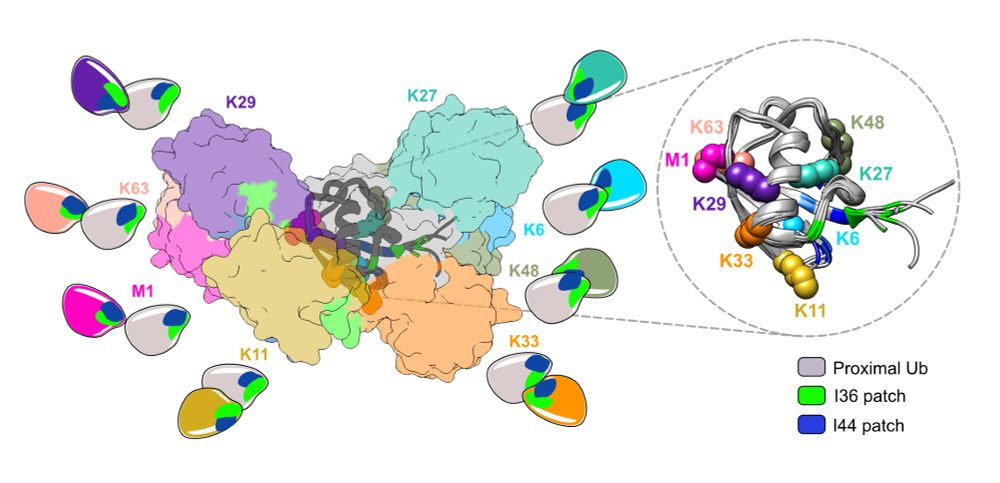
New to #ubiquitin? Been with it for a while? Either way this review may be for you 🤩
Excited to share our review article in @molcell.bsky.social, diving deep into everything #ubiquitin
Read here 👉: kwnsfk27.r.eu-west-1.awstrack.me/L0/https:%2F...
@cellpress.bsky.social
@wehi-research.bsky.social
Excited to share our review article in @molcell.bsky.social, diving deep into everything #ubiquitin
Read here 👉: kwnsfk27.r.eu-west-1.awstrack.me/L0/https:%2F...
@cellpress.bsky.social
@wehi-research.bsky.social
January 17, 2025 at 2:19 AM
New to #ubiquitin? Been with it for a while? Either way this review may be for you 🤩
Excited to share our review article in @molcell.bsky.social, diving deep into everything #ubiquitin
Read here 👉: kwnsfk27.r.eu-west-1.awstrack.me/L0/https:%2F...
@cellpress.bsky.social
@wehi-research.bsky.social
Excited to share our review article in @molcell.bsky.social, diving deep into everything #ubiquitin
Read here 👉: kwnsfk27.r.eu-west-1.awstrack.me/L0/https:%2F...
@cellpress.bsky.social
@wehi-research.bsky.social
Reposted by Loges Krshnan
Read more about this research in our ‘First person’ interview with Nikita Sergejevs: journals.biologists.com/jcs/article/...

December 18, 2024 at 3:05 PM
Read more about this research in our ‘First person’ interview with Nikita Sergejevs: journals.biologists.com/jcs/article/...
Reposted by Loges Krshnan
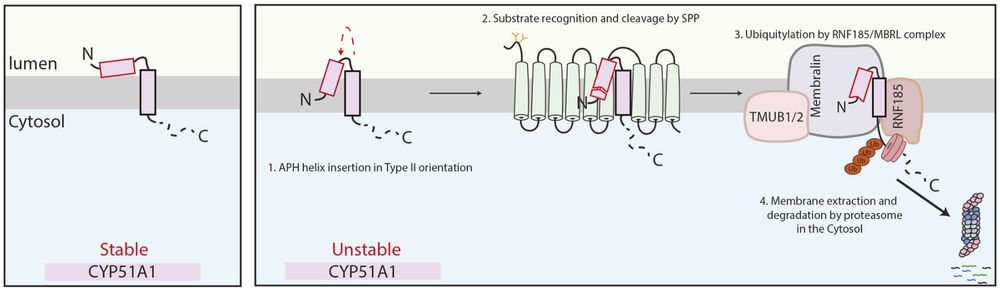
Nikita Sergejevs, Pedro Carvalho and colleagues find that that the intramembrane protease SPP conducts topology surveillance of CYP51A1 by initiating quality control of incorrectly inserted molecules.
Highlight: journals.biologists.com/jcs/article/...
Article: journals.biologists.com/jcs/article/...
Highlight: journals.biologists.com/jcs/article/...
Article: journals.biologists.com/jcs/article/...
December 18, 2024 at 3:05 PM
Nikita Sergejevs, Pedro Carvalho and colleagues find that that the intramembrane protease SPP conducts topology surveillance of CYP51A1 by initiating quality control of incorrectly inserted molecules.
Highlight: journals.biologists.com/jcs/article/...
Article: journals.biologists.com/jcs/article/...
Highlight: journals.biologists.com/jcs/article/...
Article: journals.biologists.com/jcs/article/...
Reposted by Loges Krshnan

🚨 Our latest study, "Yeast Knowledge Graphs Database for Exploring Saccharomyces cerevisiae and Schizosaccharomyces pombe," has just been deposited in @biorxivpreprint.bsky.social ! We’re thrilled to share our work with the world! #KnowledgeGraphs
www.biorxiv.org/content/10.1101/2024.12.04.626523v1
www.biorxiv.org/content/10.1101/2024.12.04.626523v1

December 10, 2024 at 4:24 AM
🚨 Our latest study, "Yeast Knowledge Graphs Database for Exploring Saccharomyces cerevisiae and Schizosaccharomyces pombe," has just been deposited in @biorxivpreprint.bsky.social ! We’re thrilled to share our work with the world! #KnowledgeGraphs
www.biorxiv.org/content/10.1101/2024.12.04.626523v1
www.biorxiv.org/content/10.1101/2024.12.04.626523v1
Reposted by Loges Krshnan
Waves of new BlueSky arrivals in last few days!
I’ve been tracking starter packs relevant to molecular/mechanistic/genetic/cellular…etc biology
Hope it’s helpful but warning: now a v long thread!
Probably the last time I can do this...
I’ve been tracking starter packs relevant to molecular/mechanistic/genetic/cellular…etc biology
Hope it’s helpful but warning: now a v long thread!
Probably the last time I can do this...
November 12, 2024 at 3:03 PM
Waves of new BlueSky arrivals in last few days!
I’ve been tracking starter packs relevant to molecular/mechanistic/genetic/cellular…etc biology
Hope it’s helpful but warning: now a v long thread!
Probably the last time I can do this...
I’ve been tracking starter packs relevant to molecular/mechanistic/genetic/cellular…etc biology
Hope it’s helpful but warning: now a v long thread!
Probably the last time I can do this...
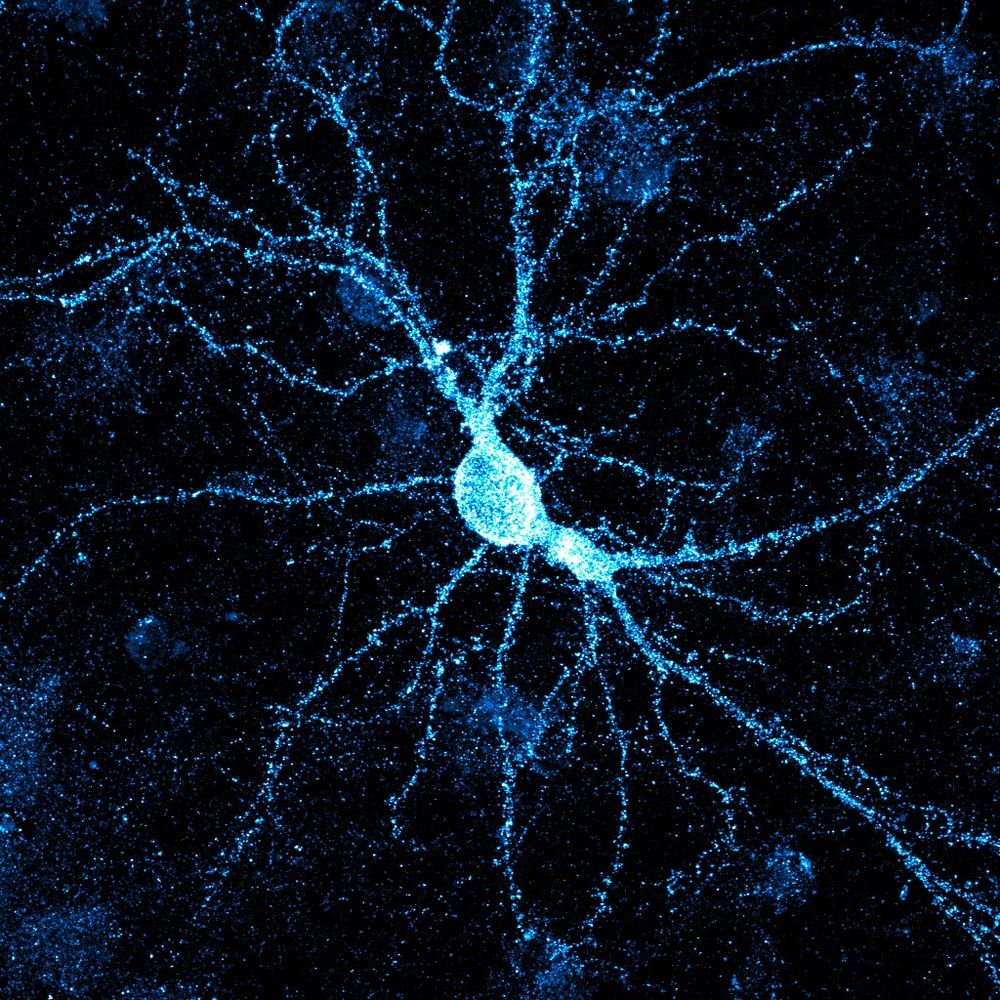
If you are interested in doing cutting-edge molecular #neurobiology research, I can highly recommend the opportunity to work with @adamgrieve.bsky.social, whom not only will ensure you an exciting scientific journey, but will also be a great mentor, guiding you through the ups and downs of a #PhD.
Can I ask you to share a PhD advert at Bristol Uni please? Rhomboid proteases play a role in neurons that is essential for life- but it is not characterised. Got a student interested in cell biology, electrophysiology and neurobiology? Send them our way! tinyurl.com/56f24f7c
December 8, 2024 at 9:20 PM
If you are interested in doing cutting-edge molecular #neurobiology research, I can highly recommend the opportunity to work with @adamgrieve.bsky.social, whom not only will ensure you an exciting scientific journey, but will also be a great mentor, guiding you through the ups and downs of a #PhD.
Reposted by Loges Krshnan

Amazing PhD opportunity to join an exciting new lab at Bristol Biochemistry - send your best students in Ferdos’ direction!
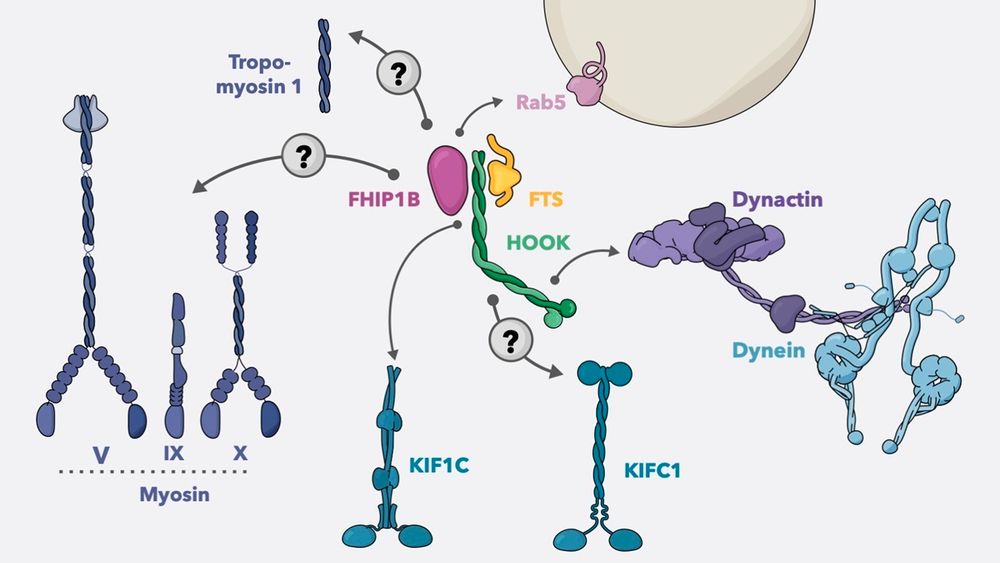
If you’re interested in how molecular motors coordinate to power intracellular trafficking events (e.g. endocytosis), I’ve got a PhD position available to study this at vibrant Bristol uni. In this project, we will capture highly dynamic events by #cryoEM, single molecule imaging & cell biology. 🔬❄️🧪
November 27, 2024 at 12:36 PM
Amazing PhD opportunity to join an exciting new lab at Bristol Biochemistry - send your best students in Ferdos’ direction!
This study has it all! A truly structure-to-function study on two #deubiquitinases that were thought to be pseudoenzymes and providing insights into disease mutations. Congratulations to @gallantkai.bsky.social, Kim and the team!
Thrilled to share our study on the two DUBs USP53 and USP54! If you're curious about how biochemistry, chemical biology, crystallography, and ubiquitinated protein isolation came together to expand our understanding of these enzymes, consider to give it a read.
Could't think of a better inaugural post here. Very excited to share that our manuscript on the "Discovery and mechanism of K63-linkage-directed deubiquitinase activity in USP53" was published today at Nature Chemical Biology. Congratulations Kim, Kai, and all authors! www.nature.com/articles/s41...
December 6, 2024 at 7:36 PM
This study has it all! A truly structure-to-function study on two #deubiquitinases that were thought to be pseudoenzymes and providing insights into disease mutations. Congratulations to @gallantkai.bsky.social, Kim and the team!
Since I read about AKIRIN2 in 2021 in their earlier paper in Nature, I have always been fascinated by this protein. This follow-up preprint is aimed at unraveling the mechanistic aspects of its functions! Just excited at the fact that we have so much more to learn about the world of #proteostasis!
We are very excited to share our recent preprint on the nuclear import mechanism of the proteasome, driven by the multivalent adaptor AKIRIN2! www.biorxiv.org/content/10.1... 🧵 1/6

A multivalent adaptor mechanism drives the nuclear import of proteasomes
Nuclear protein homeostasis, including the turnover of transcription factors, critically depends on nuclear proteasomes. After each cell division, proteasomes need to be re-imported into the newly for...
www.biorxiv.org
December 6, 2024 at 7:20 PM
Since I read about AKIRIN2 in 2021 in their earlier paper in Nature, I have always been fascinated by this protein. This follow-up preprint is aimed at unraveling the mechanistic aspects of its functions! Just excited at the fact that we have so much more to learn about the world of #proteostasis!
It was a treat to hear this story when @micharapelab.bsky.social visited University of Dundee and continuation of the story at the EMBO #ubiquitin and #ubiquitin-like proteins meeting in Cavtat, a couple months ago! Very elegant and informative mechanistic and functional works on #stresssignalling!
Very excited to present the structural and mechanistic basis for stress response silencing by the monster E3 ligase SIFI.
www.biorxiv.org/content/10.1...
www.biorxiv.org/content/10.1...
December 6, 2024 at 7:08 PM
It was a treat to hear this story when @micharapelab.bsky.social visited University of Dundee and continuation of the story at the EMBO #ubiquitin and #ubiquitin-like proteins meeting in Cavtat, a couple months ago! Very elegant and informative mechanistic and functional works on #stresssignalling!
Reposted by Loges Krshnan

Excited to reveal specific reactive oxygen species as sentinel molecules that control localized protein degradation at #mitochondria to adjust electron transport chain abundance, with many implications for the role of ROS in development and disease.
www.cell.com/molecular-ce...
www.cell.com/molecular-ce...
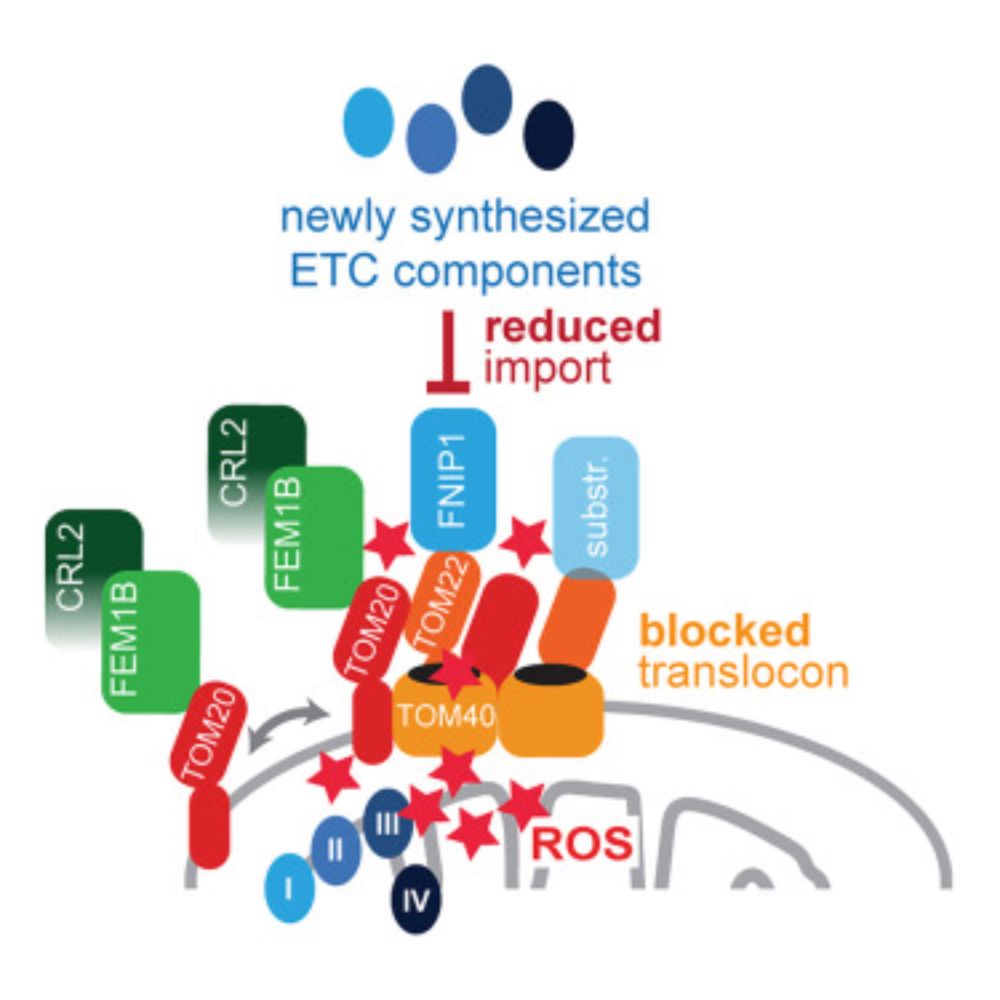
Reactive oxygen species control protein degradation at the mitochondrial import gate
This work identifies reactive oxygen species released by the electron transport chain as sentinel molecules that regulate localized protein degradation at mitochondrial TOM complexes, a mechanism that controls mitochondrial protein import and adjusts the abundance of the electron transport chain to cellular needs.
www.cell.com
December 6, 2024 at 7:07 AM
Excited to reveal specific reactive oxygen species as sentinel molecules that control localized protein degradation at #mitochondria to adjust electron transport chain abundance, with many implications for the role of ROS in development and disease.
www.cell.com/molecular-ce...
www.cell.com/molecular-ce...
Reposted by Loges Krshnan

The second of our two new preprints addresses the question of how proteasomes can be kept dormant for instance in oocytes. This study was spearheaded by first author Sascha Amann. biorxiv.org/cgi/content/... (1/6)🧵
PITHD1: An Endogenous Inhibitor of the 26S Proteasome During Cellular Dormancy
Cellular dormancy represents a state of regulated growth arrest essential for diverse biological processes, from reproduction to cancer progression. While mechanisms controlling protein synthesis in d...
biorxiv.org
December 6, 2024 at 9:17 AM
The second of our two new preprints addresses the question of how proteasomes can be kept dormant for instance in oocytes. This study was spearheaded by first author Sascha Amann. biorxiv.org/cgi/content/... (1/6)🧵
Reposted by Loges Krshnan

A humbling reminder that we've only scratched the surface of life's complexity.
www.science.org/content/arti...
www.science.org/content/arti...

‘Dark proteome’ survey reveals thousands of new human genes
Database confirms that overlooked segments of the genome code for a multitude of tiny proteins
www.science.org
December 1, 2024 at 6:34 AM
A humbling reminder that we've only scratched the surface of life's complexity.
www.science.org/content/arti...
www.science.org/content/arti...
Reposted by Loges Krshnan
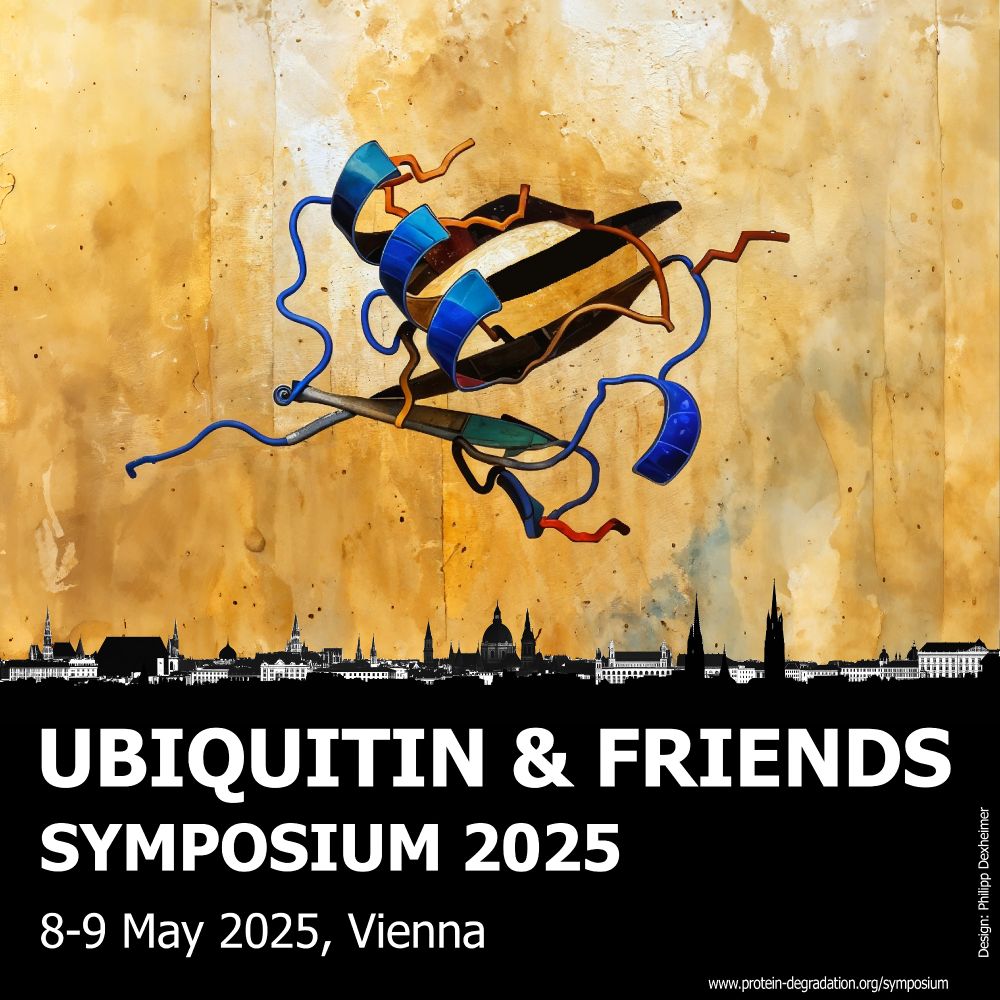
SAVE THE DATE 🗓️Ubiquitin & Friends Symposium: 8-9 May 2025 in Vienna!
Registration will open🔜 Keep an eye out for the announcement 👀
✨guest speaker lineup👇🧵 +talks from abstracts! Great chance for #ECRs to meet with peers & experts in a friendly setting!
🔗 www.protein-degradation.org/symposium/
Registration will open🔜 Keep an eye out for the announcement 👀
✨guest speaker lineup👇🧵 +talks from abstracts! Great chance for #ECRs to meet with peers & experts in a friendly setting!
🔗 www.protein-degradation.org/symposium/
November 29, 2024 at 2:18 PM
SAVE THE DATE 🗓️Ubiquitin & Friends Symposium: 8-9 May 2025 in Vienna!
Registration will open🔜 Keep an eye out for the announcement 👀
✨guest speaker lineup👇🧵 +talks from abstracts! Great chance for #ECRs to meet with peers & experts in a friendly setting!
🔗 www.protein-degradation.org/symposium/
Registration will open🔜 Keep an eye out for the announcement 👀
✨guest speaker lineup👇🧵 +talks from abstracts! Great chance for #ECRs to meet with peers & experts in a friendly setting!
🔗 www.protein-degradation.org/symposium/
Reposted by Loges Krshnan
Excited to report our discovery of an important component of the oxidative stress response: the E3 ligase TRIP12. It acts as a chain elongation factor that amplifies CUL3-KEAP1 activity to drive NRF2 degradation as cells recover from stress.
www.biorxiv.org/content/10.1...
www.biorxiv.org/content/10.1...

Dynamic regulation of the oxidative stress response by the E3 ligase TRIP12
The oxidative stress response is centered on the transcription factor NRF2 and protects cells from reactive oxygen species (ROS). While ROS inhibit the E3 ligase CUL3-KEAP1 to stabilize NRF2 and elici...
www.biorxiv.org
November 26, 2024 at 2:53 PM
Excited to report our discovery of an important component of the oxidative stress response: the E3 ligase TRIP12. It acts as a chain elongation factor that amplifies CUL3-KEAP1 activity to drive NRF2 degradation as cells recover from stress.
www.biorxiv.org/content/10.1...
www.biorxiv.org/content/10.1...
Reposted by Loges Krshnan
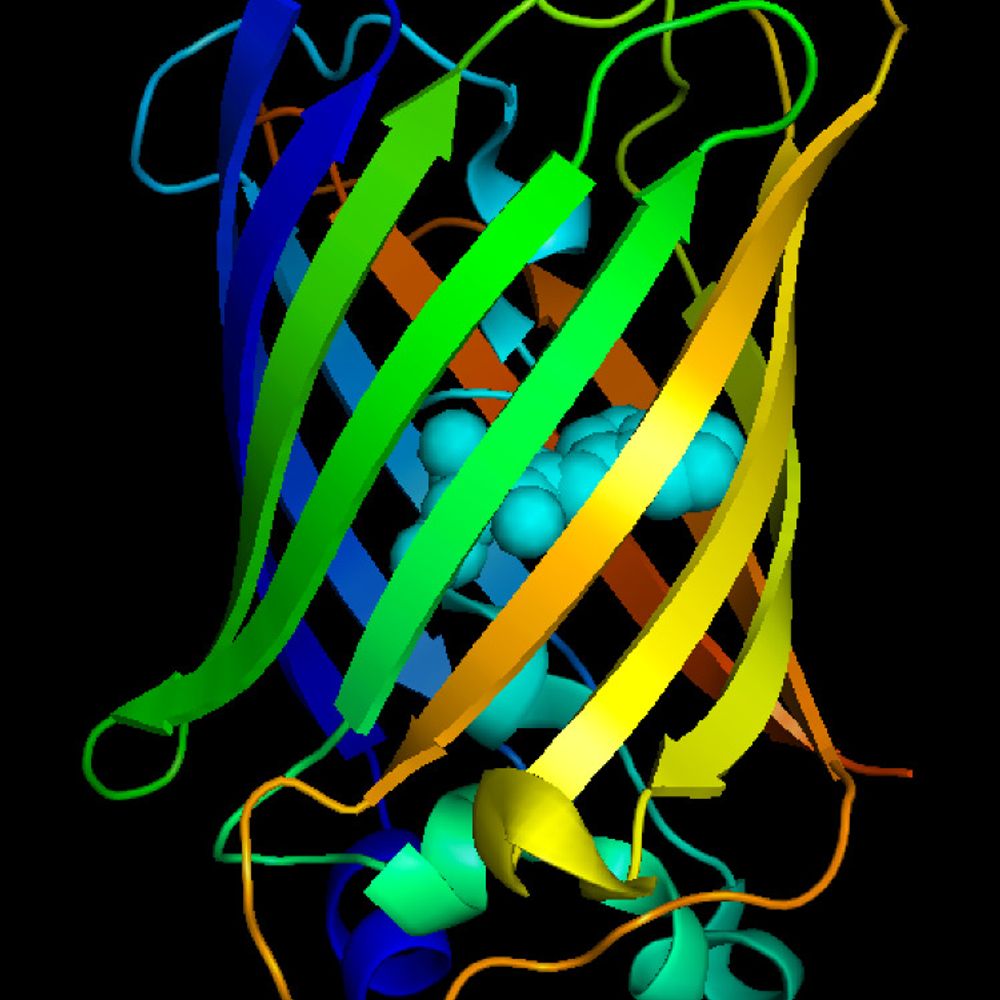
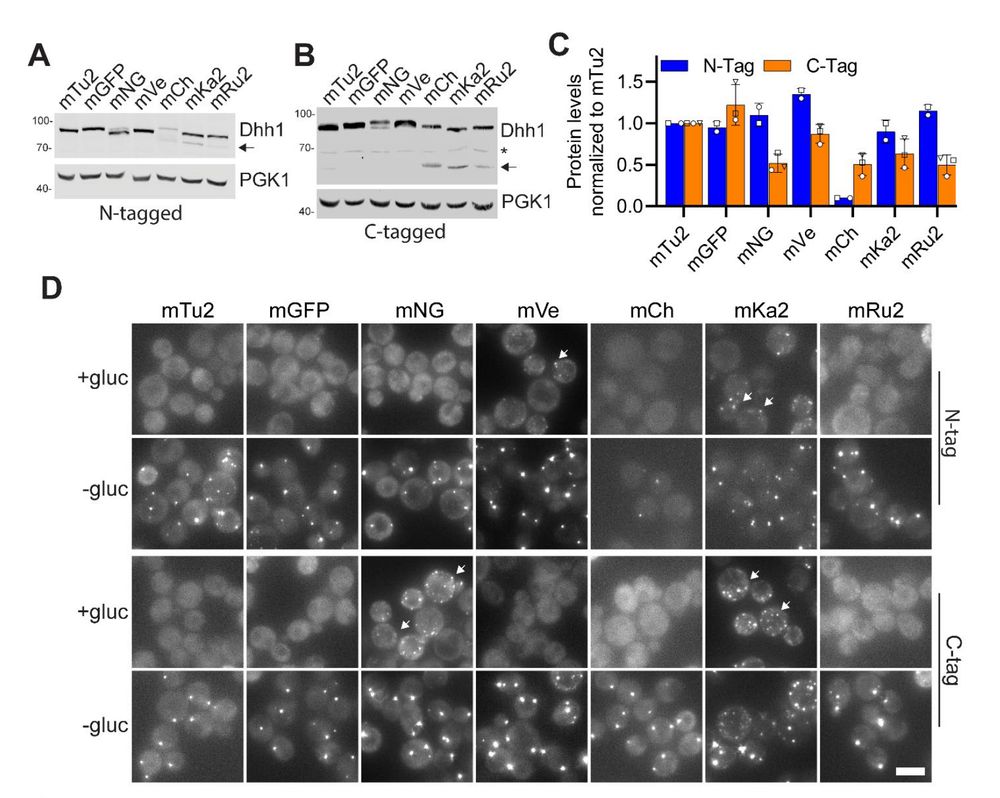
The dark side of fluorescent protein tagging: the impact of protein tags on biomolecular condensation
www.biorxiv.org/content/10.1...
www.biorxiv.org/content/10.1...
November 25, 2024 at 12:19 PM
The dark side of fluorescent protein tagging: the impact of protein tags on biomolecular condensation
www.biorxiv.org/content/10.1...
www.biorxiv.org/content/10.1...
Reposted by Loges Krshnan

For people interested in chaperones, protein quality control, proteostasis and cellular homeostasis, here is the link of the webinars we (P. Goloubinoff, A. Barducci, N. Nillegoda and I) hosted during the COVID pandemics. A lot of material!
tinyurl.com/27y5wpzy
tinyurl.com/27y5wpzy
Cellular and protein homeostasis webinars - EPFL - Ecole polytechnique fédérale de Lausanne
tinyurl.com
November 17, 2024 at 12:18 PM
For people interested in chaperones, protein quality control, proteostasis and cellular homeostasis, here is the link of the webinars we (P. Goloubinoff, A. Barducci, N. Nillegoda and I) hosted during the COVID pandemics. A lot of material!
tinyurl.com/27y5wpzy
tinyurl.com/27y5wpzy
Hello! As a new user, I thought I would introduce myself. I am a postdoc in the lab of @kulathu.bsky.social at MRC-PPU, Dundee, UK. Fascinated by #molecularchaperones and #proteinqualitycontrol. Find me on pubmed pubmed.ncbi.nlm.nih.gov?term=Logesva... or here scholar.google.com/citations?us...
November 18, 2024 at 2:06 AM
Hello! As a new user, I thought I would introduce myself. I am a postdoc in the lab of @kulathu.bsky.social at MRC-PPU, Dundee, UK. Fascinated by #molecularchaperones and #proteinqualitycontrol. Find me on pubmed pubmed.ncbi.nlm.nih.gov?term=Logesva... or here scholar.google.com/citations?us...
Reposted by Loges Krshnan

We are still considering postdoc candidates for the post advertised below. A 2-year contract beginning in 2025 to work on protein SUMO E3 ligases and the nucleosome.

November 16, 2024 at 6:43 AM
We are still considering postdoc candidates for the post advertised below. A 2-year contract beginning in 2025 to work on protein SUMO E3 ligases and the nucleosome.