




Jeremy Labrecque
@jeremylabrecque.bsky.social
Canadian epidemiologist and causal inference person at Erasmus Medical Center. Big fan of Northern Expsoure and Car Talk.
jeremylabrecque.org
jeremylabrecque.org
This is so nicely said:
It's the authors' responsibility to tell the reader how they might interpret an association.
It's the authors' responsibility to tell the reader how they might interpret an association.

Consequences of following Jeremy → constantly reminding myself that it’s my duty to give meaning to “associations” and the results, not the reader’s job. I am the one who knows the study goal, my data, the literature, who chose the methods.
Temptation to write “association” and move on is real :)
Temptation to write “association” and move on is real :)
Sometimes I hear, "we need to frame our research as associational otherwise the MDs reading it will not interpret it correctly."
It took me a while to realize how bonkers this is. It's saying some important primary users of the knowledge created are unable to understand what they're reading.
It took me a while to realize how bonkers this is. It's saying some important primary users of the knowledge created are unable to understand what they're reading.
February 6, 2026 at 3:42 PM
This is so nicely said:
It's the authors' responsibility to tell the reader how they might interpret an association.
It's the authors' responsibility to tell the reader how they might interpret an association.
Sometimes I hear, "we need to frame our research as associational otherwise the MDs reading it will not interpret it correctly."
It took me a while to realize how bonkers this is. It's saying some important primary users of the knowledge created are unable to understand what they're reading.
It took me a while to realize how bonkers this is. It's saying some important primary users of the knowledge created are unable to understand what they're reading.
February 6, 2026 at 11:54 AM
Sometimes I hear, "we need to frame our research as associational otherwise the MDs reading it will not interpret it correctly."
It took me a while to realize how bonkers this is. It's saying some important primary users of the knowledge created are unable to understand what they're reading.
It took me a while to realize how bonkers this is. It's saying some important primary users of the knowledge created are unable to understand what they're reading.
Reposted by Jeremy Labrecque

DAGs describe discrete snapshots. Most causal mechanisms of interest in science on humans and other living things operate continuously. The two may not correspond. Is it time to panic?
wildetruth.substack.com/p/can-we-bel...
wildetruth.substack.com/p/can-we-bel...

February 4, 2026 at 11:13 AM
DAGs describe discrete snapshots. Most causal mechanisms of interest in science on humans and other living things operate continuously. The two may not correspond. Is it time to panic?
wildetruth.substack.com/p/can-we-bel...
wildetruth.substack.com/p/can-we-bel...
Cool paper from @keling-wang.com showing that 35% of randomly selected diabetes guideline recommendations use stronger causal language than the papers they cite. Such "causal jumps" are not necessarily unwarranted but, at best, lack of transparency in how causal conclusions were arrived at.
Causal language jumps and non-alignments between clinical practice guidelines and original studies: a systematic evaluation of diabetes guidelines and their cited evidence
Objectives Clinical practice guidelines are designed to guide clinical practice and often make causal claims when making recommendations. Sometimes, guidelines make or require stronger causal claims t...
bmjopen.bmj.com
February 5, 2026 at 2:13 PM
Cool paper from @keling-wang.com showing that 35% of randomly selected diabetes guideline recommendations use stronger causal language than the papers they cite. Such "causal jumps" are not necessarily unwarranted but, at best, lack of transparency in how causal conclusions were arrived at.
Reposted by Jeremy Labrecque

'to treat peer review as a throughput problem is to misunderstand what is at stake. Review is not simply a production stage in the research pipeline; it is one of the few remaining spaces where the scientific community talks to itself.' 1/3

AI is not a peer, so it can’t do peer review
If we still believe that science is a vocation grounded in argument, curiosity and care, we can’t delegate judgement to machines, says Akhil Bhardwaj
www.timeshighereducation.com
February 3, 2026 at 8:17 AM
'to treat peer review as a throughput problem is to misunderstand what is at stake. Review is not simply a production stage in the research pipeline; it is one of the few remaining spaces where the scientific community talks to itself.' 1/3
Reposted by Jeremy Labrecque

This also goes for scientific conferences in the USA: just, no.

Professional athletes are being advised not to leave the hotel or go anywhere without their passports while visiting Minnesota.
This is not a country that can safely host international events like the World Cup.
Boycotting is not even a political question anymore. It is a basic issue of safety.
This is not a country that can safely host international events like the World Cup.
Boycotting is not even a political question anymore. It is a basic issue of safety.

The Montreal Canadiens are playing the Minnesota Wild in Minneapolis tonight. The players have been recommended to stay in/eat at the hotel, take the team bus to the arena, and carry passports.
Perhaps we shouldn't be hosting the World Cup and the Olympics...
Perhaps we shouldn't be hosting the World Cup and the Olympics...
February 2, 2026 at 7:04 PM
This also goes for scientific conferences in the USA: just, no.
Reposted by Jeremy Labrecque

I almost appreciate how Trump has exposed how vacant every single high profile conservative belief was: free speech, states’ rights, letting the market decide, NATO, the right to bear arms, democracy, all of it. It’s been an empty, malicious political project for decades and decades now
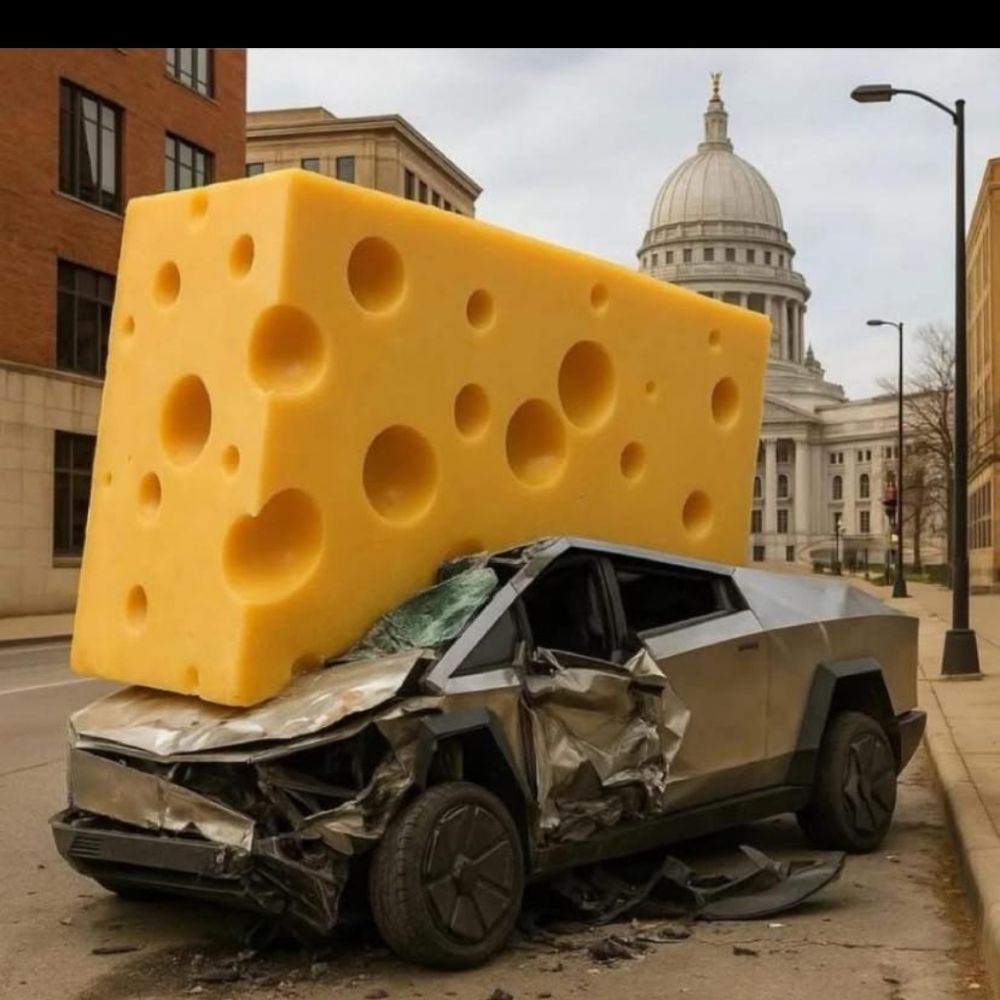
Folks have been noting the creepiness of this NRA statement on the Minneapolis murder that DOESN'T affirm Alex Pretti's right to have a gun at a protest, instead blaming "radical progressive politicians lie Tim Walz" who have "incited violence against law enforcement officers" for his death....

January 25, 2026 at 8:27 PM
I almost appreciate how Trump has exposed how vacant every single high profile conservative belief was: free speech, states’ rights, letting the market decide, NATO, the right to bear arms, democracy, all of it. It’s been an empty, malicious political project for decades and decades now
Reposted by Jeremy Labrecque

Really hard to look at this and all the other examples of bravery and kindness from ordinary people in this moment not think also of the tremendous cowardice exhibited over the past year by some of the richest, most well-protected people in business, media and politics
Let us all have the courage displayed by the residents of Minneapolis.

January 25, 2026 at 2:24 PM
Really hard to look at this and all the other examples of bravery and kindness from ordinary people in this moment not think also of the tremendous cowardice exhibited over the past year by some of the richest, most well-protected people in business, media and politics
Reposted by Jeremy Labrecque

1. This short thread is about the issue that dominates almost every aspect of politics, and causes or exacerbates most of our problems: the extreme wealth of a small number of people. Here’s the amazing thing: almost the entire political class aligns with the ultra-rich against the rest. 🧵1/10
January 23, 2026 at 11:30 AM
1. This short thread is about the issue that dominates almost every aspect of politics, and causes or exacerbates most of our problems: the extreme wealth of a small number of people. Here’s the amazing thing: almost the entire political class aligns with the ultra-rich against the rest. 🧵1/10
Reposted by Jeremy Labrecque

If you are a Canadian, and you travel to or support the United States in any way, you are a traitor.

Trump posts an image depicting Canada and Greenland as part of the United States

January 20, 2026 at 1:50 PM
If you are a Canadian, and you travel to or support the United States in any way, you are a traitor.
Posting for no reason: european-alternatives.eu

European Alternatives
We help you find European alternatives for digital service and products, like cloud services and SaaS products.
european-alternatives.eu
January 17, 2026 at 8:46 PM
Posting for no reason: european-alternatives.eu
My apologies to people named Al because I keep reading your name as A.I. now.
January 17, 2026 at 2:51 PM
My apologies to people named Al because I keep reading your name as A.I. now.
It's funny when people write "these results suggest that exposure and outcome are associated" when they clearly found they were associated.
What they mean, I think, is the results suggest the possibility of causation.
What they mean, I think, is the results suggest the possibility of causation.
January 16, 2026 at 1:43 PM
It's funny when people write "these results suggest that exposure and outcome are associated" when they clearly found they were associated.
What they mean, I think, is the results suggest the possibility of causation.
What they mean, I think, is the results suggest the possibility of causation.
*researcher is unable to answer and is hurled into the abyss*

January 15, 2026 at 10:22 PM
*researcher is unable to answer and is hurled into the abyss*
Reposted by Jeremy Labrecque

Are you or a loved one LGBTQ+? Or does your work serve LGBTQ+ communities? Take this Survey from The Cancer Network and share how this past year has impacted you! I took it and am looking forward to seeing how the data can and will be used to advocate for our community.

Dr. Lisa Diamond of The University of Utah is conducting a climate survey of the LGBTQIA+ community. To participate or share the survey follow the link here: bit.ly/OUTCommunityS...

January 13, 2026 at 2:22 PM
Are you or a loved one LGBTQ+? Or does your work serve LGBTQ+ communities? Take this Survey from The Cancer Network and share how this past year has impacted you! I took it and am looking forward to seeing how the data can and will be used to advocate for our community.
Reposted by Jeremy Labrecque

Having trouble with time zero when using healthcare databases to emulate a #TargetTrial?
See our review of procedures to align eligibility and treatment assignment in observational emulations. We use 3 target trials of increasing complexity and provide a decision diagram
www.bmj.com/content/392/...
See our review of procedures to align eligibility and treatment assignment in observational emulations. We use 3 target trials of increasing complexity and provide a decision diagram
www.bmj.com/content/392/...

Starting right: aligning eligibility and treatment assignment at time zero when emulating a target trial
This article provides methodological guidance when emulating a target trial with longitudinal observational data by showing how to align eligibility criteria and treatment assignment at the start of f...
lnkd.in
January 13, 2026 at 3:06 PM
Having trouble with time zero when using healthcare databases to emulate a #TargetTrial?
See our review of procedures to align eligibility and treatment assignment in observational emulations. We use 3 target trials of increasing complexity and provide a decision diagram
www.bmj.com/content/392/...
See our review of procedures to align eligibility and treatment assignment in observational emulations. We use 3 target trials of increasing complexity and provide a decision diagram
www.bmj.com/content/392/...
Reposted by Jeremy Labrecque

Who's ever seen LLM output say, "we don't know"? And yet so often that is the best response. There's so much that isn't known in medicine and really even official resources could be a bit clearer about that.
www.theguardian.com/technology/2...
www.theguardian.com/technology/2...

‘Dangerous and alarming’: Google removes some of its AI summaries after users’ health put at risk
Guardian investigation finds AI Overviews provided inaccurate and false information when queried over blood tests
www.theguardian.com
January 11, 2026 at 7:50 PM
Who's ever seen LLM output say, "we don't know"? And yet so often that is the best response. There's so much that isn't known in medicine and really even official resources could be a bit clearer about that.
www.theguardian.com/technology/2...
www.theguardian.com/technology/2...
It's super easy to exercise your choice as a consumer. And if more people did, these companies would be more receptive to change. I switched from Spotify to Qobuz last year and am loving it. They also pay artists more than other streaming services.

variety.com/2026/digital...
And… we f-ing won another one! Keep it coming. Watch out Home Depot. Karma is a stink that stays on you.
And… we f-ing won another one! Keep it coming. Watch out Home Depot. Karma is a stink that stays on you.

Spotify Confirms ICE Recruitment Ads Are No Longer Running on Platform
Spotify has confirimed that ICE recruitment ads are no longer running on its platform following criticism from last year.
variety.com
January 9, 2026 at 11:13 AM
It's super easy to exercise your choice as a consumer. And if more people did, these companies would be more receptive to change. I switched from Spotify to Qobuz last year and am loving it. They also pay artists more than other streaming services.
Reposted by Jeremy Labrecque

*Determinant* is a synonym for cause.
But it seems implausible for your voting behaviour to cause your mortality risk (beyond large scale macro changes to the government in control).
More likely it's a complex multidimensional marker of your overall circumstances which in turn predicts your risk.
But it seems implausible for your voting behaviour to cause your mortality risk (beyond large scale macro changes to the government in control).
More likely it's a complex multidimensional marker of your overall circumstances which in turn predicts your risk.
January 8, 2026 at 1:05 PM
*Determinant* is a synonym for cause.
But it seems implausible for your voting behaviour to cause your mortality risk (beyond large scale macro changes to the government in control).
More likely it's a complex multidimensional marker of your overall circumstances which in turn predicts your risk.
But it seems implausible for your voting behaviour to cause your mortality risk (beyond large scale macro changes to the government in control).
More likely it's a complex multidimensional marker of your overall circumstances which in turn predicts your risk.
Reposted by Jeremy Labrecque

Here's a question for the causal inference people: What is your take on causality without counterfactuals and/or causal inference without counterfactuals?

a cartoon of a man holding a box that says ' w ' on it
Alt: The Farnsworth Parabox
media.tenor.com
January 5, 2026 at 1:18 PM
Here's a question for the causal inference people: What is your take on causality without counterfactuals and/or causal inference without counterfactuals?
Reposted by Jeremy Labrecque

I reckon CI does two good things to a field, neither of which are philosophical or even technical: first, it obliges it to admit it actually wants causal knowledge. And second, demands it says what that knowledge amounts to in concrete interventional terms (or admit that it doesn't quite know).
January 4, 2026 at 10:14 PM
I reckon CI does two good things to a field, neither of which are philosophical or even technical: first, it obliges it to admit it actually wants causal knowledge. And second, demands it says what that knowledge amounts to in concrete interventional terms (or admit that it doesn't quite know).
Reposted by Jeremy Labrecque

Books I read this year that were particularly good I will never do a top ten list you can't make me rank art.
December 29, 2025 at 6:20 AM
Books I read this year that were particularly good I will never do a top ten list you can't make me rank art.
Reposted by Jeremy Labrecque
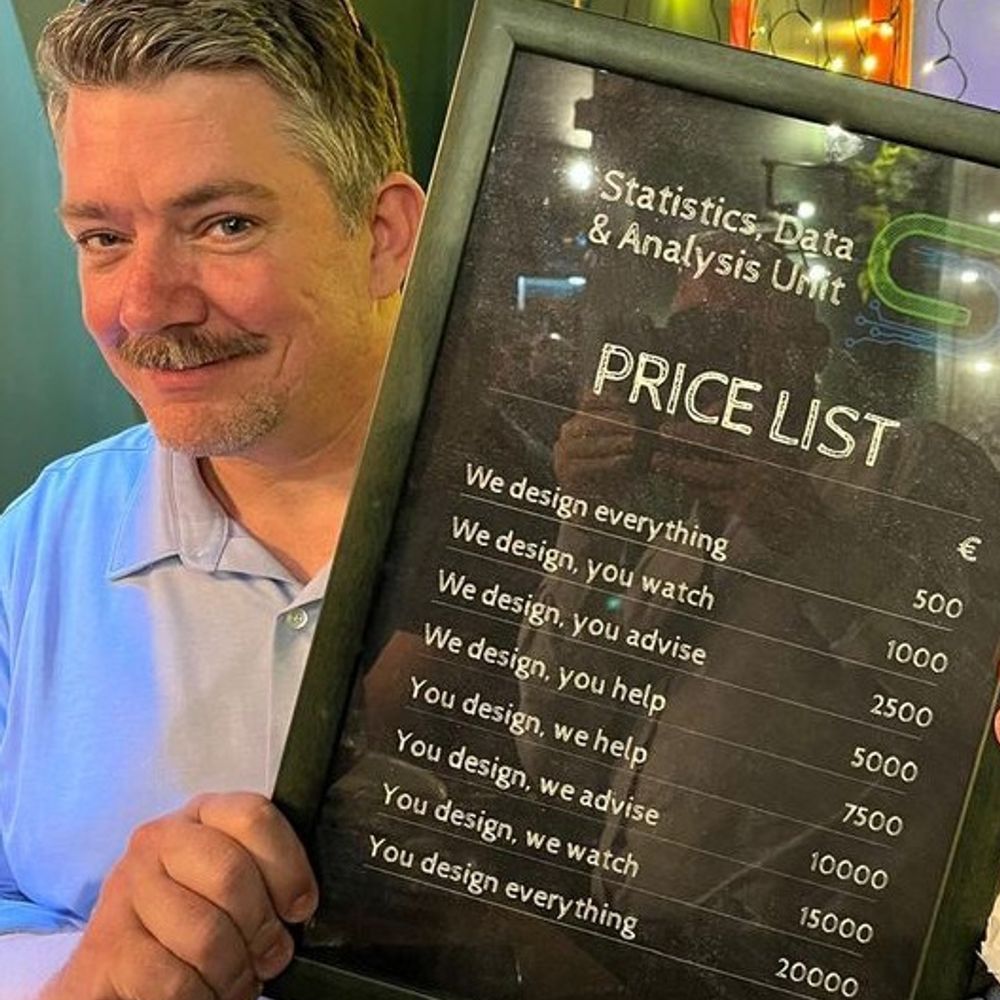
It has a name now 😜
Many thanks to Ken for agreeing to put his good name to my...artwork. The image is in the public domain (CC 0), but citations to the linked documents are warmly welcomed.
✅ zenodo.org/records/1808...
✅ pubmed.ncbi.nlm.nih.gov/24452418/
Many thanks to Ken for agreeing to put his good name to my...artwork. The image is in the public domain (CC 0), but citations to the linked documents are warmly welcomed.
✅ zenodo.org/records/1808...
✅ pubmed.ncbi.nlm.nih.gov/24452418/

December 29, 2025 at 11:19 AM
It has a name now 😜
Many thanks to Ken for agreeing to put his good name to my...artwork. The image is in the public domain (CC 0), but citations to the linked documents are warmly welcomed.
✅ zenodo.org/records/1808...
✅ pubmed.ncbi.nlm.nih.gov/24452418/
Many thanks to Ken for agreeing to put his good name to my...artwork. The image is in the public domain (CC 0), but citations to the linked documents are warmly welcomed.
✅ zenodo.org/records/1808...
✅ pubmed.ncbi.nlm.nih.gov/24452418/
Reposted by Jeremy Labrecque

Poverty is a policy choice. Concentrated wealth is a policy choice. Inequality is a policy choice. None of it is natural or inevitable. Remember: We have the power to build a system that serves the many, not the powerful few.
December 28, 2025 at 9:00 PM
Poverty is a policy choice. Concentrated wealth is a policy choice. Inequality is a policy choice. None of it is natural or inevitable. Remember: We have the power to build a system that serves the many, not the powerful few.
Reposted by Jeremy Labrecque

I don't think the claim is puritanical, to be honest. X is a digital platform built on network effects, so every user who posts there creates a negative externality by amplifying its owner, who is openly hostile to democratic rule and the Western liberal order.

I’m not going to argue that anyone still using X is an enabler/collaborator. The claim is puritanical. I abandoned X about a year ago and will never go back. But I’m not a vegan.
I wish academic bsky was more like ac twitter of a decade ago. But that version of the internet is (maybe forever) dead.
I wish academic bsky was more like ac twitter of a decade ago. But that version of the internet is (maybe forever) dead.
December 26, 2025 at 10:53 AM
I don't think the claim is puritanical, to be honest. X is a digital platform built on network effects, so every user who posts there creates a negative externality by amplifying its owner, who is openly hostile to democratic rule and the Western liberal order.