




Zeke Hausfather
@hausfath.bsky.social
"A tireless chronicler and commentator on all things climate" -NYTimes.
Climate research lead @stripe, writer @CarbonBrief, scientist @BerkeleyEarth, IPCC AR7 lead author / NCA5 author.
Substack: https://theclimatebrink.substack.com/
Twitter: @hausfath
Climate research lead @stripe, writer @CarbonBrief, scientist @BerkeleyEarth, IPCC AR7 lead author / NCA5 author.
Substack: https://theclimatebrink.substack.com/
Twitter: @hausfath
Pinned

I've created a new dashboard for The Climate Brink that is updated daily with ERA5 global mean surface temperature data. It includes daily anomalies, monthly and annual forecasts, and a bunch of interactive data visualizations: dashboard.theclimate...
Reposted by Zeke Hausfather

Pretty good summary of the forces arrayed against the CO2 endangerment finding. I think they are counting their chickens prematurely.
🎁 www.nytimes.com/2026/02/09/c...
🎁 www.nytimes.com/2026/02/09/c...

Trump Allies Near ‘Total Victory’ in Wiping Out U.S. Climate Regulation
www.nytimes.com
February 10, 2026 at 2:47 PM
Pretty good summary of the forces arrayed against the CO2 endangerment finding. I think they are counting their chickens prematurely.
🎁 www.nytimes.com/2026/02/09/c...
🎁 www.nytimes.com/2026/02/09/c...
I've created a new dashboard for The Climate Brink that is updated daily with ERA5 global mean surface temperature data. It includes daily anomalies, monthly and annual forecasts, and a bunch of interactive data visualizations: dashboard.theclimate...
February 9, 2026 at 5:47 PM
I've created a new dashboard for The Climate Brink that is updated daily with ERA5 global mean surface temperature data. It includes daily anomalies, monthly and annual forecasts, and a bunch of interactive data visualizations: dashboard.theclimate...
Reposted by Zeke Hausfather

A further update on bsky.app/profile/bobk... — it turns out if you correct the statistical errors in Michael Schellenberger’s favorite new sea level paper, it (unsurprisingly) shows clear evidence of sea level acceleration

Their refusal to share data and code notwithstanding, we roughly reproduce Voortman & de Vos.
They underpower their analysis and misread a statistical procedure.
Correcting that, we find that sea level rise DID accelerate.
essopenarchive.org/doi/full/10....
They underpower their analysis and misread a statistical procedure.
Correcting that, we find that sea level rise DID accelerate.
essopenarchive.org/doi/full/10....
A global perspective on local sea level change: A comment
We replicate Voortman and de Vos (2025). Although we unfortunately lack access to their data and code, we qualitatively reproduce their results. We argue that their null result-no significant accelera...
essopenarchive.org
February 7, 2026 at 3:24 PM
A further update on bsky.app/profile/bobk... — it turns out if you correct the statistical errors in Michael Schellenberger’s favorite new sea level paper, it (unsurprisingly) shows clear evidence of sea level acceleration
Reposted by Zeke Hausfather

*DEADLINE EXTENDED* February 8
Submit your suggestions and nominate (yourself or others) as a co-author for the 2026 edition of the 10 New Insights in Climate Science
Submit your suggestions and nominate (yourself or others) as a co-author for the 2026 edition of the 10 New Insights in Climate Science

What climate insights are policymakers missing?
If you’re working on new or emerging climate research, now’s the time to surface it.
Help shape the 2026 10 New Insights in Climate Science.
Submit by 31 Jan 2026: form.jotform.com/Future_Earth...
If you’re working on new or emerging climate research, now’s the time to surface it.
Help shape the 2026 10 New Insights in Climate Science.
Submit by 31 Jan 2026: form.jotform.com/Future_Earth...

10 New Insights in Climate Science - CALL FOR EXPERT INPUT 2026
Please click the link to complete this form.
form.jotform.com
February 5, 2026 at 8:31 AM
*DEADLINE EXTENDED* February 8
Submit your suggestions and nominate (yourself or others) as a co-author for the 2026 edition of the 10 New Insights in Climate Science
Submit your suggestions and nominate (yourself or others) as a co-author for the 2026 edition of the 10 New Insights in Climate Science
Katie Miller citing @carbonbrief.org was definitely not on my 2026 bingo card... 🫠

February 5, 2026 at 5:05 PM
Katie Miller citing @carbonbrief.org was definitely not on my 2026 bingo card... 🫠
We see clear fingerprints of greenhouse gas-driven climate change: the upper atmosphere is cooling while the lower atmosphere, surface, and oceans are warming.
If it were external factors like to sun driving warming we'd see the whole atmosphere warm.
If it were external factors like to sun driving warming we'd see the whole atmosphere warm.

February 5, 2026 at 5:03 PM
We see clear fingerprints of greenhouse gas-driven climate change: the upper atmosphere is cooling while the lower atmosphere, surface, and oceans are warming.
If it were external factors like to sun driving warming we'd see the whole atmosphere warm.
If it were external factors like to sun driving warming we'd see the whole atmosphere warm.
January 2026 was the 5th warmest on record in the ERA5 dataset, at 1.48C above preindustrial levels, after 2025, 2024, 2020, and 2016.

February 3, 2026 at 4:00 PM
January 2026 was the 5th warmest on record in the ERA5 dataset, at 1.48C above preindustrial levels, after 2025, 2024, 2020, and 2016.
Reposted by Zeke Hausfather

The weather regime that on average brings the coldest weather is warming the fastest in a large part of northern Europe. In contrast, the weather regime that typically brings the warmest weather has warmed the slowest.
doi.org/10.1002/asl.... @mikarantane.bsky.social
doi.org/10.1002/asl.... @mikarantane.bsky.social

Is climate change responsible for increasingly frequent or severe cold events?
The evidence suggests it is not.
Instead, the impact of climate change is warmer winters and less severe cold events.
@hausfath.bsky.social has a great post on The Climate Brink talking about this.
The evidence suggests it is not.
Instead, the impact of climate change is warmer winters and less severe cold events.
@hausfath.bsky.social has a great post on The Climate Brink talking about this.

Fact check: Climate change is not making extreme cold more common
Sometimes it just gets cold
substack.com
February 3, 2026 at 2:59 PM
The weather regime that on average brings the coldest weather is warming the fastest in a large part of northern Europe. In contrast, the weather regime that typically brings the warmest weather has warmed the slowest.
doi.org/10.1002/asl.... @mikarantane.bsky.social
doi.org/10.1002/asl.... @mikarantane.bsky.social
Reposted by Zeke Hausfather
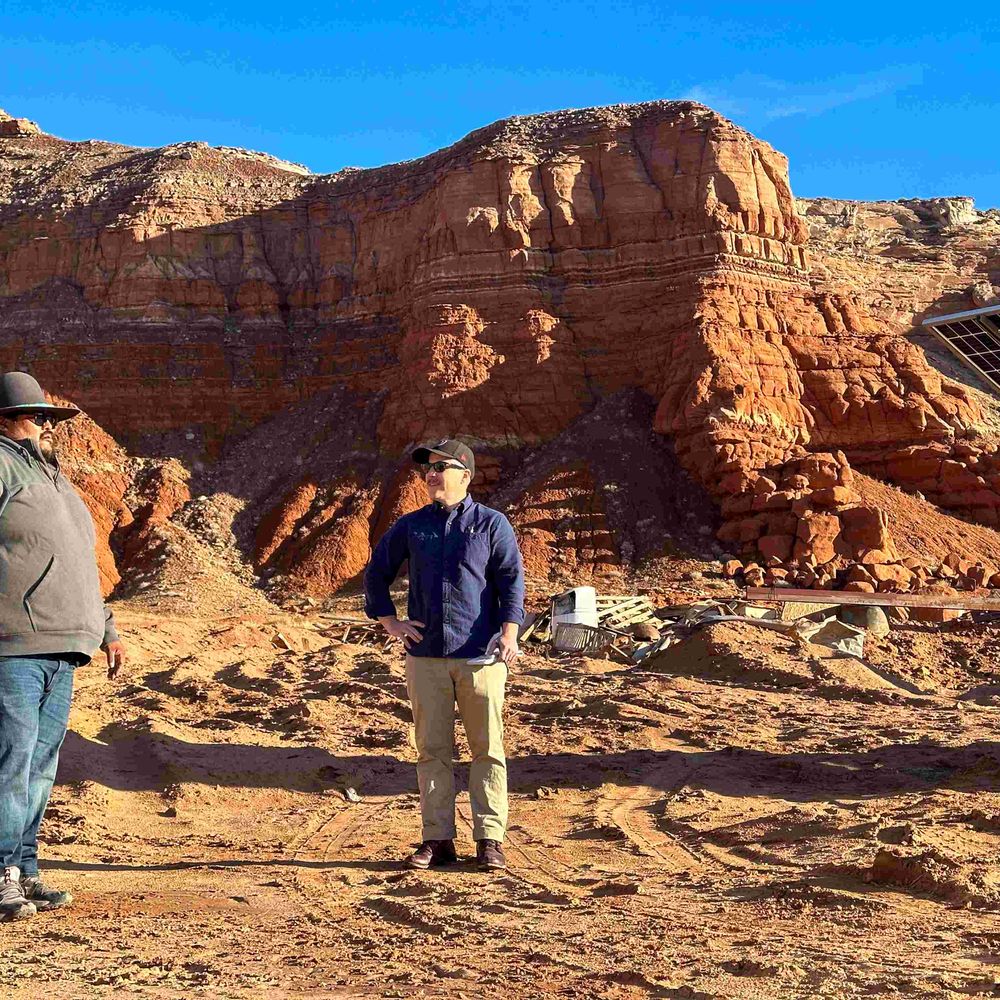
Internal emails show Department of Energy's debunked climate science report was reviewed by scientists internally, who found it "biased," "misleading," and "hypocritical." Contrarian authors tailored their work to ensure it focused on weakening climate regulations. www.eenews.net/articles/doe...

DOE scientists blasted climate report ordered up by boss
Secretary Chris Wright handpicked five climate contrarians to write about global warming. Department experts pushed back on the findings.
www.eenews.net
February 2, 2026 at 4:17 PM
Internal emails show Department of Energy's debunked climate science report was reviewed by scientists internally, who found it "biased," "misleading," and "hypocritical." Contrarian authors tailored their work to ensure it focused on weakening climate regulations. www.eenews.net/articles/doe...
Recent assessments have found the last glacial maximum implies a climate sensitivity of 2.4C (1.4C to 5.0C): www.science.org/doi/...
And the Pliocene implies a sensitivity of 3.1C (2.3C to 4.7C): www.pnas.org/doi/10....
Paleoclimate evidence generally provides the strongest constraint on high ECS.
And the Pliocene implies a sensitivity of 3.1C (2.3C to 4.7C): www.pnas.org/doi/10....
Paleoclimate evidence generally provides the strongest constraint on high ECS.

February 2, 2026 at 6:51 PM
Recent assessments have found the last glacial maximum implies a climate sensitivity of 2.4C (1.4C to 5.0C): www.science.org/doi/...
And the Pliocene implies a sensitivity of 3.1C (2.3C to 4.7C): www.pnas.org/doi/10....
Paleoclimate evidence generally provides the strongest constraint on high ECS.
And the Pliocene implies a sensitivity of 3.1C (2.3C to 4.7C): www.pnas.org/doi/10....
Paleoclimate evidence generally provides the strongest constraint on high ECS.
With cold outbreaks sweeping parts of the US, some have argued that climate change is to blame. But the proposed mechanism remains quite controversial in the scientific community, and the number of extreme cold events have been decreasing almost everywhere: www.theclimatebrink....

February 2, 2026 at 4:24 PM
With cold outbreaks sweeping parts of the US, some have argued that climate change is to blame. But the proposed mechanism remains quite controversial in the scientific community, and the number of extreme cold events have been decreasing almost everywhere: www.theclimatebrink....
Reposted by Zeke Hausfather

Budgets cut. Jobs lost. Pulling out of the IPCC. The consequences of climate science policy changes under the Trump administration are already showing. Climate scientist Dr. Zeke @hausfath.bsky.social joins @worthingtonbry.bsky.social to discuss. Catch up now: www.cleaningup.live/socials/
January 30, 2026 at 1:02 PM
Budgets cut. Jobs lost. Pulling out of the IPCC. The consequences of climate science policy changes under the Trump administration are already showing. Climate scientist Dr. Zeke @hausfath.bsky.social joins @worthingtonbry.bsky.social to discuss. Catch up now: www.cleaningup.live/socials/
Reposted by Zeke Hausfather

Going on the record: clean energy is NOT chopped

BIG SCOOP @heatmap.news: The Trump administration is now going after renewable energy projects on both public and private lands by indefinitely delaying water permits … on grounds that the projects might have bad “aesthetics”
Yes, they’re hurting renewable energy projects by calling them ugly
Yes, they’re hurting renewable energy projects by calling them ugly

The Trump Administration Is Now Delaying Renewable Projects It Thinks Are Ugly
The Army Corps of Engineers is out to protect “the beauty of the Nation’s natural landscape.”
heatmap.news
January 30, 2026 at 2:52 AM
Going on the record: clean energy is NOT chopped
Reposted by Zeke Hausfather

In this week's episode of @cleaninguppod.bsky.social, Bryony sat down with US-based climate scientist @hausfath.bsky.social for an update on all things climate science. Zeke is extremely grounded, no exaggerations and fake scenarios. But oh, the comments already!
www.youtube.com/watch?v=EzyS...
www.youtube.com/watch?v=EzyS...

The State of the Climate 2026 | Ep242: Zeke Hausfather
YouTube video by Cleaning Up Podcast
www.youtube.com
January 29, 2026 at 10:44 AM
In this week's episode of @cleaninguppod.bsky.social, Bryony sat down with US-based climate scientist @hausfath.bsky.social for an update on all things climate science. Zeke is extremely grounded, no exaggerations and fake scenarios. But oh, the comments already!
www.youtube.com/watch?v=EzyS...
www.youtube.com/watch?v=EzyS...
Reposted by Zeke Hausfather

This is a super insightful graph from @kingsmillbond.bsky.social illustrating how countries like India that are experiencing economic development later are skipping over some (not all) fossil dependency.
ember-energy.org/latest-insig...
ember-energy.org/latest-insig...

January 28, 2026 at 7:19 PM
This is a super insightful graph from @kingsmillbond.bsky.social illustrating how countries like India that are experiencing economic development later are skipping over some (not all) fossil dependency.
ember-energy.org/latest-insig...
ember-energy.org/latest-insig...
It was a real pleasure chatting with Bryony Worthington on the Cleaning Up Podcast. Check our our wide ranging discussion of warming acceleration, clouds and aerosols, future emissions scenarios, geoengineering, and carbon removal here:

The State of the Climate 2026 | Ep242: Zeke Hausfather
How do we model the climate system? How warm will 2026 be? And can geoengineering be anything more than a bandaid?
This week on Cleaning Up, Bryony Worthington sits down with leading climate scientist Dr. Zeke Hausfather on the day the 2025 global temperature data is released. Despite a La Niña ye
www.youtube.com
January 28, 2026 at 7:16 PM
It was a real pleasure chatting with Bryony Worthington on the Cleaning Up Podcast. Check our our wide ranging discussion of warming acceleration, clouds and aerosols, future emissions scenarios, geoengineering, and carbon removal here:
Reposted by Zeke Hausfather

New discussion paper just dropped that’s taken shall we say a little work to get this far … essd.copernicus.org/preprints/es... please be kind. Not on an at all sensitive topic in the slightest.

How well can we quantify when 1.5 °C of global warming has been exceeded?
Abstract. Parties to the 2015 Paris Agreement agreed to limit the long-term increase in global average temperature to well below 2 °C and pursue efforts to keep temperatures below 1.5 °C relative to p...
essd.copernicus.org
January 28, 2026 at 8:48 AM
New discussion paper just dropped that’s taken shall we say a little work to get this far … essd.copernicus.org/preprints/es... please be kind. Not on an at all sensitive topic in the slightest.
Reposted by Zeke Hausfather
This week on Cleaning Up, @worthingtonbry.bsky.social
talks with climate scientist @hausfath.bsky.social about the US pulling out of the IPCC, science funding cuts under Trump 2.0, and the real risks vs rewards of geoengineering. 6pm tonight, subscribe now: cleaningup.live/socials/
talks with climate scientist @hausfath.bsky.social about the US pulling out of the IPCC, science funding cuts under Trump 2.0, and the real risks vs rewards of geoengineering. 6pm tonight, subscribe now: cleaningup.live/socials/
January 28, 2026 at 2:18 PM
This week on Cleaning Up, @worthingtonbry.bsky.social
talks with climate scientist @hausfath.bsky.social about the US pulling out of the IPCC, science funding cuts under Trump 2.0, and the real risks vs rewards of geoengineering. 6pm tonight, subscribe now: cleaningup.live/socials/
talks with climate scientist @hausfath.bsky.social about the US pulling out of the IPCC, science funding cuts under Trump 2.0, and the real risks vs rewards of geoengineering. 6pm tonight, subscribe now: cleaningup.live/socials/
As the world quickly approaches 1.5C, researchers have a call in Nature to rethink the utility of temperature targets – and to potentially replace them with more actionable and precise targets around clean energy:

As we breach 1.5 °C, we must replace temperature limits with clean-energy targets
Nature - Actionable goals are needed to guide the world towards what needs to happen most quickly: shifting economies to clean energy sources.
www.nature.com
January 27, 2026 at 7:14 PM
As the world quickly approaches 1.5C, researchers have a call in Nature to rethink the utility of temperature targets – and to potentially replace them with more actionable and precise targets around clean energy:
Reposted by Zeke Hausfather

Vader: “When Senators, sector governors, and voices on the HoloNet indulge in heated rhetoric, they make a choice.
They choose to vilify stormtroopers calling them “secret police,” they invite disorder. They dress rebellion in virtue, and you will be answered with strength.”
They choose to vilify stormtroopers calling them “secret police,” they invite disorder. They dress rebellion in virtue, and you will be answered with strength.”

Bovino: "When politicians, community leaders, & some journalists engage in that heated rhetoric we keep talking about, when they make the choice to vilify law enforcement calling law enforcement 'Gestapo' or using the term 'kidnapping,' that is a choice & there are actions & consequences."
January 26, 2026 at 8:14 PM
Vader: “When Senators, sector governors, and voices on the HoloNet indulge in heated rhetoric, they make a choice.
They choose to vilify stormtroopers calling them “secret police,” they invite disorder. They dress rebellion in virtue, and you will be answered with strength.”
They choose to vilify stormtroopers calling them “secret police,” they invite disorder. They dress rebellion in virtue, and you will be answered with strength.”
Reposted by Zeke Hausfather

Factcheck: Climate change is not making extreme cold more common | @hausfath.bsky.social #CBarchive
Read here: buff.ly/SjC9yQm
Read here: buff.ly/SjC9yQm

Factcheck: Climate change is not making extreme cold more common - Carbon Brief
In a new analysis, Carbon Brief shows that few places in the world have seen an increase in extreme cold days over the past 55 years.
buff.ly
January 26, 2026 at 2:49 PM
Factcheck: Climate change is not making extreme cold more common | @hausfath.bsky.social #CBarchive
Read here: buff.ly/SjC9yQm
Read here: buff.ly/SjC9yQm

Your regular reminder that when folks say "its cold outside where I live, what happened to global warming?" that the world is big, and weather still exists.

January 23, 2026 at 7:40 PM
Your regular reminder that when folks say "its cold outside where I live, what happened to global warming?" that the world is big, and weather still exists.
Environment Canada (ECCC) has a new prediction that 2026 will very likely be between the second and fourth warmest year (roughly tied with 2025). Its nicely in-line with the other estimates, though with interestingly smaller error bars: climatedata.ca/news/...

January 20, 2026 at 11:02 PM
Environment Canada (ECCC) has a new prediction that 2026 will very likely be between the second and fourth warmest year (roughly tied with 2025). Its nicely in-line with the other estimates, though with interestingly smaller error bars: climatedata.ca/news/...
Reposted by Zeke Hausfather

Most carbon removal projects don’t pull CO₂ from the atmosphere instantly — there are temporal lags. We contributed to a new preprint showing why accounting for lags matters for both near-term warming and long-term temperature stabilization. 1/2
carbonplan.org/blog/cdr-tem...
carbonplan.org/blog/cdr-tem...

The need to consistently account for time in CDR – CarbonPlan
We collaborated on a new preprint that establishes clearer language for talking about temporal lags in CDR, and shows how ignoring them can drive near-term warming.
carbonplan.org
January 20, 2026 at 10:20 PM
Most carbon removal projects don’t pull CO₂ from the atmosphere instantly — there are temporal lags. We contributed to a new preprint showing why accounting for lags matters for both near-term warming and long-term temperature stabilization. 1/2
carbonplan.org/blog/cdr-tem...
carbonplan.org/blog/cdr-tem...