



Freddy Boutrot
@freddyboutrot.bsky.social
Translational researcher in plant disease resistance
@Limagrain, opinions are my own 🌽🌾🧬🔬
@Limagrain, opinions are my own 🌽🌾🧬🔬
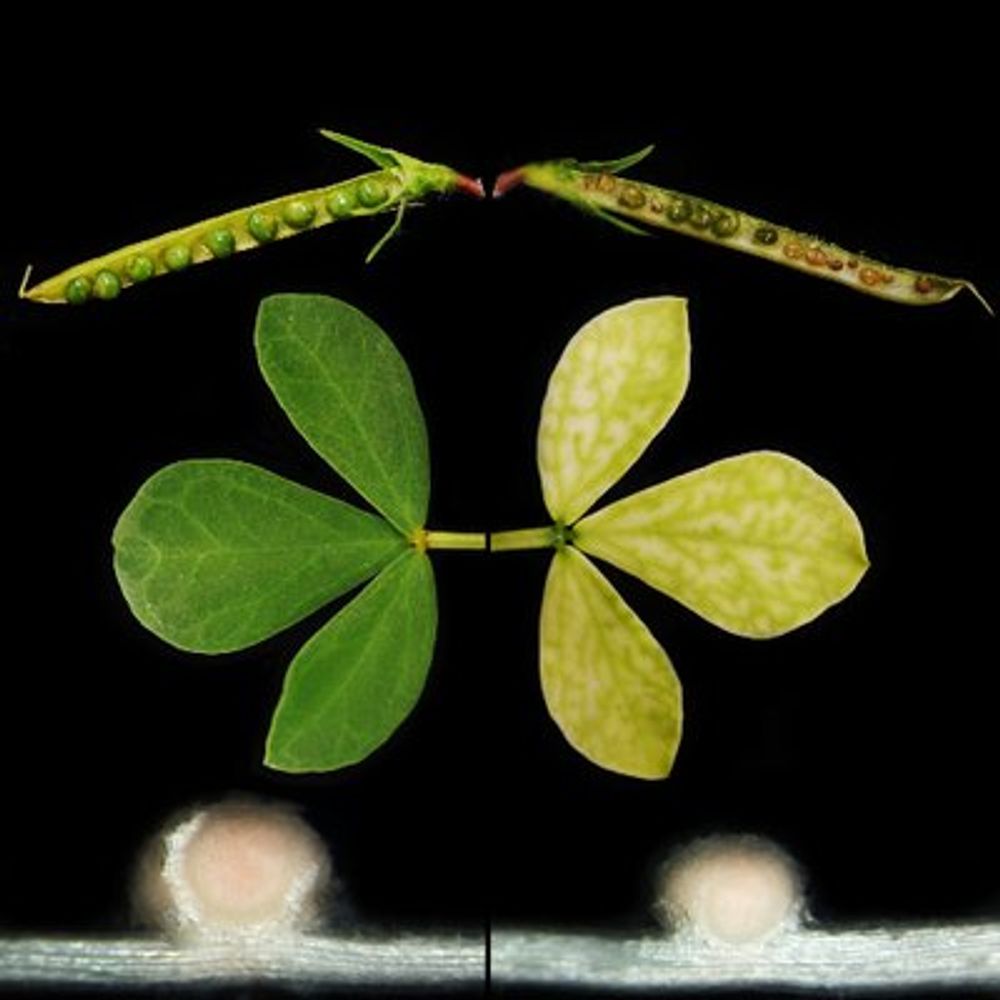
👀 A Specific Sinorhizobium Flagellin Suppresses Legume Nodulation Through Immune Activation doi.org/10.1111/pbi....

A Specific Sinorhizobium Flagellin Suppresses Legume Nodulation Through Immune Activation
Bacterial flagellin-activated immunity plays a crucial role in shaping plant-microbe interactions, leading to either parasitism, mutualism, or commensalism. In the legume-rhizobium symbiosis, while i....
doi.org
February 6, 2026 at 8:38 AM
👀 A Specific Sinorhizobium Flagellin Suppresses Legume Nodulation Through Immune Activation doi.org/10.1111/pbi....
Reposted by Freddy Boutrot
Leaf it to science: Uncovering plant immune systems through technological advances (Xinnian Dong) doi.org/10.1093/plph... #PlantScience @aspbofficial

February 4, 2026 at 3:44 PM
Leaf it to science: Uncovering plant immune systems through technological advances (Xinnian Dong) doi.org/10.1093/plph... #PlantScience @aspbofficial
Reposted by Freddy Boutrot
⚙️🦠 REVIEW 🦠⚙️
Turley & Faulkner explore the function of plant heavy metal-associated domain-containing proteins and speculate about their functions at plasmodesmata by drawing from plant–pathogen interaction studies.
🔗 doi.org/10.1093/jxb/...
#PlantScience 🧪 Christine Faulkner
Turley & Faulkner explore the function of plant heavy metal-associated domain-containing proteins and speculate about their functions at plasmodesmata by drawing from plant–pathogen interaction studies.
🔗 doi.org/10.1093/jxb/...
#PlantScience 🧪 Christine Faulkner

February 3, 2026 at 10:29 AM
⚙️🦠 REVIEW 🦠⚙️
Turley & Faulkner explore the function of plant heavy metal-associated domain-containing proteins and speculate about their functions at plasmodesmata by drawing from plant–pathogen interaction studies.
🔗 doi.org/10.1093/jxb/...
#PlantScience 🧪 Christine Faulkner
Turley & Faulkner explore the function of plant heavy metal-associated domain-containing proteins and speculate about their functions at plasmodesmata by drawing from plant–pathogen interaction studies.
🔗 doi.org/10.1093/jxb/...
#PlantScience 🧪 Christine Faulkner
Reposted by Freddy Boutrot
Please share! We are looking for a postdoctoral scientist (2 years, extension possible) starting from 01/05/2026 at
@ipbhalle.bsky.social! The project focuses on plant immune receptor biochemistry and structural biology.
Deadline 09/03/2026.
Apply at: ipb-halle.mhm.jobs/11-postdocto...
@ipbhalle.bsky.social! The project focuses on plant immune receptor biochemistry and structural biology.
Deadline 09/03/2026.
Apply at: ipb-halle.mhm.jobs/11-postdocto...

Postdoctoral position in biology (m/f/d) (2/2026)
Leibniz Institute of Plant Biochemistry (Halle) offers a Postdoctoral position in Biology
ipb-halle.mhm.jobs
February 5, 2026 at 9:06 AM
Please share! We are looking for a postdoctoral scientist (2 years, extension possible) starting from 01/05/2026 at
@ipbhalle.bsky.social! The project focuses on plant immune receptor biochemistry and structural biology.
Deadline 09/03/2026.
Apply at: ipb-halle.mhm.jobs/11-postdocto...
@ipbhalle.bsky.social! The project focuses on plant immune receptor biochemistry and structural biology.
Deadline 09/03/2026.
Apply at: ipb-halle.mhm.jobs/11-postdocto...
Reposted by Freddy Boutrot

Join us in Toulouse !!

[#Job]📢Post-doc position in protein interactomics of Sclerotinia effectors!
▶️We are seeking a motivated postdoc researcher to join the LoSica consortium, project aimed at improving disease resistance in Brassica crops through the identification of susceptibility factors
🔗 jobs.inrae.fr/en/ot-27655
▶️We are seeking a motivated postdoc researcher to join the LoSica consortium, project aimed at improving disease resistance in Brassica crops through the identification of susceptibility factors
🔗 jobs.inrae.fr/en/ot-27655

February 3, 2026 at 10:35 PM
Join us in Toulouse !!
Reposted by Freddy Boutrot
🗣️ 𝐼𝑛 𝑐𝑜𝑛𝑣𝑒𝑟𝑠𝑎𝑡𝑖𝑜𝑛 𝑤𝑖𝑡ℎ 𝐃𝐫. 𝐂𝐲𝐫𝐢𝐥 𝐙𝐢𝐩𝐟𝐞𝐥
Cyril Zipfel, a leading voice in plant immunity, reflects on plant immune recognition, his scientific journey, and what’s next for the field 🌱🧬
interviewed by @luisdeluna.bsky.social
👉 doi.org/10.1111/tpj.70688
Cyril Zipfel, a leading voice in plant immunity, reflects on plant immune recognition, his scientific journey, and what’s next for the field 🌱🧬
interviewed by @luisdeluna.bsky.social
👉 doi.org/10.1111/tpj.70688

February 3, 2026 at 11:30 AM
🗣️ 𝐼𝑛 𝑐𝑜𝑛𝑣𝑒𝑟𝑠𝑎𝑡𝑖𝑜𝑛 𝑤𝑖𝑡ℎ 𝐃𝐫. 𝐂𝐲𝐫𝐢𝐥 𝐙𝐢𝐩𝐟𝐞𝐥
Cyril Zipfel, a leading voice in plant immunity, reflects on plant immune recognition, his scientific journey, and what’s next for the field 🌱🧬
interviewed by @luisdeluna.bsky.social
👉 doi.org/10.1111/tpj.70688
Cyril Zipfel, a leading voice in plant immunity, reflects on plant immune recognition, his scientific journey, and what’s next for the field 🌱🧬
interviewed by @luisdeluna.bsky.social
👉 doi.org/10.1111/tpj.70688
Reposted by Freddy Boutrot

Apoplast multi-omics profiling during fungal infection uncovers new players of basal and early induced immunity https://www.biorxiv.org/content/10.64898/2026.01.28.702280v1
January 30, 2026 at 3:02 PM
Apoplast multi-omics profiling during fungal infection uncovers new players of basal and early induced immunity https://www.biorxiv.org/content/10.64898/2026.01.28.702280v1
Reposted by Freddy Boutrot
NEW H. H. Flor Distinguished Review: "The Extended Plant Immune System," by Corné M. J. Pieterse. Read the open access review in MPMI: https://doi.org/10.1094/MPMI-10-25-0144-HH

January 30, 2026 at 11:39 PM
NEW H. H. Flor Distinguished Review: "The Extended Plant Immune System," by Corné M. J. Pieterse. Read the open access review in MPMI: https://doi.org/10.1094/MPMI-10-25-0144-HH
Reposted by Freddy Boutrot

Please share!
My group at @zmbp-tuebingen.bsky.social is offering a post-doctoral position (4 years). We look for a structural biologist with experience in Cryo-EM/Cryo-ET to investigate the mechanisms of host invasion by pathogenic fungi. Deadline February 28th!
uni-tuebingen.de/universitaet...
My group at @zmbp-tuebingen.bsky.social is offering a post-doctoral position (4 years). We look for a structural biologist with experience in Cryo-EM/Cryo-ET to investigate the mechanisms of host invasion by pathogenic fungi. Deadline February 28th!
uni-tuebingen.de/universitaet...

January 30, 2026 at 1:56 PM
Please share!
My group at @zmbp-tuebingen.bsky.social is offering a post-doctoral position (4 years). We look for a structural biologist with experience in Cryo-EM/Cryo-ET to investigate the mechanisms of host invasion by pathogenic fungi. Deadline February 28th!
uni-tuebingen.de/universitaet...
My group at @zmbp-tuebingen.bsky.social is offering a post-doctoral position (4 years). We look for a structural biologist with experience in Cryo-EM/Cryo-ET to investigate the mechanisms of host invasion by pathogenic fungi. Deadline February 28th!
uni-tuebingen.de/universitaet...
Reposted by Freddy Boutrot

FoldMason is out now in @science.org. It generates accurate multiple structure alignments for thousands of protein structures in seconds. Great work by Cameron L. M. Gilchrist and @milot.bsky.social.
📄 www.science.org/doi/10.1126/...
🌐 search.foldseek.com/foldmason
💾 github.com/steineggerla...
📄 www.science.org/doi/10.1126/...
🌐 search.foldseek.com/foldmason
💾 github.com/steineggerla...

Multiple protein structure alignment at scale with FoldMason
Protein structure is conserved beyond sequence, making multiple structural alignment (MSTA) essential for analyzing distantly related proteins. Computational prediction methods have vastly extended ou...
www.science.org
January 30, 2026 at 6:11 AM
FoldMason is out now in @science.org. It generates accurate multiple structure alignments for thousands of protein structures in seconds. Great work by Cameron L. M. Gilchrist and @milot.bsky.social.
📄 www.science.org/doi/10.1126/...
🌐 search.foldseek.com/foldmason
💾 github.com/steineggerla...
📄 www.science.org/doi/10.1126/...
🌐 search.foldseek.com/foldmason
💾 github.com/steineggerla...
Reposted by Freddy Boutrot

Calling all OrthoFinder users!
We’ve just released GLADE, a tool to infer gene gains, losses, duplications, and ancestral genomes across a phylogeny.
GLADE runs directly on OrthoFinder results.
www.biorxiv.org/content/10.6...
github.com/lauriebelch/...
(1/10)
We’ve just released GLADE, a tool to infer gene gains, losses, duplications, and ancestral genomes across a phylogeny.
GLADE runs directly on OrthoFinder results.
www.biorxiv.org/content/10.6...
github.com/lauriebelch/...
(1/10)
www.biorxiv.org
January 29, 2026 at 12:07 PM
Calling all OrthoFinder users!
We’ve just released GLADE, a tool to infer gene gains, losses, duplications, and ancestral genomes across a phylogeny.
GLADE runs directly on OrthoFinder results.
www.biorxiv.org/content/10.6...
github.com/lauriebelch/...
(1/10)
We’ve just released GLADE, a tool to infer gene gains, losses, duplications, and ancestral genomes across a phylogeny.
GLADE runs directly on OrthoFinder results.
www.biorxiv.org/content/10.6...
github.com/lauriebelch/...
(1/10)
Reposted by Freddy Boutrot
1/12 I'm ecstatic to share my preprint on legume NLR tissue expression! We investigated the NLRomes of 28 legumes + 4 outgroups, examining tissue expression across 7 legume species. Paper thread below 🧵👇
@thesainsburylab.bsky.social @itqbnova.bsky.social
🔗https://doi.org/10.64898/2026.01.25.701577
@thesainsburylab.bsky.social @itqbnova.bsky.social
🔗https://doi.org/10.64898/2026.01.25.701577

January 29, 2026 at 11:06 AM
1/12 I'm ecstatic to share my preprint on legume NLR tissue expression! We investigated the NLRomes of 28 legumes + 4 outgroups, examining tissue expression across 7 legume species. Paper thread below 🧵👇
@thesainsburylab.bsky.social @itqbnova.bsky.social
🔗https://doi.org/10.64898/2026.01.25.701577
@thesainsburylab.bsky.social @itqbnova.bsky.social
🔗https://doi.org/10.64898/2026.01.25.701577
S2-PepAnalyst: A Web Tool for Predicting Plant Small Signalling Peptides doi.org/10.1111/pbi....
onlinelibrary.wiley.com
January 29, 2026 at 9:45 AM
S2-PepAnalyst: A Web Tool for Predicting Plant Small Signalling Peptides doi.org/10.1111/pbi....
Reposted by Freddy Boutrot
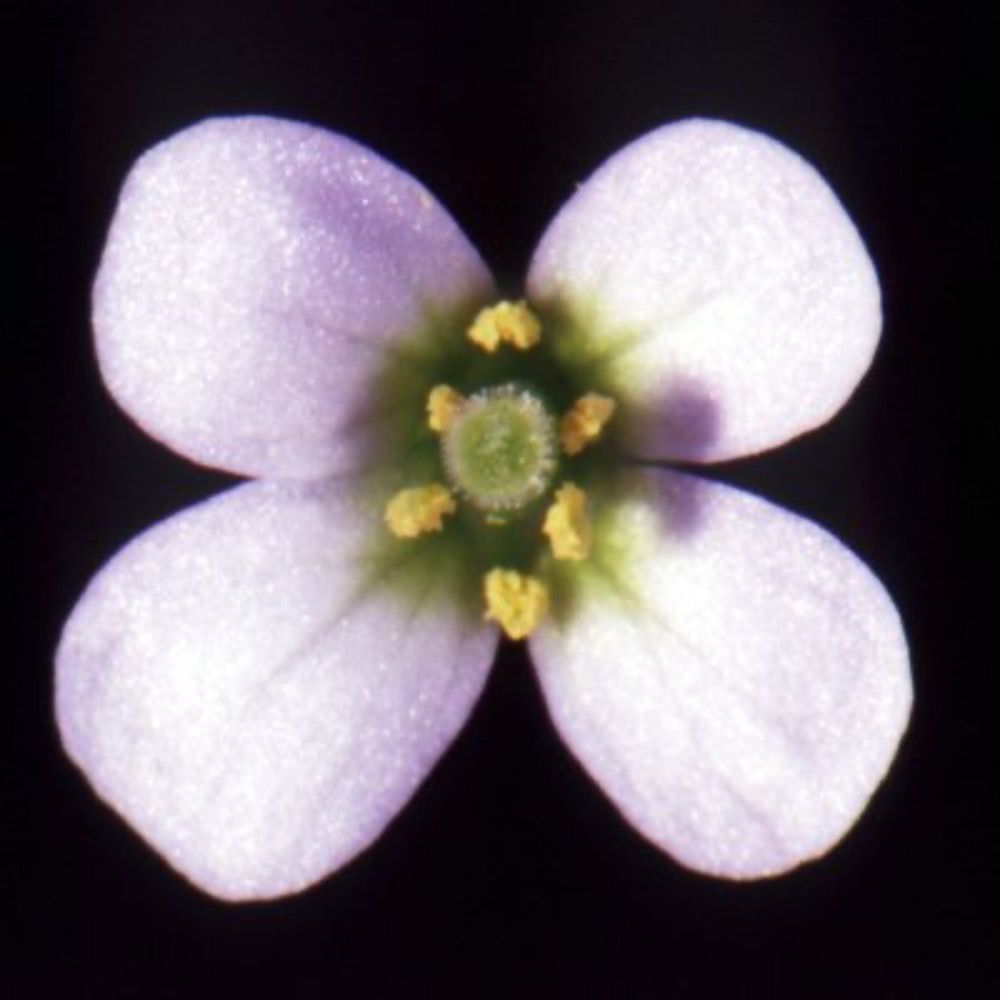
Great news — forward looking voices are finally prevailing in the discussion on genome editing in crop plants!

Plant Breeding Innovation Clears Next Hurdle for EU NGT Framework
https://www.europesays.com/2737143/
The European Parliament’s Committee on the Environment (ENVI) has approved, by a strong majority, the compromise text on…
https://www.europesays.com/2737143/
The European Parliament’s Committee on the Environment (ENVI) has approved, by a strong majority, the compromise text on…

Plant Breeding Innovation Clears Next Hurdle for EU NGT Framework - EUROPE SAYS
The European Parliament’s Committee on the Environment (ENVI) has approved, by a strong majority, the compromise text on the NGT Regulation agreed in trilogue
www.europesays.com
January 28, 2026 at 1:30 PM
Great news — forward looking voices are finally prevailing in the discussion on genome editing in crop plants!
Reposted by Freddy Boutrot

New Preprint: NLR immune receptors can exhibit tissue-specific expression patterns across legume species (2026)
https://www.tsl.ac.uk/publications/163011
https://www.tsl.ac.uk/publications/163011

bioRxiv: NLR immune receptors can exhibit tissue-specific expression patterns across legume species (2026)
Pathogen pressure threatens legume crop productivity worldwide. Nucleotide-binding leucine-rich repeat (NLR) immune receptors serve as crucial plant resistance genes, recognizing pathogens and triggering immunity. However, the extent and patterns of NLR expression in different tissues and organs, notably across evolutionary time, remain largely uncharacterized. To investigate tissue-specificity of NLR expression in the Fabaceae (legumes), we conducted comparative analyses integrating phylogenomics and transcriptomics in root and shoot tissues across different legume species. The NLR repertoires of 28 legumes were grouped into five monophyletic clades: coiled-coil NLR (CC-NLR), Toll/interleukin-1 receptor NLR (TIR-NLR), G10-subclade CC NLR (CCG10-NLR), RESISTANCE TO POWDERY MILDEW 8-like CC NLR (CCR-NLR), and TIR-NB-ARC-like β-propeller WD40/tetratricopeptide repeats (TNPs). Most legume NLRs belonged to CC-NLR and TIR-NLR clades, followed by CCG10-NLR, CCR-NLR, and TNP clades. In seven of these species, comparative analysis of NLR expression in leaves versus roots revealed that over half (~57%) of expressed NLR genes showed predominant expression in one tissue: 34% in roots (451/1336), and 23% in leaves (311/1336). We identified 324 root-specific NLRs, 171 leaf-specific NLRs, and 841 non-specific NLRs, with an average tissue specificity per species of 32%. The closely related species grass pea (Lathyrus sativus) and pea (Pisum sativum) were an exception, showing higher levels of leaf-specific rather than root-specific NLR expression. We also identified conserved tissue expression patterns across legume species, resulting in a comprehensive resource describing tissue expression bias, enrichment, and specificity for 113 phylogenetic NLR subclasses. These legume NLR repertoires will support comparative studies between species and inform precision-breeding programs considering tissue expression patterns.
doi.org
January 28, 2026 at 10:47 AM
New Preprint: NLR immune receptors can exhibit tissue-specific expression patterns across legume species (2026)
https://www.tsl.ac.uk/publications/163011
https://www.tsl.ac.uk/publications/163011
Reposted by Freddy Boutrot

Reposted by Freddy Boutrot
The Sainsbury Laboratory is delighted to announce that it has received $2 million in funding as part of Google.org's $20 million AI for Science Fund to support organizations focused on cutting-edge AI for science research.
@kamounlab.bsky.social @amiralito.bsky.social
www.tsl.ac.uk/news/the-sai...
@kamounlab.bsky.social @amiralito.bsky.social
www.tsl.ac.uk/news/the-sai...

January 26, 2026 at 5:34 PM
The Sainsbury Laboratory is delighted to announce that it has received $2 million in funding as part of Google.org's $20 million AI for Science Fund to support organizations focused on cutting-edge AI for science research.
@kamounlab.bsky.social @amiralito.bsky.social
www.tsl.ac.uk/news/the-sai...
@kamounlab.bsky.social @amiralito.bsky.social
www.tsl.ac.uk/news/the-sai...
Reposted by Freddy Boutrot

Our first wheat stripe rust avirulence (?!) effector is published "Defence Recognition of a Stripe Rust Fungal Effector Is Uncoupled from Disease Outcomes in Wheat" apsjournals.apsnet.org/doi/10.1094/.... It is not what we expected but this is the most fun part about science. 1/n

Defence Recognition of a Stripe Rust Fungal Effector Is Uncoupled from Disease Outcomes in Wheat | Molecular Plant-Microbe Interactions®
Plant resistance (R) and pathogen avirulence (Avr) gene interactions are central to pathogen recognition and disease resistance in crops. Functional characterisation of recognised Avr effectors of Puc...
apsjournals.apsnet.org
January 26, 2026 at 8:50 PM
Our first wheat stripe rust avirulence (?!) effector is published "Defence Recognition of a Stripe Rust Fungal Effector Is Uncoupled from Disease Outcomes in Wheat" apsjournals.apsnet.org/doi/10.1094/.... It is not what we expected but this is the most fun part about science. 1/n
Reposted by Freddy Boutrot

📢 2 PhD Positions Available in Plant Immune Receptor Bioengineering at Imperial College London
🌱 Start: Oct 2026
📅 Deadline: 10 Feb 2026
🇬🇧 UK/settled status only
💰 Fully funded (48 months)
ℹ️ Info: shorturl.at/po61I
#PlantImmunity #PlantPathology #SyntheticBiology
🙏 Share with interested candidates!
🌱 Start: Oct 2026
📅 Deadline: 10 Feb 2026
🇬🇧 UK/settled status only
💰 Fully funded (48 months)
ℹ️ Info: shorturl.at/po61I
#PlantImmunity #PlantPathology #SyntheticBiology
🙏 Share with interested candidates!
PhD Opportunities | Faculty of Natural Sciences | Imperial College London
www.imperial.ac.uk
January 23, 2026 at 9:33 AM
📢 2 PhD Positions Available in Plant Immune Receptor Bioengineering at Imperial College London
🌱 Start: Oct 2026
📅 Deadline: 10 Feb 2026
🇬🇧 UK/settled status only
💰 Fully funded (48 months)
ℹ️ Info: shorturl.at/po61I
#PlantImmunity #PlantPathology #SyntheticBiology
🙏 Share with interested candidates!
🌱 Start: Oct 2026
📅 Deadline: 10 Feb 2026
🇬🇧 UK/settled status only
💰 Fully funded (48 months)
ℹ️ Info: shorturl.at/po61I
#PlantImmunity #PlantPathology #SyntheticBiology
🙏 Share with interested candidates!
Reposted by Freddy Boutrot

🌱🌱🌱 Laurier Biology ( @laurierbiology.bsky.social ) is excited to host Dr. Tom DeFalco ( @westernu.ca ) on Friday (Jan 23rd).
He will be delivering his seminar on plant receptor kinases at 2:30 PM EST.
Please DM for the Zoom registration link! Hope to see you there.
He will be delivering his seminar on plant receptor kinases at 2:30 PM EST.
Please DM for the Zoom registration link! Hope to see you there.

January 21, 2026 at 8:05 PM
🌱🌱🌱 Laurier Biology ( @laurierbiology.bsky.social ) is excited to host Dr. Tom DeFalco ( @westernu.ca ) on Friday (Jan 23rd).
He will be delivering his seminar on plant receptor kinases at 2:30 PM EST.
Please DM for the Zoom registration link! Hope to see you there.
He will be delivering his seminar on plant receptor kinases at 2:30 PM EST.
Please DM for the Zoom registration link! Hope to see you there.
Reposted by Freddy Boutrot

Happy New Year all. I know it's been a draining and difficult year for science in general, but wanted to share some good news: our intrabody paper has now been published in Science Advances with lots of additional data.
www.science.org/doi/10.1126/...
www.science.org/doi/10.1126/...

AI-assisted protein design to rapidly convert antibody sequences to intrabodies targeting diverse peptides and histone modifications
AI-powered pipeline converts antibodies into functional intrabodies, enabling live-cell imaging of peptides and histone marks.
www.science.org
January 19, 2026 at 5:43 PM
Happy New Year all. I know it's been a draining and difficult year for science in general, but wanted to share some good news: our intrabody paper has now been published in Science Advances with lots of additional data.
www.science.org/doi/10.1126/...
www.science.org/doi/10.1126/...
Reposted by Freddy Boutrot
New Publication: PRRs and NLRs sans frontières: advances and challenges in transfer of immune receptors between plant species (2026)
https://www.tsl.ac.uk/publications/162118
https://www.tsl.ac.uk/publications/162118

Curr Opin Biotechnol: PRRs and NLRs sans frontières: advances and challenges in transfer of immune receptors between plant species (2026)
Plants employ cell-surface and intracellular immune receptors to perceive pathogens and activate defense responses. Recent advances in mechanistic understanding of how cell-surface and intracellular immune receptors convert recognition of molecular patterns or effectors into defense activation, combined with the knowledge of receptor repertoire variation both within and between species, allow transfer of immune receptors between species to increase the spectrum of recognition specificities. Here, we summarize recent progress in the functional transfer of immune receptors within and between plant families. We also discuss challenges that limit the transferability of intracellular immune receptors, including the requirement of additional host factors or downstream components and their incompatibility between donor and recipient species. Finally, we provide an overview of future perspectives for bioengineering disease-resistant crops through immune receptor transfer.
doi.org
January 15, 2026 at 9:53 AM
New Publication: PRRs and NLRs sans frontières: advances and challenges in transfer of immune receptors between plant species (2026)
https://www.tsl.ac.uk/publications/162118
https://www.tsl.ac.uk/publications/162118
Reposted by Freddy Boutrot
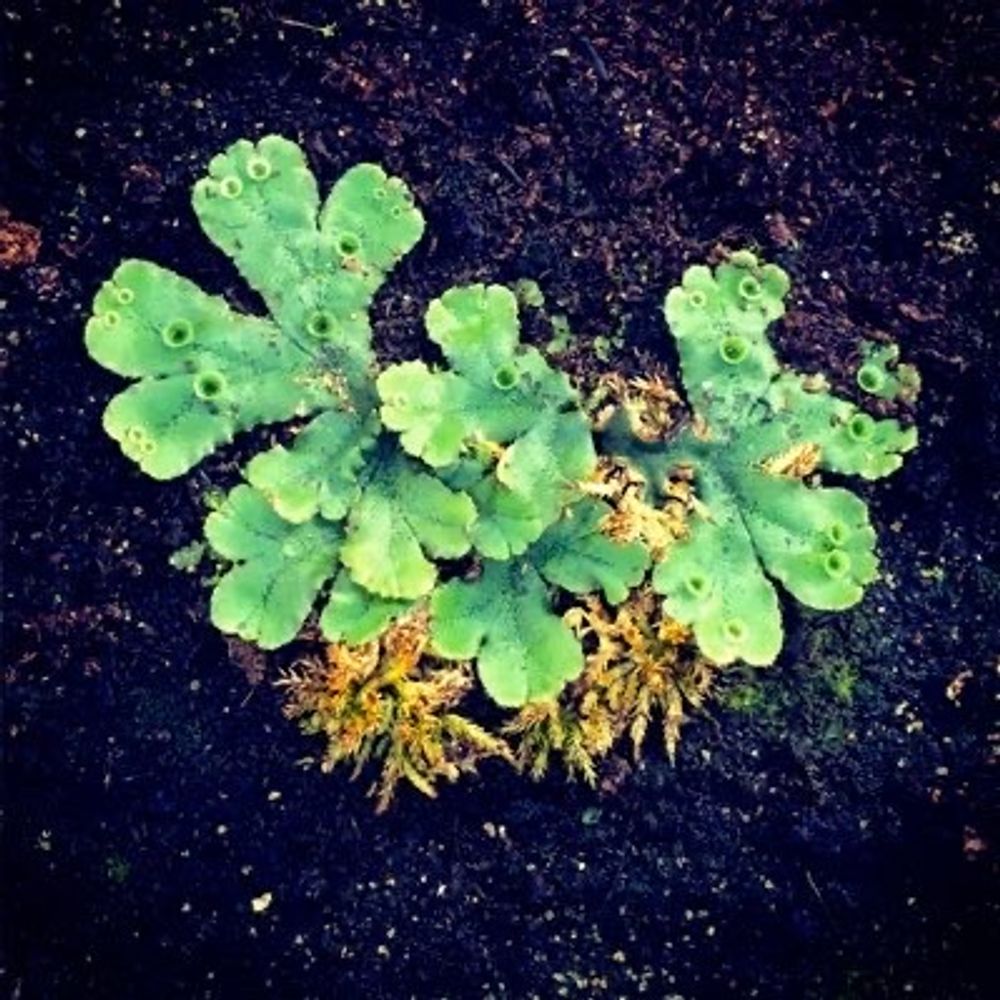
We have an open POSTDOC position to explore Marchantia immune receptor biology that is closing on the 18th of Jan. Apply using the link below, and/or email me for more details. www.jic.ac.uk/vacancies/po...

Postdoctoral Researcher (Carella Group) | John Innes Centre
An exciting opportunity has arisen for a Postdoctoral Researcher to join the Carella Group at the John Innes Centre, working on cutting-edge science in the field of Evo-MPMI (Evolutionary Molecular…
www.jic.ac.uk
January 13, 2026 at 11:31 AM
We have an open POSTDOC position to explore Marchantia immune receptor biology that is closing on the 18th of Jan. Apply using the link below, and/or email me for more details. www.jic.ac.uk/vacancies/po...
Reposted by Freddy Boutrot
Our new article is now online on @natplants.nature.com! ✨
We identified and characterised AvrPm4 and SvrPm4, a pair of powdery mildew effectors controlling avirulence on the wheat kinase fusion resistance protein Pm4 🌾 check it out ➡️ www.nature.com/articles/s41...
We identified and characterised AvrPm4 and SvrPm4, a pair of powdery mildew effectors controlling avirulence on the wheat kinase fusion resistance protein Pm4 🌾 check it out ➡️ www.nature.com/articles/s41...

January 12, 2026 at 3:27 PM
Our new article is now online on @natplants.nature.com! ✨
We identified and characterised AvrPm4 and SvrPm4, a pair of powdery mildew effectors controlling avirulence on the wheat kinase fusion resistance protein Pm4 🌾 check it out ➡️ www.nature.com/articles/s41...
We identified and characterised AvrPm4 and SvrPm4, a pair of powdery mildew effectors controlling avirulence on the wheat kinase fusion resistance protein Pm4 🌾 check it out ➡️ www.nature.com/articles/s41...