


Ken Shirasu
@shirasulab.bsky.social
Scientist@RIKEN, Univ of Tokyo,
Studying plant-microbe interactions, parasitic plants, plant immunity
http://plantimmunity.riken.jp/index.html
Studying plant-microbe interactions, parasitic plants, plant immunity
http://plantimmunity.riken.jp/index.html
Reposted by Ken Shirasu
The Bart Lab at UC Berkeley is looking for a postdoc. Please share!

February 17, 2026 at 12:03 AM
The Bart Lab at UC Berkeley is looking for a postdoc. Please share!
Reposted by Ken Shirasu
Out in @science.org this week, two fungal enzymes synthesise DHHA, which controls cell wall porosity and turgor in plant pathogenic fungi www.science.org/doi/10.1126/...
#mycology
#plantscience
#mycology
#plantscience

Dihydroxyhexanoic acid biosynthesis controls turgor in pathogenic fungi
Many plant pathogenic fungi penetrate host surfaces mechanically, using turgor pressure generated by specialized infection cells called appressoria. These appressoria develop semipermeable cell walls ...
www.science.org
February 13, 2026 at 9:46 AM
Out in @science.org this week, two fungal enzymes synthesise DHHA, which controls cell wall porosity and turgor in plant pathogenic fungi www.science.org/doi/10.1126/...
#mycology
#plantscience
#mycology
#plantscience
Reposted by Ken Shirasu
NSF needs to hear from you. Among other points, I suggested: keep politics out of science; stop using the threat of cancelling scientific grants to try to control universities; increase NSF funding for fundamental research. Pls send around. Deadline is January 27. Thanks
www.nsf.gov/od/updates/n...
www.nsf.gov/od/updates/n...

NSF seeks public input on its Fiscal Year (FY) 2026–2030 NSF Strategic Plan
www.nsf.gov
January 17, 2026 at 2:41 AM
NSF needs to hear from you. Among other points, I suggested: keep politics out of science; stop using the threat of cancelling scientific grants to try to control universities; increase NSF funding for fundamental research. Pls send around. Deadline is January 27. Thanks
www.nsf.gov/od/updates/n...
www.nsf.gov/od/updates/n...
Reposted by Ken Shirasu
In @science.org this week:
The interaction between flavonoids and rhizobial Nod factors during legume symbiosis
www.science.org/doi/10.1126/...
#plantscience
The interaction between flavonoids and rhizobial Nod factors during legume symbiosis
www.science.org/doi/10.1126/...
#plantscience

The molecular basis of the binding and specific activation of rhizobial NodD by flavonoids
The specific partnership between legumes and rhizobia relies on a chemical dialogue. Plant flavonoids activate the bacterial transcription factor NodD, which triggers production of Nod factors that ar...
www.science.org
January 9, 2026 at 4:07 PM
In @science.org this week:
The interaction between flavonoids and rhizobial Nod factors during legume symbiosis
www.science.org/doi/10.1126/...
#plantscience
The interaction between flavonoids and rhizobial Nod factors during legume symbiosis
www.science.org/doi/10.1126/...
#plantscience
Reposted by Ken Shirasu

Horizontal acquisition of nicotine catabolism gene cluster drives the assembly of tobacco root microbiota community https://www.biorxiv.org/content/10.64898/2025.12.24.696441v1
December 26, 2025 at 12:16 AM
Horizontal acquisition of nicotine catabolism gene cluster drives the assembly of tobacco root microbiota community https://www.biorxiv.org/content/10.64898/2025.12.24.696441v1
Reposted by Ken Shirasu
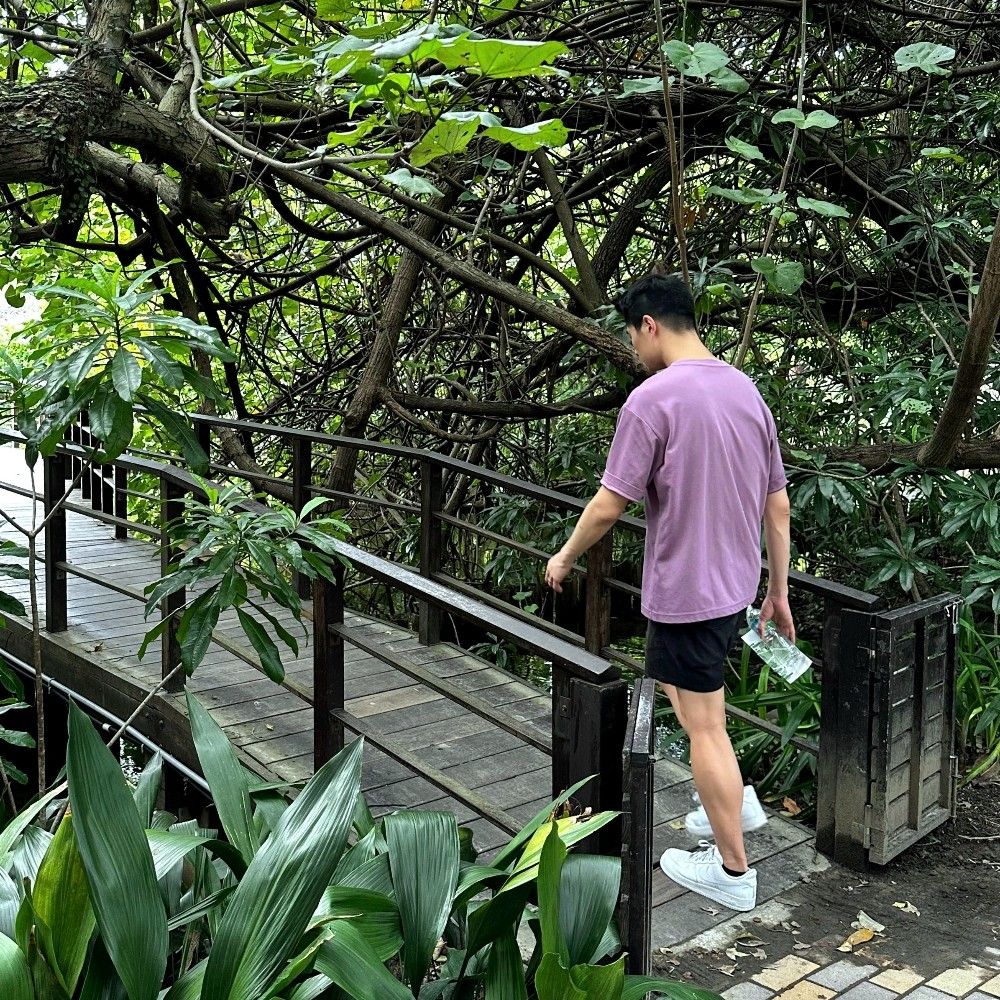
Many thanks to the editors for the invitation. Free access tᴏ the article: authors.elsevier.com/a/1mIlz3PtAV...
authors.elsevier.com
December 22, 2025 at 2:24 AM
Many thanks to the editors for the invitation. Free access tᴏ the article: authors.elsevier.com/a/1mIlz3PtAV...
Well done, Bruno!
We wrote a review on the mᴏdular properties of plant cell-surface receptors, and how this knowledge can be used to reprogram and engineer them:
www.sciencedirect.com/science/arti...
www.sciencedirect.com/science/arti...

A guide to designing cell-surface receptors in plants
Cell-surface receptors perceive environmental cues and trigger appropriate responses. In plants, these receptors comprise ectodomain, juxta-membrane, …
www.sciencedirect.com
December 22, 2025 at 2:25 AM
Well done, Bruno!
Reposted by Ken Shirasu
I’m excited to share a new preprint from Carella group #CarellaCapybaras! biorxiv.org/content/10.6...
In this study, we show molecular co-evolution of two popular nonhost resistance genes in plants, RAR1 and SGT1, in ferns. For a quick read before Christmas, here’s the thread:
In this study, we show molecular co-evolution of two popular nonhost resistance genes in plants, RAR1 and SGT1, in ferns. For a quick read before Christmas, here’s the thread:
December 19, 2025 at 12:24 PM
I’m excited to share a new preprint from Carella group #CarellaCapybaras! biorxiv.org/content/10.6...
In this study, we show molecular co-evolution of two popular nonhost resistance genes in plants, RAR1 and SGT1, in ferns. For a quick read before Christmas, here’s the thread:
In this study, we show molecular co-evolution of two popular nonhost resistance genes in plants, RAR1 and SGT1, in ferns. For a quick read before Christmas, here’s the thread:
Reposted by Ken Shirasu

The rare, mushroom-like Balanophora plant surprises researchers with their genetic makeup and unconventional role of plastids in biosynthesis, despite being entirely parasitic of a select few trees. New study in @newphyt.bsky.social 👇 www.oist.jp/news-center/...

The evolutionary mysteries of a rare parasitic plant
New study maps the strange genomes of Asia-Pacific Balanophora species, giving new insights into the evolution of parasitic plants and an unconventional role of plastids.
www.oist.jp
December 12, 2025 at 2:58 AM
The rare, mushroom-like Balanophora plant surprises researchers with their genetic makeup and unconventional role of plastids in biosynthesis, despite being entirely parasitic of a select few trees. New study in @newphyt.bsky.social 👇 www.oist.jp/news-center/...

Reposted by Ken Shirasu

How do plants fight disease? 🌱 #NASmember Jane Parker studies NLR proteins that help plants sense attackers and launch powerful immune defenses. She shares her latest findings on how these proteins signal plants to resist disease in a new @pnas.org QnAs: www.pnas.org/doi/10.1073/...

November 26, 2025 at 6:00 PM
How do plants fight disease? 🌱 #NASmember Jane Parker studies NLR proteins that help plants sense attackers and launch powerful immune defenses. She shares her latest findings on how these proteins signal plants to resist disease in a new @pnas.org QnAs: www.pnas.org/doi/10.1073/...
Reposted by Ken Shirasu
Name badges all ready for kick off at the Stromlo Plant Pathogen (and Pests!) conference in Canberra at @biologyanu.bsky.social #strompath2025

November 26, 2025 at 9:06 PM
Name badges all ready for kick off at the Stromlo Plant Pathogen (and Pests!) conference in Canberra at @biologyanu.bsky.social #strompath2025
Reposted by Ken Shirasu
Privileged to have @yasukadota.bsky.social present at the Stromlo conference on the SCORE receptors … brilliant story. #strompath25

November 27, 2025 at 3:01 AM
Privileged to have @yasukadota.bsky.social present at the Stromlo conference on the SCORE receptors … brilliant story. #strompath25
Reposted by Ken Shirasu
Out First Release in @science.org this week:
A large scale analysis of the epigenetics of transposable elements in Arabidopsis shows transgenerational stability
www.science.org/doi/10.1126/...
#PlantScience
A large scale analysis of the epigenetics of transposable elements in Arabidopsis shows transgenerational stability
www.science.org/doi/10.1126/...
#PlantScience

Transposable elements are vectors of recurrent transgenerational epigenetic inheritance
DNA methylation loss at transposable elements (TEs) can affect neighboring genes and be epigenetically inherited in plants, yet the determinants and significance of this additional system of inheritan...
www.science.org
September 22, 2025 at 4:09 PM
Out First Release in @science.org this week:
A large scale analysis of the epigenetics of transposable elements in Arabidopsis shows transgenerational stability
www.science.org/doi/10.1126/...
#PlantScience
A large scale analysis of the epigenetics of transposable elements in Arabidopsis shows transgenerational stability
www.science.org/doi/10.1126/...
#PlantScience
Reposted by Ken Shirasu

Plant Science Research Weekly -- How parasitic plants avoid being parasitized (Science) @shirasulab.bsky.social (Summary by Mary Williams @PlantTeaching.bsky.social) buff.ly/KEgzFe5
#PlantaePSRW
#PlantaePSRW

How parasitic plants avoid being parasitized | Plantae
It’s not too difficult to envision how a plant recognizes something very different from itself, like a bacterium, oomycete, or fungus. It’s a bit less obvious how a plant recognizes another plant as…
buff.ly
November 17, 2025 at 8:15 PM
Plant Science Research Weekly -- How parasitic plants avoid being parasitized (Science) @shirasulab.bsky.social (Summary by Mary Williams @PlantTeaching.bsky.social) buff.ly/KEgzFe5
#PlantaePSRW
#PlantaePSRW
Congrats, Tatsuya!

We are pleased to announce that @tatsuyanobori.bsky.social has won the Young Investigator Award by the Japanese Society of Plant Physiologists.
The award ceremony and the recipient's lecture will take place at the next Tokyo Annual Meeting on 14 March 2026.
buff.ly/pemelQu
The award ceremony and the recipient's lecture will take place at the next Tokyo Annual Meeting on 14 March 2026.
buff.ly/pemelQu

November 10, 2025 at 6:41 AM
Congrats, Tatsuya!
Reposted by Ken Shirasu

In case you missed it, the clocks went back last night in the UK 🕰️
Do you think Chronophage at @corpuscambridge.bsky.social is enjoying the extra hour?
📸 Lloyd Mann
Do you think Chronophage at @corpuscambridge.bsky.social is enjoying the extra hour?
📸 Lloyd Mann

October 26, 2025 at 2:05 PM
In case you missed it, the clocks went back last night in the UK 🕰️
Do you think Chronophage at @corpuscambridge.bsky.social is enjoying the extra hour?
📸 Lloyd Mann
Do you think Chronophage at @corpuscambridge.bsky.social is enjoying the extra hour?
📸 Lloyd Mann

Reposted by Ken Shirasu
Read PCP Editors Satoko Yoshida and Takayuki Tohge's exciting collaborative work on parasitic plants (below).
And watch out for PCP's upcoming special issue on #ParasiticPlants (organised by Satoko Yoshida, Atsushi Okazawa, Thomas Spallek and Kaori Yoneyama) - out next year...!
And watch out for PCP's upcoming special issue on #ParasiticPlants (organised by Satoko Yoshida, Atsushi Okazawa, Thomas Spallek and Kaori Yoneyama) - out next year...!
Simon's mutant finally published! Well done, Satoko' lab with Harro, Tobimatsu, Tohge collaborations. Glucosylation of endogenous haustorium-inducing factors underpins kin avoidance in parasitic plants | Science www.science.org/doi/10.1126/...

Glucosylation of endogenous haustorium-inducing factors underpins kin avoidance in parasitic plants
Parasitic plants rarely attack themselves, suggesting the existence of a kin-avoidance mechanism. In the root parasitic plant Phtheirospermum japonicum, prehaustorium formation is triggered by host-se...
www.science.org
October 24, 2025 at 3:24 PM
Read PCP Editors Satoko Yoshida and Takayuki Tohge's exciting collaborative work on parasitic plants (below).
And watch out for PCP's upcoming special issue on #ParasiticPlants (organised by Satoko Yoshida, Atsushi Okazawa, Thomas Spallek and Kaori Yoneyama) - out next year...!
And watch out for PCP's upcoming special issue on #ParasiticPlants (organised by Satoko Yoshida, Atsushi Okazawa, Thomas Spallek and Kaori Yoneyama) - out next year...!
October 24, 2025 at 12:47 AM
It’s been 14 years since I uploaded a video on YouTube showing that Striga does not infect other members of the Orobanchaceae family.JSPS Fellow Simon came to Japan and carried out mutant screening to find mechanism and it was 10 years ago that the mutant was finally obtained. A long journey.
Simon's mutant finally published! Well done, Satoko' lab with Harro, Tobimatsu, Tohge collaborations. Glucosylation of endogenous haustorium-inducing factors underpins kin avoidance in parasitic plants | Science www.science.org/doi/10.1126/...
Glucosylation of endogenous haustorium-inducing factors underpins kin avoidance in parasitic plants
Parasitic plants rarely attack themselves, suggesting the existence of a kin-avoidance mechanism. In the root parasitic plant Phtheirospermum japonicum, prehaustorium formation is triggered by host-se...
www.science.org
October 24, 2025 at 12:46 AM
It’s been 14 years since I uploaded a video on YouTube showing that Striga does not infect other members of the Orobanchaceae family.JSPS Fellow Simon came to Japan and carried out mutant screening to find mechanism and it was 10 years ago that the mutant was finally obtained. A long journey.
Simon's mutant finally published! Well done, Satoko' lab with Harro, Tobimatsu, Tohge collaborations. Glucosylation of endogenous haustorium-inducing factors underpins kin avoidance in parasitic plants | Science www.science.org/doi/10.1126/...
Glucosylation of endogenous haustorium-inducing factors underpins kin avoidance in parasitic plants
Parasitic plants rarely attack themselves, suggesting the existence of a kin-avoidance mechanism. In the root parasitic plant Phtheirospermum japonicum, prehaustorium formation is triggered by host-se...
www.science.org
October 24, 2025 at 12:29 AM
Simon's mutant finally published! Well done, Satoko' lab with Harro, Tobimatsu, Tohge collaborations. Glucosylation of endogenous haustorium-inducing factors underpins kin avoidance in parasitic plants | Science www.science.org/doi/10.1126/...
Reposted by Ken Shirasu
Orobanche cumana in the USA!
The WSDA is on the hunt for a new crop pest, parasitic plant Orobanche cumana (aka 'SBR' or sunflower broomrape).
Thanks, iNaturalist community, O. cumana was ID'ed for the 1st time in North America in Yakima County. O. cumana is an agronomic pest and could destablilize native plant ecosystems.
Thanks, iNaturalist community, O. cumana was ID'ed for the 1st time in North America in Yakima County. O. cumana is an agronomic pest and could destablilize native plant ecosystems.

WSDA seeks help from sunflower growers after first North American detection of sunflower broomrape confirmed in Yakima
The Washington State Department of Agriculture (WSDA) has confirmed the first-ever North American detection of Orobanche cumana, commonly known as sunflower broomrape, in Yakima, WA. This marks the fi...
agr.wa.gov
October 22, 2025 at 8:15 PM
Orobanche cumana in the USA!
Reposted by Ken Shirasu

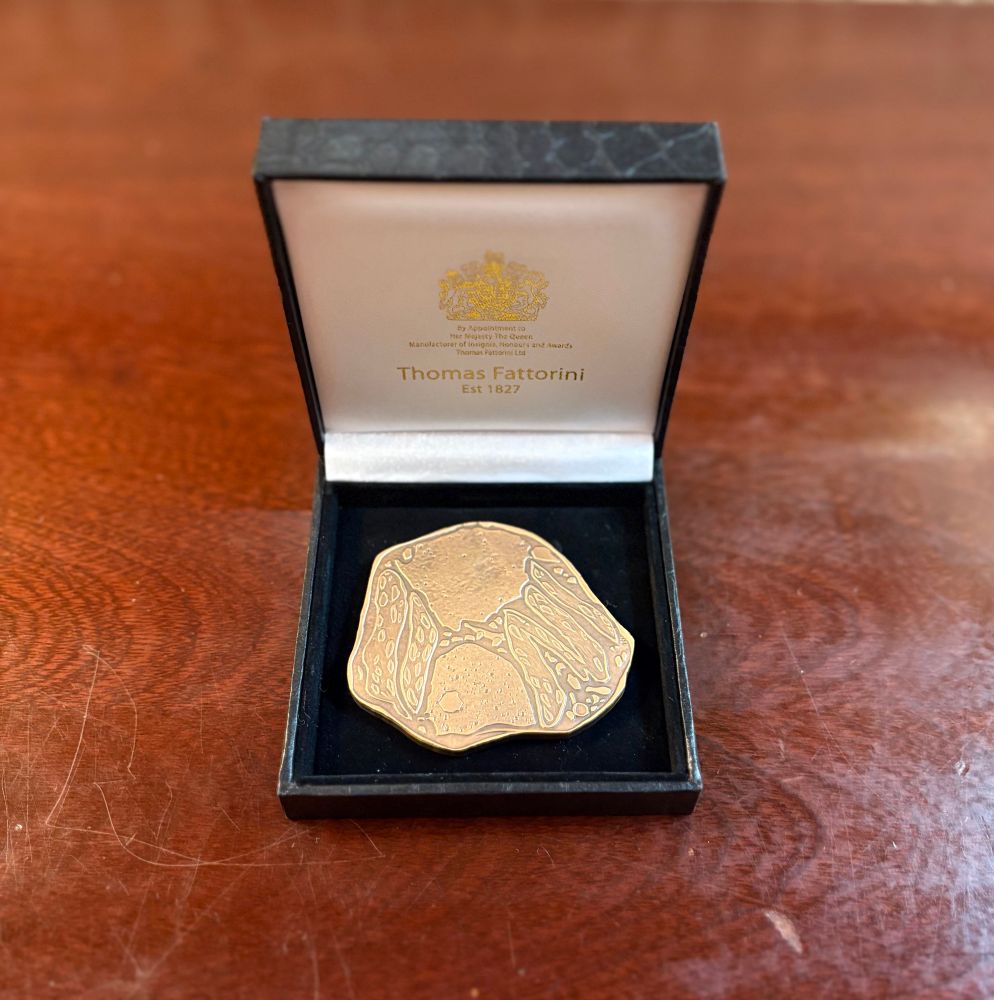
I had the honour of giving a talk at the Biochemical Society conference and finally received the medal. Grateful once again to everyone who made this possible! #BiochemEvent

October 22, 2025 at 9:17 AM
I had the honour of giving a talk at the Biochemical Society conference and finally received the medal. Grateful once again to everyone who made this possible! #BiochemEvent
Pomelo on tatami as the cover of RIKEN Research www.riken.jp/medialibrary...

October 20, 2025 at 3:49 AM
Pomelo on tatami as the cover of RIKEN Research www.riken.jp/medialibrary...