



Casper Kerrén
@ckerren.bsky.social
Postdoc Max Planck Institute for Human Cognitive and Brain Sciences.
Pinned

New preprint: Inference over hidden contexts shapes the geometry of conceptual knowledge for flexible behaviour.
In this pre-reg study, our core claim was that we don’t just learn stimulus-reward. We infer hidden context and that inference re-wires attention and neural state space on the fly.
1/8
In this pre-reg study, our core claim was that we don’t just learn stimulus-reward. We infer hidden context and that inference re-wires attention and neural state space on the fly.
1/8
New preprint: Inference over hidden contexts shapes the geometry of conceptual knowledge for flexible behaviour.
In this pre-reg study, our core claim was that we don’t just learn stimulus-reward. We infer hidden context and that inference re-wires attention and neural state space on the fly.
1/8
In this pre-reg study, our core claim was that we don’t just learn stimulus-reward. We infer hidden context and that inference re-wires attention and neural state space on the fly.
1/8
January 8, 2026 at 7:46 AM
New preprint: Inference over hidden contexts shapes the geometry of conceptual knowledge for flexible behaviour.
In this pre-reg study, our core claim was that we don’t just learn stimulus-reward. We infer hidden context and that inference re-wires attention and neural state space on the fly.
1/8
In this pre-reg study, our core claim was that we don’t just learn stimulus-reward. We infer hidden context and that inference re-wires attention and neural state space on the fly.
1/8
Reposted by Casper Kerrén
Brains are designed for dimensionality reduction.
Simulated Complex Cells Contribute to Object Recognition Through Representational Untangling
doi.org/10.1162/NECO...
#neuroscience
Simulated Complex Cells Contribute to Object Recognition Through Representational Untangling
doi.org/10.1162/NECO...
#neuroscience

Simulated Complex Cells Contribute to Object Recognition Through Representational Untangling
Abstract. The visual system performs a remarkable feat: it takes complex retinal activation patterns and decodes them for object recognition. This operation, termed “representational untangling,” orga...
doi.org
December 13, 2025 at 7:12 PM
Brains are designed for dimensionality reduction.
Simulated Complex Cells Contribute to Object Recognition Through Representational Untangling
doi.org/10.1162/NECO...
#neuroscience
Simulated Complex Cells Contribute to Object Recognition Through Representational Untangling
doi.org/10.1162/NECO...
#neuroscience
Reposted by Casper Kerrén
🚨 🆕 Preprint 🚨
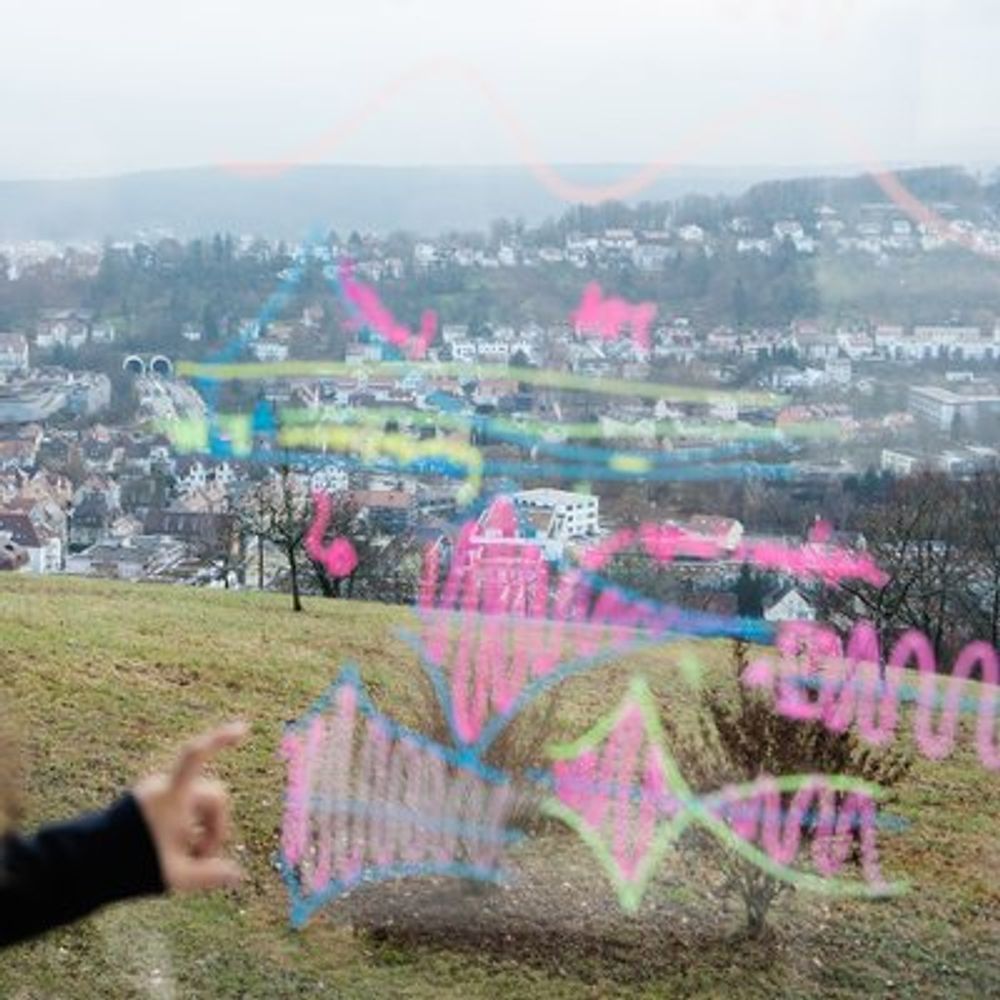
How does the brain represent natural images?
Using MEG + multivariate analysis, we disentangle contributions of retinotopy, spatial frequency, shape, and texture
Together, our results reveal how visual features jointly and dynamically support human object recognition.
link 👇
How does the brain represent natural images?
Using MEG + multivariate analysis, we disentangle contributions of retinotopy, spatial frequency, shape, and texture
Together, our results reveal how visual features jointly and dynamically support human object recognition.
link 👇

December 13, 2025 at 5:39 PM
🚨 🆕 Preprint 🚨
How does the brain represent natural images?
Using MEG + multivariate analysis, we disentangle contributions of retinotopy, spatial frequency, shape, and texture
Together, our results reveal how visual features jointly and dynamically support human object recognition.
link 👇
How does the brain represent natural images?
Using MEG + multivariate analysis, we disentangle contributions of retinotopy, spatial frequency, shape, and texture
Together, our results reveal how visual features jointly and dynamically support human object recognition.
link 👇
Reposted by Casper Kerrén
New preprint! Have you ever wondered, what are these fuzzy simplicial sets, the theoretical framework behind e.g. UMAP? Here we show that you may simply see them as marginal distributions over simplicial sets. This provides a generative model for UMAP. (1/2)
arxiv.org/abs/2512.03899
arxiv.org/abs/2512.03899

Probabilistic Foundations of Fuzzy Simplicial Sets for Nonlinear Dimensionality Reduction
Fuzzy simplicial sets have become an object of interest in dimensionality reduction and manifold learning, most prominently through their role in UMAP. However, their definition through tools from alg...
arxiv.org
December 4, 2025 at 12:31 PM
New preprint! Have you ever wondered, what are these fuzzy simplicial sets, the theoretical framework behind e.g. UMAP? Here we show that you may simply see them as marginal distributions over simplicial sets. This provides a generative model for UMAP. (1/2)
arxiv.org/abs/2512.03899
arxiv.org/abs/2512.03899
As always, interesting stuff by @sandervanbree.bsky.social
New preprint w/ Malin Styrnal & @martinhebart.bsky.social
Have you ever computed noise ceilings to understand how well a model performs? We wrote a clarifying note on a subtle and common misapplication that can make models appear quite a lot better than they are.
osf.io/preprints/ps...
Have you ever computed noise ceilings to understand how well a model performs? We wrote a clarifying note on a subtle and common misapplication that can make models appear quite a lot better than they are.
osf.io/preprints/ps...
OSF
osf.io
December 4, 2025 at 7:34 PM
As always, interesting stuff by @sandervanbree.bsky.social
Reposted by Casper Kerrén

I'm happy to share my debut as first-author with the recent publication of our article in #JNeurosci:
www.jneurosci.org/content/earl...
Big thanks again to @tschreiner.bsky.social and the whole team who made this possible! 🧠🌬️
www.jneurosci.org/content/earl...
Big thanks again to @tschreiner.bsky.social and the whole team who made this possible! 🧠🌬️
December 4, 2025 at 8:09 AM
I'm happy to share my debut as first-author with the recent publication of our article in #JNeurosci:
www.jneurosci.org/content/earl...
Big thanks again to @tschreiner.bsky.social and the whole team who made this possible! 🧠🌬️
www.jneurosci.org/content/earl...
Big thanks again to @tschreiner.bsky.social and the whole team who made this possible! 🧠🌬️
Reposted by Casper Kerrén
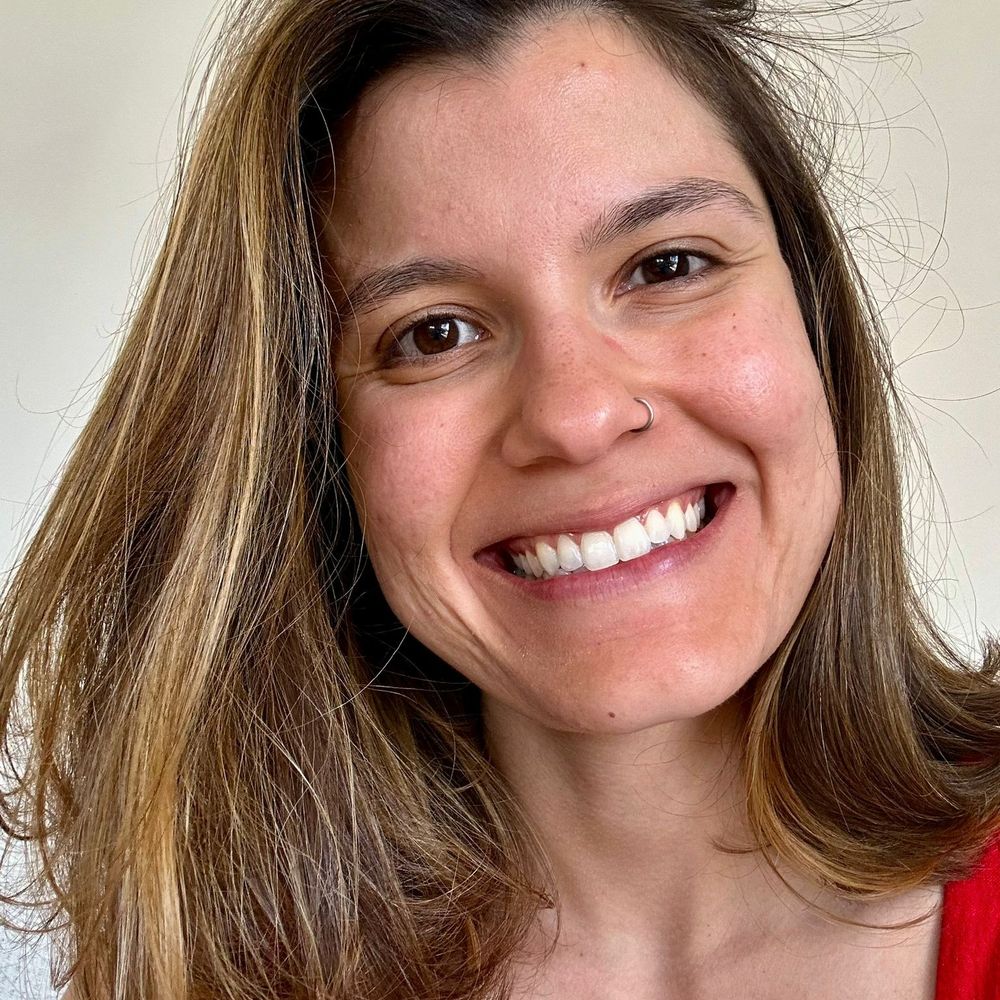
Investigating individual-specific topographic organization has traditionally been a resource-intensive and time-consuming process. But what if we could map visual cortex organization in thousands of brains? Here we offer the community with a toolbox that can do just that! tinyurl.com/deepretinotopy

December 1, 2025 at 11:26 AM
Investigating individual-specific topographic organization has traditionally been a resource-intensive and time-consuming process. But what if we could map visual cortex organization in thousands of brains? Here we offer the community with a toolbox that can do just that! tinyurl.com/deepretinotopy
Reposted by Casper Kerrén

New Correspondence with @davidpoeppel.bsky.social in Nat Rev Neurosci. www.nature.com/articles/s41...
Here, we critique a recent paper by Rosas et al. We argue that "Bottom-up" and "Top-down" neuroscience have various meanings in the literature.
PDF: rdcu.be/eSKYI
Here, we critique a recent paper by Rosas et al. We argue that "Bottom-up" and "Top-down" neuroscience have various meanings in the literature.
PDF: rdcu.be/eSKYI
Top-down and bottom-up neuroscience as collections of practices - Nature Reviews Neuroscience
Nature Reviews Neuroscience - Top-down and bottom-up neuroscience as collections of practices
www.nature.com
December 2, 2025 at 3:13 PM
New Correspondence with @davidpoeppel.bsky.social in Nat Rev Neurosci. www.nature.com/articles/s41...
Here, we critique a recent paper by Rosas et al. We argue that "Bottom-up" and "Top-down" neuroscience have various meanings in the literature.
PDF: rdcu.be/eSKYI
Here, we critique a recent paper by Rosas et al. We argue that "Bottom-up" and "Top-down" neuroscience have various meanings in the literature.
PDF: rdcu.be/eSKYI
Reposted by Casper Kerrén
Our new paper, now published in @natcomms.nature.com , asks a simple question: when two tasks share a common structure, does the brain learn them more efficiently? Surprisingly, this was not the case. Thread below (1/7)
rdcu.be/eSwvU
rdcu.be/eSwvU

The effects of task similarity during representation learning in brains and neural networks
Nature Communications - Here, the authors show learning tasks with similar structures can initially cause interference and slow down learning, but both the brain and artificial networks gradually...
rdcu.be
December 2, 2025 at 9:42 AM
Our new paper, now published in @natcomms.nature.com , asks a simple question: when two tasks share a common structure, does the brain learn them more efficiently? Surprisingly, this was not the case. Thread below (1/7)
rdcu.be/eSwvU
rdcu.be/eSwvU
Reposted by Casper Kerrén

1/ Excited to share that our symposium review covering cognitive mapping in the PFC just came out in the Journal of Neuroscience: www.jneurosci.org/content/45/4...

Cognitive Maps in the Prefrontal Cortex
The prefrontal cortex (PFC) is critical for our ability to rapidly and flexibly adapt our behavior in new environments based on our previous experience. Despite its importance, the neural substrates a...
www.jneurosci.org
November 15, 2025 at 6:03 PM
1/ Excited to share that our symposium review covering cognitive mapping in the PFC just came out in the Journal of Neuroscience: www.jneurosci.org/content/45/4...
Reposted by Casper Kerrén

We went back to the drawing board to think about what information is available to the visual system upon which it could build scene representations.
The outcome: a self-supervised training objective based on active vision that beats the SOTA on NSD representational alignment. 👇
The outcome: a self-supervised training objective based on active vision that beats the SOTA on NSD representational alignment. 👇
🚨New Preprint!
How can we model natural scene representations in visual cortex? A solution is in active vision: predict the features of the next glimpse! arxiv.org/abs/2511.12715
+ @adriendoerig.bsky.social , @alexanderkroner.bsky.social , @carmenamme.bsky.social , @timkietzmann.bsky.social
🧵 1/14
How can we model natural scene representations in visual cortex? A solution is in active vision: predict the features of the next glimpse! arxiv.org/abs/2511.12715
+ @adriendoerig.bsky.social , @alexanderkroner.bsky.social , @carmenamme.bsky.social , @timkietzmann.bsky.social
🧵 1/14

Predicting upcoming visual features during eye movements yields scene representations aligned with human visual cortex
Scenes are complex, yet structured collections of parts, including objects and surfaces, that exhibit spatial and semantic relations to one another. An effective visual system therefore needs unified ...
arxiv.org
November 18, 2025 at 2:14 PM
We went back to the drawing board to think about what information is available to the visual system upon which it could build scene representations.
The outcome: a self-supervised training objective based on active vision that beats the SOTA on NSD representational alignment. 👇
The outcome: a self-supervised training objective based on active vision that beats the SOTA on NSD representational alignment. 👇
Reposted by Casper Kerrén

How prediction error drives memory updating: role of locus coeruleus–hippocampal interactions
Looks interesting, from Groves et al
#neuroskyence #psychscisky #cognition
Looks interesting, from Groves et al
#neuroskyence #psychscisky #cognition

How prediction error drives memory updating: role of locus coeruleus–hippocampal interactions
The brain constantly generates predictions based on one’s knowledge of the world, as captured in memory. When these predictions are in error, our know…
www.sciencedirect.com
November 14, 2025 at 9:22 AM
How prediction error drives memory updating: role of locus coeruleus–hippocampal interactions
Looks interesting, from Groves et al
#neuroskyence #psychscisky #cognition
Looks interesting, from Groves et al
#neuroskyence #psychscisky #cognition
Reposted by Casper Kerrén

Please repost! Fully funded four-year PhD studentship opportunity on sleep deprivation and neurovascular dysfunction on the BBSRC Yorkshire Bioscience Doctoral Training Partnership, including annual stipend, research costs and home tuition fees tinyurl.com/ms7v2pcx

Disrupted Sleep: Mechanisms Linking Sleep Deprivation, Neurovascular Dysfunction, and Metabolic Pathways at Leeds Beckett University on FindAPhD.com
PhD Project - Disrupted Sleep: Mechanisms Linking Sleep Deprivation, Neurovascular Dysfunction, and Metabolic Pathways at Leeds Beckett University, listed on FindAPhD.com
tinyurl.com
November 14, 2025 at 1:53 PM
Please repost! Fully funded four-year PhD studentship opportunity on sleep deprivation and neurovascular dysfunction on the BBSRC Yorkshire Bioscience Doctoral Training Partnership, including annual stipend, research costs and home tuition fees tinyurl.com/ms7v2pcx
Reposted by Casper Kerrén

Time, space, memory and brain–body rhythms — a Perspective by György Buzsáki
#neuroscience #neuroskyence
www.nature.com/articles/s41...
#neuroscience #neuroskyence
www.nature.com/articles/s41...

Time, space, memory and brain–body rhythms - Nature Reviews Neuroscience
Understanding how the brain represents experienced time and how representations of space and time are integrated to form episodic memories has been a goal of much neuroscientific research. In this Per...
www.nature.com
November 13, 2025 at 11:43 AM
Time, space, memory and brain–body rhythms — a Perspective by György Buzsáki
#neuroscience #neuroskyence
www.nature.com/articles/s41...
#neuroscience #neuroskyence
www.nature.com/articles/s41...
Reposted by Casper Kerrén
What aspects of human knowledge do vision models like CLIP fail to capture, and how can we improve them? We suggest models miss key global organization; aligning them makes them more robust. Check out LukasMuttenthaler's work, finally out (in Nature!?) www.nature.com/articles/s41... + our blog! 1/3

Aligning machine and human visual representations across abstraction levels - Nature
Aligning foundation models with human judgments enables them to more accurately approximate human behaviour and uncertainty across various levels of visual abstraction, while additionally improving th...
www.nature.com
November 12, 2025 at 4:50 PM
What aspects of human knowledge do vision models like CLIP fail to capture, and how can we improve them? We suggest models miss key global organization; aligning them makes them more robust. Check out LukasMuttenthaler's work, finally out (in Nature!?) www.nature.com/articles/s41... + our blog! 1/3
Reposted by Casper Kerrén

Delighted to share our new preprint!
We show that rhythmic light stimulation produces multiplexed oscillatory responses at fundamental and harmonic frequencies that are spatially, temporally, and functionally distinct.
Read on for the details [1/6]
www.biorxiv.org/content/10.1...
#neuroskyence
We show that rhythmic light stimulation produces multiplexed oscillatory responses at fundamental and harmonic frequencies that are spatially, temporally, and functionally distinct.
Read on for the details [1/6]
www.biorxiv.org/content/10.1...
#neuroskyence

Rhythmic light stimulation elicits multiple concurrent neural responses that separably shape human perception
Rhythmic light stimulation offers solutions to innumerable cognitive and neurological disorders. However, like any neuromodulatory technique, responses to rhythmic light stimulation are highly variabl...
www.biorxiv.org
November 7, 2025 at 11:55 AM
Delighted to share our new preprint!
We show that rhythmic light stimulation produces multiplexed oscillatory responses at fundamental and harmonic frequencies that are spatially, temporally, and functionally distinct.
Read on for the details [1/6]
www.biorxiv.org/content/10.1...
#neuroskyence
We show that rhythmic light stimulation produces multiplexed oscillatory responses at fundamental and harmonic frequencies that are spatially, temporally, and functionally distinct.
Read on for the details [1/6]
www.biorxiv.org/content/10.1...
#neuroskyence
Reposted by Casper Kerrén
Please repost! I am looking for a PhD candidate in the area of Computational Cognitive Neuroscience to start in early 2026.
The position is funded as part of the Excellence Cluster "The Adaptive Mind" at @jlugiessen.bsky.social.
Please apply here until Nov 25:
www.uni-giessen.de/de/ueber-uns...
The position is funded as part of the Excellence Cluster "The Adaptive Mind" at @jlugiessen.bsky.social.
Please apply here until Nov 25:
www.uni-giessen.de/de/ueber-uns...

November 4, 2025 at 1:57 PM
Please repost! I am looking for a PhD candidate in the area of Computational Cognitive Neuroscience to start in early 2026.
The position is funded as part of the Excellence Cluster "The Adaptive Mind" at @jlugiessen.bsky.social.
Please apply here until Nov 25:
www.uni-giessen.de/de/ueber-uns...
The position is funded as part of the Excellence Cluster "The Adaptive Mind" at @jlugiessen.bsky.social.
Please apply here until Nov 25:
www.uni-giessen.de/de/ueber-uns...
Reposted by Casper Kerrén
I wrote a thing on episodic memory and systems consolidation. I hope you all enjoy it and/or find it interesting.
A neural state space for episodic memories
www.sciencedirect.com/science/arti...
#neuroskyence #psychscisky #cognition 🧪
A neural state space for episodic memories
www.sciencedirect.com/science/arti...
#neuroskyence #psychscisky #cognition 🧪

A neural state space for episodic memories
Episodic memories are highly dynamic and change in nonlinear ways over time. This dynamism is not captured by existing systems consolidation theories …
www.sciencedirect.com
November 3, 2025 at 12:56 PM
I wrote a thing on episodic memory and systems consolidation. I hope you all enjoy it and/or find it interesting.
A neural state space for episodic memories
www.sciencedirect.com/science/arti...
#neuroskyence #psychscisky #cognition 🧪
A neural state space for episodic memories
www.sciencedirect.com/science/arti...
#neuroskyence #psychscisky #cognition 🧪
Reposted by Casper Kerrén

🚨Preprint: Semantic Tuning of Single Neurons in the Human Medial Temporal Lobe
1/8: How do human neurons encode meaning?
In this work, led by Katharina Karkowski, we recorded hundreds of human MTL neurons to study semantic coding in the human brain:
doi.org/10.1101/2025...
1/8: How do human neurons encode meaning?
In this work, led by Katharina Karkowski, we recorded hundreds of human MTL neurons to study semantic coding in the human brain:
doi.org/10.1101/2025...

Semantic Tuning of Single Neurons in the Human Medial Temporal Lobe
The Medial Temporal Lobe (MTL) is key to human cognition, supporting memory, emotional processing, navigation, and semantic coding. Rare direct human MTL recordings revealed concept cells, which were ...
doi.org
October 27, 2025 at 3:32 PM
🚨Preprint: Semantic Tuning of Single Neurons in the Human Medial Temporal Lobe
1/8: How do human neurons encode meaning?
In this work, led by Katharina Karkowski, we recorded hundreds of human MTL neurons to study semantic coding in the human brain:
doi.org/10.1101/2025...
1/8: How do human neurons encode meaning?
In this work, led by Katharina Karkowski, we recorded hundreds of human MTL neurons to study semantic coding in the human brain:
doi.org/10.1101/2025...
Reposted by Casper Kerrén
Understanding the flexibility of working memory: Compositionality, generative processing, anchors and holistic representations
www.sciencedirect.com/science/arti...
#neuroscience
www.sciencedirect.com/science/arti...
#neuroscience

Understanding the flexibility of working memory: Compositionality, generative processing, anchors and holistic representations
The typical conception of working memory is a mechanism to temporarily hold multiple discrete objects in service of other cognitive tasks in an item-b…
www.sciencedirect.com
October 25, 2025 at 12:45 PM
Understanding the flexibility of working memory: Compositionality, generative processing, anchors and holistic representations
www.sciencedirect.com/science/arti...
#neuroscience
www.sciencedirect.com/science/arti...
#neuroscience
Reposted by Casper Kerrén

I’m excited to share my recent preprint on a neural network model of free recall that learns multiple memory strategies including the memory palace!
www.biorxiv.org/content/10.1...
www.biorxiv.org/content/10.1...
October 21, 2025 at 3:36 AM
I’m excited to share my recent preprint on a neural network model of free recall that learns multiple memory strategies including the memory palace!
www.biorxiv.org/content/10.1...
www.biorxiv.org/content/10.1...
Reposted by Casper Kerrén

Really enjoyed working on this with Luise @graichenl.bsky.social Congrats! 🎉
Another piece of evidence highlighting how important visual space and the oculomotor system are for humans (and other primates). 👀🧠
Another piece of evidence highlighting how important visual space and the oculomotor system are for humans (and other primates). 👀🧠
✨My first first-author paper is out✨
Entorhinal grid-like codes for visual space during memory formation in @natcomms.nature.com ➡️ rdcu.be/eLRm2
Big thanks to everyone @isabellacwagner.bsky.social, @tobiasstaudigl.bsky.social, @olejensen.bsky.social, @doellerlab.bsky.social, @clauslamm.bsky.social
Entorhinal grid-like codes for visual space during memory formation in @natcomms.nature.com ➡️ rdcu.be/eLRm2
Big thanks to everyone @isabellacwagner.bsky.social, @tobiasstaudigl.bsky.social, @olejensen.bsky.social, @doellerlab.bsky.social, @clauslamm.bsky.social

Entorhinal grid-like codes for visual space during memory formation
Nature Communications - Eye movements during scene viewing are tied to grid-like codes in the entorhinal cortex. Grid signals are specific to later remembered scenes, covary with activity in...
rdcu.be
October 21, 2025 at 7:18 AM
Really enjoyed working on this with Luise @graichenl.bsky.social Congrats! 🎉
Another piece of evidence highlighting how important visual space and the oculomotor system are for humans (and other primates). 👀🧠
Another piece of evidence highlighting how important visual space and the oculomotor system are for humans (and other primates). 👀🧠
Reposted by Casper Kerrén
New preprint written with the wonderful philosopher William Ramsey: Mental Representation Without Neural Representation: Understanding The Evidence osf.io/preprints/ps...
OSF
osf.io
October 18, 2025 at 8:18 AM
New preprint written with the wonderful philosopher William Ramsey: Mental Representation Without Neural Representation: Understanding The Evidence osf.io/preprints/ps...
Reposted by Casper Kerrén
What makes an image memorable? And can we predict image memorability using pretrained vision encoders? We explored activations, attention distributions, image patch uniformity and sparse autoencoder losses using image representations across the layers of CLIP, DINOv2 and SigLIP2.


October 15, 2025 at 9:10 AM
What makes an image memorable? And can we predict image memorability using pretrained vision encoders? We explored activations, attention distributions, image patch uniformity and sparse autoencoder losses using image representations across the layers of CLIP, DINOv2 and SigLIP2.
Reposted by Casper Kerrén
Can Only Meat Machines be Conscious? New paper in Trends in Cognitive Sciences, free download until November 26 with this URL: authors.elsevier.com/a/1luwh4sIRv...
authors.elsevier.com
October 8, 2025 at 1:06 PM
Can Only Meat Machines be Conscious? New paper in Trends in Cognitive Sciences, free download until November 26 with this URL: authors.elsevier.com/a/1luwh4sIRv...