



Arun Durvasula
@arundurvasula.bsky.social
Assistant Professor in the Center for Genetic Epidemiology at USC.
My lab studies genetics and evolution.
https://www.durvasula-lab.usc.edu
My lab studies genetics and evolution.
https://www.durvasula-lab.usc.edu
Can confirm
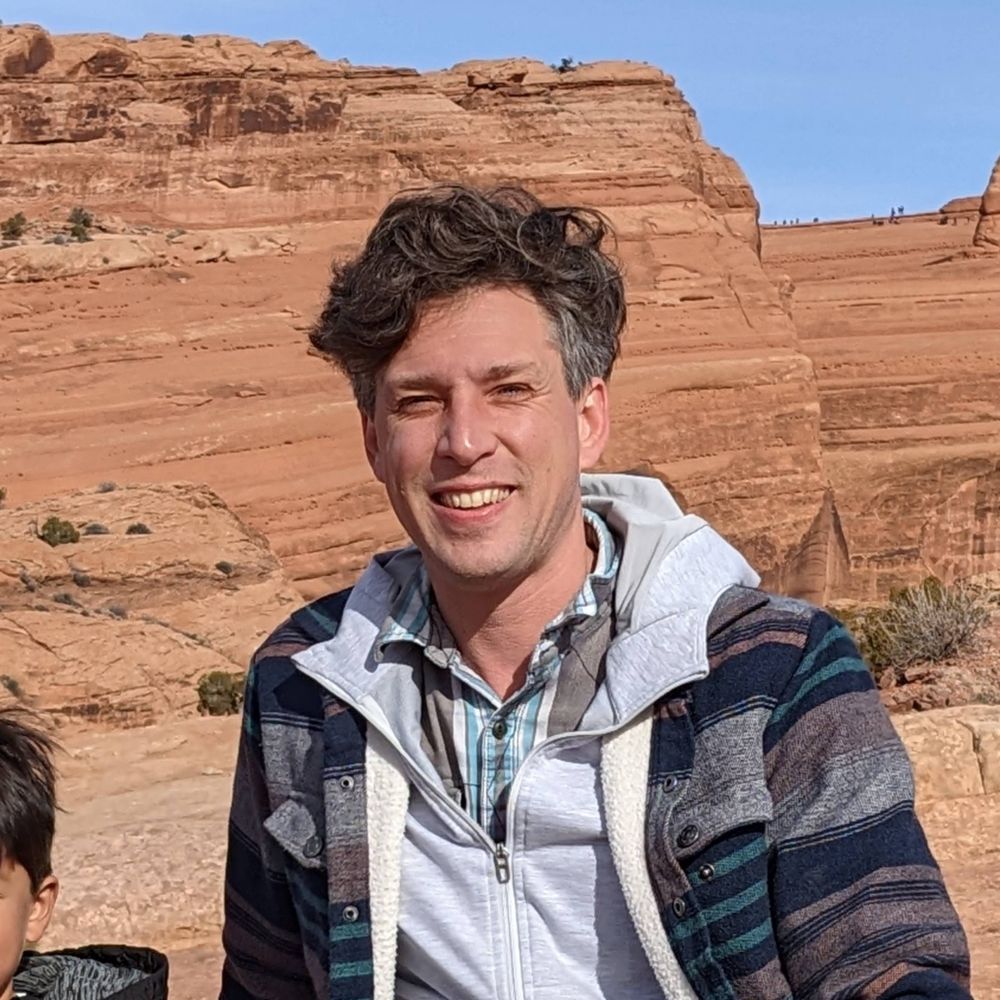
Reminder: I will always be y'alls hype man.
Send me your grant score, I'm gonna hype that shit up. Send me your review, I'm gonna hype that shit up. I genuinely get so excited for folks' successes.
I made it here bc of the folks around me, and I'll -happily- make sure others feel celebrated
Send me your grant score, I'm gonna hype that shit up. Send me your review, I'm gonna hype that shit up. I genuinely get so excited for folks' successes.
I made it here bc of the folks around me, and I'll -happily- make sure others feel celebrated
January 29, 2026 at 5:56 PM
Can confirm
Reposted by Arun Durvasula

In a new GBE Review, @david-peede.bsky.social et al. overview the SMC model and extensions, discuss examples of discoveries made with the help of SMC-based inference, and comment on the assumptions, benefits, and drawbacks of various methods.
🔗 doi.org/10.1093/gbe/...
#genome #evolution #compbio
🔗 doi.org/10.1093/gbe/...
#genome #evolution #compbio

Not Just Ne Ne-More: New Applications for SMC from Ecology to Phylogenies
Abstract. Genomes contain the mutational footprint of an organism’s evolutionary history, shaped by diverse forces including ecological factors, selective
doi.org
January 8, 2026 at 8:02 AM
In a new GBE Review, @david-peede.bsky.social et al. overview the SMC model and extensions, discuss examples of discoveries made with the help of SMC-based inference, and comment on the assumptions, benefits, and drawbacks of various methods.
🔗 doi.org/10.1093/gbe/...
#genome #evolution #compbio
🔗 doi.org/10.1093/gbe/...
#genome #evolution #compbio
Reposted by Arun Durvasula

Happy to share our new preprint from @sashagusevposts.bsky.social and @nmancuso.bsky.social labs! We introduce Mr. PEG, a framework integrating perturbational screens, eQTL, and GWAS data to identify mediating genes for complex traits. (1/n) www.medrxiv.org/content/10.6...

Integrating perturbational screens, eQTL, and GWAS data identifies mediating genes for complex traits
Most current GWAS-eQTL approaches prioritize genes whose mediating effects on complex traits act through cis-regulation, while trans-acting genes remain largely underexplored. Recent perturbational sc...
www.medrxiv.org
January 5, 2026 at 10:27 PM
Happy to share our new preprint from @sashagusevposts.bsky.social and @nmancuso.bsky.social labs! We introduce Mr. PEG, a framework integrating perturbational screens, eQTL, and GWAS data to identify mediating genes for complex traits. (1/n) www.medrxiv.org/content/10.6...
Reposted by Arun Durvasula

How much better is an ancestral recombination graph (ARG) than a site frequency spectrum (SFS)? For recovering mutation rate history, we can answer fairly precisely because both ARG and SFS are linear transforms of mutation rate history. This blog post uses spectral analysis to clarify the picture.
Observability of mutation rate histories from ancestral recombination graphs
This post explores mathematical aspects of recovering mutation rate histories from an ancestral recombination graph (ARG) Vs a sample frequency spectrum (SFS), expanding on a recent collaborative pape...
dewitt-lab.github.io
December 22, 2025 at 6:19 PM
How much better is an ancestral recombination graph (ARG) than a site frequency spectrum (SFS)? For recovering mutation rate history, we can answer fairly precisely because both ARG and SFS are linear transforms of mutation rate history. This blog post uses spectral analysis to clarify the picture.
Reposted by Arun Durvasula
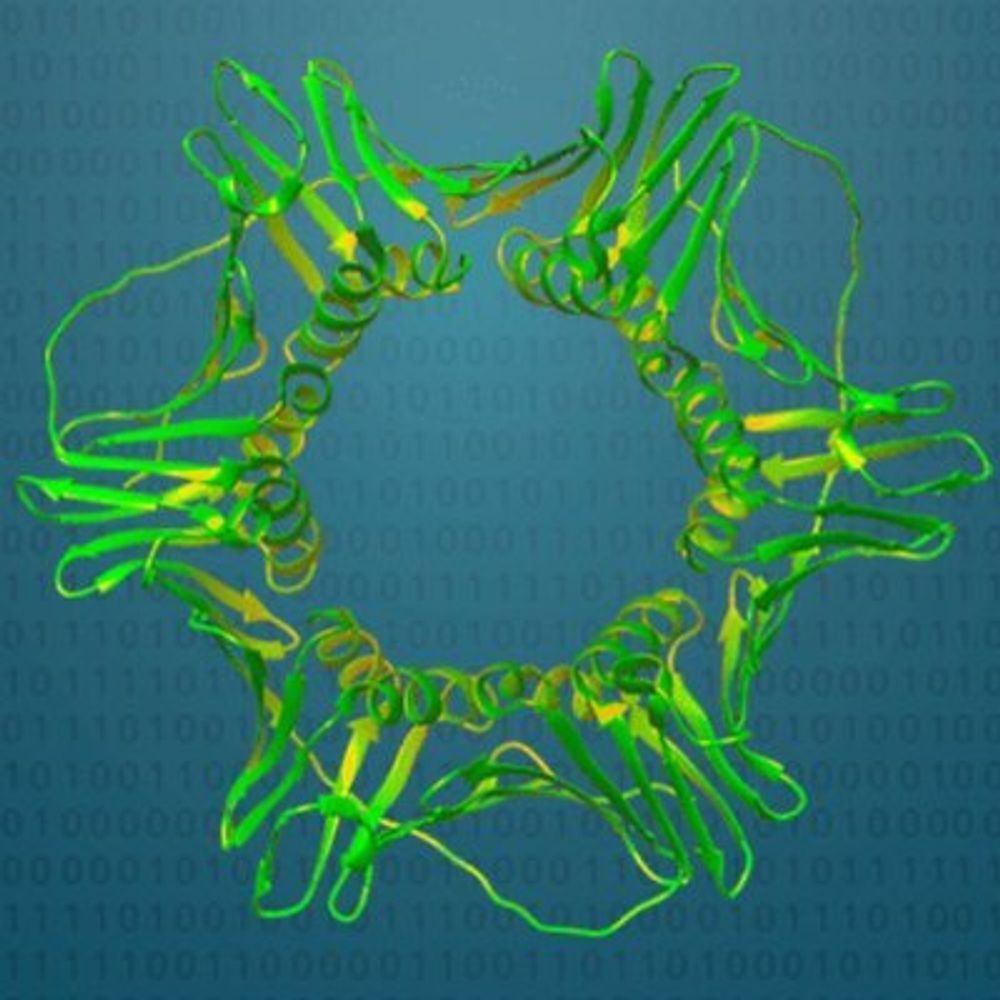
🧬 Just out in Bioinformatics Advances: “tskit arg visualizer: Interactive plotting of ancestral recombination graphs.”
Read the full paper here: https://doi.org/10.1093/bioadv/vbaf302
Authors include: @kitchensjn.bsky.social, @yanwong.bsky.social
Read the full paper here: https://doi.org/10.1093/bioadv/vbaf302
Authors include: @kitchensjn.bsky.social, @yanwong.bsky.social

December 18, 2025 at 10:02 AM
🧬 Just out in Bioinformatics Advances: “tskit arg visualizer: Interactive plotting of ancestral recombination graphs.”
Read the full paper here: https://doi.org/10.1093/bioadv/vbaf302
Authors include: @kitchensjn.bsky.social, @yanwong.bsky.social
Read the full paper here: https://doi.org/10.1093/bioadv/vbaf302
Authors include: @kitchensjn.bsky.social, @yanwong.bsky.social
Reposted by Arun Durvasula

Preprint online right before the holidays! Excited to share the first piece of work from the Zhang Lab, led by my absolutely stellar postdoc Michelle Kim! In this work, we ask how admixture, selection and demography shape complex trait genetics and GWAS performance www.biorxiv.org/content/10.6...

Determining the driving factors shaping genetic architecture of complex traits in recently admixed populations
Understanding the genetic architecture of complex traits in admixed populations remains challenging due to heterogeneous genetic backgrounds and demographic histories. Mischaracterizing admixture can ...
www.biorxiv.org
December 16, 2025 at 1:47 PM
Preprint online right before the holidays! Excited to share the first piece of work from the Zhang Lab, led by my absolutely stellar postdoc Michelle Kim! In this work, we ask how admixture, selection and demography shape complex trait genetics and GWAS performance www.biorxiv.org/content/10.6...
Reposted by Arun Durvasula

Amazing to have a byline with @cbo.bsky.social - read our take on Watson’s ultimate legacy in the Boston Globe. Will be in Sunday’s print edition.

"What James Watson got wrong about DNA"
By the great Sohini Ramachandran (@sramach.bsky.social) and your boy for The Boston Globe (@bostonglobe.com).
www.bostonglobe.com/2025/11/14/o...
By the great Sohini Ramachandran (@sramach.bsky.social) and your boy for The Boston Globe (@bostonglobe.com).
www.bostonglobe.com/2025/11/14/o...
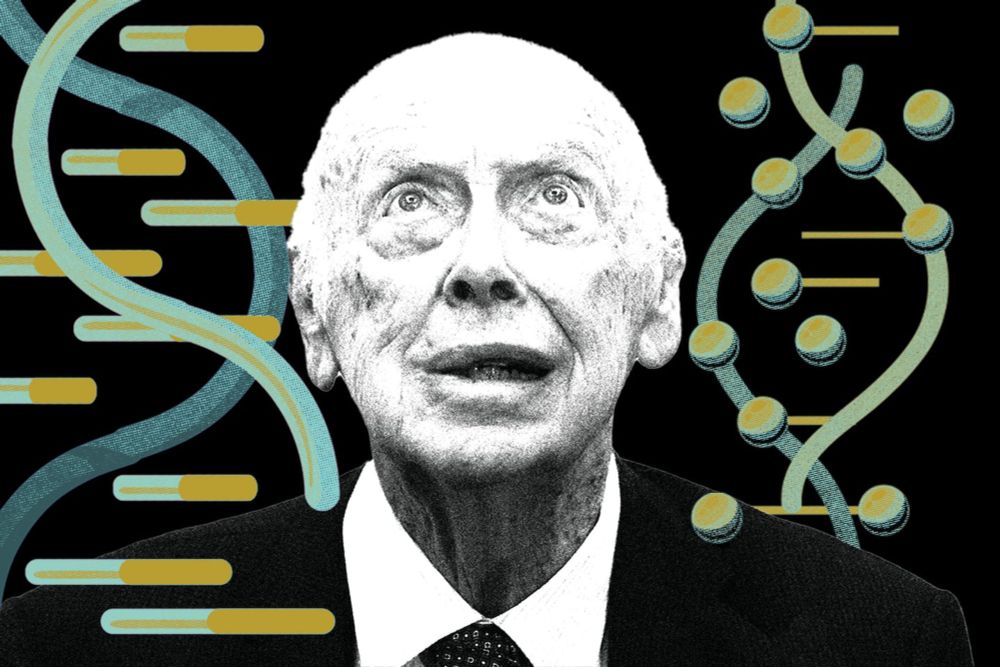
What James Watson got wrong about DNA - The Boston Globe
The science he helped pioneer consistently undermines his view that genes determine everything about us.
www.bostonglobe.com
November 14, 2025 at 5:48 PM
Amazing to have a byline with @cbo.bsky.social - read our take on Watson’s ultimate legacy in the Boston Globe. Will be in Sunday’s print edition.
Reposted by Arun Durvasula

We're excited to share the final version of our paper, where we demonstrate how confounding remains a thorny problem for claims about causal genetic influences on human behavioral and socioeconomic outcomes. (w/ @jedidiahcarlson.com @oliviarxiv.bsky.social Ruth Shaw @arbelharpak.bsky.social) 🧵👇
November 7, 2025 at 7:06 PM
We're excited to share the final version of our paper, where we demonstrate how confounding remains a thorny problem for claims about causal genetic influences on human behavioral and socioeconomic outcomes. (w/ @jedidiahcarlson.com @oliviarxiv.bsky.social Ruth Shaw @arbelharpak.bsky.social) 🧵👇
Reposted by Arun Durvasula

JOB POSTING: Director, National Human Genome Research Institute hr.nih.gov/careers/open...
hr.nih.gov
November 7, 2025 at 3:57 PM
JOB POSTING: Director, National Human Genome Research Institute hr.nih.gov/careers/open...
Reposted by Arun Durvasula

We're excited to be recruiting an NIH funded postdoc to work in the Coop lab at UC Davis. We're specifically interested in candidates who are want to work at the intersection of human genetics, GWAS, and population genetics modeling. Please RT
October 15, 2025 at 3:53 PM
We're excited to be recruiting an NIH funded postdoc to work in the Coop lab at UC Davis. We're specifically interested in candidates who are want to work at the intersection of human genetics, GWAS, and population genetics modeling. Please RT
Reposted by Arun Durvasula
If you are at #ASHG2025 and would like to chat in person, please reach out! My lab is looking for curious scientists to join us, especially (but not limited to) postdoctoral researchers.

October 14, 2025 at 3:45 PM
If you are at #ASHG2025 and would like to chat in person, please reach out! My lab is looking for curious scientists to join us, especially (but not limited to) postdoctoral researchers.
Reposted by Arun Durvasula

Thread:
A year ago yesterday was a very happy day for me. I had lost my prostate. It was good riddance, as it was riddled with cancer. I’m now cancer-free — and thankful for the tax-funded technology that saved my life.
A year ago yesterday was a very happy day for me. I had lost my prostate. It was good riddance, as it was riddled with cancer. I’m now cancer-free — and thankful for the tax-funded technology that saved my life.

October 10, 2025 at 1:11 AM
Thread:
A year ago yesterday was a very happy day for me. I had lost my prostate. It was good riddance, as it was riddled with cancer. I’m now cancer-free — and thankful for the tax-funded technology that saved my life.
A year ago yesterday was a very happy day for me. I had lost my prostate. It was good riddance, as it was riddled with cancer. I’m now cancer-free — and thankful for the tax-funded technology that saved my life.
Reposted by Arun Durvasula

The MBE Best Student Paper award of 2024 goes to Julien Joseph (winner) and William S. Henriques (runner-up).
👏 Congratulations Julien and William for this recognition of your amazing work!
Check below for details on their research ⬇️
👏 Congratulations Julien and William for this recognition of your amazing work!
Check below for details on their research ⬇️

October 9, 2025 at 10:06 AM
The MBE Best Student Paper award of 2024 goes to Julien Joseph (winner) and William S. Henriques (runner-up).
👏 Congratulations Julien and William for this recognition of your amazing work!
Check below for details on their research ⬇️
👏 Congratulations Julien and William for this recognition of your amazing work!
Check below for details on their research ⬇️
Reposted by Arun Durvasula

PEQG website live! genetics-gsa.org/peqg-2026/

Homepage - 2026 Population, Evolutionary, and Quantitative Genetics Conference
Visit our website to learn more.
genetics-gsa.org
October 9, 2025 at 4:08 PM
PEQG website live! genetics-gsa.org/peqg-2026/
Reposted by Arun Durvasula

Science is intertwined with eugenics, and eugenic ideologies continue to negatively impact #Indigenous communities and science today.
Read a timely and important perspective piece in #GENETICS from @jazlynmooney.bsky.social and colleagues: buff.ly/T7rbV3k
Read a timely and important perspective piece in #GENETICS from @jazlynmooney.bsky.social and colleagues: buff.ly/T7rbV3k

October 8, 2025 at 8:03 PM
Science is intertwined with eugenics, and eugenic ideologies continue to negatively impact #Indigenous communities and science today.
Read a timely and important perspective piece in #GENETICS from @jazlynmooney.bsky.social and colleagues: buff.ly/T7rbV3k
Read a timely and important perspective piece in #GENETICS from @jazlynmooney.bsky.social and colleagues: buff.ly/T7rbV3k
Reposted by Arun Durvasula

Exciting updates!!
(1) I just opened my lab at Boston Children’s Hospital (Harvard-affiliated)
(2) I’m hiring a postdoc focused on integrating GWAS and functional genomic data. Reach out if you’re interested or connect at ASHG next week!
(3) Learn more at stroberlab.com
(1) I just opened my lab at Boston Children’s Hospital (Harvard-affiliated)
(2) I’m hiring a postdoc focused on integrating GWAS and functional genomic data. Reach out if you’re interested or connect at ASHG next week!
(3) Learn more at stroberlab.com

Strober Lab
The Strober lab is a computational group at Boston Children's Hospital (a Harvard Medical School affiliated hospital) focused on developing statistical and machine learning tools applied to human gene...
stroberlab.com
October 7, 2025 at 6:55 PM
Exciting updates!!
(1) I just opened my lab at Boston Children’s Hospital (Harvard-affiliated)
(2) I’m hiring a postdoc focused on integrating GWAS and functional genomic data. Reach out if you’re interested or connect at ASHG next week!
(3) Learn more at stroberlab.com
(1) I just opened my lab at Boston Children’s Hospital (Harvard-affiliated)
(2) I’m hiring a postdoc focused on integrating GWAS and functional genomic data. Reach out if you’re interested or connect at ASHG next week!
(3) Learn more at stroberlab.com
Reposted by Arun Durvasula

Population Biology Modeling & Theory (PBMT) is a peer-reviewed journal reporting advances in modeling and theory within population biology. Its scope spans demography, ecology, epidemiology, evolutionary biology, population genetics, and phylogenetics. PBMT will be online soon.
September 30, 2025 at 9:02 PM
Population Biology Modeling & Theory (PBMT) is a peer-reviewed journal reporting advances in modeling and theory within population biology. Its scope spans demography, ecology, epidemiology, evolutionary biology, population genetics, and phylogenetics. PBMT will be online soon.
Reposted by Arun Durvasula
Delighted that our paper about the distribution of genomic spans of clades/edges in genealogies (ARGs), and using this for detecting inversions and other SVs (and other phenomena that cause local disruption of recombination) is out in MBE academic.oup.com/mbe/article/... (1/n)

The Length of Haplotype Blocks and Signals of Structural Variation in Reconstructed Genealogies
Abstract. Recent breakthroughs have enabled the accurate inference of large-scale genealogies. Through modelling the impact of recombination on the correla
academic.oup.com
October 3, 2025 at 9:54 AM
Delighted that our paper about the distribution of genomic spans of clades/edges in genealogies (ARGs), and using this for detecting inversions and other SVs (and other phenomena that cause local disruption of recombination) is out in MBE academic.oup.com/mbe/article/... (1/n)
Reposted by Arun Durvasula

Would be excited to chat with folks looking for a postdoc in AI to develop models for genomic prediction...
A great opportunity for funding coming up soon is the Schmidt AI in Science fellowship, due October 13th! apply.interfolio.com/173322
A great opportunity for funding coming up soon is the Schmidt AI in Science fellowship, due October 13th! apply.interfolio.com/173322
Apply - Interfolio
{{$ctrl.$state.data.pageTitle}} - Apply - Interfolio
apply.interfolio.com
September 19, 2025 at 4:20 PM
Would be excited to chat with folks looking for a postdoc in AI to develop models for genomic prediction...
A great opportunity for funding coming up soon is the Schmidt AI in Science fellowship, due October 13th! apply.interfolio.com/173322
A great opportunity for funding coming up soon is the Schmidt AI in Science fellowship, due October 13th! apply.interfolio.com/173322
Reposted by Arun Durvasula
In the midst of the darkness, I am pleased to announce that UCLA will be hosting the upcoming Southern California Evolutionary Genetics (SCalE) conference on November 1! Registration & abstract submission is here: www.scalemeeting.org/home Deadline is October 13! Hope to see you at UCLA!

Home
The SCalE Meeting is a free, one day regional academic meeting focused on evolutionary genetics and genomics.
This year's SCalE Meeting is hosted by UCLA, sponsored by the Institute for Quantitative ...
www.scalemeeting.org
September 16, 2025 at 4:47 PM
In the midst of the darkness, I am pleased to announce that UCLA will be hosting the upcoming Southern California Evolutionary Genetics (SCalE) conference on November 1! Registration & abstract submission is here: www.scalemeeting.org/home Deadline is October 13! Hope to see you at UCLA!
Reposted by Arun Durvasula

📣Online now from @arundurvasula.bsky.social & co!
📄Pathway-specific polygenic scores substantially increase the discovery of gene-adiposity interactions impacting liver biomarkers
👉https://bit.ly/47HmkYW
📄Pathway-specific polygenic scores substantially increase the discovery of gene-adiposity interactions impacting liver biomarkers
👉https://bit.ly/47HmkYW

September 12, 2025 at 5:32 PM
📣Online now from @arundurvasula.bsky.social & co!
📄Pathway-specific polygenic scores substantially increase the discovery of gene-adiposity interactions impacting liver biomarkers
👉https://bit.ly/47HmkYW
📄Pathway-specific polygenic scores substantially increase the discovery of gene-adiposity interactions impacting liver biomarkers
👉https://bit.ly/47HmkYW
Reposted by Arun Durvasula
Our work on leveraging pathway-specific polygenic scores to discover gene-environment interactions is now online at HGG Advances (@hggadvances.bsky.social). 10/10 great review process!
www.cell.com/hgg-advances...
cc @kewesterman.bsky.social
www.cell.com/hgg-advances...
cc @kewesterman.bsky.social

Pathway-specific polygenic scores substantially increase the discovery of gene-adiposity interactions impacting liver biomarkers
The authors describe a strategy for using pathway-specific polygenic scores to increase
the detection and interpretability of gene-environment interactions, with an applied
analysis uncovering genetic...
www.cell.com
September 12, 2025 at 4:39 PM
Our work on leveraging pathway-specific polygenic scores to discover gene-environment interactions is now online at HGG Advances (@hggadvances.bsky.social). 10/10 great review process!
www.cell.com/hgg-advances...
cc @kewesterman.bsky.social
www.cell.com/hgg-advances...
cc @kewesterman.bsky.social
Reposted by Arun Durvasula
Excited to share our latest manuscript, "Exposure accumulation drives age-dependent disease architectures and polygenic risk scores," led by Xilin Jiang: www.medrxiv.org/content/10.1...
I am attempting an explainer thread for the first time here:
(I am usually too exhausted to post one)
I am attempting an explainer thread for the first time here:
(I am usually too exhausted to post one)

Exposure accumulation drives age-dependent disease architectures and polygenic risk scores
Our understanding of the dependence of the genetic and environmental architecture of common diseases on age is incomplete. Here, we use longitudinal data to quantify age-dependent genetic and environm...
www.medrxiv.org
September 2, 2025 at 11:08 PM
Excited to share our latest manuscript, "Exposure accumulation drives age-dependent disease architectures and polygenic risk scores," led by Xilin Jiang: www.medrxiv.org/content/10.1...
I am attempting an explainer thread for the first time here:
(I am usually too exhausted to post one)
I am attempting an explainer thread for the first time here:
(I am usually too exhausted to post one)
Reposted by Arun Durvasula

We regret to inform you we have returned to social media. Sorry.
September 12, 2025 at 7:36 PM
We regret to inform you we have returned to social media. Sorry.
Our work on leveraging pathway-specific polygenic scores to discover gene-environment interactions is now online at HGG Advances (@hggadvances.bsky.social). 10/10 great review process!
www.cell.com/hgg-advances...
cc @kewesterman.bsky.social
www.cell.com/hgg-advances...
cc @kewesterman.bsky.social
Pathway-specific polygenic scores substantially increase the discovery of gene-adiposity interactions impacting liver biomarkers
The authors describe a strategy for using pathway-specific polygenic scores to increase
the detection and interpretability of gene-environment interactions, with an applied
analysis uncovering genetic...
www.cell.com
September 12, 2025 at 4:39 PM
Our work on leveraging pathway-specific polygenic scores to discover gene-environment interactions is now online at HGG Advances (@hggadvances.bsky.social). 10/10 great review process!
www.cell.com/hgg-advances...
cc @kewesterman.bsky.social
www.cell.com/hgg-advances...
cc @kewesterman.bsky.social