


Anna Maria Niewiadomska
@amnbio.bsky.social
Science, infectious disease, virology, public health, molecular biology, genomics, bioinformatics. Opinions are my own.
Reposted by Anna Maria Niewiadomska

We are on!
Air 🌬️
Sea spray 💦
Surface 🌊
3000 m deep ⚓
~1 million DNA molecules/hour
sequenced live in the middle of the Pacific Ocean!
Shout out to Aden and Rhonda,l who can extract DNA, PCR, and library prep without getting seasick ⛵️
From sample to data in less than 48 hrs.
#eDNA #nanopore #UW
Air 🌬️
Sea spray 💦
Surface 🌊
3000 m deep ⚓
~1 million DNA molecules/hour
sequenced live in the middle of the Pacific Ocean!
Shout out to Aden and Rhonda,l who can extract DNA, PCR, and library prep without getting seasick ⛵️
From sample to data in less than 48 hrs.
#eDNA #nanopore #UW

January 17, 2026 at 1:57 AM
Reposted by Anna Maria Niewiadomska

Genotypic Technology invites you to an exclusive webinar on Oxford Nanopore RNA Sequencing, exploring how long-read and direct RNA sequencing overcome the limitations of short-read platforms.
Register now shorturl.at/uCc1Q
Register now shorturl.at/uCc1Q

January 12, 2026 at 10:19 AM
Genotypic Technology invites you to an exclusive webinar on Oxford Nanopore RNA Sequencing, exploring how long-read and direct RNA sequencing overcome the limitations of short-read platforms.
Register now shorturl.at/uCc1Q
Register now shorturl.at/uCc1Q
Reposted by Anna Maria Niewiadomska

Need an excuse to visit Antwerp in April? You can register for our Flanders Nanopore Day. Research using @nanoporetech.com sequencing will be highlighted, throughout a variety of research fields. And for academia, registration is for free.
nanoporeflanders.be
nanoporeflanders.be
Flanders Nanopore Day 2026 - Flanders Nanopore Day
The Flanders Nanopore Day - April 17th, 2026
nanoporeflanders.be
January 12, 2026 at 11:28 AM
Need an excuse to visit Antwerp in April? You can register for our Flanders Nanopore Day. Research using @nanoporetech.com sequencing will be highlighted, throughout a variety of research fields. And for academia, registration is for free.
nanoporeflanders.be
nanoporeflanders.be
Reposted by Anna Maria Niewiadomska

@keygene.com 's @awngs.bsky.social will be a speaker during the Industry Workshop of Oxford Nanopore Technologies ( @nanoporetech.com ), presenting some recent results in technology development for single-nuclei transcriptomics at PAG33 in San Diego on January 12.

Looking forward to attending #PAG33 in San Diego (if flights allow…) to present @nanoporetech.com industry workshop. Some background in the link below. www.keygene.com/single-nucle...

Single nuclei RNA sequencing for high resolution insights
KeyGene developed a single-cell transcriptomics technology based on the Chromium X by 10 X Genomics to analyze the gene expression profiles
www.keygene.com
January 8, 2026 at 9:11 AM
@keygene.com 's @awngs.bsky.social will be a speaker during the Industry Workshop of Oxford Nanopore Technologies ( @nanoporetech.com ), presenting some recent results in technology development for single-nuclei transcriptomics at PAG33 in San Diego on January 12.
Reposted by Anna Maria Niewiadomska

Latest #CDlab paper on nanopore protein sequencing now published in JACS: pubs.acs.org/doi/full/10....
Here, Justas Ritmejeris, Xiuqi Chen, collaborator Bauke Albada, and me developed a conjugation chemistry strategy for nanopore sequencing of natural peptides!
Here, Justas Ritmejeris, Xiuqi Chen, collaborator Bauke Albada, and me developed a conjugation chemistry strategy for nanopore sequencing of natural peptides!


January 9, 2026 at 8:53 AM
Latest #CDlab paper on nanopore protein sequencing now published in JACS: pubs.acs.org/doi/full/10....
Here, Justas Ritmejeris, Xiuqi Chen, collaborator Bauke Albada, and me developed a conjugation chemistry strategy for nanopore sequencing of natural peptides!
Here, Justas Ritmejeris, Xiuqi Chen, collaborator Bauke Albada, and me developed a conjugation chemistry strategy for nanopore sequencing of natural peptides!
Long-read Nanopore WGS can resolve large multi-kb integration events in HPV infected cells, that cause structural rearrangements, leading to oncogenesis.

Complex HPV-human DNA structures revealed by large-scale DNA analyses in an HPV-cancer derived cell line
Most human papillomavirus (HPV)-associated cancers harbor viral DNA integrated into the human genome as extrachromosomal circles, intrachromosomal segments, or both. Distinguishing intrachromosomal…
www.biorxiv.org
January 12, 2026 at 4:00 AM
Long-read Nanopore WGS can resolve large multi-kb integration events in HPV infected cells, that cause structural rearrangements, leading to oncogenesis.
A new study shows MTB surveillance and transmission can be resolved without culture or capture-based enrichment, using nanopore WGS directly from sputum.
www.biorxiv.org/content/10.1...
www.biorxiv.org/content/10.1...

Direct nanopore sequencing of M. tuberculosis on sputa and rescue of suboptimal results to enhance transmission surveillance
Whole-genome sequencing (WGS) enhances precision in predicting antimicrobial resistance and tracking Mycobacterium tuberculosis (MTB) transmission. Due to MTB’s slow-growing nature, genomic results…
www.biorxiv.org
January 9, 2026 at 1:02 PM
A new study shows MTB surveillance and transmission can be resolved without culture or capture-based enrichment, using nanopore WGS directly from sputum.
www.biorxiv.org/content/10.1...
www.biorxiv.org/content/10.1...
Long-read single-cell RNA sequencing on nasopharyngeal swabs from COVID-19 patients; authors were able to identify differences in splice isoforms for genes that modulate immune signaling and apoptosis.
Long-read single-cell RNA sequencing uncovers cell-type specific transcript regulation in COVID-19
SARS-CoV-2 infection leads to extensive host transcriptomic changes, but the role of alternative splicing in shaping the immune response remains underexplored. Here, we present the first application…
www.biorxiv.org
January 8, 2026 at 3:03 PM
Long-read single-cell RNA sequencing on nasopharyngeal swabs from COVID-19 patients; authors were able to identify differences in splice isoforms for genes that modulate immune signaling and apoptosis.
Interesting news in the world of transposable elements. Discovery of "a novel clade of Helitrons, with 9-10 kb transposase ORFs under purifying selection, that have remained active" in Paramecium aurelia.
www.biorxiv.org/content/10.1...
www.biorxiv.org/content/10.1...
The tiny germline chromosomes of Paramecium aurelia have an exceptionally high recombination rate and are capped by a new class of Helitrons
Background Paramecia belong to the ciliate phylum of unicellular eukaryotes characterized by nuclear dimorphism. A diploid germline micronucleus (MIC) transmits genetic information across sexual…
www.biorxiv.org
January 7, 2026 at 3:03 PM
Interesting news in the world of transposable elements. Discovery of "a novel clade of Helitrons, with 9-10 kb transposase ORFs under purifying selection, that have remained active" in Paramecium aurelia.
www.biorxiv.org/content/10.1...
www.biorxiv.org/content/10.1...
Long-read de novo assemblies for 5 paracoccidioides fungal pathogen species endemic to Latin America. (P. brasiliensis, P. americana, P. restrepiensis, P. venezuelensis and P. lutzii)
www.biorxiv.org/content/10.1...
www.biorxiv.org/content/10.1...
Telomeric assemblies of Paracoccidioides genomes
Paracoccidioides is a genus of dimorphic fungal pathogens endemic to Latin America. We generated long-read de novo assemblies for 11 isolates representing four species of the brasiliensis complex (…
www.biorxiv.org
January 6, 2026 at 2:02 PM
Long-read de novo assemblies for 5 paracoccidioides fungal pathogen species endemic to Latin America. (P. brasiliensis, P. americana, P. restrepiensis, P. venezuelensis and P. lutzii)
www.biorxiv.org/content/10.1...
www.biorxiv.org/content/10.1...
"This work validates ONT long-read sequencing as a powerful tool for marine microbiome studies to catalyze advancements in the fields of ecology and evolution, resource management, and conservation"
www.biorxiv.org/content/10.1...
www.biorxiv.org/content/10.1...
Evaluation of full-length 16S rRNA amplicon sequencing using Oxford Nanopore Technologies for diversity surveys of understudied microbiomes
1. The use of long-read sequencing using portable Oxford Nanopore Technologies (ONT) is becoming increasingly popular in the study of host-associated microbiomes. However, its application has not…
www.biorxiv.org
January 6, 2026 at 1:08 AM
"This work validates ONT long-read sequencing as a powerful tool for marine microbiome studies to catalyze advancements in the fields of ecology and evolution, resource management, and conservation"
www.biorxiv.org/content/10.1...
www.biorxiv.org/content/10.1...
Very cool to see the early results of nanopore sequencing of PEPTIDES!
The ability to perform genomics, transcriptomics and proteomics on a single platform is incredibly exciting, and the potential for future applications is massive.
www.biorxiv.org/content/10.1...
The ability to perform genomics, transcriptomics and proteomics on a single platform is incredibly exciting, and the potential for future applications is massive.
www.biorxiv.org/content/10.1...
Terminal conjugation enables nanopore sequencing of peptides
Nanopore sequencing of peptides holds great promise for single-molecule proteomics, but robust conjugation strategies to adapt native peptides for motor-enzyme–driven translocation have yet to be…
www.biorxiv.org
December 31, 2025 at 12:06 PM
Very cool to see the early results of nanopore sequencing of PEPTIDES!
The ability to perform genomics, transcriptomics and proteomics on a single platform is incredibly exciting, and the potential for future applications is massive.
www.biorxiv.org/content/10.1...
The ability to perform genomics, transcriptomics and proteomics on a single platform is incredibly exciting, and the potential for future applications is massive.
www.biorxiv.org/content/10.1...
Not sure which tick reference genome to use for your analysis?
This paper provides a very nice assessment of 34 high-quality tick genome assemblies from 21 species.
www.biorxiv.org/content/10.1...
This paper provides a very nice assessment of 34 high-quality tick genome assemblies from 21 species.
www.biorxiv.org/content/10.1...
Tick Genome Assemblies: Overcoming biological limitations through advances in sequencing technologies
Ticks are blood-feeding arthropods with approximately 1,000 species, however, only 24 species currently have a genome assembly. These genome assemblies are important resources to advance tick biology…
www.biorxiv.org
December 31, 2025 at 12:02 AM
Not sure which tick reference genome to use for your analysis?
This paper provides a very nice assessment of 34 high-quality tick genome assemblies from 21 species.
www.biorxiv.org/content/10.1...
This paper provides a very nice assessment of 34 high-quality tick genome assemblies from 21 species.
www.biorxiv.org/content/10.1...
Using long reads that can span the length of telomeric regions, researchers developed a method to measure telomere length in S. cerevisiae, and found wide variation in telomere length, ploidy, and subtelomere structure.
buff.ly/hGM08qS
buff.ly/hGM08qS
Natural diversity of telomere length distributions across 100 Saccharomyces cerevisiae strains
Telomeres gradually shorten at each cell division and telomerase counteracts this shortening by elongating telomere sequences. This dynamic balance between elongation and shortening results in a…
www.biorxiv.org
December 30, 2025 at 8:30 AM
Using long reads that can span the length of telomeric regions, researchers developed a method to measure telomere length in S. cerevisiae, and found wide variation in telomere length, ploidy, and subtelomere structure.
buff.ly/hGM08qS
buff.ly/hGM08qS
Long-read WGS of 48 L. infantum identified drug-resistance biomarkers in 80% of the isolates!
"Leveraging WGS, our approach provides a methodological advantage by complementing CNV analysis with detailed read sequence profiling "
buff.ly/LRIDrOr
"Leveraging WGS, our approach provides a methodological advantage by complementing CNV analysis with detailed read sequence profiling "
buff.ly/LRIDrOr
Insights on genomic profiles of drug resistance and virulence in a cohort of Leishmania infantum isolates from the Mediterranean area
Background Drug-resistant strains of Leishmania infantum challenge the effectiveness of treatments for clinical leishmaniosis and may lead to more frequent relapses. Copy number variation (CNV) at…
www.biorxiv.org
December 29, 2025 at 9:55 PM
Long-read WGS of 48 L. infantum identified drug-resistance biomarkers in 80% of the isolates!
"Leveraging WGS, our approach provides a methodological advantage by complementing CNV analysis with detailed read sequence profiling "
buff.ly/LRIDrOr
"Leveraging WGS, our approach provides a methodological advantage by complementing CNV analysis with detailed read sequence profiling "
buff.ly/LRIDrOr
Potentially useful new tool for targeted microbial genomics.
- Toolkit to design selective WGA (sWGA) primers
- ~99% on-target reads + strong genome coverage when tested with P. falciparum samples
- Validated with long read Oxofrd Nanopore sequencing
- Toolkit to design selective WGA (sWGA) primers
- ~99% on-target reads + strong genome coverage when tested with P. falciparum samples
- Validated with long read Oxofrd Nanopore sequencing
COATswga: A Coverage Optimizing and Accurate Toolkit for fast primer design in selective whole genome amplification
Background Despite the transformative nature of next-generation sequencing in genomics, efficiently capturing underrepresented microbial DNA from complex biological mixtures, such as pathogens from…
www.biorxiv.org
December 29, 2025 at 8:24 PM
Potentially useful new tool for targeted microbial genomics.
- Toolkit to design selective WGA (sWGA) primers
- ~99% on-target reads + strong genome coverage when tested with P. falciparum samples
- Validated with long read Oxofrd Nanopore sequencing
- Toolkit to design selective WGA (sWGA) primers
- ~99% on-target reads + strong genome coverage when tested with P. falciparum samples
- Validated with long read Oxofrd Nanopore sequencing
Reposted by Anna Maria Niewiadomska
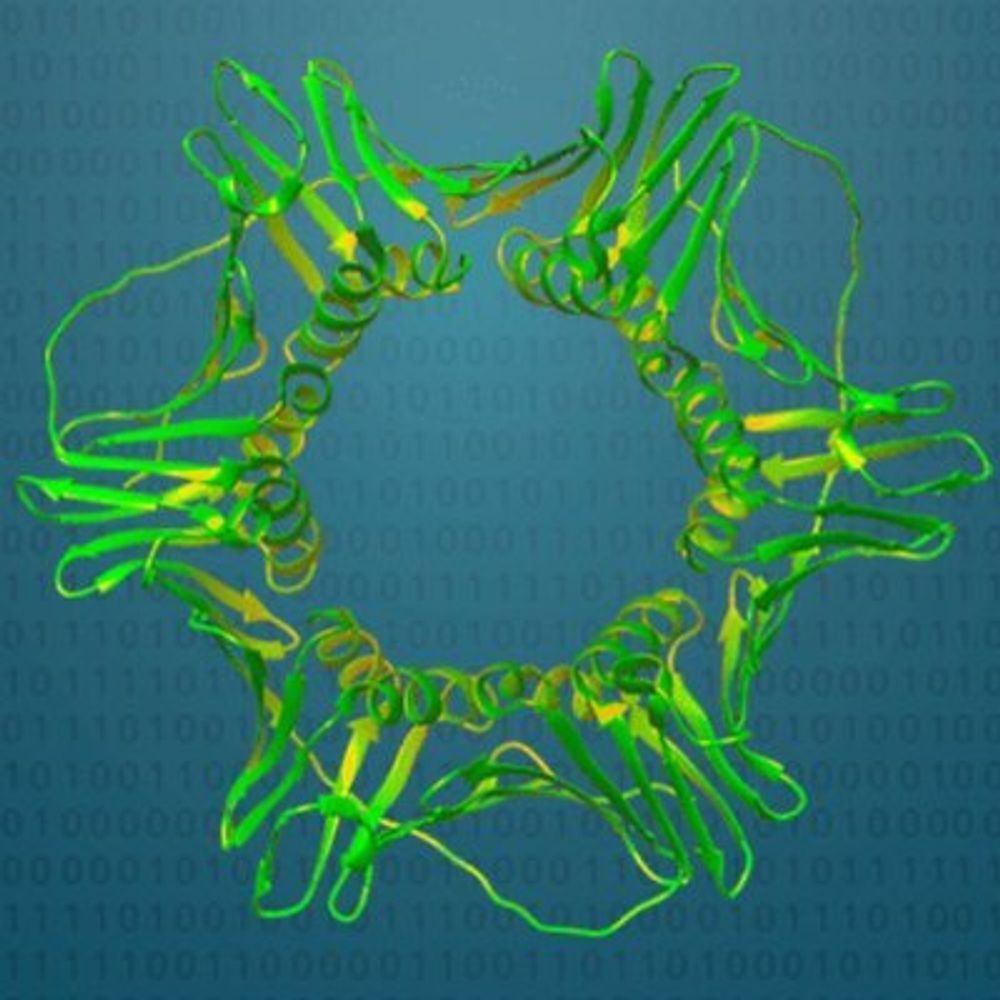
🧬 Now published in Bioinformatics Advances: "Snappy: Fast identification of DNA methylation motifs based on Oxford Nanopore reads"
Full article available: https://doi.org/10.1093/bioadv/vbaf296
Full article available: https://doi.org/10.1093/bioadv/vbaf296

December 15, 2025 at 10:02 AM
🧬 Now published in Bioinformatics Advances: "Snappy: Fast identification of DNA methylation motifs based on Oxford Nanopore reads"
Full article available: https://doi.org/10.1093/bioadv/vbaf296
Full article available: https://doi.org/10.1093/bioadv/vbaf296
Reposted by Anna Maria Niewiadomska

Long read Metagenomics, #phage and #prophage in the gut by Ami Bhatt's group. Beautiful data showing changes in phages over two years
#phagesky
www.nature.com/articles/s41...
#phagesky
www.nature.com/articles/s41...

Long-read metagenomics reveals phage dynamics in the human gut microbiome - Nature
Complex prophage integration dynamics, including low-level induction, cross-family host range and transposase-mediated mobilization, challenge existing paradigms and deepen our understanding of phage–...
www.nature.com
November 26, 2025 at 9:55 PM
Long read Metagenomics, #phage and #prophage in the gut by Ami Bhatt's group. Beautiful data showing changes in phages over two years
#phagesky
www.nature.com/articles/s41...
#phagesky
www.nature.com/articles/s41...
Very pleased to have been able to participate in this, and looking forward to hearing more about the participants' future work!

This afternoon we have @amnbio.bsky.social talking to our participants about implementation of Oxford nanopore technology in metagenomic sequencing. We’re very grateful for ONTs support in making this workshop possible

November 24, 2025 at 5:13 AM
Very pleased to have been able to participate in this, and looking forward to hearing more about the participants' future work!
Reposted by Anna Maria Niewiadomska

🔬 L’équipe de Sciensano dirigée par Margo Maex remporte le #BSFM2025PosterAward 🏆 pour ses travaux sur l’usage d’Oxford Nanopore Technologies dans la surveillance de Salmonella.
Une avancée vers une #surveillance plus rapide et intégrée en #microbiologie !
Une avancée vers une #surveillance plus rapide et intégrée en #microbiologie !

November 21, 2025 at 9:09 AM
🔬 L’équipe de Sciensano dirigée par Margo Maex remporte le #BSFM2025PosterAward 🏆 pour ses travaux sur l’usage d’Oxford Nanopore Technologies dans la surveillance de Salmonella.
Une avancée vers une #surveillance plus rapide et intégrée en #microbiologie !
Une avancée vers une #surveillance plus rapide et intégrée en #microbiologie !
Reposted by Anna Maria Niewiadomska

Nanopore-based ITS2 sequencing maps the global distribution and diversity of human-infecting whipworm (Trichuris)
@pschneeb.bsky.social @noordeen24.bsky.social @swisstph.ch
#parasitology #whipworm
@pschneeb.bsky.social @noordeen24.bsky.social @swisstph.ch
#parasitology #whipworm

Widespread Trichuris incognita reveals hidden diversity and reshapes understanding of human whipworm infections - Nature Communications
Authors used nanopore-based ITS2 sequencing analysis to map the global distribution of human-infecting Trichuris spp. They reveal a wide presence of T. incognita, its zoonotic potential, and provide insights for better control of infections.
bit.ly
November 18, 2025 at 5:40 PM
Nanopore-based ITS2 sequencing maps the global distribution and diversity of human-infecting whipworm (Trichuris)
@pschneeb.bsky.social @noordeen24.bsky.social @swisstph.ch
#parasitology #whipworm
@pschneeb.bsky.social @noordeen24.bsky.social @swisstph.ch
#parasitology #whipworm
Reposted by Anna Maria Niewiadomska

Our manuscript comparing Nanopore vs. Illumina reads for population-level variant calling and genotyping is now out: journals.asm.org/doi/10.1128/... . This work was led by Andrea Schiffer and @arftrhmn.bsky.social.

A comparison of short- and long-read whole-genome sequencing for microbial pathogen epidemiology | mSystems
Genome assembly and variant calling are important steps in microbial population studies
and epidemiology. Most variant calling and genotyping pipelines are designed for Illumina
short sequencing reads...
journals.asm.org
November 13, 2025 at 9:31 PM
Our manuscript comparing Nanopore vs. Illumina reads for population-level variant calling and genotyping is now out: journals.asm.org/doi/10.1128/... . This work was led by Andrea Schiffer and @arftrhmn.bsky.social.
Reposted by Anna Maria Niewiadomska
📢 Save the Date!
The 2nd Nanopore Users Day will take place 🗓️10 March 2026 at the Duclaux Amphitheater, Institut Pasteur (Paris). This edition will be open to external participants!
👉 More details and registration info coming soon!
@chloebaum.bsky.social @pasteur.fr @nanoporetech.com
The 2nd Nanopore Users Day will take place 🗓️10 March 2026 at the Duclaux Amphitheater, Institut Pasteur (Paris). This edition will be open to external participants!
👉 More details and registration info coming soon!
@chloebaum.bsky.social @pasteur.fr @nanoporetech.com

November 7, 2025 at 3:53 PM
📢 Save the Date!
The 2nd Nanopore Users Day will take place 🗓️10 March 2026 at the Duclaux Amphitheater, Institut Pasteur (Paris). This edition will be open to external participants!
👉 More details and registration info coming soon!
@chloebaum.bsky.social @pasteur.fr @nanoporetech.com
The 2nd Nanopore Users Day will take place 🗓️10 March 2026 at the Duclaux Amphitheater, Institut Pasteur (Paris). This edition will be open to external participants!
👉 More details and registration info coming soon!
@chloebaum.bsky.social @pasteur.fr @nanoporetech.com
Reposted by Anna Maria Niewiadomska

Countering illegal wildlife trade needs rapid, reliable species ID in places such as airports. This study describes VeRIF-ID, a portable nanopore DNA method that identifies vertebrate species on-site with >91 % accuracy, offering a fast, low-cost tool against trafficking.

Rapid on-site universal vertebrate species identification via multi-barcode nanopore sequencing
The growing illegal wildlife trade (IWT) threatens biodiversity and is a conduit for zoonotic disease, yet its risk of detection is low. Once processed, trafficked species are difficult to identify…
plos.io
November 12, 2025 at 1:02 PM
Countering illegal wildlife trade needs rapid, reliable species ID in places such as airports. This study describes VeRIF-ID, a portable nanopore DNA method that identifies vertebrate species on-site with >91 % accuracy, offering a fast, low-cost tool against trafficking.