




Ambra Ferrari
@ambrafer.bsky.social
Marie Skłodowska-Curie Fellow @cimecunitrento.bsky.social (Trento, IT) pondering how we (learn to) communicate before and beyond words. https://ambrafer.github.io/
Pinned
Feeling the music: Audiotactile encoding of temporal structure in the human brain
In everyday situations, like a rock party or an organ concert, we feel music vibrating through our bodies. How do these vibrotactile signals influence music processing? How do they aid auditory scene analysis? Combining psychophysics, fMRI and time-resolved EEG decoding, this work reveals how the brain encodes the temporal structure of music (beat and envelope) across audition and touch and uses this information to guide multisensory integration and segregation in simple and more complex perceptual scenes. Participants experienced monophonic and polyphonic piano pieces through auditory, vibrotactile and audiotactile stimulation. Vibrotactile signals improved the detection of a brief target embedded in music, establishing the functional relevance of audiotactile integration in naturalistic settings. fMRI and EEG multivariate decoding revealed that auditory and tactile beat information converged in planum temporale and parietal operculum, albeit through distinct neural dynamics and representations. Superior temporal cortices reliably encoded envelope information from audition, but only weakly from touch. Nevertheless, vibrotactile signals significantly enhanced neural encoding of auditory beat as early as 100 ms, and envelope representations from 250 ms onward. These encoding benefits were associated with superadditive interactions in primary auditory cortex, where tactile signals sharpen and amplify auditory envelope representations. In complex polyphonic music, touch further amplified the segregation and encoding of temporally coherent auditory streams. Our findings highlight the important, yet largely unexplored influence of touch on auditory processing, enriching music perception and supporting auditory scene analysis in real-world environments. ### Competing Interest Statement The authors have declared no competing interest. European Research Council, 309349, 101096659
www.biorxiv.org
🚨NEW PREPRINT🚨
www.biorxiv.org/content/10.6...
w/ Giulio Degano and Uta Noppeney
In this work, we use music to investigate how the brain extracts and integrates multisensory information in real-world environments.
🧠🧪 #psychscisky #neuroskyence
TL;DR 🧵👇
www.biorxiv.org/content/10.6...
w/ Giulio Degano and Uta Noppeney
In this work, we use music to investigate how the brain extracts and integrates multisensory information in real-world environments.
🧠🧪 #psychscisky #neuroskyence
TL;DR 🧵👇
Reposted by Ambra Ferrari

1/7 Can infants recognise the world around them? 👶🧠 As part of the FOUNDCOG project, we scanned 134 awake infants using fMRI. Published today in Nature Neuroscience, our research reveals 2-month-old infants already possess complex visual representations in VVC that align with DNNs.
February 2, 2026 at 4:00 PM
1/7 Can infants recognise the world around them? 👶🧠 As part of the FOUNDCOG project, we scanned 134 awake infants using fMRI. Published today in Nature Neuroscience, our research reveals 2-month-old infants already possess complex visual representations in VVC that align with DNNs.
Reposted by Ambra Ferrari
🚨NEW PREPRINT🚨
www.biorxiv.org/content/10.6...
w/ Giulio Degano and Uta Noppeney
In this work, we use music to investigate how the brain extracts and integrates multisensory information in real-world environments.
🧠🧪 #psychscisky #neuroskyence
TL;DR 🧵👇
www.biorxiv.org/content/10.6...
w/ Giulio Degano and Uta Noppeney
In this work, we use music to investigate how the brain extracts and integrates multisensory information in real-world environments.
🧠🧪 #psychscisky #neuroskyence
TL;DR 🧵👇
Feeling the music: Audiotactile encoding of temporal structure in the human brain
In everyday situations, like a rock party or an organ concert, we feel music vibrating through our bodies. How do these vibrotactile signals influence music processing? How do they aid auditory scene analysis? Combining psychophysics, fMRI and time-resolved EEG decoding, this work reveals how the brain encodes the temporal structure of music (beat and envelope) across audition and touch and uses this information to guide multisensory integration and segregation in simple and more complex perceptual scenes. Participants experienced monophonic and polyphonic piano pieces through auditory, vibrotactile and audiotactile stimulation. Vibrotactile signals improved the detection of a brief target embedded in music, establishing the functional relevance of audiotactile integration in naturalistic settings. fMRI and EEG multivariate decoding revealed that auditory and tactile beat information converged in planum temporale and parietal operculum, albeit through distinct neural dynamics and representations. Superior temporal cortices reliably encoded envelope information from audition, but only weakly from touch. Nevertheless, vibrotactile signals significantly enhanced neural encoding of auditory beat as early as 100 ms, and envelope representations from 250 ms onward. These encoding benefits were associated with superadditive interactions in primary auditory cortex, where tactile signals sharpen and amplify auditory envelope representations. In complex polyphonic music, touch further amplified the segregation and encoding of temporally coherent auditory streams. Our findings highlight the important, yet largely unexplored influence of touch on auditory processing, enriching music perception and supporting auditory scene analysis in real-world environments. ### Competing Interest Statement The authors have declared no competing interest. European Research Council, 309349, 101096659
www.biorxiv.org
January 19, 2026 at 10:37 AM
🚨NEW PREPRINT🚨
www.biorxiv.org/content/10.6...
w/ Giulio Degano and Uta Noppeney
In this work, we use music to investigate how the brain extracts and integrates multisensory information in real-world environments.
🧠🧪 #psychscisky #neuroskyence
TL;DR 🧵👇
www.biorxiv.org/content/10.6...
w/ Giulio Degano and Uta Noppeney
In this work, we use music to investigate how the brain extracts and integrates multisensory information in real-world environments.
🧠🧪 #psychscisky #neuroskyence
TL;DR 🧵👇
🚨NEW PREPRINT🚨
www.biorxiv.org/content/10.6...
w/ Giulio Degano and Uta Noppeney
In this work, we use music to investigate how the brain extracts and integrates multisensory information in real-world environments.
🧠🧪 #psychscisky #neuroskyence
TL;DR 🧵👇
www.biorxiv.org/content/10.6...
w/ Giulio Degano and Uta Noppeney
In this work, we use music to investigate how the brain extracts and integrates multisensory information in real-world environments.
🧠🧪 #psychscisky #neuroskyence
TL;DR 🧵👇
Feeling the music: Audiotactile encoding of temporal structure in the human brain
In everyday situations, like a rock party or an organ concert, we feel music vibrating through our bodies. How do these vibrotactile signals influence music processing? How do they aid auditory scene analysis? Combining psychophysics, fMRI and time-resolved EEG decoding, this work reveals how the brain encodes the temporal structure of music (beat and envelope) across audition and touch and uses this information to guide multisensory integration and segregation in simple and more complex perceptual scenes. Participants experienced monophonic and polyphonic piano pieces through auditory, vibrotactile and audiotactile stimulation. Vibrotactile signals improved the detection of a brief target embedded in music, establishing the functional relevance of audiotactile integration in naturalistic settings. fMRI and EEG multivariate decoding revealed that auditory and tactile beat information converged in planum temporale and parietal operculum, albeit through distinct neural dynamics and representations. Superior temporal cortices reliably encoded envelope information from audition, but only weakly from touch. Nevertheless, vibrotactile signals significantly enhanced neural encoding of auditory beat as early as 100 ms, and envelope representations from 250 ms onward. These encoding benefits were associated with superadditive interactions in primary auditory cortex, where tactile signals sharpen and amplify auditory envelope representations. In complex polyphonic music, touch further amplified the segregation and encoding of temporally coherent auditory streams. Our findings highlight the important, yet largely unexplored influence of touch on auditory processing, enriching music perception and supporting auditory scene analysis in real-world environments. ### Competing Interest Statement The authors have declared no competing interest. European Research Council, 309349, 101096659
www.biorxiv.org
January 19, 2026 at 10:37 AM
🚨NEW PREPRINT🚨
www.biorxiv.org/content/10.6...
w/ Giulio Degano and Uta Noppeney
In this work, we use music to investigate how the brain extracts and integrates multisensory information in real-world environments.
🧠🧪 #psychscisky #neuroskyence
TL;DR 🧵👇
www.biorxiv.org/content/10.6...
w/ Giulio Degano and Uta Noppeney
In this work, we use music to investigate how the brain extracts and integrates multisensory information in real-world environments.
🧠🧪 #psychscisky #neuroskyence
TL;DR 🧵👇
Reposted by Ambra Ferrari
Paper out today in @nathumbehav.nature.com:
1) those groups (women, African Americans, lower SES, rural) that are underrepresented in science have been less trusting of science.
2) If you improve representation in science, you improve trust among those groups.
www.nature.com/articles/s41...
1) those groups (women, African Americans, lower SES, rural) that are underrepresented in science have been less trusting of science.
2) If you improve representation in science, you improve trust among those groups.
www.nature.com/articles/s41...

Representation in science and trust in scientists in the USA - Nature Human Behaviour
Druckman et al. document gaps in trust in scientists in the USA. People from groups less represented among scientists (for example, women and those with lower economic status) are less trusting. Incre...
www.nature.com
December 9, 2025 at 4:21 AM
Paper out today in @nathumbehav.nature.com:
1) those groups (women, African Americans, lower SES, rural) that are underrepresented in science have been less trusting of science.
2) If you improve representation in science, you improve trust among those groups.
www.nature.com/articles/s41...
1) those groups (women, African Americans, lower SES, rural) that are underrepresented in science have been less trusting of science.
2) If you improve representation in science, you improve trust among those groups.
www.nature.com/articles/s41...
Reposted by Ambra Ferrari

We’re happy to share that the website for the 24th International Multisensory Research Forum, which will take place in Genoa, Italy, from 24 to 27 June 2026, is now live:
imrf2026.sciencesconf.org
Save and share the key dates, and stay tuned for more updates. #IMRF2026
imrf2026.sciencesconf.org
Save and share the key dates, and stay tuned for more updates. #IMRF2026

December 10, 2025 at 8:25 AM
We’re happy to share that the website for the 24th International Multisensory Research Forum, which will take place in Genoa, Italy, from 24 to 27 June 2026, is now live:
imrf2026.sciencesconf.org
Save and share the key dates, and stay tuned for more updates. #IMRF2026
imrf2026.sciencesconf.org
Save and share the key dates, and stay tuned for more updates. #IMRF2026
Reposted by Ambra Ferrari

Well this is exciting!
The Department of Psychological & Brain Sciences at Johns Hopkins University (@jhu.edu) invites applications for a full-time tenured or tenure-track faculty member in Cognitive Psychology, in any area and at any rank!
Application + more info: apply.interfolio.com/178146
The Department of Psychological & Brain Sciences at Johns Hopkins University (@jhu.edu) invites applications for a full-time tenured or tenure-track faculty member in Cognitive Psychology, in any area and at any rank!
Application + more info: apply.interfolio.com/178146
Apply - Interfolio
{{$ctrl.$state.data.pageTitle}} - Apply - Interfolio
apply.interfolio.com
December 2, 2025 at 3:18 AM
Well this is exciting!
The Department of Psychological & Brain Sciences at Johns Hopkins University (@jhu.edu) invites applications for a full-time tenured or tenure-track faculty member in Cognitive Psychology, in any area and at any rank!
Application + more info: apply.interfolio.com/178146
The Department of Psychological & Brain Sciences at Johns Hopkins University (@jhu.edu) invites applications for a full-time tenured or tenure-track faculty member in Cognitive Psychology, in any area and at any rank!
Application + more info: apply.interfolio.com/178146
Reposted by Ambra Ferrari

High-level visual surprise is rapidly integrated during perceptual inference!
🚨 New paper 🚨 out now in @cp-iscience.bsky.social with @paulapena.bsky.social and @mruz.bsky.social
www.cell.com/iscience/ful...
Summary 🧵 below 👇
🚨 New paper 🚨 out now in @cp-iscience.bsky.social with @paulapena.bsky.social and @mruz.bsky.social
www.cell.com/iscience/ful...
Summary 🧵 below 👇

Rapid computation of high-level visual surprise
Health sciences
www.cell.com
December 5, 2025 at 2:37 PM
High-level visual surprise is rapidly integrated during perceptual inference!
🚨 New paper 🚨 out now in @cp-iscience.bsky.social with @paulapena.bsky.social and @mruz.bsky.social
www.cell.com/iscience/ful...
Summary 🧵 below 👇
🚨 New paper 🚨 out now in @cp-iscience.bsky.social with @paulapena.bsky.social and @mruz.bsky.social
www.cell.com/iscience/ful...
Summary 🧵 below 👇
Reposted by Ambra Ferrari
I’m happy to share a short opinion piece I’ve just finished, where I revisit the famous Skinner vs. Chomsky exchange on how language is learned through the lens of today’s large language models (before getting mad read the rest) 1/n
osf.io/preprints/ps...
osf.io/preprints/ps...

December 3, 2025 at 10:22 AM
I’m happy to share a short opinion piece I’ve just finished, where I revisit the famous Skinner vs. Chomsky exchange on how language is learned through the lens of today’s large language models (before getting mad read the rest) 1/n
osf.io/preprints/ps...
osf.io/preprints/ps...
This is a great resource for setting (or improving) a lab culture rooted in awareness, fairness, and equity:
📌 Publication: elifesciences.org/articles/108...
📌 Website: safelabs.info
📌 Publication: elifesciences.org/articles/108...
📌 Website: safelabs.info

Research Culture: The SAFE Labs Handbook as a tool for improving lab culture
A survey of more than 200 researchers shows strong support for a new community-driven lab handbook that can be implemented by individual group leaders to reduce conflict and create more positive and e...
elifesciences.org
December 2, 2025 at 11:18 AM
This is a great resource for setting (or improving) a lab culture rooted in awareness, fairness, and equity:
📌 Publication: elifesciences.org/articles/108...
📌 Website: safelabs.info
📌 Publication: elifesciences.org/articles/108...
📌 Website: safelabs.info
Reposted by Ambra Ferrari
Asking informally: does anyone know someone who might be interested in a postdoc focused on understanding changes in memory representations driven by attention using EEG? ⚡️Thanks!
December 1, 2025 at 5:03 AM
Asking informally: does anyone know someone who might be interested in a postdoc focused on understanding changes in memory representations driven by attention using EEG? ⚡️Thanks!
Reposted by Ambra Ferrari

Nature Sci Rep publishes incoherent AI slop. eLife publishes a paper which the reviewers didn't agree with, making all the comments and responses public with thoughtful commentary. One of these journals got delisted by Web of Science for quality concerns from not doing peer review. Guess which one?

November 27, 2025 at 1:35 PM
Nature Sci Rep publishes incoherent AI slop. eLife publishes a paper which the reviewers didn't agree with, making all the comments and responses public with thoughtful commentary. One of these journals got delisted by Web of Science for quality concerns from not doing peer review. Guess which one?
Reposted by Ambra Ferrari
CogSci in Aarhus is hiring, open rank (assi, asso or full prof).
We want somebody working on and teaching computational modelling of cognitive processes and/or social processes. Students are amazing, work/life balance very satisfactory, and colleagues are nice!
international.au.dk/about/profil...
We want somebody working on and teaching computational modelling of cognitive processes and/or social processes. Students are amazing, work/life balance very satisfactory, and colleagues are nice!
international.au.dk/about/profil...

Assistant Professor, Associate Professor or Full Professor of Cognitive Science - Vacancy at Aarhus University
Vacancy at School of Communication and Culture - Linguistics, Cognitive Science and Semiotics, Dept. of, Aarhus University
international.au.dk
November 26, 2025 at 11:38 AM
CogSci in Aarhus is hiring, open rank (assi, asso or full prof).
We want somebody working on and teaching computational modelling of cognitive processes and/or social processes. Students are amazing, work/life balance very satisfactory, and colleagues are nice!
international.au.dk/about/profil...
We want somebody working on and teaching computational modelling of cognitive processes and/or social processes. Students are amazing, work/life balance very satisfactory, and colleagues are nice!
international.au.dk/about/profil...
Reposted by Ambra Ferrari

🚨NEW PUBLICATION ALERT!🚨
The 'Design Features' of Language Revisited (w/ @mperlman.bsky.social @glupyan.bsky.social Koen de Reus & @limorraviv.bsky.social)
Feature Review out now in #OpenAccess in @cp-trendscognsci.bsky.social! #language #linguistics
Paper: doi.org/10.1016/j.ti...
The 'Design Features' of Language Revisited (w/ @mperlman.bsky.social @glupyan.bsky.social Koen de Reus & @limorraviv.bsky.social)
Feature Review out now in #OpenAccess in @cp-trendscognsci.bsky.social! #language #linguistics
Paper: doi.org/10.1016/j.ti...

November 25, 2025 at 7:49 PM
🚨NEW PUBLICATION ALERT!🚨
The 'Design Features' of Language Revisited (w/ @mperlman.bsky.social @glupyan.bsky.social Koen de Reus & @limorraviv.bsky.social)
Feature Review out now in #OpenAccess in @cp-trendscognsci.bsky.social! #language #linguistics
Paper: doi.org/10.1016/j.ti...
The 'Design Features' of Language Revisited (w/ @mperlman.bsky.social @glupyan.bsky.social Koen de Reus & @limorraviv.bsky.social)
Feature Review out now in #OpenAccess in @cp-trendscognsci.bsky.social! #language #linguistics
Paper: doi.org/10.1016/j.ti...
Reposted by Ambra Ferrari

By mapping connections among researchers, Neurotree makes it possible to trace how the field has evolved and to visualize how shifts in lab size, training and other factors can shape its direction, writes founder @stephenvdavid.bsky.social.
bit.ly/4od0SiL
#neuroskyence #StateOfNeuroscience
bit.ly/4od0SiL
#neuroskyence #StateOfNeuroscience

Tracing neuroscience’s family tree to track its growth
By mapping connections among researchers, Neurotree makes it possible to see how the field has evolved and what factors shape its direction.
www.thetransmitter.org
November 25, 2025 at 2:08 PM
By mapping connections among researchers, Neurotree makes it possible to trace how the field has evolved and to visualize how shifts in lab size, training and other factors can shape its direction, writes founder @stephenvdavid.bsky.social.
bit.ly/4od0SiL
#neuroskyence #StateOfNeuroscience
bit.ly/4od0SiL
#neuroskyence #StateOfNeuroscience
Reposted by Ambra Ferrari

Online Now: Hierarchical interactions between sensory cortices defy predictive coding

Hierarchical interactions between sensory cortices defy predictive coding
Perceptual experience depends on recurrent interactions between lower and higher cortices. One theory, predictive coding, posits that feedback from higher to lower brain regions decreases neuronal activity predicted by higher-level representations. Despite the widespread adoption of predictive coding in neuroscience, the correspondence to neurophysiological findings in sensory cortices remains elusive. Here, we review how the canonical patterns of intra- and inter-cortical interactions that occur during perception and shifts of attention deviate from those predicted by predictive coding. We argue that these circuit interactions are better captured by alternative theories, which we summarize under the umbrella term BELIEF. We review how BELIEF theories account for the inter-areal interactions during attentive perception.
dlvr.it
October 20, 2025 at 7:04 PM
Online Now: Hierarchical interactions between sensory cortices defy predictive coding
Reposted by Ambra Ferrari
We're seeing lots of headlines about the catastrophic impact of massive data center expansion. But what else could data centers look like?
In my perpetual quest to seek out alternative technofutures, I want to highlight the really cool work of Keolu Fox.
🧵
In my perpetual quest to seek out alternative technofutures, I want to highlight the really cool work of Keolu Fox.
🧵

October 22, 2025 at 2:18 AM
We're seeing lots of headlines about the catastrophic impact of massive data center expansion. But what else could data centers look like?
In my perpetual quest to seek out alternative technofutures, I want to highlight the really cool work of Keolu Fox.
🧵
In my perpetual quest to seek out alternative technofutures, I want to highlight the really cool work of Keolu Fox.
🧵
Reposted by Ambra Ferrari

Dr Daniël Lakens presents 'When & How to Deviate From a Preregistration.' Essential for research integrity. Register:
www.eventbrite.co.uk/e/when-and-h...
#Preregistration #OpenScience #DataScience #Statistics #AcademicResearch @lakens.bsky.social
www.eventbrite.co.uk/e/when-and-h...
#Preregistration #OpenScience #DataScience #Statistics #AcademicResearch @lakens.bsky.social

When and How to Deviate From a Preregistration, with Prof Daniël Lakens
Prof Daniël Lakens will share guidance on appropriate circumstances and methods for deviating from a pre-registration
www.eventbrite.co.uk
October 20, 2025 at 12:52 PM
Dr Daniël Lakens presents 'When & How to Deviate From a Preregistration.' Essential for research integrity. Register:
www.eventbrite.co.uk/e/when-and-h...
#Preregistration #OpenScience #DataScience #Statistics #AcademicResearch @lakens.bsky.social
www.eventbrite.co.uk/e/when-and-h...
#Preregistration #OpenScience #DataScience #Statistics #AcademicResearch @lakens.bsky.social
Reposted by Ambra Ferrari

I’m looking for a postdoc to join my lab and work on Multi-Brain Stimulation (MBS).
Learn more about the project and how to apply below 👇
This position is funded by the @erc.europa.eu
Reposts are very welcome 🙏
#Postdoc #Neuroscience #BrainStimulation #EEG #SocialNeuroscience
Learn more about the project and how to apply below 👇
This position is funded by the @erc.europa.eu
Reposts are very welcome 🙏
#Postdoc #Neuroscience #BrainStimulation #EEG #SocialNeuroscience
October 17, 2025 at 7:12 AM
I’m looking for a postdoc to join my lab and work on Multi-Brain Stimulation (MBS).
Learn more about the project and how to apply below 👇
This position is funded by the @erc.europa.eu
Reposts are very welcome 🙏
#Postdoc #Neuroscience #BrainStimulation #EEG #SocialNeuroscience
Learn more about the project and how to apply below 👇
This position is funded by the @erc.europa.eu
Reposts are very welcome 🙏
#Postdoc #Neuroscience #BrainStimulation #EEG #SocialNeuroscience
Reposted by Ambra Ferrari
A thought-provoking piece in Nature Neuroscience by many neuroscience colleagues: "Science must break its silence to rebuild public trust". Lots to think about here.
www.nature.com/articles/s41...
www.nature.com/articles/s41...

October 14, 2025 at 8:51 PM
A thought-provoking piece in Nature Neuroscience by many neuroscience colleagues: "Science must break its silence to rebuild public trust". Lots to think about here.
www.nature.com/articles/s41...
www.nature.com/articles/s41...
Reposted by Ambra Ferrari

If this happened at a steel plant there would be talk of government bail out to secure jobs
Cuts equivalent to 15,000 jobs planned at UK universities – UCU www.timeshighereducation.com/news/cuts-eq...

Cuts equivalent to 15,000 jobs planned at UK universities – UCU
Proposed job losses almost triple since March as unions prepare to vote on nationwide industrial action
www.timeshighereducation.com
October 13, 2025 at 9:50 AM
If this happened at a steel plant there would be talk of government bail out to secure jobs
So important
As a primatologist, Jane Goodall was a huge inspiration to me. I admired the way she describes chimpanzee behavior with such detail and empathy, and she’s inspired so many people and advocated for chimpanzee conservation and welfare.
However, I'm dismayed at what her narrative leaves out (1/10)
However, I'm dismayed at what her narrative leaves out (1/10)

October 11, 2025 at 4:29 PM
So important
Reposted by Ambra Ferrari
🫁❤️New preprint out: The social, decoupled self
We show effects of interpersonal synchronization of physiological rhythms on intrapersonal cardiorespiratory coupling: when we sync our breathing, our breathing–heart rhythms decouple, with a perturbed phase-relationship
www.biorxiv.org/content/10.1...
We show effects of interpersonal synchronization of physiological rhythms on intrapersonal cardiorespiratory coupling: when we sync our breathing, our breathing–heart rhythms decouple, with a perturbed phase-relationship
www.biorxiv.org/content/10.1...

The social, decoupled self: interpersonal synchronization of breathing alters intrapersonal cardiorespiratory coupling
People synchronize their periodic behavioural and physiological rhythms with each other during social interaction. While this interpersonal synchronization has largely been associated with positive ef...
www.biorxiv.org
October 4, 2025 at 11:47 AM
🫁❤️New preprint out: The social, decoupled self
We show effects of interpersonal synchronization of physiological rhythms on intrapersonal cardiorespiratory coupling: when we sync our breathing, our breathing–heart rhythms decouple, with a perturbed phase-relationship
www.biorxiv.org/content/10.1...
We show effects of interpersonal synchronization of physiological rhythms on intrapersonal cardiorespiratory coupling: when we sync our breathing, our breathing–heart rhythms decouple, with a perturbed phase-relationship
www.biorxiv.org/content/10.1...
Reposted by Ambra Ferrari

I continue to believe sharing example materials is useful in academia, so in that spirit, my tenure statements and CV are now available on our Resources for Researchers website (bottom of the New PI page: www.plasticityinneurodevelopmentlab.com/resourcesfor...)
September 30, 2025 at 7:26 PM
I continue to believe sharing example materials is useful in academia, so in that spirit, my tenure statements and CV are now available on our Resources for Researchers website (bottom of the New PI page: www.plasticityinneurodevelopmentlab.com/resourcesfor...)
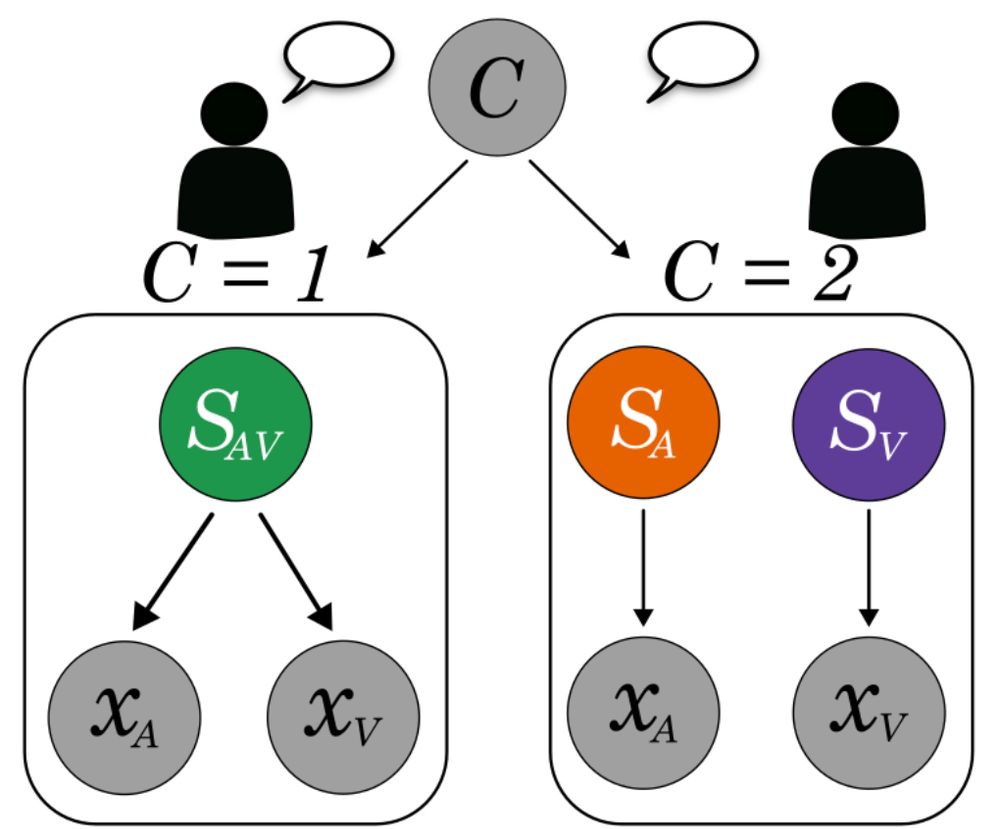
🚨NEW PAPER🚨 Prior expectations guide multisensory integration during face-to-face communication
Out now in @plos.org Computational Biology
journals.plos.org/ploscompbiol...
w/ @giuliamz.bsky.social et al. @cimecunitrento.bsky.social
🧠🧪 #psychscisky #neuroskyence
TL;DR 🧵👇
Out now in @plos.org Computational Biology
journals.plos.org/ploscompbiol...
w/ @giuliamz.bsky.social et al. @cimecunitrento.bsky.social
🧠🧪 #psychscisky #neuroskyence
TL;DR 🧵👇
September 24, 2025 at 7:39 AM
🚨NEW PAPER🚨 Prior expectations guide multisensory integration during face-to-face communication
Out now in @plos.org Computational Biology
journals.plos.org/ploscompbiol...
w/ @giuliamz.bsky.social et al. @cimecunitrento.bsky.social
🧠🧪 #psychscisky #neuroskyence
TL;DR 🧵👇
Out now in @plos.org Computational Biology
journals.plos.org/ploscompbiol...
w/ @giuliamz.bsky.social et al. @cimecunitrento.bsky.social
🧠🧪 #psychscisky #neuroskyence
TL;DR 🧵👇
Reposted by Ambra Ferrari

Are you an early career researcher (undergrad to postdoc) who could use advice about navigating peer review? Are you stuck on a manuscript submission or revision? Have general questions about peer review?
Schedule a 30-min chat with any member of @reviewerzero.bsky.social! We'd love to help 😊
Schedule a 30-min chat with any member of @reviewerzero.bsky.social! We'd love to help 😊

Formative And Interactive Review (FAIR)
🌱 Formative And Interactive Review (FAIR) 🌱
Reviewer Zero's Formative and Interactive Review (FAIR) draft feedback program is designed for early career researchers (ECRs) to receive feedback on a draf...
www.reviewerzero.net
September 8, 2025 at 8:20 PM
Are you an early career researcher (undergrad to postdoc) who could use advice about navigating peer review? Are you stuck on a manuscript submission or revision? Have general questions about peer review?
Schedule a 30-min chat with any member of @reviewerzero.bsky.social! We'd love to help 😊
Schedule a 30-min chat with any member of @reviewerzero.bsky.social! We'd love to help 😊