



Woolly Rhino was not experiencing population decline prior to its rapid extinction ~14,000 years ago, based on DNA recovered from mummified wolf stomach in Siberian permafrost. Instead, extinction likely due to rapid environmental change.
🧪🌎🧬🖥️ #EvoSky #Genomics
pmc.ncbi.nlm.nih.gov/articles/PMC...
🧪🌎🧬🖥️ #EvoSky #Genomics
pmc.ncbi.nlm.nih.gov/articles/PMC...

Genome Shows no Recent Inbreeding in Near-Extinction Woolly Rhinoceros Sample Found in Ancient Wolf's Stomach
Using temporarily spaced high-coverage ancient genomes, we can assess population decline prior to extinction. However, finding suitable ancient remains for recovering this type of data is challenging. Here, we sequenced a high-coverage genome from ...
pmc.ncbi.nlm.nih.gov
January 17, 2026 at 1:33 AM
Woolly Rhino was not experiencing population decline prior to its rapid extinction ~14,000 years ago, based on DNA recovered from mummified wolf stomach in Siberian permafrost. Instead, extinction likely due to rapid environmental change.
🧪🌎🧬🖥️ #EvoSky #Genomics
pmc.ncbi.nlm.nih.gov/articles/PMC...
🧪🌎🧬🖥️ #EvoSky #Genomics
pmc.ncbi.nlm.nih.gov/articles/PMC...

🔍 Behind the Paper: 'Brains in the Branches: how chickadees outsmart our harsh winters.' Did you know chickadee have an astonishing memory? 🌍 In the harsh eastern Sierra Nevada, these tiny birds survive by hiding & retrieving thousands of seeds. 🔗 bit.ly/4aVt8Ue #EvoSky <a href="https://bsky.app/profile/did:plc:ysc73isz7jkgr4ozyn6azo77" class="hover:underline text-blue-600 dark:text-sky-400 no-card-link" target="_blank" rel="noopener" data-link="bsky-mention">@springer.springernature.com

Brains in the Branches: how chickadees outsmart our harsh winters
You’ve probably heard of a chickadee, but did you know they have an astonishing memory? In the harsh eastern Sierra Nevada, these tiny birds survive by hiding and retrieving thousands of seeds—making them a powerful model for studying how specialized brain functions evolve. Tune in to learn more!
bit.ly
January 14, 2026 at 4:00 PM
🔍 Behind the Paper: 'Brains in the Branches: how chickadees outsmart our harsh winters.' Did you know chickadee have an astonishing memory? 🌍 In the harsh eastern Sierra Nevada, these tiny birds survive by hiding & retrieving thousands of seeds. 🔗 bit.ly/4aVt8Ue #EvoSky <a href="https://bsky.app/profile/did:plc:ysc73isz7jkgr4ozyn6azo77" class="hover:underline text-blue-600 dark:text-sky-400 no-card-link" target="_blank" rel="noopener" data-link="bsky-mention">@springer.springernature.com
Reminder 📢 We are advertising a postdoctoral position in #philbio or #philphysics to work on an interdisciplinary project that adopts the lens of self-organization & active matter to explore the boundary between living and nonliving systems👇 www.kuleuven.be/personeel/jo... #philjobs #philsci #evosky
January 13, 2026 at 6:49 PM
Reminder 📢 We are advertising a postdoctoral position in #philbio or #philphysics to work on an interdisciplinary project that adopts the lens of self-organization & active matter to explore the boundary between living and nonliving systems👇 www.kuleuven.be/personeel/jo... #philjobs #philsci #evosky

Ecologist friends! Can anyone recommend papers that link species abundance distributions to ecological processes? I'm interested in what inferences can be made from SADs, and the theoretical basis for those inferences. Thanks 🫶
January 12, 2026 at 3:34 PM


1/n New paper alert!
Bottlenecks are common in life cycles, but how do they shape the evolution of multiple cooperative traits at once? We tested this in M. xanthus under stringent vs relaxed bottlenecks.
Bottlenecks are common in life cycles, but how do they shape the evolution of multiple cooperative traits at once? We tested this in M. xanthus under stringent vs relaxed bottlenecks.

Population bottlenecks shape the evolution of #cooperative traits in #Myxococcus via #LifeCycle trade-offs. @iamsamayp.bsky.social &co show that stringent bottlenecks favor growth & sporulation, while relaxed bottlenecks favor predation & germination @plosbiology.org 🧪 plos.io/3N1nia7
January 9, 2026 at 4:51 PM

"The Year in Neanderthals".
It is interesting to see, among other things, how the arguments regarding the #speciesproblem have evolved. Which option most deprives the #Neanderthals of their evolutionary individuality? As you know, I do have a few thoughts 🙃👇
#hpbio #philsky #evosky #paleosky 🏺
It is interesting to see, among other things, how the arguments regarding the #speciesproblem have evolved. Which option most deprives the #Neanderthals of their evolutionary individuality? As you know, I do have a few thoughts 🙃👇
#hpbio #philsky #evosky #paleosky 🏺

The Year in Neanderthals
www.nytimes.com
January 6, 2026 at 9:34 AM
"The Year in Neanderthals".
It is interesting to see, among other things, how the arguments regarding the #speciesproblem have evolved. Which option most deprives the #Neanderthals of their evolutionary individuality? As you know, I do have a few thoughts 🙃👇
#hpbio #philsky #evosky #paleosky 🏺
It is interesting to see, among other things, how the arguments regarding the #speciesproblem have evolved. Which option most deprives the #Neanderthals of their evolutionary individuality? As you know, I do have a few thoughts 🙃👇
#hpbio #philsky #evosky #paleosky 🏺
In his forthcoming 📃 in @jrnlofphil.bsky.social, Grant Ramsey shows that a long-standing thesis held by philosophers of biology & evolutionary biologists—that fitness depends on population size, n—is based on conceptual & mathematical errors 👇 philsci-archive.pitt.edu/27701/ #philsky #HPBio #evosky

January 5, 2026 at 4:05 PM
In his forthcoming 📃 in @jrnlofphil.bsky.social, Grant Ramsey shows that a long-standing thesis held by philosophers of biology & evolutionary biologists—that fitness depends on population size, n—is based on conceptual & mathematical errors 👇 philsci-archive.pitt.edu/27701/ #philsky #HPBio #evosky
New genomics study points to the expansion of CAZymes (lignocellulose degradation) in wood-feeding termites, associated with genome enlargement and adaptive radiation during their divergence from wood-eating roaches.
🪳 🧪🌎🧬🖥️ #Genomics #EvoSky #Insects #ArthroSky
www.nature.com/articles/s41...
🪳 🧪🌎🧬🖥️ #Genomics #EvoSky #Insects #ArthroSky
www.nature.com/articles/s41...

Unravelling the evolution of wood-feeding in termites with 47 high-resolution genome assemblies - Nature Communications
Termites, the largest lineage of non-hymenopteran social insects, are important decomposers of plant organic matter in the tropics. Here, the authors sequence the genomes of 45 termites and two cockro...
www.nature.com
December 29, 2025 at 6:16 PM
New genomics study points to the expansion of CAZymes (lignocellulose degradation) in wood-feeding termites, associated with genome enlargement and adaptive radiation during their divergence from wood-eating roaches.
🪳 🧪🌎🧬🖥️ #Genomics #EvoSky #Insects #ArthroSky
www.nature.com/articles/s41...
🪳 🧪🌎🧬🖥️ #Genomics #EvoSky #Insects #ArthroSky
www.nature.com/articles/s41...
Rapid compensatory evolution within a multiprotein complex preserves telomere integrity
#evolution #evoSky
www.science.org/doi/10.1126/...
#evolution #evoSky
www.science.org/doi/10.1126/...

Rapid compensatory evolution within a multiprotein complex preserves telomere integrity
Intragenomic conflict with selfish genetic elements spurs adaptive changes in subunits of essential multiprotein complexes. Whether and how these adaptive changes disrupt interactions within such comp...
www.science.org
December 28, 2025 at 4:45 PM
Rapid compensatory evolution within a multiprotein complex preserves telomere integrity
#evolution #evoSky
www.science.org/doi/10.1126/...
#evolution #evoSky
www.science.org/doi/10.1126/...
Infrared radiation is an ancient pollination signal
#evolution #EvolutionaryBiology #evoSky #cycads #beetles
www.science.org/doi/10.1126/...
#evolution #EvolutionaryBiology #evoSky #cycads #beetles
www.science.org/doi/10.1126/...

Infrared radiation is an ancient pollination signal
Color and scent are well-known pollinator cues. Some plants also produce heat, but its role remains unclear. Here, we report that plant-generated thermal infrared radiation serves as a pollination sig...
www.science.org
December 27, 2025 at 6:39 PM
Infrared radiation is an ancient pollination signal
#evolution #EvolutionaryBiology #evoSky #cycads #beetles
www.science.org/doi/10.1126/...
#evolution #EvolutionaryBiology #evoSky #cycads #beetles
www.science.org/doi/10.1126/...
Biomechanics of the mandibular middle ear of the cynodont Thrinaxodon and the evolution of mammal hearing
#evolution #EvolutionaryBiology #evoSky
www.pnas.org/doi/10.1073/...
#evolution #EvolutionaryBiology #evoSky
www.pnas.org/doi/10.1073/...
PNAS
Proceedings of the National Academy of Sciences (PNAS), a peer reviewed journal of the National Academy of Sciences (NAS) - an authoritative source of high-impact, original research that broadly spans...
www.pnas.org
December 27, 2025 at 5:10 PM
Biomechanics of the mandibular middle ear of the cynodont Thrinaxodon and the evolution of mammal hearing
#evolution #EvolutionaryBiology #evoSky
www.pnas.org/doi/10.1073/...
#evolution #EvolutionaryBiology #evoSky
www.pnas.org/doi/10.1073/...

Looking for a PhD in palaeontology or associated fields? Just a heads up that we have a list of opportunities on the @thepalass.bsky.social website:
palass.org/phd-opportun...
⚒️🧪🦀🦑 #evosky
(If you're advertising one, you can add it to our listings too: palass.org/form/webform... )
palass.org/phd-opportun...
⚒️🧪🦀🦑 #evosky
(If you're advertising one, you can add it to our listings too: palass.org/form/webform... )
PhD Opportunities | The Palaeontological Association
palass.org
December 22, 2025 at 12:20 PM
Looking for a PhD in palaeontology or associated fields? Just a heads up that we have a list of opportunities on the @thepalass.bsky.social website:
palass.org/phd-opportun...
⚒️🧪🦀🦑 #evosky
(If you're advertising one, you can add it to our listings too: palass.org/form/webform... )
palass.org/phd-opportun...
⚒️🧪🦀🦑 #evosky
(If you're advertising one, you can add it to our listings too: palass.org/form/webform... )

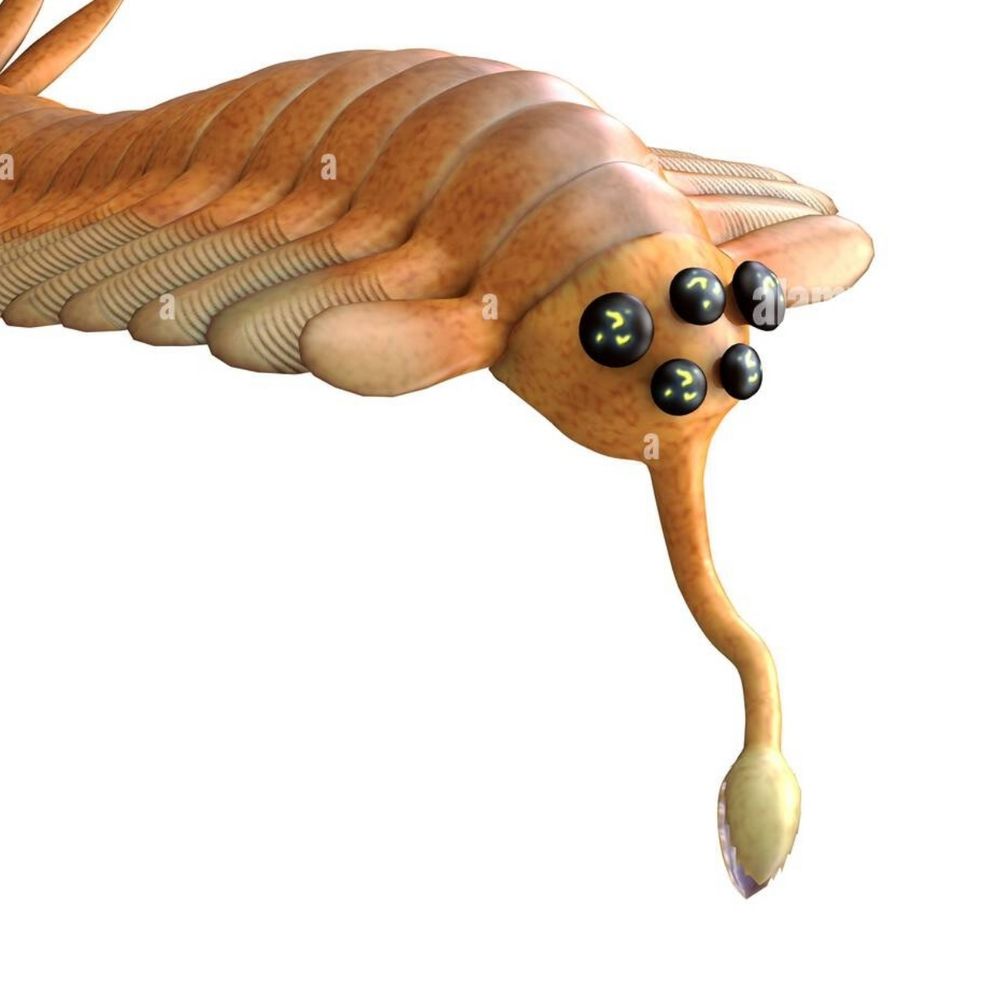
My new Gould paper is out today in Paleobiology (OA)! It is, in effect, a synthesis of some of my historical work on Stephen Jay Gould’s early career, which explores the curious position of punctuated equilibria in his early vision for evolutionary paleontology
www.extinctblog.org/palaeonews/2...
www.extinctblog.org/palaeonews/2...

Max’s New Gould paper — Extinct
My new paper in Paleobiology (OA), on some lesser known aspects of the early history of punctuated equilibria, is available to read online. It is, in effect, a synthesis of some of my older work on ...
www.extinctblog.org
December 20, 2025 at 1:02 AM
The variability of evolvability: Properties of dynamic fitness landscapes determine how phenotypic variability evolves
#evolution #evoSky #DigitalEvolution
www.pnas.org/doi/10.1073/...
#evolution #evoSky #DigitalEvolution
www.pnas.org/doi/10.1073/...

The variability of evolvability: Properties of dynamic fitness landscapes determine how phenotypic variability evolves | PNAS
The magnitude and shape of phenotypic variation depends on properties of the genotype-to-phenotype
(GP) map, which itself can evolve over time. The...
www.pnas.org
December 20, 2025 at 12:17 AM
The variability of evolvability: Properties of dynamic fitness landscapes determine how phenotypic variability evolves
#evolution #evoSky #DigitalEvolution
www.pnas.org/doi/10.1073/...
#evolution #evoSky #DigitalEvolution
www.pnas.org/doi/10.1073/...

Call for Abstracts Open for our symposium in @csee-scee.bsky.social May 2026 (Toronto): Microbial symbiosis: disturbance, adaptation, and the parasitism-mutualism continuum! 🦠 🐻❄️ See u there!
@jingdi.bsky.social @tommytraverscook.bsky.social @csee-sceemtgs.bsky.social #SymbioSky #EvoSky #MicroSky
@jingdi.bsky.social @tommytraverscook.bsky.social @csee-sceemtgs.bsky.social #SymbioSky #EvoSky #MicroSky
December 17, 2025 at 8:38 PM
Call for Abstracts Open for our symposium in @csee-scee.bsky.social May 2026 (Toronto): Microbial symbiosis: disturbance, adaptation, and the parasitism-mutualism continuum! 🦠 🐻❄️ See u there!
@jingdi.bsky.social @tommytraverscook.bsky.social @csee-sceemtgs.bsky.social #SymbioSky #EvoSky #MicroSky
@jingdi.bsky.social @tommytraverscook.bsky.social @csee-sceemtgs.bsky.social #SymbioSky #EvoSky #MicroSky


Have you ever wondered: just how strong *is* the evidence for Muller's ratchet on mtDNA?
Well, wonder no more!
(Project led by Yu Mo, with @smishra677.bsky.social and @yadirapga.bsky.social)
"No molecular evidence for Muller's ratchet in mitochondrial genomes"
www.biorxiv.org/content/10.6...
Well, wonder no more!
(Project led by Yu Mo, with @smishra677.bsky.social and @yadirapga.bsky.social)
"No molecular evidence for Muller's ratchet in mitochondrial genomes"
www.biorxiv.org/content/10.6...

No molecular evidence for Muller's ratchet in mitochondrial genomes
Muller's ratchet predicts that non-recombining genomes can accumulate deleterious mutations, though molecular evidence for it is rare. Previous studies have tried to detect ratchet-like behavior in mi...
www.biorxiv.org
December 17, 2025 at 4:20 PM
A brief natural history of misinformation
#ecology #evolution #evoSky #scienceSky
royalsocietypublishing.org/rsif/article...
#ecology #evolution #evoSky #scienceSky
royalsocietypublishing.org/rsif/article...

A brief natural history of misinformation
Abstract. The idea that organisms benefit by acquiring information through social connections is a cornerstone of our understanding of social evolution and
royalsocietypublishing.org
December 14, 2025 at 4:22 AM
A brief natural history of misinformation
#ecology #evolution #evoSky #scienceSky
royalsocietypublishing.org/rsif/article...
#ecology #evolution #evoSky #scienceSky
royalsocietypublishing.org/rsif/article...

Congratulations to @alexrob.bsky.social , @alisonfeder.bsky.social , and Ben Kerr on this beautiful study, using evolutionary theory to study antiviral resistance dynamics when resistance is social...
#socialviruses #evosky 🧪
#socialviruses #evosky 🧪
So excited to share this work led by @alexrob.bsky.social with Ben Kerr!
We investigated a poliovirus capsid inhibitor that exploits a breakdown in the genotype-phenotype map to prevent drug resistance evolution. Or does it?
See Alex's thread, but a few extras:
#socialviruses #evosky #virosky 🧪
We investigated a poliovirus capsid inhibitor that exploits a breakdown in the genotype-phenotype map to prevent drug resistance evolution. Or does it?
See Alex's thread, but a few extras:
#socialviruses #evosky #virosky 🧪
My first lead author paper is out with Ben Kerr and @alisonfeder.bsky.social! We found that making an antiviral too strong can sometimes make resistance easier to evolve. This has implications for how we design drugs, choose doses, and think about viral evolution in the face of treatment. (1/n)
December 13, 2025 at 12:24 AM
Congratulations to @alexrob.bsky.social , @alisonfeder.bsky.social , and Ben Kerr on this beautiful study, using evolutionary theory to study antiviral resistance dynamics when resistance is social...
#socialviruses #evosky 🧪
#socialviruses #evosky 🧪

So excited to share this work led by @alexrob.bsky.social with Ben Kerr!
We investigated a poliovirus capsid inhibitor that exploits a breakdown in the genotype-phenotype map to prevent drug resistance evolution. Or does it?
See Alex's thread, but a few extras:
#socialviruses #evosky #virosky 🧪
We investigated a poliovirus capsid inhibitor that exploits a breakdown in the genotype-phenotype map to prevent drug resistance evolution. Or does it?
See Alex's thread, but a few extras:
#socialviruses #evosky #virosky 🧪
My first lead author paper is out with Ben Kerr and @alisonfeder.bsky.social! We found that making an antiviral too strong can sometimes make resistance easier to evolve. This has implications for how we design drugs, choose doses, and think about viral evolution in the face of treatment. (1/n)

Intracellular interactions shape antiviral resistance outcomes in poliovirus via eco-evolutionary feedback - Nature Ecology & Evolution
A model of intrahost poliovirus replication shows that, after several rounds of replication, pocapavir, a poliovirus capsid inhibitor, collapses viral density, preventing intracellular interactions th...
www.nature.com
December 10, 2025 at 9:07 PM
So excited to share this work led by @alexrob.bsky.social with Ben Kerr!
We investigated a poliovirus capsid inhibitor that exploits a breakdown in the genotype-phenotype map to prevent drug resistance evolution. Or does it?
See Alex's thread, but a few extras:
#socialviruses #evosky #virosky 🧪
We investigated a poliovirus capsid inhibitor that exploits a breakdown in the genotype-phenotype map to prevent drug resistance evolution. Or does it?
See Alex's thread, but a few extras:
#socialviruses #evosky #virosky 🧪

@umdentomology.bsky.social graduate student Jenan El-Hifnawi (B.S. ’22, biological sciences) is studying the evolutionary history of bees in the Andes 🐝
Learn about her research experience with Entomology's Anahí Espindola (@analyssi.bsky.social) ⤵️ #EvoSky
Learn about her research experience with Entomology's Anahí Espindola (@analyssi.bsky.social) ⤵️ #EvoSky

Meet UMD Entomology Graduate Student Jenan El-Hifnawi | College of Computer, Mathematical, and Natural Sciences | University of Maryland
Jenan El-Hifnawi (B.S.
go.umd.edu
December 9, 2025 at 2:59 PM
@umdentomology.bsky.social graduate student Jenan El-Hifnawi (B.S. ’22, biological sciences) is studying the evolutionary history of bees in the Andes 🐝
Learn about her research experience with Entomology's Anahí Espindola (@analyssi.bsky.social) ⤵️ #EvoSky
Learn about her research experience with Entomology's Anahí Espindola (@analyssi.bsky.social) ⤵️ #EvoSky

December 8, 2025 at 5:15 PM
The Fate of Behavioral Modernity now out in BiolTheory (@biologicaltheory.bsky.social) !
Not OA, but you can access the PDF here:
rdcu.be/eTFFX
I hope it helps open up a disenchanted conversation abt the evolution of the concept & possible ways forward.
#philbio #philsky #evosky #archaeosky 🏺💀
Not OA, but you can access the PDF here:
rdcu.be/eTFFX
I hope it helps open up a disenchanted conversation abt the evolution of the concept & possible ways forward.
#philbio #philsky #evosky #archaeosky 🏺💀

The Fate of Behavioral Modernity - Biological Theory
Biological Theory - Over the past twenty years, empirical and theoretical advances have significantly reshaped the research agenda on “behavioral modernity” and its conceptualization....
link.springer.com
December 8, 2025 at 2:30 PM
The Fate of Behavioral Modernity now out in BiolTheory (@biologicaltheory.bsky.social) !
Not OA, but you can access the PDF here:
rdcu.be/eTFFX
I hope it helps open up a disenchanted conversation abt the evolution of the concept & possible ways forward.
#philbio #philsky #evosky #archaeosky 🏺💀
Not OA, but you can access the PDF here:
rdcu.be/eTFFX
I hope it helps open up a disenchanted conversation abt the evolution of the concept & possible ways forward.
#philbio #philsky #evosky #archaeosky 🏺💀
Come work with us! We are looking for a postdoc in #philbio or #philphysics to work on an interdisciplinary project that adopts the lens of self-organization & active matter to explore the boundary between living & nonliving systems www.kuleuven.be/personeel/jo... #academicsky #philjobs #HPS #evosky
December 8, 2025 at 11:40 AM
Come work with us! We are looking for a postdoc in #philbio or #philphysics to work on an interdisciplinary project that adopts the lens of self-organization & active matter to explore the boundary between living & nonliving systems www.kuleuven.be/personeel/jo... #academicsky #philjobs #HPS #evosky
December 8, 2025 at 11:21 AM
Come work with us! We are looking for a postdoc in #philbio or #philphysics to work on an interdisciplinary project that adopts the lens of self-organization & active matter to explore the boundary between living & nonliving systems www.kuleuven.be/personeel/jo... #academicsky #philjobs #HPS #evosky
Biology Professor Sean B. Carroll joined the @pbs.org NOVA podcast to reveal the hidden rules behind nature's creativity and the genetic toolkit that makes it possible. #EvoSky

Evolution of New Species, Venom, Wings, and More | Extended Interview with Sean B. Carroll
<p>How does evolution invent entirely new things, like limbs, wings, and venom? Evolutionary biologist Sean B. Carroll joins us to reveal the hidden rules behind nature’s creativity and the genetic to...
player.fm
December 5, 2025 at 5:29 PM