



This study reveals that #lncRNA #Maternally expressed gene 3 (MEG3) suppresses #EpithelialMesenchymalTransition by modulating #Ecadherin via Snail/#MAPK regulation, positioning MEG3 as a potential #therapeutic target for #BladderCancer. #medsky
To read:
To read:

LncRNA MEG3 Inhibits the Epithelial-mesenchymal Transition of Bladder Cancer Cells through the Snail/E-cadherin Axis - Current Medical Science
Objective This study aimed to investigate the role of the long noncoding RNA (lncRNA) maternally expressed gene 3 (MEG3) in the epithelial-mesenchymal transition (EMT) of bladder cancer cells and the…
link.springer.com
October 3, 2025 at 12:30 PM
This study reveals that #lncRNA #Maternally expressed gene 3 (MEG3) suppresses #EpithelialMesenchymalTransition by modulating #Ecadherin via Snail/#MAPK regulation, positioning MEG3 as a potential #therapeutic target for #BladderCancer. #medsky
To read:
To read:

Excited to share our latest pre-print “Soluble E-cadherin Drives Brain Metastasis in Inflammatory Breast Cancer” led by the outstanding Xiaoding Hu, an instructor in my lab. #Breastcancer #Brainmetastasis #IBC #Ecadherin #ReactiveAstrocytes #CXCR2
👉 biorxiv.org/content/10.110…
👉 biorxiv.org/content/10.110…
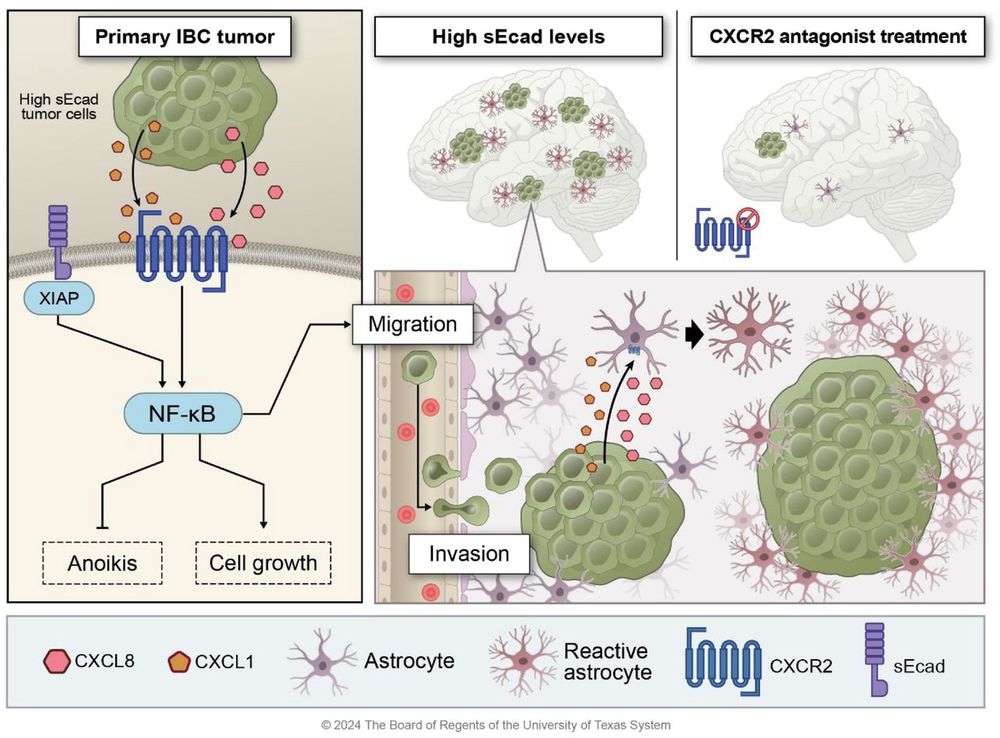
June 27, 2025 at 12:30 AM
Excited to share our latest pre-print “Soluble E-cadherin Drives Brain Metastasis in Inflammatory Breast Cancer” led by the outstanding Xiaoding Hu, an instructor in my lab. #Breastcancer #Brainmetastasis #IBC #Ecadherin #ReactiveAstrocytes #CXCR2
👉 biorxiv.org/content/10.110…
👉 biorxiv.org/content/10.110…

Great new DNA/Q-Paint method published by our @ucl colleague Sabrina Simoncelli - lucky to have been part of it! Check out the Ecadherin and collagenIV imaging in the fly retina at up to 15micron depth www.nature.com/articles/s41...
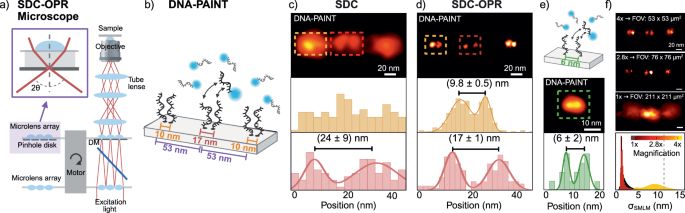
Super-resolution imaging in whole cells and tissues via DNA-PAINT on a spinning disk confocal with optical photon reassignment - Nature Communications
Zaza and colleagues demonstrate that DNA-PAINT on a spinning disk confocal microscope with optical photon reassignment enables high-resolution imaging across large fields and imaging depths, resolving...
www.nature.com
May 29, 2025 at 7:10 PM
Great new DNA/Q-Paint method published by our @ucl colleague Sabrina Simoncelli - lucky to have been part of it! Check out the Ecadherin and collagenIV imaging in the fly retina at up to 15micron depth www.nature.com/articles/s41...

Uncovering synthetic lethal vulnerabilities across cancers. Upregulation of #TWIST1/2, #VIM, and integrin components ( #ITGB5, #ITGAV, #FERMT2 ) constitutes a synthetic lethal buffering mechanism that preserves tumor fitness despite #CDH1 #Ecadherin loss #lobular #DGC
www.nature.com/articles/s41...
www.nature.com/articles/s41...

The transcriptomic architecture of common cancers reflects synthetic lethal interactions - Nature Genetics
Tumor cells upregulate compensatory buffering genes following tumor suppressor loss. These genes may represent new synthetic lethal partners that could be harnessed therapeutically.
www.nature.com
April 18, 2025 at 9:11 PM
Uncovering synthetic lethal vulnerabilities across cancers. Upregulation of #TWIST1/2, #VIM, and integrin components ( #ITGB5, #ITGAV, #FERMT2 ) constitutes a synthetic lethal buffering mechanism that preserves tumor fitness despite #CDH1 #Ecadherin loss #lobular #DGC
www.nature.com/articles/s41...
www.nature.com/articles/s41...
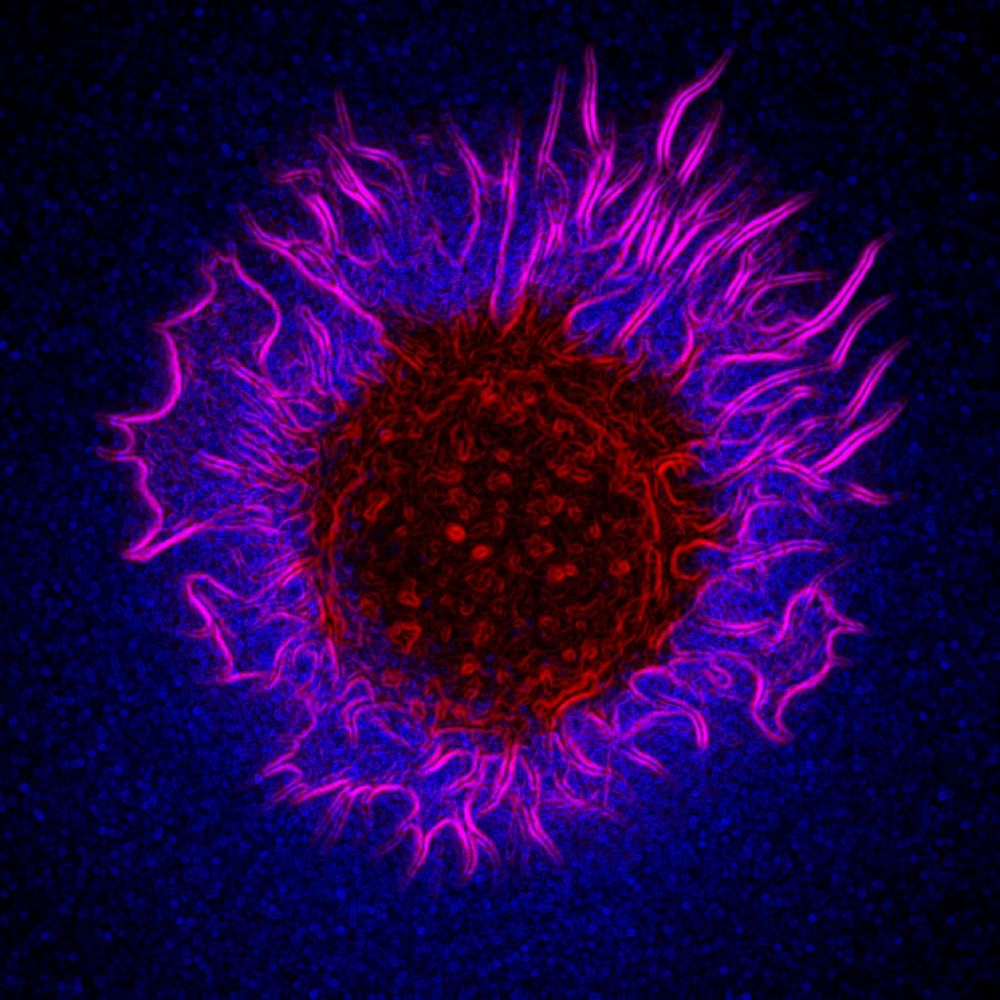
Here's a set of three for #FluorescenceFriday. Same image, progressively higher zoom. FFPE human tonsil tissue labeled with primary antibodies against Cytokeratin, PCNA, C20, CD45RB, CD68, eCadherin, and SMA. 🧪🔬


March 1, 2025 at 5:31 AM
Here's a set of three for #FluorescenceFriday. Same image, progressively higher zoom. FFPE human tonsil tissue labeled with primary antibodies against Cytokeratin, PCNA, C20, CD45RB, CD68, eCadherin, and SMA. 🧪🔬

Congrats @debeblab.bsky.social @mdanderson.bsky.social on their nice work showing soluble ecadherin role in brain Mets in IBC. Enhances astrocytosis to activate CXCR2 signaling that can be targeted to prevent colonization of brain Mets. #SABCS24 Congrats Ding! #cansky #oncsky

December 13, 2024 at 2:17 PM
Congrats @debeblab.bsky.social @mdanderson.bsky.social on their nice work showing soluble ecadherin role in brain Mets in IBC. Enhances astrocytosis to activate CXCR2 signaling that can be targeted to prevent colonization of brain Mets. #SABCS24 Congrats Ding! #cansky #oncsky

Further, the major apical actin belt co-localizes with Afadin & Nectin, not the cadherin/catenin complex! 12/n

March 17, 2024 at 3:39 PM
Further, the major apical actin belt co-localizes with Afadin & Nectin, not the cadherin/catenin complex! 12/n
Bill’s impact on our understanding of cell–cell adhesion was even more central. This rested on a long collaboration with James Nelson & more recently biophysicist Alex Dunn. Building on their structure of β-cat’s central domain, they defined how β-cat binds α-catenin & E-cadherin 13/n

March 5, 2024 at 7:58 PM
Bill’s impact on our understanding of cell–cell adhesion was even more central. This rested on a long collaboration with James Nelson & more recently biophysicist Alex Dunn. Building on their structure of β-cat’s central domain, they defined how β-cat binds α-catenin & E-cadherin 13/n