



@thechomskyan.bsky.social
Avatar: Portrait of the linguist as a young man.
Commenting on Linguistics, Philosophy of Language, Biolinguistics
Trying to understand -and explain- Chomsky
Commenting on Linguistics, Philosophy of Language, Biolinguistics
Trying to understand -and explain- Chomsky
Reposted

Do I have it right that people who are trying to create digital slaves are telling other people not to use "eugenics language" toward computer programs
October 5, 2025 at 1:31 AM
Do I have it right that people who are trying to create digital slaves are telling other people not to use "eugenics language" toward computer programs
Reposted

Finally a Large Language Model I can get behind

We are thrilled to announce that our NEW Large Language Model will be released on 11.18.25.
October 1, 2025 at 4:30 PM
Finally a Large Language Model I can get behind
Reposted

📹Aquí os dejamos el vídeo resumen de nuestra última #charlaZL.
🗣️ José Luis Mendívil Giró (@jlmendivil.fediscience.org.ap.brid.gy)
📑 "Un loro estocástico en la habitación china: ChatGPT y el conocimiento del lenguaje"
📺 ¡Puedes ver la charla completa aquí!:
🔗 www.youtube.com/watch?v=9rYv...
⬇️
🗣️ José Luis Mendívil Giró (@jlmendivil.fediscience.org.ap.brid.gy)
📑 "Un loro estocástico en la habitación china: ChatGPT y el conocimiento del lenguaje"
📺 ¡Puedes ver la charla completa aquí!:
🔗 www.youtube.com/watch?v=9rYv...
⬇️
September 24, 2025 at 2:33 PM
📹Aquí os dejamos el vídeo resumen de nuestra última #charlaZL.
🗣️ José Luis Mendívil Giró (@jlmendivil.fediscience.org.ap.brid.gy)
📑 "Un loro estocástico en la habitación china: ChatGPT y el conocimiento del lenguaje"
📺 ¡Puedes ver la charla completa aquí!:
🔗 www.youtube.com/watch?v=9rYv...
⬇️
🗣️ José Luis Mendívil Giró (@jlmendivil.fediscience.org.ap.brid.gy)
📑 "Un loro estocástico en la habitación china: ChatGPT y el conocimiento del lenguaje"
📺 ¡Puedes ver la charla completa aquí!:
🔗 www.youtube.com/watch?v=9rYv...
⬇️
Reposted

Philosopher John Searle has died.

John Searle (1932-2025) - Daily Nous
Philosopher John Searle, well-known for his work on philosophy of mind and philosophy of language, has died. John Searle wrote extensively consciousness and the mind, intentionality, and speech act th...
dailynous.com
September 28, 2025 at 6:40 PM
Philosopher John Searle has died.
Reposted

I mean yes this is funny, but the fact that these unconstitutional stormtroopers are so directionless that they literally stand around waiting for random nonwhite delivery guys to bike past them is just pathetic. No mandate, no mission, no clue. Just racism.

ICE attempted
and failed to disappear a food delivery guy.
It needed to be scored.
and failed to disappear a food delivery guy.
It needed to be scored.
September 29, 2025 at 3:16 AM
I mean yes this is funny, but the fact that these unconstitutional stormtroopers are so directionless that they literally stand around waiting for random nonwhite delivery guys to bike past them is just pathetic. No mandate, no mission, no clue. Just racism.
Reposted

To be clear, there's overwhelming evidence that autism is primarily a genetic condition, and NO evidence for any of the bullshit this fool is spouting...
September 28, 2025 at 5:30 PM
To be clear, there's overwhelming evidence that autism is primarily a genetic condition, and NO evidence for any of the bullshit this fool is spouting...
Reposted

This only happens to you once

September 26, 2025 at 7:39 PM
This only happens to you once
Reposted

New analysis of a 1-million yr old fossil skull captured worldwide media attention this week, with many headlines saying it requires a complete rewrite/rethink of human evolution. This is an intriguing study & it's brilliant to see so much public enthusiasm for deciphering our origins, but....1/n 🧪

September 27, 2025 at 12:40 PM
New analysis of a 1-million yr old fossil skull captured worldwide media attention this week, with many headlines saying it requires a complete rewrite/rethink of human evolution. This is an intriguing study & it's brilliant to see so much public enthusiasm for deciphering our origins, but....1/n 🧪
Reposted
This is the kind of finding that *doesn't* filter into the public consciousness: yet another gene in which mutations confer high risk of autism (and other neurodevelopmental conditions)

www.cell.com/ajhg/abstrac...
🧪🧪 enormous effort, years in the making
🧪🧪 enormous effort, years in the making

Heterozygous pathogenic variants in the splicing factor SF1 lead to a large spectrum of neurodevelopmental disorders
Heterozygous de novo variants in the splicing factor SF1 cause a neurodevelopmental
disorder with variable severity and autistic traits. Functional studies reveal that
SF1 deficiency disrupts gene exp...
www.cell.com
September 25, 2025 at 6:22 AM
This is the kind of finding that *doesn't* filter into the public consciousness: yet another gene in which mutations confer high risk of autism (and other neurodevelopmental conditions)
Reposted

I assume that we won't get Surgeon General reports about the epidemic of white men shooting people and sociological studies about where their fathers are?
September 24, 2025 at 5:16 PM
I assume that we won't get Surgeon General reports about the epidemic of white men shooting people and sociological studies about where their fathers are?
Reposted

Reposted
Familial confounding in the associations between maternal health and autism www.nature.com/articles/s41... - drawing causal conclusions from observational studies is not a good idea

Familial confounding in the associations between maternal health and autism - Nature Medicine
Using national registry data from Denmark, 30 maternal diagnoses linked to offspring autism were identified with most associations attributable to family-level factors rather than direct causal effects of maternal diagnoses.
www.nature.com
September 24, 2025 at 7:12 PM
Familial confounding in the associations between maternal health and autism www.nature.com/articles/s41... - drawing causal conclusions from observational studies is not a good idea
Reposted

AfD was polling in the mid 20s a few months ago and underperformed polls from this week by 1-2 points. Still would like to see it much lower, but a pretty big sigh of relief in Europe


February 23, 2025 at 5:14 PM
AfD was polling in the mid 20s a few months ago and underperformed polls from this week by 1-2 points. Still would like to see it much lower, but a pretty big sigh of relief in Europe
Reposted

February 12, 2025 at 9:03 PM
This thread is also an excellent read!

This is an excellent read, which I recommend to those interested in how to think about human-machine differences. There are also three previous pieces Riley links to.
I want to add to this: the piece bears directly on the problem of human choice and its relation to a science of mind. Deep dive🧵
I want to add to this: the piece bears directly on the problem of human choice and its relation to a science of mind. Deep dive🧵

"Generative AI tools are passive recipients of the text we feed them—they cannot move about the world, they cannot explore it of their own volition. They have no impetuses and they seek no affordances. They do not control their behavior. We do."
buildcognitiveresonance.substack.com/p/a-challeng...
buildcognitiveresonance.substack.com/p/a-challeng...
January 25, 2025 at 4:08 PM
This thread is also an excellent read!
Reposted

JOB ALERT! Come work with me!
34-Month Postdoc Position here at the Center for Language Evolution Studies, Nicolaus Copernicus University in Toruń in my project "Paths to Polysemy"
Job offer here: www.umk.pl/en/jobs/?tas...
Please repost & share widely!
34-Month Postdoc Position here at the Center for Language Evolution Studies, Nicolaus Copernicus University in Toruń in my project "Paths to Polysemy"
Job offer here: www.umk.pl/en/jobs/?tas...
Please repost & share widely!

January 24, 2025 at 8:00 AM
JOB ALERT! Come work with me!
34-Month Postdoc Position here at the Center for Language Evolution Studies, Nicolaus Copernicus University in Toruń in my project "Paths to Polysemy"
Job offer here: www.umk.pl/en/jobs/?tas...
Please repost & share widely!
34-Month Postdoc Position here at the Center for Language Evolution Studies, Nicolaus Copernicus University in Toruń in my project "Paths to Polysemy"
Job offer here: www.umk.pl/en/jobs/?tas...
Please repost & share widely!
Reposted

I get our undergraduates to read and discuss this paper, its good fun and I think it’s a good lesson in understanding that how people use that word is field/motivation/background dependent www.cell.com/current-biol...

What is cognition?
Eleven authors with disparate relevant backgrounds give their view on what is meant
by the word “cognition”.
www.cell.com
January 15, 2025 at 10:52 AM
I get our undergraduates to read and discuss this paper, its good fun and I think it’s a good lesson in understanding that how people use that word is field/motivation/background dependent www.cell.com/current-biol...
Huh? 😆

We wouldn’t have complex language if it weren’t for interactive repair.
Last year around this time our review 'Interactive repair and the foundations of language' came out doi.org/10.1016/j.ti... (PDF pure.mpg.de/pubman/item/...)
I blogged about it here ideophone.org/interactive-... #langsky
Last year around this time our review 'Interactive repair and the foundations of language' came out doi.org/10.1016/j.ti... (PDF pure.mpg.de/pubman/item/...)
I blogged about it here ideophone.org/interactive-... #langsky
Redirecting
doi.org
January 12, 2025 at 1:41 AM
Huh? 😆
Reposted

Born 20 years after WW2 ended, I grew up in its shadow. I used to wonder how the Nazis decimated the amazing pockets of progressive culture in Germany in the 1920s and then went onto to create a fascist empire of unimaginable horror.
Like me, do you feel you understand it all so much better now?
Like me, do you feel you understand it all so much better now?
January 8, 2025 at 2:51 PM
Born 20 years after WW2 ended, I grew up in its shadow. I used to wonder how the Nazis decimated the amazing pockets of progressive culture in Germany in the 1920s and then went onto to create a fascist empire of unimaginable horror.
Like me, do you feel you understand it all so much better now?
Like me, do you feel you understand it all so much better now?
Reposted

Oliver Sacks once said he wanted to write a book about dementia, a "reverse Piaget."
January 7, 2025 at 6:49 PM
Oliver Sacks once said he wanted to write a book about dementia, a "reverse Piaget."
Reposted
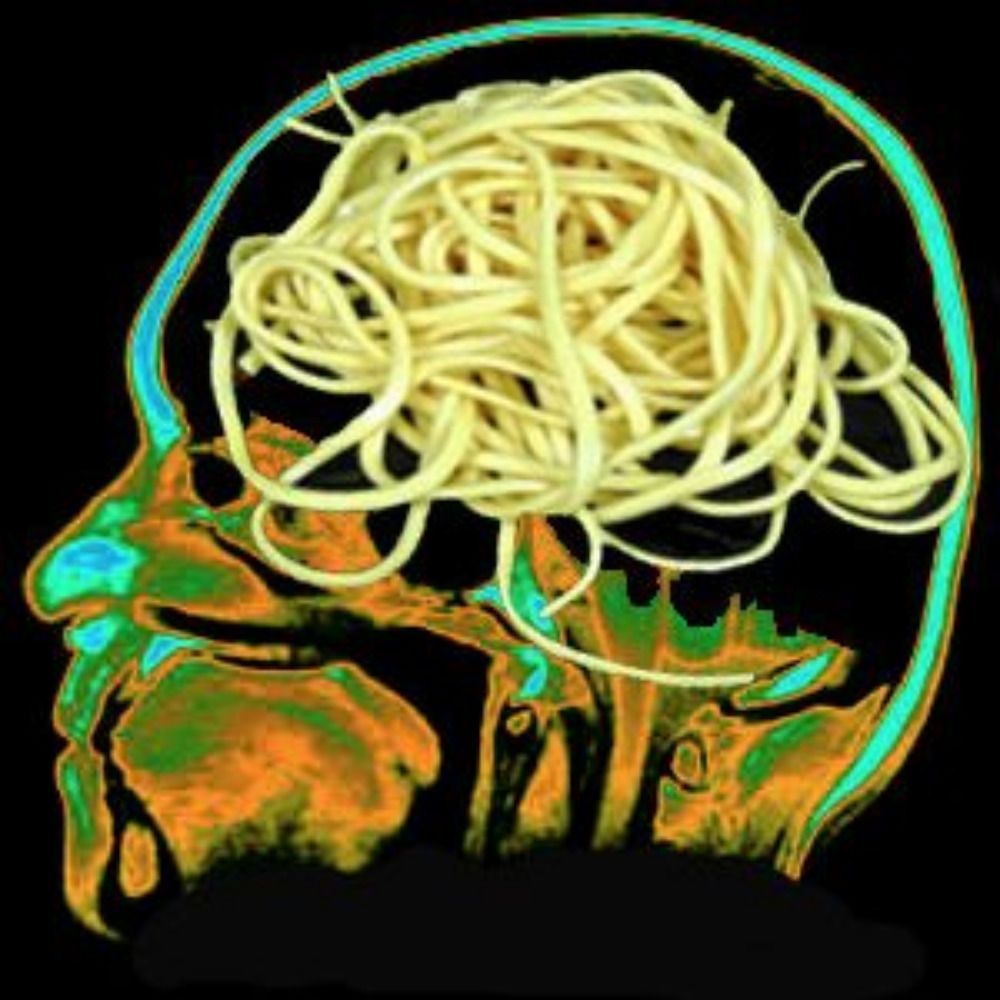
I never fail to learn something from Mark's excellent round up! thank you for doing this :)

Cutting it a bit fine, but here’s my review of the year in neuroscience for 2024
The eighth of these, would you believe? We’ve got dark neurons, tiny monkeys, the most complete brain wiring diagram ever constructed, and much more…
Published on The Spike
Enjoy!
medium.com/the-spike/20...
The eighth of these, would you believe? We’ve got dark neurons, tiny monkeys, the most complete brain wiring diagram ever constructed, and much more…
Published on The Spike
Enjoy!
medium.com/the-spike/20...

2024: A Review of the Year in Neuroscience
Feeling a bit wired
medium.com
January 3, 2025 at 1:08 PM
I never fail to learn something from Mark's excellent round up! thank you for doing this :)
Reposted
Our International Max Planck Research School is offering two PhD fellowships, funded by @maxplanck.de & hosted at @mpi-nl.bsky.social, to carry out innovative research projects on language & genetics, & on multimodal language. Application portal closes 6th Jan 2025! 🧪
www.mpi.nl/imprs-phd-fe...
www.mpi.nl/imprs-phd-fe...

January 4, 2025 at 3:09 PM
Our International Max Planck Research School is offering two PhD fellowships, funded by @maxplanck.de & hosted at @mpi-nl.bsky.social, to carry out innovative research projects on language & genetics, & on multimodal language. Application portal closes 6th Jan 2025! 🧪
www.mpi.nl/imprs-phd-fe...
www.mpi.nl/imprs-phd-fe...
Reposted
A New Year's rant, for 2025 😊:

January 3, 2025 at 6:17 PM
A New Year's rant, for 2025 😊:
Reposted

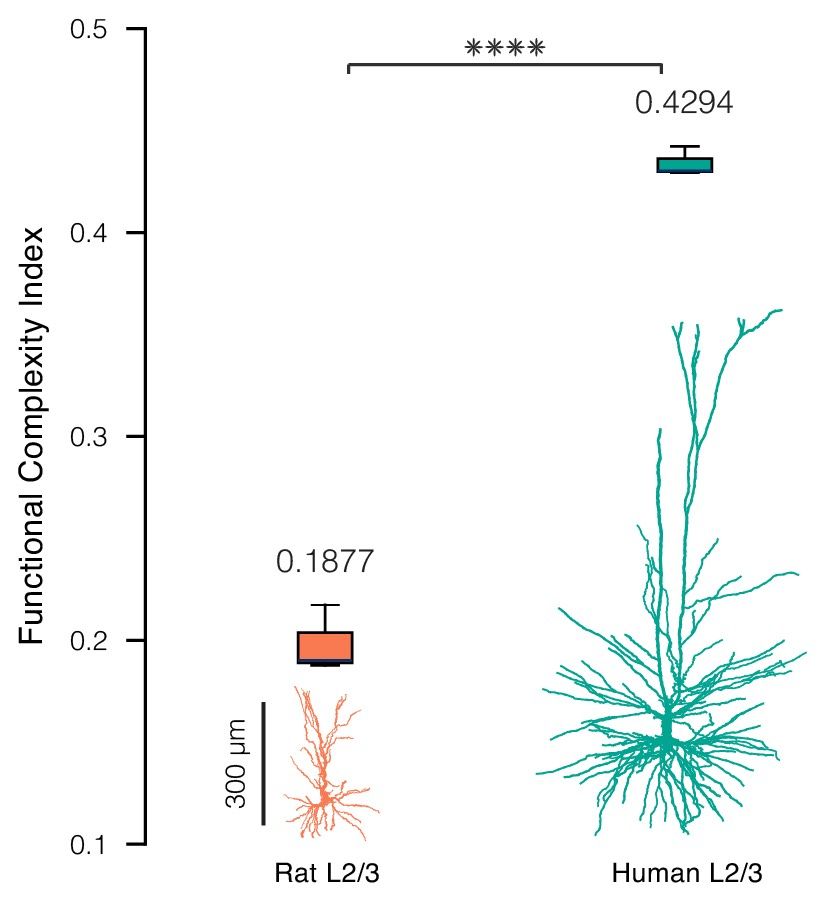
Human cortical pyramidal neurons are larger, with more elaborate branching, and distinct nonlinear biophysical properties compared to rat cortical pyramidal neurons.
Are they more functionally complex? Could that boost the human brain’s computational power? and is that what makes us human? (1/11)
Are they more functionally complex? Could that boost the human brain’s computational power? and is that what makes us human? (1/11)
December 26, 2024 at 5:31 PM
Human cortical pyramidal neurons are larger, with more elaborate branching, and distinct nonlinear biophysical properties compared to rat cortical pyramidal neurons.
Are they more functionally complex? Could that boost the human brain’s computational power? and is that what makes us human? (1/11)
Are they more functionally complex? Could that boost the human brain’s computational power? and is that what makes us human? (1/11)
Reposted

Jackendoff is not crazy! (Or about phonology and consciousness)
@linguistics
#linguistics
#philsci
https://philosophyoflinguistics618680050.wordpress.com/2018/11/19/jackendoff-is-not-crazy-or-about-phonology-and-consciousness/
@linguistics
#linguistics
#philsci
https://philosophyoflinguistics618680050.wordpress.com/2018/11/19/jackendoff-is-not-crazy-or-about-phonology-and-consciousness/

Jackendoff is not crazy! (Or about phonology and consciousness)
<p><img alt="9780198736455" class="size-full wp-image-64 alignleft" data-attachment-id="64" data-comments-opened="1" data-image-caption="" data-image-description="" data-image-meta='{"aperture":"0","credit":"","camera":"","caption":"","created_timestamp":"0","copyright":"","focal_length":"0","iso":"0","shutter_speed":"0","title":"","orientation":"0"}' data-image-title="9780198736455" data-large-file="https://philosophyoflinguistics618680050.wordpress.com/wp-content/uploads/2018/11/9780198736455.jpeg?w=180" data-medium-file="https://philosophyoflinguistics618680050.wordpress.com/wp-content/uploads/2018/11/9780198736455.jpeg?w=180" data-orig-file="https://philosophyoflinguistics618680050.wordpress.com/wp-content/uploads/2018/11/9780198736455.jpeg" data-orig-size="180,271" data-permalink="https://philosophyoflinguistics618680050.wordpress.com/2018/11/19/jackendoff-is-not-crazy-or-about-phonology-and-consciousness/attachment/9780198736455/" sizes="(max-width: 180px) 100vw, 180px" src="https://philosophyoflinguistics618680050.wordpress.com/wp-content/uploads/2018/11/9780198736455.jpeg?w=1100" srcset="https://philosophyoflinguistics618680050.wordpress.com/wp-content/uploads/2018/11/9780198736455.jpeg 180w, https://philosophyoflinguistics618680050.wordpress.com/wp-content/uploads/2018/11/9780198736455.jpeg?w=100&h=150 100w"/>In a commendable and sincere self-portrait, linguist <a href="http://generativelinguist.blogspot.com/2015_04_01_archive.html" rel="noopener" target="_blank">Gillian Ramchand</a> explains what it means for her to be a generativist linguist. Among the many things that she thinks you can accept while being Chomskyan is having no reason to think that Jackendoff is crazy. I completely agree. Contrary to what other (quite orthodox) generativists seem to think, I believe that Ray Jackendoff, besides being as generativist as anyone, has done (and is doing) a great service to the cause of building an authentic cognitive science of language, which is the goal of generativism. Incidentally, the same can be said of Steven Pinker, so I do not tremble when I write that Jackendoff and Pinker are as Chomskyan as Chomsky himself, because the framework of Chomskyan linguistics undoubtedly transcends the flesh-and-blood pioneer genius that gives it its name.</p>
<p>But in proclaiming that Jackendoff is not crazy, I do not want to get lost in this minor plot of the sociology of language science, but to focus on Jackendoff’s enigmatic and attractive <em>Unconscious Meaning Hypothesis </em>(UMH, for short). The excuse for this is that I’ve recently re-read Jackendoff’s book <em><a href="https://global.oup.com/academic/product/a-users-guide-to-thought-and-meaning-9780198736455?cc=es&lang=en&" rel="noopener" target="_blank">A User’s Guide to Thought and Meaning</a></em>, which recapitulates in a pleasant and (more) intelligible way his more than 30 years of publications on this issue. In fact, the UMH already appears in his essential <em><a href="https://mitpress.mit.edu/books/consciousness-and-computational-mind" rel="noopener" target="_blank">Consciousness and the Computational Mind</a> </em>(1987), but there (or so it seemed to me at the time) the hypothesis was formulated in a darker and less convincing way (or maybe I was too immature to understand it).</p>
<p><em>A User’s Guide to Thought and Meaning </em>is an excellent example of how the adoption of the cognitive perspective can represent an advance in the study of language and the mind with respect to the ordinary perspective. In fact, I think that the ordinary perspective, ironically, is the usual one in so-called cognitive linguistics, but that issue deserves a separate discussion.</p>
<p>As its name suggests, the UMH assumes that meaning is unconscious, that is, it is hidden from awareness. There can be no clearer explanation of why it is so easy for us to understand words yet so difficult to explain what they mean.</p>
<p>Surprising as this proposal may seem, the most intriguing and original aspect of the UMH is, in my opinion, the role it gives to what Saussure called the ‘plane of the signifier’, that is, the phonological form of words and sentences: sound is a ‘handle’ so that we can <em>experience </em>the sensation of meaningfulness. In Jackendoff’s own words, quoting from <em>A User’s Guide</em>: “the meaning side of a sound-meaning pair is unconscious, except for producing the feeling that the attached piece of sound is meaningful” (p. 49).</p>
<p>Of course, the fact that meanings are hidden from awareness does not imply that they do not have relevant effects: thanks to them we can identify and categorize objects in the world, we can follow instructions, make inferences and issue statements that other people seem to understand. All of these processes, Jackendoff says, depend on “grasping” meanings. The important thing is that we grasp meanings even though we are not aware of them. The UMH has, then, three essential parts: (i) the ‘pronunciation’ perceived is conscious, (ii) the ‘pronunciation’ is accompanied by a conscious sensation of meaningfulness, and (iii) it is associated with an unconscious meaning (the concept or thought that it expresses).</p>
<p>What we have in our heads are unconscious concepts and thoughts; when some of these concepts and thoughts can be associated with a phonological form, then these concepts or thoughts are the meaning of that phonological form. Therefore, there may be concepts or thoughts that are not the meaning of any phonological form (although we cannot be aware of them), and there may be phonological forms that have no meaning (because they do not connect to any concept or thought).</p>
<p>What Jackendoff calls <em>thought </em>is actually the sum of the concepts and the computational system or syntax that structures them. From this point of view, thought is the same as the ‘internal language’ of the well-known Chomskyan model (formed by the conceptual-intentional system plus the computational system, but disconnected from the sensorimotor system). What we usually call <em>language </em>(and which we group in historical languages such as Spanish or Chinese) necessarily implies a connection of that ‘internal language’ with the systems of externalization (pronunciation, for simplicity). The conventional story is that the externalization of the internal language is at the service of communication. But Jackendoff goes further and suggests that the linking of meanings to sounds not only improves our ability to communicate, but also provides the means for the conscious mind to operate with internal derivations that, otherwise, could only be unconscious. In other words, that phonology is at the base of consciousness and, therefore, of so-called rational thought.</p>
<p>Jackendoff may not be crazy, but many might think so. It seems to me that he is right, and I will try to explain why (although it would be better if you read the book).</p>
<p>As I said, the most striking and attractive part of Jackendoff’s hypothesis is the role that the model gives to the phonological form. Meaning is the basis of our knowledge, but it is unconscious. We are aware of the phonological form of words and sentences, but <em>not </em>of their meaning. Thus, according to Jackendoff, the old intuition that thinking consciously is the same as talking to oneself is correct, since the only way that meanings have access to consciousness is through a handle, typically, the pronunciation. Of course, we can also be conscious through visual images or other perceptions, but the logic is the same: the conceptual and spatial structure that underlies all thought (and which is the basis of our cognition) is totally unconscious, it is hidden in the brain except for the episodic and transitory flashes that we have of them when we use those handles (phonological forms, visual images, tactile sensations, etc.) to <em>experience </em>our own inner discourse.</p>
<p>Of course, this does not mean that our thoughts are exactly the phrases we hear internally. Recall that the phonological form of our inner discourse is only the handle of the cognitive structures confined in our unconscious mind. According to Jackendoff, when we perceive a meaningful phonological form (because someone pronounces it or because it resonates by itself in our brain) we cannot perceive the meaning directly (remember that it is unconscious!). What we are aware of is that such a phonological form is meaningful, but not of the meaning itself: “meaning is unconscious, aside from the simple feeling of meaningfulness” (p. 111). Or in other words: when someone tells us something and we understand what it means, we are not really aware of the meaning, but only that those sounds <em>have </em>meaning.</p>
<p>What we call a ‘conscious thought’ actually has three components: the verbal image, the sense that it is meaningful, and the meaning itself. But, according to Jackendoff, only the first two components access consciousness. The third, the meaning associated with pronunciation, remains unconscious, although it is the one that does all the heavy work in internal thinking, such as establishing inferences, collating assumptions and drawing reference relationships, that is, providing an interpretation of what we are told, and of the world.</p>
<p>According to this model, then, not all human thought is conscious. In fact, almost all the use we make in our life of the internal language, that is, the language of thought (even when we think we are reasoning) belongs to unconscious thought, and this type of thought does not need handholds. Only the thought we are aware of, that is, the one we are capable of experiencing, requires phonological handholds (or other perceptual modalities of them).</p>
<p>It is true that we tend to think that the internal pronunciation is the thought itself, but this is a simplification motivated precisely by the feeling of meaningfulness, of which we are aware. A string of random sounds like <em>clepnodra</em>, for example, does not produce that feeling. Another common error that the UMH clarifies is the confusion between thought and consciousness. Thus, a being without language (understood as internal language plus phonology) could think, and quite well. What it could not do is to be aware of its thoughts. In fact, human beings make habitual and very efficient use of unconscious thinking. The difference is that, compared to other higher primates, not only can we have more complex thoughts (thanks to the computational system we call syntax), but we can also be aware that we have them (thanks to the connection of the computational and conceptual systems with the sensorimotor system).</p>
<p>The same works for vision. When we are consciously thinking, we ‘hear’ the words within the mind (in fact, this perception is the only thing that we are aware of), and we know that nobody is talking to us because there is no connection between the auditory stimuli processed by the ear and the ‘voice’ in our head. When we see something, like the computer screen, we are aware of the visual image and we know that it is out there, in front of us, because there is a connection between the visual image within our brain and the stimuli received in the retina. When there is no such connection, we are imagining a screen (or we have a hallucination, which would be explained as a malfunction of the detection of the connection between the visual image in the brain and the visual stimuli from the retina).</p>
<p>We have seen that, according to Jackendoff’s UMH, the phonological form is the handle that makes consciousness possible. But note that language per se would not be a requirement for consciousness, since also visual images and tactile and olfactory stimuli can function as handles of unconscious internal concepts. In fact, we have no reason to think that we are the only organisms with some kind of self-awareness. Something different is what you can be conscious of.</p>
<p>The human computational system (which is also unconscious) seems to make a difference with respect to its analogs in other species in terms of the complexity of thought (both conscious and unconscious). As Chomsky and followers have shown since the late 1950s, the computational system, with its ability to recursively produce unlimited derivations and to combine all kinds of conceptual elements together, produces a conceptual structure (now using Jackendoff’s typical terminology) that distinguishes us cognitively from other organisms. Everything that we know, we know because the brain has built it, and syntax is the main tool our brain uses. To put it simply: even if we did not have consciousness, we would also be smarter (although we would not know it).</p>
<p>Therefore, such a complex conceptual structure produced by syntax does not imply or necessarily presuppose consciousness. In fact, if Jackendoff is right and thought (meaning) is really unconscious, human consciousness is not a consequence of the internal language or of the sophistication of our conceptual structure, but is a consequence of the connection of our internal language with arbitrary chains of phonemes, which can access consciousness. We cannot represent concepts such as ‘despair’, ‘jealousy’, ‘entropy’ or ‘past’ with a visual image, but we can create them with the internal language and make them present in our conscious experience through sounds associated with them (or with spellings, as I have just done right now).</p>
<p>Yet there is more. We human beings are not only aware of ourselves, but, thanks to language, we are also aware of our thoughts, that is, we are aware that <em>we have them</em>, even though they are in themselves unconscious. Thanks to their linguistic handles, we can store and retrieve our own unconscious thoughts. And here, according to Jackendoff, is the basis of our most notorious attribute as a species: rational thought, that is, conscious thought.</p>
<p>According to Jackendoff, research in cognitive psychology distinguishes between two modes of reasoning, System 1 and System 2. System 1 is fast, automatic and unconscious (it’s what we commonly call intuitive or unconscious thinking), while System 2 is slow, effortful, linear and conscious (which is what we usually identify with rational thinking). Much of the philosophical tradition has insisted that System 2 is specifically human and it has been related to language. Jackendoff’s model does not deny this, but explains it much more coherently. What our author proposes is that System 2 is <em>not different </em>from System 1 but, as he says, that “it ‘rides on top of’ System 1” (p. 214). System 2 would be thought that is linked to a cognitive correlate of consciousness, that is, a phonological form. Since the phonological form is linear, Jackendoff says, conscious thought is linear; since pronunciation is slow (as compared to the speed of thought), conscious thought is slow. And since thought is unconscious, we can only have conscious access to it if it has a conscious handle, the phonological form. Considering that only humans have language, Jackendoff concludes that only humans have rational thinking (System 2). Therefore, System 2 basically corresponds to System 1 plus language: “rationality is intuition enhanced by language” (p. 243).</p>
<p>But at this point we should be very careful with terminology. It would be better to say that System 2 is equivalent to System 1 plus <em>language externalization</em>. The idea is that language (internal language) is already part of System 1. Jackendoff suggests that if a chimpanzee had language it would not be like a human, since human System 1 is also very different from chimpanzee System 1 (it is “more sophisticated” in Jackendoff’s terms). But then we lose the interesting intuition that language (the internal language) is also the cause of the difference between human and chimpanzee Systems 1. Jackendoff is using here ‘language’ as equivalent to a phonological dimension, but language is much more than that, since language (syntax more specifically) differentiates our System 1 from the System 1 of the rest of organisms capable of thought (perhaps making our conceptual structures ‘more sophisticated’). The computational system of human language (syntax) is also unconscious and is also at the service of the construction of thought, and not of communication.</p>
<p>Regarding the question of whether language arose in our ancestors as an enhancement of communication or as an enhancement of thought, Jackendoff concludes, surprisingly, that Chomsky’s minority stance (that the primary innovation in language evolution was structured thought) is erroneous. Jackendoff’s argument is based on the fact that in Chomsky’s model the connection of the ‘internal language’ with externalization systems is secondary or ancillary. Given that Jackendoff’s hypothesis implies that pronunciation is crucial to understanding the contribution of language to the development of rational thought, it would seem that the main contribution of language to thought could not be prior to the development of language externalization. But note that this conclusion seems to ignore the fact that rational thought (that is, conscious thought) is not the only thing that cognitively differentiates humans from their evolutionary relatives. As Jackendoff himself admits, the human System 1 is different from that of other species without the need to appeal to System 2. Therefore, there is nothing contradictory in assuming that <em>part </em>of language (the computational system) evolved at the service of thought (modifying qualitatively the human System 1), while <em>another part </em>of language (the connection with the externalization systems), evolved at the service of communication and, simultaneously (if Jackendoff’s theory is correct), could have a decisive effect on the development of conscious thinking, as a “huge side benefit”, as Jackendoff himself says (p. 222).</p>
<p>In any case, what language (as a whole) adds to the human System 1 to turn it into an (also human) System 2 is not computational complexity (which explains the sophistication of System 1), but enhanced access to consciousness. The possibility that language gives us to refer to our thoughts and manipulate them through their conscious correlates (phonological forms) makes us able to draw conclusions and obtain a kind of knowledge that we could not obtain only with unconscious thought. The wonderful thing is that this knowledge is still unconscious, even if it makes us human.</p>
<p><span style="color:#999999;">[Author’s English version of a blogpost published in Spanish (5 July, 2015) in zaragozalinguistica.wordpress.com]</span></p>
<div id="atatags-370373-67694b8b62074">
<script type="text/javascript">
__ATA.cmd.push(function() {
__ATA.initVideoSlot('atatags-370373-67694b8b62074', {
sectionId: '370373',
format: 'inread'
});
});
</script>
</div><span id="wordads-inline-marker" style="display: none;"></span> <div id="atatags-26942-67694b8b62109"></div>
<script>
__ATA.cmd.push(function() {
__ATA.initDynamicSlot({
id: 'atatags-26942-67694b8b62109',
location: 120,
formFactor: '001',
label: {
text: 'Advertisements',
},
creative: {
reportAd: {
text: 'Report this Ad',
},
privacySettings: {
text: 'Privacy',
}
}
});
});
</script><div class="sharedaddy sd-like-enabled sd-sharing-enabled" id="jp-post-flair"><div class="sharedaddy sd-sharing-enabled"><div class="robots-nocontent sd-block sd-social sd-social-official sd-sharing"><h3 class="sd-title">Compártelo:</h3><div class="sd-content"><ul><li class="share-bluesky"><a class="share-bluesky sd-button" data-shared="sharing-bluesky-62" href="https://philosophyoflinguistics618680050.wordpress.com/2018/11/19/jackendoff-is-not-crazy-or-about-phonology-and-consciousness/?share=bluesky" rel="nofollow noopener noreferrer" target="_blank" title="Click to share on Bluesky"><span>Bluesky</span></a></li><li class="share-mastodon"><a class="share-mastodon sd-button" data-shared="sharing-mastodon-62" href="https://philosophyoflinguistics618680050.wordpress.com/2018/11/19/jackendoff-is-not-crazy-or-about-phonology-and-consciousness/?share=mastodon" rel="nofollow noopener noreferrer" target="_blank" title="Click to share on Mastodon"><span>Mastodon</span></a></li><li class="share-facebook"><div class="fb-share-button" data-href="https://philosophyoflinguistics618680050.wordpress.com/2018/11/19/jackendoff-is-not-crazy-or-about-phonology-and-consciousness/" data-layout="button_count"></div></li><li class="share-x"><a class="twitter-share-button" data-related="wordpressdotcom" data-text="Jackendoff is not crazy! (Or about phonology and consciousness)" data-url="https://philosophyoflinguistics618680050.wordpress.com/2018/11/19/jackendoff-is-not-crazy-or-about-phonology-and-consciousness/" href="https://x.com/share">Post</a></li><li class="share-threads"><a class="share-threads sd-button" data-shared="sharing-threads-62" href="https://philosophyoflinguistics618680050.wordpress.com/2018/11/19/jackendoff-is-not-crazy-or-about-phonology-and-consciousness/?share=threads" rel="nofollow noopener noreferrer" target="_blank" title="Click to share on Threads"><span>Threads</span></a></li><li class="share-jetpack-whatsapp"><a class="share-jetpack-whatsapp sd-button" data-shared="" href="https://philosophyoflinguistics618680050.wordpress.com/2018/11/19/jackendoff-is-not-crazy-or-about-phonology-and-consciousness/?share=jetpack-whatsapp" rel="nofollow noopener noreferrer" target="_blank" title="Click to share on WhatsApp"><span>WhatsApp</span></a></li><li class="share-end"></li></ul></div></div></div><div class="sharedaddy sd-block sd-like jetpack-likes-widget-wrapper jetpack-likes-widget-unloaded" data-name="like-post-frame-154033232-62-67694b8b62a91" data-src="//widgets.wp.com/likes/index.html?ver=20241223#blog_id=154033232&post_id=62&origin=philosophyoflinguistics618680050.wordpress.com&obj_id=154033232-62-67694b8b62a91" data-title="Like or Reblog" id="like-post-wrapper-154033232-62-67694b8b62a91"><div class="likes-widget-placeholder post-likes-widget-placeholder" style="height: 55px;"><span class="button"><span>Like</span></span> <span class="loading">Loading...</span></div><span class="sd-text-color"></span><a class="sd-link-color"></a></div>
<div class="jp-relatedposts" id="jp-relatedposts">
<h3 class="jp-relatedposts-headline"><em>Related</em></h3>
</div></div>
philosophyoflinguistics618680050.wordpress.com
December 23, 2024 at 11:38 AM
Jackendoff is not crazy! (Or about phonology and consciousness)
@linguistics
#linguistics
#philsci
https://philosophyoflinguistics618680050.wordpress.com/2018/11/19/jackendoff-is-not-crazy-or-about-phonology-and-consciousness/
@linguistics
#linguistics
#philsci
https://philosophyoflinguistics618680050.wordpress.com/2018/11/19/jackendoff-is-not-crazy-or-about-phonology-and-consciousness/