



PlanetSci
@planetsci.bsky.social
Reposted by PlanetSci

There is still hope to save irreplaceable coral ecosystems, but time is running out. Baby corals can ride ocean currents for hundreds of miles, but they can’t outrun climate change. And humans have a limited capacity to make new reefs in cooler waters. buff.ly/nY4jJs0 #WorldOceanDay

Coral reefs face an uncertain recovery from the 4th global mass bleaching event – can climate refuges help?
As baby corals float in the currents, they can expand their species’ range. But can they get to climate refuges fast enough to survive? A new study has good news and bad.
buff.ly
June 8, 2025 at 7:12 PM
There is still hope to save irreplaceable coral ecosystems, but time is running out. Baby corals can ride ocean currents for hundreds of miles, but they can’t outrun climate change. And humans have a limited capacity to make new reefs in cooler waters. buff.ly/nY4jJs0 #WorldOceanDay
Reposted by PlanetSci

Along with many of my weather and climate colleagues, I'll be participating in the Weather & Climate Livestream ("100 Hours To Save America's Forecasts). I'll be hosting an "Ask Me Anything" (AMA)-style live session 9-10am PT on Saturday, May 31st. Join me then, and check out the other speakers too!

Just 5 days left until the Weather & Climate Livestream! We're thrilled to announce two speakers: an AMA w/ @weatherwest.bsky.social (Sat. 12-1pm ET/9-10am PT) and a 💯th hour speech from @drshepherd2013.bsky.social during our final segment (Sun. 5-8pm PT/2-5pm). Join us at wclivestream.com/watch

The Weather & Climate Livestream | Watch
Information for how to watch the Weather & Climate Livestream
wclivestream.com
May 24, 2025 at 9:23 PM
Along with many of my weather and climate colleagues, I'll be participating in the Weather & Climate Livestream ("100 Hours To Save America's Forecasts). I'll be hosting an "Ask Me Anything" (AMA)-style live session 9-10am PT on Saturday, May 31st. Join me then, and check out the other speakers too!
Reposted by PlanetSci

Happy Winter Solstice!
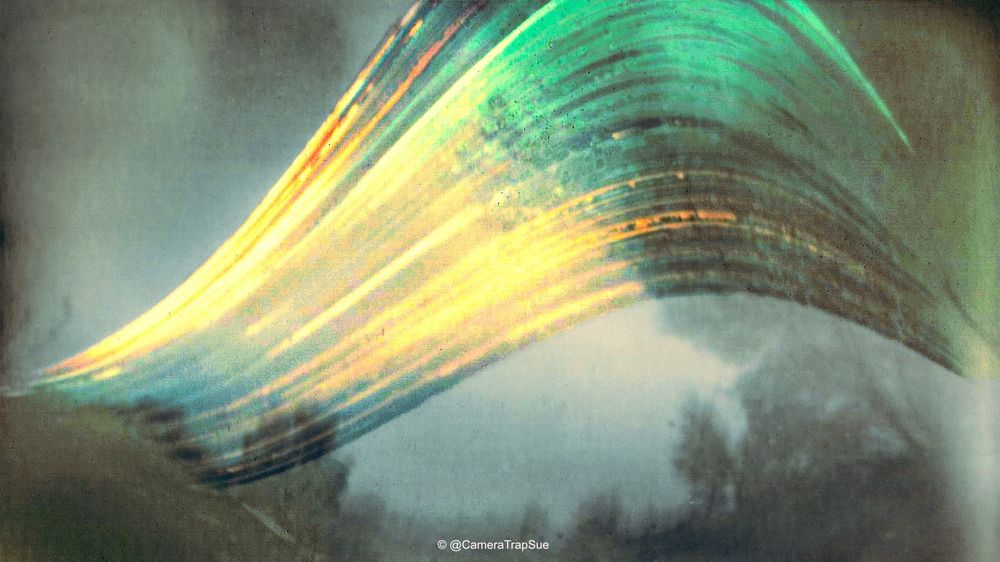
These photos were taken with a pinhole camera I made from a beer can and left out from Summer to Winter Solstice - a 6 month exposure.
Bottom line = Winter Solstice. Top line = Summer Solstice.
The lines are the Sun moving across the sky w/some reflections. No line = clouds
These photos were taken with a pinhole camera I made from a beer can and left out from Summer to Winter Solstice - a 6 month exposure.
Bottom line = Winter Solstice. Top line = Summer Solstice.
The lines are the Sun moving across the sky w/some reflections. No line = clouds

December 21, 2024 at 2:01 PM
Happy Winter Solstice!
These photos were taken with a pinhole camera I made from a beer can and left out from Summer to Winter Solstice - a 6 month exposure.
Bottom line = Winter Solstice. Top line = Summer Solstice.
The lines are the Sun moving across the sky w/some reflections. No line = clouds
These photos were taken with a pinhole camera I made from a beer can and left out from Summer to Winter Solstice - a 6 month exposure.
Bottom line = Winter Solstice. Top line = Summer Solstice.
The lines are the Sun moving across the sky w/some reflections. No line = clouds
Reposted by PlanetSci
The 2-year ranching rest period after #wildfires on federal land can devastate rural ranching communities. An environmental studies professor says a one-size-fits-all approach may not be needed, as fire impacts vary widely: https://buff.ly/49Hhp9a (Jared L. Talley @boisestate.bsky.social) 🌎

After wildfires, ranchers face 2-year delay to graze cattle on federal land – is it doing more harm than good?
That delay can tip ranchers’ finances into the red. While the land needs time to recover, studies raise questions about whether two years is really necessary.
buff.ly
December 17, 2024 at 3:30 AM
The 2-year ranching rest period after #wildfires on federal land can devastate rural ranching communities. An environmental studies professor says a one-size-fits-all approach may not be needed, as fire impacts vary widely: https://buff.ly/49Hhp9a (Jared L. Talley @boisestate.bsky.social) 🌎
Reposted by PlanetSci
#Wildland #firefighters risk their lives for as little as $15/hour—and now they face up to a $20,000 pay cut unless Congress acts. Many are already struggling to make ends meet. A biology professor (and firefighter’s spouse) breaks down the stakes: https://buff.ly/4imM53B #politics #wildfires

Wildland firefighters face up to $20,000 pay cut if Congress doesn’t act − that’s taking a toll on a workforce already under stress
Firefighters work long hours to protect communities, often in dangerous conditions and for low starting pay. Surveys show the impact that can have on their physical and mental health.
buff.ly
December 4, 2024 at 2:36 AM
#Wildland #firefighters risk their lives for as little as $15/hour—and now they face up to a $20,000 pay cut unless Congress acts. Many are already struggling to make ends meet. A biology professor (and firefighter’s spouse) breaks down the stakes: https://buff.ly/4imM53B #politics #wildfires
Reposted by PlanetSci
Arctic has changed dramatically in just a couple of decades – 2024 report card shows worrying trends in snow, ice, wildfire and more

Arctic has changed dramatically in just a couple of decades – 2024 report card shows worrying trends in snow, ice, wildfire and more
Rapid changes underway in the Arctic affect the region’s people and wildlife, and the entire planet.
buff.ly
December 15, 2024 at 1:07 PM
Arctic has changed dramatically in just a couple of decades – 2024 report card shows worrying trends in snow, ice, wildfire and more
Climate disasters are worsening for countries around the world, and more people are in harm's way. While #COP29 discusses the Loss and Damage Fund, there are also other powerful ways to get faster, more effective disaster aid to low-income countries: theconversation.com/3-innovative...

3 innovative ways to help countries hit by climate disasters, beyond a loss and damage fund
Getting aid to countries before the storm or drought hits is one response increasingly being used to limit the damage.
theconversation.com
November 15, 2024 at 12:12 AM
Climate disasters are worsening for countries around the world, and more people are in harm's way. While #COP29 discusses the Loss and Damage Fund, there are also other powerful ways to get faster, more effective disaster aid to low-income countries: theconversation.com/3-innovative...
Reposted by PlanetSci

What Trump Can Do To Reverse US Climate Policy (and What He Probably Can’t Change)
The latest from The Conversation, published in The New Climate.
[Gift link]
medium.com/the-new-clim...
The latest from The Conversation, published in The New Climate.
[Gift link]
medium.com/the-new-clim...

What Trump Can Do To Reverse US Climate Policy (and What He Probably Can’t Change)
While he hasn’t released an official plan, Trump’s former playbook and his frequent complaints about clean energy offer clues.
medium.com
November 10, 2024 at 8:57 AM
What Trump Can Do To Reverse US Climate Policy (and What He Probably Can’t Change)
The latest from The Conversation, published in The New Climate.
[Gift link]
medium.com/the-new-clim...
The latest from The Conversation, published in The New Climate.
[Gift link]
medium.com/the-new-clim...
Reposted by PlanetSci
Countries spend over $1 trillion on fossil fuel subsidies every year -- and the costs are much higher when counting fossil fuel damage to health and environment. Here's why taxpayer-funded support for oil, gas and coal is so hard to eliminate. #COP29 @climatesky 🌎

Countries spend huge sums on fossil fuel subsidies – why they’re so hard to eliminate
Countries have promised to reduce their fossil fuel subsidies to fight climate change, but it’s harder to do than it looks. An energy law expert explains the challenges.
buff.ly
November 12, 2024 at 3:34 PM
Countries spend over $1 trillion on fossil fuel subsidies every year -- and the costs are much higher when counting fossil fuel damage to health and environment. Here's why taxpayer-funded support for oil, gas and coal is so hard to eliminate. #COP29 @climatesky 🌎
Reposted by PlanetSci
High in the Rocky Mountains, an unusual type of rock called Tava holds the secret to Snowball Earth - a period long ago when evidence suggests the entire planet was encased in ice. ⚒️🧪#environment #SnowballEarth #Earth

Missing link to Snowball Earth history emerges from some unusual rocks on Colorado’s Pikes Peak
The evidence is in the unusual way Tava rocks formed there around 700 million years ago.
buff.ly
November 11, 2024 at 8:18 PM
High in the Rocky Mountains, an unusual type of rock called Tava holds the secret to Snowball Earth - a period long ago when evidence suggests the entire planet was encased in ice. ⚒️🧪#environment #SnowballEarth #Earth
Companies are buying up cheap carbon offsets − data suggest it’s more about greenwashing than helping the climate. Here's what a study of 866 companies' use of offsets over years shows. #COP29 #Article6
theconversation.com/companies-ar...
theconversation.com/companies-ar...

Companies are buying up cheap carbon offsets − data suggest it’s more about greenwashing than helping the climate
A deep dive into 866 public companies and 1,413 carbon projects reveals some twists in who relies on cheap offsets and who chooses to cut their own emissions instead.
theconversation.com
November 11, 2024 at 5:14 AM
Companies are buying up cheap carbon offsets − data suggest it’s more about greenwashing than helping the climate. Here's what a study of 866 companies' use of offsets over years shows. #COP29 #Article6
theconversation.com/companies-ar...
theconversation.com/companies-ar...
Reposted by PlanetSci

Heat is becoming a global problem. Extreme heat increases dramatically even with global temperature being just ~1.5 °C above preindustrial in the past months. Global mean temperature is 71% ocean surface which keeps cooler. But we live on land.
theconversation.com/extreme-heat...
theconversation.com/extreme-heat...

Extreme heat waves broiling the US in 2024 aren’t normal: How climate change is heating up weather around the world
Global temperatures have averaged at least 1.5 degrees Celsius warmer than preindustrial times for over a year. Two scientists explain what that means and what humanity can do.
theconversation.com
July 15, 2024 at 4:43 PM
Heat is becoming a global problem. Extreme heat increases dramatically even with global temperature being just ~1.5 °C above preindustrial in the past months. Global mean temperature is 71% ocean surface which keeps cooler. But we live on land.
theconversation.com/extreme-heat...
theconversation.com/extreme-heat...
Reposted by PlanetSci
This early summer heat wave is especially brutal because our bodies haven’t adapted yet to summer heat (and yes, they do after about two weeks). More useful information from an expert on heat-related illnesses.
🩺 #pedsky #medsky
🩺 #pedsky #medsky

Extreme heat can be dangerous for runners, cyclists and anyone spending time outdoors: 6 tips for staying safe
The heat comes from everywhere when you’re active outside on hot days – the Sun’s rays, the air around you, the ground and even your own body.
theconversation.com
June 20, 2024 at 10:54 PM
Reposted by PlanetSci

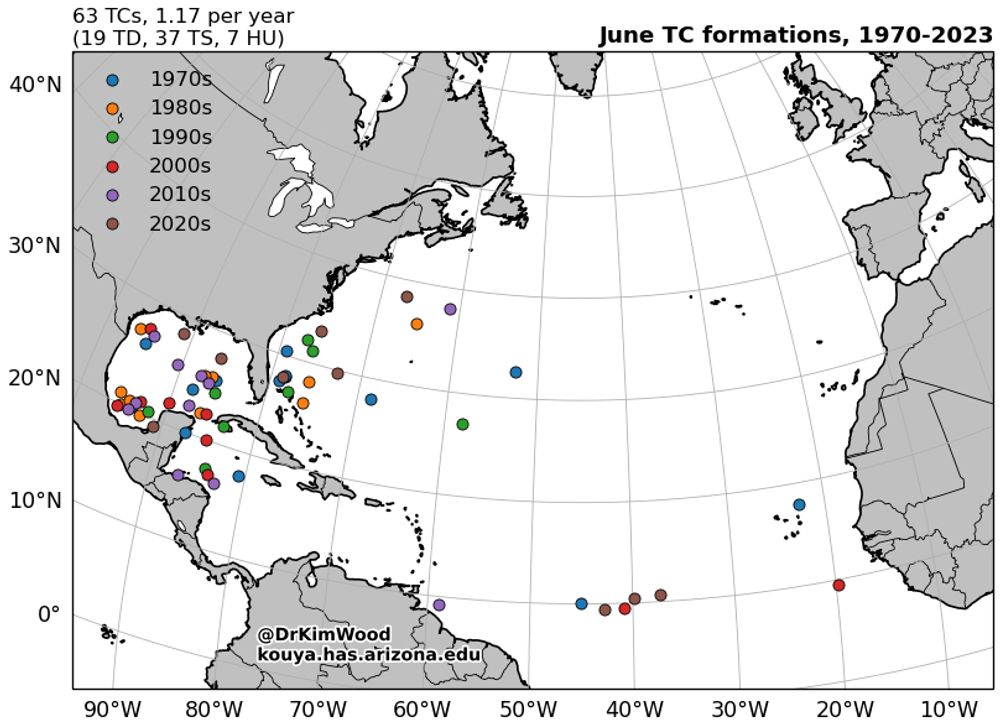
Since 1970, 63 North Atlantic tropical cyclones (TCs) formed in June for an average of about 1.2 per year. Seventeen years produced 0 TCs in June, and the most was 4 in 2021.
19 of these June TCs remained tropical depressions, and only 7 eventually achieved hurricane status.
19 of these June TCs remained tropical depressions, and only 7 eventually achieved hurricane status.
June 1, 2024 at 5:30 PM
Since 1970, 63 North Atlantic tropical cyclones (TCs) formed in June for an average of about 1.2 per year. Seventeen years produced 0 TCs in June, and the most was 4 in 2021.
19 of these June TCs remained tropical depressions, and only 7 eventually achieved hurricane status.
19 of these June TCs remained tropical depressions, and only 7 eventually achieved hurricane status.
Reposted by PlanetSci

AP analysis finds 2023 set record for US heat deaths, killing in areas that used to handle the heat
May 31, 2024 at 3:12 PM
AP analysis finds 2023 set record for US heat deaths, killing in areas that used to handle the heat
Reposted by PlanetSci

And we thought 2023 was bad...


May 31, 2024 at 2:59 PM
And we thought 2023 was bad...
Reposted by PlanetSci
New Weather West post: Complex weather pattern to bring notable early-season heatwave across West, including parts of California! Also: how might the PacNW atmospheric river this weekend contribute to the heatwave the following week? #CAwx #CAfire weatherwest.com/arch...
Complex weather pattern to bring notable early-season heatwave across West, including parts of California - Weather West
An atmospheric "Rube Goldberg" machine will lead to complex pattern evolution The upcoming pattern across the Western U.S. is going to be a complex one--the result of a series of concatenating unusual occurrences in the coming days that I'm an "atmospheric Rube Goldberg machine." (FWIW, nearly all atmospheric interactions can be conceptualized as a naturally
weatherwest.com
May 31, 2024 at 10:05 PM
New Weather West post: Complex weather pattern to bring notable early-season heatwave across West, including parts of California! Also: how might the PacNW atmospheric river this weekend contribute to the heatwave the following week? #CAwx #CAfire weatherwest.com/arch...
Reposted by PlanetSci

That hailstorm in Denver last night was one for the record books! #denverwx #cowx www.accuweather.com/en/severe-we...


May 31, 2024 at 10:43 PM
That hailstorm in Denver last night was one for the record books! #denverwx #cowx www.accuweather.com/en/severe-we...
Reposted by PlanetSci

The Atlantic hurricane season typically begins June 1 since that's when we start to see sea surface temperatures above 26C (79F), the threshold required for hurricanes to form.
This year, as of May 29, nearly the entire hurricane formation area is already above the threshold (yellow-orange areas).
This year, as of May 29, nearly the entire hurricane formation area is already above the threshold (yellow-orange areas).

May 31, 2024 at 5:23 PM
The Atlantic hurricane season typically begins June 1 since that's when we start to see sea surface temperatures above 26C (79F), the threshold required for hurricanes to form.
This year, as of May 29, nearly the entire hurricane formation area is already above the threshold (yellow-orange areas).
This year, as of May 29, nearly the entire hurricane formation area is already above the threshold (yellow-orange areas).
Reposted by PlanetSci

Pretty nasty consequences of global heating impacting winter - heavier snowfall and worse ice
"There will be unfamiliar variability with snow, ice and rain"
theconversation.com/ice-storms-j...
"There will be unfamiliar variability with snow, ice and rain"
theconversation.com/ice-storms-j...

Ice storms, January downpours, heavy snow, no snow: Diagnosing ‘warming winter syndrome’
As the climate changes and weather warms, the freezing line is shifting, bringing rain and ice to regions not prepared for it.
theconversation.com
January 25, 2024 at 1:54 PM
Pretty nasty consequences of global heating impacting winter - heavier snowfall and worse ice
"There will be unfamiliar variability with snow, ice and rain"
theconversation.com/ice-storms-j...
"There will be unfamiliar variability with snow, ice and rain"
theconversation.com/ice-storms-j...
NOAA's billion-dollar disasters list for 2023 shattered the US record with 28 weather and climate disasters amid Earth's hottest year on record. Nice explanation of the connections between weather disasters and rising temperatures -- written by an atmospheric scientist.

2023's billion-dollar disasters list shattered the US record with 28 weather and climate disasters a...
An atmospheric scientist explains how rising temperatures are helping to fuel extreme storms, floods, droughts and devastating wildfires.
theconversation.com
January 9, 2024 at 5:20 PM
NOAA's billion-dollar disasters list for 2023 shattered the US record with 28 weather and climate disasters amid Earth's hottest year on record. Nice explanation of the connections between weather disasters and rising temperatures -- written by an atmospheric scientist.
Reposted by PlanetSci

Given the warmth of recent months, and the current El Niño, 2023 is now virtually certain (>99% likelihood) to become the warmest year ever directly measured.
In addition, 2023 is now very likely (90% chance) to finish at least 1.5 °C (2.7 °F) above our 1850-1900 baseline.
10/
In addition, 2023 is now very likely (90% chance) to finish at least 1.5 °C (2.7 °F) above our 1850-1900 baseline.
10/

October 11, 2023 at 11:07 PM
Given the warmth of recent months, and the current El Niño, 2023 is now virtually certain (>99% likelihood) to become the warmest year ever directly measured.
In addition, 2023 is now very likely (90% chance) to finish at least 1.5 °C (2.7 °F) above our 1850-1900 baseline.
10/
In addition, 2023 is now very likely (90% chance) to finish at least 1.5 °C (2.7 °F) above our 1850-1900 baseline.
10/
Reposted by PlanetSci
With more contributions just made on September 30, the annual time (so far) the heat index was at or above 105°F in Miami is now 178 hours. The old full-year record was 49 hours. It just doesn't end and nothing even remotely close to this heat has ever been observed here.

October 1, 2023 at 3:26 PM
With more contributions just made on September 30, the annual time (so far) the heat index was at or above 105°F in Miami is now 178 hours. The old full-year record was 49 hours. It just doesn't end and nothing even remotely close to this heat has ever been observed here.
With all the flooding across the NYC region today, here's something else cities need to think about: old industrial sites that may not be prepared for inundation. Excellent research and discussion by Thomas Marlow (NYU), James R. Elliott (Rice) and Scott Frickel (Brown):

Flood maps show US vastly underestimates contamination risk at old industrial sites
Climate change is colliding with old factory sites where soil or water contamination still exist, and the most vulnerable populations are particularly at risk.
theconversation.com
September 29, 2023 at 9:47 PM
With all the flooding across the NYC region today, here's something else cities need to think about: old industrial sites that may not be prepared for inundation. Excellent research and discussion by Thomas Marlow (NYU), James R. Elliott (Rice) and Scott Frickel (Brown):