


Virginia Valcarcel
@nidevavirginia.bsky.social
Plant biologist Araliaceae Hedera Universidad Autónoma de Madrid
Happy to have an early and indisputable Araliaceae fossil!! This fills an important biodiversity gap, congrats on the paper and thanks for the discovery!

This #FossilFriday marvel at the presence of Astropanax leaves & pollen in Ethiopia 21.73 million years ago, found in the Mush Valley, providing the earliest evidence for Araliaceae on the African continent! (around the time when ancient rhinos & horses began to evolve)🌍🧪
doi.org/10.1093/botl...
doi.org/10.1093/botl...

November 15, 2025 at 9:24 AM
Happy to have an early and indisputable Araliaceae fossil!! This fills an important biodiversity gap, congrats on the paper and thanks for the discovery!
Reposted by Virginia Valcarcel
SINGER is a fantastic method for ARG Inference and based on some of the analyses I've seen definitely the best trade off between accuracy and sample size

SINGER, our ARG inference method, is finally published and freely available online:
doi.org/10.1038/s415...
It was a long journey – 16 months from initial submission to acceptance. Is it just me, or has peer review gotten more arduous lately? 4+ rounds of review isn't so unusual these days...
doi.org/10.1038/s415...
It was a long journey – 16 months from initial submission to acceptance. Is it just me, or has peer review gotten more arduous lately? 4+ rounds of review isn't so unusual these days...

Robust and accurate Bayesian inference of genome-wide genealogies for hundreds of genomes - Nature Genetics
SINGER is a method for creating ancestral recombination graphs to understand the genealogical history of genomes. The method has increased speed, and thus scalability, without sacrificing accuracy.
doi.org
September 11, 2025 at 4:23 AM
SINGER is a fantastic method for ARG Inference and based on some of the analyses I've seen definitely the best trade off between accuracy and sample size
Reposted by Virginia Valcarcel
Today I had the opportunity of sharing the first results of my postdoctoral research with Dr Jun Wen in the @smithsonianmag.bsky.social National Museum of Natural History with other botanists at the #Botany2025 congress organized by the @botsocamerica.bsky.social in Palm Springs (CA, USA)

July 29, 2025 at 8:12 PM
Today I had the opportunity of sharing the first results of my postdoctoral research with Dr Jun Wen in the @smithsonianmag.bsky.social National Museum of Natural History with other botanists at the #Botany2025 congress organized by the @botsocamerica.bsky.social in Palm Springs (CA, USA)
Reposted by Virginia Valcarcel
Our newest paper was released today! 🎉
We obtained the most complete phylogeny of the plant family Araliaceae to date and studied how whole genome duplications have shaped the history of the family.
Check it out!
doi.org/10.3389/fpls...
@nidevavirginia.bsky.social @mfmazuecos.bsky.social
We obtained the most complete phylogeny of the plant family Araliaceae to date and studied how whole genome duplications have shaped the history of the family.
Check it out!
doi.org/10.3389/fpls...
@nidevavirginia.bsky.social @mfmazuecos.bsky.social

Frontiers | Ancient polyploidization events influence the evolution of the ginseng family (Araliaceae)
IntroductionWhole genome duplication events (WGDs) have been recognized as major drivers of evolution in plants, especially when they involve hybridization (...
doi.org
June 13, 2025 at 5:35 PM
Our newest paper was released today! 🎉
We obtained the most complete phylogeny of the plant family Araliaceae to date and studied how whole genome duplications have shaped the history of the family.
Check it out!
doi.org/10.3389/fpls...
@nidevavirginia.bsky.social @mfmazuecos.bsky.social
We obtained the most complete phylogeny of the plant family Araliaceae to date and studied how whole genome duplications have shaped the history of the family.
Check it out!
doi.org/10.3389/fpls...
@nidevavirginia.bsky.social @mfmazuecos.bsky.social
Reposted by Virginia Valcarcel

🧬 Taller en SEBOT 2025: Análisis de patrones geográficos y evolutivos
Aprende a aplicar la filogenética espacial en conservación de plantas.
📍Congreso SEBOT 2025, Sevilla (22–25 sept)
🗓️ Inscripción abierta hasta el 8 de julio
@ajcoello.bsky.social
@iramosgutierrez.bsky.social
@mfmazuecos.bsky.social
Aprende a aplicar la filogenética espacial en conservación de plantas.
📍Congreso SEBOT 2025, Sevilla (22–25 sept)
🗓️ Inscripción abierta hasta el 8 de julio
@ajcoello.bsky.social
@iramosgutierrez.bsky.social
@mfmazuecos.bsky.social
June 10, 2025 at 2:29 PM
🧬 Taller en SEBOT 2025: Análisis de patrones geográficos y evolutivos
Aprende a aplicar la filogenética espacial en conservación de plantas.
📍Congreso SEBOT 2025, Sevilla (22–25 sept)
🗓️ Inscripción abierta hasta el 8 de julio
@ajcoello.bsky.social
@iramosgutierrez.bsky.social
@mfmazuecos.bsky.social
Aprende a aplicar la filogenética espacial en conservación de plantas.
📍Congreso SEBOT 2025, Sevilla (22–25 sept)
🗓️ Inscripción abierta hasta el 8 de julio
@ajcoello.bsky.social
@iramosgutierrez.bsky.social
@mfmazuecos.bsky.social
Reposted by Virginia Valcarcel
📚 II Taller sobre Monografías Botánicas en el Siglo XXI.
🌿 Aprende a integrar morfología, genética, ecología e IA para hacer monografías útiles y modernas.
📍 Congreso SEBOT 2025, Sevilla (22–25 sept).
🗓️ Inscripción a talleres abierta hasta el 8 de julio.
🔗 www.congresosebot2025.com/index.php?se...
🌿 Aprende a integrar morfología, genética, ecología e IA para hacer monografías útiles y modernas.
📍 Congreso SEBOT 2025, Sevilla (22–25 sept).
🗓️ Inscripción a talleres abierta hasta el 8 de julio.
🔗 www.congresosebot2025.com/index.php?se...
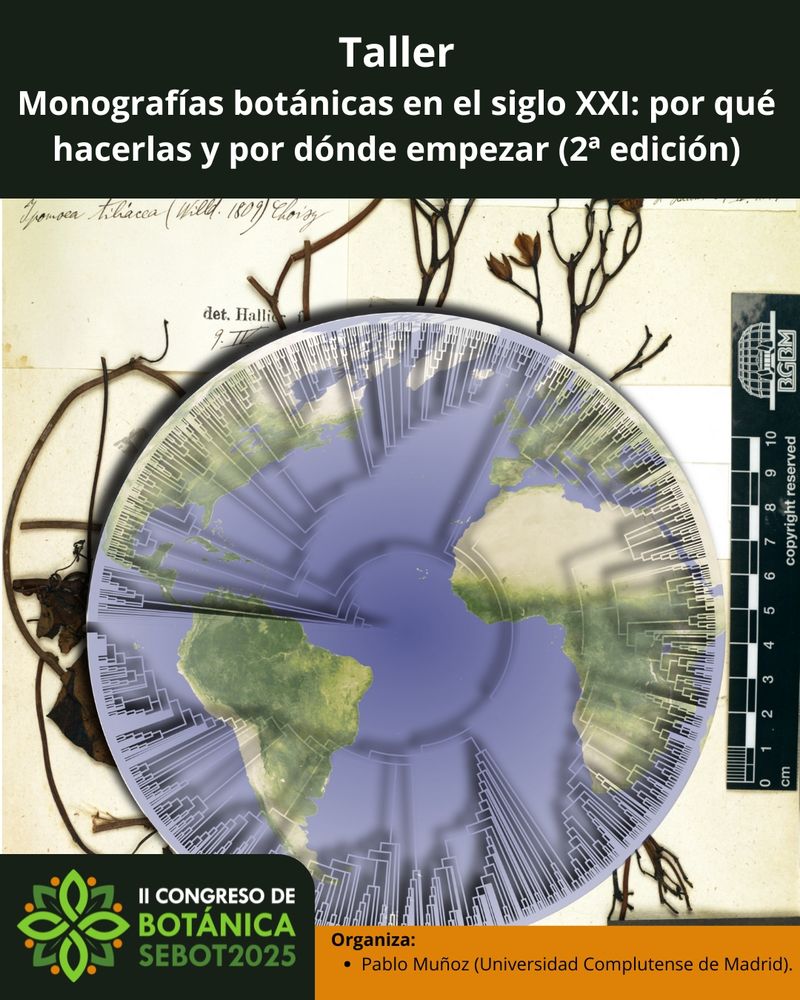
June 6, 2025 at 12:11 PM
📚 II Taller sobre Monografías Botánicas en el Siglo XXI.
🌿 Aprende a integrar morfología, genética, ecología e IA para hacer monografías útiles y modernas.
📍 Congreso SEBOT 2025, Sevilla (22–25 sept).
🗓️ Inscripción a talleres abierta hasta el 8 de julio.
🔗 www.congresosebot2025.com/index.php?se...
🌿 Aprende a integrar morfología, genética, ecología e IA para hacer monografías útiles y modernas.
📍 Congreso SEBOT 2025, Sevilla (22–25 sept).
🗓️ Inscripción a talleres abierta hasta el 8 de julio.
🔗 www.congresosebot2025.com/index.php?se...
Reposted by Virginia Valcarcel
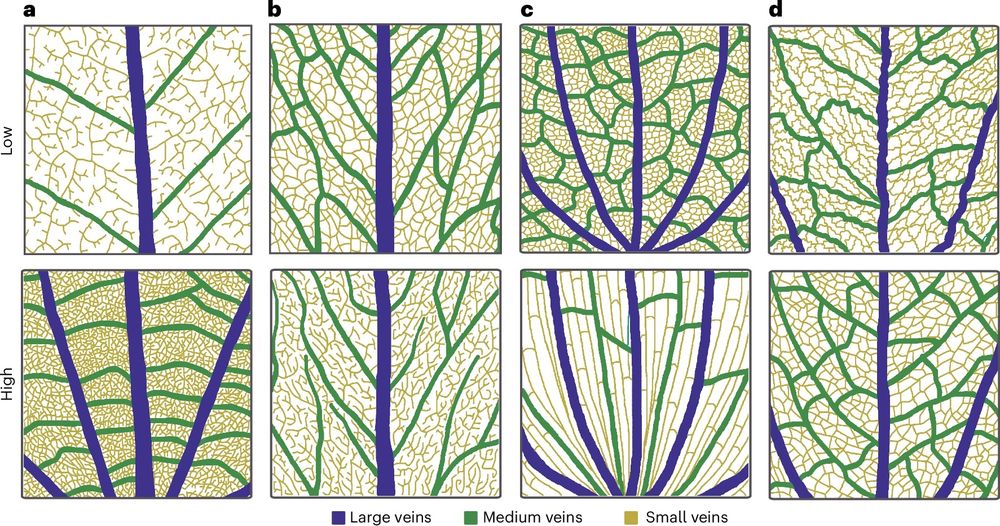
New Article: "Leaf venation network evolution across clades and scales" rdcu.be/epLNP
Evolution of leaf venation networks, from fewer, corrugated veins to high vein density and smoother loops. Herbivory as a potential driver of venation architectural changes.
Evolution of leaf venation networks, from fewer, corrugated veins to high vein density and smoother loops. Herbivory as a potential driver of venation architectural changes.
June 6, 2025 at 5:24 PM
New Article: "Leaf venation network evolution across clades and scales" rdcu.be/epLNP
Evolution of leaf venation networks, from fewer, corrugated veins to high vein density and smoother loops. Herbivory as a potential driver of venation architectural changes.
Evolution of leaf venation networks, from fewer, corrugated veins to high vein density and smoother loops. Herbivory as a potential driver of venation architectural changes.
Reposted by Virginia Valcarcel
For many marine species, all we have is a name. Now, thanks to a huge effort led by @drcraigmc.bsky.social, for 85,000 species we have body size as well. Version 1 of the MOBS database is published today: onlinelibrary.wiley.com/doi/10.1111/... Enjoy! 🌐🧪

MOBS 1.0: A Database of Interspecific Variation in Marine Organismal Body Sizes
Motivation Body size is a fundamental trait influencing an organism's life history, ecology, physiology and evolutionary dynamics. While extensive body-size databases exist for terrestrial vertebrat...
onlinelibrary.wiley.com
June 5, 2025 at 8:42 AM
For many marine species, all we have is a name. Now, thanks to a huge effort led by @drcraigmc.bsky.social, for 85,000 species we have body size as well. Version 1 of the MOBS database is published today: onlinelibrary.wiley.com/doi/10.1111/... Enjoy! 🌐🧪
Reposted by Virginia Valcarcel
🌿 ¿Te enfrentas a desafíos en la recolección de material vegetal en áreas remotas?
Envía tu resumen al simposio Trabajo de campo en zonas remotas en #SEBOT2025
📍 Sevilla, 22–25 sept
📅 Deadline: 30 mayo
Org.: J.I. Márquez & P. García
🔗 goo.su/XJ5IL0
Envía tu resumen al simposio Trabajo de campo en zonas remotas en #SEBOT2025
📍 Sevilla, 22–25 sept
📅 Deadline: 30 mayo
Org.: J.I. Márquez & P. García
🔗 goo.su/XJ5IL0

May 23, 2025 at 4:41 PM
🌿 ¿Te enfrentas a desafíos en la recolección de material vegetal en áreas remotas?
Envía tu resumen al simposio Trabajo de campo en zonas remotas en #SEBOT2025
📍 Sevilla, 22–25 sept
📅 Deadline: 30 mayo
Org.: J.I. Márquez & P. García
🔗 goo.su/XJ5IL0
Envía tu resumen al simposio Trabajo de campo en zonas remotas en #SEBOT2025
📍 Sevilla, 22–25 sept
📅 Deadline: 30 mayo
Org.: J.I. Márquez & P. García
🔗 goo.su/XJ5IL0
Reposted by Virginia Valcarcel
🧬🌿 ¿Te interesa cómo la genómica está revolucionando la biodiversidad vegetal?
Envía tu resumen al simposio Genómica de la biodiversidad en plantas en #SEBOT2025
📍Sevilla 22–25 sept
🗓️Deadline: 30 mayo
@marcialescudero.bsky.social Carmen Benitez @anavaldesf.bsky.social
🔗 goo.su/XJ5IL0
Envía tu resumen al simposio Genómica de la biodiversidad en plantas en #SEBOT2025
📍Sevilla 22–25 sept
🗓️Deadline: 30 mayo
@marcialescudero.bsky.social Carmen Benitez @anavaldesf.bsky.social
🔗 goo.su/XJ5IL0
May 12, 2025 at 9:56 AM
🧬🌿 ¿Te interesa cómo la genómica está revolucionando la biodiversidad vegetal?
Envía tu resumen al simposio Genómica de la biodiversidad en plantas en #SEBOT2025
📍Sevilla 22–25 sept
🗓️Deadline: 30 mayo
@marcialescudero.bsky.social Carmen Benitez @anavaldesf.bsky.social
🔗 goo.su/XJ5IL0
Envía tu resumen al simposio Genómica de la biodiversidad en plantas en #SEBOT2025
📍Sevilla 22–25 sept
🗓️Deadline: 30 mayo
@marcialescudero.bsky.social Carmen Benitez @anavaldesf.bsky.social
🔗 goo.su/XJ5IL0
Reposted by Virginia Valcarcel

¡Explora la flora del sureste de Madrid! Únete a nuestra ruta botánica guiada por la Dehesa de Arganda, enmarcada en el @biomaratonflora.bsky.social
📆sábado 17 de mayo a las 10:30h
La organizamos jóvenes investigadoras de Botánica de la UAM
Inscríbete (es gratis)👇
docs.google.com/forms/d/e/1F...
📆sábado 17 de mayo a las 10:30h
La organizamos jóvenes investigadoras de Botánica de la UAM
Inscríbete (es gratis)👇
docs.google.com/forms/d/e/1F...

May 8, 2025 at 4:53 PM
¡Explora la flora del sureste de Madrid! Únete a nuestra ruta botánica guiada por la Dehesa de Arganda, enmarcada en el @biomaratonflora.bsky.social
📆sábado 17 de mayo a las 10:30h
La organizamos jóvenes investigadoras de Botánica de la UAM
Inscríbete (es gratis)👇
docs.google.com/forms/d/e/1F...
📆sábado 17 de mayo a las 10:30h
La organizamos jóvenes investigadoras de Botánica de la UAM
Inscríbete (es gratis)👇
docs.google.com/forms/d/e/1F...
Reposted by Virginia Valcarcel
🌱 ¡Gran noticia para la botánica! Se redescubre Gyrocaryum oppositifolium en el PN Sierra Morena de Sevilla tras más de un siglo sin citas. Un hallazgo clave para la conservación vegetal en Andalucía. 🌿🔬
www.juntadeandalucia.es/presidencia/...
www.juntadeandalucia.es/presidencia/...

May 7, 2025 at 12:28 PM
🌱 ¡Gran noticia para la botánica! Se redescubre Gyrocaryum oppositifolium en el PN Sierra Morena de Sevilla tras más de un siglo sin citas. Un hallazgo clave para la conservación vegetal en Andalucía. 🌿🔬
www.juntadeandalucia.es/presidencia/...
www.juntadeandalucia.es/presidencia/...
Reposted by Virginia Valcarcel

Una noticia excelente : después de décadas considerada extinta en Andalucía reaparece ‘Gyrocaryum oppositifolium’ - más información 👇🏻
www.juntadeandalucia.es/presidencia/...
www.juntadeandalucia.es/presidencia/...
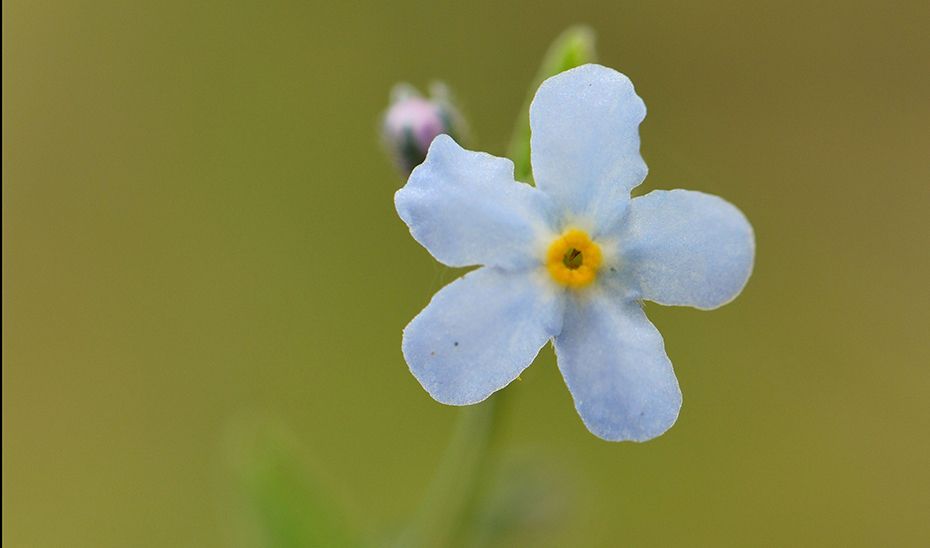
La Junta confirma el redescubrimiento del 'Nomevés' en Sevilla tras 42 años dado por extinguido
Catalina García destaca que este hallazgo refuerza el compromiso andaluz con la protección de especies amenazadas y la conservación de la biodiversidad
www.juntadeandalucia.es
May 7, 2025 at 11:05 AM
Una noticia excelente : después de décadas considerada extinta en Andalucía reaparece ‘Gyrocaryum oppositifolium’ - más información 👇🏻
www.juntadeandalucia.es/presidencia/...
www.juntadeandalucia.es/presidencia/...
Reposted by Virginia Valcarcel
Este jueves tendremos una nueva charla del ciclo Cafés Sistemáticos ☕️🌿. Candela Blanco Moreno
@candelabm.bsky.social @uam.es nos hablará de plantas fósiles:
"Paleobotánica: la historia oculta de las plantas"
🗓️ Jueves, 10 de abril
⏲️ 11:00 (CET)
🔗 conectaha.csic.es/b/mar-dl5-qf...
¡Os esperamos!
@candelabm.bsky.social @uam.es nos hablará de plantas fósiles:
"Paleobotánica: la historia oculta de las plantas"
🗓️ Jueves, 10 de abril
⏲️ 11:00 (CET)
🔗 conectaha.csic.es/b/mar-dl5-qf...
¡Os esperamos!


April 7, 2025 at 10:07 AM
Este jueves tendremos una nueva charla del ciclo Cafés Sistemáticos ☕️🌿. Candela Blanco Moreno
@candelabm.bsky.social @uam.es nos hablará de plantas fósiles:
"Paleobotánica: la historia oculta de las plantas"
🗓️ Jueves, 10 de abril
⏲️ 11:00 (CET)
🔗 conectaha.csic.es/b/mar-dl5-qf...
¡Os esperamos!
@candelabm.bsky.social @uam.es nos hablará de plantas fósiles:
"Paleobotánica: la historia oculta de las plantas"
🗓️ Jueves, 10 de abril
⏲️ 11:00 (CET)
🔗 conectaha.csic.es/b/mar-dl5-qf...
¡Os esperamos!
Reposted by Virginia Valcarcel

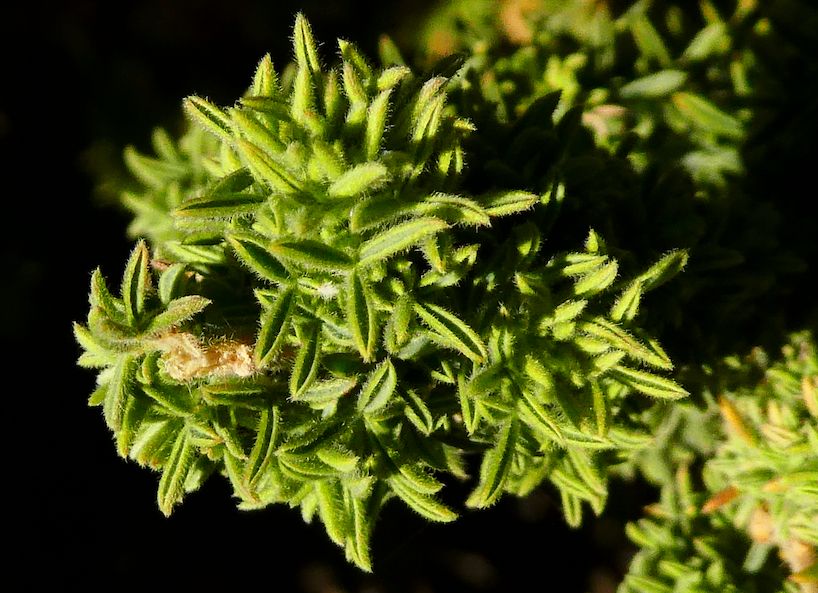
¿Te interesan las áreas megadiversas? En ellas el paisaje puede estar dominado por muy pocas especies (hiperdominancia). Te proponemos un TFM en el RJB @csic.es para explorar este fenómeno en el género de leguminosas 𝘈𝘥𝘦𝘯𝘰𝘤𝘢𝘳𝘱𝘶𝘴 DC. (JAEINT25_EX_0917) @sebot.bsky.social @jovenesbotanica.bsky.social



April 3, 2025 at 5:03 PM
¿Te interesan las áreas megadiversas? En ellas el paisaje puede estar dominado por muy pocas especies (hiperdominancia). Te proponemos un TFM en el RJB @csic.es para explorar este fenómeno en el género de leguminosas 𝘈𝘥𝘦𝘯𝘰𝘤𝘢𝘳𝘱𝘶𝘴 DC. (JAEINT25_EX_0917) @sebot.bsky.social @jovenesbotanica.bsky.social


Reposted by Virginia Valcarcel
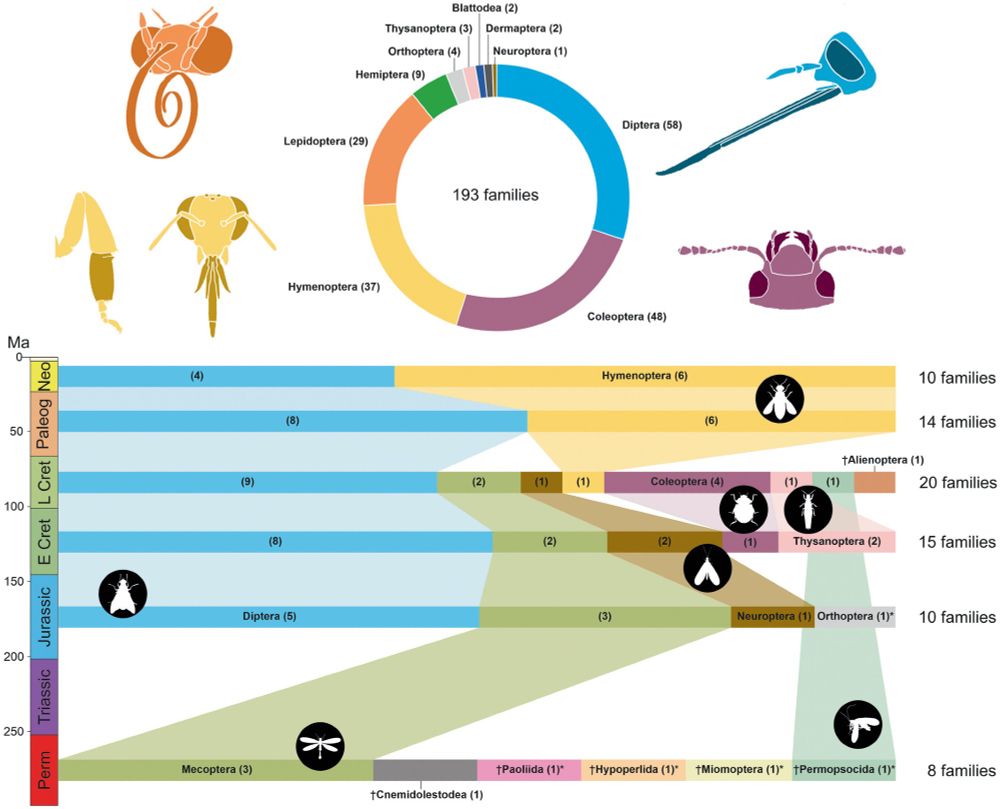
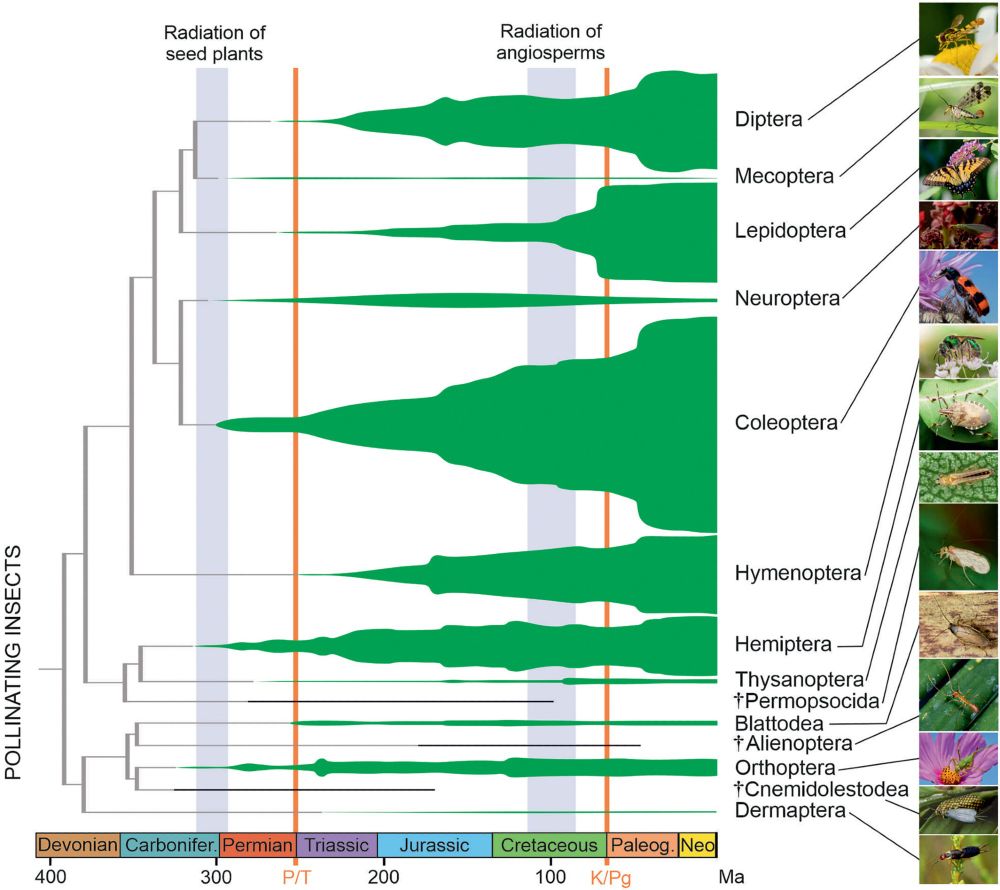
Excited to see this out!! In this thought-provoking review led by @davidperis.bsky.social and Ricardo Pérez-de la Fuente we further demonstrate that insect #pollination was once widespread among #gymnosperms and existed long before the origin of #angiosperms
onlinelibrary.wiley.com/doi/full/10....
onlinelibrary.wiley.com/doi/full/10....
March 12, 2025 at 11:57 PM
Excited to see this out!! In this thought-provoking review led by @davidperis.bsky.social and Ricardo Pérez-de la Fuente we further demonstrate that insect #pollination was once widespread among #gymnosperms and existed long before the origin of #angiosperms
onlinelibrary.wiley.com/doi/full/10....
onlinelibrary.wiley.com/doi/full/10....
Reposted by Virginia Valcarcel

Although many invertebrates and other less-charismatic groups are key for ecosystem service provision, they and their functions are rarely included in conservation strategies. Benoit Guénard, @achughes.bsky.social et al show how funding largely goes to charismatic rather than threatened species 🌐🧪🪲
March 7, 2025 at 12:10 PM
Although many invertebrates and other less-charismatic groups are key for ecosystem service provision, they and their functions are rarely included in conservation strategies. Benoit Guénard, @achughes.bsky.social et al show how funding largely goes to charismatic rather than threatened species 🌐🧪🪲
Reposted by Virginia Valcarcel
Nueva propuesta: Catálogo Madrileño de Flora Protegida
>30 años sin renovar‼️
#SEBiCoP ha obtenido un proyecto para actualizar el Catálogo Regional de Especies de Flora Amenazadas de la Comunidad de Madrid, publicado en 1992
Colaboran en la actualización 30 expertos y socios
>30 años sin renovar‼️
#SEBiCoP ha obtenido un proyecto para actualizar el Catálogo Regional de Especies de Flora Amenazadas de la Comunidad de Madrid, publicado en 1992
Colaboran en la actualización 30 expertos y socios

March 1, 2025 at 12:07 PM
Nueva propuesta: Catálogo Madrileño de Flora Protegida
>30 años sin renovar‼️
#SEBiCoP ha obtenido un proyecto para actualizar el Catálogo Regional de Especies de Flora Amenazadas de la Comunidad de Madrid, publicado en 1992
Colaboran en la actualización 30 expertos y socios
>30 años sin renovar‼️
#SEBiCoP ha obtenido un proyecto para actualizar el Catálogo Regional de Especies de Flora Amenazadas de la Comunidad de Madrid, publicado en 1992
Colaboran en la actualización 30 expertos y socios
Reposted by Virginia Valcarcel

¡Hola Briomaniacos!
El miércoles 26 tendrá lugar el 2º encuentro de Transmitting Bryology (TBryo) a mano de Pere Miquel Mir-Roselló titulado "Briófitos como indicadores: adaptabilidad y limitaciones". En este espacio distendido nos reunimos una vez al mes para debatir, dar charlas y mucho más.
El miércoles 26 tendrá lugar el 2º encuentro de Transmitting Bryology (TBryo) a mano de Pere Miquel Mir-Roselló titulado "Briófitos como indicadores: adaptabilidad y limitaciones". En este espacio distendido nos reunimos una vez al mes para debatir, dar charlas y mucho más.
February 24, 2025 at 3:03 PM
¡Hola Briomaniacos!
El miércoles 26 tendrá lugar el 2º encuentro de Transmitting Bryology (TBryo) a mano de Pere Miquel Mir-Roselló titulado "Briófitos como indicadores: adaptabilidad y limitaciones". En este espacio distendido nos reunimos una vez al mes para debatir, dar charlas y mucho más.
El miércoles 26 tendrá lugar el 2º encuentro de Transmitting Bryology (TBryo) a mano de Pere Miquel Mir-Roselló titulado "Briófitos como indicadores: adaptabilidad y limitaciones". En este espacio distendido nos reunimos una vez al mes para debatir, dar charlas y mucho más.
Reposted by Virginia Valcarcel


Reposted by Virginia Valcarcel

Mediante el análisis de isótopos de cloro en la sal depositada en el lecho del Mediterráneo, se ha podido establecer cuándo y cómo desapareció el 70% del agua de este mar: 35.000 años de restricción del flujo de agua y aislamiento total durante 10.000 años.
www.nature.com/articles/s41...
www.nature.com/articles/s41...
December 3, 2024 at 8:09 AM
Mediante el análisis de isótopos de cloro en la sal depositada en el lecho del Mediterráneo, se ha podido establecer cuándo y cómo desapareció el 70% del agua de este mar: 35.000 años de restricción del flujo de agua y aislamiento total durante 10.000 años.
www.nature.com/articles/s41...
www.nature.com/articles/s41...