




Botanical Journal of the Linnean Society
@botjlinnsoc.bsky.social
International Botanical Journal covering all aspects of systematic & evolutionary botany of living & fossil plants & fungi 🌺🌿🌴🍄🟫
Homepage: https://academic.oup.com/botlinnean
Blog: https://www.linnean.org/news/categories/the-paper-trail
Homepage: https://academic.oup.com/botlinnean
Blog: https://www.linnean.org/news/categories/the-paper-trail
Thirty, and flirty and AI-ing?
It's hard to deny the impact AI has had on the world this year, highlighted here in a guest blog about its use in scientific research in our Botanical Journal! Did you know Machine Learning can help detect salt stress in plants? 🌍🧪
Check it out 👇
buff.ly/pU9nbpv
It's hard to deny the impact AI has had on the world this year, highlighted here in a guest blog about its use in scientific research in our Botanical Journal! Did you know Machine Learning can help detect salt stress in plants? 🌍🧪
Check it out 👇
buff.ly/pU9nbpv

December 30, 2025 at 8:30 AM
Thirty, and flirty and AI-ing?
It's hard to deny the impact AI has had on the world this year, highlighted here in a guest blog about its use in scientific research in our Botanical Journal! Did you know Machine Learning can help detect salt stress in plants? 🌍🧪
Check it out 👇
buff.ly/pU9nbpv
It's hard to deny the impact AI has had on the world this year, highlighted here in a guest blog about its use in scientific research in our Botanical Journal! Did you know Machine Learning can help detect salt stress in plants? 🌍🧪
Check it out 👇
buff.ly/pU9nbpv
Reposted by Botanical Journal of the Linnean Society

On the fifth day of Christmas, Linnaeus gave to me...FIVE ANOLES! Well, more like anoles adapting to temperature change in the Andes, as taught to us in this lunchtime lecture! Kicking off the journal series, it contributed to the 1000+ lecture attendees this year! 🌍🧪👇
buff.ly/Tgjn9Pk
buff.ly/Tgjn9Pk

December 5, 2025 at 10:24 AM
On the fifth day of Christmas, Linnaeus gave to me...FIVE ANOLES! Well, more like anoles adapting to temperature change in the Andes, as taught to us in this lunchtime lecture! Kicking off the journal series, it contributed to the 1000+ lecture attendees this year! 🌍🧪👇
buff.ly/Tgjn9Pk
buff.ly/Tgjn9Pk
Reposted by Botanical Journal of the Linnean Society
We all know ornithologists loved naming birds, but less so trying to understand their evolutionary history...
Using the (perfectly named) Buzzing Flowerpecker as a case study, phylogenetic studies revealed rapid evolution & shared genes, making it difficult to draw boundaries...
Using the (perfectly named) Buzzing Flowerpecker as a case study, phylogenetic studies revealed rapid evolution & shared genes, making it difficult to draw boundaries...

Rapid divergence with gene flow creates intractable nodes in the tree of life: An empirical demonstration in the Buzzing Flowerpecker (Dicaeum hypoleucum)
Abstract. The avian tree of life contains a series of famously intractable nodes and controversial relationships whose resolution varies between studies de
doi.org
December 2, 2025 at 3:03 PM
We all know ornithologists loved naming birds, but less so trying to understand their evolutionary history...
Using the (perfectly named) Buzzing Flowerpecker as a case study, phylogenetic studies revealed rapid evolution & shared genes, making it difficult to draw boundaries...
Using the (perfectly named) Buzzing Flowerpecker as a case study, phylogenetic studies revealed rapid evolution & shared genes, making it difficult to draw boundaries...
With more twists than Stranger Things, the East Asian Artemisia isn't just a medicinal plant! New research shows its evolutionary history is full of genetic crossovers, hybridisations & ancient divergence! 🌍 🧪 👇
doi.org/10.1093/botl...
@linneansociety.bsky.social
#UpsideDown
doi.org/10.1093/botl...
@linneansociety.bsky.social
#UpsideDown

Multiple molecular data provide new insights into phylogeny and historical biogeography of East Asian Artemisia L. (Asteraceae)
Abstract. Artemisia L. is one of the most diverse genera in the Asteraceae, widely used in agriculture and medicine, with a giant range of complicated taxa
doi.org
November 28, 2025 at 12:02 PM
With more twists than Stranger Things, the East Asian Artemisia isn't just a medicinal plant! New research shows its evolutionary history is full of genetic crossovers, hybridisations & ancient divergence! 🌍 🧪 👇
doi.org/10.1093/botl...
@linneansociety.bsky.social
#UpsideDown
doi.org/10.1093/botl...
@linneansociety.bsky.social
#UpsideDown
Ahhh Rafflesia, the parasitic corpse flower...what's not to love? Known for their scent of rotting flesh, these Strange(r) Things can be found in the rainforests of South East Asia, and may remind you of a certain Demogorgon, henchmen of the upside down...
#StrangerThings #Demogorgon
#StrangerThings #Demogorgon

November 27, 2025 at 2:06 PM
Ahhh Rafflesia, the parasitic corpse flower...what's not to love? Known for their scent of rotting flesh, these Strange(r) Things can be found in the rainforests of South East Asia, and may remind you of a certain Demogorgon, henchmen of the upside down...
#StrangerThings #Demogorgon
#StrangerThings #Demogorgon
Reposted by Botanical Journal of the Linnean Society
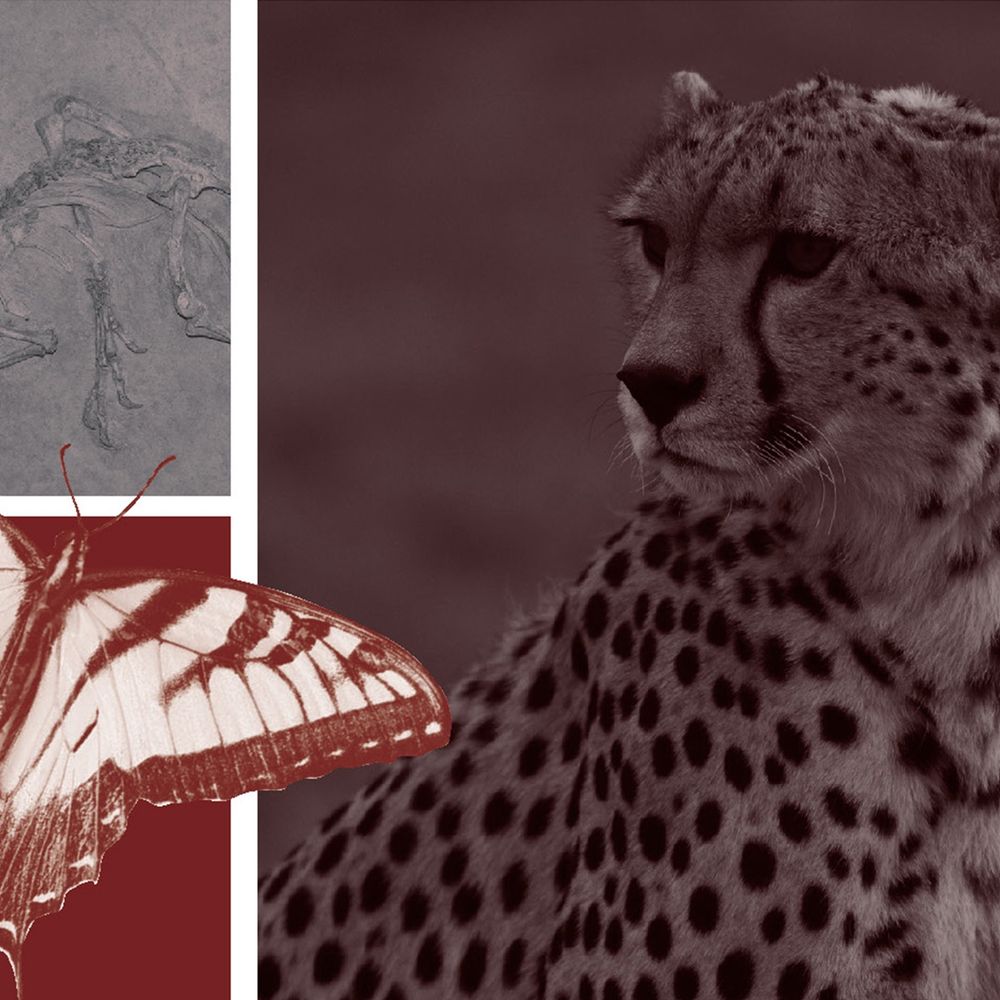
I spy with my little eye, a brand new...butterfly?
Found hiding from Panama to Colombia, whole-genome sequencing uncovered this new species as part of the tribe Phocidini!
doi.org/10.1093/zool...
@linneansociety.bsky.social
Found hiding from Panama to Colombia, whole-genome sequencing uncovered this new species as part of the tribe Phocidini!
doi.org/10.1093/zool...
@linneansociety.bsky.social

November 26, 2025 at 11:30 AM
I spy with my little eye, a brand new...butterfly?
Found hiding from Panama to Colombia, whole-genome sequencing uncovered this new species as part of the tribe Phocidini!
doi.org/10.1093/zool...
@linneansociety.bsky.social
Found hiding from Panama to Colombia, whole-genome sequencing uncovered this new species as part of the tribe Phocidini!
doi.org/10.1093/zool...
@linneansociety.bsky.social
Reposted by Botanical Journal of the Linnean Society

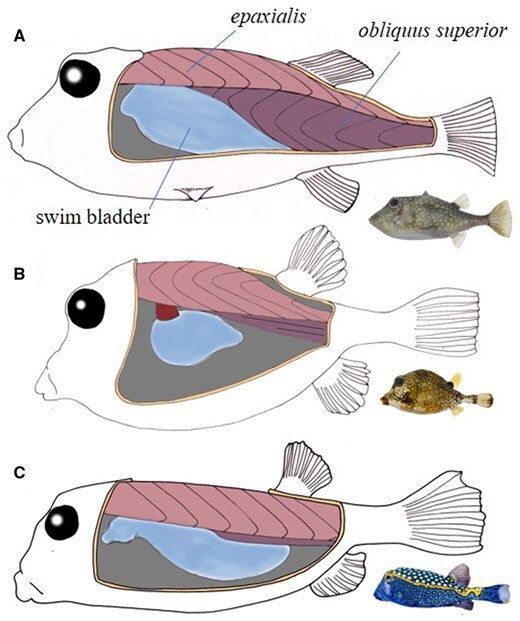
What's that? You didn't know boxfish made sound? Me neither...
It turns out all species (Atlantic & Pacific) do, yet little is known about how this evolved. A novel structure found only in the Atlantic species offered the answer, but it isn't quite what you think...🌍 🧪
doi.org/10.1093/biol...
It turns out all species (Atlantic & Pacific) do, yet little is known about how this evolved. A novel structure found only in the Atlantic species offered the answer, but it isn't quite what you think...🌍 🧪
doi.org/10.1093/biol...
November 25, 2025 at 8:30 AM
What's that? You didn't know boxfish made sound? Me neither...
It turns out all species (Atlantic & Pacific) do, yet little is known about how this evolved. A novel structure found only in the Atlantic species offered the answer, but it isn't quite what you think...🌍 🧪
doi.org/10.1093/biol...
It turns out all species (Atlantic & Pacific) do, yet little is known about how this evolved. A novel structure found only in the Atlantic species offered the answer, but it isn't quite what you think...🌍 🧪
doi.org/10.1093/biol...
Reposted by Botanical Journal of the Linnean Society
Weevil, weevil, rock you!
Not quite as catchy as the Queen hit, the phylogeny of broad-nosed weevils was explored using mitochondrial genomes of 130 species, helping to classify the subfamily & uncover their biogeography! 🌍👇🧪
doi.org/10.1093/zool...
@linneansociety.bsky.social
Not quite as catchy as the Queen hit, the phylogeny of broad-nosed weevils was explored using mitochondrial genomes of 130 species, helping to classify the subfamily & uncover their biogeography! 🌍👇🧪
doi.org/10.1093/zool...
@linneansociety.bsky.social

November 24, 2025 at 11:01 AM
Weevil, weevil, rock you!
Not quite as catchy as the Queen hit, the phylogeny of broad-nosed weevils was explored using mitochondrial genomes of 130 species, helping to classify the subfamily & uncover their biogeography! 🌍👇🧪
doi.org/10.1093/zool...
@linneansociety.bsky.social
Not quite as catchy as the Queen hit, the phylogeny of broad-nosed weevils was explored using mitochondrial genomes of 130 species, helping to classify the subfamily & uncover their biogeography! 🌍👇🧪
doi.org/10.1093/zool...
@linneansociety.bsky.social
The pantropical genus Mapania is associated with forest understorey, yet its evolutionary history & species delimitation are poorly known. Here, DNA sequence data was used to change this, highlighting the need for further research to better protect this genus! 🌍 🧪 👇

Phylogeny of Southeast Asian Mapania (Cyperaceae: Mapanioideae) using chloroplast sequence data
Abstract. Mapania (Cyperaceae) is a pantropical genus associated with the forest understorey. Its evolutionary history and species delimitation are poorly
doi.org
November 17, 2025 at 9:45 AM
The pantropical genus Mapania is associated with forest understorey, yet its evolutionary history & species delimitation are poorly known. Here, DNA sequence data was used to change this, highlighting the need for further research to better protect this genus! 🌍 🧪 👇
This #FossilFriday marvel at the presence of Astropanax leaves & pollen in Ethiopia 21.73 million years ago, found in the Mush Valley, providing the earliest evidence for Araliaceae on the African continent! (around the time when ancient rhinos & horses began to evolve)🌍🧪
doi.org/10.1093/botl...
doi.org/10.1093/botl...

November 14, 2025 at 8:30 AM
This #FossilFriday marvel at the presence of Astropanax leaves & pollen in Ethiopia 21.73 million years ago, found in the Mush Valley, providing the earliest evidence for Araliaceae on the African continent! (around the time when ancient rhinos & horses began to evolve)🌍🧪
doi.org/10.1093/botl...
doi.org/10.1093/botl...
New Species Alert!
Two new species of the genus Cedrela from W Ecuador are described based on extensive comparative analysis, aiding in the classification of their conservation status! Both endangered by #Deforestation, this highlights the importance of continued research 👇
doi.org/10.1093/botl...
Two new species of the genus Cedrela from W Ecuador are described based on extensive comparative analysis, aiding in the classification of their conservation status! Both endangered by #Deforestation, this highlights the importance of continued research 👇
doi.org/10.1093/botl...


November 11, 2025 at 10:01 AM
New Species Alert!
Two new species of the genus Cedrela from W Ecuador are described based on extensive comparative analysis, aiding in the classification of their conservation status! Both endangered by #Deforestation, this highlights the importance of continued research 👇
doi.org/10.1093/botl...
Two new species of the genus Cedrela from W Ecuador are described based on extensive comparative analysis, aiding in the classification of their conservation status! Both endangered by #Deforestation, this highlights the importance of continued research 👇
doi.org/10.1093/botl...
Effective conservation relies on accurate research, monitoring & understanding of species. Here, the first comprehensive IUCN Red List assessment of the High Atlas vascular flora has been done, helping to uncover extinction threats to endemic flora! 🧪 🌍 👇
doi.org/10.1093/botl...
doi.org/10.1093/botl...

November 9, 2025 at 11:01 AM
Effective conservation relies on accurate research, monitoring & understanding of species. Here, the first comprehensive IUCN Red List assessment of the High Atlas vascular flora has been done, helping to uncover extinction threats to endemic flora! 🧪 🌍 👇
doi.org/10.1093/botl...
doi.org/10.1093/botl...
As Alphaville famously sang...hummingbird-pollinated Costus flowers appear to stay forever young, keeping their juvenile traits through paedomorphosis, whilst bee-pollinated ones do not! 🧪 🌍 👇
doi.org/10.1093/botl...
@linneansociety.bsky.social
@thiagojcandre.bsky.social
@cdspecht.bsky.social
doi.org/10.1093/botl...
@linneansociety.bsky.social
@thiagojcandre.bsky.social
@cdspecht.bsky.social

November 7, 2025 at 11:30 AM
As Alphaville famously sang...hummingbird-pollinated Costus flowers appear to stay forever young, keeping their juvenile traits through paedomorphosis, whilst bee-pollinated ones do not! 🧪 🌍 👇
doi.org/10.1093/botl...
@linneansociety.bsky.social
@thiagojcandre.bsky.social
@cdspecht.bsky.social
doi.org/10.1093/botl...
@linneansociety.bsky.social
@thiagojcandre.bsky.social
@cdspecht.bsky.social
Piper (no, not the magical man who tamed the rats) is the largest genus of Piperaceae & second largest angiosperm, yet its biogeography & global radiation still requires research. Here, phylogenetic analysis investigated divergence time, revealing it spread to mainland Africa twice! (1/2)🌍 🧪 👇

November 4, 2025 at 5:35 PM
Piper (no, not the magical man who tamed the rats) is the largest genus of Piperaceae & second largest angiosperm, yet its biogeography & global radiation still requires research. Here, phylogenetic analysis investigated divergence time, revealing it spread to mainland Africa twice! (1/2)🌍 🧪 👇
Are you as bromeli-MAD about bromeliads as us? Then you're in luck!
Following the success of our previous special issues, we're pleased to announce a new one on Bromeliaceae Evolution & Systematics! Keep an eye on our socials as we share papers over the next few weeks 🌍 🧪 👇
buff.ly/zVh5ORp
Following the success of our previous special issues, we're pleased to announce a new one on Bromeliaceae Evolution & Systematics! Keep an eye on our socials as we share papers over the next few weeks 🌍 🧪 👇
buff.ly/zVh5ORp

October 29, 2025 at 10:01 AM
Are you as bromeli-MAD about bromeliads as us? Then you're in luck!
Following the success of our previous special issues, we're pleased to announce a new one on Bromeliaceae Evolution & Systematics! Keep an eye on our socials as we share papers over the next few weeks 🌍 🧪 👇
buff.ly/zVh5ORp
Following the success of our previous special issues, we're pleased to announce a new one on Bromeliaceae Evolution & Systematics! Keep an eye on our socials as we share papers over the next few weeks 🌍 🧪 👇
buff.ly/zVh5ORp
Reposted by Botanical Journal of the Linnean Society
It's #WombatDay! Famed for their cubed poop, these guys have surprisingly similar forelimb myology to koalas...helping to unravel their evolutionary past! Read about it below 👇🌍🧪
doi.org/10.1093/zool...
@linneansociety.bsky.social
doi.org/10.1093/zool...
@linneansociety.bsky.social

October 22, 2025 at 3:47 PM
It's #WombatDay! Famed for their cubed poop, these guys have surprisingly similar forelimb myology to koalas...helping to unravel their evolutionary past! Read about it below 👇🌍🧪
doi.org/10.1093/zool...
@linneansociety.bsky.social
doi.org/10.1093/zool...
@linneansociety.bsky.social
Reposted by Botanical Journal of the Linnean Society
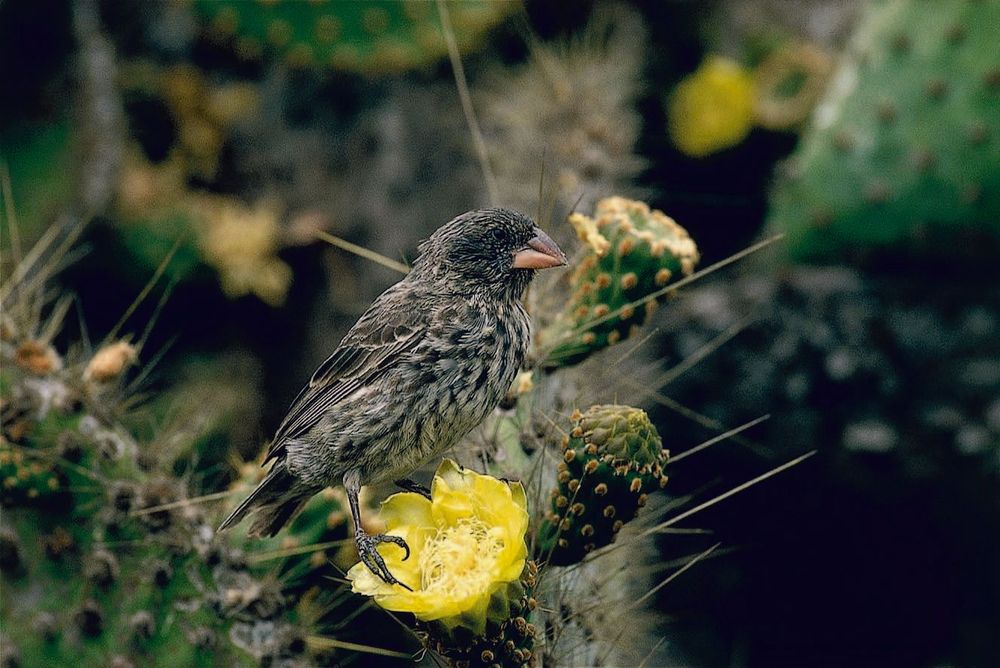
Darwin's Darwin finches (the island is called Darwin, that's not a typo) have been variably described as either two species, or combined into just one. But what's right? As part of our #SpecialIssue on Evolution on Islands, Peter & Rosemary Grant took to answering this...(1/2) 🌍🧪
October 17, 2025 at 10:02 AM
Darwin's Darwin finches (the island is called Darwin, that's not a typo) have been variably described as either two species, or combined into just one. But what's right? As part of our #SpecialIssue on Evolution on Islands, Peter & Rosemary Grant took to answering this...(1/2) 🌍🧪
Reposted by Botanical Journal of the Linnean Society
Ahh, Drosophila suzukii, a global pest...and best dressed? Whilst fashion week is over, these guys really put the fly in fruit fly! Known for their body colour plasticity, the role of sexual vs natural selection on their colour diversity was investigated...check it out 👇🧪🌍🦟

Natural selection, rather than sexual selection, plays a dominant role in the formation of body coloration in Drosophila suzukii
Abstract. Drosophila suzukii is a globally distributed pest, and its body colour exhibits notable plasticity. Given the important roles of natural and sexu
doi.org
October 16, 2025 at 9:30 AM
Ahh, Drosophila suzukii, a global pest...and best dressed? Whilst fashion week is over, these guys really put the fly in fruit fly! Known for their body colour plasticity, the role of sexual vs natural selection on their colour diversity was investigated...check it out 👇🧪🌍🦟
Ever wondered in hard and woody fruits (like a cherry pit) or soft, unspecialised, berry-like fruits are the ancestral fruit-type in Arecoidea tropical palms? Well, you're in luck! Check out this paper to unravel this mystery...🌍🧪
@linneansociety.bsky.social
@linneansociety.bsky.social

Fruit structure and development in representatives of Iriarteeae (Arecaceae–Arecoideae)
Abstract. With the aim of determining the plesiomorphic fruit type of Arecaceae–Arecoideae, we conducted a developmental carpological study of all five gen
doi.org
October 15, 2025 at 4:01 PM
Ever wondered in hard and woody fruits (like a cherry pit) or soft, unspecialised, berry-like fruits are the ancestral fruit-type in Arecoidea tropical palms? Well, you're in luck! Check out this paper to unravel this mystery...🌍🧪
@linneansociety.bsky.social
@linneansociety.bsky.social
Reposted by Botanical Journal of the Linnean Society
New Blog Day! 🐜📣
The acacia fruit doesn't fall far from the evolutionary tree in this new blog, written by guest blogger Josie Cooper! Ever wondered how plants defend themselves from plant-eating predators? In the case of swollen-thorn acacias, the answer is ants...a 🧵 (1/6) 🌍🧪
buff.ly/Sm4NQsQ
The acacia fruit doesn't fall far from the evolutionary tree in this new blog, written by guest blogger Josie Cooper! Ever wondered how plants defend themselves from plant-eating predators? In the case of swollen-thorn acacias, the answer is ants...a 🧵 (1/6) 🌍🧪
buff.ly/Sm4NQsQ

Ants, Acacias, and Breaking the Mould of Niche Conservatism
Discover the latest news from The Linnean Society of London.
www.linnean.org
October 14, 2025 at 4:15 PM
New Blog Day! 🐜📣
The acacia fruit doesn't fall far from the evolutionary tree in this new blog, written by guest blogger Josie Cooper! Ever wondered how plants defend themselves from plant-eating predators? In the case of swollen-thorn acacias, the answer is ants...a 🧵 (1/6) 🌍🧪
buff.ly/Sm4NQsQ
The acacia fruit doesn't fall far from the evolutionary tree in this new blog, written by guest blogger Josie Cooper! Ever wondered how plants defend themselves from plant-eating predators? In the case of swollen-thorn acacias, the answer is ants...a 🧵 (1/6) 🌍🧪
buff.ly/Sm4NQsQ
Are you a PhD student ready to publish a paper? Submit your research to our journal today & enter one of our new journal prizes, celebrating PhD student work in #Botany! 🧪🌍👇
academic.oup.com/botlinnean/p...
academic.oup.com/botlinnean/p...

September 27, 2025 at 9:30 AM
Are you a PhD student ready to publish a paper? Submit your research to our journal today & enter one of our new journal prizes, celebrating PhD student work in #Botany! 🧪🌍👇
academic.oup.com/botlinnean/p...
academic.oup.com/botlinnean/p...
IT'S ALIIIIIIIIIIIIIIIIIIVE!
Not quite Frankenstein's monster, nuclear sequence capture was used on the orchid subtribe Calypsoinae, making a strong case for the resurrection of Kitigorchis as a sister to Corallorhiza! Read about it below 🌍🧪👇
Not quite Frankenstein's monster, nuclear sequence capture was used on the orchid subtribe Calypsoinae, making a strong case for the resurrection of Kitigorchis as a sister to Corallorhiza! Read about it below 🌍🧪👇

Phylogenomics and intergenomic conflict in a challenging orchid clade (Calypsoinae): monophyly of Corallorhiza, paraphyly of Oreorchis, and resurrection of Kitigorchis
Abstract. Heterotrophic plants are among the most recalcitrant from a systematics perspective because of reduced morphological and genomic features, and of
doi.org
September 23, 2025 at 1:02 PM
IT'S ALIIIIIIIIIIIIIIIIIIVE!
Not quite Frankenstein's monster, nuclear sequence capture was used on the orchid subtribe Calypsoinae, making a strong case for the resurrection of Kitigorchis as a sister to Corallorhiza! Read about it below 🌍🧪👇
Not quite Frankenstein's monster, nuclear sequence capture was used on the orchid subtribe Calypsoinae, making a strong case for the resurrection of Kitigorchis as a sister to Corallorhiza! Read about it below 🌍🧪👇
Reposted by Botanical Journal of the Linnean Society
Who you gonna call? EVOLUTIONARY SCIENTISTS!
Ghost species (no, not species of ghost) are extinct, unknown & unsampled taxa...and they vastly outnumber those included in phylogenetics. This hidden diversity can complicate phylogenetic signals of horizontal gene flow, impacting their study...(1/2)🧪
Ghost species (no, not species of ghost) are extinct, unknown & unsampled taxa...and they vastly outnumber those included in phylogenetics. This hidden diversity can complicate phylogenetic signals of horizontal gene flow, impacting their study...(1/2)🧪

September 19, 2025 at 10:01 AM
Who you gonna call? EVOLUTIONARY SCIENTISTS!
Ghost species (no, not species of ghost) are extinct, unknown & unsampled taxa...and they vastly outnumber those included in phylogenetics. This hidden diversity can complicate phylogenetic signals of horizontal gene flow, impacting their study...(1/2)🧪
Ghost species (no, not species of ghost) are extinct, unknown & unsampled taxa...and they vastly outnumber those included in phylogenetics. This hidden diversity can complicate phylogenetic signals of horizontal gene flow, impacting their study...(1/2)🧪
It's #PeerReviewWeek and what better opportunity exists to say a huge thank you to our excellent reviewers from across the globe. It is your hard work & commitment that enables us to continue publishing ground-breaking research in Biology, Botany, Evolution and Zoology. (1/2)
September 17, 2025 at 9:00 AM
It's #PeerReviewWeek and what better opportunity exists to say a huge thank you to our excellent reviewers from across the globe. It is your hard work & commitment that enables us to continue publishing ground-breaking research in Biology, Botany, Evolution and Zoology. (1/2)
Did you know male wasps can get tricked by orchids into thinking they're females?
Pterostylis orchids use sexual deception as a pollination strategy, with fungus gnats (Diptera) falling victim, acting as the main pollinators of these deceptive plants! 🌍🧪👇
academic.oup.com/botlinnean/a...
Pterostylis orchids use sexual deception as a pollination strategy, with fungus gnats (Diptera) falling victim, acting as the main pollinators of these deceptive plants! 🌍🧪👇
academic.oup.com/botlinnean/a...

How widespread is pollination by sexual deception of fungus gnats in Pterostylis (Orchidaceae)?
Abstract. Pollination by sexual deception has evolved multiple times in the Orchidaceae, with most known cases involving male Hymenoptera as pollinators. T
academic.oup.com
September 16, 2025 at 1:35 PM
Did you know male wasps can get tricked by orchids into thinking they're females?
Pterostylis orchids use sexual deception as a pollination strategy, with fungus gnats (Diptera) falling victim, acting as the main pollinators of these deceptive plants! 🌍🧪👇
academic.oup.com/botlinnean/a...
Pterostylis orchids use sexual deception as a pollination strategy, with fungus gnats (Diptera) falling victim, acting as the main pollinators of these deceptive plants! 🌍🧪👇
academic.oup.com/botlinnean/a...