



Nadine Herzog
@ndherzog.bsky.social
Cracking Brain Signals
🧠 Neuroscientist | 🎯 Dopamine & Food Reward Systems
📡 EEG-fMRI Fusion | 🤖 Deep Learning
Advancing obesity treatment through the science of cognition and reward.
🧠 Neuroscientist | 🎯 Dopamine & Food Reward Systems
📡 EEG-fMRI Fusion | 🤖 Deep Learning
Advancing obesity treatment through the science of cognition and reward.
Reposted by Nadine Herzog
It’s not too late to apply for the PhD position in my lab! Please send your documents (cover letter, CV, transcripts, names of references) through the official application platform by Nov 25!
Please repost! I am looking for a PhD candidate in the area of Computational Cognitive Neuroscience to start in early 2026.
The position is funded as part of the Excellence Cluster "The Adaptive Mind" at @jlugiessen.bsky.social.
Please apply here until Nov 25:
www.uni-giessen.de/de/ueber-uns...
The position is funded as part of the Excellence Cluster "The Adaptive Mind" at @jlugiessen.bsky.social.
Please apply here until Nov 25:
www.uni-giessen.de/de/ueber-uns...

November 24, 2025 at 8:55 AM
It’s not too late to apply for the PhD position in my lab! Please send your documents (cover letter, CV, transcripts, names of references) through the official application platform by Nov 25!
Reposted by Nadine Herzog
Please share! - 🚨⚠️ PhD position alert ⚠️🚨 - Please share!
Come work with @ldeserno.bsky.social and yours truly on an exciting DFG-funded project on the neurocognitive mechanisms of (noise in) learning and decision-making in development and ADHD!
Come work with @ldeserno.bsky.social and yours truly on an exciting DFG-funded project on the neurocognitive mechanisms of (noise in) learning and decision-making in development and ADHD!
November 21, 2025 at 2:51 PM
Please share! - 🚨⚠️ PhD position alert ⚠️🚨 - Please share!
Come work with @ldeserno.bsky.social and yours truly on an exciting DFG-funded project on the neurocognitive mechanisms of (noise in) learning and decision-making in development and ADHD!
Come work with @ldeserno.bsky.social and yours truly on an exciting DFG-funded project on the neurocognitive mechanisms of (noise in) learning and decision-making in development and ADHD!
Reposted by Nadine Herzog

Is overeating driven by hedonism? @danasmall.bsky.social &co argue that the pleasure of eating food is not a driver of the #obesity epidemic, but rather the regular consumption of an unhealthy diet blunts sensitivity to interoceptive signals that drive food reward #neurosky 🧪
plos.io/4nTlHQc
plos.io/4nTlHQc

November 14, 2025 at 2:00 PM
Is overeating driven by hedonism? @danasmall.bsky.social &co argue that the pleasure of eating food is not a driver of the #obesity epidemic, but rather the regular consumption of an unhealthy diet blunts sensitivity to interoceptive signals that drive food reward #neurosky 🧪
plos.io/4nTlHQc
plos.io/4nTlHQc
Reposted by Nadine Herzog

Wer in der Wissenschaft als exzellent gelten will, muss sichtbar sein. Nur: Frauen werden für Sichtbarkeit abgestraft. Sie können es schlicht nicht richtig machen! Kein Wunder, dass Gleichstellung im dt. Wissenschaftssystem schleppend vorangeht. Das #Sichtbarkeitsparadox: heute in #ArbeitInDerWiss!

Das Sichtbarkeitsparadox: Warum Wissenschaftlerinnen es nicht richtig…
Als exzellent gelten setzt voraus, sichtbar zu sein. Wissenschaftlerinnen werden jedoch für Sichtbarkeit abgestraft. Egal was sie tun: Sie können es nur falsch machen!
steady.page
November 11, 2025 at 8:01 AM
Wer in der Wissenschaft als exzellent gelten will, muss sichtbar sein. Nur: Frauen werden für Sichtbarkeit abgestraft. Sie können es schlicht nicht richtig machen! Kein Wunder, dass Gleichstellung im dt. Wissenschaftssystem schleppend vorangeht. Das #Sichtbarkeitsparadox: heute in #ArbeitInDerWiss!
Reposted by Nadine Herzog
Please repost! I am looking for a PhD candidate in the area of Computational Cognitive Neuroscience to start in early 2026.
The position is funded as part of the Excellence Cluster "The Adaptive Mind" at @jlugiessen.bsky.social.
Please apply here until Nov 25:
www.uni-giessen.de/de/ueber-uns...
The position is funded as part of the Excellence Cluster "The Adaptive Mind" at @jlugiessen.bsky.social.
Please apply here until Nov 25:
www.uni-giessen.de/de/ueber-uns...
November 4, 2025 at 1:57 PM
Please repost! I am looking for a PhD candidate in the area of Computational Cognitive Neuroscience to start in early 2026.
The position is funded as part of the Excellence Cluster "The Adaptive Mind" at @jlugiessen.bsky.social.
Please apply here until Nov 25:
www.uni-giessen.de/de/ueber-uns...
The position is funded as part of the Excellence Cluster "The Adaptive Mind" at @jlugiessen.bsky.social.
Please apply here until Nov 25:
www.uni-giessen.de/de/ueber-uns...
Big shake-up for dopamine theory?
This new @NatureComms paper argues that VTA dopamine isn’t signaling reward prediction error but instead modulates force and performance.
If true, it decouples learning from motivation and puts pressure on decades of RPE-based models.
www.nature.com/articles/s41...
This new @NatureComms paper argues that VTA dopamine isn’t signaling reward prediction error but instead modulates force and performance.
If true, it decouples learning from motivation and puts pressure on decades of RPE-based models.
www.nature.com/articles/s41...

Dopamine dynamics during stimulus-reward learning in mice can be explained by performance rather than learning - Nature Communications
VTA dopamine activity control movement-related performance, not reward prediction errors. Here, authors show that behavioral changes during Pavlovian learning explain DA activity regardless of reward ...
www.nature.com
October 18, 2025 at 2:25 PM
Big shake-up for dopamine theory?
This new @NatureComms paper argues that VTA dopamine isn’t signaling reward prediction error but instead modulates force and performance.
If true, it decouples learning from motivation and puts pressure on decades of RPE-based models.
www.nature.com/articles/s41...
This new @NatureComms paper argues that VTA dopamine isn’t signaling reward prediction error but instead modulates force and performance.
If true, it decouples learning from motivation and puts pressure on decades of RPE-based models.
www.nature.com/articles/s41...
Reposted by Nadine Herzog
Fresh from the press 🍃
In this article, we put forward a framework for understanding goal-directed and habitual control. We propose how interactive loops in the brain & shortcuts between them may shape our behavior – and that of Transformers. Looking forward to your thoughts💡
doi.org/10.1016/j.ti...
In this article, we put forward a framework for understanding goal-directed and habitual control. We propose how interactive loops in the brain & shortcuts between them may shape our behavior – and that of Transformers. Looking forward to your thoughts💡
doi.org/10.1016/j.ti...
Redirecting
doi.org
October 14, 2025 at 7:41 AM
Fresh from the press 🍃
In this article, we put forward a framework for understanding goal-directed and habitual control. We propose how interactive loops in the brain & shortcuts between them may shape our behavior – and that of Transformers. Looking forward to your thoughts💡
doi.org/10.1016/j.ti...
In this article, we put forward a framework for understanding goal-directed and habitual control. We propose how interactive loops in the brain & shortcuts between them may shape our behavior – and that of Transformers. Looking forward to your thoughts💡
doi.org/10.1016/j.ti...
Reposted by Nadine Herzog
Functional connectivity (FC) is driven by 1/f. The approach: compute FC as usual, compute FC only with ROI where oscillations are 'present', then compare. Alpha lives, but not other bands. Idk, seems overstated. If beta comes in bursts: no peak, but could be FC
doi.org/10.1523/JNEUROSCI.1041-25.2025
doi.org/10.1523/JNEUROSCI.1041-25.2025

Functional connectivity is dominated by aperiodic, rather than oscillatory, coupling
Functional connectivity (FC) has attracted significant interest in the identification of specific circuits underlying brain (dys-)function. Classical analyses to estimate FC ( i.e ., filtering electro...
doi.org
October 13, 2025 at 2:28 PM
Functional connectivity (FC) is driven by 1/f. The approach: compute FC as usual, compute FC only with ROI where oscillations are 'present', then compare. Alpha lives, but not other bands. Idk, seems overstated. If beta comes in bursts: no peak, but could be FC
doi.org/10.1523/JNEUROSCI.1041-25.2025
doi.org/10.1523/JNEUROSCI.1041-25.2025
Reposted by Nadine Herzog

We are looking for “Data Scientist or ML/AI expert” who will work at the cutting edge of data science and neuromaging in a collaboration between @mpicbs.bsky.social and the Max Planck Computing and Data Facility (MPCDF).
Deadline: 10th Nov. 2025.
Apply here:
Deadline: 10th Nov. 2025.
Apply here:

Data Scientist or Machine Learning / AI expert (m/f/d)
Data Scientist or Machine Learning / AI expert (m/f/d) to join the AI and High-Performance Data Analytics division of MPCDF.
www.mpcdf.mpg.de
October 13, 2025 at 11:00 AM
We are looking for “Data Scientist or ML/AI expert” who will work at the cutting edge of data science and neuromaging in a collaboration between @mpicbs.bsky.social and the Max Planck Computing and Data Facility (MPCDF).
Deadline: 10th Nov. 2025.
Apply here:
Deadline: 10th Nov. 2025.
Apply here:
Reposted by Nadine Herzog

Published now (after long last & 10 citations). Although tVNS does not alter food reward ratings in healthy people, it acutely improved liking ratings in patients with MDD (also correlated with anhedonia). #neuroskyence 🩺
Work w/ @akuehnel.bsky.social
www.sciencedirect.com/science/arti...
Work w/ @akuehnel.bsky.social
www.sciencedirect.com/science/arti...

October 11, 2025 at 11:40 AM
Published now (after long last & 10 citations). Although tVNS does not alter food reward ratings in healthy people, it acutely improved liking ratings in patients with MDD (also correlated with anhedonia). #neuroskyence 🩺
Work w/ @akuehnel.bsky.social
www.sciencedirect.com/science/arti...
Work w/ @akuehnel.bsky.social
www.sciencedirect.com/science/arti...
Reposted by Nadine Herzog

Just finished reading this *excellent* article by Gabriel et al. which discusses which effects can be identified in randomized controlled trials. With DAGs!>
link.springer.com/article/10.1...
link.springer.com/article/10.1...


October 2, 2025 at 8:09 AM
Just finished reading this *excellent* article by Gabriel et al. which discusses which effects can be identified in randomized controlled trials. With DAGs!>
link.springer.com/article/10.1...
link.springer.com/article/10.1...
Reposted by Nadine Herzog
#Throwback 🧪
REVIEW | Feeding gut microbes to nourish the brain: unravelling the diet–microbiota–gut–brain axis
@elizschneider.bsky.social
@jfcryan.bsky.social et al
REVIEW | Feeding gut microbes to nourish the brain: unravelling the diet–microbiota–gut–brain axis
@elizschneider.bsky.social
@jfcryan.bsky.social et al

Feeding gut microbes to nourish the brain: unravelling the diet–microbiota–gut–brain axis - Nature Metabolism
This Review provides an overview of the interplay between host diet and the gut microbiota, and how this affects brain function.
bit.ly
October 1, 2025 at 3:22 PM
#Throwback 🧪
REVIEW | Feeding gut microbes to nourish the brain: unravelling the diet–microbiota–gut–brain axis
@elizschneider.bsky.social
@jfcryan.bsky.social et al
REVIEW | Feeding gut microbes to nourish the brain: unravelling the diet–microbiota–gut–brain axis
@elizschneider.bsky.social
@jfcryan.bsky.social et al
Reposted by Nadine Herzog
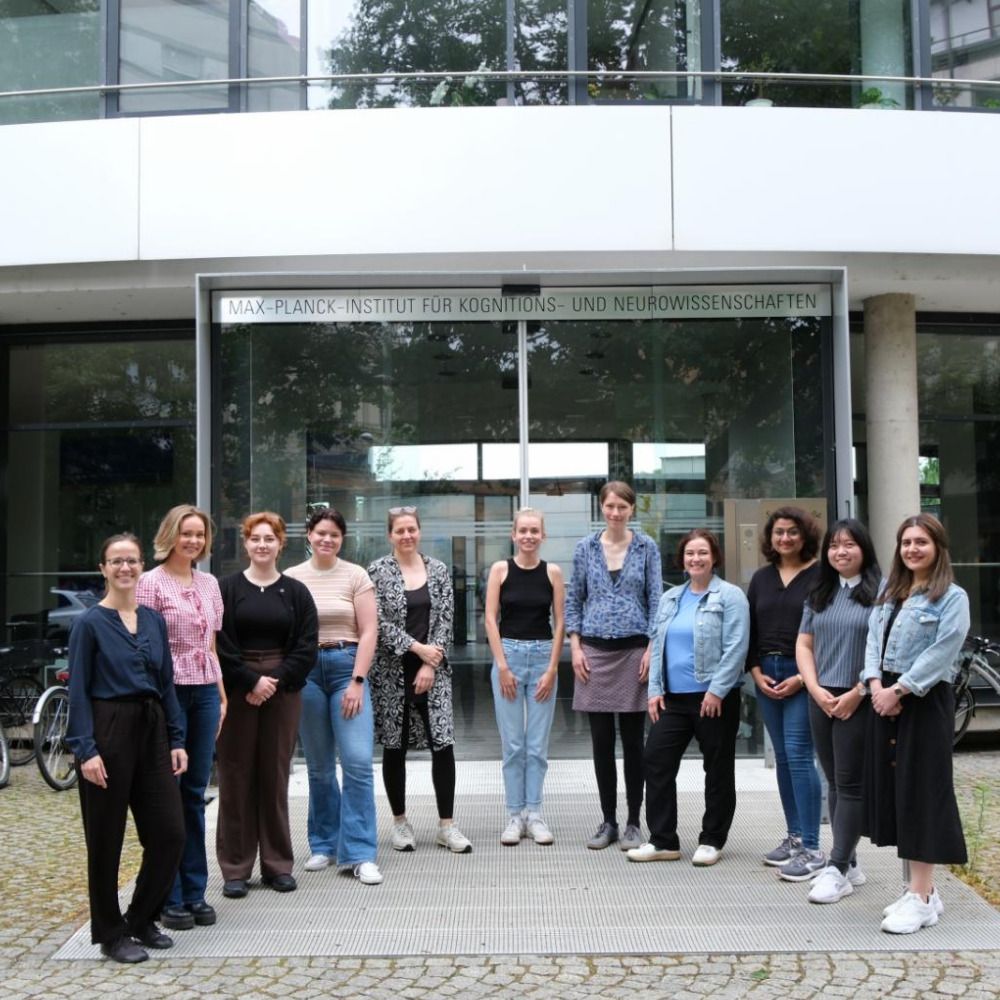
🧠 Join Our Team! 🧠
2 PhD candidates and 1 Study Nurse positions ope as part of our new RCT within the LeiCeM Excellence Cluster.
- PhD (deadline:15/10): tinyurl.com/35e5tbhy
- PhD within the IMPRIS-CONI (deadline:02/11): tinyurl.com/y9yt4akf
- Study Nurse (deadline:15/10): tinyurl.com/4zztjmj9
2 PhD candidates and 1 Study Nurse positions ope as part of our new RCT within the LeiCeM Excellence Cluster.
- PhD (deadline:15/10): tinyurl.com/35e5tbhy
- PhD within the IMPRIS-CONI (deadline:02/11): tinyurl.com/y9yt4akf
- Study Nurse (deadline:15/10): tinyurl.com/4zztjmj9
www.uniklinikum-leipzig.de
October 2, 2025 at 7:54 AM
🧠 Join Our Team! 🧠
2 PhD candidates and 1 Study Nurse positions ope as part of our new RCT within the LeiCeM Excellence Cluster.
- PhD (deadline:15/10): tinyurl.com/35e5tbhy
- PhD within the IMPRIS-CONI (deadline:02/11): tinyurl.com/y9yt4akf
- Study Nurse (deadline:15/10): tinyurl.com/4zztjmj9
2 PhD candidates and 1 Study Nurse positions ope as part of our new RCT within the LeiCeM Excellence Cluster.
- PhD (deadline:15/10): tinyurl.com/35e5tbhy
- PhD within the IMPRIS-CONI (deadline:02/11): tinyurl.com/y9yt4akf
- Study Nurse (deadline:15/10): tinyurl.com/4zztjmj9
Reposted by Nadine Herzog
I read books on various topics. This time, I picked up a book that I thought would be about cognitive science, but turned out to be political. Still, the central argument applies to the lives of every scientist. “The Bias That Divides Us” by Keith E. Stanovich
www.alinastudenova.com/home/blog/bo...
www.alinastudenova.com/home/blog/bo...

Alina Studenova - myside-bias
Have you ever argued with someone about a political issue and lost your temper because they just didn’t seem to hear your arguments? Why don’t they hear your arguments? Your arguments were perfectly s...
www.alinastudenova.com
September 28, 2025 at 8:40 AM
I read books on various topics. This time, I picked up a book that I thought would be about cognitive science, but turned out to be political. Still, the central argument applies to the lives of every scientist. “The Bias That Divides Us” by Keith E. Stanovich
www.alinastudenova.com/home/blog/bo...
www.alinastudenova.com/home/blog/bo...
Reposted by Nadine Herzog
Simulations are fun! Especially with the right tools😉.
@willenjoy.bsky.social and I (with support from Mina Jamshidi) made a toolbox for simulating EEG/MEG data
meegsim.readthedocs.io
I put together a quick simulation using it for this short clip. Took me 10 minutes (no, really!)
#brainmovies
@willenjoy.bsky.social and I (with support from Mina Jamshidi) made a toolbox for simulating EEG/MEG data
meegsim.readthedocs.io
I put together a quick simulation using it for this short clip. Took me 10 minutes (no, really!)
#brainmovies
September 26, 2025 at 2:10 PM
Simulations are fun! Especially with the right tools😉.
@willenjoy.bsky.social and I (with support from Mina Jamshidi) made a toolbox for simulating EEG/MEG data
meegsim.readthedocs.io
I put together a quick simulation using it for this short clip. Took me 10 minutes (no, really!)
#brainmovies
@willenjoy.bsky.social and I (with support from Mina Jamshidi) made a toolbox for simulating EEG/MEG data
meegsim.readthedocs.io
I put together a quick simulation using it for this short clip. Took me 10 minutes (no, really!)
#brainmovies
Reposted by Nadine Herzog

In some way, it's trivial:
The #brain & the rest of the #body (e.g. the #heart) are coupled.
Yet, we spelled it out
w/ A. Villringer & V. Nikulin for current scientists (below)
w/ @martager.bsky.social @agatapatyczek.bsky.social @el-rei.bsky.social for future scientists bsky.app/profile/mart...
The #brain & the rest of the #body (e.g. the #heart) are coupled.
Yet, we spelled it out
w/ A. Villringer & V. Nikulin for current scientists (below)
w/ @martager.bsky.social @agatapatyczek.bsky.social @el-rei.bsky.social for future scientists bsky.app/profile/mart...
'Brain–body states as a link between cardiovascular and mental health'
by Arno Villringer, Vadim Nikulin & Michael Gaebler @mbe-lab.bsky.social @michaelgaebler.com @mpicbs.bsky.social sky.social
www.cell.com/trends/neuro...
by Arno Villringer, Vadim Nikulin & Michael Gaebler @mbe-lab.bsky.social @michaelgaebler.com @mpicbs.bsky.social sky.social
www.cell.com/trends/neuro...


September 25, 2025 at 7:43 AM
In some way, it's trivial:
The #brain & the rest of the #body (e.g. the #heart) are coupled.
Yet, we spelled it out
w/ A. Villringer & V. Nikulin for current scientists (below)
w/ @martager.bsky.social @agatapatyczek.bsky.social @el-rei.bsky.social for future scientists bsky.app/profile/mart...
The #brain & the rest of the #body (e.g. the #heart) are coupled.
Yet, we spelled it out
w/ A. Villringer & V. Nikulin for current scientists (below)
w/ @martager.bsky.social @agatapatyczek.bsky.social @el-rei.bsky.social for future scientists bsky.app/profile/mart...
Reposted by Nadine Herzog

What drives how much we eat? A new paper from Dr. Barbara Rolls et al. highlights “The Big Three” food properties that shape consumption:
1️⃣ Portion Size 2️⃣ Energy Density 3️⃣ Variety
See: www.sciencedirect.com/science/arti...
1️⃣ Portion Size 2️⃣ Energy Density 3️⃣ Variety
See: www.sciencedirect.com/science/arti...

“The Big Three” properties of food that drive intake
Much of the interest in studying human eating behavior stems from a desire to characterize properties of foods that affect consumption, with the goal …
www.sciencedirect.com
September 22, 2025 at 1:49 PM
What drives how much we eat? A new paper from Dr. Barbara Rolls et al. highlights “The Big Three” food properties that shape consumption:
1️⃣ Portion Size 2️⃣ Energy Density 3️⃣ Variety
See: www.sciencedirect.com/science/arti...
1️⃣ Portion Size 2️⃣ Energy Density 3️⃣ Variety
See: www.sciencedirect.com/science/arti...
Reposted by Nadine Herzog
Love it! Especially the boundaries part...
not sure I agree with the “I won’t open my laptop until the kids are in bed” part though...
probably you shouldn’t open your laptop after the kids are in bed at all — there needs to be some space for “me-time” as well.
not sure I agree with the “I won’t open my laptop until the kids are in bed” part though...
probably you shouldn’t open your laptop after the kids are in bed at all — there needs to be some space for “me-time” as well.

Balancing a STEM PhD program and parenthood presents unique challenges—and opportunities.
Read Tiffany Bartel’s practical guide as a mother of two and neuroscience PhD student for tips on time management, setting boundaries, and more.
📖: vist.ly/44hwt
Read Tiffany Bartel’s practical guide as a mother of two and neuroscience PhD student for tips on time management, setting boundaries, and more.
📖: vist.ly/44hwt

A Busy Parent’s Guide to Pursuing a STEM PhD
pIt may be unconventional, but having children before or during your PhD is not career suicide. Now, in the midst of my PhD training, I have two girls: one is ten and the other is three. Here are some lessons and advice for those who may find themselves in a similar situation./p
neuronline.sfn.org
September 6, 2025 at 8:32 AM
Love it! Especially the boundaries part...
not sure I agree with the “I won’t open my laptop until the kids are in bed” part though...
probably you shouldn’t open your laptop after the kids are in bed at all — there needs to be some space for “me-time” as well.
not sure I agree with the “I won’t open my laptop until the kids are in bed” part though...
probably you shouldn’t open your laptop after the kids are in bed at all — there needs to be some space for “me-time” as well.
Reposted by Nadine Herzog
If you're contemplating new study to start,
Cause you want to couple the brain to the heart,
And you search for clear analytical steps,
That give you a good estimation of HEPs.
This review uncovered how most people act,
When they heart reaction from data extract.
Cause you want to couple the brain to the heart,
And you search for clear analytical steps,
That give you a good estimation of HEPs.
This review uncovered how most people act,
When they heart reaction from data extract.
September 5, 2025 at 1:26 PM
If you're contemplating new study to start,
Cause you want to couple the brain to the heart,
And you search for clear analytical steps,
That give you a good estimation of HEPs.
This review uncovered how most people act,
When they heart reaction from data extract.
Cause you want to couple the brain to the heart,
And you search for clear analytical steps,
That give you a good estimation of HEPs.
This review uncovered how most people act,
When they heart reaction from data extract.
Reposted by Nadine Herzog

Join us !!!
obrainlab.com/our-symposiu...
obrainlab.com/our-symposiu...

Our symposium is headed to FENS Forum 2026—join us in Barcelona! » O’BRAIN Lab
Great news: Our symposium proposal on Neurobiological mechanisms on the cognitive control of feeding in the modern food environment (Internal States & Homeostasis) was selected ...
obrainlab.com
August 25, 2025 at 1:46 PM
Join us !!!
obrainlab.com/our-symposiu...
obrainlab.com/our-symposiu...
Reposted by Nadine Herzog

PsyArXiv is seeking new moderators to help combat an increase in AI submissions! If you've ever posted a preprint to PsyArXiv, please consider joining. Minimum commitment 1h/month, there's a training session this Monday @ 1pm ET. More info here: forms.gle/9LB1rEtxHAeZ... #PsychSciSky

Expression of Interest in Serving as a PsyArXiv Moderator
As you might have heard, PsyArXiv is having some issues with an increase in low-quality submissions, ranging from AI generated manuscripts to inflate citation metrics, incoherent or nonsensical docume...
forms.gle
August 15, 2025 at 5:31 PM
PsyArXiv is seeking new moderators to help combat an increase in AI submissions! If you've ever posted a preprint to PsyArXiv, please consider joining. Minimum commitment 1h/month, there's a training session this Monday @ 1pm ET. More info here: forms.gle/9LB1rEtxHAeZ... #PsychSciSky
Reposted by Nadine Herzog

Could the diversity of findings in heartbeat-evoked response (HER) research be due to variability in methods?
In our new preprint my co-first authors, Maria Azanova and @willenjoy.bsky.social, and me systematically reviewed 132 M/EEG HER studies and found:
In our new preprint my co-first authors, Maria Azanova and @willenjoy.bsky.social, and me systematically reviewed 132 M/EEG HER studies and found:
August 13, 2025 at 8:54 AM
Could the diversity of findings in heartbeat-evoked response (HER) research be due to variability in methods?
In our new preprint my co-first authors, Maria Azanova and @willenjoy.bsky.social, and me systematically reviewed 132 M/EEG HER studies and found:
In our new preprint my co-first authors, Maria Azanova and @willenjoy.bsky.social, and me systematically reviewed 132 M/EEG HER studies and found:
Reposted by Nadine Herzog

NEW PREPRINT
Explainable AI refers to an extremely popular group of approaches that aim to open "black box" AI models. But what can we see when we open the black AI box? We use Galit Shmueli's framework (to describe, predict or explain) to evaluate
arxiv.org/abs/2508.05753
Explainable AI refers to an extremely popular group of approaches that aim to open "black box" AI models. But what can we see when we open the black AI box? We use Galit Shmueli's framework (to describe, predict or explain) to evaluate
arxiv.org/abs/2508.05753

August 11, 2025 at 6:53 AM
NEW PREPRINT
Explainable AI refers to an extremely popular group of approaches that aim to open "black box" AI models. But what can we see when we open the black AI box? We use Galit Shmueli's framework (to describe, predict or explain) to evaluate
arxiv.org/abs/2508.05753
Explainable AI refers to an extremely popular group of approaches that aim to open "black box" AI models. But what can we see when we open the black AI box? We use Galit Shmueli's framework (to describe, predict or explain) to evaluate
arxiv.org/abs/2508.05753
Reposted by Nadine Herzog
🧵 Beautiful new preprint by @marishishi.bsky.social on the genetic architecture of impulsivity. With the UCSD team of Sandra Sanchez-Roige, Abe Palmer et al. and Lang Liu, Ziv Gan-Or @ukuvainik.bsky.social @filipkmorys.bsky.social @misicbata.bsky.social and others www.biorxiv.org/content/10.1...
www.biorxiv.org
June 16, 2025 at 6:23 PM
🧵 Beautiful new preprint by @marishishi.bsky.social on the genetic architecture of impulsivity. With the UCSD team of Sandra Sanchez-Roige, Abe Palmer et al. and Lang Liu, Ziv Gan-Or @ukuvainik.bsky.social @filipkmorys.bsky.social @misicbata.bsky.social and others www.biorxiv.org/content/10.1...