



Muzaffer Arikan
@muzafferarikan.bsky.social
asst. prof. | istanbul university | microbiome | multi-omics | arikanlab.com
Reposted by Muzaffer Arikan

I woke up to some very sad news...
Peer was a giant of bioinformatics and computational biology and an inspiring mentor to everyone who had been in his group. I find myself repeating things he said all the time and will probably keep doing so for the rest of my life
www.embl.org/news/embl-an...
Peer was a giant of bioinformatics and computational biology and an inspiring mentor to everyone who had been in his group. I find myself repeating things he said all the time and will probably keep doing so for the rest of my life
www.embl.org/news/embl-an...

In remembrance of Peer Bork | EMBL
EMBL and its community are deeply saddened by the death of Peer Bork, the organisation’s Interim Director General.
www.embl.org
January 17, 2026 at 12:10 AM
I woke up to some very sad news...
Peer was a giant of bioinformatics and computational biology and an inspiring mentor to everyone who had been in his group. I find myself repeating things he said all the time and will probably keep doing so for the rest of my life
www.embl.org/news/embl-an...
Peer was a giant of bioinformatics and computational biology and an inspiring mentor to everyone who had been in his group. I find myself repeating things he said all the time and will probably keep doing so for the rest of my life
www.embl.org/news/embl-an...
Reposted by Muzaffer Arikan

GcMeta - a new global resource of metagenome-assembled genomes and their encoded functions with an easy to use, interactive and searchable website academic.oup.com/nar/advance-...

gcMeta 2025: a global repository of metagenome-assembled genomes enabling cross-ecosystem microbial discovery and function research
Abstract. The rapid growth of metagenomic sequencing has generated an unprecedented wealth of metagenome-assembled genomes (MAGs), transforming opportuniti
academic.oup.com
November 3, 2025 at 9:01 AM
GcMeta - a new global resource of metagenome-assembled genomes and their encoded functions with an easy to use, interactive and searchable website academic.oup.com/nar/advance-...
Reposted by Muzaffer Arikan

MetaPepticon: automated prediction of anticancer peptides from microbial genomes and metagenomes https://www.biorxiv.org/content/10.1101/2025.10.28.685052v1
October 29, 2025 at 7:47 PM
MetaPepticon: automated prediction of anticancer peptides from microbial genomes and metagenomes https://www.biorxiv.org/content/10.1101/2025.10.28.685052v1
Reposted by Muzaffer Arikan

Interested in #drugs, #microbiome and #antibiotic resistance, then check out our paper on the effects of over 300 drugs on the gut microbiome. Exciting results as well on the role of antibiotic resistance defining how microbiomes respond to drugs.
@quadraminstitute.bsky.social
rdcu.be/eMmcT
@quadraminstitute.bsky.social
rdcu.be/eMmcT

Systematic metaproteomics mapping reveals functional and ecological landscapes of Ex vivo human gut microbiota responses to therapeutic drugs
Nature Communications - Here, the authors systematically map metaproteomic responses of ex vivo human gut microbiota to common therapeutics, identifying several drug classes inducing strong...
rdcu.be
October 24, 2025 at 4:20 PM
Interested in #drugs, #microbiome and #antibiotic resistance, then check out our paper on the effects of over 300 drugs on the gut microbiome. Exciting results as well on the role of antibiotic resistance defining how microbiomes respond to drugs.
@quadraminstitute.bsky.social
rdcu.be/eMmcT
@quadraminstitute.bsky.social
rdcu.be/eMmcT
Reposted by Muzaffer Arikan

Practical Guidance for Training Machine Learning Models in Metabolomics and Mass Spectrometry Research | Analytical Chemistry pubs.acs.org/doi/full/10....

Practical Guidance for Training Machine Learning Models in Metabolomics and Mass Spectrometry Research
This tutorial offers a step-by-step guide for analytical chemists to train machine learning models for MS-based metabolomics. It covers data preparation, feature engineering, model selection, evaluati...
pubs.acs.org
October 26, 2025 at 10:59 AM
Practical Guidance for Training Machine Learning Models in Metabolomics and Mass Spectrometry Research | Analytical Chemistry pubs.acs.org/doi/full/10....
Our recent publication has appeared in Gut Microbes. Access it through the link below:
www.tandfonline.com/doi/full/10....
www.tandfonline.com/doi/full/10....

Microbiome signatures of virulence in the oral-gut-brain axis influence Parkinson’s disease and cognitive decline pathophysiology
The human microbiome is increasingly recognized for its crucial role in the development and progression of neurodegenerative diseases. While the gut-brain axis has been extensively studied, the con...
www.tandfonline.com
May 28, 2025 at 7:07 AM
Our recent publication has appeared in Gut Microbes. Access it through the link below:
www.tandfonline.com/doi/full/10....
www.tandfonline.com/doi/full/10....
Reposted by Muzaffer Arikan

Dominant taxa in microbiomes are obviously important but here's a discussion on low abundance taxa that are highly persisting/prevalent. We can see a lot of these in metagenomics, often obscured by a high false negative rate.
🔗 www.sciencedirect.com/science/arti...
🔗 www.sciencedirect.com/science/arti...

March 31, 2025 at 1:26 AM
Dominant taxa in microbiomes are obviously important but here's a discussion on low abundance taxa that are highly persisting/prevalent. We can see a lot of these in metagenomics, often obscured by a high false negative rate.
🔗 www.sciencedirect.com/science/arti...
🔗 www.sciencedirect.com/science/arti...
Reposted by Muzaffer Arikan
Mass-spectrometry-based proteomics: from single cells to clinical applications www.nature.com/articles/s41...

Mass-spectrometry-based proteomics: from single cells to clinical applications - Nature
This Review summarizes advances in mass-spectrometry-based proteomics and explores the potential applications of these technologies in the clinic.
www.nature.com
March 2, 2025 at 4:09 AM
Mass-spectrometry-based proteomics: from single cells to clinical applications www.nature.com/articles/s41...
Reposted by Muzaffer Arikan

"Dark proteins." Also known as microproteins. There are thousands of them in our cells and we're still struggling to define their function. Succinctly reviewed @nature.com www.nature.com/articles/d41...

‘Dark proteins’ hiding in our cells could hold clues to cancer and other diseases
The human genome encodes potentially thousands of tiny proteins that were previously overlooked. The search is on to find out what they do.
www.nature.com
February 1, 2025 at 4:42 PM
"Dark proteins." Also known as microproteins. There are thousands of them in our cells and we're still struggling to define their function. Succinctly reviewed @nature.com www.nature.com/articles/d41...
Reposted by Muzaffer Arikan
We knew about the potential origin of Parkinson's disease from the gut (known as Braak’s hypothesis). But the kidney?!
www.nature.com/articles/s41...
www.nature.com/articles/s41...
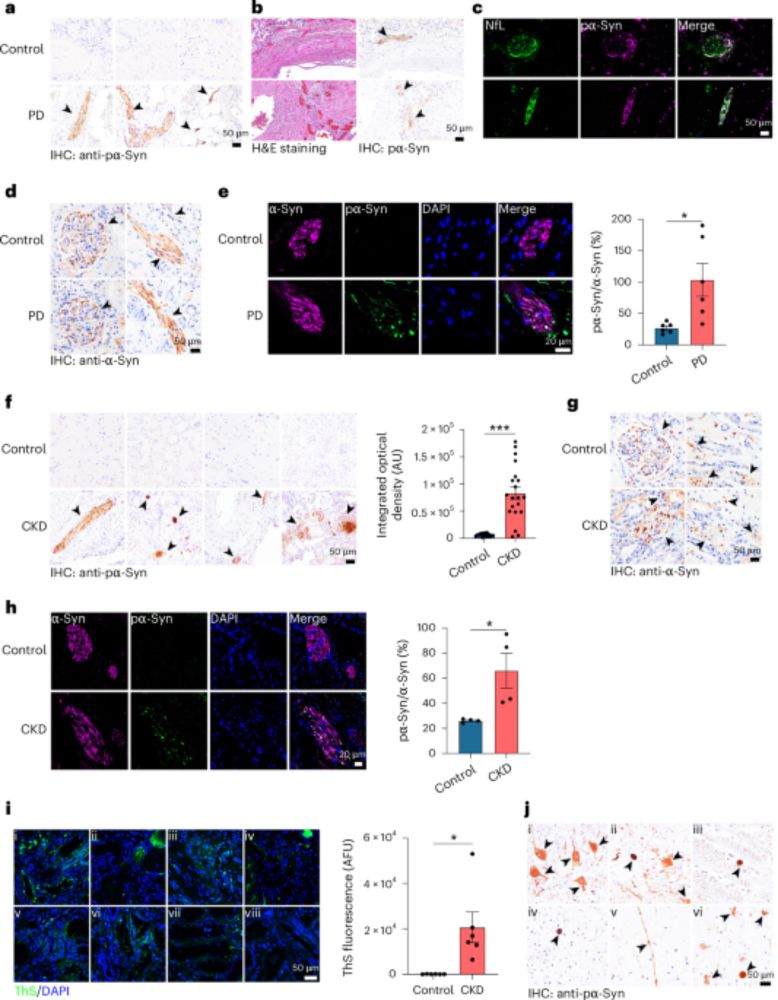
Propagation of pathologic α-synuclein from kidney to brain may contribute to Parkinson’s disease - Nature Neuroscience
Yuan et al. find that the kidney can serve as a site of initiation for the spread of pathological α-synuclein to the brain, contributing to the development of Parkinson’s disease (PD) and providing a ...
www.nature.com
January 23, 2025 at 3:13 PM
We knew about the potential origin of Parkinson's disease from the gut (known as Braak’s hypothesis). But the kidney?!
www.nature.com/articles/s41...
www.nature.com/articles/s41...
Reposted by Muzaffer Arikan

5,562 proteins were found to have tissue-specific enrichment across 32 human tissues.
The majority of them (3,088) are enriched at the protein but not RNA level.
The brain hosts the largest number of proteins that are only enriched at the protein level but not RNA level.
The majority of them (3,088) are enriched at the protein but not RNA level.
The brain hosts the largest number of proteins that are only enriched at the protein level but not RNA level.

January 8, 2025 at 12:29 PM
5,562 proteins were found to have tissue-specific enrichment across 32 human tissues.
The majority of them (3,088) are enriched at the protein but not RNA level.
The brain hosts the largest number of proteins that are only enriched at the protein level but not RNA level.
The majority of them (3,088) are enriched at the protein but not RNA level.
The brain hosts the largest number of proteins that are only enriched at the protein level but not RNA level.
Reposted by Muzaffer Arikan


Reposted by Muzaffer Arikan

Some gut microbes can degrade mucus. 🍬🦠🍭
✂️ What enzymes do they use to degrade mucin glycans and how does that lead to cross-feeding?
#glycotime
#microbiology
academic.oup.com/glycob/artic...
✂️ What enzymes do they use to degrade mucin glycans and how does that lead to cross-feeding?
#glycotime
#microbiology
academic.oup.com/glycob/artic...
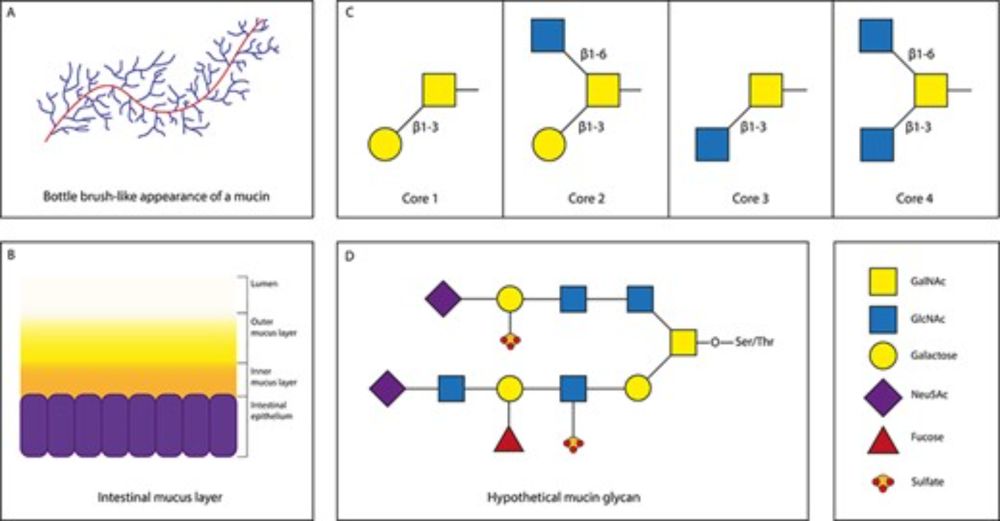
How microbial glycosyl hydrolase activity in the gut mucosa initiates microbial cross-feeding
Abstract. The intestinal epithelium is protected from direct contact with gut microbes by a mucus layer. This mucus layer consists of secreted mucin glycop
academic.oup.com
December 2, 2024 at 7:27 PM
Some gut microbes can degrade mucus. 🍬🦠🍭
✂️ What enzymes do they use to degrade mucin glycans and how does that lead to cross-feeding?
#glycotime
#microbiology
academic.oup.com/glycob/artic...
✂️ What enzymes do they use to degrade mucin glycans and how does that lead to cross-feeding?
#glycotime
#microbiology
academic.oup.com/glycob/artic...
AI in microbiome-related healthcare

AI in microbiome‐related healthcare
Artificial intelligence (AI) has the potential to transform clinical practice and healthcare. Following impressive advancements in fields such as computer vision and medical imaging, AI is poised to ...
enviromicro-journals.onlinelibrary.wiley.com
November 28, 2024 at 1:28 PM
AI in microbiome-related healthcare
worth a read: A framework for understanding collective microbiome metabolism

A framework for understanding collective microbiome metabolism - Nature Microbiology
This Perspective explores why microbiome members perform partial metabolism of substrates and suggests that proteome efficiency is a driver of collective microbiome metabolism.
www.nature.com
November 27, 2024 at 6:39 AM
worth a read: A framework for understanding collective microbiome metabolism
Reposted by Muzaffer Arikan

Excited to share “Bin Chicken”, substantially improving genome recovery through rational metagenomic assembly. Applied to public 🌍 metagenomes, it recovered 24,000 novel species 🦠, including 6 novel phyla.
doi.org/10.1101/2024...
@wwood @rhysnewell @CMR_QUT
🧵1/6
doi.org/10.1101/2024...
@wwood @rhysnewell @CMR_QUT
🧵1/6
November 26, 2024 at 2:45 AM
Excited to share “Bin Chicken”, substantially improving genome recovery through rational metagenomic assembly. Applied to public 🌍 metagenomes, it recovered 24,000 novel species 🦠, including 6 novel phyla.
doi.org/10.1101/2024...
@wwood @rhysnewell @CMR_QUT
🧵1/6
doi.org/10.1101/2024...
@wwood @rhysnewell @CMR_QUT
🧵1/6
Here is our recent review on constructing protein sequence databases for metaptoteomics
#microbiome #metaproteomics
pubs.acs.org/doi/10.1021/...
#microbiome #metaproteomics
pubs.acs.org/doi/10.1021/...

Construction of Protein Sequence Databases for Metaproteomics: A Review of the Current Tools and Databases
In metaproteomics studies, constructing a reference protein sequence database that is both comprehensive and not overly large is critical for the peptide identification step. Therefore, the availabili...
pubs.acs.org
November 24, 2024 at 10:31 PM
Here is our recent review on constructing protein sequence databases for metaptoteomics
#microbiome #metaproteomics
pubs.acs.org/doi/10.1021/...
#microbiome #metaproteomics
pubs.acs.org/doi/10.1021/...