



Maxime Quétin
@mquetin.bsky.social
MSc. in Ecology & Evolution 🇨🇵🐸
PhD student in Macroevolution & Biogeography of Tetrapods 🇨🇿🐍
Herping 📷🐊
PhD student in Macroevolution & Biogeography of Tetrapods 🇨🇿🐍
Herping 📷🐊
Reposted by Maxime Quétin
🔊 New paper: first integration of population genetics🧬 and dynamic species distribution modeling🌐 using #KISSMig to reconstruct postglacial dynamics of wild black pepper, endemic to India’s Western Ghats. #macroecology #popgen #phylogeography #biogeography
👉 onlinelibrary.wiley.com/doi/10.1111/...
👉 onlinelibrary.wiley.com/doi/10.1111/...
September 22, 2025 at 10:46 AM
🔊 New paper: first integration of population genetics🧬 and dynamic species distribution modeling🌐 using #KISSMig to reconstruct postglacial dynamics of wild black pepper, endemic to India’s Western Ghats. #macroecology #popgen #phylogeography #biogeography
👉 onlinelibrary.wiley.com/doi/10.1111/...
👉 onlinelibrary.wiley.com/doi/10.1111/...
Reposted by Maxime Quétin
PhD in Biogeography and Evolution of Vertebrates at Charles University, Prague. Analyze biodiversity across 30,000 species; funding available. Apply by April 10, 2025. More info: https://machac.weebly.com #phd

Antonin Machac
My research integrates phylogenies, maps and functional traits to uncover the processes that generated the diversity of life.
machac.weebly.com
March 13, 2025 at 12:43 PM
PhD in Biogeography and Evolution of Vertebrates at Charles University, Prague. Analyze biodiversity across 30,000 species; funding available. Apply by April 10, 2025. More info: https://machac.weebly.com #phd
Reposted by Maxime Quétin

oh this is nice! 🥳
a cute little frog not seen since it was first collected in 1893 has been rediscovered alive and well in a couple of populations in central Chile! 🐸🧪
www.eurekalert.org/news-release...
a cute little frog not seen since it was first collected in 1893 has been rediscovered alive and well in a couple of populations in central Chile! 🐸🧪
www.eurekalert.org/news-release...

Rare frog rediscovered after 130 years
A team of researchers has rediscovered a frog species which has not been seen in more than 130 years. First described in 1902, Alsodes vittatus had evaded detection since then, despite multiple search...
www.eurekalert.org
March 13, 2025 at 9:25 AM
oh this is nice! 🥳
a cute little frog not seen since it was first collected in 1893 has been rediscovered alive and well in a couple of populations in central Chile! 🐸🧪
www.eurekalert.org/news-release...
a cute little frog not seen since it was first collected in 1893 has been rediscovered alive and well in a couple of populations in central Chile! 🐸🧪
www.eurekalert.org/news-release...
Reposted by Maxime Quétin

Interested in a PhD? Check out this amazing opportunity to research the biogeography and macroevolution of vertebrates with Dr. Antonin Machac at Charles University in Prague. For more details about this position, click the following link! machac.weebly.com/open-phd-pos...

Open PhD Positions
PhD positions Biogeography. Macroevolution. Vertebrates. Department of Ecology, Charles University, Prague Deadline: April 10, 2025 How did the diversity of life on Earth emerge? The successful...
machac.weebly.com
March 12, 2025 at 5:28 PM
Interested in a PhD? Check out this amazing opportunity to research the biogeography and macroevolution of vertebrates with Dr. Antonin Machac at Charles University in Prague. For more details about this position, click the following link! machac.weebly.com/open-phd-pos...
Reposted by Maxime Quétin
Very excited to use my first @bsky.app post to announce @echinerd.bsky.social and I's new paper in Proc B! 🎉
We used a dataset of Palaeozoic echinoids from 33 museums worldwide to see the impact museum ‘dark data’ has on biogeographic and evolutionary patterns in deep time!
doi.org/10.1098/rspb...
We used a dataset of Palaeozoic echinoids from 33 museums worldwide to see the impact museum ‘dark data’ has on biogeographic and evolutionary patterns in deep time!
doi.org/10.1098/rspb...
Museum ‘dark data’ show variable impacts on deep-time biogeographic and evolutionary history | Proceedings of the Royal Society B: Biological Sciences
The age of digitally accessible datasets has transformed palaeontology, enabling previously
impossible macroevolutionary insights. However, a substantial reservoir of generally
inaccessible ‘dark data...
royalsocietypublishing.org
February 26, 2025 at 9:55 AM
Very excited to use my first @bsky.app post to announce @echinerd.bsky.social and I's new paper in Proc B! 🎉
We used a dataset of Palaeozoic echinoids from 33 museums worldwide to see the impact museum ‘dark data’ has on biogeographic and evolutionary patterns in deep time!
doi.org/10.1098/rspb...
We used a dataset of Palaeozoic echinoids from 33 museums worldwide to see the impact museum ‘dark data’ has on biogeographic and evolutionary patterns in deep time!
doi.org/10.1098/rspb...
Reposted by Maxime Quétin

February 26, 2025 at 6:02 AM
Reposted by Maxime Quétin

Interesting model combining mass extinction of giant dinosaurs and their effects on the seed sizes and later diversification of giant mammals which were dependent on the emergence of large seeded plants 👇
onlinelibrary.wiley.com/doi/epdf/10....
🧪 #Paleobio #EvoBio ⚒️ #Macroecology #Complexity
onlinelibrary.wiley.com/doi/epdf/10....
🧪 #Paleobio #EvoBio ⚒️ #Macroecology #Complexity

February 17, 2025 at 9:23 PM
Interesting model combining mass extinction of giant dinosaurs and their effects on the seed sizes and later diversification of giant mammals which were dependent on the emergence of large seeded plants 👇
onlinelibrary.wiley.com/doi/epdf/10....
🧪 #Paleobio #EvoBio ⚒️ #Macroecology #Complexity
onlinelibrary.wiley.com/doi/epdf/10....
🧪 #Paleobio #EvoBio ⚒️ #Macroecology #Complexity
Reposted by Maxime Quétin

Well just received this email regarding a paper under review:

February 4, 2025 at 8:55 PM
Well just received this email regarding a paper under review:
Reposted by Maxime Quétin

Roughly 6,000 readers answered our poll, with many declaring that Bluesky was nicer, kinder and less antagonistic to science than X
https://go.nature.com/42tH8Ai
https://go.nature.com/42tH8Ai

Bluesky’s science takeover: 70% of Nature poll respondents use platform
Roughly 6,000 readers answered our poll, with many declaring that Bluesky was nicer, kinder and less antagonistic to science than X.
go.nature.com
January 24, 2025 at 11:52 AM
Roughly 6,000 readers answered our poll, with many declaring that Bluesky was nicer, kinder and less antagonistic to science than X
https://go.nature.com/42tH8Ai
https://go.nature.com/42tH8Ai
Reposted by Maxime Quétin

Just opened my Bluesky account, and what better way to kick things off than with big news? Our paper, “Broad geographic dispersal is not a diversification driver for Emberizoidea,” is now out in PRSB!
1/3
#Macroevolution #Macroecology #Biogeography
1/3
#Macroevolution #Macroecology #Biogeography

Broad geographic dispersal is not a diversification driver for Emberizoidea | Proceedings of the Royal Society B: Biological Sciences
The movement of species to new geographical areas has been proposed to be crucial
for speciation. As such, dispersal has been regarded as a likely explanation for the
variation in species richness amo...
royalsocietypublishing.org
January 25, 2025 at 3:47 PM
Just opened my Bluesky account, and what better way to kick things off than with big news? Our paper, “Broad geographic dispersal is not a diversification driver for Emberizoidea,” is now out in PRSB!
1/3
#Macroevolution #Macroecology #Biogeography
1/3
#Macroevolution #Macroecology #Biogeography
Reposted by Maxime Quétin
An extinction event in plants in the aftermath of the Quaternary megafaunal extinction?
"Major potential plant extinction events were detected around 17,000 and 9000 years ago which lag maximum vegetation turnover."
www.nature.com/articles/s41...
🧪 #EvoBio #Paleobio #Macroecology #Extinction
"Major potential plant extinction events were detected around 17,000 and 9000 years ago which lag maximum vegetation turnover."
www.nature.com/articles/s41...
🧪 #EvoBio #Paleobio #Macroecology #Extinction

Potential plant extinctions with the loss of the Pleistocene mammoth steppe - Nature Communications
Plant extinctions during the Pleistocene-Holocene transition are poorly documented in the fossil record. Here, the authors present a method to detect plant taxa loss from sedaDNA and demonstrate that ...
www.nature.com
January 17, 2025 at 9:48 AM
An extinction event in plants in the aftermath of the Quaternary megafaunal extinction?
"Major potential plant extinction events were detected around 17,000 and 9000 years ago which lag maximum vegetation turnover."
www.nature.com/articles/s41...
🧪 #EvoBio #Paleobio #Macroecology #Extinction
"Major potential plant extinction events were detected around 17,000 and 9000 years ago which lag maximum vegetation turnover."
www.nature.com/articles/s41...
🧪 #EvoBio #Paleobio #Macroecology #Extinction
Reposted by Maxime Quétin

Reposted by Maxime Quétin

Rhombic Egg-Eater (Dasypeltis scabra), harmless.
#snakesofsa #snakesofza #snakesofsouthafrica #herpingsa #herpingza #reptiles #snakes #wildlifephotography #africa #animalphotography #herps #snaketheworldsmarter #herpingtheglobe
#africawildlife #africanwildlife #southafrica
#snakesofsa #snakesofza #snakesofsouthafrica #herpingsa #herpingza #reptiles #snakes #wildlifephotography #africa #animalphotography #herps #snaketheworldsmarter #herpingtheglobe
#africawildlife #africanwildlife #southafrica

January 14, 2025 at 5:00 AM
Rhombic Egg-Eater (Dasypeltis scabra), harmless.
#snakesofsa #snakesofza #snakesofsouthafrica #herpingsa #herpingza #reptiles #snakes #wildlifephotography #africa #animalphotography #herps #snaketheworldsmarter #herpingtheglobe
#africawildlife #africanwildlife #southafrica
#snakesofsa #snakesofza #snakesofsouthafrica #herpingsa #herpingza #reptiles #snakes #wildlifephotography #africa #animalphotography #herps #snaketheworldsmarter #herpingtheglobe
#africawildlife #africanwildlife #southafrica
Reposted by Maxime Quétin
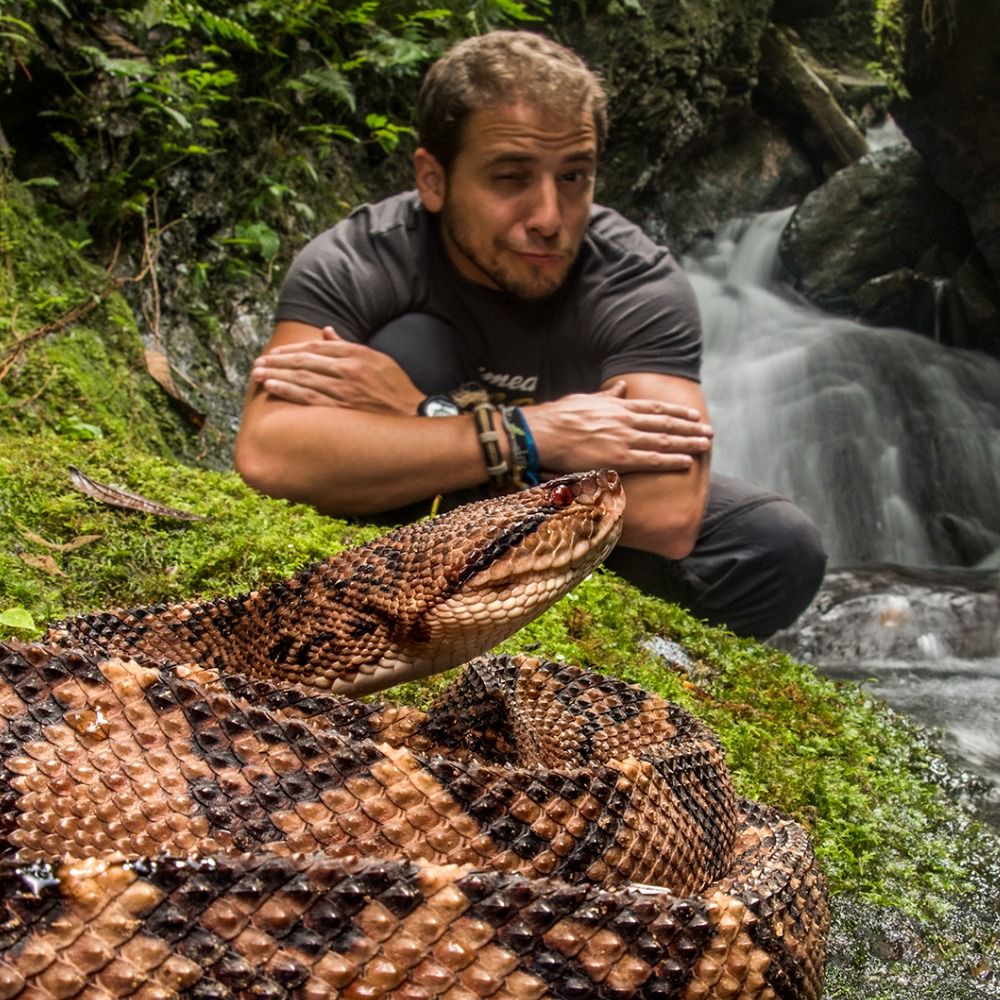
en 2023 publicamos 2 nuevos registros de una rana poco común en la cuenca alta del Amazonas, la "Hyalinobatrachium iaspidiense". Ahora hemos podido volver a encontrar varios ejemplares. Aquí muestro un par de fotillos recientes.
www.researchgate.net/publication/...
www.researchgate.net/publication/...


January 14, 2025 at 9:57 AM
en 2023 publicamos 2 nuevos registros de una rana poco común en la cuenca alta del Amazonas, la "Hyalinobatrachium iaspidiense". Ahora hemos podido volver a encontrar varios ejemplares. Aquí muestro un par de fotillos recientes.
www.researchgate.net/publication/...
www.researchgate.net/publication/...
Reposted by Maxime Quétin

The insanity of being a fire ecologist in the epicenter of a major fire event, bags packed and ready to evacuate, watching active fire from my window, while taking media requests and explaining to the public, for the 100,000th time how climate change is largely responsible for this
January 8, 2025 at 7:52 PM
The insanity of being a fire ecologist in the epicenter of a major fire event, bags packed and ready to evacuate, watching active fire from my window, while taking media requests and explaining to the public, for the 100,000th time how climate change is largely responsible for this