



Kayla Flanagan
@kaylaflanagan.bsky.social
Archeology and Anthropology Student 📚
Reposted by Kayla Flanagan

🧪🦣🏺

#ESHE2025
Juliette Henrion ‘Late Neandertal occupations at Arcy-sur-Cure (Yonne, France): Insights from dental anthropology’
Teeth analysis from all 4 sites (ranging fr Quina assoc to later NEA) – substantial variation!! some w affs to earlier NEA, and unique dental traits
Juliette Henrion ‘Late Neandertal occupations at Arcy-sur-Cure (Yonne, France): Insights from dental anthropology’
Teeth analysis from all 4 sites (ranging fr Quina assoc to later NEA) – substantial variation!! some w affs to earlier NEA, and unique dental traits

September 26, 2025 at 10:15 AM
🧪🦣🏺
Reposted by Kayla Flanagan
🏺 Always intrigued about potential that such things existed in prehistoric settlements. Identifying multi-storey buildings from stone remains are one thing, but organic superstructures might not preserve.
e.g. what if these Neolithic house models aren't symbolic, but show real architecture?
e.g. what if these Neolithic house models aren't symbolic, but show real architecture?

September 25, 2025 at 4:59 PM
🏺 Always intrigued about potential that such things existed in prehistoric settlements. Identifying multi-storey buildings from stone remains are one thing, but organic superstructures might not preserve.
e.g. what if these Neolithic house models aren't symbolic, but show real architecture?
e.g. what if these Neolithic house models aren't symbolic, but show real architecture?
Reposted by Kayla Flanagan
Not so fast... 😉
I know you're a details man Derek so here you go: the evidence we have for #Neanderthal clothing, including thermal arguments that some of it, at some times, must have been 'tailored'.
(from Kindred: Neanderthal Life, Love, Death and Art)
I know you're a details man Derek so here you go: the evidence we have for #Neanderthal clothing, including thermal arguments that some of it, at some times, must have been 'tailored'.
(from Kindred: Neanderthal Life, Love, Death and Art)


August 6, 2025 at 10:01 PM
Not so fast... 😉
I know you're a details man Derek so here you go: the evidence we have for #Neanderthal clothing, including thermal arguments that some of it, at some times, must have been 'tailored'.
(from Kindred: Neanderthal Life, Love, Death and Art)
I know you're a details man Derek so here you go: the evidence we have for #Neanderthal clothing, including thermal arguments that some of it, at some times, must have been 'tailored'.
(from Kindred: Neanderthal Life, Love, Death and Art)
Reposted by Kayla Flanagan
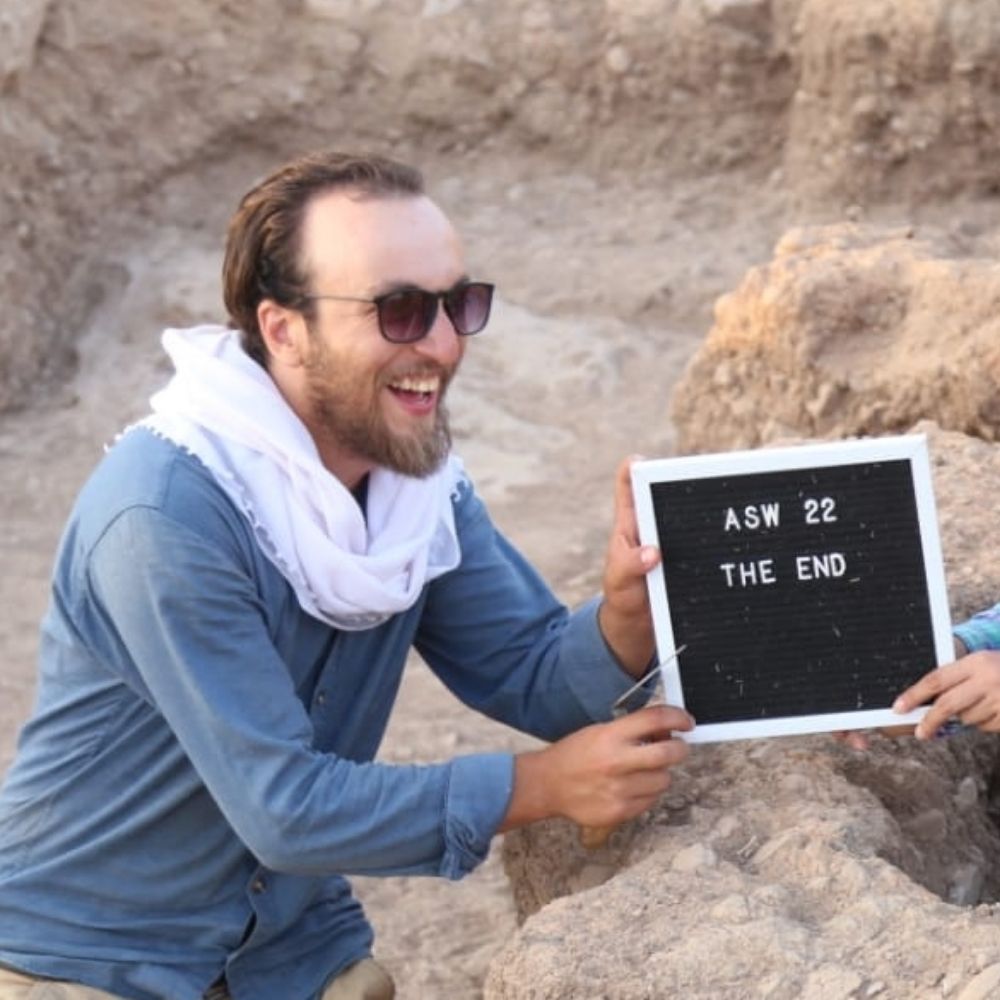
Levallois Alert ⚠️
Moving beyond classic metric measurements, @eshallinan.bsky.social and @jmcascalheira.bsky.social applied a geometric morphometric approach to Nubian Levallois cores, offering novel insights into shape variability at an inter-regional scale.
link.springer.com/article/10.1...
Moving beyond classic metric measurements, @eshallinan.bsky.social and @jmcascalheira.bsky.social applied a geometric morphometric approach to Nubian Levallois cores, offering novel insights into shape variability at an inter-regional scale.
link.springer.com/article/10.1...

Quantifying Levallois: a 3D geometric morphometric approach to Nubian technology - Archaeological and Anthropological Sciences
Levallois technology, a hallmark of Middle Palaeolithic stone tool manufacture, involves sophisticated core reduction strategies that have major implications for understanding human cognitive and tech...
link.springer.com
March 25, 2025 at 9:35 PM
Levallois Alert ⚠️
Moving beyond classic metric measurements, @eshallinan.bsky.social and @jmcascalheira.bsky.social applied a geometric morphometric approach to Nubian Levallois cores, offering novel insights into shape variability at an inter-regional scale.
link.springer.com/article/10.1...
Moving beyond classic metric measurements, @eshallinan.bsky.social and @jmcascalheira.bsky.social applied a geometric morphometric approach to Nubian Levallois cores, offering novel insights into shape variability at an inter-regional scale.
link.springer.com/article/10.1...
Reposted by Kayla Flanagan
🏺🗃️

When bricks were drying in the sun thousands of years ago near the Tigris and Euphrates, I often wonder who wandered among them. Brickmakers? Yes. Dogs? Sure.
Kids? Maybe every once in a while, as it might have been a child who left behind a footprint on this particular mud brick.
Kids? Maybe every once in a while, as it might have been a child who left behind a footprint on this particular mud brick.

February 18, 2025 at 5:51 PM
🏺🗃️
Reposted by Kayla Flanagan
🦣🏺
Rabbit Exploitation by Humans in the Northwestern Mediterranean at Terra Amata (Nice, France) | Current Anthropology: Vol 66, No 1 www.journals.uchicago.edu/doi/abs/10.1...

The Earliest Taphonomic Evidence of Rabbit Exploitation by Humans in the Northwestern Mediterranean at Terra Amata (Nice, France) | Current Anthropology: Vol 66, No 1
Recent taphonomic research has sparked new debates about the breadth and scale of early hominin exploitation of small game animals, including rabbits and other small-bodied, fast taxa. In this article...
www.journals.uchicago.edu
February 20, 2025 at 8:16 AM
🦣🏺
Reposted by Kayla Flanagan
The universe will always hold more wonders than we can imagine

A feather floating on Mars.
NASA's Curiosity rover captured this view of iridescent dry-ice clouds in the cold Martian air over Gale Crater. 🧪🔭
www.nasa.gov/image-articl...
NASA's Curiosity rover captured this view of iridescent dry-ice clouds in the cold Martian air over Gale Crater. 🧪🔭
www.nasa.gov/image-articl...

February 24, 2025 at 2:00 PM
The universe will always hold more wonders than we can imagine
Reposted by Kayla Flanagan
Been dipping into this already, and once again, Riley has created something marvellous!
If you're into prehistory, #palaeontology, biology, science or just great writing - this book is for you
🧪🦣📚
If you're into prehistory, #palaeontology, biology, science or just great writing - this book is for you
🧪🦣📚

February 25, 2025 at 5:49 PM
Been dipping into this already, and once again, Riley has created something marvellous!
If you're into prehistory, #palaeontology, biology, science or just great writing - this book is for you
🧪🦣📚
If you're into prehistory, #palaeontology, biology, science or just great writing - this book is for you
🧪🦣📚
Reposted by Kayla Flanagan
Love how our Earthling eyes are just not adapted to the Moon's strange desaturated starkness, so that photos of it with something familiar can look oddly fake

EVERYONE LOOK AT THIS PHOTO
This *gorgeous* view of the Moon was taken by the @firefly-aerospace.bsky.social Blue Ghost lander from an altitude of 100 km above the lunar farside on Monday.
Blue Ghost is aiming for a landing on the Moon on Sunday.
This *gorgeous* view of the Moon was taken by the @firefly-aerospace.bsky.social Blue Ghost lander from an altitude of 100 km above the lunar farside on Monday.
Blue Ghost is aiming for a landing on the Moon on Sunday.

February 27, 2025 at 4:47 PM
Love how our Earthling eyes are just not adapted to the Moon's strange desaturated starkness, so that photos of it with something familiar can look oddly fake
Reposted by Kayla Flanagan
🦣🧪🏺 More evidence of early ecological adaptation v cool, but consider that in Eurasia, (roughly) equivalent Middle Palaeolithic technologies are made by several species.
Wouldn't it be amazing if the makers of these tools, living in wet forests, turn out to be 'ghost' hominins known only from DNA?
Wouldn't it be amazing if the makers of these tools, living in wet forests, turn out to be 'ghost' hominins known only from DNA?

In @nature.com we show that humans lived in rainforests ~150,000 years ago – over double the previous oldest estimate. Their presence in West Africa’s rainforests demonstrates the spread of early humans and places ecological diversity at the heart of our species.
www.nature.com/articles/s41...
www.nature.com/articles/s41...
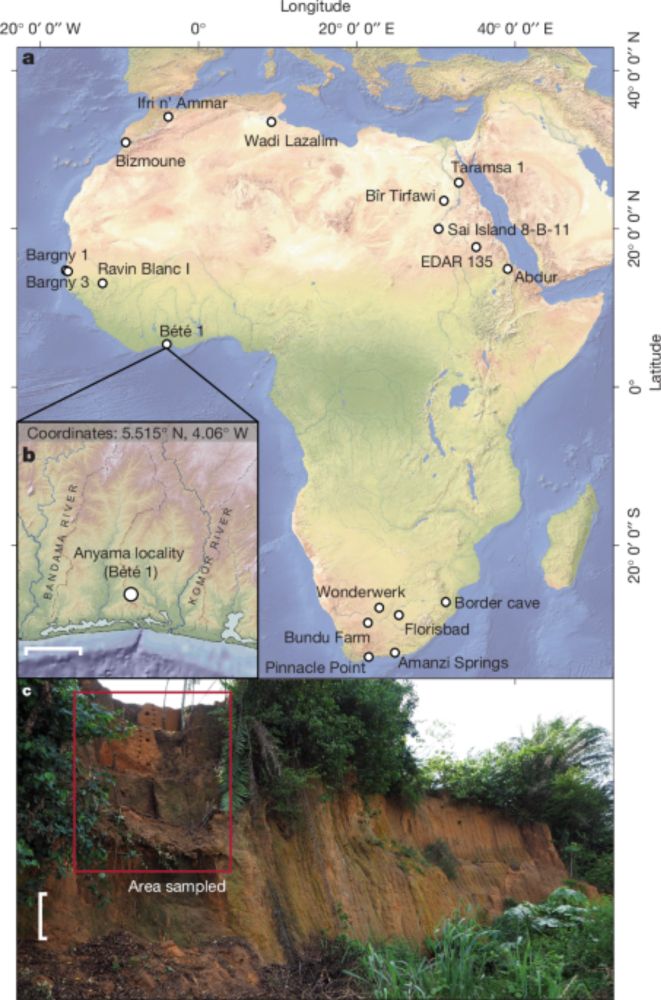
Humans in Africa’s wet tropical forests 150 thousand years ago - Nature
The identification of tools dated to the time of Homo sapiens associated with microfloral evidence of wet tropical forests indicates that West African forests were occupied by humans much earlier...
www.nature.com
February 27, 2025 at 4:56 PM
🦣🧪🏺 More evidence of early ecological adaptation v cool, but consider that in Eurasia, (roughly) equivalent Middle Palaeolithic technologies are made by several species.
Wouldn't it be amazing if the makers of these tools, living in wet forests, turn out to be 'ghost' hominins known only from DNA?
Wouldn't it be amazing if the makers of these tools, living in wet forests, turn out to be 'ghost' hominins known only from DNA?
Reposted by Kayla Flanagan
🏺 Fascinating find, and a great quote here threading between Indigenous knowledge & histories, and archaeological science: "let the finds tell their stories"

March 3, 2025 at 9:38 AM
🏺 Fascinating find, and a great quote here threading between Indigenous knowledge & histories, and archaeological science: "let the finds tell their stories"
Reposted by Kayla Flanagan

I’m excited to look through this digital exhibit! Alice Watterson is one of the creators and I’ve really appreciated her writing on visualization in the past. Also it looks like an excellent model for sharing archaeological research while prioritizing a community’s needs and interests.

You can find more incredible Yup'ik #archaeology in the new Nunalleq Digital Museum (www.nunalleq.org), where the results of 9 excavation seasons are accessible whilst the original objects remain with the descendent community.
🆓 Antiquity research explores the project: doi.org/10.15184/aqy...
🆓 Antiquity research explores the project: doi.org/10.15184/aqy...
March 3, 2025 at 2:13 PM
I’m excited to look through this digital exhibit! Alice Watterson is one of the creators and I’ve really appreciated her writing on visualization in the past. Also it looks like an excellent model for sharing archaeological research while prioritizing a community’s needs and interests.
Reposted by Kayla Flanagan
🦣🧪🏺 As far as I am aware, this is NOT regarded by the majority of researchers as a hybrid between #Neanderthals and Homo sapiens.
Its re-dating to the Gravettian is useful info for that period, but uncontroversial.
Its re-dating to the Gravettian is useful info for that period, but uncontroversial.
New dating confirms the Lapedo Child as a 28,000-year-old Neanderthal-human hybrid, refining its timeline and burial context. The study highlights interbreeding and advances radiocarbon methods. @science.org
#LapedoChild #Neanderthals #HumanEvolution #Paleoanthropology #AncientDNA #Archaeology
#LapedoChild #Neanderthals #HumanEvolution #Paleoanthropology #AncientDNA #Archaeology

The Lapedo Child: A 28,000-Year-Old Mystery Reshaped by Science
New dating techniques reveal fresh insights into one of the most enigmatic burials in human prehistory
www.anthropology.net
March 8, 2025 at 8:16 AM
🦣🧪🏺 As far as I am aware, this is NOT regarded by the majority of researchers as a hybrid between #Neanderthals and Homo sapiens.
Its re-dating to the Gravettian is useful info for that period, but uncontroversial.
Its re-dating to the Gravettian is useful info for that period, but uncontroversial.
Reposted by Kayla Flanagan
🏺

Pair of terracotta boots from an Early Geometric period cremation burial of a woman in the Athenian Agora, c. 900 BC.
These lovely model terracotta booties give us a glimpse into Iron Age footwear some 3,000 years ago in Athens.
Museum of the Ancient Agora, Athens. 📷 by me
These lovely model terracotta booties give us a glimpse into Iron Age footwear some 3,000 years ago in Athens.
Museum of the Ancient Agora, Athens. 📷 by me

March 10, 2025 at 2:02 PM
🏺
Reposted by Kayla Flanagan
Just learned that in some Bronze Age cultures, seats of rulers - i.e. thrones - were actually deities. The Seat Of Power was not just a thing but an entity
March 10, 2025 at 4:59 PM
Just learned that in some Bronze Age cultures, seats of rulers - i.e. thrones - were actually deities. The Seat Of Power was not just a thing but an entity
Reposted by Kayla Flanagan
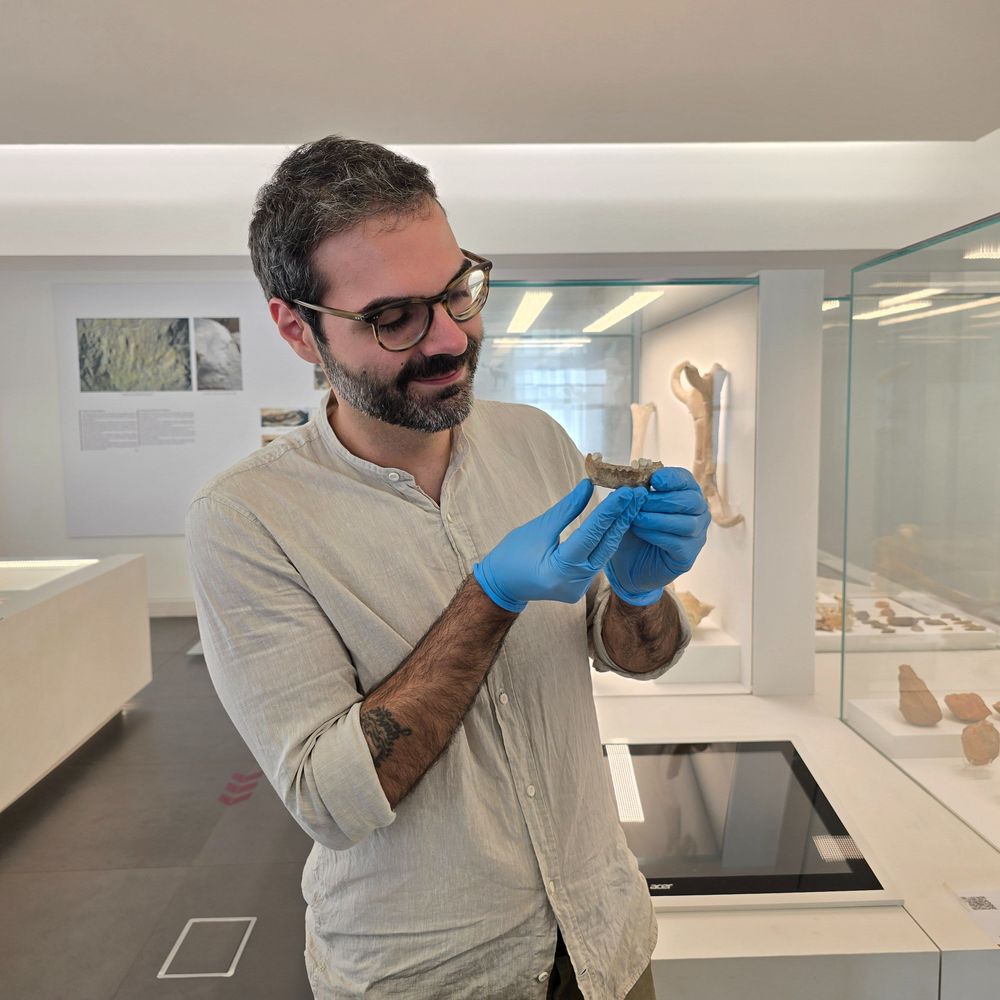
The oldest human remains from Western Europe from a species never documented here 🤯 #Atapuerca did it again! 🏺🧪
www.nature.com/articles/s41...
www.nature.com/articles/s41...

The earliest human face of Western Europe - Nature
A Homo aff. erectus individual dated to 1.4 million to 1.1 million years ago found at Sima del Elefante (Sierra de Atapuerca, Spain) does not display the modern-human-like aspect of Homo antecess...
www.nature.com
March 12, 2025 at 4:30 PM
The oldest human remains from Western Europe from a species never documented here 🤯 #Atapuerca did it again! 🏺🧪
www.nature.com/articles/s41...
www.nature.com/articles/s41...
Reposted by Kayla Flanagan
Officially complaining that there's just too much cool archaeology out these days

Roughly 8,000-year-old remains unearthed from present-day Tunisia held a surprise: European hunter-gatherer ancestry
https://go.nature.com/3Fpu3hX
https://go.nature.com/3Fpu3hX

Ancient DNA shows Stone Age Europeans voyaged by sea to Africa
Roughly 8,000-year-old remains unearthed from present-day Tunisia held a surprise: European hunter-gatherer ancestry.
go.nature.com
March 12, 2025 at 6:12 PM
Officially complaining that there's just too much cool archaeology out these days
Reposted by Kayla Flanagan
🗃️🏺 Been thinking about ancient female literacy a lot recently for #Matriarcha, in Bronze Age Aegean and Near East, and the extent to which we might underestimate it not just in elite or scribal settings, but mercantile/trade contexts too.

📜 Women Scribes in the Middle Ages
A new study finds that at least 1.1% of medieval manuscripts were copied by female scribes - suggesting over 110,000 manuscripts were written by women.
🔗 doi.org/10.1057/s415...
#SciComm #WomenInSTEM 🧪
A new study finds that at least 1.1% of medieval manuscripts were copied by female scribes - suggesting over 110,000 manuscripts were written by women.
🔗 doi.org/10.1057/s415...
#SciComm #WomenInSTEM 🧪

How many medieval and early modern manuscripts were copied by female scribes? A bibliometric analysis based on colophons - Humanities and Social Sciences Communications
Humanities and Social Sciences Communications - How many medieval and early modern manuscripts were copied by female scribes? A bibliometric analysis based on colophons
doi.org
March 12, 2025 at 8:15 PM
🗃️🏺 Been thinking about ancient female literacy a lot recently for #Matriarcha, in Bronze Age Aegean and Near East, and the extent to which we might underestimate it not just in elite or scribal settings, but mercantile/trade contexts too.
Reposted by Kayla Flanagan

From the teaching collection of the @uclarchaeology.bsky.social a beautiful, deep honey coloured handaxe. It's unprovenanced but based on shape, technology and condition, there is no reason it couldn't be from a local late Neanderthal population.
#FlintFriday
🏺🦣
#FlintFriday
🏺🦣

March 14, 2025 at 8:27 AM
From the teaching collection of the @uclarchaeology.bsky.social a beautiful, deep honey coloured handaxe. It's unprovenanced but based on shape, technology and condition, there is no reason it couldn't be from a local late Neanderthal population.
#FlintFriday
🏺🦣
#FlintFriday
🏺🦣
Reposted by Kayla Flanagan
Absolutely mind-bending - and makes me wonder, if Earth had a moon like Titan (or a binary partner planet like Venus) with a thick atmosphere and just the right orbital configuration to create total eclipses, what colour would we see its eclipses as?
One more--this is just so cool:
Firefly Aerospace has released the full image sequence of a solar eclipse from the surface of the Moon. The dark object moving in front of the Sun is Earth. The lunar landscape is lit red by all the sunrises & sunsets in the world. 🧪
fireflyspace.com/news/blue-gh...
Firefly Aerospace has released the full image sequence of a solar eclipse from the surface of the Moon. The dark object moving in front of the Sun is Earth. The lunar landscape is lit red by all the sunrises & sunsets in the world. 🧪
fireflyspace.com/news/blue-gh...
March 18, 2025 at 11:09 AM
Absolutely mind-bending - and makes me wonder, if Earth had a moon like Titan (or a binary partner planet like Venus) with a thick atmosphere and just the right orbital configuration to create total eclipses, what colour would we see its eclipses as?
Reposted by Kayla Flanagan

I've am deep dive fascinated w the history of women in anthropology, particularly my bit of it, so you can imagine how excited i was when Sarah Blaffer Hrdy published a new book on paternal care -- and it did not disappoint. insight and insane Trivers quotes... www.tandfonline.com/doi/full/10....

Father Time: A Natural History of Men and Babies
Published in Childhood in the Past: An International Journal (Ahead of Print, 2025)
www.tandfonline.com
March 19, 2025 at 8:25 AM
I've am deep dive fascinated w the history of women in anthropology, particularly my bit of it, so you can imagine how excited i was when Sarah Blaffer Hrdy published a new book on paternal care -- and it did not disappoint. insight and insane Trivers quotes... www.tandfonline.com/doi/full/10....
Reposted by Kayla Flanagan
🏺This IS cool but N American Old Copper culture (clue's in the name), were also using copper at this time: mining, heating, hammering & grinding into weapons & tools.
Not same intensity of metallurgy/pyrotechnology, but foragers definitely interested in metals!
[all this will feat. in #Matriarcha]
Not same intensity of metallurgy/pyrotechnology, but foragers definitely interested in metals!
[all this will feat. in #Matriarcha]

Okay, this is big. Really.
New finds from SE Anatolia suggest that at Gre Fılla, #Diyarbakir, Neolithic hunter-gatherers experimented with copper #metallurgy ... 9,000 years ago!
Yes, that's the Pre-Poettery Neolithic we're talking about:
🏺 www.turkiyetoday.com/culture/how-...
New finds from SE Anatolia suggest that at Gre Fılla, #Diyarbakir, Neolithic hunter-gatherers experimented with copper #metallurgy ... 9,000 years ago!
Yes, that's the Pre-Poettery Neolithic we're talking about:
🏺 www.turkiyetoday.com/culture/how-...
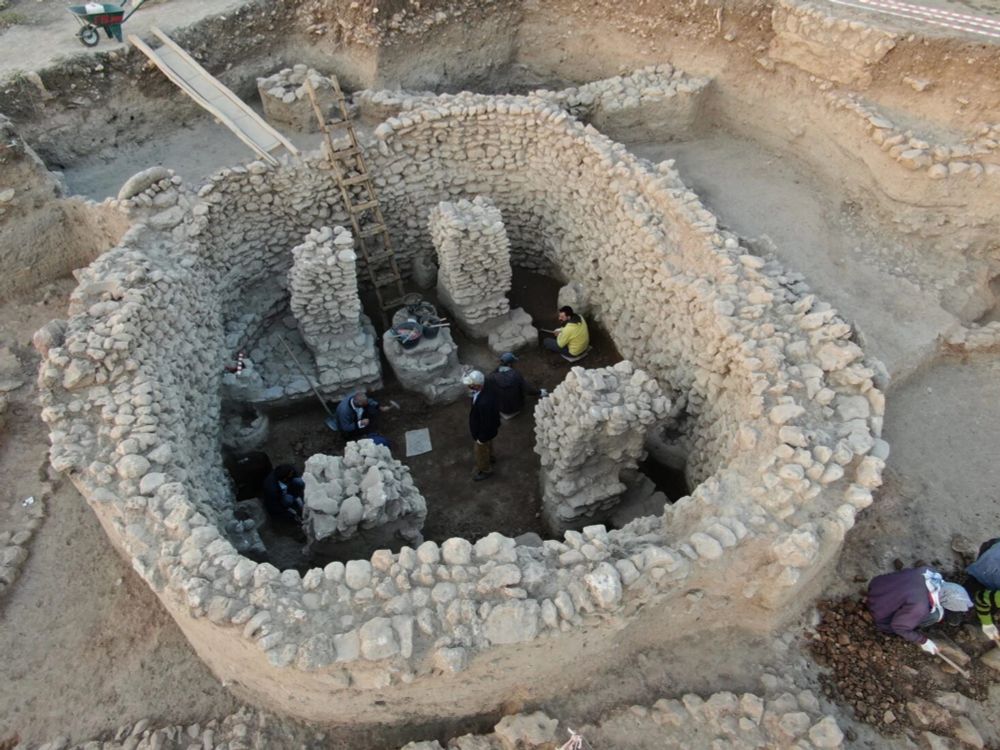
How Anatolia’s last hunter-gatherers pioneered copper metallurgy 9,000 years ago - Türkiye Today
New findings in Anatolia show that hunter-gatherers were experimenting with copper metallurgy 9,000 years ago, reshaping our understanding of early technology.
www.turkiyetoday.com
March 19, 2025 at 9:39 PM
🏺This IS cool but N American Old Copper culture (clue's in the name), were also using copper at this time: mining, heating, hammering & grinding into weapons & tools.
Not same intensity of metallurgy/pyrotechnology, but foragers definitely interested in metals!
[all this will feat. in #Matriarcha]
Not same intensity of metallurgy/pyrotechnology, but foragers definitely interested in metals!
[all this will feat. in #Matriarcha]
Reposted by Kayla Flanagan
🏺🧪🦣 #Neanderthals eating some insects makes sense (here in #Kindred I write about reindeer parasites), but we should also consider that some studies show early H. sapiens in same environments have equivalent high nitrogen levels

March 20, 2025 at 11:16 AM
🏺🧪🦣 #Neanderthals eating some insects makes sense (here in #Kindred I write about reindeer parasites), but we should also consider that some studies show early H. sapiens in same environments have equivalent high nitrogen levels
Reposted by Kayla Flanagan
V interesting what this might suggest for the late prehistoric perceptions & use of the landscape: a massive river, wetlands, deep black lakes, with not much settlement at all, but body deposition on the Thames shore & eyots (isles)

The Rockingham Anomaly in Elephant and Castle is evidence of a periglacial environment in London. A peat filled hollow which has yield well-preserved pollen and plant seeds has been interpreted as a pingo. Read more at londongeopartnership.org.uk/wp/wp-conten... #londongeology


March 23, 2025 at 10:28 PM
V interesting what this might suggest for the late prehistoric perceptions & use of the landscape: a massive river, wetlands, deep black lakes, with not much settlement at all, but body deposition on the Thames shore & eyots (isles)
Reposted by Kayla Flanagan
🏺 🐕 New potential late Upper Palaeolithic dog, from southern France (slightly younger than Erralla one); with pathology that may indicate hunting by humans
www.sciencedirect.com/science/arti...
www.sciencedirect.com/science/arti...

The Canis lupus ssp. (Mammalia, Carnivora) of the Baume Traucade (Issirac, Gard, France): A complete skeleton of a “dog-like” individual from the post-LGM
Completely preserved canid skeletons dating from the Pleistocene are rare finds. Here, we describe such a unique discovery from Baume Traucade, a cave…
www.sciencedirect.com
March 24, 2025 at 9:40 AM
🏺 🐕 New potential late Upper Palaeolithic dog, from southern France (slightly younger than Erralla one); with pathology that may indicate hunting by humans
www.sciencedirect.com/science/arti...
www.sciencedirect.com/science/arti...