



José R Penadés
@jrpenades.bsky.social
Frustrated football player, I moved to a less relevant work: microbiologist interested on mobile genetic elements
Excited to share our latest work with @albertomarina.bsky.social and @avigdoreldar.bsky.social labs, where we decipher the mechanism by which SPβ-like phages sense the SOS response to control the lysis–lysogeny switch. www.biorxiv.org/content/10.1...

An unprecedented DNA recognition–mimicry switch governs induction in arbitrium phages
Temperate phages integrate multiple information sources to regulate lysis-lysogeny transitions. SPBeta-like phages use arbitrium signalling and DNA damage to control repressor activity during lytic in...
www.biorxiv.org
December 2, 2025 at 9:31 AM
Excited to share our latest work with @albertomarina.bsky.social and @avigdoreldar.bsky.social labs, where we decipher the mechanism by which SPβ-like phages sense the SOS response to control the lysis–lysogeny switch. www.biorxiv.org/content/10.1...
Reposted by José R Penadés

🚨 PhD Opportunity in my lab🚨
Harnessing Phage Satellites for Next-Generation Biological Crop Protection
🗓 Deadline: 12 Jan
🔗 Apply: tinyurl.com/425x8ahj
🔗 Project : tinyurl.com/22uanm86
Interested in Structural Microbiology, Phage Biology & SynBio - Apply Now!
Harnessing Phage Satellites for Next-Generation Biological Crop Protection
🗓 Deadline: 12 Jan
🔗 Apply: tinyurl.com/425x8ahj
🔗 Project : tinyurl.com/22uanm86
Interested in Structural Microbiology, Phage Biology & SynBio - Apply Now!

Grantham PhD opportunities
The Grantham Institute - Climate Change and the Environment invites PhD applications that support projects in some of our priority research areas. In...
tinyurl.com
November 30, 2025 at 11:37 AM
🚨 PhD Opportunity in my lab🚨
Harnessing Phage Satellites for Next-Generation Biological Crop Protection
🗓 Deadline: 12 Jan
🔗 Apply: tinyurl.com/425x8ahj
🔗 Project : tinyurl.com/22uanm86
Interested in Structural Microbiology, Phage Biology & SynBio - Apply Now!
Harnessing Phage Satellites for Next-Generation Biological Crop Protection
🗓 Deadline: 12 Jan
🔗 Apply: tinyurl.com/425x8ahj
🔗 Project : tinyurl.com/22uanm86
Interested in Structural Microbiology, Phage Biology & SynBio - Apply Now!
Reposted by José R Penadés

Arbitrium systems control lysis/lysogeny through the regulation of small antirepressor proteins https://www.biorxiv.org/content/10.1101/2025.11.23.689978v1
November 25, 2025 at 2:17 AM
Arbitrium systems control lysis/lysogeny through the regulation of small antirepressor proteins https://www.biorxiv.org/content/10.1101/2025.11.23.689978v1
Reposted by José R Penadés
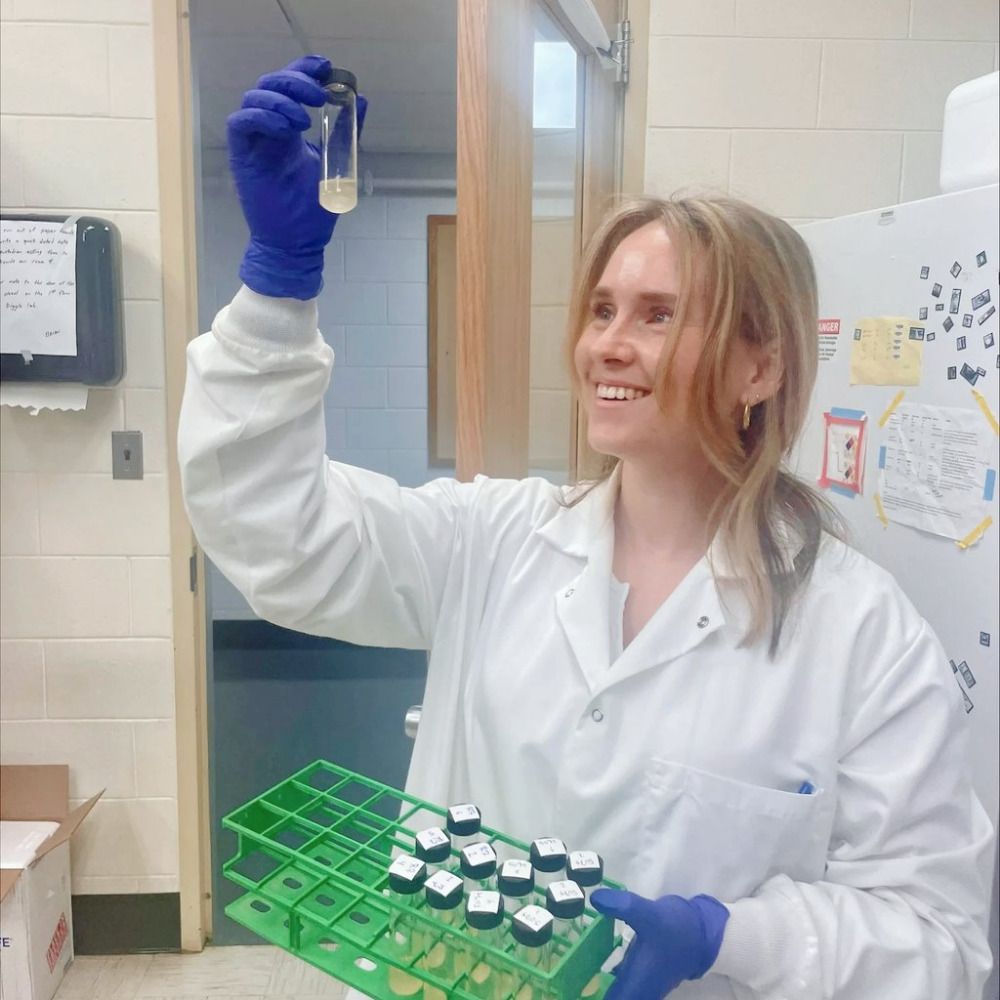
Very happy to see this piece out in @plosbiology.org, on the bacterial immune systems and microbial communities. It was a great team effort with Rafael Custodio, @brockhurstlab.bsky.social , @brownlab.bsky.social, and Edze Westra! 🦠🧫 #phagesky #mevosky
journals.plos.org/plosbiology/...
journals.plos.org/plosbiology/...

Bacterial immune systems as causes and consequences of microbiome structure
Bacterial immune systems have evolved in response to diverse molecular "parasites", yet their ecological roles remain poorly understood. This Essay explores how interactions between mobile genetic ele...
journals.plos.org
November 19, 2025 at 6:35 PM
Very happy to see this piece out in @plosbiology.org, on the bacterial immune systems and microbial communities. It was a great team effort with Rafael Custodio, @brockhurstlab.bsky.social , @brownlab.bsky.social, and Edze Westra! 🦠🧫 #phagesky #mevosky
journals.plos.org/plosbiology/...
journals.plos.org/plosbiology/...
Reposted by José R Penadés

👏 Dos proyectos del #CNB seleccionados en la convocatoria de Investigación en Salud 2025 de la @caixaresearch.bsky.social
Ambos abordan un gran reto global: la resistencia a los antimicrobianos.
#HealthResearch #FundaciónlaCaixa
@sanmillan.bsky.social @jaescudero.bsky.social
f.mtr.cool/jejatlbssz
Ambos abordan un gran reto global: la resistencia a los antimicrobianos.
#HealthResearch #FundaciónlaCaixa
@sanmillan.bsky.social @jaescudero.bsky.social
f.mtr.cool/jejatlbssz

November 20, 2025 at 11:26 AM
👏 Dos proyectos del #CNB seleccionados en la convocatoria de Investigación en Salud 2025 de la @caixaresearch.bsky.social
Ambos abordan un gran reto global: la resistencia a los antimicrobianos.
#HealthResearch #FundaciónlaCaixa
@sanmillan.bsky.social @jaescudero.bsky.social
f.mtr.cool/jejatlbssz
Ambos abordan un gran reto global: la resistencia a los antimicrobianos.
#HealthResearch #FundaciónlaCaixa
@sanmillan.bsky.social @jaescudero.bsky.social
f.mtr.cool/jejatlbssz
Reposted by José R Penadés

1/ Antibiotic resistance causes ➕ than 1 M deaths each year and understanding why this happens is key to stopping it.
With #HealthResearch support, @sanmillan.bsky.social is investigating how different plasmids (DNA fragments) coexist in bacteria and confer resistance.
https://tinyurl.com/3bysv6cr
With #HealthResearch support, @sanmillan.bsky.social is investigating how different plasmids (DNA fragments) coexist in bacteria and confer resistance.
https://tinyurl.com/3bysv6cr

November 20, 2025 at 11:03 AM
1/ Antibiotic resistance causes ➕ than 1 M deaths each year and understanding why this happens is key to stopping it.
With #HealthResearch support, @sanmillan.bsky.social is investigating how different plasmids (DNA fragments) coexist in bacteria and confer resistance.
https://tinyurl.com/3bysv6cr
With #HealthResearch support, @sanmillan.bsky.social is investigating how different plasmids (DNA fragments) coexist in bacteria and confer resistance.
https://tinyurl.com/3bysv6cr
Reposted by José R Penadés
#microsky #phagesky #phage
Anyone who’s tried deleting prophages in the lab by HR knows the difficulties of the task. Here we have an example of how HR-mediated natural transformation might hit the same hurdle in a more native context.
academic.oup.com/mbe/article/...
Anyone who’s tried deleting prophages in the lab by HR knows the difficulties of the task. Here we have an example of how HR-mediated natural transformation might hit the same hurdle in a more native context.
academic.oup.com/mbe/article/...

Chromosomal Curing Drives an Arms Race Between Bacterial Transformation and Prophage
Abstract. Transformation occurs when bacteria import exogenous DNA via the competence machinery and integrate it into their genome through homologous recom
academic.oup.com
November 23, 2025 at 4:39 PM
#microsky #phagesky #phage
Anyone who’s tried deleting prophages in the lab by HR knows the difficulties of the task. Here we have an example of how HR-mediated natural transformation might hit the same hurdle in a more native context.
academic.oup.com/mbe/article/...
Anyone who’s tried deleting prophages in the lab by HR knows the difficulties of the task. Here we have an example of how HR-mediated natural transformation might hit the same hurdle in a more native context.
academic.oup.com/mbe/article/...
Reposted by José R Penadés

🚨Preprint alert - this is a big one! We transfer the revolutionary power of TnSeq to bacteriophages.
Our HIDEN-SEQ links the "dark matter" genes of your favorite phage to any selectable phenotype, guiding the path from fun observations to molecular mechanisms.
A thread 1/8
Our HIDEN-SEQ links the "dark matter" genes of your favorite phage to any selectable phenotype, guiding the path from fun observations to molecular mechanisms.
A thread 1/8

November 20, 2025 at 8:40 PM
🚨Preprint alert - this is a big one! We transfer the revolutionary power of TnSeq to bacteriophages.
Our HIDEN-SEQ links the "dark matter" genes of your favorite phage to any selectable phenotype, guiding the path from fun observations to molecular mechanisms.
A thread 1/8
Our HIDEN-SEQ links the "dark matter" genes of your favorite phage to any selectable phenotype, guiding the path from fun observations to molecular mechanisms.
A thread 1/8
Reposted by José R Penadés

The hitchhiker’s guide to cross-species DNA delivery
@cp-trendsmicrobiol.bsky.social Spotlight by Kotaro Kiga and Rodrigo Ibarra-Chávez
www.cell.com/trends/micro...
@cp-trendsmicrobiol.bsky.social Spotlight by Kotaro Kiga and Rodrigo Ibarra-Chávez
www.cell.com/trends/micro...

The hitchhiker’s guide to cross-species DNA delivery
Microbial hitchhikers are rewriting the rules of horizontal gene transfer. He, Patkowski,
et al. reveal how phage satellites assemble chimeric infective particles that deliver
DNA across species bound...
www.cell.com
November 9, 2025 at 9:39 AM
The hitchhiker’s guide to cross-species DNA delivery
@cp-trendsmicrobiol.bsky.social Spotlight by Kotaro Kiga and Rodrigo Ibarra-Chávez
www.cell.com/trends/micro...
@cp-trendsmicrobiol.bsky.social Spotlight by Kotaro Kiga and Rodrigo Ibarra-Chávez
www.cell.com/trends/micro...
Reposted by José R Penadés

New paper: www.sciencedirect.com/science/arti...
Klebs can evolve resistance to Colistin through mgrB mutation or by acquiring the mcr-1 gene. Both routes have similar fitness costs against a bacterial competitor, but mgrB mutations are associated with enhanced virulence.
Klebs can evolve resistance to Colistin through mgrB mutation or by acquiring the mcr-1 gene. Both routes have similar fitness costs against a bacterial competitor, but mgrB mutations are associated with enhanced virulence.

mgrB inactivation confers enhanced pathogenicity and immune evasion over mcr-1 expression in colistin-resistant Klebsiella pneumoniae
Colistin is one of the last treatment options against human infections caused by multi-drug resistant Klebsiella pneumoniae. Colistin resistant K. pne…
www.sciencedirect.com
November 6, 2025 at 12:13 PM
New paper: www.sciencedirect.com/science/arti...
Klebs can evolve resistance to Colistin through mgrB mutation or by acquiring the mcr-1 gene. Both routes have similar fitness costs against a bacterial competitor, but mgrB mutations are associated with enhanced virulence.
Klebs can evolve resistance to Colistin through mgrB mutation or by acquiring the mcr-1 gene. Both routes have similar fitness costs against a bacterial competitor, but mgrB mutations are associated with enhanced virulence.
Reposted by José R Penadés

Preprint: Bacteria sense virus-induced genome degradation via methylated mononucleotides
tinyurl.com/ch3damp
We show how molecular byproducts released during virus-induced cell exploitation are used as signals to trigger host immunity
Revealed by the amazing Ilya Osterman. See his thread below👇
tinyurl.com/ch3damp
We show how molecular byproducts released during virus-induced cell exploitation are used as signals to trigger host immunity
Revealed by the amazing Ilya Osterman. See his thread below👇

November 6, 2025 at 10:39 AM
Preprint: Bacteria sense virus-induced genome degradation via methylated mononucleotides
tinyurl.com/ch3damp
We show how molecular byproducts released during virus-induced cell exploitation are used as signals to trigger host immunity
Revealed by the amazing Ilya Osterman. See his thread below👇
tinyurl.com/ch3damp
We show how molecular byproducts released during virus-induced cell exploitation are used as signals to trigger host immunity
Revealed by the amazing Ilya Osterman. See his thread below👇
Reposted by José R Penadés

Please RT. Post-doc opportunity alert! 💥 closing 10th December.. Come join our team (www.thelowlab.org) at Imperial, London, working on the structure and mechanism of bacterial secretion systems.
For more details and to apply please see
www.imperial.ac.uk/jobs/search-...
For more details and to apply please see
www.imperial.ac.uk/jobs/search-...

November 4, 2025 at 5:20 PM
Please RT. Post-doc opportunity alert! 💥 closing 10th December.. Come join our team (www.thelowlab.org) at Imperial, London, working on the structure and mechanism of bacterial secretion systems.
For more details and to apply please see
www.imperial.ac.uk/jobs/search-...
For more details and to apply please see
www.imperial.ac.uk/jobs/search-...
Reposted by José R Penadés
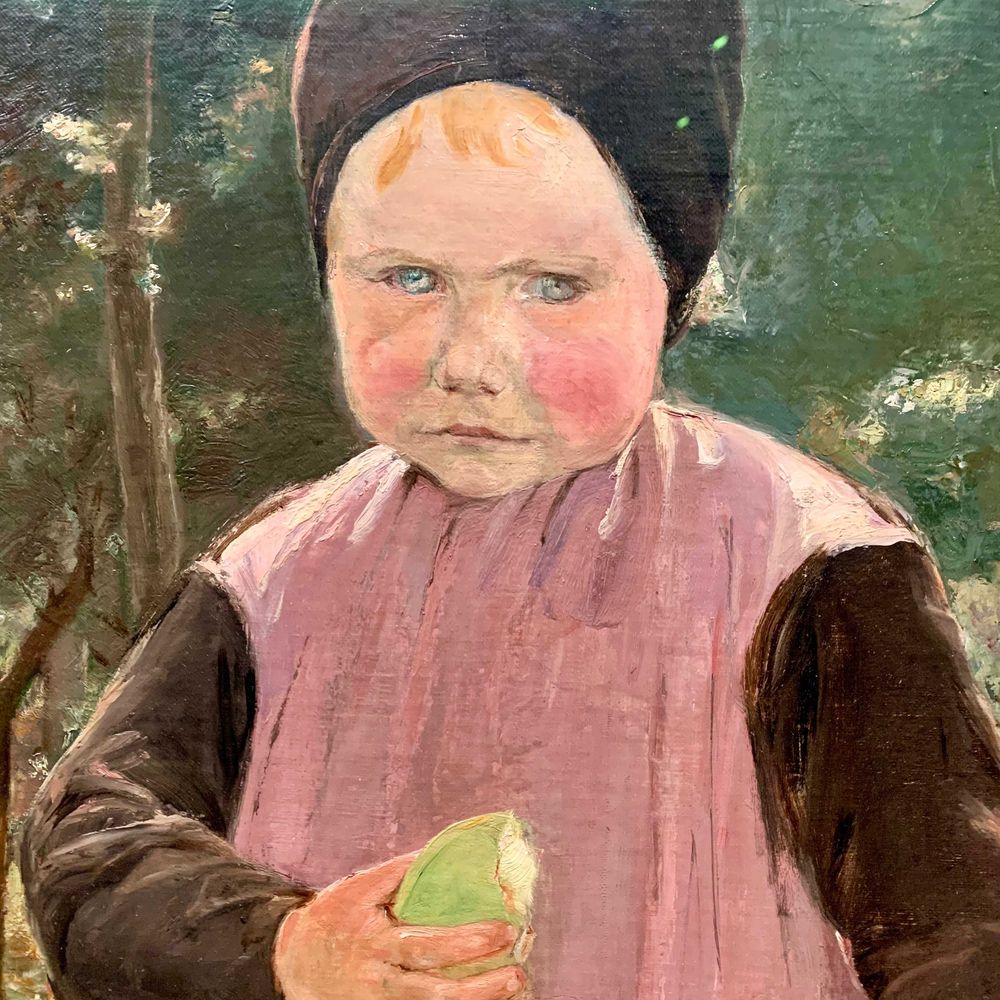
@prczhaoyansong.bsky.social’s deep dive into the dark matter of compost communities is now out 🎉 Genomic islands hijack jumbo phages—whose capsids enable transfer of large tracts of DNA—shedding new light on the scale & scope of phage-mediated gene flow 😎
www.pnas.org/doi/10.1073/...
www.pnas.org/doi/10.1073/...

Jumbo phage–mediated transduction of genomic islands | PNAS
Bacteria acquire new genes by horizontal gene transfer, typically mediated by mobile
genetic elements (MGEs). While plasmids, bacteriophages, and c...
www.pnas.org
October 28, 2025 at 6:36 PM
@prczhaoyansong.bsky.social’s deep dive into the dark matter of compost communities is now out 🎉 Genomic islands hijack jumbo phages—whose capsids enable transfer of large tracts of DNA—shedding new light on the scale & scope of phage-mediated gene flow 😎
www.pnas.org/doi/10.1073/...
www.pnas.org/doi/10.1073/...
Reposted by José R Penadés
Antiviral Defence is a Conserved Function of Diverse DNA Glycosylases https://www.biorxiv.org/content/10.1101/2025.10.29.685425v1
October 30, 2025 at 2:17 AM
Antiviral Defence is a Conserved Function of Diverse DNA Glycosylases https://www.biorxiv.org/content/10.1101/2025.10.29.685425v1
Reposted by José R Penadés

New article alert: Bacterial TIR-based immune systems sense phage capsids to initiate defense
Out now in Nature Microbiology by Cameron G. Roberts, Chloe B. Fishman, Zhiying Zhang, Dalton V. Banh, Dinshaw J. Patel & Luciano A. Marraffini
#microsky
www.nature.com/articles/s41...
Out now in Nature Microbiology by Cameron G. Roberts, Chloe B. Fishman, Zhiying Zhang, Dalton V. Banh, Dinshaw J. Patel & Luciano A. Marraffini
#microsky
www.nature.com/articles/s41...

Bacterial TIR-based immune systems sense phage capsids to initiate defense - Nature Microbiology
After sensing capsids, the Thoeris antiphage defense system triggers a cascade that leads to NAD+ cleavage and cell arrest, which are dynamics that are mirrored in some mammalian immune pathways.
www.nature.com
October 24, 2025 at 5:23 PM
New article alert: Bacterial TIR-based immune systems sense phage capsids to initiate defense
Out now in Nature Microbiology by Cameron G. Roberts, Chloe B. Fishman, Zhiying Zhang, Dalton V. Banh, Dinshaw J. Patel & Luciano A. Marraffini
#microsky
www.nature.com/articles/s41...
Out now in Nature Microbiology by Cameron G. Roberts, Chloe B. Fishman, Zhiying Zhang, Dalton V. Banh, Dinshaw J. Patel & Luciano A. Marraffini
#microsky
www.nature.com/articles/s41...
Reposted by José R Penadés
New pre-print: Plasmid dependent phage effectively eliminate AMR bacteria and block plasmid transmission in the chicken gut microbiome
Fun collaboration with Tao He lab (JAAS) and @brockhurstlab.bsky.social lab (Manchester)
#phagesky#microsky
www.biorxiv.org/content/10.1...
Fun collaboration with Tao He lab (JAAS) and @brockhurstlab.bsky.social lab (Manchester)
#phagesky#microsky
www.biorxiv.org/content/10.1...

Plasmid dependent phage eliminate pathogenic bacteria and antibiotic resistance plasmids from the chicken gut microbiome
Conjugative plasmids are a key reservoir of antimicrobial resistance (AMR) in commensal and pathogenic bacteria within the gut microbiome. Plasmid-dependent phage (PDPs) are a promising therapeutic op...
www.biorxiv.org
October 27, 2025 at 8:19 AM
New pre-print: Plasmid dependent phage effectively eliminate AMR bacteria and block plasmid transmission in the chicken gut microbiome
Fun collaboration with Tao He lab (JAAS) and @brockhurstlab.bsky.social lab (Manchester)
#phagesky#microsky
www.biorxiv.org/content/10.1...
Fun collaboration with Tao He lab (JAAS) and @brockhurstlab.bsky.social lab (Manchester)
#phagesky#microsky
www.biorxiv.org/content/10.1...
Reposted by José R Penadés

Do plasmids really move around that much? Well, maybe not always
Thrilled to have contributed to this story with two of my favourite microbiologists: @jrpenades.bsky.social & @sanmillan.bsky.social
This great work was led by Akshay Sabnis & @wfigueroac3.bsky.social
www.cell.com/cell-reports...
Thrilled to have contributed to this story with two of my favourite microbiologists: @jrpenades.bsky.social & @sanmillan.bsky.social
This great work was led by Akshay Sabnis & @wfigueroac3.bsky.social
www.cell.com/cell-reports...

Non-conjugative plasmids limit their mobility to persist in nature
Sabnis et al. explain why non-conjugative plasmids move at a low rate in nature. While
increased mobility can easily evolve by incorporating phage DNA into plasmids, this
is disadvantageous because it...
www.cell.com
October 22, 2025 at 5:47 PM
Do plasmids really move around that much? Well, maybe not always
Thrilled to have contributed to this story with two of my favourite microbiologists: @jrpenades.bsky.social & @sanmillan.bsky.social
This great work was led by Akshay Sabnis & @wfigueroac3.bsky.social
www.cell.com/cell-reports...
Thrilled to have contributed to this story with two of my favourite microbiologists: @jrpenades.bsky.social & @sanmillan.bsky.social
This great work was led by Akshay Sabnis & @wfigueroac3.bsky.social
www.cell.com/cell-reports...
Reposted by José R Penadés
New paper with my (amazing) friend and mentor @jrpenades.bsky.social
Really looking forward to see what plasmid aficionados think of this one!!
With @asantoslopez.bsky.social @wfigueroac3.bsky.social Akshay Sabins and others
www.cell.com/cell-reports...
Really looking forward to see what plasmid aficionados think of this one!!
With @asantoslopez.bsky.social @wfigueroac3.bsky.social Akshay Sabins and others
www.cell.com/cell-reports...

Non-conjugative plasmids limit their mobility to persist in nature
Sabnis et al. explain why non-conjugative plasmids move at a low rate in nature. While
increased mobility can easily evolve by incorporating phage DNA into plasmids, this
is disadvantageous because it...
www.cell.com
October 22, 2025 at 1:12 PM
New paper with my (amazing) friend and mentor @jrpenades.bsky.social
Really looking forward to see what plasmid aficionados think of this one!!
With @asantoslopez.bsky.social @wfigueroac3.bsky.social Akshay Sabins and others
www.cell.com/cell-reports...
Really looking forward to see what plasmid aficionados think of this one!!
With @asantoslopez.bsky.social @wfigueroac3.bsky.social Akshay Sabins and others
www.cell.com/cell-reports...
Reposted by José R Penadés

New paper just out from #OurImperial @tcostalab.bsky.social
The assembly of a hybrid type IV secretion system by a Crohn’s disease-associated Escherichia coli strain.
www.nature.com/articles/s41...
The assembly of a hybrid type IV secretion system by a Crohn’s disease-associated Escherichia coli strain.
www.nature.com/articles/s41...

The assembly of a hybrid type IV secretion system by a Crohn’s disease-associated Escherichia coli strain - Nature Communications
Adherent-invasive strains of E. coli are commonly isolated from patients with Crohn’s disease. Here, the authors show that an AIEC harbours a hybrid Type IV secretion system (T4SS) that mediates pilin...
www.nature.com
October 20, 2025 at 6:38 PM
New paper just out from #OurImperial @tcostalab.bsky.social
The assembly of a hybrid type IV secretion system by a Crohn’s disease-associated Escherichia coli strain.
www.nature.com/articles/s41...
The assembly of a hybrid type IV secretion system by a Crohn’s disease-associated Escherichia coli strain.
www.nature.com/articles/s41...
Reposted by José R Penadés

Two intensive sampling periods of oyster-associated vibrio and their phage, 4 years apart, and many surprises. Despite being washed by the Atlantic, wide tides, and vibrio (almost?) disappearing most of the year, we can find the exact same virulent phages 4 years later (down to 0 SNP)! preprint👇

October 14, 2025 at 4:08 PM
Two intensive sampling periods of oyster-associated vibrio and their phage, 4 years apart, and many surprises. Despite being washed by the Atlantic, wide tides, and vibrio (almost?) disappearing most of the year, we can find the exact same virulent phages 4 years later (down to 0 SNP)! preprint👇
Reposted by José R Penadés
Well, I guess I just learned that svg don't work great here. Check the figures in the preprint!
Two intensive sampling periods of oyster-associated vibrio and their phage, 4 years apart, and many surprises. Despite being washed by the Atlantic, wide tides, and vibrio (almost?) disappearing most of the year, we can find the exact same virulent phages 4 years later (down to 0 SNP)! preprint👇
October 14, 2025 at 4:11 PM
Well, I guess I just learned that svg don't work great here. Check the figures in the preprint!
Our latest work reveals that arbitrium phages cross-communicate across species! These tiny viruses “listen” to signals from others, coordinating lysis-lysogeny decisions across species.
Original idea from @albertomarina.bsky.social and, as usual, he was right.
www.biorxiv.org/content/10.1...
Original idea from @albertomarina.bsky.social and, as usual, he was right.
www.biorxiv.org/content/10.1...
Phages communicate across species to shape microbial ecosystems
Arbitrium is a communication system that helps bacteriophages decide between lysis and lysogeny via secreted peptides. In arbitrium, the AimP peptide binds its cognate AimR receptor to repress aimX ex...
www.biorxiv.org
October 14, 2025 at 1:36 PM
Our latest work reveals that arbitrium phages cross-communicate across species! These tiny viruses “listen” to signals from others, coordinating lysis-lysogeny decisions across species.
Original idea from @albertomarina.bsky.social and, as usual, he was right.
www.biorxiv.org/content/10.1...
Original idea from @albertomarina.bsky.social and, as usual, he was right.
www.biorxiv.org/content/10.1...
Reposted by José R Penadés
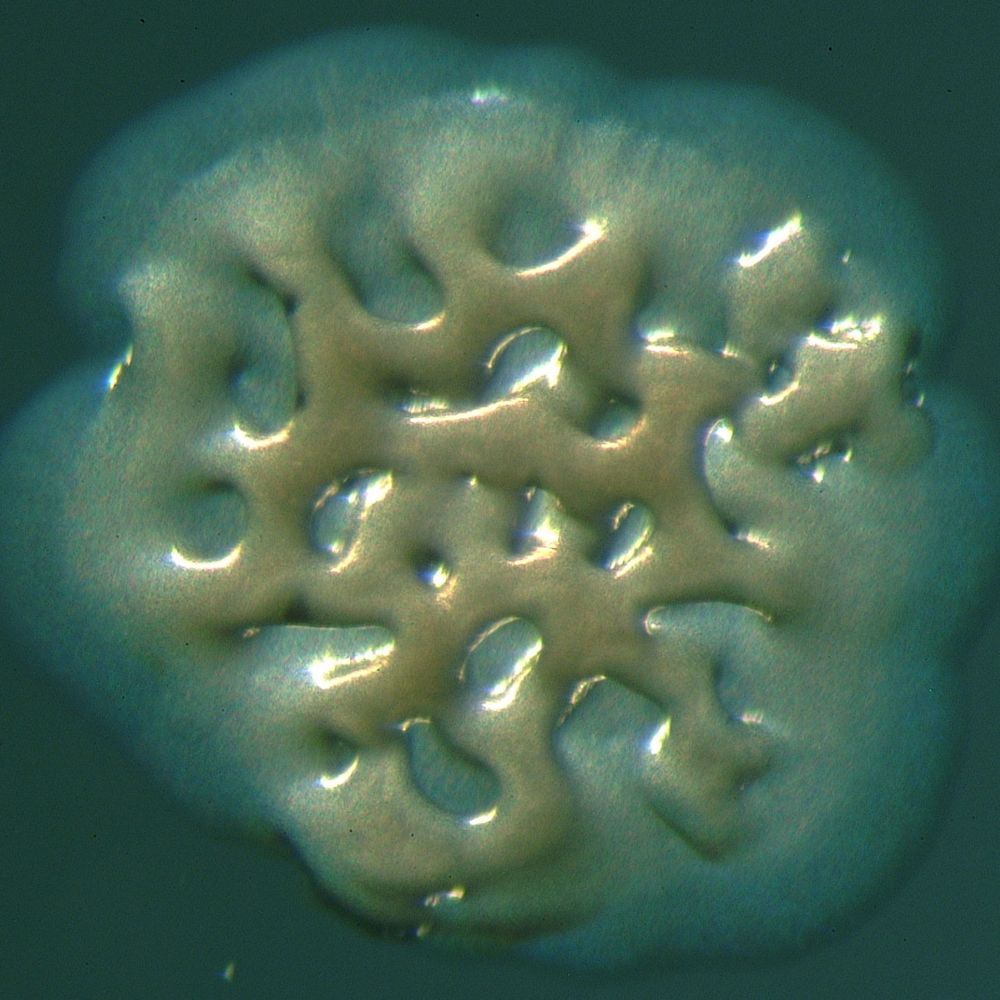
PS Simon’s tail fibre protein structure models showing the variants causing altered surface receptor binding specificity are Lovell-y

October 6, 2025 at 12:24 PM
PS Simon’s tail fibre protein structure models showing the variants causing altered surface receptor binding specificity are Lovell-y
Reposted by José R Penadés
5-years in the making this paper has been a real journey!
Also, a fun collaboration with @frimanscience.bsky.social @jofoth.bsky.social Edze Westra, Simon Lovell, Aras Kadioglu
#mevosky #phagesky
Also, a fun collaboration with @frimanscience.bsky.social @jofoth.bsky.social Edze Westra, Simon Lovell, Aras Kadioglu
#mevosky #phagesky
October 6, 2025 at 6:37 AM
5-years in the making this paper has been a real journey!
Also, a fun collaboration with @frimanscience.bsky.social @jofoth.bsky.social Edze Westra, Simon Lovell, Aras Kadioglu
#mevosky #phagesky
Also, a fun collaboration with @frimanscience.bsky.social @jofoth.bsky.social Edze Westra, Simon Lovell, Aras Kadioglu
#mevosky #phagesky
Reposted by José R Penadés
New preprint!
Ever wondered why only a fraction of genomes encode CRISPR immunity? 🧬 🦠
Turns out CRISPR is rarely beneficial against virulent phages, being most beneficial against those for which resistance mutations are rare!
An epic effort by Rosanna Wright
www.biorxiv.org/content/10.1...
Ever wondered why only a fraction of genomes encode CRISPR immunity? 🧬 🦠
Turns out CRISPR is rarely beneficial against virulent phages, being most beneficial against those for which resistance mutations are rare!
An epic effort by Rosanna Wright
www.biorxiv.org/content/10.1...

Resistance mutation supply modulates the benefit of CRISPR immunity against virulent phages
Only a fraction of bacterial genomes encode CRISPR-Cas systems but the selective causes of this variation are unexplained. How naturally virulent bacteriophages (phages) select for CRISPR immunity has...
www.biorxiv.org
October 6, 2025 at 6:27 AM
New preprint!
Ever wondered why only a fraction of genomes encode CRISPR immunity? 🧬 🦠
Turns out CRISPR is rarely beneficial against virulent phages, being most beneficial against those for which resistance mutations are rare!
An epic effort by Rosanna Wright
www.biorxiv.org/content/10.1...
Ever wondered why only a fraction of genomes encode CRISPR immunity? 🧬 🦠
Turns out CRISPR is rarely beneficial against virulent phages, being most beneficial against those for which resistance mutations are rare!
An epic effort by Rosanna Wright
www.biorxiv.org/content/10.1...