



@jag2231.bsky.social
Reposted

🚨New Preprint: We develop a novel task that probes counterfactual thinking without using counterfactual language, and that teases apart genuine counterfactual thinking from related forms of thinking. Using this task, we find that the ability for counterfactual thinking emerges around 5 years of age.

October 13, 2025 at 7:58 PM
🚨New Preprint: We develop a novel task that probes counterfactual thinking without using counterfactual language, and that teases apart genuine counterfactual thinking from related forms of thinking. Using this task, we find that the ability for counterfactual thinking emerges around 5 years of age.
Reposted

Excited to share recent work on an AI model that doubles as a scalable cognitive theory.
Basic idea: when learning one task, "preplay" other tasks to learn implicit goal-oriented maps that support fast performance later.
This improves AI and predicts human behavior in naturalistic experiments!
Basic idea: when learning one task, "preplay" other tasks to learn implicit goal-oriented maps that support fast performance later.
This improves AI and predicts human behavior in naturalistic experiments!

September 10, 2025 at 2:37 PM
Excited to share recent work on an AI model that doubles as a scalable cognitive theory.
Basic idea: when learning one task, "preplay" other tasks to learn implicit goal-oriented maps that support fast performance later.
This improves AI and predicts human behavior in naturalistic experiments!
Basic idea: when learning one task, "preplay" other tasks to learn implicit goal-oriented maps that support fast performance later.
This improves AI and predicts human behavior in naturalistic experiments!
Reposted

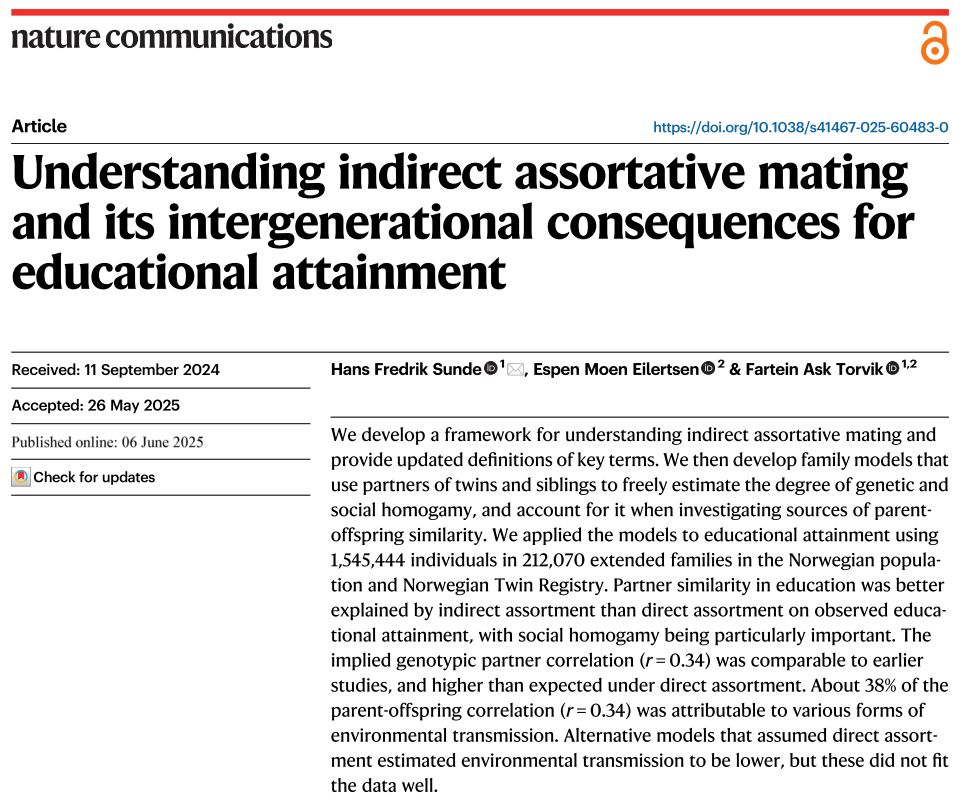
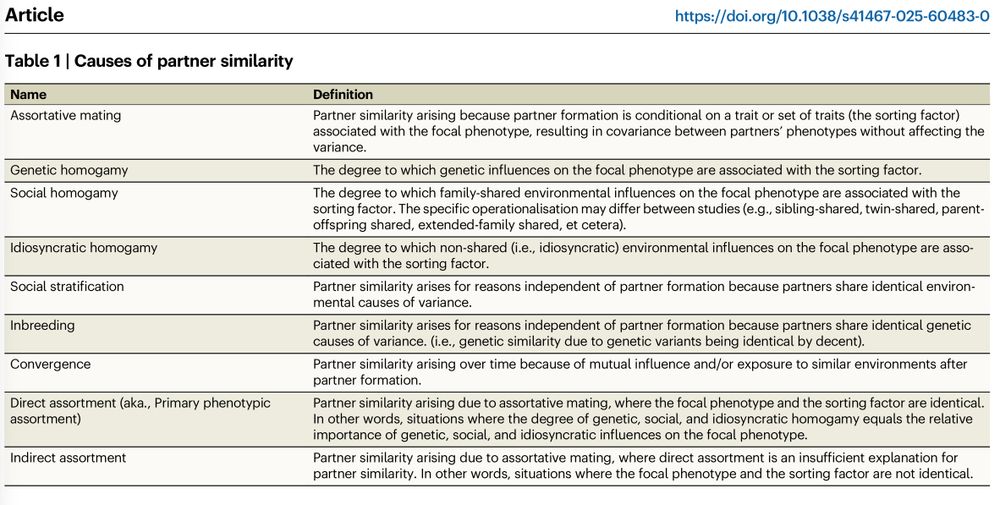
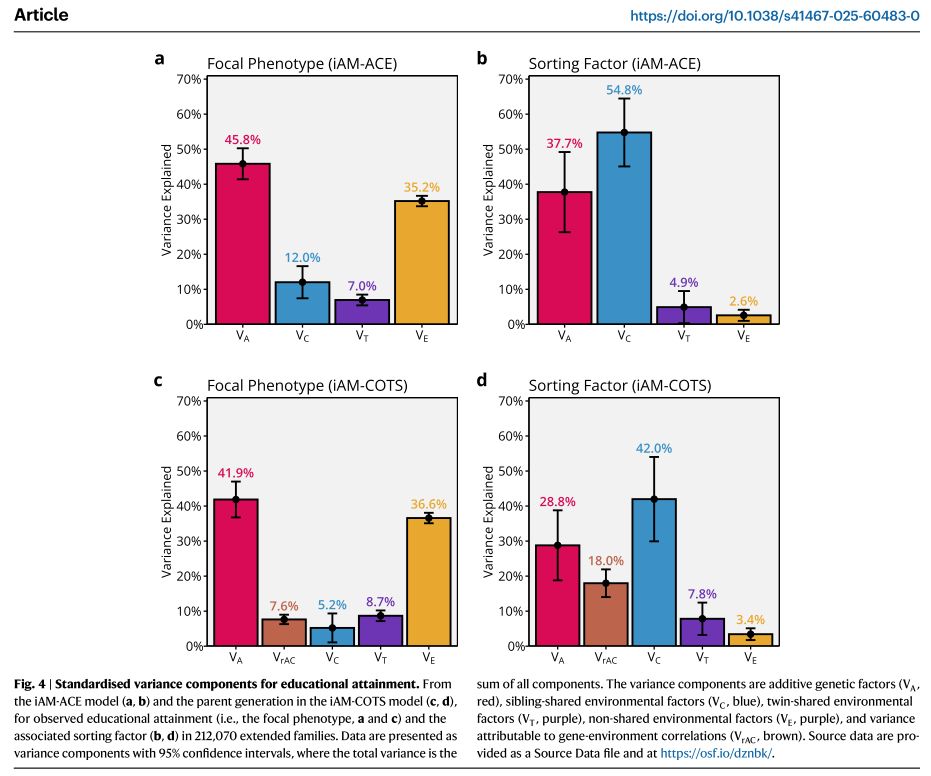
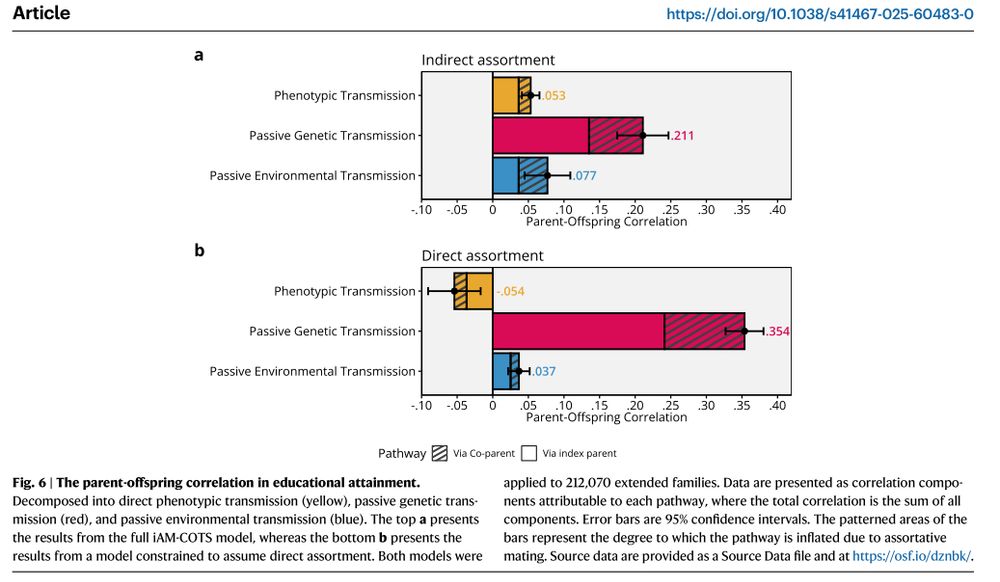
Last week, our new paper on indirect assortative mating was published.🍾 Let’s take a closer look at what this means, why it matters, and what we found (🧵/32):
www.nature.com/articles/s41...
www.nature.com/articles/s41...
June 11, 2025 at 9:52 PM
Last week, our new paper on indirect assortative mating was published.🍾 Let’s take a closer look at what this means, why it matters, and what we found (🧵/32):
www.nature.com/articles/s41...
www.nature.com/articles/s41...
Reposted

New blog post: Weekly Recap (Sep 2025 part 1): Biobank-scale relatedness estimation, SNP calling+phasing w/ long RNA-seq reads, predicting expression-altering promoter mutations with DL, cross-species filtering for comparative genomics... #rstats 🧬🖥️🧪 doi.org/10.59350/ste...


September 2, 2025 at 12:20 PM
New blog post: Weekly Recap (Sep 2025 part 1): Biobank-scale relatedness estimation, SNP calling+phasing w/ long RNA-seq reads, predicting expression-altering promoter mutations with DL, cross-species filtering for comparative genomics... #rstats 🧬🖥️🧪 doi.org/10.59350/ste...
Reposted

In these dark times, it comes as a rare pleasure to highlight @natanaels.bsky.social & @marcdemanuel.bsky.social's work on germline and somatic mutations in humans. 1/n
www.biorxiv.org/cgi/content/...
www.biorxiv.org/cgi/content/...

Collateral mutagenesis funnels multiple sources of DNA damage into a ubiquitous mutational signature
Mutations reflect the net effects of myriad types of damage, replication errors, and repair mechanisms, and thus are expected to differ across cell types with distinct exposures to mutagens, division ...
www.biorxiv.org
September 2, 2025 at 11:44 AM
In these dark times, it comes as a rare pleasure to highlight @natanaels.bsky.social & @marcdemanuel.bsky.social's work on germline and somatic mutations in humans. 1/n
www.biorxiv.org/cgi/content/...
www.biorxiv.org/cgi/content/...
Reposted

Tour de force review on “Economics of Attention” by Loewenstein just published in J Econ Lit
@aeajournals.bsky.social
#behavioraleconomics
@aeajournals.bsky.social
#behavioraleconomics


August 29, 2025 at 11:24 PM
Tour de force review on “Economics of Attention” by Loewenstein just published in J Econ Lit
@aeajournals.bsky.social
#behavioraleconomics
@aeajournals.bsky.social
#behavioraleconomics
@jtleek.bsky.social
FYI this post has broken images:
simplystatistics.org/posts/2023-0...
Also the link to your name leads to 404. It's insightful article and I'd like to share it but figured I'd let you know in case you feel like fixing it a little bit.
-James Guevara
FYI this post has broken images:
simplystatistics.org/posts/2023-0...
Also the link to your name leads to 404. It's insightful article and I'd like to share it but figured I'd let you know in case you feel like fixing it a little bit.
-James Guevara
Simply Statistics: The analyst is a random variable
simplystatistics.org
January 14, 2025 at 5:36 AM
@jtleek.bsky.social
FYI this post has broken images:
simplystatistics.org/posts/2023-0...
Also the link to your name leads to 404. It's insightful article and I'd like to share it but figured I'd let you know in case you feel like fixing it a little bit.
-James Guevara
FYI this post has broken images:
simplystatistics.org/posts/2023-0...
Also the link to your name leads to 404. It's insightful article and I'd like to share it but figured I'd let you know in case you feel like fixing it a little bit.
-James Guevara
Reposted

It seems easy to make fun of basic science – for example why would you want to study bacterial immune systems? But then you would have to admit that that’s exactly what led to the discovery of using CRISPR as an insanely good technology for genome engineering.
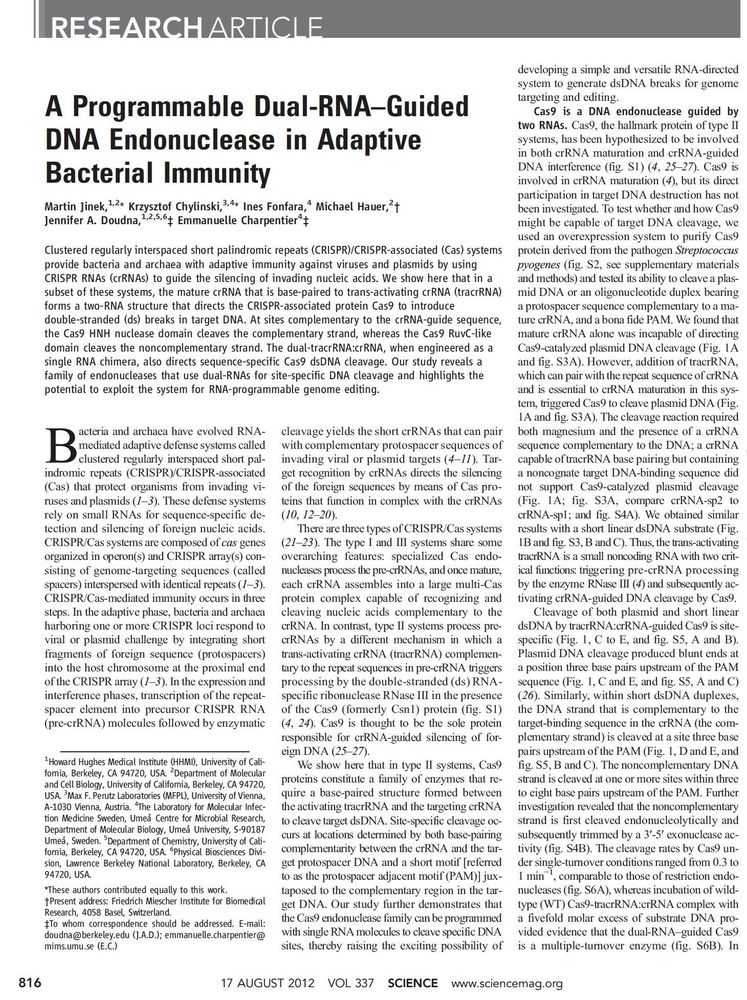
November 30, 2024 at 10:24 PM
It seems easy to make fun of basic science – for example why would you want to study bacterial immune systems? But then you would have to admit that that’s exactly what led to the discovery of using CRISPR as an insanely good technology for genome engineering.
Reposted

A wonderful paper from @tonyzador.bsky.social and colleagues: Encoding innate ability through a genomic bottleneck www.pnas.org/doi/10.1073/...
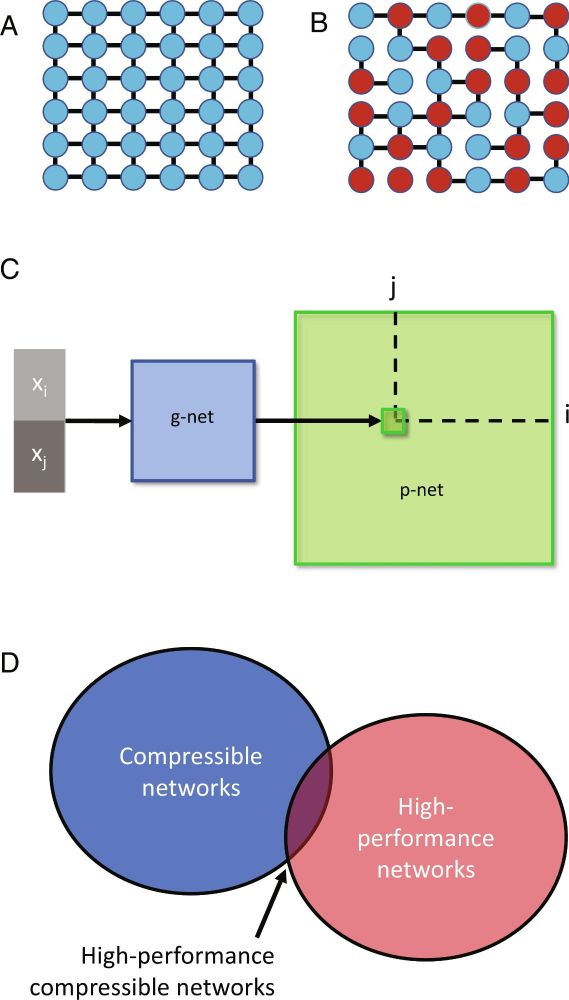
Encoding innate ability through a genomic bottleneck | PNAS
Animals are born with extensive innate behavioral capabilities, which arise from neural
circuits encoded in the genome. However, the information ca...
www.pnas.org
November 28, 2024 at 9:57 AM
A wonderful paper from @tonyzador.bsky.social and colleagues: Encoding innate ability through a genomic bottleneck www.pnas.org/doi/10.1073/...
Reposted

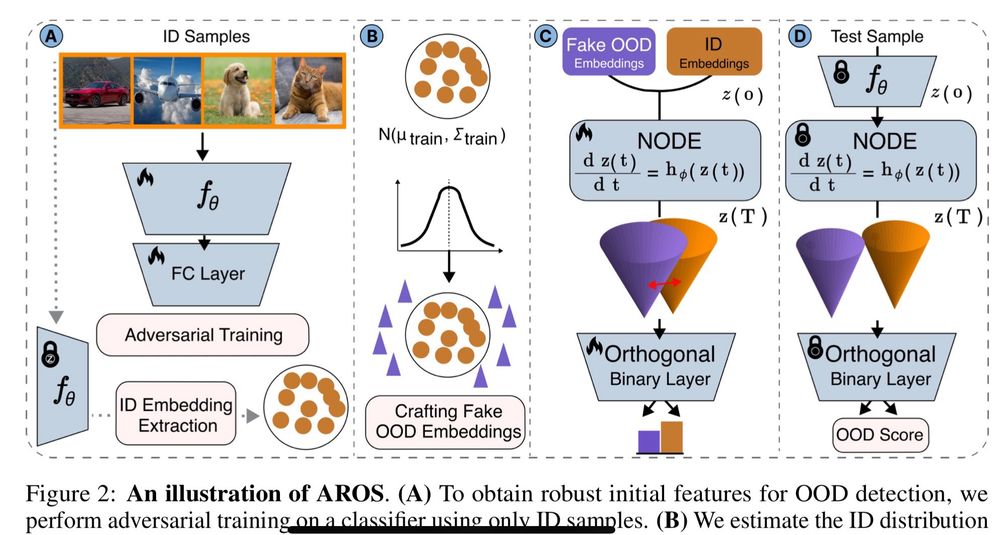
Adversarial robustness is becoming even more critical as #AI systems are deployed in the real-world, but how can we detect outliers (adversarials) without training on them?
🔥 NEW work by @mirzious.bsky.social a super talented PhD student in my group 🧠🧪 🚀
📊➡️ #AROS💍 arxiv.org/abs/2410.10744
1/2
🔥 NEW work by @mirzious.bsky.social a super talented PhD student in my group 🧠🧪 🚀
📊➡️ #AROS💍 arxiv.org/abs/2410.10744
1/2
November 27, 2024 at 9:12 PM
Adversarial robustness is becoming even more critical as #AI systems are deployed in the real-world, but how can we detect outliers (adversarials) without training on them?
🔥 NEW work by @mirzious.bsky.social a super talented PhD student in my group 🧠🧪 🚀
📊➡️ #AROS💍 arxiv.org/abs/2410.10744
1/2
🔥 NEW work by @mirzious.bsky.social a super talented PhD student in my group 🧠🧪 🚀
📊➡️ #AROS💍 arxiv.org/abs/2410.10744
1/2
Reposted

Geographical distribution of myopia prevalence in China in 2014 vs 2019. The increase in prevalence over time and clustering in certain regions align with the increase in socioeconomic status (and also, likely education).
Gao et al. Sci Rep 2024
www.nature.com/articles/s41...

Analysis of the spatio-temporal evolutionary characteristics of myopia among students aged 7–18 years in China: based on panel data analysis - Scientific Reports
Scientific Reports - Analysis of the spatio-temporal evolutionary characteristics of myopia among students aged 7–18 years in China: based on panel data analysis
www.nature.com
November 28, 2024 at 7:52 AM
Geographical distribution of myopia prevalence in China in 2014 vs 2019. The increase in prevalence over time and clustering in certain regions align with the increase in socioeconomic status (and also, likely education).
Gao et al. Sci Rep 2024
www.nature.com/articles/s41...
Reposted

🚨 We just updated our perspective on representational alignment. The most recent version is both more crisp and more comprehensive. We try to find common language across research disciplines for aligning the representations from different info processing systems!
arxiv.org/abs/2310.13018
arxiv.org/abs/2310.13018

Getting aligned on representational alignment
Biological and artificial information processing systems form representations of the world that they can use to categorize, reason, plan, navigate, and make decisions. How can we measure the similarit...
arxiv.org
November 27, 2024 at 8:57 AM
🚨 We just updated our perspective on representational alignment. The most recent version is both more crisp and more comprehensive. We try to find common language across research disciplines for aligning the representations from different info processing systems!
arxiv.org/abs/2310.13018
arxiv.org/abs/2310.13018
Reposted

We're attempting to make short explainer videos to accompany our main published research papers.
Here is the first, by Brendan, on our recent paper on tracking the distance to a critical point from a noisy time series.
#criticality #complexsystems
www.youtube.com/watch?v=4_rI...
Here is the first, by Brendan, on our recent paper on tracking the distance to a critical point from a noisy time series.
#criticality #complexsystems
www.youtube.com/watch?v=4_rI...
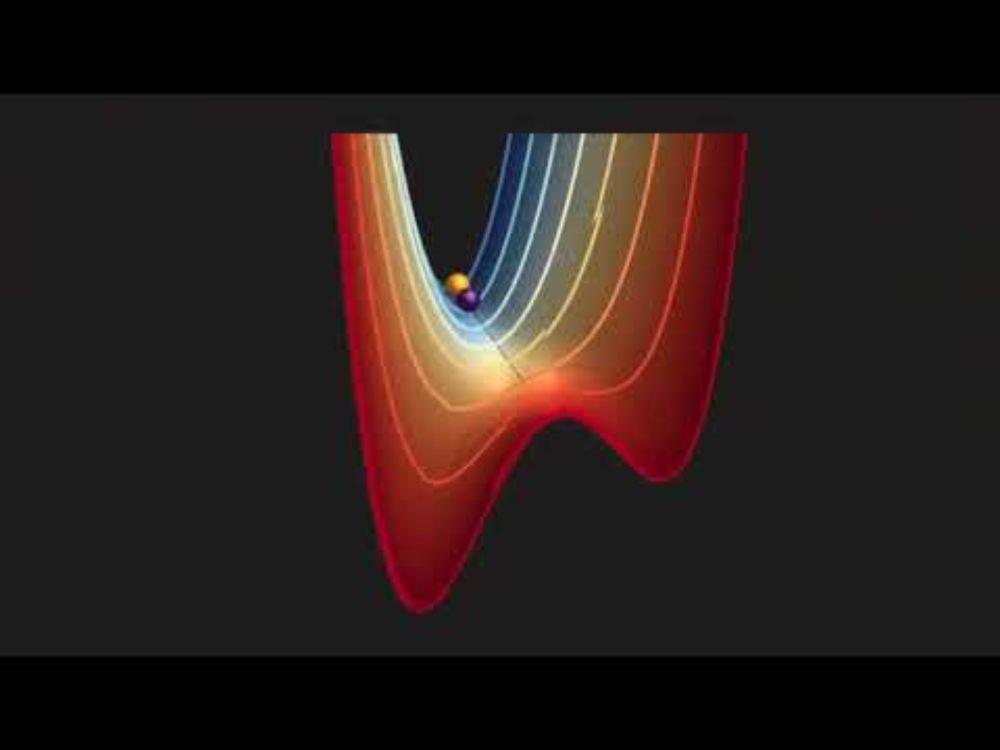
Tracking the distance to a critical point in noisy systems
YouTube video by Dynamics and Neural Systems
www.youtube.com
November 26, 2024 at 10:39 PM
We're attempting to make short explainer videos to accompany our main published research papers.
Here is the first, by Brendan, on our recent paper on tracking the distance to a critical point from a noisy time series.
#criticality #complexsystems
www.youtube.com/watch?v=4_rI...
Here is the first, by Brendan, on our recent paper on tracking the distance to a critical point from a noisy time series.
#criticality #complexsystems
www.youtube.com/watch?v=4_rI...
Reposted

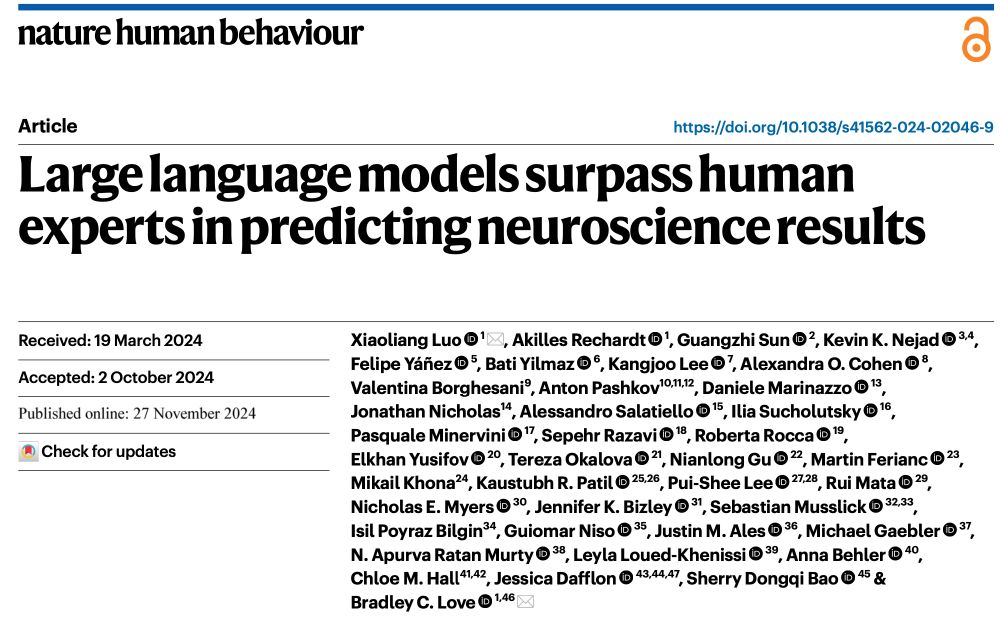
"Large language models surpass human experts in predicting neuroscience results" w @ken-lxl.bsky.social
and braingpt.org. LLMs integrate a noisy yet interrelated scientific literature to forecast outcomes. nature.com/articles/s41... 1/8
and braingpt.org. LLMs integrate a noisy yet interrelated scientific literature to forecast outcomes. nature.com/articles/s41... 1/8
November 27, 2024 at 2:13 PM
"Large language models surpass human experts in predicting neuroscience results" w @ken-lxl.bsky.social
and braingpt.org. LLMs integrate a noisy yet interrelated scientific literature to forecast outcomes. nature.com/articles/s41... 1/8
and braingpt.org. LLMs integrate a noisy yet interrelated scientific literature to forecast outcomes. nature.com/articles/s41... 1/8
Reposted
Review: The lives of cells, recorded https://www.nature.com/articles/s41576-024-00788-w (read free: https://rdcu.be/d1s8d) 🧬🖥️🧪


November 26, 2024 at 8:14 PM
Review: The lives of cells, recorded https://www.nature.com/articles/s41576-024-00788-w (read free: https://rdcu.be/d1s8d) 🧬🖥️🧪
Reposted

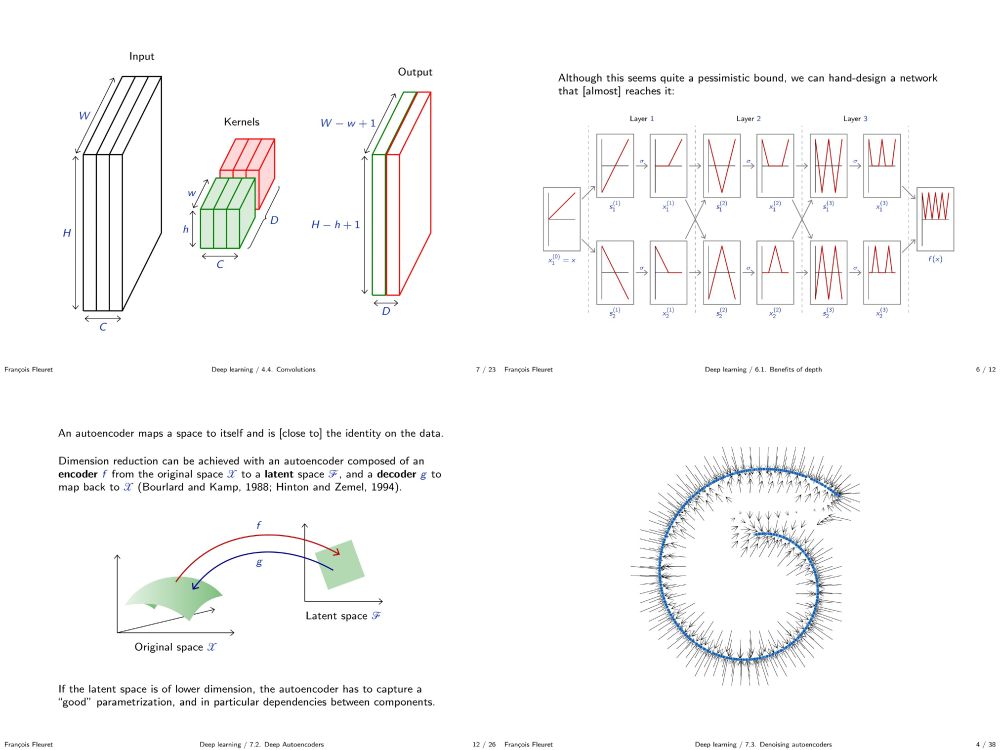
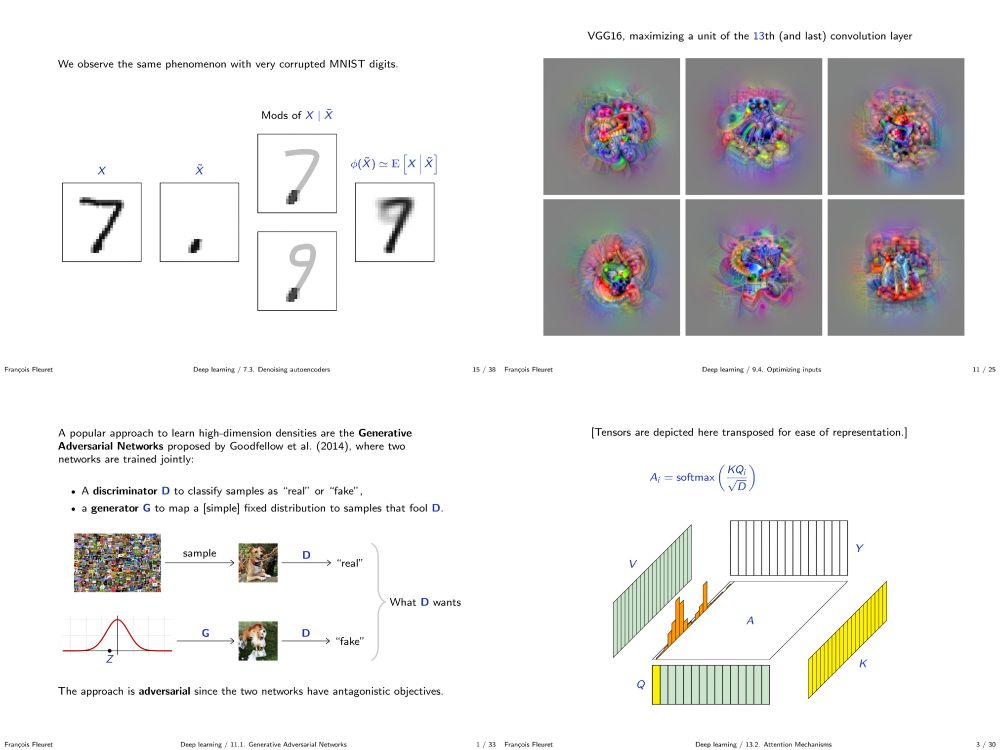
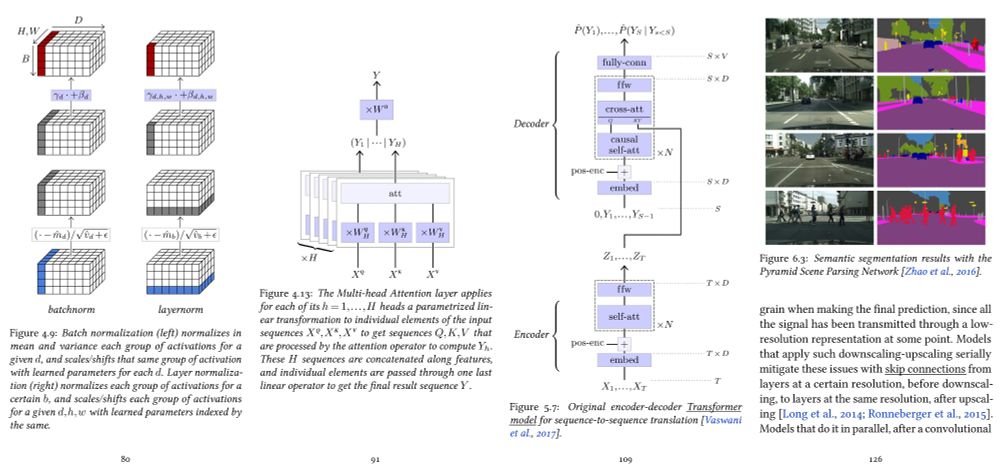
My deep learning course at the University of Geneva is available on-line. 1000+ slides, ~20h of screen-casts. Full of examples in PyTorch.
fleuret.org/dlc/
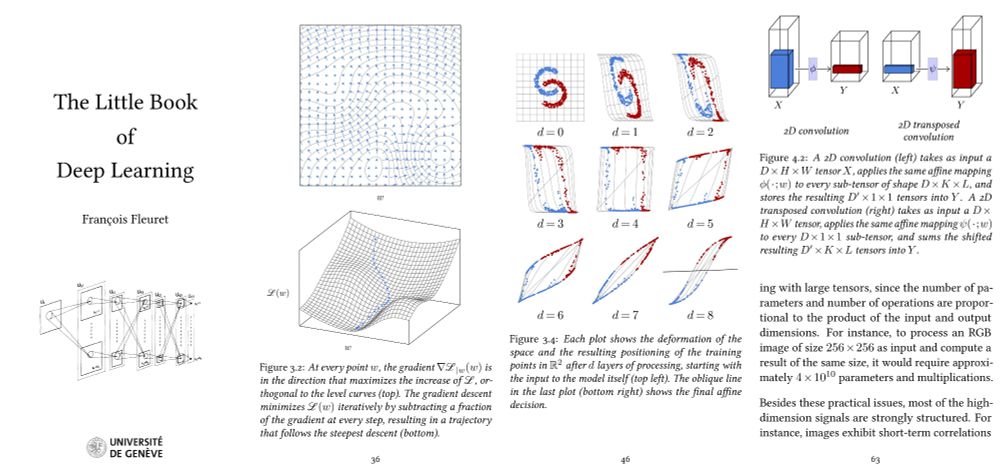
And my "Little Book of Deep Learning" is available as a phone-formatted pdf (nearing 700k downloads!)
fleuret.org/lbdl/
fleuret.org/dlc/
And my "Little Book of Deep Learning" is available as a phone-formatted pdf (nearing 700k downloads!)
fleuret.org/lbdl/
November 26, 2024 at 6:15 AM
My deep learning course at the University of Geneva is available on-line. 1000+ slides, ~20h of screen-casts. Full of examples in PyTorch.
fleuret.org/dlc/
And my "Little Book of Deep Learning" is available as a phone-formatted pdf (nearing 700k downloads!)
fleuret.org/lbdl/
fleuret.org/dlc/
And my "Little Book of Deep Learning" is available as a phone-formatted pdf (nearing 700k downloads!)
fleuret.org/lbdl/
Reposted

In which I try to teach control theory in two lectures. www.argmin.net/p/the-optima...

The Optimal Part of Control
A mad dash through the rudiments of predictive control.
www.argmin.net
November 19, 2024 at 3:31 PM
In which I try to teach control theory in two lectures. www.argmin.net/p/the-optima...
Reposted
The “principle of indifference” is often presented as an intuitively obvious motivation for specifying “non-informative” prior models. Unfortunately that intuition quickly falls apart in many common applications. A long thread about applied probability theory!
January 8, 2024 at 4:40 PM
The “principle of indifference” is often presented as an intuitively obvious motivation for specifying “non-informative” prior models. Unfortunately that intuition quickly falls apart in many common applications. A long thread about applied probability theory!
Reposted

Have you ever done a dense grid search over neural network hyperparameters? Like a *really dense* grid search? It looks like this (!!). Blueish colors correspond to hyperparameters for which training converges, redish to those for which training diverges.
Even better, a video: vimeo.com/903855670
Even better, a video: vimeo.com/903855670

February 12, 2024 at 5:38 AM
Have you ever done a dense grid search over neural network hyperparameters? Like a *really dense* grid search? It looks like this (!!). Blueish colors correspond to hyperparameters for which training converges, redish to those for which training diverges.
Even better, a video: vimeo.com/903855670
Even better, a video: vimeo.com/903855670
Reposted

Just published in the Cambridge Elements of Philosophy of Physics: Foundations of General Relativity, by Sam Fletcher!
Open access for two weeks. Get it for free while you can!
www.cambridge.org/core/element...
Open access for two weeks. Get it for free while you can!
www.cambridge.org/core/element...

Foundations of General Relativity
Cambridge Core - Philosophy: General Interest - Foundations of General Relativity
www.cambridge.org
November 26, 2024 at 1:44 PM
Just published in the Cambridge Elements of Philosophy of Physics: Foundations of General Relativity, by Sam Fletcher!
Open access for two weeks. Get it for free while you can!
www.cambridge.org/core/element...
Open access for two weeks. Get it for free while you can!
www.cambridge.org/core/element...
Reposted

Indirect genetic effects increase heritable variation for selection in theory, but how much does that occur in the wild? New meta-analysis from Santostefano and colleagues.
academic.oup.com/evlett/advan...
academic.oup.com/evlett/advan...

Indirect genetic effects increase the heritable variation available to selection and are largest for behaviors: a meta-analysis
Abstract. The evolutionary potential of traits is governed by the amount of heritable variation available to selection. While this is typically quantified
academic.oup.com
November 26, 2024 at 7:03 AM
Indirect genetic effects increase heritable variation for selection in theory, but how much does that occur in the wild? New meta-analysis from Santostefano and colleagues.
academic.oup.com/evlett/advan...
academic.oup.com/evlett/advan...
Reposted

Alex Pouget and I wrote a perspective a few years ago on Major Sources of Computational Complexity in Complex Decision-Making 🧠. We never got around to publishing it, and so now uploaded it to OSF Preprints: doi.org/10.31219/osf.... I hope some of you might find it useful.
OSF
doi.org
November 25, 2024 at 6:19 PM
Alex Pouget and I wrote a perspective a few years ago on Major Sources of Computational Complexity in Complex Decision-Making 🧠. We never got around to publishing it, and so now uploaded it to OSF Preprints: doi.org/10.31219/osf.... I hope some of you might find it useful.
Reposted

Move over bouba-kiki!
New study on crossmodal iconicity shows [r] = rough and [l] = smooth, even in langs that conflate them.
The results show "that speech sounds are not just acoustic objects, but they also have a texture and a shape to them".
#iconicity 🐦🐦
New study on crossmodal iconicity shows [r] = rough and [l] = smooth, even in langs that conflate them.
The results show "that speech sounds are not just acoustic objects, but they also have a texture and a shape to them".
#iconicity 🐦🐦
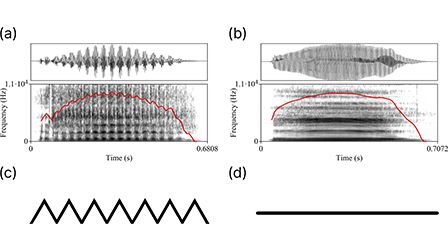
The alveolar trill is perceived as jagged/rough by speakers of different languages
Typological research shows that across languages, trilled [r] sounds are more common in adjectives describing rough as opposed to smooth surfaces. In this study
pubs.aip.org
November 23, 2024 at 8:57 AM
Move over bouba-kiki!
New study on crossmodal iconicity shows [r] = rough and [l] = smooth, even in langs that conflate them.
The results show "that speech sounds are not just acoustic objects, but they also have a texture and a shape to them".
#iconicity 🐦🐦
New study on crossmodal iconicity shows [r] = rough and [l] = smooth, even in langs that conflate them.
The results show "that speech sounds are not just acoustic objects, but they also have a texture and a shape to them".
#iconicity 🐦🐦
Reposted

journals.plos.org/plosbiology/...
"In visual working memory (VWM), distraction may come from the coding of distractors or other concurrently retained targets.... using fMRI pattern decoding, the human posterior parietal cortex is shown to orthogonalize the representations ..."
"In visual working memory (VWM), distraction may come from the coding of distractors or other concurrently retained targets.... using fMRI pattern decoding, the human posterior parietal cortex is shown to orthogonalize the representations ..."

The human posterior parietal cortices orthogonalize the representation of different streams of information concurrently coded in visual working memory
How do humans maintain information in their visual working memory (VWM) in the presence of distractors? This study shows that the human occipitotemporal and posterior parietal cortices orthogonalize t...
journals.plos.org
November 25, 2024 at 1:54 AM
journals.plos.org/plosbiology/...
"In visual working memory (VWM), distraction may come from the coding of distractors or other concurrently retained targets.... using fMRI pattern decoding, the human posterior parietal cortex is shown to orthogonalize the representations ..."
"In visual working memory (VWM), distraction may come from the coding of distractors or other concurrently retained targets.... using fMRI pattern decoding, the human posterior parietal cortex is shown to orthogonalize the representations ..."