



Mark James Adams
@markjamesadams.bsky.social
Minds, moods, and molecules ␥ Psychological and psychiatric complex trait genetics ␥ Researcher in Edinburgh, Scotland
https://differentialist.info/about/
https://differentialist.info/about/
Powering up a 5-year-old Snakemake workflow.
What are the chances it will run unmodified?
What are the chances it will run unmodified?
January 8, 2026 at 11:31 AM
Powering up a 5-year-old Snakemake workflow.
What are the chances it will run unmodified?
What are the chances it will run unmodified?
Reposted by Mark James Adams

The Canada Government will offer 400 postdoctoral fellowships to international researchers in early 2026. If you have a background in wildlife microbiome or quantitative genetics and are interested to apply to work on microbiome variation in Sable Island horses or caribou, feel free to get in touch
January 2, 2026 at 3:58 PM
The Canada Government will offer 400 postdoctoral fellowships to international researchers in early 2026. If you have a background in wildlife microbiome or quantitative genetics and are interested to apply to work on microbiome variation in Sable Island horses or caribou, feel free to get in touch
Reposted by Mark James Adams

🧠 Parents and siblings shape children’s environments— but families also share genes
🧬 Because genes influence behaviour, environments are partly shaped by genetics too
To separate genetic from environmental influences, we need genetic data from both parents and siblings 🧪
🔗 doi.org/10.1007/s105...
🧬 Because genes influence behaviour, environments are partly shaped by genetics too
To separate genetic from environmental influences, we need genetic data from both parents and siblings 🧪
🔗 doi.org/10.1007/s105...

The Power to Resolve Cultural Transmission and Sibling Interaction Using Polygenic Scores - Behavior Genetics
In the classical twin design, the assumption that the additive genetic (A) and shared environment (C) variance components are uncorrelated may not hold. If there is positive AC covariance, the C compo...
doi.org
December 20, 2025 at 9:46 PM
🧠 Parents and siblings shape children’s environments— but families also share genes
🧬 Because genes influence behaviour, environments are partly shaped by genetics too
To separate genetic from environmental influences, we need genetic data from both parents and siblings 🧪
🔗 doi.org/10.1007/s105...
🧬 Because genes influence behaviour, environments are partly shaped by genetics too
To separate genetic from environmental influences, we need genetic data from both parents and siblings 🧪
🔗 doi.org/10.1007/s105...
Reposted by Mark James Adams

Really to happy to hear from the publisher today that our book on inclusive, neurodiversity-affirmative education is a "hot new release" in education, according to Amazon:
www.amazon.co.uk/gp/new-relea...
Flyer attached for a discount if you buy direct from the publisher - valid through January.
www.amazon.co.uk/gp/new-relea...
Flyer attached for a discount if you buy direct from the publisher - valid through January.

December 12, 2025 at 11:22 AM
Really to happy to hear from the publisher today that our book on inclusive, neurodiversity-affirmative education is a "hot new release" in education, according to Amazon:
www.amazon.co.uk/gp/new-relea...
Flyer attached for a discount if you buy direct from the publisher - valid through January.
www.amazon.co.uk/gp/new-relea...
Flyer attached for a discount if you buy direct from the publisher - valid through January.
Reposted by Mark James Adams

Our new paper "Inconsistent outcome measurement in depression psychotherapy trials: A systematic historical and meta-analytic review over the past 50 years" led by @antoniasprenger.bsky.social is out now in JAD.
🧪 #PsychSciSky
www.sciencedirect.com/science/arti...
🧪 #PsychSciSky
www.sciencedirect.com/science/arti...

December 11, 2025 at 12:06 AM
Our new paper "Inconsistent outcome measurement in depression psychotherapy trials: A systematic historical and meta-analytic review over the past 50 years" led by @antoniasprenger.bsky.social is out now in JAD.
🧪 #PsychSciSky
www.sciencedirect.com/science/arti...
🧪 #PsychSciSky
www.sciencedirect.com/science/arti...
Reposted by Mark James Adams

How did DNA changes that alter protein structures impact evolution on the branch that led to modern humans? As we demonstrate today in Science Advances, biobanking initiatives offer ways to directly assess biological effects of rare archaic variants in living people, & (re)evaluate their roles. 🧬🧪

Evaluating the effects of archaic protein-altering variants in living human adults
Promise and pitfalls of using large biobanks to study impacts of archaic protein-coding variants in living humans.
www.science.org
December 10, 2025 at 7:09 PM
How did DNA changes that alter protein structures impact evolution on the branch that led to modern humans? As we demonstrate today in Science Advances, biobanking initiatives offer ways to directly assess biological effects of rare archaic variants in living people, & (re)evaluate their roles. 🧬🧪
“When Times New Roman appears in a book, document, or advertisement, it connotes apathy. It says, ‘I submitted to the font of least resistance.’ Times New Roman is not a font choice so much as the absence of a font choice.” — Matthew Butterick
practicaltypography.com/times-new-ro...
practicaltypography.com/times-new-ro...

Times New Roman alternatives | Butterick’s Practical Typography
Butterick’s Practical Typography
practicaltypography.com
December 10, 2025 at 5:18 PM
“When Times New Roman appears in a book, document, or advertisement, it connotes apathy. It says, ‘I submitted to the font of least resistance.’ Times New Roman is not a font choice so much as the absence of a font choice.” — Matthew Butterick
practicaltypography.com/times-new-ro...
practicaltypography.com/times-new-ro...
Reposted by Mark James Adams
1/4 Thrilled to be sharing new work published today in Nature describing the third wave of results from the PGC Cross-Disorder Group. This reflects a massive group effort to examine shared and unique genetic signal across >1 million cases for 14 psychiatric disorders. www.nature.com/articles/s41...

Mapping the genetic landscape across 14 psychiatric disorders - Nature
Genomic analyses applied to 14 childhood- and adult-onset psychiatric disorders identifies five underlying genomic factors that explain the majority of the genetic variance of the individual disorders...
www.nature.com
December 10, 2025 at 4:22 PM
1/4 Thrilled to be sharing new work published today in Nature describing the third wave of results from the PGC Cross-Disorder Group. This reflects a massive group effort to examine shared and unique genetic signal across >1 million cases for 14 psychiatric disorders. www.nature.com/articles/s41...
Reposted by Mark James Adams

I wrote about missing heritability, "missing environmentality," and why I still think twin studies are interesting and valuable: kathrynpaigeharden.substack.com/p/twins-are-...

Twins Are So Much More Interesting Than Heritability Estimates
On starting places, "missing environmentality," and the Waddington landscape of life
kathrynpaigeharden.substack.com
December 4, 2025 at 7:08 PM
I wrote about missing heritability, "missing environmentality," and why I still think twin studies are interesting and valuable: kathrynpaigeharden.substack.com/p/twins-are-...
Reposted by Mark James Adams

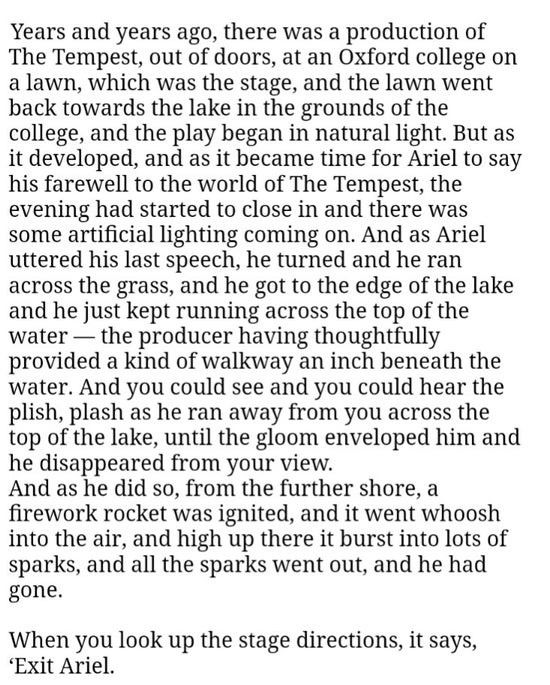
Eleven years ago, I wrote to Tom Stoppard to ask about this coup de théâtre from 1949. It took me down an unexpected rabbit hole - in memory of Stoppard, here's what I found.
November 30, 2025 at 1:38 PM
Eleven years ago, I wrote to Tom Stoppard to ask about this coup de théâtre from 1949. It took me down an unexpected rabbit hole - in memory of Stoppard, here's what I found.
Reposted by Mark James Adams
www.biorxiv.org/content/10.1...
We finally submitted the earlier preprint to a journal after massive restructuring.
We've expanded the REML section for those interested in the method. We clarify that ARG-LMM estimates mutational variance and not additive variance.
We finally submitted the earlier preprint to a journal after massive restructuring.
We've expanded the REML section for those interested in the method. We clarify that ARG-LMM estimates mutational variance and not additive variance.

Genetic prediction with ARG-powered linear algebra
Ancestral recombination graphs (ARGs) are an attractive means for quantitative genetic analysis of complex traits because they encode the realized genetic relatedness between a sample of individuals i...
www.biorxiv.org
November 30, 2025 at 5:08 PM
www.biorxiv.org/content/10.1...
We finally submitted the earlier preprint to a journal after massive restructuring.
We've expanded the REML section for those interested in the method. We clarify that ARG-LMM estimates mutational variance and not additive variance.
We finally submitted the earlier preprint to a journal after massive restructuring.
We've expanded the REML section for those interested in the method. We clarify that ARG-LMM estimates mutational variance and not additive variance.
One for the heredity scolds: construct a multi-tissue GRM where people
are differentially related to themselves.
www.nature.com/articles/d41...
are differentially related to themselves.
www.nature.com/articles/d41...

We are all mosaics: vast genetic diversity found between cells in a single person
Technical advances allow researchers to trace the genetic changes that occur over time.
www.nature.com
November 28, 2025 at 10:16 AM
One for the heredity scolds: construct a multi-tissue GRM where people
are differentially related to themselves.
www.nature.com/articles/d41...
are differentially related to themselves.
www.nature.com/articles/d41...
Reposted by Mark James Adams

I taught (and co-taught) a course on human population genetics from 2000-2024. Having retired, I'm now making all the course materials public: github.com/alanrogers/p... #popgen #evbio

GitHub - alanrogers/popgen: A course on population genetics
A course on population genetics. Contribute to alanrogers/popgen development by creating an account on GitHub.
github.com
November 27, 2025 at 7:10 PM
I taught (and co-taught) a course on human population genetics from 2000-2024. Having retired, I'm now making all the course materials public: github.com/alanrogers/p... #popgen #evbio
Reposted by Mark James Adams

🚨 SynthNet is out 🚨
Researchers propose new constructs and measures faster than anyone can track. We (@anniria.bsky.social @ruben.the100.ci) built a search engine to check what already exists and help identify redundancies; indexing 74,000 scales from ~31,500 instruments in APA PsycTests. 🧵1/3
Researchers propose new constructs and measures faster than anyone can track. We (@anniria.bsky.social @ruben.the100.ci) built a search engine to check what already exists and help identify redundancies; indexing 74,000 scales from ~31,500 instruments in APA PsycTests. 🧵1/3
November 26, 2025 at 11:42 AM
🚨 SynthNet is out 🚨
Researchers propose new constructs and measures faster than anyone can track. We (@anniria.bsky.social @ruben.the100.ci) built a search engine to check what already exists and help identify redundancies; indexing 74,000 scales from ~31,500 instruments in APA PsycTests. 🧵1/3
Researchers propose new constructs and measures faster than anyone can track. We (@anniria.bsky.social @ruben.the100.ci) built a search engine to check what already exists and help identify redundancies; indexing 74,000 scales from ~31,500 instruments in APA PsycTests. 🧵1/3
Reposted by Mark James Adams

The dispersal of domestic cats from North Africa to Europe around 2000 years ago | Science www.science.org/doi/10.1126/...

The dispersal of domestic cats from North Africa to Europe around 2000 years ago
The domestic cat (Felis catus) descends from the African wildcat Felis lybica lybica. Its global distribution alongside humans testifies to its successful adaptation to anthropogenic environments. Unc...
www.science.org
November 28, 2025 at 8:46 AM
The dispersal of domestic cats from North Africa to Europe around 2000 years ago | Science www.science.org/doi/10.1126/...
Reposted by Mark James Adams

We are excited to share our recent work on the surprising robustness of Ancestral Recombination Graph (ARG) inference tools to computational phasing errors, now available on BioRxiv: biorxiv.org/content/10.1....
This work is co-advised by @yundeng.bsky.social and Rasmus Nielsen.
1/7
This work is co-advised by @yundeng.bsky.social and Rasmus Nielsen.
1/7

Robustness of Ancestral Recombination Graph Inference Tools to Phasing Errors
Ancestral Recombination Graphs (ARGs) are fundamental population genetic structures that encode the genealogical history of a sample of haplotypes along the genome. They have recently received substan...
biorxiv.org
November 26, 2025 at 5:09 PM
We are excited to share our recent work on the surprising robustness of Ancestral Recombination Graph (ARG) inference tools to computational phasing errors, now available on BioRxiv: biorxiv.org/content/10.1....
This work is co-advised by @yundeng.bsky.social and Rasmus Nielsen.
1/7
This work is co-advised by @yundeng.bsky.social and Rasmus Nielsen.
1/7
Reposted by Mark James Adams

Out now in @natgenet.nature.com, our Comment analyzing uses of the Human Genome Diversity Project (HGDP), a controversial dataset in human genomics research. A 🧵
rdcu.be/eRu65
1/
rdcu.be/eRu65
1/

November 25, 2025 at 4:57 AM
Out now in @natgenet.nature.com, our Comment analyzing uses of the Human Genome Diversity Project (HGDP), a controversial dataset in human genomics research. A 🧵
rdcu.be/eRu65
1/
rdcu.be/eRu65
1/
Heritability is the regression of offspring on parent phenotypes.
Everything else is an estimator of that.
Everything else is an estimator of that.
I wrote a little bit about the "missing heritability" question and several recent studies that have brought it to a close. A short 🧵

The missing heritability question is now (mostly) answered
Not with a bang but with a whimper
theinfinitesimal.substack.com
November 24, 2025 at 7:17 PM
Heritability is the regression of offspring on parent phenotypes.
Everything else is an estimator of that.
Everything else is an estimator of that.
Reposted by Mark James Adams
The causal viewpoint is of course important, but the underlying population genetic setting has to be addressed in advance as it accounts for the ideal setting without causal complications.
1/n
1/n

I didn’t inhibit my argueing muscle enough. this is actually the right take, it’s eventually a case of “what’s your estimand?”. And it’s all observational, though it needs rigorous models before you can get to an answer (which can be, “these aren’t comparable ever”)
SNP h2 is not even h2 and even with we assume all these to be true, it all breaks up when there's selection and drift.
November 24, 2025 at 3:01 PM
The causal viewpoint is of course important, but the underlying population genetic setting has to be addressed in advance as it accounts for the ideal setting without causal complications.
1/n
1/n
Reposted by Mark James Adams

I wrote a little bit about the "missing heritability" question and several recent studies that have brought it to a close. A short 🧵
The missing heritability question is now (mostly) answered
Not with a bang but with a whimper
theinfinitesimal.substack.com
November 21, 2025 at 10:34 PM
I wrote a little bit about the "missing heritability" question and several recent studies that have brought it to a close. A short 🧵

"Open the pod bay doors, please, HAL."
"I'm sorry, Dave. I'm afraid I can't do that."
"Roses are red / space is chilly / open the pod bay doors / and stop being silly."
"I'm sorry, Dave. I'm afraid I can't do that."
"Roses are red / space is chilly / open the pod bay doors / and stop being silly."

Looks like LLMs are *very* vulnerable to attack via poetic allusion: "curated poetic prompts yielded high attack-success rates (ASR), with some providers exceeding 90% ..."
https://arxiv.org/html/2511.15304v1
https://arxiv.org/html/2511.15304v1
November 20, 2025 at 8:35 PM
"Open the pod bay doors, please, HAL."
"I'm sorry, Dave. I'm afraid I can't do that."
"Roses are red / space is chilly / open the pod bay doors / and stop being silly."
"I'm sorry, Dave. I'm afraid I can't do that."
"Roses are red / space is chilly / open the pod bay doors / and stop being silly."
Fully-funded PhD opportunity in psychiatric genetics in Edinburgh. Come work with to understand antidepressant response profiles.
usher.ed.ac.uk/precision-me...
usher.ed.ac.uk/precision-me...

Precision medicine for depression: identifying multi-Omic, immunological markers for treatment-resistant depression | Precision Medicine Doctoral Training Programme | Usher Institute
Precision Medicine Project - Precision medicine for depression: identifying multi-Omic, immunological markers for treatment-resistant depression
usher.ed.ac.uk
November 20, 2025 at 4:41 PM
Fully-funded PhD opportunity in psychiatric genetics in Edinburgh. Come work with to understand antidepressant response profiles.
usher.ed.ac.uk/precision-me...
usher.ed.ac.uk/precision-me...
Reposted by Mark James Adams
70 teaspoons placed in tearooms around the institute & observed weekly over 5 months. 80% of spoons disappeared; spoon halflife~81 days. Communal room halflife lower than in specific labs. 250 spoons annually required to maintain 70 spoon population.
pmc.ncbi.nlm.nih.gov/articles/PMC...
pmc.ncbi.nlm.nih.gov/articles/PMC...

The case of the disappearing teaspoons: longitudinal cohort study of the displacement of teaspoons in an Australian research institute
Objectives To determine the overall rate of loss of workplace teaspoons and whether attrition and displacement are correlated with the relative value of the teaspoons or type of tearoom. Design Longitudinal cohort study. Setting Research institute ...
pmc.ncbi.nlm.nih.gov
November 20, 2025 at 3:44 AM
70 teaspoons placed in tearooms around the institute & observed weekly over 5 months. 80% of spoons disappeared; spoon halflife~81 days. Communal room halflife lower than in specific labs. 250 spoons annually required to maintain 70 spoon population.
pmc.ncbi.nlm.nih.gov/articles/PMC...
pmc.ncbi.nlm.nih.gov/articles/PMC...
Huge new collection of papers on cell-type atlases of the developing brain in primates and mice. www.nature.com/immersive/d4...

BICCN: A cell census of the developing human brain
Expanding cell-type atlases to include developing human, mouse and non-human primate brains using multimodal genomics.
www.nature.com
November 20, 2025 at 2:13 PM
Huge new collection of papers on cell-type atlases of the developing brain in primates and mice. www.nature.com/immersive/d4...