



@fernandodocobo.bsky.social
Reposted
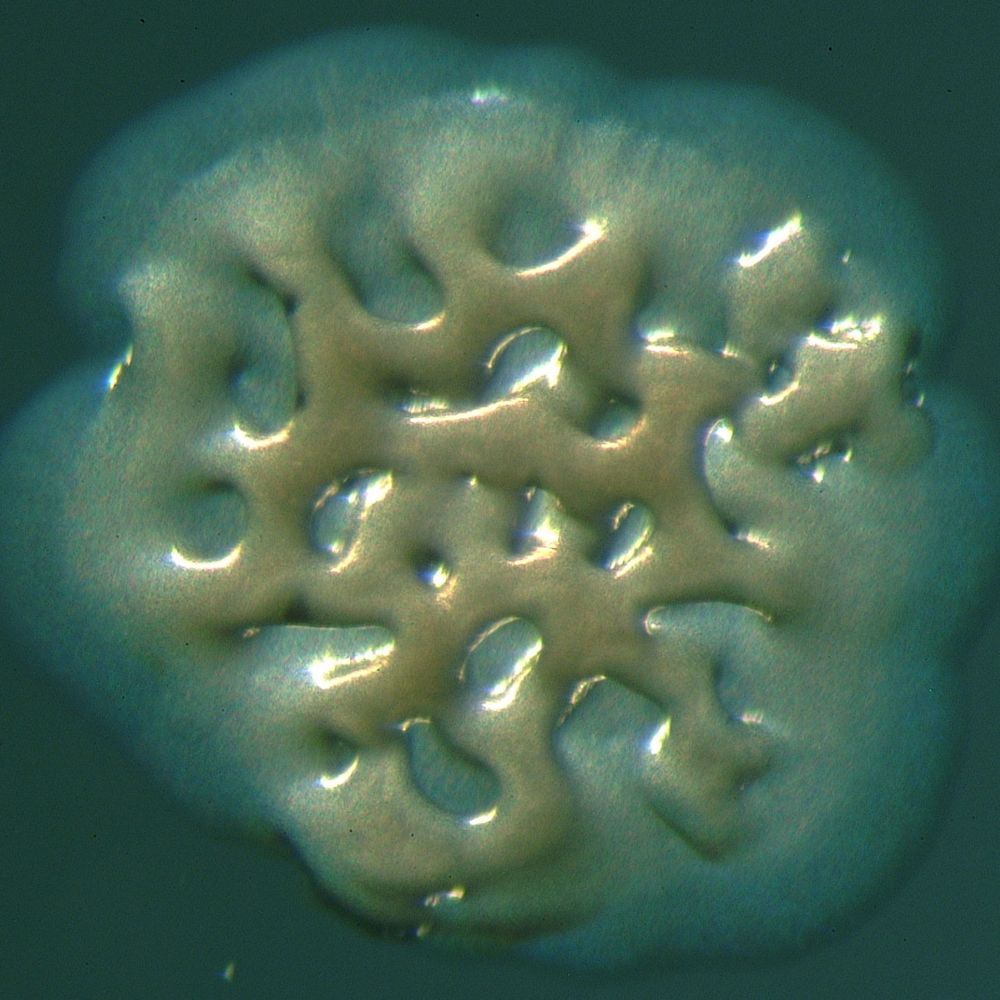
Now peer-reviewed, improved and published in @microbiologysociety.org Microbiology - thanks to editor and reviewers!
www.microbiologyresearch.org/content/jour...
www.microbiologyresearch.org/content/jour...
September 26, 2025 at 8:26 AM
Now peer-reviewed, improved and published in @microbiologysociety.org Microbiology - thanks to editor and reviewers!
www.microbiologyresearch.org/content/jour...
www.microbiologyresearch.org/content/jour...
Reposted
Our paper “Global dissemination of npmA mediated pan‑aminoglycoside resistance via a mobile element in Gram‑positive bacteria” is now in @natcomms.nature.com. Part of my freshly defended PhD, so doubly happy! 😄🎉
🧵 (1/14)
www.doi.org/10.1038/s414...
🧵 (1/14)
www.doi.org/10.1038/s414...
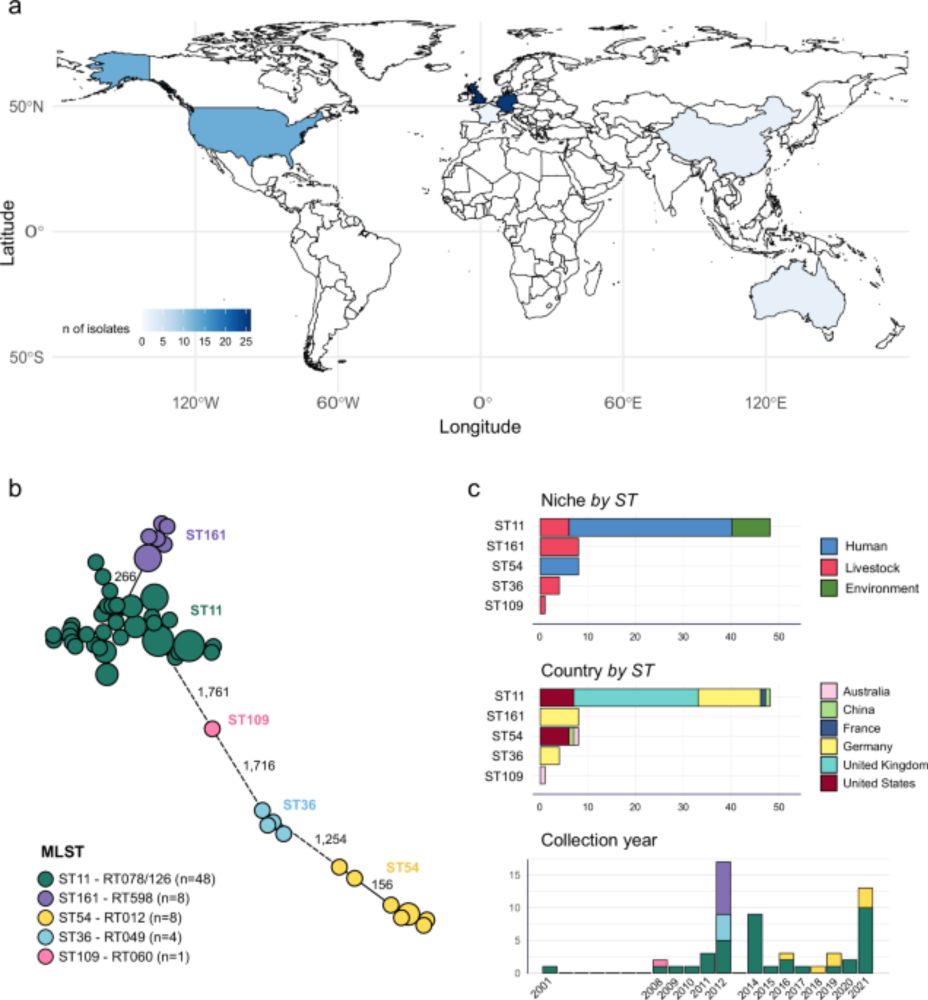
Global dissemination of npmA mediated pan-aminoglycoside resistance via a mobile genetic element in Gram-positive bacteria - Nature Communications
The authors investigate the distribution of the aminoglycoside resistance gene npmA in Gram-positive bacteria via a mobile genetic element, highlighting its global presence and cross-species transfer ...
www.doi.org
July 17, 2025 at 12:13 PM
Our paper “Global dissemination of npmA mediated pan‑aminoglycoside resistance via a mobile element in Gram‑positive bacteria” is now in @natcomms.nature.com. Part of my freshly defended PhD, so doubly happy! 😄🎉
🧵 (1/14)
www.doi.org/10.1038/s414...
🧵 (1/14)
www.doi.org/10.1038/s414...
Reposted

Just as our bodies have evolved to defend us against bacterial and viral pathogens, bacteria face the same challenges. They must deter their own viruses, chemically compete with other microbes, and deal with challenges from eukaryotic hosts 1/n 🧪

June 29, 2025 at 12:53 PM
Just as our bodies have evolved to defend us against bacterial and viral pathogens, bacteria face the same challenges. They must deter their own viruses, chemically compete with other microbes, and deal with challenges from eukaryotic hosts 1/n 🧪
Reposted
Reposted
New mechanism of gene transfer! With @tcostalab.bsky.social @imperialcollegeldn.bsky.social, we discovered that cf-PICIs form tail-less elements that, once released, spread among different bacterial species by hijacking tails from various phages. More exciting news soon! shorturl.at/kRJqE

Chimeric infective particles expand species boundaries in phage inducible chromosomal island mobilization
Some mobile genetic elements spread among unrelated bacterial species through unknown mechanisms. Recently, we discovered that identical capsid-forming phage-inducible chromosomal islands (cf-PICIs), ...
shorturl.at
February 12, 2025 at 1:48 PM
New mechanism of gene transfer! With @tcostalab.bsky.social @imperialcollegeldn.bsky.social, we discovered that cf-PICIs form tail-less elements that, once released, spread among different bacterial species by hijacking tails from various phages. More exciting news soon! shorturl.at/kRJqE
Reposted

Our paper describing the microGWAS pipeline was published yesterday in Microbial Genomics. Lots of fixes and additions to the code/documentation since the preprint, including a hard to reproduce bug that only showed up in a specific HPC 🥵
www.microbiologyresearch.org/content/jour...
www.microbiologyresearch.org/content/jour...

microGWAS: a computational pipeline to perform large-scale bacterial genome-wide association studies
Identifying genetic variants associated with bacterial phenotypes, such as virulence, host preference and antimicrobial resistance, has great potential for a better understanding of the mechanisms inv...
www.microbiologyresearch.org
February 12, 2025 at 3:36 PM
Our paper describing the microGWAS pipeline was published yesterday in Microbial Genomics. Lots of fixes and additions to the code/documentation since the preprint, including a hard to reproduce bug that only showed up in a specific HPC 🥵
www.microbiologyresearch.org/content/jour...
www.microbiologyresearch.org/content/jour...
Reposted

🔥The @escmid.bsky.social Study Group for Antimicrobial Stewardship (ESGAP) has joined BSky!
We organize webinars, write newsletters, promote European research on AMS, participate in the AMS certificate and more
Visit www.escmid.org/esgap/ to find more
Also on www.linkedin.com/groups/90724...
We organize webinars, write newsletters, promote European research on AMS, participate in the AMS certificate and more
Visit www.escmid.org/esgap/ to find more
Also on www.linkedin.com/groups/90724...


January 25, 2025 at 9:43 AM
🔥The @escmid.bsky.social Study Group for Antimicrobial Stewardship (ESGAP) has joined BSky!
We organize webinars, write newsletters, promote European research on AMS, participate in the AMS certificate and more
Visit www.escmid.org/esgap/ to find more
Also on www.linkedin.com/groups/90724...
We organize webinars, write newsletters, promote European research on AMS, participate in the AMS certificate and more
Visit www.escmid.org/esgap/ to find more
Also on www.linkedin.com/groups/90724...
Reposted
📣 New high-throughput method for determining genes involved in #AMR, Quantitative Mutational Scan Sequencing (QMS-Seq)
Special congratulations to MERMAN PhD student Matt @mattjago.bsky.social for his 1st first author paper & supervisor Mato Lagator!
#MicroSky 🦠🧫
www.nature.com/articles/s41...
Special congratulations to MERMAN PhD student Matt @mattjago.bsky.social for his 1st first author paper & supervisor Mato Lagator!
#MicroSky 🦠🧫
www.nature.com/articles/s41...

High-throughput method characterizes hundreds of previously unknown antibiotic resistance mutations - Nature Communications
Resistance mutations are challenging to characterize because their effects are highly context dependent. Here, authors present a quantitative mutant screening technique that deconstructs how factors l...
www.nature.com
January 17, 2025 at 4:41 PM
📣 New high-throughput method for determining genes involved in #AMR, Quantitative Mutational Scan Sequencing (QMS-Seq)
Special congratulations to MERMAN PhD student Matt @mattjago.bsky.social for his 1st first author paper & supervisor Mato Lagator!
#MicroSky 🦠🧫
www.nature.com/articles/s41...
Special congratulations to MERMAN PhD student Matt @mattjago.bsky.social for his 1st first author paper & supervisor Mato Lagator!
#MicroSky 🦠🧫
www.nature.com/articles/s41...
Reposted

I just made a first release of TNA - new tool to compare 2 bacterial genomes. Is shamelessly inspired by ACT, but should be simpler to use. Drag-n-drop two genomes: it runs BLAST for you and then you can visualize. For Mac, Windows 11, Linux tna.readthedocs.io
TNA documentation — TNA 0.0.1 documentation
tna.readthedocs.io
November 29, 2024 at 11:38 AM
I just made a first release of TNA - new tool to compare 2 bacterial genomes. Is shamelessly inspired by ACT, but should be simpler to use. Drag-n-drop two genomes: it runs BLAST for you and then you can visualize. For Mac, Windows 11, Linux tna.readthedocs.io
Reposted

Researchers are hoping to fight antibiotic-resistant bacteria by harnessing other microbes that are experts at stealing iron.
https://buff.ly/4grpj97
https://buff.ly/4grpj97

Starving microbes of iron
Pyoverdines, iron-trapping molecules found in certain microbes, can help in the fight against antibiotic-resistant bacteria that can cause incurable infections.
buff.ly
January 3, 2025 at 9:01 PM
Researchers are hoping to fight antibiotic-resistant bacteria by harnessing other microbes that are experts at stealing iron.
https://buff.ly/4grpj97
https://buff.ly/4grpj97