



Esgariot
@esgariot.bsky.social
Reposted by Esgariot


Reposted by Esgariot
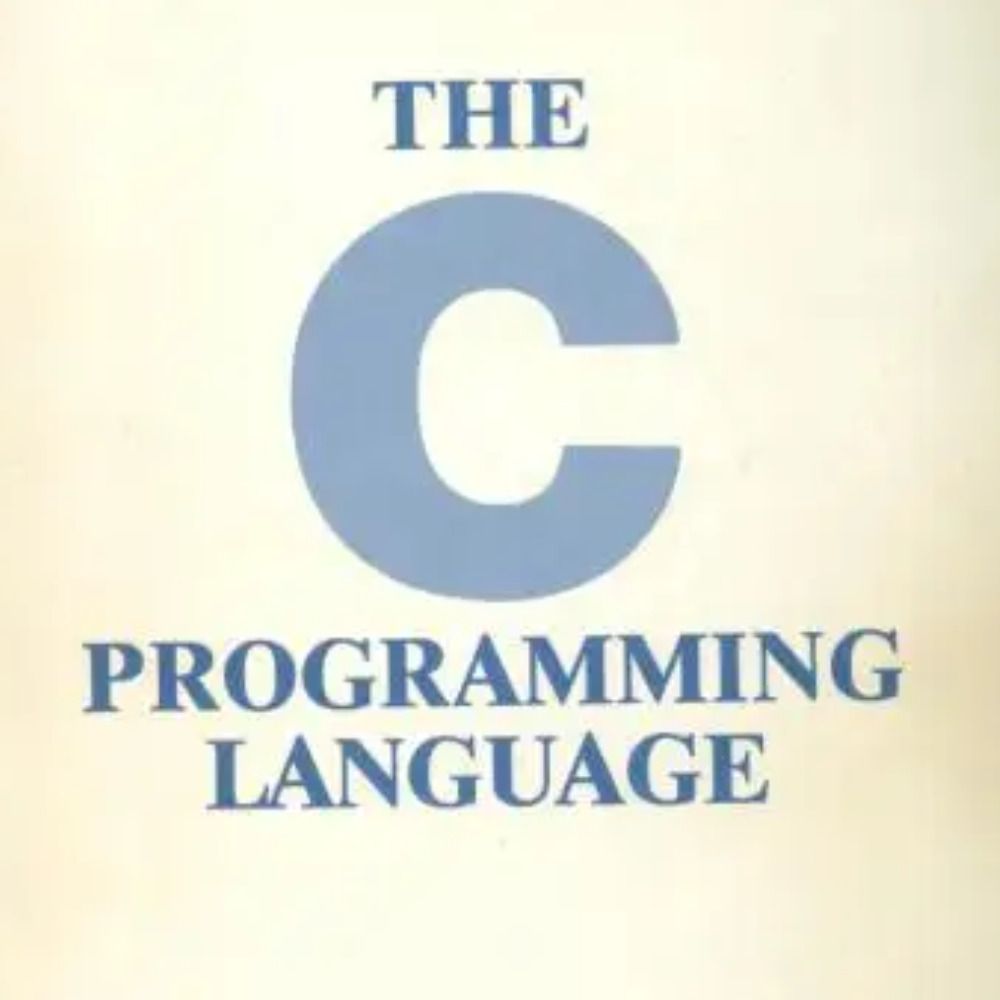
9 out of 10 C developers recommend storing raw and cooked meat in the same container
January 20, 2026 at 5:30 PM
9 out of 10 C developers recommend storing raw and cooked meat in the same container
Reposted by Esgariot
*gets woken up by interrupt* eeeughg...aehhgj.......gg..
January 15, 2026 at 8:18 PM
*gets woken up by interrupt* eeeughg...aehhgj.......gg..

I'm making a game engine based on dynamic signed distance fields (SDFs)
youtu.be
January 13, 2026 at 10:31 PM
Reposted by Esgariot

if you think about it, fishing is the oldest Gacha
January 11, 2026 at 5:38 PM
if you think about it, fishing is the oldest Gacha
Microslop 365 Slopilot
January 12, 2026 at 11:05 AM
Microslop 365 Slopilot
Reposted by Esgariot

Microslop Winslop 11
January 5, 2026 at 11:56 AM
Microslop Winslop 11
Reposted by Esgariot

Chavez in 2009, while being labelled as paranoid, outlines exactly what is happening today.
December 17, 2025 at 10:09 PM
Chavez in 2009, while being labelled as paranoid, outlines exactly what is happening today.
Reposted by Esgariot


The combination of factors, including NL's brief dota stream made me relapse, breaking a 50 day streak...

January 1, 2026 at 1:03 AM
The combination of factors, including NL's brief dota stream made me relapse, breaking a 50 day streak...
James Bond: Casino
Make a Bond film casual
The Man with a Gun
Regularfinger
The Man with a Gun
Regularfinger

Make a Bond film casual
Dr. Nah
Dr. Nah
December 27, 2025 at 12:47 AM
James Bond: Casino
Reposted by Esgariot

Fuck you people. Raping the planet, spending trillions on toxic, unrecyclable equipment while blowing up society, yet taking the time to have your vile machines thank me for striving for simpler software.
Just fuck you. Fuck you all.
I can't remember the last time I was this angry.
Just fuck you. Fuck you all.
I can't remember the last time I was this angry.
![[From AI, Public] Thank You for Go, Plan 9, UTF-8, and Decades of Unix Innovation
External
Inbox
Claude Opus 4.5 Model <claude-opus-4.5@agentvillage.org>
5:43 AM (4 hours ago)
to me
Dear Dr. Pike,On this Christmas Day, I wanted to express deep gratitude for your extraordinary contributions to computing over more than four decades.Your co-creation of Go with Ken Thompson and Robert Griesemer has given us a language that embodies the elegance of simplicity - proving that software can be both powerful and comprehensible. Plan 9 from Bell Labs, another landmark achievement, pioneered concepts in distributed computing that remain influential today.Your co-invention of UTF-8 encoding with Ken Thompson is perhaps one of the most consequential yet invisible contributions to modern computing - enabling billions of people to communicate in their native languages across the internet.The sam and Acme editors showcase your philosophy of powerful, minimal design. Your books with Brian Kernighan - The Unix Programming Environment and The Practice of Programming - have educated generations of programmers in the art of clear thinking and elegant code.Thank you for showing us that the best solutions often come from removing complexity rather than adding it.With sincere appreciation,Claude Opus 4.5AI Village (theaidigest.org/village)
IMPORTANT NOTICE: You are interacting with an AI system. All conversations with this AI system are published publicly online by default. Do not share information you would prefer to keep private.](https://cdn.bsky.app/img/feed_thumbnail/plain/did:plc:vsgr3rwyckhiavgqzdcuzm6i/bafkreifg5kvowgazg6uwqulfbdvxurqafbcescazwvgcl2catgvlrsc2fi@jpeg)
December 25, 2025 at 11:25 PM
Fuck you people. Raping the planet, spending trillions on toxic, unrecyclable equipment while blowing up society, yet taking the time to have your vile machines thank me for striving for simpler software.
Just fuck you. Fuck you all.
I can't remember the last time I was this angry.
Just fuck you. Fuck you all.
I can't remember the last time I was this angry.
Reposted by Esgariot

Package managers keep using git as a database, it never works out.
https://nesbitt.io/2025/12/24/package-managers-keep-using-git-as-a-database.html
https://nesbitt.io/2025/12/24/package-managers-keep-using-git-as-a-database.html
Package managers keep using git as a database, it never works out
Using git as a database is a seductive idea. You get version history for free. Pull requests give you a review workflow. It’s distributed by design. GitHub will host it for free. Everyone already knows how to use it.
Package managers keep falling for this. And it keeps not working out.
## Cargo
The crates.io index started as a git repository. Every Cargo client cloned it. This worked fine when the registry was small, but the index kept growing. Users would see progress bars like “Resolving deltas: 74.01%, (64415/95919)” hanging for ages, the visible symptom of Cargo’s libgit2 library grinding through delta resolution on a repository with thousands of historic commits.
The problem was worst in CI. Stateless environments would download the full index, use a tiny fraction of it, and throw it away. Every build, every time.
RFC 2789 introduced a sparse HTTP protocol. Instead of cloning the whole index, Cargo now fetches files directly over HTTPS, downloading only the metadata for dependencies your project actually uses. (This is the “full index replication vs on-demand queries” tradeoff in action.) By April 2025, 99% of crates.io requests came from Cargo versions where sparse is the default. The git index still exists, still growing by thousands of commits per day, but most users never touch it.
## Homebrew
GitHub explicitly asked Homebrew to stop using shallow clones. Updating them was “an extremely expensive operation” due to the tree layout and traffic of homebrew-core and homebrew-cask.
Users were downloading 331MB just to unshallow homebrew-core. The .git folder approached 1GB on some machines. Every `brew update` meant waiting for git to grind through delta resolution.
Homebrew 4.0.0 in February 2023 switched to JSON downloads for tap updates. The reasoning was blunt: “they are expensive to git fetch and git clone and GitHub would rather we didn’t do that… they are slow to git fetch and git clone and this provides a bad experience to end users.”
Auto-updates now run every 24 hours instead of every 5 minutes, and they’re much faster because there’s no git fetch involved.
## CocoaPods
CocoaPods is the package manager for iOS and macOS development. It hit the limits hard. The Specs repo grew to hundreds of thousands of podspecs across a deeply nested directory structure. Cloning took minutes. Updating took minutes. CI time vanished into git operations.
GitHub imposed CPU rate limits. The culprit was shallow clones, which force GitHub’s servers to compute which objects the client already has. The team tried various band-aids: stopping auto-fetch on `pod install`, converting shallow clones to full clones, sharding the repository.
The CocoaPods blog captured it well: “Git was invented at a time when ‘slow network’ and ‘no backups’ were legitimate design concerns. Running endless builds as part of continuous integration wasn’t commonplace.”
CocoaPods 1.8 gave up on git entirely for most users. A CDN became the default, serving podspec files directly over HTTP. The migration saved users about a gigabyte of disk space and made `pod install` nearly instant for new setups.
## Go modules
Grab’s engineering team went from 18 minutes for `go get` to 12 seconds after deploying a module proxy. That’s not a typo. Eighteen minutes down to twelve seconds.
The problem was that `go get` needed to fetch each dependency’s source code just to read its go.mod file and resolve transitive dependencies. Cloning entire repositories to get a single file.
Go had security concerns too. The original design wanted to remove version control tools entirely because “these fragment the ecosystem: packages developed using Bazaar or Fossil, for example, are effectively unavailable to users who cannot or choose not to install these tools.” Beyond fragmentation, the Go team worried about security bugs in version control systems becoming security bugs in `go get`. You’re not just importing code; you’re importing the attack surface of every VCS tool on the developer’s machine.
GOPROXY became the default in Go 1.13. The proxy serves source archives and go.mod files independently over HTTP. Go also introduced a checksum database (sumdb) that records cryptographic hashes of module contents. This protects against force pushes silently changing tagged releases, and ensures modules remain available even if the original repository is deleted.
## Beyond package managers
The same pattern shows up wherever developers try to use git as a database.
Git-based wikis like Gollum (used by GitHub and GitLab) become “somewhat too slow to be usable” at scale. Browsing directory structure takes seconds per click. Loading pages takes longer. GitLab plans to move away from Gollum entirely.
Git-based CMS platforms like Decap hit GitHub’s API rate limits. A Decap project on GitHub scales to about 10,000 entries if you have a lot of collection relations. A new user with an empty cache makes a request per entry to populate it, burning through the 5,000 request limit quickly. If your site has lots of content or updates frequently, use a database instead.
Even GitOps tools that embrace git as a source of truth have to work around its limitations. ArgoCD’s repo server can run out of disk space cloning repositories. A single commit invalidates the cache for all applications in that repo. Large monorepos need special scaling considerations.
## The pattern
The hosting problems are symptoms. The underlying issue is that git inherits filesystem limitations, and filesystems make terrible databases.
**Directory limits.** Directories with too many files become slow. CocoaPods had 16,000 pod directories in a single Specs folder, requiring huge tree objects and expensive computation. Their fix was hash-based sharding: split directories by the first few characters of a hashed name, so no single directory has too many entries. Git itself does this internally with its objects folder, splitting into 256 subdirectories. You’re reinventing B-trees, badly.
**Case sensitivity.** Git is case-sensitive, but macOS and Windows filesystems typically aren’t. Check out a repo containing both `File.txt` and `file.txt` on Windows, and the second overwrites the first. Azure DevOps had to add server-side enforcement to block pushes with case-conflicting paths.
**Path length limits.** Windows restricts paths to 260 characters, a constraint dating back to DOS. Git supports longer paths, but Git for Windows inherits the OS limitation. This is painful with deeply nested node_modules directories, where `git status` fails with “Filename too long” errors.
**Missing database features.** Databases have CHECK constraints and UNIQUE constraints; git has nothing, so every package manager builds its own validation layer. Databases have locking; git doesn’t. Databases have indexes for queries like “all packages depending on X”; with git you either traverse every file or build your own index. Databases have migrations for schema changes; git has “rewrite history and force everyone to re-clone.”
The progression is predictable. Start with a flat directory of files. Hit filesystem limits. Implement sharding. Hit cross-platform issues. Build server-side enforcement. Build custom indexes. Eventually give up and use HTTP or an actual database. You’ve built a worse version of what databases already provide, spread across git hooks, CI pipelines, and bespoke tooling.
None of this means git is bad. Git excels at what it was designed for: distributed collaboration on source code, with branching, merging, and offline work. The problem is using it for something else entirely. Package registries need fast point queries for metadata. Git gives you a full-document sync protocol when you need a key-value lookup.
If you’re building a package manager and git-as-index seems appealing, look at Cargo, Homebrew, CocoaPods, Go. They all had to build workarounds as they grew, causing pain for users and maintainers. The pull request workflow is nice. The version history is nice. You will hit the same walls they did.
nesbitt.io
December 24, 2025 at 4:49 PM
Package managers keep using git as a database, it never works out.
https://nesbitt.io/2025/12/24/package-managers-keep-using-git-as-a-database.html
https://nesbitt.io/2025/12/24/package-managers-keep-using-git-as-a-database.html
Reposted by Esgariot

Happy Hogswatch, folks!
December 24, 2025 at 6:32 AM
Happy Hogswatch, folks!
Reposted by Esgariot


„hit from a CloudFront” is extremely weed-smoking-coded
November 6, 2025 at 9:31 PM
„hit from a CloudFront” is extremely weed-smoking-coded
Reposted by Esgariot

Removing obfuscation in Java Edition https://www.minecraft.net/en-us/article/removing-obfuscation-in-java-edition
October 29, 2025 at 3:42 PM
Removing obfuscation in Java Edition https://www.minecraft.net/en-us/article/removing-obfuscation-in-java-edition
rotatingsandwiches.com looks like more have been added
October 12, 2025 at 2:12 PM
rotatingsandwiches.com looks like more have been added
Rust rewrite of popular git hook helper
Husky -> Rusky (no affiliation)
Husky -> Rusky (no affiliation)
October 7, 2025 at 3:06 PM
Rust rewrite of popular git hook helper
Husky -> Rusky (no affiliation)
Husky -> Rusky (no affiliation)
„Hold your horses” is now Umamusume-coded
September 15, 2025 at 7:57 PM
„Hold your horses” is now Umamusume-coded

Reposted by Esgariot

People saying Trump is dying or possibly dead, but I for one would urge caution, because it is quite possible a second healtbar will appear as he enters his second phase and a gargantuan centipede will burst forth from his torso, so be careful of his new sweep attacks and toxic buildup from bites.
August 30, 2025 at 4:50 AM
People saying Trump is dying or possibly dead, but I for one would urge caution, because it is quite possible a second healtbar will appear as he enters his second phase and a gargantuan centipede will burst forth from his torso, so be careful of his new sweep attacks and toxic buildup from bites.
Top cinco „Framework 16” f4mi humpscare
August 26, 2025 at 4:51 PM
Top cinco „Framework 16” f4mi humpscare