



Trent E Balius
@dalyusbalius.bsky.social
Computational Chemist @FredNatLab. Interest are molecular docking and methods for drug discovery. Views are my own.
Pinned
Trent E Balius
@dalyusbalius.bsky.social
· Jan 22

Development of Receptor Desolvation Scoring and Covalent Sampling in DOCK 6: Methods Evaluated on a RAS Test Set
Molecular docking methods are widely used in drug discovery efforts. RAS proteins are important cancer drug targets, and are useful systems for evaluating docking methods, including accounting for solvation effects and covalent small molecule binding. Water often plays a key role in small molecule binding to RAS proteins, and many inhibitors─including FDA-approved drugs─covalently bind to oncogenic RAS proteins. We assembled a RAS test set, consisting of 138 RAS protein structures and 2 structures of KRAS DNA in complex with ligands. In DOCK 6, we have implemented a receptor desolvation scoring function and a covalent docking algorithm. These new features were evaluated using the test set, with pose reproduction, cross-docking, and enrichment calculations. We tested two solvation methods for generating receptor desolvation scoring grids: GIST and 3D-RISM. Using grids from GIST or 3D-RISM, water displacements are precomputed with Gaussian-weighting, and trilinear interpolation is used to speed up this scoring calculation. To test receptor desolvation scoring, we prepared GIST and 3D-RISM grids for all KRAS systems in the test set, and we compare enrichment performance with and without receptor desolvation. Accounting for receptor desolvation using GIST improves enrichment for 51% of systems and worsens enrichment for 35% of systems, while using 3D-RISM improves enrichment for 44% of systems and worsens enrichment for 30% of systems. To more rigorously test accounting for receptor desolvation using 3D-RISM, we compare pose reproduction with and without 3D-RISM receptor desolvation. Pose reproduction docking with 3D-RISM yields a 1.8 ± 2.41% increase in success rate compared to docking without 3D-RISM. Accounting for receptor desolvation provides a small, but significant, improvement in both enrichment and pose reproduction for this set. We tested the covalent attach-and-grow algorithm on 70 KRAS systems containing covalent ligands, obtaining similar pose reproduction success rates between covalent and noncovalent docking. Comparing covalent docking to noncovalent docking, there is a 2.4 ± 3.29% increase and a 1.27 ± 3.33% decline in the success rate when docking with experimental and SMILES-generated ligand conformations, respectively. As a proof-of-concept, we performed covalent virtual screens with and without receptor desolvation scoring, targeting the switch II pocket of KRAS, using 3.4 million make-on-demand acrylamide compounds from the Enamine REAL database. On average, the attach-and-grow algorithm spends approximately 17.61 s per molecule across the screen. The test set is available at https://github.com/tbalius/teb_docking_test_sets.
pubs.acs.org
Our paper entitled "Development of Receptor Desolvation Scoring and Covalent Sampling in DOCK 6: Methods Evaluated on a RAS Test Set" is published in JCIM: pubs.acs.org/doi/full/10....
I liked this quote from the abstract of a preprint where Menon et al. compare AlphaFold3 and DOCK 3: "AF3 … represents the beginning of deep-learning-based structure-guided ligand discovery: a complementary tool rather than a replacement for conventional docking ..."
www.biorxiv.org/content/10.6...
www.biorxiv.org/content/10.6...

AlphaFold3 for Structure-guided Ligand Discovery
Deep-learning methods for protein structure prediction, such as AlphaFold2 (AF2) and RosettaFold (RF), have transformed structural biology and accelerated downstream biological discovery. More recent ...
www.biorxiv.org
December 11, 2025 at 6:15 PM
I liked this quote from the abstract of a preprint where Menon et al. compare AlphaFold3 and DOCK 3: "AF3 … represents the beginning of deep-learning-based structure-guided ligand discovery: a complementary tool rather than a replacement for conventional docking ..."
www.biorxiv.org/content/10.6...
www.biorxiv.org/content/10.6...
Reposted by Trent E Balius

AlphaFold3 for Structure-guided Ligand Discovery https://www.biorxiv.org/content/10.64898/2025.12.04.692352v1
December 9, 2025 at 4:01 AM
AlphaFold3 for Structure-guided Ligand Discovery https://www.biorxiv.org/content/10.64898/2025.12.04.692352v1
In the paper entitled "Solvent-Site Prediction for Fragment Docking and Its Implication on Fragment-Based Drug Discovery," the authors explore the effect of adding waters on the performance of different docking software including DOCK 6.9. here is the link: pubs.acs.org/doi/10.1021/...

Solvent-Site Prediction for Fragment Docking and Its Implication on Fragment-Based Drug Discovery
The accuracy in the posing and scoring of low-affinity fragments is still a main challenge in fragment-based virtual screenings. The positive impact of including structural or predicted water molecule...
pubs.acs.org
November 26, 2025 at 1:25 AM
In the paper entitled "Solvent-Site Prediction for Fragment Docking and Its Implication on Fragment-Based Drug Discovery," the authors explore the effect of adding waters on the performance of different docking software including DOCK 6.9. here is the link: pubs.acs.org/doi/10.1021/...
Reposted by Trent E Balius
Displacing high-energy water from molecular binding sites can significantly enhance binding strength, offering new strategies for drug design and materials development. doi.org/g96vfk

Displacing high-energy water can supercharge molecular binding
Water is everywhere in life, covering most of our planet, making up the majority of our bodies, and forming the stage on which all biology plays out.
phys.org
October 14, 2025 at 1:59 PM
Displacing high-energy water from molecular binding sites can significantly enhance binding strength, offering new strategies for drug design and materials development. doi.org/g96vfk
Reposted by Trent E Balius

🧵[1/10] A busy week for K-Ras! We reported three stories on covalent, mutant-selective targeting of oncogenic K-Ras mutations @pubs.acs.org. Covalent chemistry has been key in drugging this once “undruggable” GTPase. Sotorasib and adagrasib are the only approved therapeutics for K-Ras(G12C).

July 10, 2025 at 2:10 PM
🧵[1/10] A busy week for K-Ras! We reported three stories on covalent, mutant-selective targeting of oncogenic K-Ras mutations @pubs.acs.org. Covalent chemistry has been key in drugging this once “undruggable” GTPase. Sotorasib and adagrasib are the only approved therapeutics for K-Ras(G12C).
Reposted by Trent E Balius

Beautiful work from our colleagues in the Jura & Verba labs here @ UCSF! Cryo-EM structures of PI3Ka / KRas complex in context of lipid nanodiscs. Read on for unexpected dimers & to see how high-rez structural biology w/ the right reconstitutions can inform mechanism! www.biorxiv.org/content/10.1...

Structures of the PI3Kα/KRas complex on lipid bilayers reveal the molecular mechanism of PI3Kα activation
PI3Kα is a potent oncogene that converts PIP2 to PIP3 at the plasma membrane upon activation by receptor tyrosine kinases and Ras GTPases. In the absence of any structures of activated PI3Kα, the mole...
www.biorxiv.org
March 26, 2025 at 4:20 PM
Beautiful work from our colleagues in the Jura & Verba labs here @ UCSF! Cryo-EM structures of PI3Ka / KRas complex in context of lipid nanodiscs. Read on for unexpected dimers & to see how high-rez structural biology w/ the right reconstitutions can inform mechanism! www.biorxiv.org/content/10.1...
Reposted by Trent E Balius

Mapping the free energy landscape of K-Ras4B dimerization https://www.biorxiv.org/content/10.1101/2025.04.22.650040v1
April 29, 2025 at 2:25 PM
Mapping the free energy landscape of K-Ras4B dimerization https://www.biorxiv.org/content/10.1101/2025.04.22.650040v1
UCSF DOCK 6.13 has been released. The source code for DOCK 6.13 is available for download and free for academic users at:
dock.compbio.ucsf.edu/DOCK_6/index...
dock.compbio.ucsf.edu/DOCK_6/index...
UCSF DOCK 6
dock.compbio.ucsf.edu
July 16, 2025 at 11:41 PM
UCSF DOCK 6.13 has been released. The source code for DOCK 6.13 is available for download and free for academic users at:
dock.compbio.ucsf.edu/DOCK_6/index...
dock.compbio.ucsf.edu/DOCK_6/index...
Reposted by Trent E Balius
Delighted to share the final version of this co-first author publication from my first postdoc project. Thank you to everyone involved for the mentorship and collaboration! pubs.acs.org/doi/10.1021/...
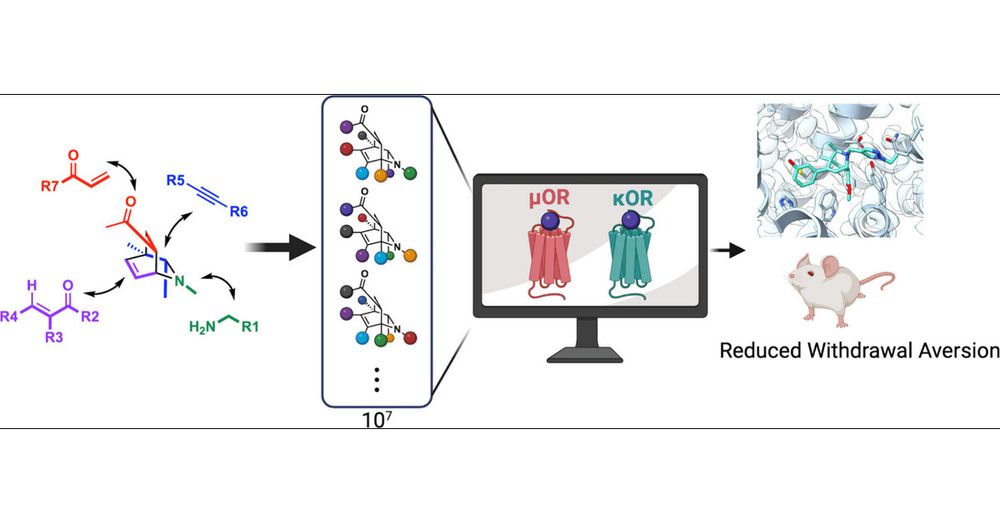
Docking 14 Million Virtual Isoquinuclidines against the μ and κ Opioid Receptors Reveals Dual Antagonists–Inverse Agonists with Reduced Withdrawal Effects
Large library docking of tangible molecules has revealed potent ligands across many targets. While make-on-demand libraries now exceed 75 billion enumerated molecules, their synthetic routes are dominated by a few reaction types, reducing diversity and inevitably leaving many interesting bioactive-like chemotypes unexplored. Here, we investigate the large-scale enumeration and targeted docking of isoquinuclidines. These “natural-product-like” molecules are rare in current libraries and are functionally congested, making them interesting as receptor probes. Using a modular, four-component reaction scheme, we built and docked a virtual library of over 14.6 million isoquinuclidines against both the μ- and κ-opioid receptors (MOR and KOR, respectively). Synthesis and experimental testing of 18 prioritized compounds found nine ligands with low μM affinities. Structure-based optimization revealed low- and sub-nM antagonists and inverse agonists targeting both receptors. Cryo-electron microscopy structures illuminate the origins of activity on each target. In mouse behavioral studies, a potent joint MOR-antagonist and KOR-inverse-agonist reversed morphine-induced analgesia, phenocopying the MOR-selective antioverdose agent naloxone. Encouragingly, the isoquinuclidine induced less severe opioid-withdrawal symptoms versus naloxone and did not induce conditioned-place aversion, reflecting reduced dysphoria, consistent with its KOR-inverse agonism. The strengths and weaknesses of bespoke library docking and of docking for opioid receptor polypharmacology will be considered.
pubs.acs.org
April 29, 2025 at 7:20 PM
Delighted to share the final version of this co-first author publication from my first postdoc project. Thank you to everyone involved for the mentorship and collaboration! pubs.acs.org/doi/10.1021/...
Exciting paper by Patrick Alexander, Andrew G. Stephen, and colleagues: doi.org/10.1016/j.jb...
Redirecting
doi.org
June 10, 2025 at 1:14 PM
Exciting paper by Patrick Alexander, Andrew G. Stephen, and colleagues: doi.org/10.1016/j.jb...
Reposted by Trent E Balius
A database for large-scale docking and experimental results https://www.biorxiv.org/content/10.1101/2025.02.25.639879v1
February 28, 2025 at 3:03 AM
A database for large-scale docking and experimental results https://www.biorxiv.org/content/10.1101/2025.02.25.639879v1
Reposted by Trent E Balius

Really comprehensive and nicely written ACS Chemical Reviews by Nir London on covalent proximity inducers
pubs.acs.org/doi/full/10....
pubs.acs.org/doi/full/10....

Covalent Proximity Inducers
Molecules that are able to induce proximity between two proteins are finding ever increasing applications in chemical biology and drug discovery. The ability to introduce an electrophile and make such proximity inducers covalent can offer improved properties such as selectivity, potency, duration of action, and reduced molecular size. This concept has been heavily explored in the context of targeted degradation in particular for bivalent molecules, but recently, additional applications are reported in other contexts, as well as for monovalent molecular glues. This is a comprehensive review of reported covalent proximity inducers, aiming to identify common trends and current gaps in their discovery and application.
pubs.acs.org
December 21, 2024 at 5:46 PM
Really comprehensive and nicely written ACS Chemical Reviews by Nir London on covalent proximity inducers
pubs.acs.org/doi/full/10....
pubs.acs.org/doi/full/10....
Reposted by Trent E Balius

Just listened to a talk on OpenEye's Cryptic Pocket detection, amazing that this stuff works...
pubs.acs.org/doi/full/10....
pubs.acs.org/doi/full/10....

Exploration of Cryptic Pockets Using Enhanced Sampling Along Normal Modes: A Case Study of KRAS G12D
Identification of cryptic pockets has the potential to open new therapeutic opportunities by discovering ligand binding sites that remain hidden in static apo structures of a target protein. Moreover,...
pubs.acs.org
November 12, 2024 at 11:33 PM
Just listened to a talk on OpenEye's Cryptic Pocket detection, amazing that this stuff works...
pubs.acs.org/doi/full/10....
pubs.acs.org/doi/full/10....
Reposted by Trent E Balius

Quantum-computing-enhanced algorithm unveils potential KRAS inhibitors go.nature.com/3EitbLm

Quantum-computing-enhanced algorithm unveils potential KRAS inhibitors - Nature Biotechnology
A hybrid model combines quantum and classical approaches to generate compounds targeting the KRAS protein.
go.nature.com
January 22, 2025 at 3:33 PM
Quantum-computing-enhanced algorithm unveils potential KRAS inhibitors go.nature.com/3EitbLm
Reposted by Trent E Balius

#compchem Good read: Assessing small molecule conformational sampling methods in molecular docking #compchemsky doi.org/10.1002/jcc....

Assessing small molecule conformational sampling methods in molecular docking
Small molecule conformational sampling is crucial for exploring the vast conformational space within specific chemical environments. Recent advancements have led to the emergence of various conformat...
doi.org
November 25, 2024 at 5:57 AM
#compchem Good read: Assessing small molecule conformational sampling methods in molecular docking #compchemsky doi.org/10.1002/jcc....
Our paper entitled "Development of Receptor Desolvation Scoring and Covalent Sampling in DOCK 6: Methods Evaluated on a RAS Test Set" is published in JCIM: pubs.acs.org/doi/full/10....
Development of Receptor Desolvation Scoring and Covalent Sampling in DOCK 6: Methods Evaluated on a RAS Test Set
Molecular docking methods are widely used in drug discovery efforts. RAS proteins are important cancer drug targets, and are useful systems for evaluating docking methods, including accounting for solvation effects and covalent small molecule binding. Water often plays a key role in small molecule binding to RAS proteins, and many inhibitors─including FDA-approved drugs─covalently bind to oncogenic RAS proteins. We assembled a RAS test set, consisting of 138 RAS protein structures and 2 structures of KRAS DNA in complex with ligands. In DOCK 6, we have implemented a receptor desolvation scoring function and a covalent docking algorithm. These new features were evaluated using the test set, with pose reproduction, cross-docking, and enrichment calculations. We tested two solvation methods for generating receptor desolvation scoring grids: GIST and 3D-RISM. Using grids from GIST or 3D-RISM, water displacements are precomputed with Gaussian-weighting, and trilinear interpolation is used to speed up this scoring calculation. To test receptor desolvation scoring, we prepared GIST and 3D-RISM grids for all KRAS systems in the test set, and we compare enrichment performance with and without receptor desolvation. Accounting for receptor desolvation using GIST improves enrichment for 51% of systems and worsens enrichment for 35% of systems, while using 3D-RISM improves enrichment for 44% of systems and worsens enrichment for 30% of systems. To more rigorously test accounting for receptor desolvation using 3D-RISM, we compare pose reproduction with and without 3D-RISM receptor desolvation. Pose reproduction docking with 3D-RISM yields a 1.8 ± 2.41% increase in success rate compared to docking without 3D-RISM. Accounting for receptor desolvation provides a small, but significant, improvement in both enrichment and pose reproduction for this set. We tested the covalent attach-and-grow algorithm on 70 KRAS systems containing covalent ligands, obtaining similar pose reproduction success rates between covalent and noncovalent docking. Comparing covalent docking to noncovalent docking, there is a 2.4 ± 3.29% increase and a 1.27 ± 3.33% decline in the success rate when docking with experimental and SMILES-generated ligand conformations, respectively. As a proof-of-concept, we performed covalent virtual screens with and without receptor desolvation scoring, targeting the switch II pocket of KRAS, using 3.4 million make-on-demand acrylamide compounds from the Enamine REAL database. On average, the attach-and-grow algorithm spends approximately 17.61 s per molecule across the screen. The test set is available at https://github.com/tbalius/teb_docking_test_sets.
pubs.acs.org
January 22, 2025 at 6:21 PM
Our paper entitled "Development of Receptor Desolvation Scoring and Covalent Sampling in DOCK 6: Methods Evaluated on a RAS Test Set" is published in JCIM: pubs.acs.org/doi/full/10....