



jmperez_lab
@arolab.bsky.social
Prof. Genetics at the IB-UMH. Interested in Plant Biology, Cell reprogramming and Regeneration.
Reposted by jmperez_lab

Happy birthday!!! www.theguardian.com/tv-and-radio...

Happy birthday, David Attenborough! 99 ways he has inspired us, by Barack Obama, Billie Eilish, Morgan Freeman – and many more
This week the presenter turns 99. To celebrate, we asked 99 nature lovers – including Margaret Atwood, Jane Fonda, Bono, Kate Winslet and Michael Palin – how he has helped us see the world with fresh ...
www.theguardian.com
May 3, 2025 at 12:51 PM
Happy birthday!!! www.theguardian.com/tv-and-radio...
Reposted by jmperez_lab

New CRISPR tools for tomato functional genomics from Eilon Shani! 🍅 🧬 ✂️ www.nature.com/articles/s41...
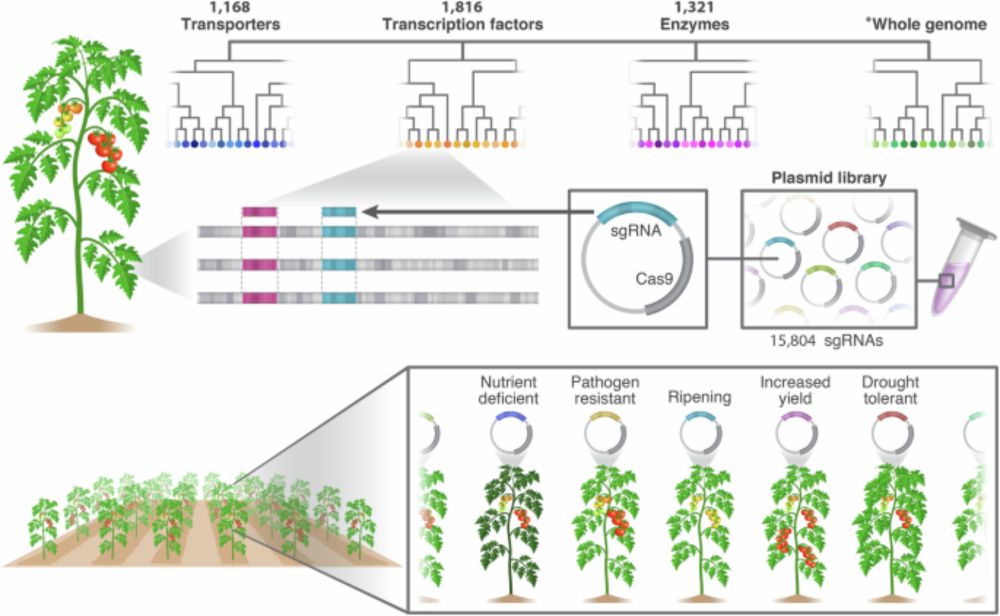
Construction of multi-targeted CRISPR libraries in tomato to overcome functional redundancy at genome-scale level - Nature Communications
Genetic variance is vital for breeding programs and mutant screening, yet traditional mutagenesis methods wrestle with genetic redundancy and a lack of specificity in gene targeting. Here the authors ...
www.nature.com
May 5, 2025 at 3:16 PM
New CRISPR tools for tomato functional genomics from Eilon Shani! 🍅 🧬 ✂️ www.nature.com/articles/s41...
Reposted by jmperez_lab

A few places still available for the workshop "Plant Science in the Anthropocene" (PLANT) (March 24- April 4, Paris-Saclay)! eng-saclay-plant-sciences.hub.inrae.fr/events/works... (application deadline February 17th)

January 28, 2025 at 9:29 AM
A few places still available for the workshop "Plant Science in the Anthropocene" (PLANT) (March 24- April 4, Paris-Saclay)! eng-saclay-plant-sciences.hub.inrae.fr/events/works... (application deadline February 17th)
Reposted by jmperez_lab

The new look ISRR website is now live www.rootresearch.org. See all the latest information on the society and if not already a member then join us for free.

International Society of Root Research
www.rootresearch.org
January 11, 2025 at 11:39 AM
Reposted by jmperez_lab

🌾 Fighting Fungal Pathogens with dsRNA! A new study in
@commsbio.bsky.social shows that dsRNA can combat Magnaporthe oryzae, a major crop pathogen, by triggering RNAi & stress responses. Sustainable, eco-friendly plant protection is on the horizon! 🌱🔬
Read more: rdcu.be/d7tBT
@commsbio.bsky.social shows that dsRNA can combat Magnaporthe oryzae, a major crop pathogen, by triggering RNAi & stress responses. Sustainable, eco-friendly plant protection is on the horizon! 🌱🔬
Read more: rdcu.be/d7tBT

January 28, 2025 at 8:15 PM
🌾 Fighting Fungal Pathogens with dsRNA! A new study in
@commsbio.bsky.social shows that dsRNA can combat Magnaporthe oryzae, a major crop pathogen, by triggering RNAi & stress responses. Sustainable, eco-friendly plant protection is on the horizon! 🌱🔬
Read more: rdcu.be/d7tBT
@commsbio.bsky.social shows that dsRNA can combat Magnaporthe oryzae, a major crop pathogen, by triggering RNAi & stress responses. Sustainable, eco-friendly plant protection is on the horizon! 🌱🔬
Read more: rdcu.be/d7tBT
Reposted by jmperez_lab

Reposted by jmperez_lab

Previously on @biorxivpreprint.bsky.social now online @naturecomms.bsky.social www.nature.com/articles/s41...

Evolutionary origins and functional diversification of Auxin Response Factors
Nature Communications - Auxin is a universal regulator of plant growth and development. The authors report the origin and evolutionary history of the key DNA-binding transcription factors mediating...
www.nature.com
December 30, 2024 at 8:27 PM
Previously on @biorxivpreprint.bsky.social now online @naturecomms.bsky.social www.nature.com/articles/s41...
Reposted by jmperez_lab

Two articles about plants on @cnn.com :
- Scientists solve old mystery of how a cucumber explosively squirts its seeds edition.cnn.com/2024/11/26/s... (@christhorogood.bsky.social)
- This greenhouse keeps crops cool. It could prove valuable as our planet bakes edition.cnn.com/climate/seco...
- Scientists solve old mystery of how a cucumber explosively squirts its seeds edition.cnn.com/2024/11/26/s... (@christhorogood.bsky.social)
- This greenhouse keeps crops cool. It could prove valuable as our planet bakes edition.cnn.com/climate/seco...

Scientists solve centuries-old mystery of how a cucumber explosively squirts its seeds | CNN
Squirting cucumbers blast their seeds over distances hundreds of times their length, and now scientists say they have found the secret to how the plants do it.
edition.cnn.com
December 19, 2024 at 10:22 AM
Two articles about plants on @cnn.com :
- Scientists solve old mystery of how a cucumber explosively squirts its seeds edition.cnn.com/2024/11/26/s... (@christhorogood.bsky.social)
- This greenhouse keeps crops cool. It could prove valuable as our planet bakes edition.cnn.com/climate/seco...
- Scientists solve old mystery of how a cucumber explosively squirts its seeds edition.cnn.com/2024/11/26/s... (@christhorogood.bsky.social)
- This greenhouse keeps crops cool. It could prove valuable as our planet bakes edition.cnn.com/climate/seco...
Reposted by jmperez_lab

December 19, 2024 at 10:51 AM
Reposted by jmperez_lab

Issue 23 is now complete!
On the cover: The liverwort Marchantia polymorpha grown for four weeks on soil. New tissues and organs are produced from meristems at the apices of the plant. See Research article by Spencer et al.
journals.biologists.com/dev/article/...
On the cover: The liverwort Marchantia polymorpha grown for four weeks on soil. New tissues and organs are produced from meristems at the apices of the plant. See Research article by Spencer et al.
journals.biologists.com/dev/article/...

December 18, 2024 at 1:20 PM
Issue 23 is now complete!
On the cover: The liverwort Marchantia polymorpha grown for four weeks on soil. New tissues and organs are produced from meristems at the apices of the plant. See Research article by Spencer et al.
journals.biologists.com/dev/article/...
On the cover: The liverwort Marchantia polymorpha grown for four weeks on soil. New tissues and organs are produced from meristems at the apices of the plant. See Research article by Spencer et al.
journals.biologists.com/dev/article/...
Reposted by jmperez_lab
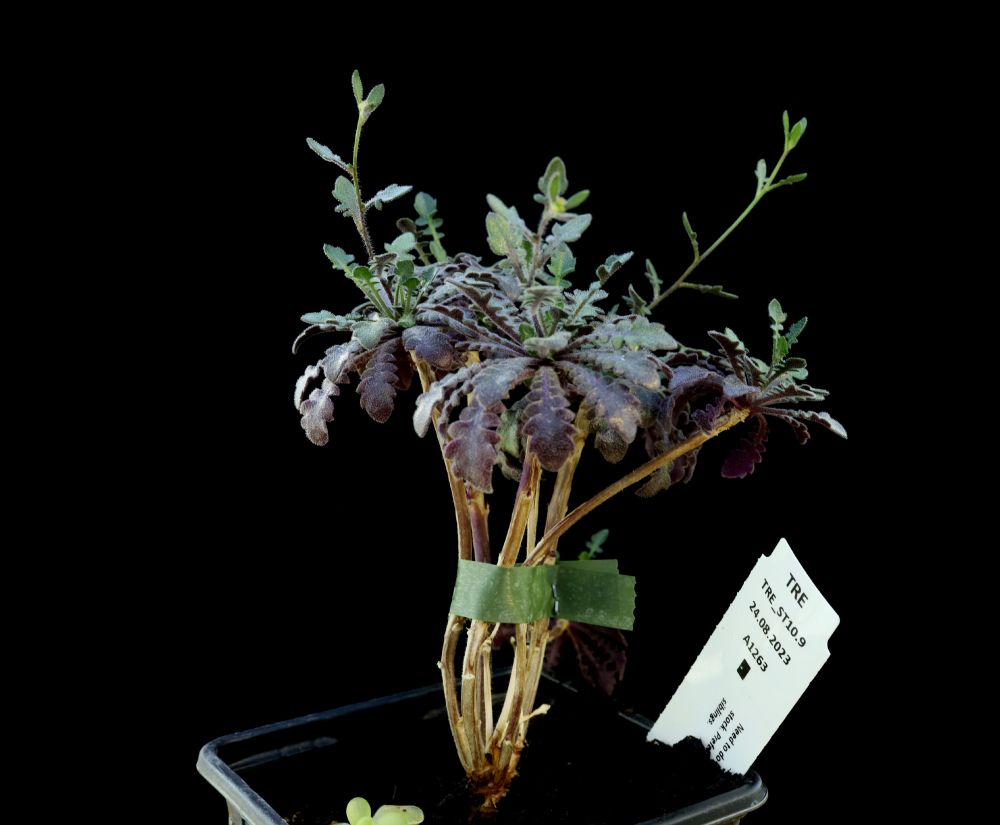
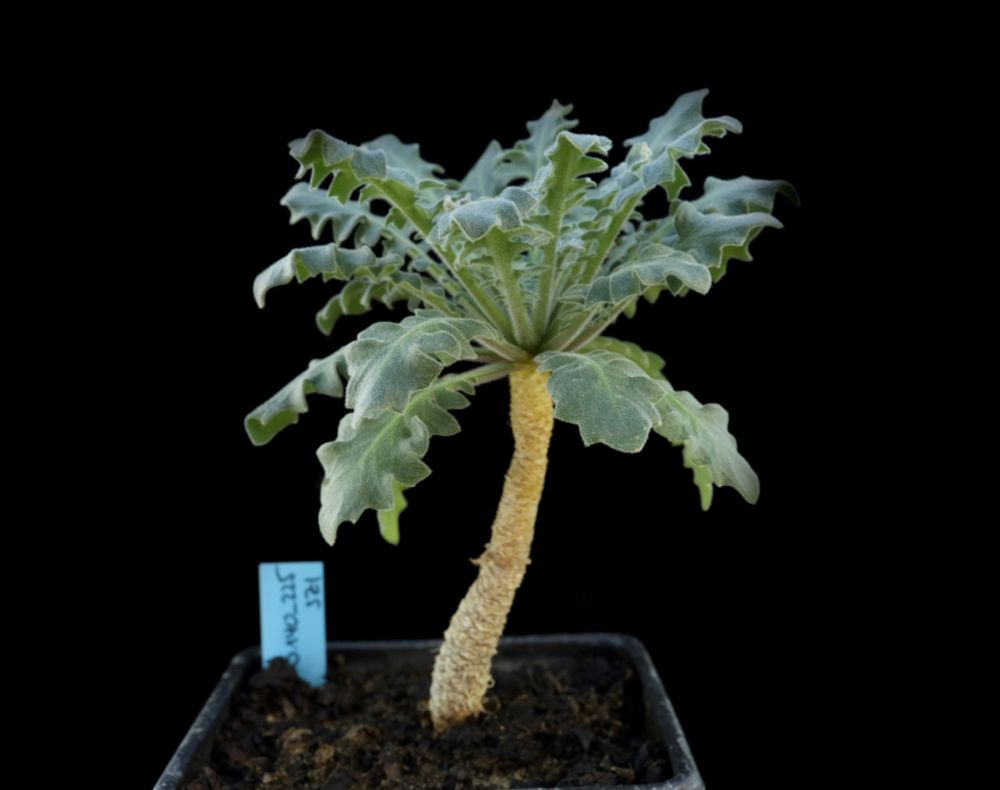
Happy Friday everyone! Here are some cool Arabidopsis mini trees🌴
Arabidopsis arenosa hypocotyls can undergo extensive secondary growth and the rosettes that develop on top make them look like palm trees 🤯I wonder if this can be engineered in thaliana..
Arabidopsis arenosa hypocotyls can undergo extensive secondary growth and the rosettes that develop on top make them look like palm trees 🤯I wonder if this can be engineered in thaliana..
November 29, 2024 at 10:43 AM
Happy Friday everyone! Here are some cool Arabidopsis mini trees🌴
Arabidopsis arenosa hypocotyls can undergo extensive secondary growth and the rosettes that develop on top make them look like palm trees 🤯I wonder if this can be engineered in thaliana..
Arabidopsis arenosa hypocotyls can undergo extensive secondary growth and the rosettes that develop on top make them look like palm trees 🤯I wonder if this can be engineered in thaliana..
Reposted by jmperez_lab
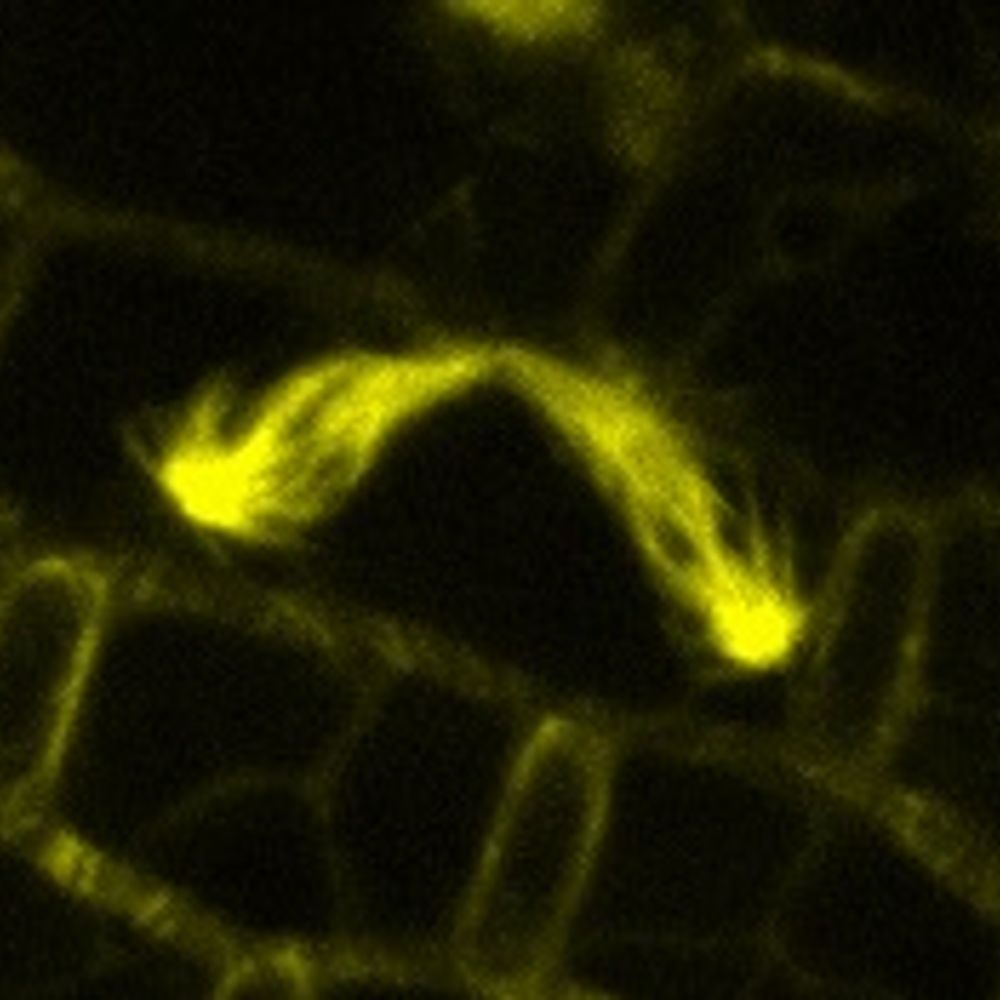
Differential growth is an emergent property of mechanochemical feedback mechanisms in curved plant organs @ Developmental Cell
www.cell.com/developmenta...
www.cell.com/developmenta...
November 30, 2024 at 2:17 PM
Differential growth is an emergent property of mechanochemical feedback mechanisms in curved plant organs @ Developmental Cell
www.cell.com/developmenta...
www.cell.com/developmenta...
Reposted by jmperez_lab

Very intriguing paper showing that m6A reader ECT2 requires ALBA for proper activity. Likely explains the poor CLIP consensus for ALBA, and makes me wonder about m6A in heat stress response..
www.embopress.org/doi/10.1038/...
www.embopress.org/doi/10.1038/...

ALBA proteins facilitate cytoplasmic YTHDF-mediated reading of m6A in Arabidopsis | The EMBO Journal
imageimageYTHDF proteins read the m6A-code on eukaryotic mRNA in the cytoplasm. This report shows that in Arabidopsis, m6A is read not simply by YTHDF proteins, but by their complexes with the ancient RNA-binding ALBA proteins. A short linear ...
www.embopress.org
December 1, 2024 at 7:04 PM
Very intriguing paper showing that m6A reader ECT2 requires ALBA for proper activity. Likely explains the poor CLIP consensus for ALBA, and makes me wonder about m6A in heat stress response..
www.embopress.org/doi/10.1038/...
www.embopress.org/doi/10.1038/...
Reposted by jmperez_lab

Article about Wieger Wamelink, space biologist from Wageningen University who explores crop cultivation using simulated Mars and lunar soil from NASA. He is currently demonstrating the cultivation of his space potatoes in a Mars soil replica at the Evoluon in Eindhoven
nextnature.org/en/magazine/...
nextnature.org/en/magazine/...

December 2, 2024 at 8:33 AM
Article about Wieger Wamelink, space biologist from Wageningen University who explores crop cultivation using simulated Mars and lunar soil from NASA. He is currently demonstrating the cultivation of his space potatoes in a Mars soil replica at the Evoluon in Eindhoven
nextnature.org/en/magazine/...
nextnature.org/en/magazine/...
Reposted by jmperez_lab

🔺🔺🔺RED TRIANGLE ALERT 🔺🔺🔺
Ever wonder how #TADs compare across the tree of life?Look no further & read our Review!!!
Find out what genes & 3D chromatin can & can't do in Bacteria! Archeae! Yeast! Plants! Animals!
SMCs & RNA-Pol are the only thing they have in common
www.nature.com/articles/s41...
Ever wonder how #TADs compare across the tree of life?Look no further & read our Review!!!
Find out what genes & 3D chromatin can & can't do in Bacteria! Archeae! Yeast! Plants! Animals!
SMCs & RNA-Pol are the only thing they have in common
www.nature.com/articles/s41...
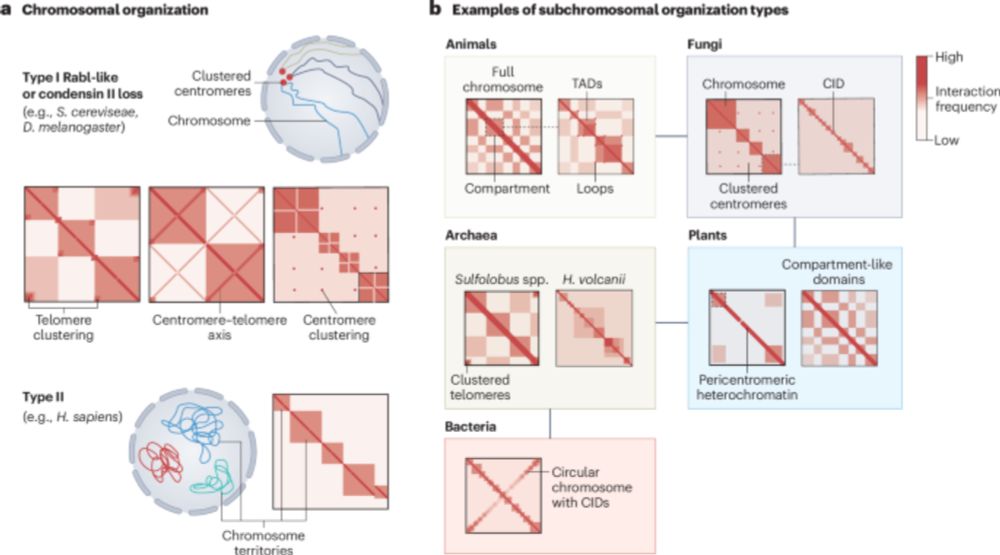
Evolution and function of chromatin domains across the tree of life - Nature Structural & Molecular Biology
Szalay et al. discuss cross-kingdom similarities and differences in 3D chromatin folding in relation to gene regulation, including in bacteria, archaea, mammals and plants. This comparison reveals cer...
www.nature.com
November 28, 2024 at 12:48 PM
🔺🔺🔺RED TRIANGLE ALERT 🔺🔺🔺
Ever wonder how #TADs compare across the tree of life?Look no further & read our Review!!!
Find out what genes & 3D chromatin can & can't do in Bacteria! Archeae! Yeast! Plants! Animals!
SMCs & RNA-Pol are the only thing they have in common
www.nature.com/articles/s41...
Ever wonder how #TADs compare across the tree of life?Look no further & read our Review!!!
Find out what genes & 3D chromatin can & can't do in Bacteria! Archeae! Yeast! Plants! Animals!
SMCs & RNA-Pol are the only thing they have in common
www.nature.com/articles/s41...
Reposted by jmperez_lab
🚨 Exciting discovery ! Todd Blevins' team, in collaboration with J Law's lab, reveals how Pol IV uniquely interacts with CLSY proteins for TE silencing and genome stability in plants. Published in Nature Communications

CLSY docking to Pol IV requires a conserved domain critical for small RNA biogenesis and transposon silencing - Nature Communications
Transposons are DNA sequences that can mobilize, causing deleterious mutations. This work uncovers a novel structure in RNA polymerase IV allowing it to dock with four CLSY recruitment factors and sil...
www.nature.com
December 2, 2024 at 7:12 AM
🚨 Exciting discovery ! Todd Blevins' team, in collaboration with J Law's lab, reveals how Pol IV uniquely interacts with CLSY proteins for TE silencing and genome stability in plants. Published in Nature Communications
Reposted by jmperez_lab

Cool paper from the labs of Thomas Greb (@thomasgreb.bsky.social) and Karen Alim. Yet another successful collaboration within our DFG-funded research unit "Plant Morphodynamics".
www.cell.com/current-biol...
www.plantmorphodynamics.com
www.grebgroup.de
www.bpm.ph.tum.de
#PlantScience
www.cell.com/current-biol...
www.plantmorphodynamics.com
www.grebgroup.de
www.bpm.ph.tum.de
#PlantScience

Mechanical forces instruct division plane orientation of cambium stem cells during radial growth in Arabidopsis thaliana
Höfler et al. show that precisely regulated cell division plane orientations in cambium
stem cells are guided by mechanical stress patterns in the tissue. The stress pattern
is robust against local pe...
www.cell.com
December 2, 2024 at 4:08 PM
Cool paper from the labs of Thomas Greb (@thomasgreb.bsky.social) and Karen Alim. Yet another successful collaboration within our DFG-funded research unit "Plant Morphodynamics".
www.cell.com/current-biol...
www.plantmorphodynamics.com
www.grebgroup.de
www.bpm.ph.tum.de
#PlantScience
www.cell.com/current-biol...
www.plantmorphodynamics.com
www.grebgroup.de
www.bpm.ph.tum.de
#PlantScience
Reposted by jmperez_lab
Endodermis - exodermis, less related than their names suggest…great story from the Brady lab! Congratulations to all involved!
www.nature.com/articles/s41...
www.nature.com/articles/s41...

Regulation and function of a polarly localized lignin barrier in the exodermis - Nature Plants
In tomato roots, the exodermis forms a genetically distinct polar lignin cap (PLC) barrier from the Casparian strip. SlSCZ and SlEXO1 repress PLC deposition in inner layers. The PLC cannot fully compe...
www.nature.com
December 2, 2024 at 8:10 PM
Endodermis - exodermis, less related than their names suggest…great story from the Brady lab! Congratulations to all involved!
www.nature.com/articles/s41...
www.nature.com/articles/s41...
Reposted by jmperez_lab
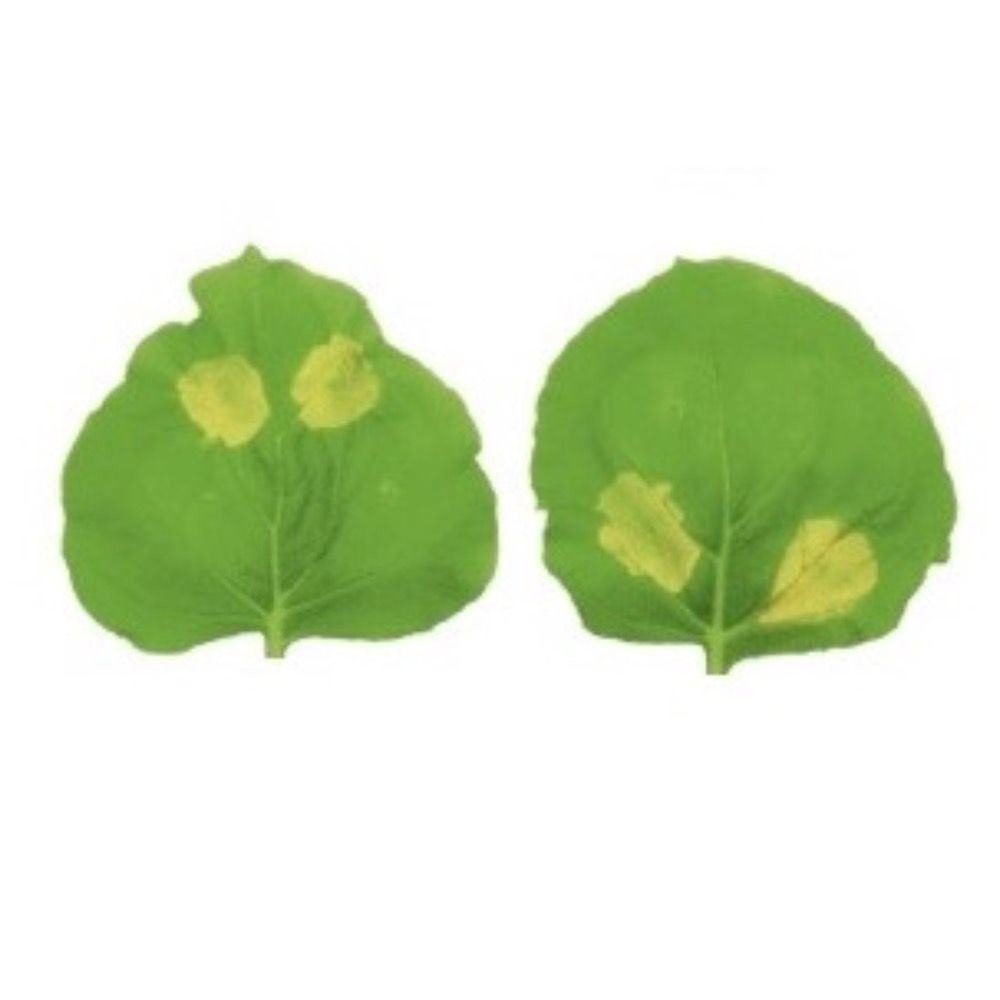
My talk "How to science (and how not to science)" presented at the Swedish University of Agricultural Sciences; course "How to pick a scientific problem" organized by Shamik Mazumdar and Simon Stael. November 18, 2024. doi.org/10.5281/zeno...

December 2, 2024 at 10:31 PM
My talk "How to science (and how not to science)" presented at the Swedish University of Agricultural Sciences; course "How to pick a scientific problem" organized by Shamik Mazumdar and Simon Stael. November 18, 2024. doi.org/10.5281/zeno...
Reposted by jmperez_lab

Interesting read @plantcellphysiol.bsky.social
The world’s first GE tomato is expected to impact the development trend of GE crops worldwide.
GE technology is democratizing the rapid development of crops, contributing to sustainable global food production.
doi.org/10.1093/pcp/...
The world’s first GE tomato is expected to impact the development trend of GE crops worldwide.
GE technology is democratizing the rapid development of crops, contributing to sustainable global food production.
doi.org/10.1093/pcp/...

Letter to the Editor: The World’s First CRISPR Tomato Launched to a Japanese Market: The Social-Economic Impact of its Implementation on Crop Genome Editing
CRISPR/Cas9 (clustered regularly interspaced short palindromic repeats/CRISPR-associated proteins 9) technology was awarded the Nobel Prize 8 years after i
doi.org
November 27, 2024 at 11:29 AM
Interesting read @plantcellphysiol.bsky.social
The world’s first GE tomato is expected to impact the development trend of GE crops worldwide.
GE technology is democratizing the rapid development of crops, contributing to sustainable global food production.
doi.org/10.1093/pcp/...
The world’s first GE tomato is expected to impact the development trend of GE crops worldwide.
GE technology is democratizing the rapid development of crops, contributing to sustainable global food production.
doi.org/10.1093/pcp/...
Reposted by jmperez_lab

It’s out!! We subjected soils from 30 different locations across Europe to extreme events and found that soil fungal and bacterial communities showed consistent responses that could be predicted from their origin! With @knightjar.bsky.social and many collaborators!
www.nature.com/articles/s41...
www.nature.com/articles/s41...
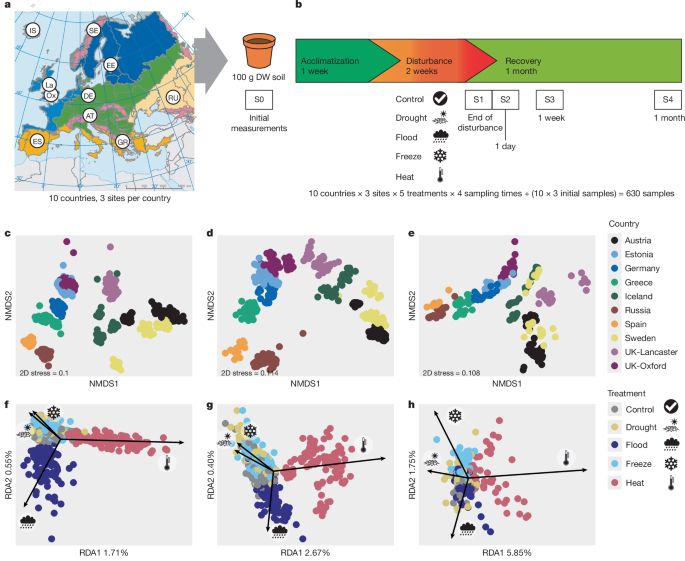
Soil microbiomes show consistent and predictable responses to extreme events - Nature
Soils from 30 grasslands across Europe were subjected to 4 contrasting extreme climatic events under drought, flood, freezing and heat conditions, with the results suggesting that soil microbiomes fro...
www.nature.com
November 27, 2024 at 7:47 PM
It’s out!! We subjected soils from 30 different locations across Europe to extreme events and found that soil fungal and bacterial communities showed consistent responses that could be predicted from their origin! With @knightjar.bsky.social and many collaborators!
www.nature.com/articles/s41...
www.nature.com/articles/s41...
Reposted by jmperez_lab
Along these lines, @naturebiotech.bsky.social
Europe’s first field trial of gene-edited vines has begun in Italy. Chardonnay vines have undergone gene inactivation to better defend themselves against downy mildew, an oomycete disease.
doi.org/10.1038/s415...
Europe’s first field trial of gene-edited vines has begun in Italy. Chardonnay vines have undergone gene inactivation to better defend themselves against downy mildew, an oomycete disease.
doi.org/10.1038/s415...

Italy tests first gene-edited vines for winemaking - Nature Biotechnology
Europe’s first field trial of gene-edited vines began in northern Italy on 30 September 2024. Developed by EdiVite, a spinoff from the University of Verona, these Chardonnay vines have undergone gene ...
doi.org
November 27, 2024 at 11:36 AM
Along these lines, @naturebiotech.bsky.social
Europe’s first field trial of gene-edited vines has begun in Italy. Chardonnay vines have undergone gene inactivation to better defend themselves against downy mildew, an oomycete disease.
doi.org/10.1038/s415...
Europe’s first field trial of gene-edited vines has begun in Italy. Chardonnay vines have undergone gene inactivation to better defend themselves against downy mildew, an oomycete disease.
doi.org/10.1038/s415...
Reposted by jmperez_lab
Interesting work in human cells. Could help explain co-translational decay in plants
www.sciencedirect.com/science/arti...
www.sciencedirect.com/science/arti...

m6A sites in the coding region trigger translation-dependent mRNA decay
N6-Methyladenosine (m6A) is the predominant internal RNA modification in eukaryotic messenger RNAs (mRNAs) and plays a crucial role in mRNA stability.…
www.sciencedirect.com
November 28, 2024 at 8:29 AM
Interesting work in human cells. Could help explain co-translational decay in plants
www.sciencedirect.com/science/arti...
www.sciencedirect.com/science/arti...
Reposted by jmperez_lab

Another sweet tomato gene coming from GWAS. For some reasons I was surprised GWAS being effective. Also impressed with the authors using Prime Editing to edit the less-sweet domesticated allele to the sweet wild allele, and vise versa.
From: onlinelibrary.wiley.com/doi/full/10....
#PlantScience
From: onlinelibrary.wiley.com/doi/full/10....
#PlantScience

A natural variation contributes to sugar accumulation in fruit during tomato domestication
Click on the article title to read more.
onlinelibrary.wiley.com
November 26, 2024 at 5:24 PM
Another sweet tomato gene coming from GWAS. For some reasons I was surprised GWAS being effective. Also impressed with the authors using Prime Editing to edit the less-sweet domesticated allele to the sweet wild allele, and vise versa.
From: onlinelibrary.wiley.com/doi/full/10....
#PlantScience
From: onlinelibrary.wiley.com/doi/full/10....
#PlantScience
Reposted by jmperez_lab

Submit your abstract to #ICAR2025 by the deadlines below!
Abstract Submission deadline for 🌱Oral presentations is March 17th.
Abstract submission deadline for 🌱Poster presentations is May 1st.
Topics for Concurrent and Workshop sessions published!
📅 June 16-20 Ghent 🇧🇪
🕸️ icar2025.com
Abstract Submission deadline for 🌱Oral presentations is March 17th.
Abstract submission deadline for 🌱Poster presentations is May 1st.
Topics for Concurrent and Workshop sessions published!
📅 June 16-20 Ghent 🇧🇪
🕸️ icar2025.com
Summary. - International Conference on Arabidopsis Research: ICAR2025
icar2025.com
November 26, 2024 at 8:53 PM
Submit your abstract to #ICAR2025 by the deadlines below!
Abstract Submission deadline for 🌱Oral presentations is March 17th.
Abstract submission deadline for 🌱Poster presentations is May 1st.
Topics for Concurrent and Workshop sessions published!
📅 June 16-20 Ghent 🇧🇪
🕸️ icar2025.com
Abstract Submission deadline for 🌱Oral presentations is March 17th.
Abstract submission deadline for 🌱Poster presentations is May 1st.
Topics for Concurrent and Workshop sessions published!
📅 June 16-20 Ghent 🇧🇪
🕸️ icar2025.com