




Andrés F. Correa-Sánchez
@a-correasanchez.bsky.social
Oligonucleotide development and translational science.
📌 Nucleic Acid Therapy Accelerator - NATA
Views on my own.
#PrideInSTEM 🏳️⚧️🏳️🌈 (He/Him)
📌 Nucleic Acid Therapy Accelerator - NATA
Views on my own.
#PrideInSTEM 🏳️⚧️🏳️🌈 (He/Him)
Reposted by Andrés F. Correa-Sánchez

The age that autism is diagnosed may partly reflect underlying biological and developmental differences among individuals with autism, according to a study in Nature. go.nature.com/4gQ5gSV 🧬 🧪

October 12, 2025 at 1:03 AM
The age that autism is diagnosed may partly reflect underlying biological and developmental differences among individuals with autism, according to a study in Nature. go.nature.com/4gQ5gSV 🧬 🧪
Reposted by Andrés F. Correa-Sánchez

We are pleased that NATA’s work is featured on the cover of Nucleic Acid Therapeutics. The study benchmarks ModDetect antibodies for detecting PS and MOE modifications in ASOs. Congrats to our Biology team.
Cover shows stained 3D cell cultures.
Read the paper: www.liebertpub.com/doi/10.1177/...
Cover shows stained 3D cell cultures.
Read the paper: www.liebertpub.com/doi/10.1177/...

Characterizing Antibodies Targeting Antisense Oligonucleotide Phosphorothioate and 2′-O-Methoxyethyl Modifications for Intracellular Trafficking and Biodistribution Studies | Nucleic Acid Therapeutics
The efficacy of nucleic acid therapeutics (NATs) such as antisense oligonucleotides (ASOs) and small interfering RNAs relies on multiple stages of extra- and intracellular trafficking. Assessing uptak...
www.liebertpub.com
September 2, 2025 at 10:37 AM
We are pleased that NATA’s work is featured on the cover of Nucleic Acid Therapeutics. The study benchmarks ModDetect antibodies for detecting PS and MOE modifications in ASOs. Congrats to our Biology team.
Cover shows stained 3D cell cultures.
Read the paper: www.liebertpub.com/doi/10.1177/...
Cover shows stained 3D cell cultures.
Read the paper: www.liebertpub.com/doi/10.1177/...
Reposted by Andrés F. Correa-Sánchez
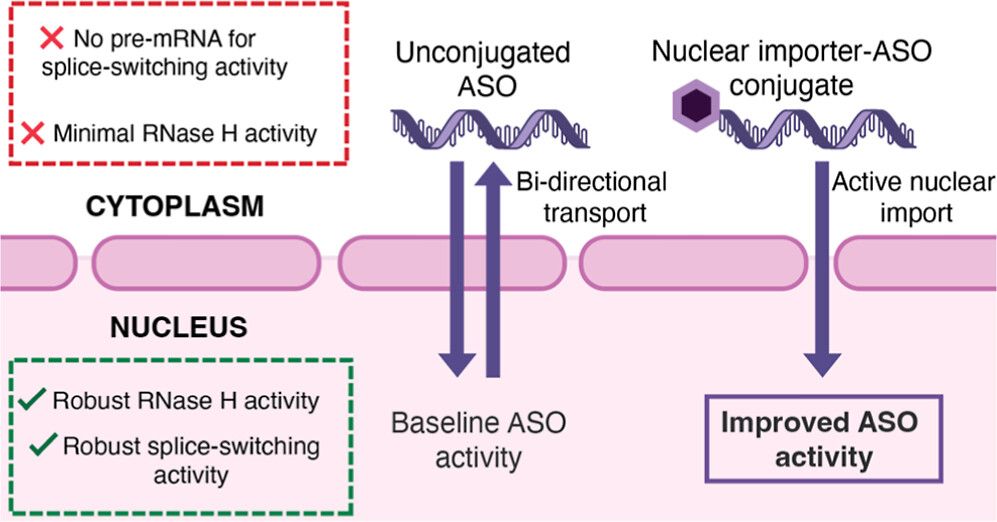
We have dramatically increased splice switching *and* RNase-H ASO activity by conjugating a nuclear importer!
Published in JACS (@jacs.acspublications.org )
Led by Disha Kashyap, with Tom Milne+@natahub.org
@uclchemistry.bsky.social 🧬🧪 #chemsky
pubs.acs.org/doi/10.1021/...
Published in JACS (@jacs.acspublications.org )
Led by Disha Kashyap, with Tom Milne+@natahub.org
@uclchemistry.bsky.social 🧬🧪 #chemsky
pubs.acs.org/doi/10.1021/...
August 5, 2025 at 8:26 AM
We have dramatically increased splice switching *and* RNase-H ASO activity by conjugating a nuclear importer!
Published in JACS (@jacs.acspublications.org )
Led by Disha Kashyap, with Tom Milne+@natahub.org
@uclchemistry.bsky.social 🧬🧪 #chemsky
pubs.acs.org/doi/10.1021/...
Published in JACS (@jacs.acspublications.org )
Led by Disha Kashyap, with Tom Milne+@natahub.org
@uclchemistry.bsky.social 🧬🧪 #chemsky
pubs.acs.org/doi/10.1021/...
Reposted by Andrés F. Correa-Sánchez
🚨 Preprint alert 🚨 We have developed an entirely new mechanism of action for ASO gene knockdown -> lysosomal trafficking!
Works with non-DNA ASOs (unlike RNase H mech) and higher activity than corresponding gapmers!
#chemsky 🧪 @uclchemistry.bsky.social sky.social
chemrxiv.org/engage/chemr...
Works with non-DNA ASOs (unlike RNase H mech) and higher activity than corresponding gapmers!
#chemsky 🧪 @uclchemistry.bsky.social sky.social
chemrxiv.org/engage/chemr...
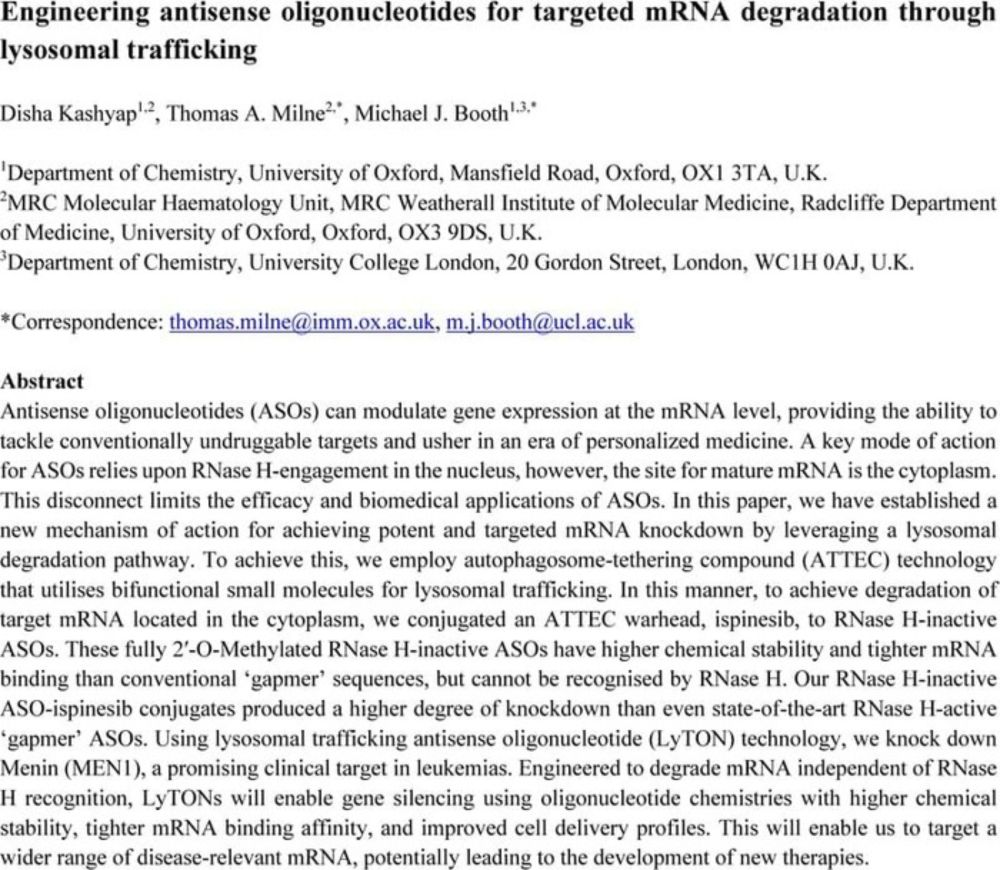
Engineering antisense oligonucleotides for targeted mRNA degradation through lysosomal trafficking
Antisense oligonucleotides (ASOs) can modulate gene expression at the mRNA level, providing the ability to tackle conventionally undruggable targets and usher in an era of personalized medicine. A key...
chemrxiv.org
March 7, 2025 at 8:51 AM
🚨 Preprint alert 🚨 We have developed an entirely new mechanism of action for ASO gene knockdown -> lysosomal trafficking!
Works with non-DNA ASOs (unlike RNase H mech) and higher activity than corresponding gapmers!
#chemsky 🧪 @uclchemistry.bsky.social sky.social
chemrxiv.org/engage/chemr...
Works with non-DNA ASOs (unlike RNase H mech) and higher activity than corresponding gapmers!
#chemsky 🧪 @uclchemistry.bsky.social sky.social
chemrxiv.org/engage/chemr...
Reposted by Andrés F. Correa-Sánchez
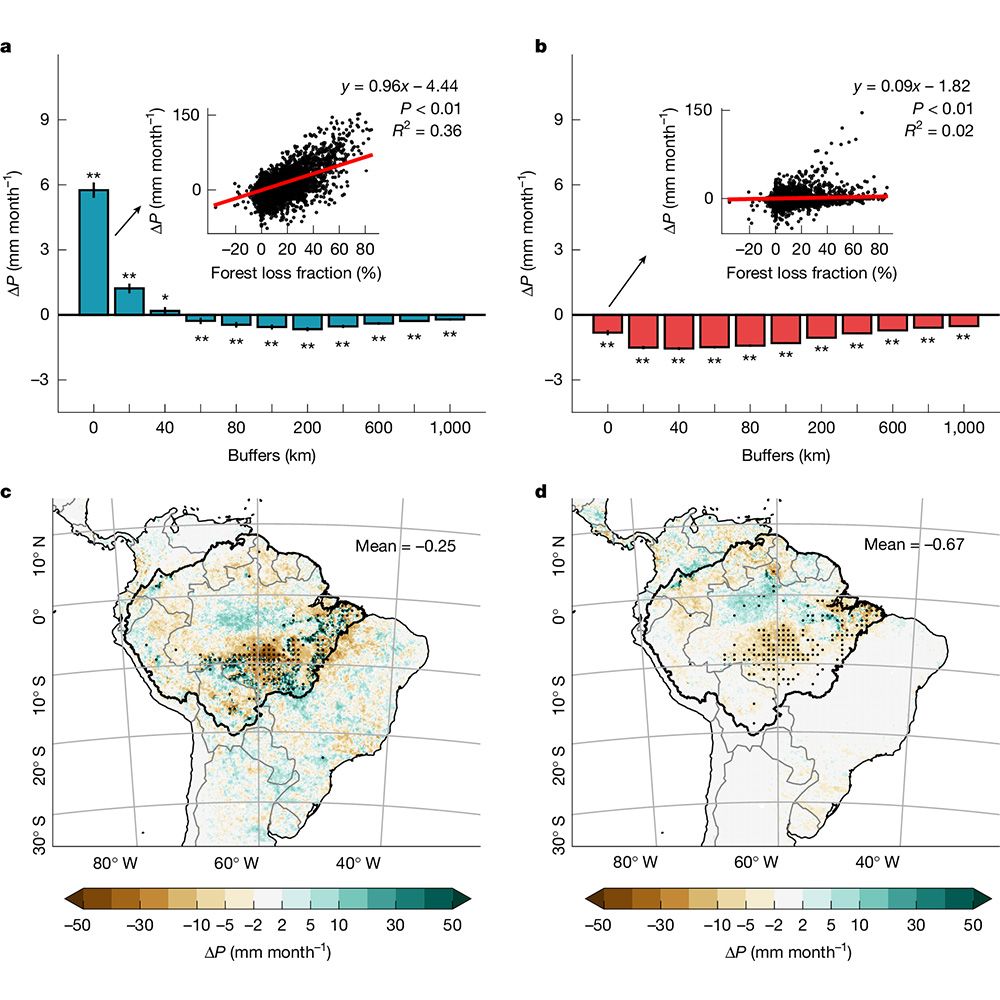
Amazonian deforestation is making wet seasons wetter and dry seasons dryer, according to research in Nature. The analysis highlights the local and regional effects of removing trees from the tropical region. https://go.nature.com/41jCClO 🧪
March 6, 2025 at 2:42 PM
Amazonian deforestation is making wet seasons wetter and dry seasons dryer, according to research in Nature. The analysis highlights the local and regional effects of removing trees from the tropical region. https://go.nature.com/41jCClO 🧪
Reposted by Andrés F. Correa-Sánchez
Synthetic biologists discuss with Nature why it’s so hard to write a genome. “We underestimated how complex biology is.” 🧪 🧬

Why is it so hard to rewrite a genome?
Synthetic biologists have the know-how and ambition to retool whole genomes. But the hidden complexity of biological systems continues to surprise them.
go.nature.com
March 2, 2025 at 2:32 AM
Synthetic biologists discuss with Nature why it’s so hard to write a genome. “We underestimated how complex biology is.” 🧪 🧬
Reposted by Andrés F. Correa-Sánchez
🌍Today is Rare Disease Day!
Here’s a reminder that with over 300 million people worldwide living with a rare disease—only 5% having approved treatments—there is still so much work to be done.
At NATA, we are committed to advancing nucleic acid therapies for rare diseases.
#RareDiseaseDay
Here’s a reminder that with over 300 million people worldwide living with a rare disease—only 5% having approved treatments—there is still so much work to be done.
At NATA, we are committed to advancing nucleic acid therapies for rare diseases.
#RareDiseaseDay


February 28, 2025 at 1:21 PM
🌍Today is Rare Disease Day!
Here’s a reminder that with over 300 million people worldwide living with a rare disease—only 5% having approved treatments—there is still so much work to be done.
At NATA, we are committed to advancing nucleic acid therapies for rare diseases.
#RareDiseaseDay
Here’s a reminder that with over 300 million people worldwide living with a rare disease—only 5% having approved treatments—there is still so much work to be done.
At NATA, we are committed to advancing nucleic acid therapies for rare diseases.
#RareDiseaseDay
Reposted by Andrés F. Correa-Sánchez
Another assault on US competitiveness at a time when biomedicine is roaring with innovation, an own-goal in a high-stakes international tournament. Of course the real losers are American people needing medicines and cures.
www.washingtonpost.com/health/2025/...
www.washingtonpost.com/health/2025/...
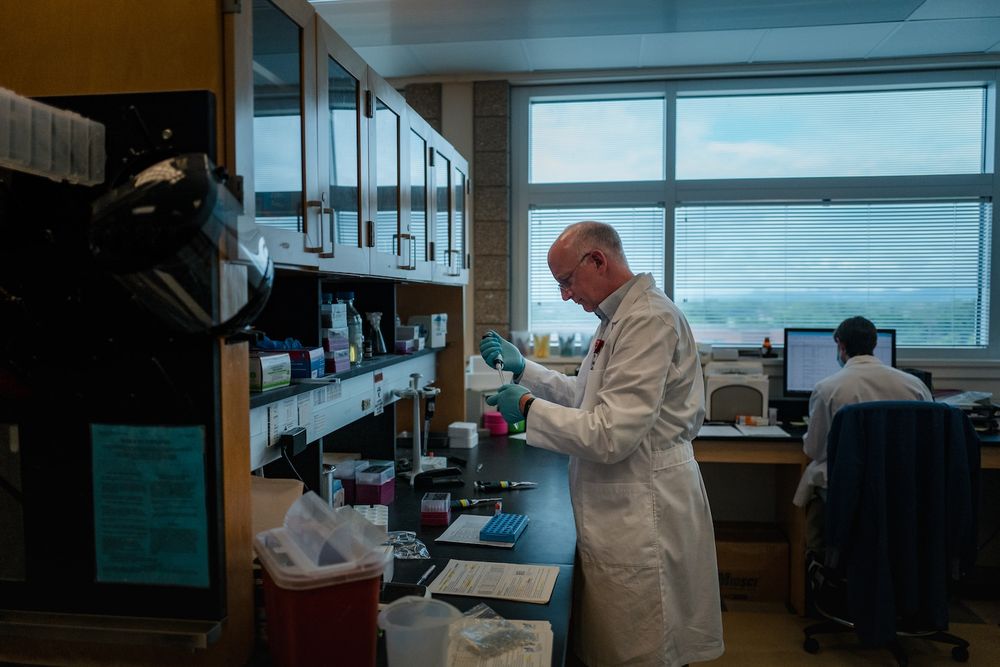
NIH cuts billions of dollars in biomedical funding, effective immediately
The move halts a large slice of money for most universities and research institutions virtually overnight, imperiling vital research in everything from cancer to heart disease.
www.washingtonpost.com
February 8, 2025 at 5:12 PM
Another assault on US competitiveness at a time when biomedicine is roaring with innovation, an own-goal in a high-stakes international tournament. Of course the real losers are American people needing medicines and cures.
www.washingtonpost.com/health/2025/...
www.washingtonpost.com/health/2025/...
Reposted by Andrés F. Correa-Sánchez
~1.5 weeks left till the deadline for my two Engineering Biology/Synthetic Biology PhD positions!
Please share 🙏 #chemsky 🧪
Please share 🙏 #chemsky 🧪
TWO PhD opportunities to join my group on the new CDT in Engineering Solutions for Antimicrobial Resistance!
Synthetic cells and DNA nanotechnology 🧬🦠🧑🔬
- Project details below
Open Day 18th December 11 am
Application Deadline 26th January 2025
#chemsky 🧪
www.findaphd.com/phds/program...
Synthetic cells and DNA nanotechnology 🧬🦠🧑🔬
- Project details below
Open Day 18th December 11 am
Application Deadline 26th January 2025
#chemsky 🧪
www.findaphd.com/phds/program...

FindAPhD : 10 fully funded 4-year PhD studentships at the EPSRC and BBSCR Centre for Doctoral Training in Engineering Solutions for Antimicrobial Resistance at University College London
Apply for a PhD: 10 fully funded 4-year PhD studentships at the EPSRC and BBSCR Centre for Doctoral Training in Engineering Solutions for Antimicrobial Resistance at University College London
www.findaphd.com
January 15, 2025 at 9:08 AM
~1.5 weeks left till the deadline for my two Engineering Biology/Synthetic Biology PhD positions!
Please share 🙏 #chemsky 🧪
Please share 🙏 #chemsky 🧪
Reposted by Andrés F. Correa-Sánchez

Controversial COVID study that promoted unproven treatment retracted after four-year saga
Paper on hydroxychloroquine led by French researcher Didier Raoult is second-most-cited study ever to be withdrawn.
@richvn.bsky.social reports at Nature.
www.nature.com/articles/d41...
Paper on hydroxychloroquine led by French researcher Didier Raoult is second-most-cited study ever to be withdrawn.
@richvn.bsky.social reports at Nature.
www.nature.com/articles/d41...

Controversial COVID study that promoted unproven treatment retracted after four-year saga
Paper on hydroxychloroquine led by French researcher Didier Raoult is second-most-cited study ever to be withdrawn.
www.nature.com
December 18, 2024 at 5:09 PM
Controversial COVID study that promoted unproven treatment retracted after four-year saga
Paper on hydroxychloroquine led by French researcher Didier Raoult is second-most-cited study ever to be withdrawn.
@richvn.bsky.social reports at Nature.
www.nature.com/articles/d41...
Paper on hydroxychloroquine led by French researcher Didier Raoult is second-most-cited study ever to be withdrawn.
@richvn.bsky.social reports at Nature.
www.nature.com/articles/d41...
Reposted by Andrés F. Correa-Sánchez
We just published a review in ACS Bio & Med Chem Au on the state-of-the-art and future of covalent nucleic acid conjugates as therapeutics 🧬💊!
Led by Disha Kashyap
@acspublications.bsky.social @uclchemistry.bsky.social @oxfordchemistry.bsky.social
#chemsky 🧪
pubs.acs.org/doi/10.1021/...
Led by Disha Kashyap
@acspublications.bsky.social @uclchemistry.bsky.social @oxfordchemistry.bsky.social
#chemsky 🧪
pubs.acs.org/doi/10.1021/...

Nucleic Acid Conjugates: Unlocking Therapeutic Potential
Nucleic acids have emerged as a powerful class of therapeutics. Through simple base pair complementarity, nucleic acids allow the targeting of a variety of pathologically relevant proteins and RNA molecules. However, despite the preliminary successes of nucleic acids as drugs in the clinic, limited biodistribution, inadequate delivery mechanisms, and target engagement remain key challenges in the field. A key area of research has been the chemical optimization of nucleic acid backbones to significantly enhance their “drug-like” properties. Alternatively, this review focuses on the next generation of nucleic acid chemical modifications: covalent biochemical conjugates. These conjugates are being applied to improve the delivery, functionality, and targeting. Exploiting research on heterobifunctionals, such as PROTACs, RIBOTACs, molecular glues, etc., has the potential to dramatically expand nucleic acid drug functionality and target engagement capabilities. Such next-generation chemistry-based enhancements have the potential to unlock nucleic acids as effective and versatile therapeutic agents.
pubs.acs.org
December 18, 2024 at 10:10 AM
We just published a review in ACS Bio & Med Chem Au on the state-of-the-art and future of covalent nucleic acid conjugates as therapeutics 🧬💊!
Led by Disha Kashyap
@acspublications.bsky.social @uclchemistry.bsky.social @oxfordchemistry.bsky.social
#chemsky 🧪
pubs.acs.org/doi/10.1021/...
Led by Disha Kashyap
@acspublications.bsky.social @uclchemistry.bsky.social @oxfordchemistry.bsky.social
#chemsky 🧪
pubs.acs.org/doi/10.1021/...
Reposted by Andrés F. Correa-Sánchez
Nature Medicine asks leading researchers to name their top clinical trial for 2025, from gene therapies for prion disease and sickle-cell disease to digital tools for cancer and mental health. Read what they named as their top 11 trials. 🧪

Eleven clinical trials that will shape medicine in 2025 - Nature Medicine
Nature Medicine asks leading researchers to name their top clinical trial for 2025, from gene therapies for prion disease and sickle-cell disease to digital tools for cancer and mental health.
go.nature.com
December 14, 2024 at 3:06 PM
Nature Medicine asks leading researchers to name their top clinical trial for 2025, from gene therapies for prion disease and sickle-cell disease to digital tools for cancer and mental health. Read what they named as their top 11 trials. 🧪
I remember trying to understand this book's complexity at school 🤯. The series is very well produced. Totally Recommended. www.theguardian.com/tv-and-radio...

One Hundred Years of Solitude review – Gabriel García Márquez’s classic makes for startling TV beauty
This 16-part series does justice to Gabriel García Márquez’s magical-realist masterwork – although the novel’s sexual politics have aged badly
www.theguardian.com
December 14, 2024 at 8:43 AM
I remember trying to understand this book's complexity at school 🤯. The series is very well produced. Totally Recommended. www.theguardian.com/tv-and-radio...
Every time I see someone using GAPDH as a reference gene:

a man in a blue suit and white turtleneck is standing next to a car .
Alt: a man in a blue suit and white turtleneck is standing next to a car screaming "NOOO!".
media.tenor.com
December 7, 2024 at 8:32 AM
Every time I see someone using GAPDH as a reference gene:
Reposted by Andrés F. Correa-Sánchez

December 7, 2024 at 1:05 AM
Reposted by Andrés F. Correa-Sánchez
Trial of Controversial Alzheimer’s Drug Halted After Disappointing Results
Cassava Sciences said that its drug did not significantly reduce cognitive decline in 1,900 people with mild to moderate Alzheimer’s disease.
@teddyrosenbluth.bsky.social for @nytimes.com
www.nytimes.com/2024/11/25/h...
Cassava Sciences said that its drug did not significantly reduce cognitive decline in 1,900 people with mild to moderate Alzheimer’s disease.
@teddyrosenbluth.bsky.social for @nytimes.com
www.nytimes.com/2024/11/25/h...

Trial of Controversial Alzheimer’s Drug Halted After Disappointing Results (Gift Article)
Cassava Sciences said that its drug did not significantly reduce cognitive decline in 1,900 people with mild to moderate Alzheimer’s disease.
www.nytimes.com
November 26, 2024 at 3:17 AM
Trial of Controversial Alzheimer’s Drug Halted After Disappointing Results
Cassava Sciences said that its drug did not significantly reduce cognitive decline in 1,900 people with mild to moderate Alzheimer’s disease.
@teddyrosenbluth.bsky.social for @nytimes.com
www.nytimes.com/2024/11/25/h...
Cassava Sciences said that its drug did not significantly reduce cognitive decline in 1,900 people with mild to moderate Alzheimer’s disease.
@teddyrosenbluth.bsky.social for @nytimes.com
www.nytimes.com/2024/11/25/h...
Reposted by Andrés F. Correa-Sánchez
‘A place of joy’: why scientists are joining the rush to Bluesky
For me, it certainly feels good to be here!
@natureportfolio.bsky.social @bsky.app
www.nature.com/articles/d41...
For me, it certainly feels good to be here!
@natureportfolio.bsky.social @bsky.app
www.nature.com/articles/d41...
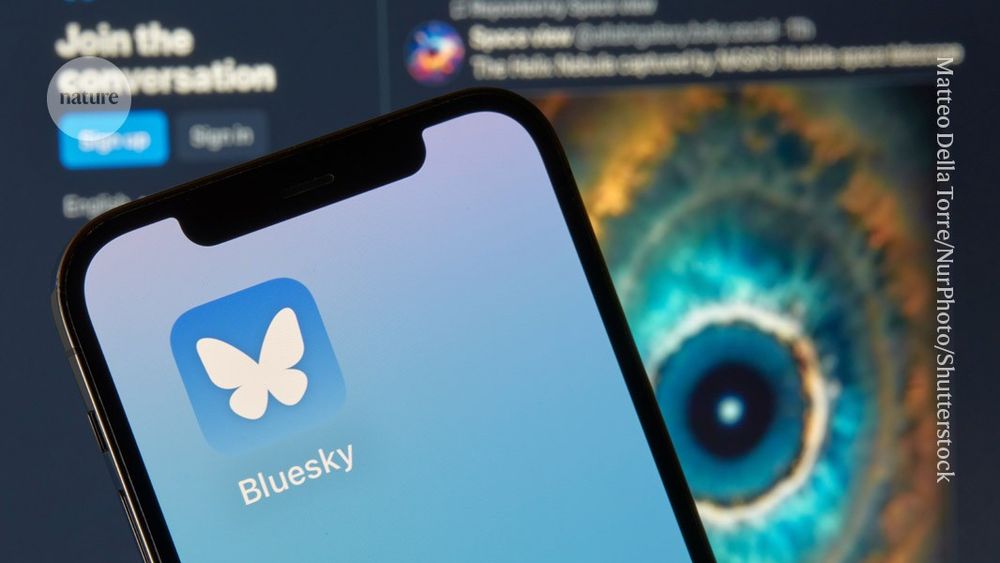
‘A place of joy’: why scientists are joining the rush to Bluesky
Researchers say the social-media platform — an alternative to X — offers more control over the content they see and the people they engage with.
www.nature.com
November 22, 2024 at 6:49 AM
‘A place of joy’: why scientists are joining the rush to Bluesky
For me, it certainly feels good to be here!
@natureportfolio.bsky.social @bsky.app
www.nature.com/articles/d41...
For me, it certainly feels good to be here!
@natureportfolio.bsky.social @bsky.app
www.nature.com/articles/d41...
Reposted by Andrés F. Correa-Sánchez

For people interested in Duchenne and wanting to know how givinostat works explained in simple terms:
www.exonskipping.nl/whats-hot/gi...
This is based on text I provided earlier for @worldduchenne.bsky.social and Italfarmaco kindly provided unrestricted funds (i.e. I was in charge) to illustrate it
www.exonskipping.nl/whats-hot/gi...
This is based on text I provided earlier for @worldduchenne.bsky.social and Italfarmaco kindly provided unrestricted funds (i.e. I was in charge) to illustrate it

Givinostat - Exon skipping
HOW DOES GIVINOSTAT WORK? Explained by Annemieke Aartsma-Rus.
www.exonskipping.nl
November 20, 2024 at 1:15 PM
For people interested in Duchenne and wanting to know how givinostat works explained in simple terms:
www.exonskipping.nl/whats-hot/gi...
This is based on text I provided earlier for @worldduchenne.bsky.social and Italfarmaco kindly provided unrestricted funds (i.e. I was in charge) to illustrate it
www.exonskipping.nl/whats-hot/gi...
This is based on text I provided earlier for @worldduchenne.bsky.social and Italfarmaco kindly provided unrestricted funds (i.e. I was in charge) to illustrate it
Reposted by Andrés F. Correa-Sánchez
Like me, you might be frustrated at the amount of overlapping and photoshopped images in science papers that we sleuths are finding.
But what is even more frustrating is the lack of response and action from journals.
Here is a thread with some outrageous examples.
#ThisImageIsFine
/
But what is even more frustrating is the lack of response and action from journals.
Here is a thread with some outrageous examples.
#ThisImageIsFine
/
November 20, 2024 at 2:06 AM
Like me, you might be frustrated at the amount of overlapping and photoshopped images in science papers that we sleuths are finding.
But what is even more frustrating is the lack of response and action from journals.
Here is a thread with some outrageous examples.
#ThisImageIsFine
/
But what is even more frustrating is the lack of response and action from journals.
Here is a thread with some outrageous examples.
#ThisImageIsFine
/
Reposted by Andrés F. Correa-Sánchez
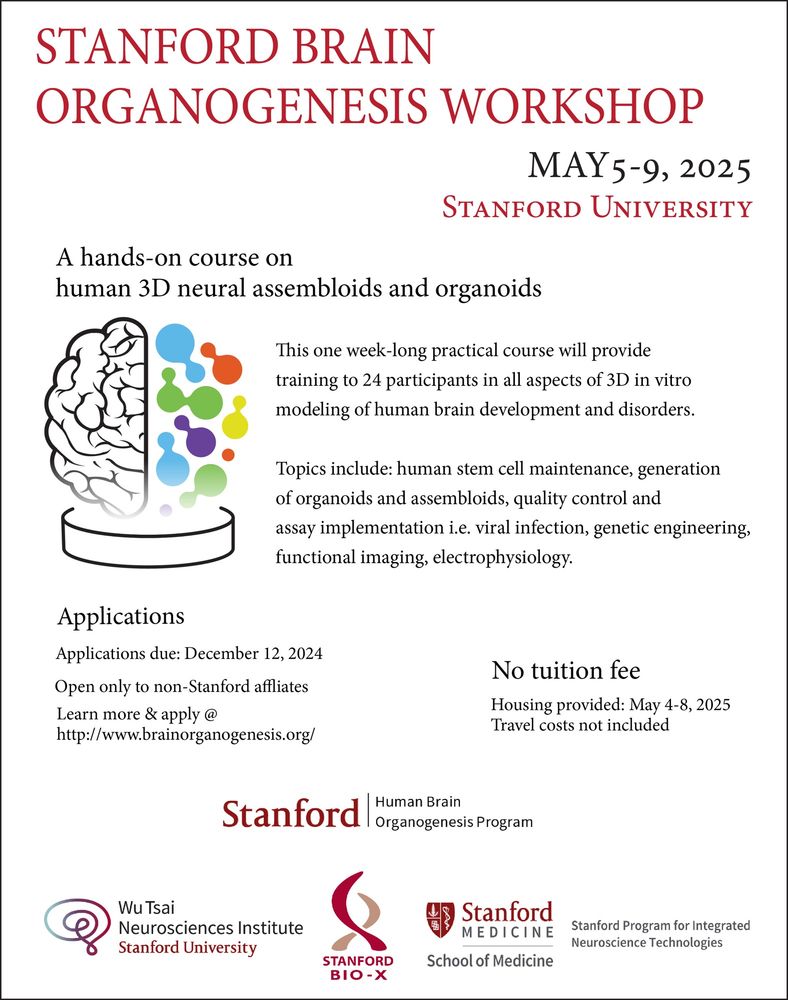
As our community grows here, reminder that our free hands on course on all aspects of modeling neural development and disease with #assembloids and #organoids will be taking place next year 👇
Glad to announce a new edition of our popular, free, hands-on Stanford course on making, probing and manipulating neural #assembloids and #organoids
Deadline in mid-December
Deadline in mid-December
November 17, 2024 at 6:46 PM
As our community grows here, reminder that our free hands on course on all aspects of modeling neural development and disease with #assembloids and #organoids will be taking place next year 👇