
Chen Zhang
@zchenstory.bsky.social
Bacteriologist studying S-layer 🔬🦠🧬 Postdoc at Rudner lab @harvardmed. PhD alumni @epfl
Reposted by Chen Zhang

The moment you’ve all been waiting for…
🦠 SAVE THE DATE! 🦠
BBM2026 will be held from June 22nd - 23rd at Boston University’s George Sherman Union. Our featured speaker this year is Dr. Eric Skaar from Vanderbilt University!
Registration opens soon!
More info at: bostonbacterial.org
#BBM2026
🦠 SAVE THE DATE! 🦠
BBM2026 will be held from June 22nd - 23rd at Boston University’s George Sherman Union. Our featured speaker this year is Dr. Eric Skaar from Vanderbilt University!
Registration opens soon!
More info at: bostonbacterial.org
#BBM2026

February 12, 2026 at 11:38 AM
The moment you’ve all been waiting for…
🦠 SAVE THE DATE! 🦠
BBM2026 will be held from June 22nd - 23rd at Boston University’s George Sherman Union. Our featured speaker this year is Dr. Eric Skaar from Vanderbilt University!
Registration opens soon!
More info at: bostonbacterial.org
#BBM2026
🦠 SAVE THE DATE! 🦠
BBM2026 will be held from June 22nd - 23rd at Boston University’s George Sherman Union. Our featured speaker this year is Dr. Eric Skaar from Vanderbilt University!
Registration opens soon!
More info at: bostonbacterial.org
#BBM2026
Reposted by Chen Zhang
Excited to share first preprint from our lab! @giubotti.bsky.social found that antibiotic tolerance in multispecies biofilms follows a surprising spatial pattern: cells survive only at intermediate distances from a partner species. 🦠 Preprint: doi.org/10.64898/202...

February 11, 2026 at 3:21 PM
Excited to share first preprint from our lab! @giubotti.bsky.social found that antibiotic tolerance in multispecies biofilms follows a surprising spatial pattern: cells survive only at intermediate distances from a partner species. 🦠 Preprint: doi.org/10.64898/202...
Reposted by Chen Zhang

Do microbes get more food by swimming or staying still? Turns out both work, and cilia help them pull in nutrients no matter the strategy.
buff.ly/vK3GmK5
buff.ly/vK3GmK5

Should I stay or should I swim
Evolutionary pressures have shaped the feeding behaviours of aquatic microorganisms in alignment with the underlying physics of fluid flow.
buff.ly
February 1, 2026 at 11:28 PM
Do microbes get more food by swimming or staying still? Turns out both work, and cilia help them pull in nutrients no matter the strategy.
buff.ly/vK3GmK5
buff.ly/vK3GmK5
Reposted by Chen Zhang

🔬🚨New preprint alert! 🚨🔬
We developed quantitative expansion microscopy (qExM) - a method to accurately count proteins in situ by combining expansion microscopy's improved labeling with statistical estimators borrowed from ecology
www.biorxiv.org/content/10.6...
#SuperResolution #CellBiology
We developed quantitative expansion microscopy (qExM) - a method to accurately count proteins in situ by combining expansion microscopy's improved labeling with statistical estimators borrowed from ecology
www.biorxiv.org/content/10.6...
#SuperResolution #CellBiology
www.biorxiv.org
January 20, 2026 at 4:12 PM
🔬🚨New preprint alert! 🚨🔬
We developed quantitative expansion microscopy (qExM) - a method to accurately count proteins in situ by combining expansion microscopy's improved labeling with statistical estimators borrowed from ecology
www.biorxiv.org/content/10.6...
#SuperResolution #CellBiology
We developed quantitative expansion microscopy (qExM) - a method to accurately count proteins in situ by combining expansion microscopy's improved labeling with statistical estimators borrowed from ecology
www.biorxiv.org/content/10.6...
#SuperResolution #CellBiology
everytime I thought:
"such a nice and straightforward idea why no one had tried"
and when I tried:
"damn I cannot make the plasmid"
"such a nice and straightforward idea why no one had tried"
and when I tried:
"damn I cannot make the plasmid"
January 8, 2026 at 3:23 PM
everytime I thought:
"such a nice and straightforward idea why no one had tried"
and when I tried:
"damn I cannot make the plasmid"
"such a nice and straightforward idea why no one had tried"
and when I tried:
"damn I cannot make the plasmid"
Reposted by Chen Zhang
December 19, 2025 at 10:31 AM
Reposted by Chen Zhang

Fer’s tour de force in B. anthracis is out! Fer got Tn-seq running, built an ordered knockout library, defined all essential sporulation genes, and found a peptidoglycan deacetylase inhibitor critical for engulfment. Including our first one-by-all Alphafold screen! journals.plos.org/plosbiology/...

Identification of sporulation genes in Bacillus anthracis highlights similarities and significant differences with Bacillus subtilis
How good is Bacillus subtilis as a model for the spore-forming pathogen Bacillus anthracis? Using high throughput genetics to identify B. anthracis sporulation genes and cytological analysis of the mu...
journals.plos.org
December 13, 2025 at 4:53 PM
Fer’s tour de force in B. anthracis is out! Fer got Tn-seq running, built an ordered knockout library, defined all essential sporulation genes, and found a peptidoglycan deacetylase inhibitor critical for engulfment. Including our first one-by-all Alphafold screen! journals.plos.org/plosbiology/...
always artist Julius!
🔬🥟 What do empanadas and #mitochondria have in common?
More than you'd think. Our "empanada-shaped" cells just helped uncover hidden subpopulations of mitochondria in your everyday, unpolarized cell lines. Curious how mitochondrial trafficking shapes network health?
More than you'd think. Our "empanada-shaped" cells just helped uncover hidden subpopulations of mitochondria in your everyday, unpolarized cell lines. Curious how mitochondrial trafficking shapes network health?

December 11, 2025 at 3:18 PM
always artist Julius!
Reposted by Chen Zhang
1/Now published! We identify a novel regulatory layer underlying SOS response dynamic. Find a short summary about our findings below.
journals.plos.org/plosbiology/...
#MicroSky
journals.plos.org/plosbiology/...
#MicroSky

Variability in intrinsic promoter strength underlies the temporal hierarchy of the Caulobacter SOS response induction
The bacterial SOS response unfolds in a defined temporal order, but the determinants of this hierarchy are unclear. This study shows that intrinsic promoter strength, modulated in part by sigma factor...
journals.plos.org
December 10, 2025 at 1:46 PM
1/Now published! We identify a novel regulatory layer underlying SOS response dynamic. Find a short summary about our findings below.
journals.plos.org/plosbiology/...
#MicroSky
journals.plos.org/plosbiology/...
#MicroSky
Reposted by Chen Zhang

‘Chromosomal Topological Domain Formation Modulates Transcription and the Coupling of Neighboring Genes in Escherichia coli‘ by Drs. Nico Yehya, Christopher Bohrer, and collaborators, is now available on bioRxiv. Check it out! doi: doi.org/10.1101/2025...

Chromosomal Topological Domain Formation Modulates Transcription and the Coupling of Neighboring Genes in Escherichia coli
Chromosomal topology and transcription are tightly coupled, yet the quantitative impact of topological constraints on transcription, supercoiling, and the potential coupling between neighboring genes ...
doi.org
November 25, 2025 at 2:04 PM
‘Chromosomal Topological Domain Formation Modulates Transcription and the Coupling of Neighboring Genes in Escherichia coli‘ by Drs. Nico Yehya, Christopher Bohrer, and collaborators, is now available on bioRxiv. Check it out! doi: doi.org/10.1101/2025...
Reposted by Chen Zhang
Really cool paper from @vincentdebakker.bsky.social @jonbakerlab.bsky.social now published @natcomms.nature.com #MicroSky www.nature.com/articles/s41...
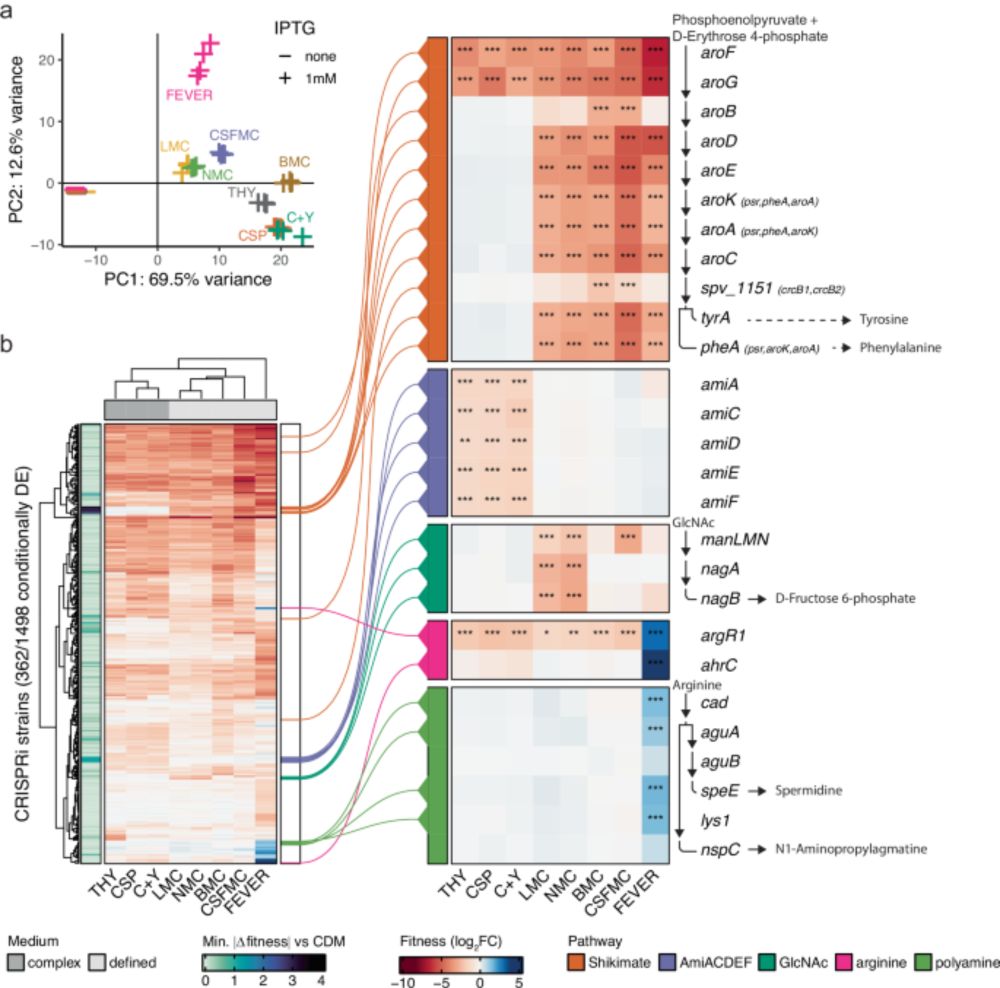
Multi-omics profiling reveals atypical sugar utilization and a key membrane composition regulator in Streptococcus pneumoniae - Nature Communications
The pathogen Streptococcus pneumoniae can adapt to diverse microenvironments in the human body. Here, De Bakker et al. study these adaptation responses, showing unusual sugar utilization and identifyi...
www.nature.com
November 25, 2025 at 1:44 PM
Really cool paper from @vincentdebakker.bsky.social @jonbakerlab.bsky.social now published @natcomms.nature.com #MicroSky www.nature.com/articles/s41...
Reposted by Chen Zhang

Hmmm
This work has so many implications on literature 😳😬
Fluorescein-based dyes are not valid reporters of oxidative stress in bacteria, and conclusions based on their use must be reconsidered | PNAS www.pnas.org/doi/10.1073/...
This work has so many implications on literature 😳😬
Fluorescein-based dyes are not valid reporters of oxidative stress in bacteria, and conclusions based on their use must be reconsidered | PNAS www.pnas.org/doi/10.1073/...

Fluorescein-based dyes are not valid reporters of oxidative stress in bacteria, and conclusions based on their use must be reconsidered | PNAS
Dihydrodichlorofluorescein derivatives have been employed as reporters of intracellular
reactive oxygen species (ROS) in innumerable studies. Their...
www.pnas.org
November 19, 2025 at 5:03 AM
Hmmm
This work has so many implications on literature 😳😬
Fluorescein-based dyes are not valid reporters of oxidative stress in bacteria, and conclusions based on their use must be reconsidered | PNAS www.pnas.org/doi/10.1073/...
This work has so many implications on literature 😳😬
Fluorescein-based dyes are not valid reporters of oxidative stress in bacteria, and conclusions based on their use must be reconsidered | PNAS www.pnas.org/doi/10.1073/...
Reposted by Chen Zhang

Happy to share our latest T6SS review:
nature.com/articles/s41...
Thank you, Jan, Danny (@dannyjamesward.bsky.social), Joana (@joanampereira.bsky.social), as well as reviewers and editors @natrevmicro.nature.com!
nature.com/articles/s41...
Thank you, Jan, Danny (@dannyjamesward.bsky.social), Joana (@joanampereira.bsky.social), as well as reviewers and editors @natrevmicro.nature.com!

The type VI secretion system and associated effector proteins - Nature Reviews Microbiology
In this Review, Basler and colleagues examine the type VI secretion system (T6SS), focusing on the diversity of antibacterial T6SS effectors and the evolutionary forces that shape them. They explain h...
nature.com
November 17, 2025 at 10:08 AM
Happy to share our latest T6SS review:
nature.com/articles/s41...
Thank you, Jan, Danny (@dannyjamesward.bsky.social), Joana (@joanampereira.bsky.social), as well as reviewers and editors @natrevmicro.nature.com!
nature.com/articles/s41...
Thank you, Jan, Danny (@dannyjamesward.bsky.social), Joana (@joanampereira.bsky.social), as well as reviewers and editors @natrevmicro.nature.com!
Reposted by Chen Zhang

Assembly, architecture and functional roles of microbial surface layers
Review article published in @natrevmicro.nature.com with @bupbuse.bsky.social, Andriko von Kügelgen and @vikramalva.bsky.social.
S-layers are everywhere!
www.nature.com/articles/s41...
Review article published in @natrevmicro.nature.com with @bupbuse.bsky.social, Andriko von Kügelgen and @vikramalva.bsky.social.
S-layers are everywhere!
www.nature.com/articles/s41...

Assembly, architecture and functional roles of microbial surface layers - Nature Reviews Microbiology
Surface layers (S-layers) are ubiquitous protein assemblies that coat prokaryotic cells, with their functional roles increasingly coming into focus. In this Review, Isbilir and colleagues discuss rece...
www.nature.com
November 13, 2025 at 8:14 PM
Assembly, architecture and functional roles of microbial surface layers
Review article published in @natrevmicro.nature.com with @bupbuse.bsky.social, Andriko von Kügelgen and @vikramalva.bsky.social.
S-layers are everywhere!
www.nature.com/articles/s41...
Review article published in @natrevmicro.nature.com with @bupbuse.bsky.social, Andriko von Kügelgen and @vikramalva.bsky.social.
S-layers are everywhere!
www.nature.com/articles/s41...
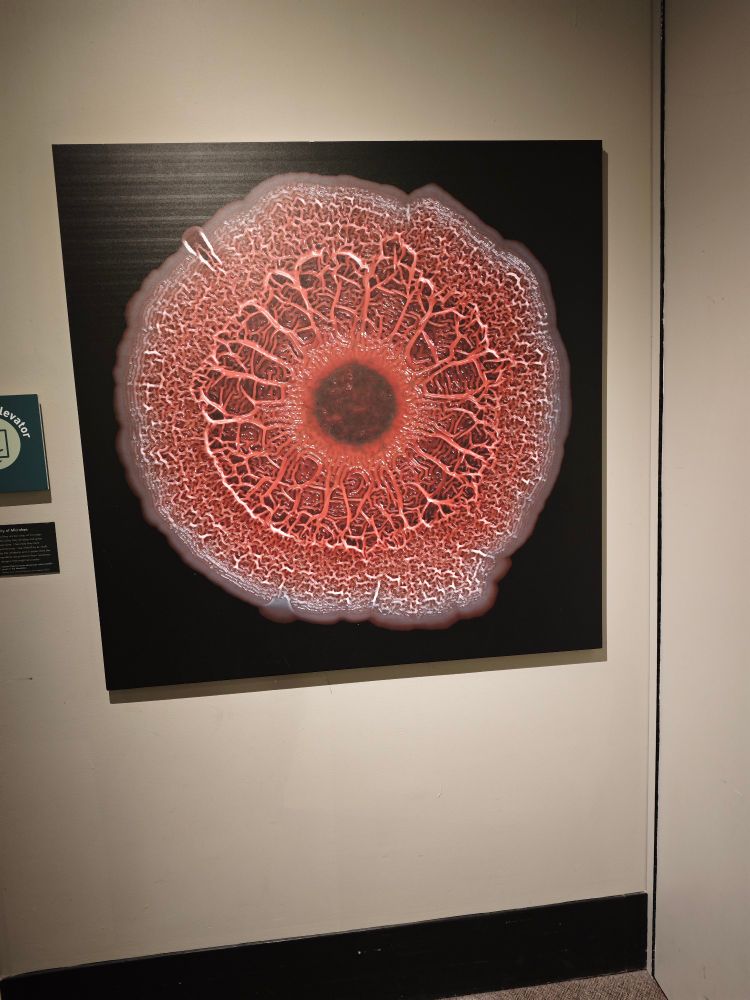
"Watermelon!" this is what my 2yo son calls 😂
--bacterial biofilm photograph at Harvard museum of nature history (guess it's congo red stained and hope never appears in watermelon)
--bacterial biofilm photograph at Harvard museum of nature history (guess it's congo red stained and hope never appears in watermelon)
July 21, 2025 at 9:29 PM
"Watermelon!" this is what my 2yo son calls 😂
--bacterial biofilm photograph at Harvard museum of nature history (guess it's congo red stained and hope never appears in watermelon)
--bacterial biofilm photograph at Harvard museum of nature history (guess it's congo red stained and hope never appears in watermelon)
Reposted by Chen Zhang
Very happy to share that a large part of my thesis work is out today: B. subtilis uses the second messenger c-di-AMP to modulate its turgor pressure in response to the state of its cell envelope. www.nature.com/articles/s41...
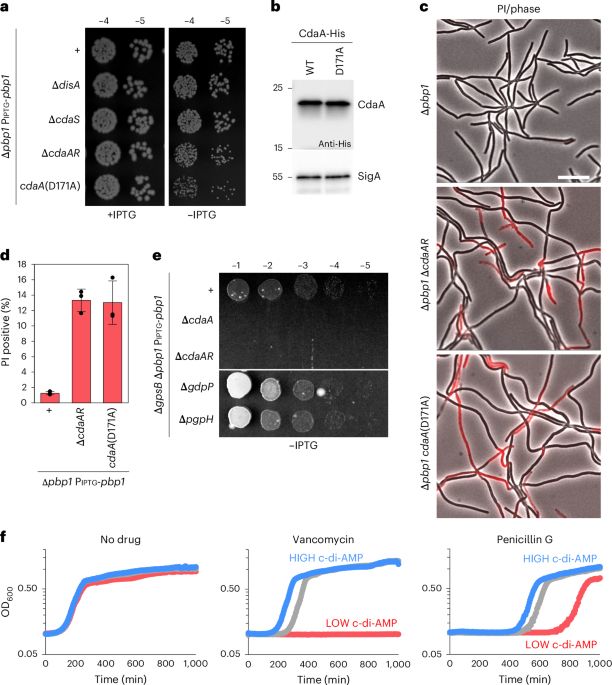
Cyclic-di-AMP modulates cellular turgor in response to defects in bacterial cell wall synthesis - Nature Microbiology
Brogan et al. uncover a signalling pathway in which levels of the nucleotide second messenger c-di-AMP increase in response to defects in cell wall synthesis. This regulatory pathway decreases turgor ...
www.nature.com
June 17, 2025 at 12:20 PM
Very happy to share that a large part of my thesis work is out today: B. subtilis uses the second messenger c-di-AMP to modulate its turgor pressure in response to the state of its cell envelope. www.nature.com/articles/s41...
Reposted by Chen Zhang
The mechanics of a continuous self-assembling surface-layer aids cell division in an archaeon
out in @pnas.org
Tight collaboration with Sherman Foo, Alice Cezanne and @buzzbaum.bsky.social, Sulfolobus cryo-ET from @idocaspy.bsky.social
www.pnas.org/doi/10.1073/...
out in @pnas.org
Tight collaboration with Sherman Foo, Alice Cezanne and @buzzbaum.bsky.social, Sulfolobus cryo-ET from @idocaspy.bsky.social
www.pnas.org/doi/10.1073/...

A self-assembling surface layer flattens the cytokinetic furrow to aid cell division in an archaeon | PNAS
The surface layer or “S-layer” is a two-dimensional lattice of proteins that coats
a wide range of archaea and bacteria in place of a cell wall or ...
www.pnas.org
June 19, 2025 at 2:06 PM
The mechanics of a continuous self-assembling surface-layer aids cell division in an archaeon
out in @pnas.org
Tight collaboration with Sherman Foo, Alice Cezanne and @buzzbaum.bsky.social, Sulfolobus cryo-ET from @idocaspy.bsky.social
www.pnas.org/doi/10.1073/...
out in @pnas.org
Tight collaboration with Sherman Foo, Alice Cezanne and @buzzbaum.bsky.social, Sulfolobus cryo-ET from @idocaspy.bsky.social
www.pnas.org/doi/10.1073/...
time to admit as a REAL bacteriologist

May 13, 2025 at 7:17 PM
time to admit as a REAL bacteriologist
Reposted by Chen Zhang

Our latest preprint www.biorxiv.org/content/10.1..., describes Willi Stepp’s project to make smart microscopy even gentler by doing event detection in phase contrast. We developed neural networks to detect mito-LD and mito-lysosome contacts, as well as mitochondrial pre-fission constrictions.

April 6, 2025 at 11:44 AM
Our latest preprint www.biorxiv.org/content/10.1..., describes Willi Stepp’s project to make smart microscopy even gentler by doing event detection in phase contrast. We developed neural networks to detect mito-LD and mito-lysosome contacts, as well as mitochondrial pre-fission constrictions.
Reposted by Chen Zhang
Happy to share Asha Joseph and Inchara Adhikashreni's latest work from the lab, describing replisome speed variation in Caulobacter!
www.cell.com/current-biol...
www.cell.com/current-biol...

Live tracking of replisomes reveals nutrient-dependent regulation of replication elongation rates in Caulobacter crescentus
Adhikashreni et al. use quantitative live-cell imaging to track cell-cycle dynamics
in hundreds of individual bacteria. They observe nutrient-dependent regulation of
replication elongation rates that ...
www.cell.com
April 4, 2025 at 3:57 PM
Happy to share Asha Joseph and Inchara Adhikashreni's latest work from the lab, describing replisome speed variation in Caulobacter!
www.cell.com/current-biol...
www.cell.com/current-biol...
Reposted by Chen Zhang

It has been coming a long way... happy to share our latest work with you: www.biorxiv.org/content/10.1...
Here, we show the importance of septal fortification by the Class A Penicillin Binding Protein, PBP1b, in E. coli and provide a molecular mechanism for this function. (1/12).
Here, we show the importance of septal fortification by the Class A Penicillin Binding Protein, PBP1b, in E. coli and provide a molecular mechanism for this function. (1/12).

The aPBP-type cell wall synthase PBP1b plays a specialized role in fortifying the Escherichia coli division site against osmotic rupture
A multi-protein system called the divisome promotes bacterial division. This apparatus synthesizes the peptidoglycan (PG) cell wall layer that forms the daughter cell poles and protects them from osmo...
www.biorxiv.org
April 3, 2025 at 10:13 PM
It has been coming a long way... happy to share our latest work with you: www.biorxiv.org/content/10.1...
Here, we show the importance of septal fortification by the Class A Penicillin Binding Protein, PBP1b, in E. coli and provide a molecular mechanism for this function. (1/12).
Here, we show the importance of septal fortification by the Class A Penicillin Binding Protein, PBP1b, in E. coli and provide a molecular mechanism for this function. (1/12).
Reposted by Chen Zhang
Expansion microscopy of a tardigrade

April 1, 2025 at 2:31 AM
Expansion microscopy of a tardigrade
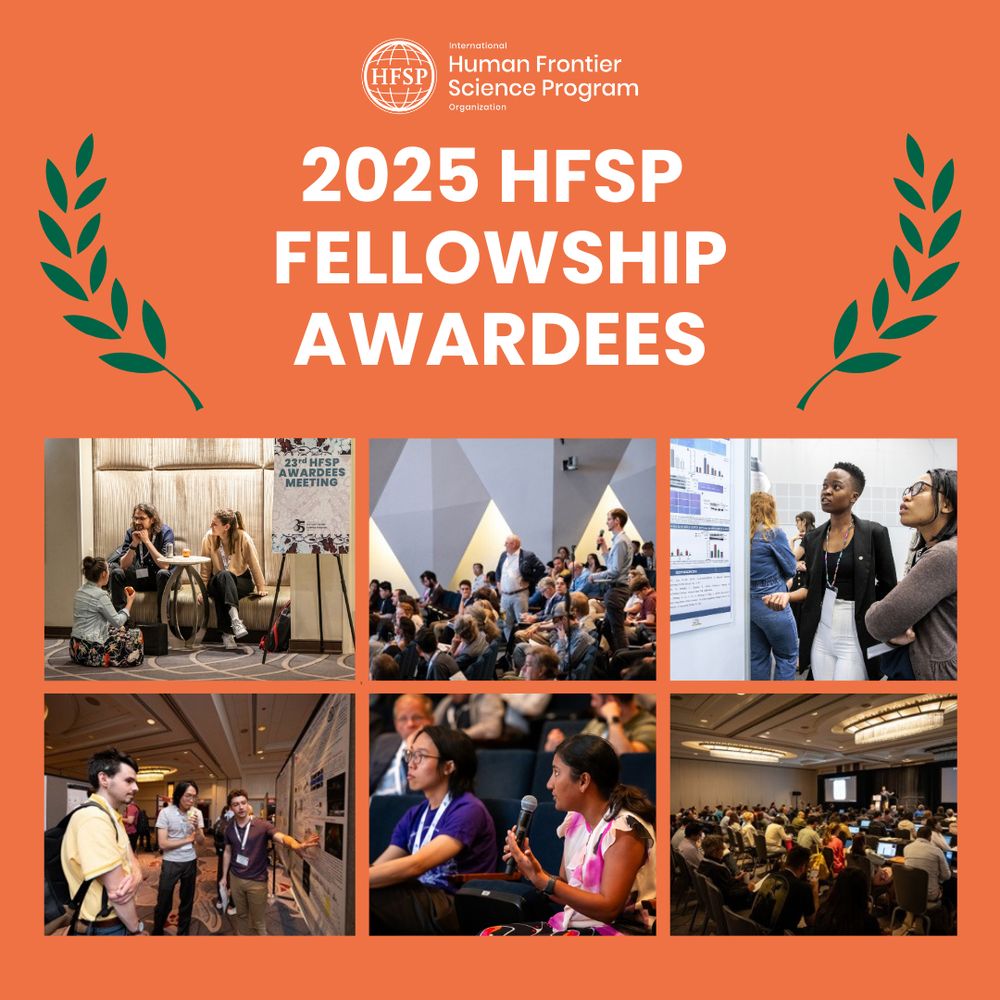
Super glad to be one of the awardees!

🥳Congrats to the 50 outstanding postdocs from 25 nations awarded 2025 #HFSPFellowships! 🎉These brilliant minds are shaping the future of #LifeSciences!🧪
🏆Are you one of them? Tag yourself & celebrate!
📖 Meet the new fellows: www.hfsp.org/bookletFS2025#book/
#HFSP #NextGenResearchers #sts
🏆Are you one of them? Tag yourself & celebrate!
📖 Meet the new fellows: www.hfsp.org/bookletFS2025#book/
#HFSP #NextGenResearchers #sts
March 31, 2025 at 4:39 PM
Super glad to be one of the awardees!
Reposted by Chen Zhang
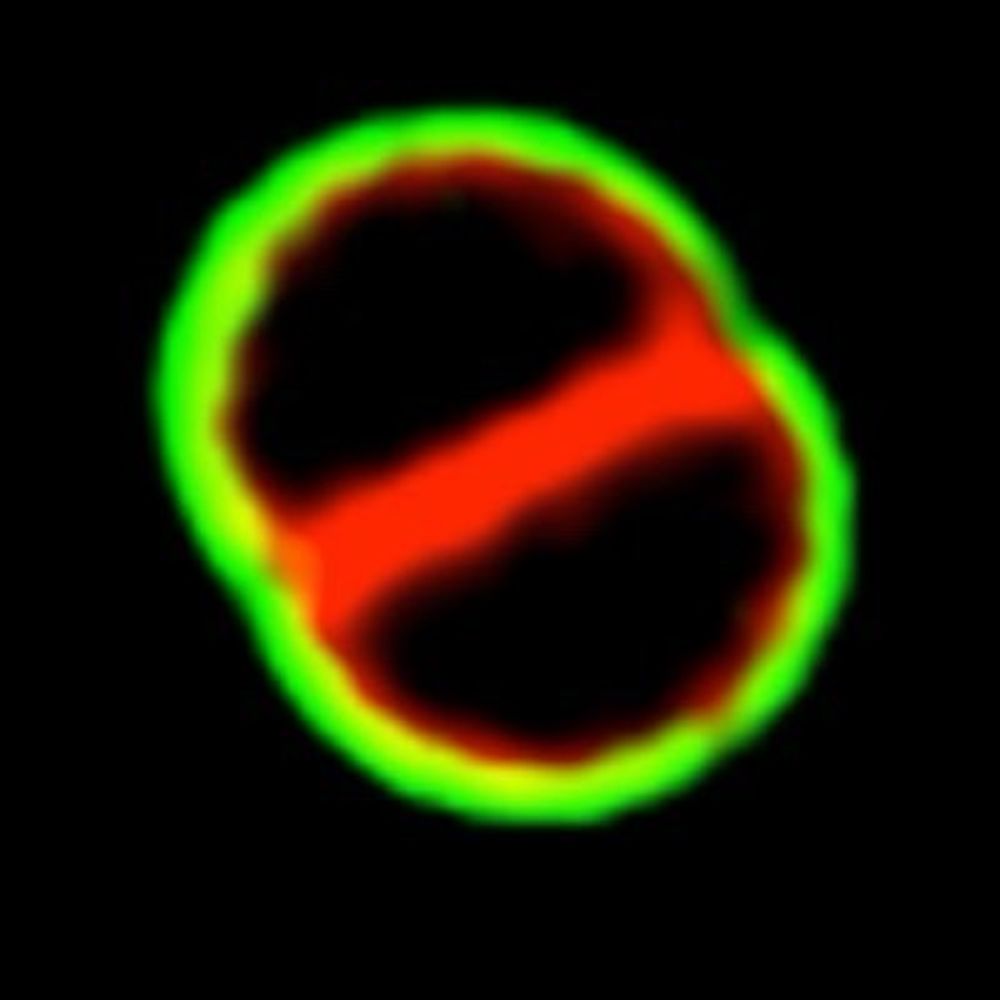
We have 3 positions for students who want to start a PhD in the next 12 months. If you like advanced fluorescence microscopy techniques and S. aureus cell biology, check links and apply(April 4)
euraxess.ec.europa.eu/jobs/325394
euraxess.ec.europa.eu/jobs/325395
euraxess.ec.europa.eu/jobs/325396
euraxess.ec.europa.eu/jobs/325394
euraxess.ec.europa.eu/jobs/325395
euraxess.ec.europa.eu/jobs/325396
March 29, 2025 at 8:18 PM
We have 3 positions for students who want to start a PhD in the next 12 months. If you like advanced fluorescence microscopy techniques and S. aureus cell biology, check links and apply(April 4)
euraxess.ec.europa.eu/jobs/325394
euraxess.ec.europa.eu/jobs/325395
euraxess.ec.europa.eu/jobs/325396
euraxess.ec.europa.eu/jobs/325394
euraxess.ec.europa.eu/jobs/325395
euraxess.ec.europa.eu/jobs/325396
Reposted by Chen Zhang