



@voigtvision.bsky.social
🔬 & 👁️ & 🐟-News & Views by Fabian Voigt - Branco Weiss Fellow in
the Engert lab at MCB @harvard.edu. Previously at UZH Zurich with Fritjof Helmchen. #mesoSPIM developer
the Engert lab at MCB @harvard.edu. Previously at UZH Zurich with Fritjof Helmchen. #mesoSPIM developer
Reposted

In @elife.bsky.social: A high-resolution, easy-to-build light-sheet microscope for subcellular imaging doi.org/10.7554/eLif...

A high-resolution, easy-to-build light-sheet microscope for subcellular imaging
An accessible light-sheet microscope delivers subcellular-resolution, multicolor volumetric, and live-cell imaging, lowering barriers to state-of-the-art performance.
doi.org
February 5, 2026 at 10:53 PM
In @elife.bsky.social: A high-resolution, easy-to-build light-sheet microscope for subcellular imaging doi.org/10.7554/eLif...
Reposted
We're still exploring how to improve LSFM performance with "big" detection air objectives, where field curvature often limits achievable FOV. Here, Steven introduces curvedASLM, a method to dynamically correct field curvature (along one axis) in axially scanned setups www.biorxiv.org/content/10.6...

December 10, 2025 at 8:12 PM
We're still exploring how to improve LSFM performance with "big" detection air objectives, where field curvature often limits achievable FOV. Here, Steven introduces curvedASLM, a method to dynamically correct field curvature (along one axis) in axially scanned setups www.biorxiv.org/content/10.6...
Reposted

The EMBO Practical Course "Hack your microscope" in Oeiras, PT, 20–25 Apr 2026 aims to innovate, democratize advanced #imaging technologies and shape the future of open-source #microscopy – Apply now!
Deadline: 12 Dec
https://meetings.embo.org/event/26-microscope
#EMBOmicroscope #EMBOevents 🧪
Deadline: 12 Dec
https://meetings.embo.org/event/26-microscope
#EMBOmicroscope #EMBOevents 🧪

December 3, 2025 at 4:15 PM
The EMBO Practical Course "Hack your microscope" in Oeiras, PT, 20–25 Apr 2026 aims to innovate, democratize advanced #imaging technologies and shape the future of open-source #microscopy – Apply now!
Deadline: 12 Dec
https://meetings.embo.org/event/26-microscope
#EMBOmicroscope #EMBOevents 🧪
Deadline: 12 Dec
https://meetings.embo.org/event/26-microscope
#EMBOmicroscope #EMBOevents 🧪
The long wait is finally over: The @thorlabs.bsky.social 8 kHz resonant scanner is available 🔬! It would be lovely if there would be a 30 mm cube compatible & acoustically shielded mount as well, but I'm sure that's going to come eventually! #Microscopy www.thorlabs.com/newgrouppage...


October 22, 2025 at 6:47 PM
The long wait is finally over: The @thorlabs.bsky.social 8 kHz resonant scanner is available 🔬! It would be lovely if there would be a 30 mm cube compatible & acoustically shielded mount as well, but I'm sure that's going to come eventually! #Microscopy www.thorlabs.com/newgrouppage...
One of the people I'm indebted the most for creating stunningly beautiful #mesoSPIM samples was Martina Schaettin - who tragically passed away in March this year. To honor her memory, Elkhan Yusifov created an award - submit your best #microscopy images & videos! www.linkedin.com/company/mart...
August 22, 2025 at 5:32 PM
One of the people I'm indebted the most for creating stunningly beautiful #mesoSPIM samples was Martina Schaettin - who tragically passed away in March this year. To honor her memory, Elkhan Yusifov created an award - submit your best #microscopy images & videos! www.linkedin.com/company/mart...
Thanks to @nvladimus.bsky.social the @mesospim.bsky.social #lightsheet #Microscope community is now on forum.image.sc/tag/mesospim !
📣We have opened our official User Forum: forum.image.sc/tag/mesospim
In this forum you can connect with 🔬developers and the image analysis experts. Ask your burning questions about the #mesoSPIM hardware, software, and image processing, or help the beginners to get started!
Tip: use project tags!
In this forum you can connect with 🔬developers and the image analysis experts. Ask your burning questions about the #mesoSPIM hardware, software, and image processing, or help the beginners to get started!
Tip: use project tags!

Topics tagged mesospim
Topics tagged mesospim
forum.image.sc
August 22, 2025 at 3:58 PM
Thanks to @nvladimus.bsky.social the @mesospim.bsky.social #lightsheet #Microscope community is now on forum.image.sc/tag/mesospim !
Definitely the most unexpected @mesospim.bsky.social #lightsheet #microscopy application of the past years: Hunting dark matter with a lightsheet microscope! #astronomy 🔭🔬https://arxiv.org/abs/2503.20732
💥How can light-sheet help reveal dark matter?💥
Join Prof. Laura Baudis @lbaudis.bsky.social at #mesoSPIM Symposium, Oct 13–15 in Zurich or online, to see how light-sheet fluorescence microscopy 🔬 is used to image nuclear ☢️ recoil tracks to detect elusive particles!
Register now: t.uzh.ch/1Ss
Join Prof. Laura Baudis @lbaudis.bsky.social at #mesoSPIM Symposium, Oct 13–15 in Zurich or online, to see how light-sheet fluorescence microscopy 🔬 is used to image nuclear ☢️ recoil tracks to detect elusive particles!
Register now: t.uzh.ch/1Ss

August 21, 2025 at 1:39 PM
Definitely the most unexpected @mesospim.bsky.social #lightsheet #microscopy application of the past years: Hunting dark matter with a lightsheet microscope! #astronomy 🔭🔬https://arxiv.org/abs/2503.20732
#Deeplearning-based #CRISPR DNA integration and editing by Thomas Naert & Sören Lienkamp & Co with lots of @mesospim.bsky.social #lightsheet #Microscopy data of tadpoles (and some taken with the #Schmidt #multiimmersion objective prototype!) 🔬🐸 www.nature.com/articles/s41...
August 13, 2025 at 2:09 PM
#Deeplearning-based #CRISPR DNA integration and editing by Thomas Naert & Sören Lienkamp & Co with lots of @mesospim.bsky.social #lightsheet #Microscopy data of tadpoles (and some taken with the #Schmidt #multiimmersion objective prototype!) 🔬🐸 www.nature.com/articles/s41...
⚠️ #alignment #warning: When aligning with the @thorlabs.bsky.social LCPA1 & LCPA2 "T-Shirts" for 60mm cage systems: Be aware that they can have quite incorrect hole & line positioning for fine alignment work! #lightsheet #Microscopy (black lines/numbers are from an reticle in the stereo microscope)


July 14, 2025 at 8:07 PM
⚠️ #alignment #warning: When aligning with the @thorlabs.bsky.social LCPA1 & LCPA2 "T-Shirts" for 60mm cage systems: Be aware that they can have quite incorrect hole & line positioning for fine alignment work! #lightsheet #Microscopy (black lines/numbers are from an reticle in the stereo microscope)
Reposted

Are you leading an #OpenScience initiative advancing the field of #neuroscience? Don’t miss this opportunity to be recognized for your contributions. Submit your application for the Neuro-Irv and Helga Cooper Foundation Open Science Prizes today!
👉Apply now! -link in comments
#neurology #datasharing
👉Apply now! -link in comments
#neurology #datasharing
July 8, 2025 at 8:21 PM
Are you leading an #OpenScience initiative advancing the field of #neuroscience? Don’t miss this opportunity to be recognized for your contributions. Submit your application for the Neuro-Irv and Helga Cooper Foundation Open Science Prizes today!
👉Apply now! -link in comments
#neurology #datasharing
👉Apply now! -link in comments
#neurology #datasharing
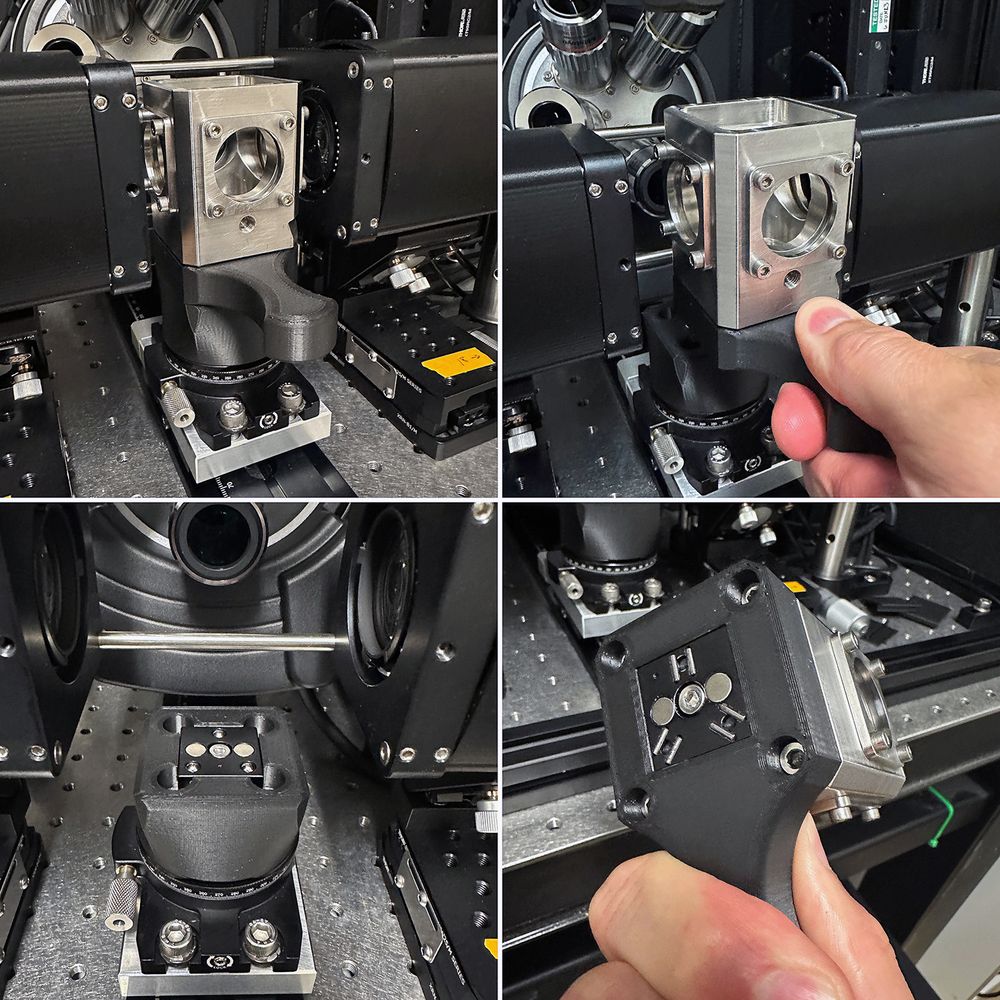
Cool new @mesospim.bsky.social chamber design!
New chamber mount design for our @mesospim.bsky.social - magnetic kinematic bases from @thorlabs.bsky.social for the win! 3D printed (for now) bases hold the chamber snugly for precise positioning between experiments. Fill port on the front allows for media addition without disturbing imaging.
June 4, 2025 at 6:02 AM
Cool new @mesospim.bsky.social chamber design!
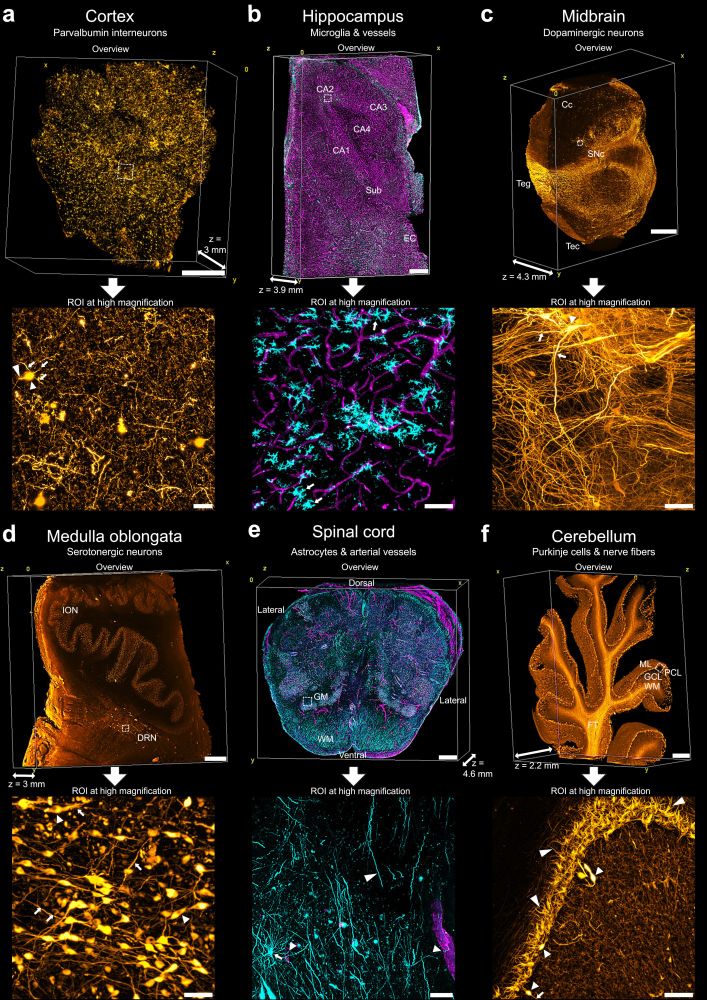
The culmination of years of hard work by Anna Maria Reuss & Co: aDISCO - a protocol for clearing & antibody-staining human formalin-fixed paraffin-embedded (FFPE) tissue! With lots of @mesospim.bsky.social #lightsheet #Microscopy @ptrrupprecht.bsky.social & many more!
www.biorxiv.org/content/10.1...
www.biorxiv.org/content/10.1...
May 27, 2025 at 7:30 AM
The culmination of years of hard work by Anna Maria Reuss & Co: aDISCO - a protocol for clearing & antibody-staining human formalin-fixed paraffin-embedded (FFPE) tissue! With lots of @mesospim.bsky.social #lightsheet #Microscopy @ptrrupprecht.bsky.social & many more!
www.biorxiv.org/content/10.1...
www.biorxiv.org/content/10.1...
This is so sad to see 😢

May 16, 2025 at 7:17 PM
This is so sad to see 😢
Looking forward to the @mesospim.bsky.social #lightsheet #Microscopy anniversary symposium in October with @preibischs.bsky.social @adamkglaser.bsky.social @christellelangevin.bsky.social & many more! And to the next mesoSPIM decade! 🔬 Thanks @nvladimus.bsky.social & Co for organizing it!
May 16, 2025 at 12:15 PM
Looking forward to the @mesospim.bsky.social #lightsheet #Microscopy anniversary symposium in October with @preibischs.bsky.social @adamkglaser.bsky.social @christellelangevin.bsky.social & many more! And to the next mesoSPIM decade! 🔬 Thanks @nvladimus.bsky.social & Co for organizing it!
For scientists interested in exploring job opportunities in Europe and especially France: @cnrs.fr started an initiative "Choose CNRS": www.cnrs.fr/en/update/ch...

'Choose CNRS' – the opportunities for scientists from other countries
Four schemes are available to encourage talented young researchers and internationally-renowned scientists to consider moving to France and
www.cnrs.fr
May 13, 2025 at 1:42 PM
For scientists interested in exploring job opportunities in Europe and especially France: @cnrs.fr started an initiative "Choose CNRS": www.cnrs.fr/en/update/ch...
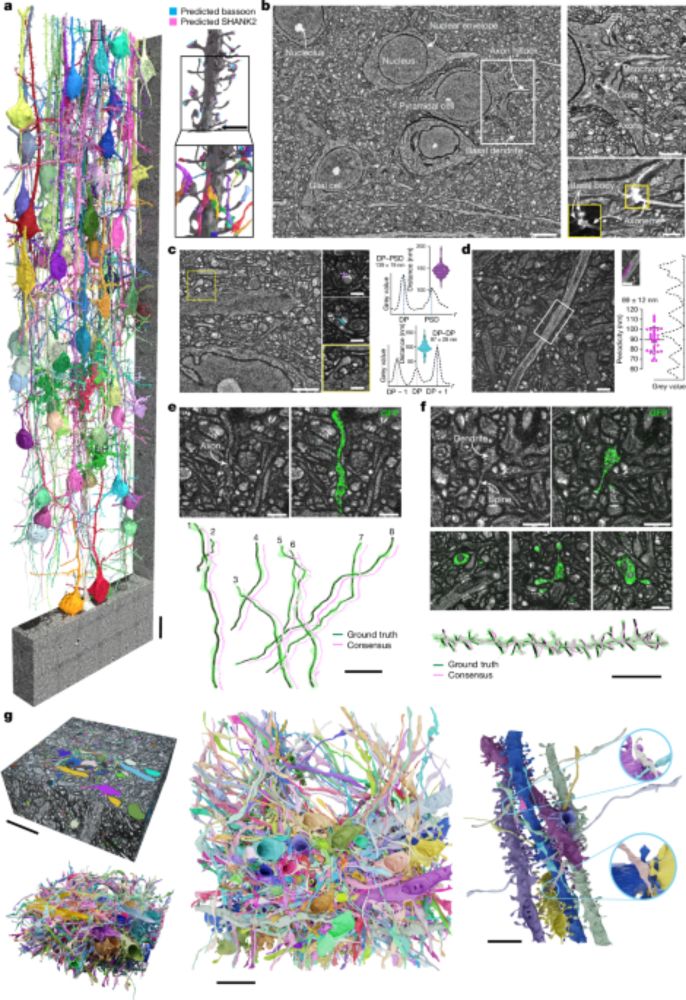
Thanks to expansion microscopy, clever labeling, and modern segmentation approaches, doing connectomics with #light #microscopy has become feasible - huge congratulations Mojtaba & the Danzl lab at @istaresearch.bsky.social !
www.nature.com/articles/s41...
www.nature.com/articles/s41...
Light-microscopy-based connectomic reconstruction of mammalian brain tissue - Nature
A technique called LICONN (light-microscopy-based connectomics) allows mapping of brain tissue at synapse level and simultaneous measurement of molecular information, thus enabling quantification of c...
www.nature.com
May 8, 2025 at 2:52 AM
Thanks to expansion microscopy, clever labeling, and modern segmentation approaches, doing connectomics with #light #microscopy has become feasible - huge congratulations Mojtaba & the Danzl lab at @istaresearch.bsky.social !
www.nature.com/articles/s41...
www.nature.com/articles/s41...
If you happen to need a #lightsheet #Microscope for cleared tissue on a budget: There is a Lavision Ultramicroscope on Ebay right now for $6.5k: www.ebay.com/itm/38806209... It's missing the laser unit and the PC but could serve as an excellent source of parts to build a #mesoSPIM 😉: mesospim.org

Olympus MVX10 Stereo Zoom Microscope MVX 10 & Parts BioTec Andor Neo sCMOS | eBay
Was able to do and have not received one complaint.
www.ebay.com
March 11, 2025 at 4:10 PM
If you happen to need a #lightsheet #Microscope for cleared tissue on a budget: There is a Lavision Ultramicroscope on Ebay right now for $6.5k: www.ebay.com/itm/38806209... It's missing the laser unit and the PC but could serve as an excellent source of parts to build a #mesoSPIM 😉: mesospim.org
It was great to see you again @edwardlachica3.bsky.social & sorry for the punch!

I love attending workshops. I see old friends. I make new friends. And then there’s stuff that punches my face. @voigtvision.bsky.social told me about his scallop objective last year but I missed this slide. NA of 1.08 in DBE with a full 11mm of working distance. Wow!

February 12, 2025 at 3:01 AM
It was great to see you again @edwardlachica3.bsky.social & sorry for the punch!
There is some cool new #photophysics in town! Check out tripletimaging.co, the startup created by wongcamposd.bsky.social Dalia Ornelas-Huerta & Mackenzie Dion to explore #multiphoton #Microscopy via long-lived intermediate states:: www.tripletimaging.co/s/dyes and www.tripletimaging.co/s/proteins

January 31, 2025 at 10:32 PM
There is some cool new #photophysics in town! Check out tripletimaging.co, the startup created by wongcamposd.bsky.social Dalia Ornelas-Huerta & Mackenzie Dion to explore #multiphoton #Microscopy via long-lived intermediate states:: www.tripletimaging.co/s/dyes and www.tripletimaging.co/s/proteins
Reposted

Some really beautiful developmental biology looking at how to build an arthropod body. Legs for days! www.biorxiv.org/content/10.1...

January 30, 2025 at 12:35 AM
Some really beautiful developmental biology looking at how to build an arthropod body. Legs for days! www.biorxiv.org/content/10.1...
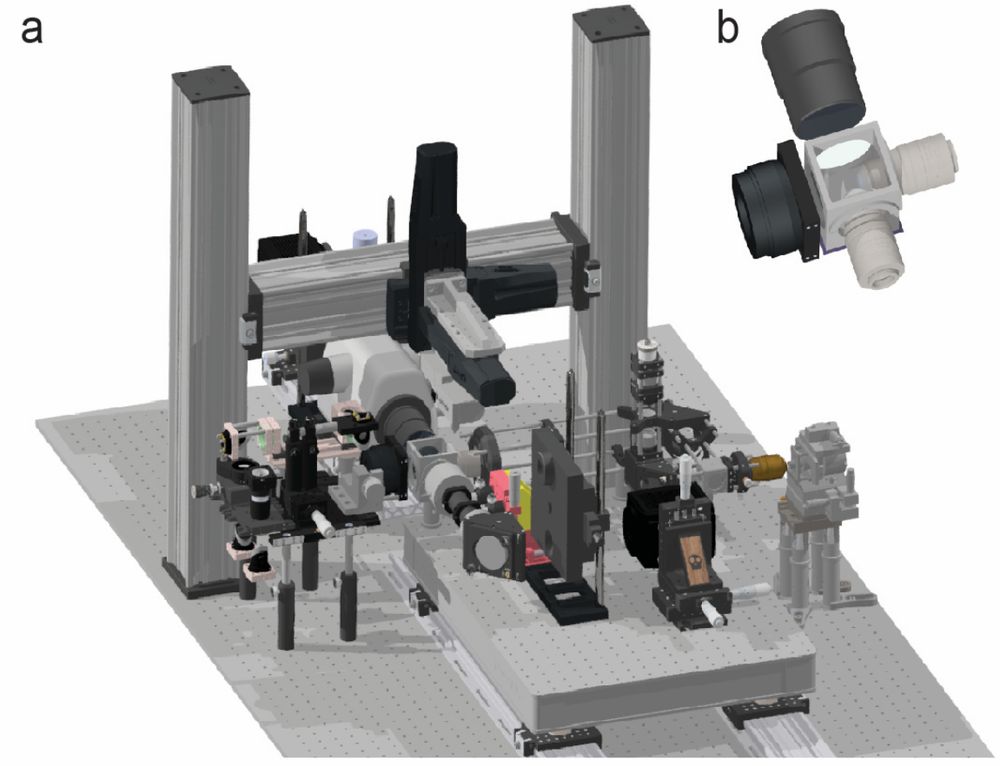
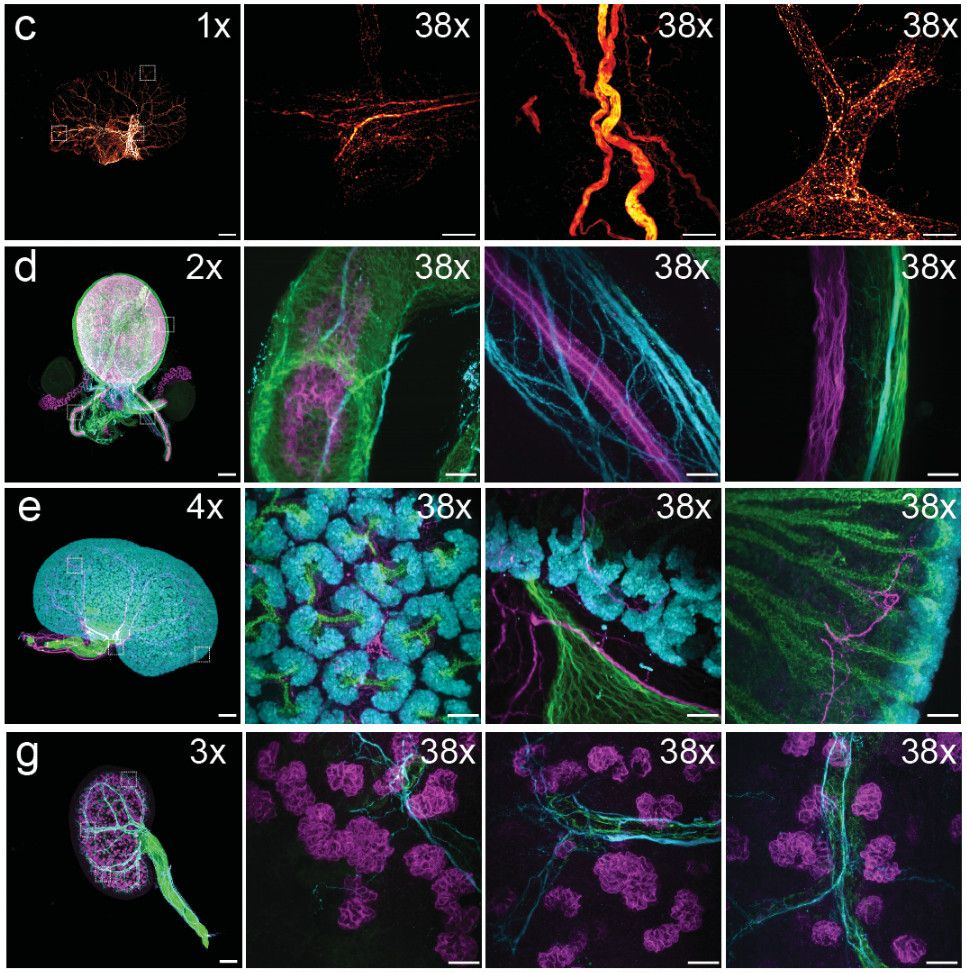
In 2019, the #mesoSPIM and #ctASLM #lightsheet #Microscopy papers appeared back-to-back in @naturemethods.bsky.social - now Jinlong Lin, @zacsimile.bsky.social & @kevin-dean.bsky.social & Co introduce the MCT-ASLM - a chimera of both for smart multiscale #imaging!
www.biorxiv.org/content/10.1...
www.biorxiv.org/content/10.1...
January 27, 2025 at 8:03 AM
In 2019, the #mesoSPIM and #ctASLM #lightsheet #Microscopy papers appeared back-to-back in @naturemethods.bsky.social - now Jinlong Lin, @zacsimile.bsky.social & @kevin-dean.bsky.social & Co introduce the MCT-ASLM - a chimera of both for smart multiscale #imaging!
www.biorxiv.org/content/10.1...
www.biorxiv.org/content/10.1...
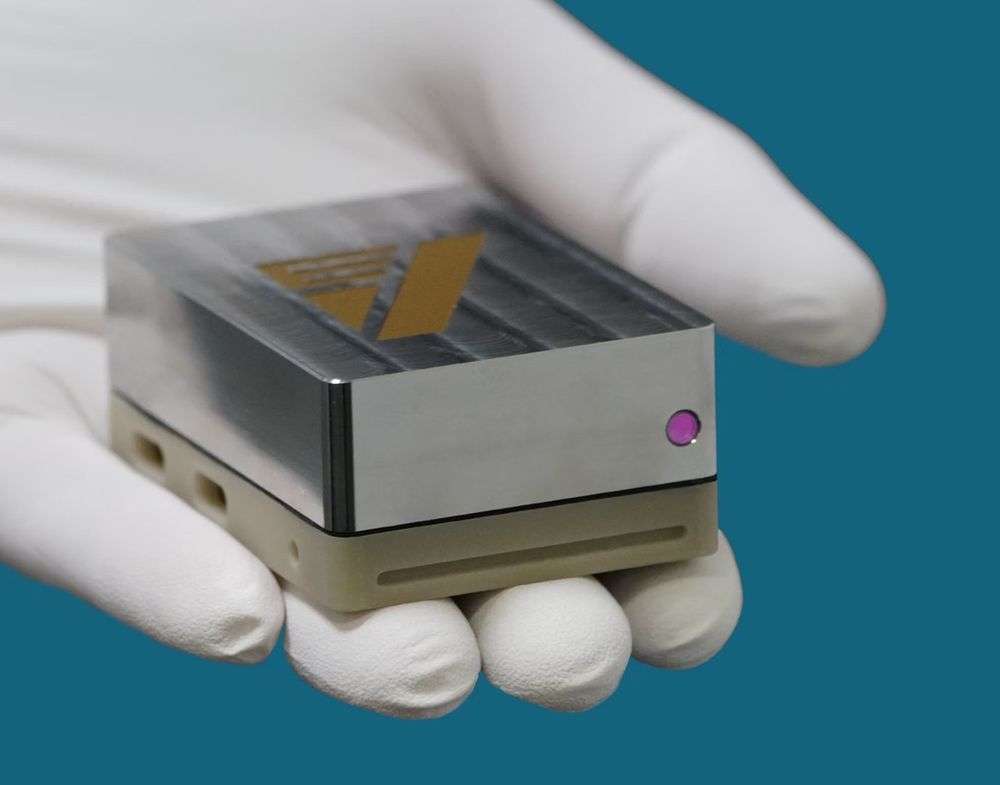
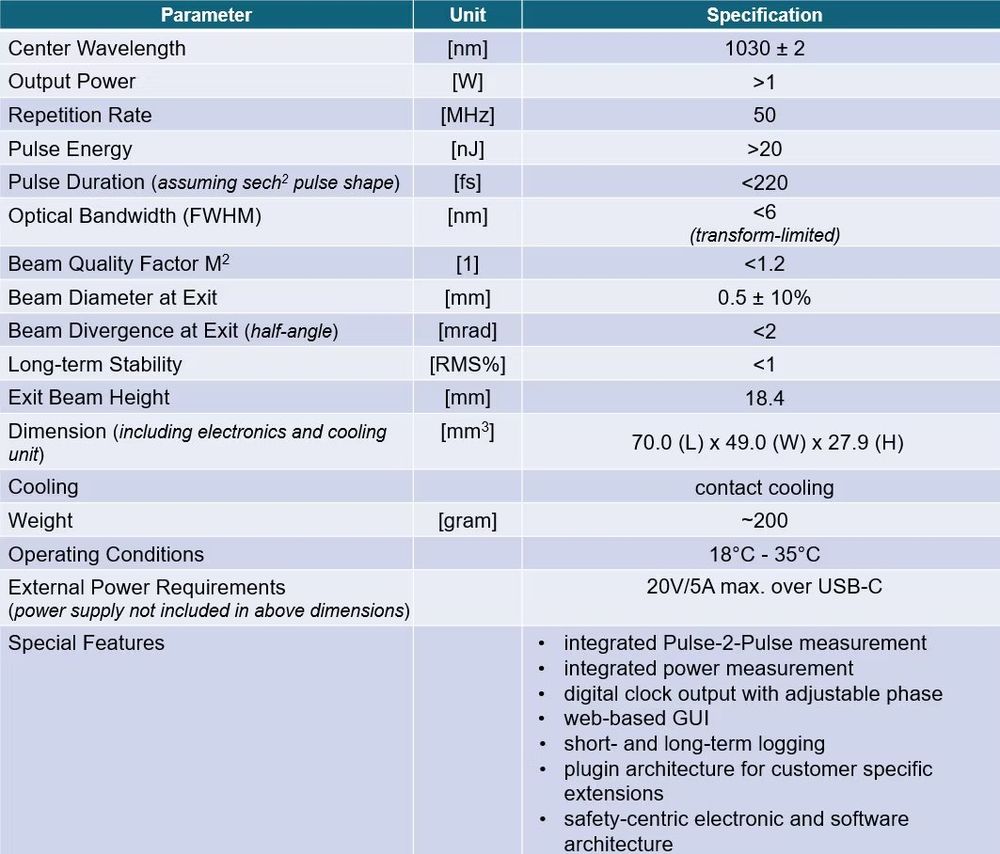
Seems like there is a new ultracompact #femtosecond #laser source for #multiphoton #microscopy in town! 50 MHz rep rate means a 2-3 m cavity if there is a single pulse circulating in the cavity - folding that into that compact of a form factor is quite impressive!
www.laseratwork.com/products-ove...
www.laseratwork.com/products-ove...
January 27, 2025 at 7:50 AM
Seems like there is a new ultracompact #femtosecond #laser source for #multiphoton #microscopy in town! 50 MHz rep rate means a 2-3 m cavity if there is a single pulse circulating in the cavity - folding that into that compact of a form factor is quite impressive!
www.laseratwork.com/products-ove...
www.laseratwork.com/products-ove...
Reposted
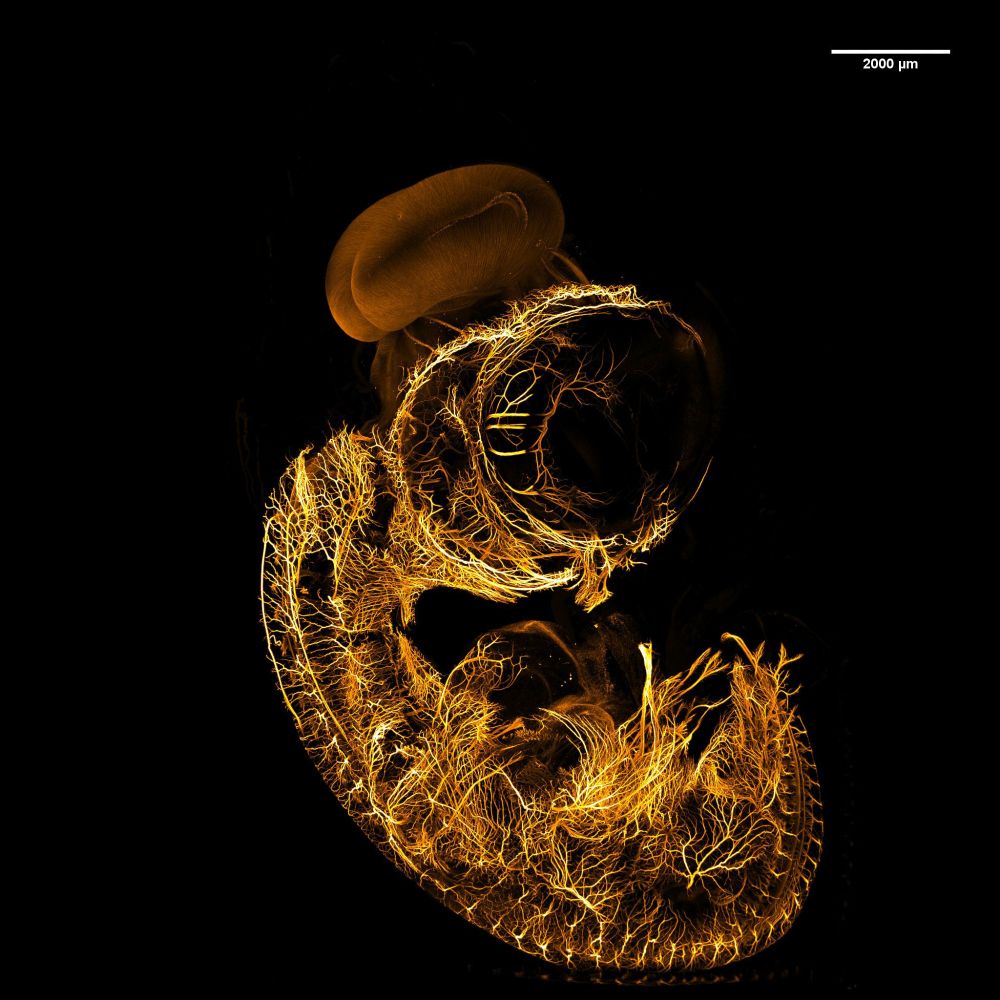
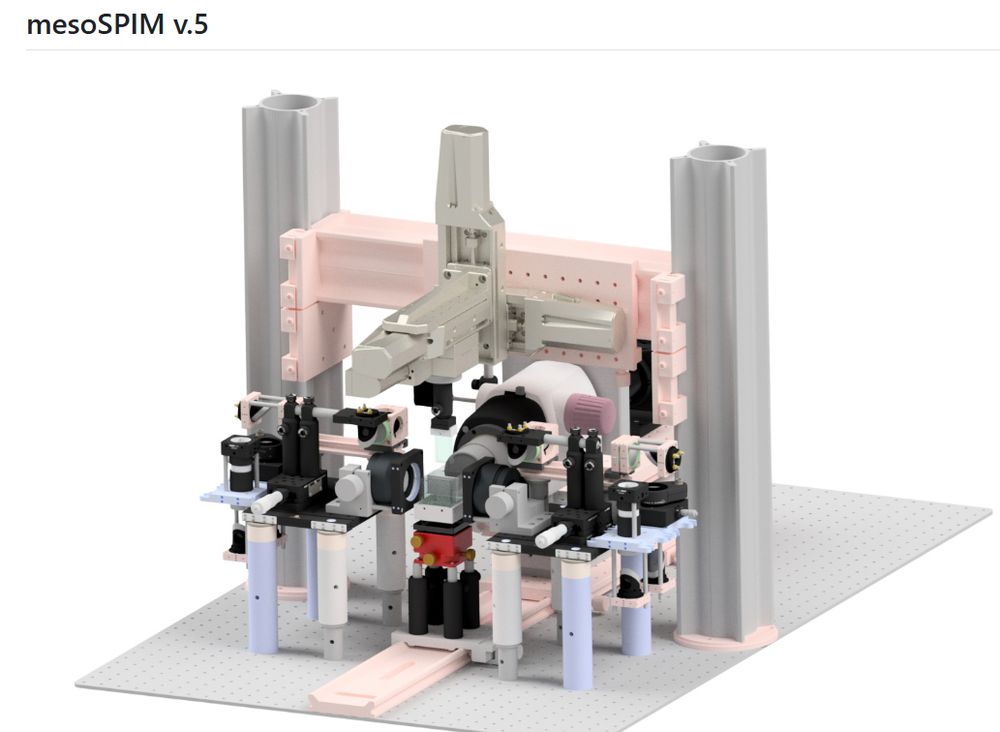
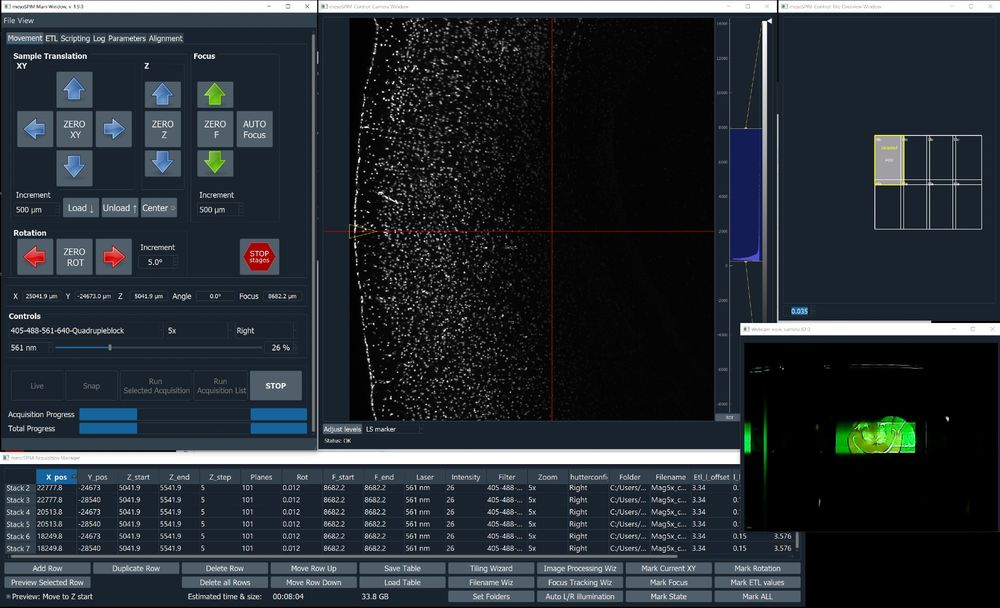
Please welcome our official #mesoSPIM channel on this platform, @mesospim.bsky.social. Repost is appreciated!

January 20, 2025 at 10:22 AM
Please welcome our official #mesoSPIM channel on this platform, @mesospim.bsky.social. Repost is appreciated!
Finally created an account here - stay tuned for news & views on #lightsheet #microscopes, #photonics, #vision, #zebrafish and more!

January 20, 2025 at 12:56 PM
Finally created an account here - stay tuned for news & views on #lightsheet #microscopes, #photonics, #vision, #zebrafish and more!
Reposted

The next-generation open-source "Benchtop" #mesoSPIM light-sheet microscope, with open access to everyone. Find the detailed blueprints on how to build your own, and examples of applications, from neuroscience to astrophysics!
link.springer.com/article/10.1...
link.springer.com/article/10.1...
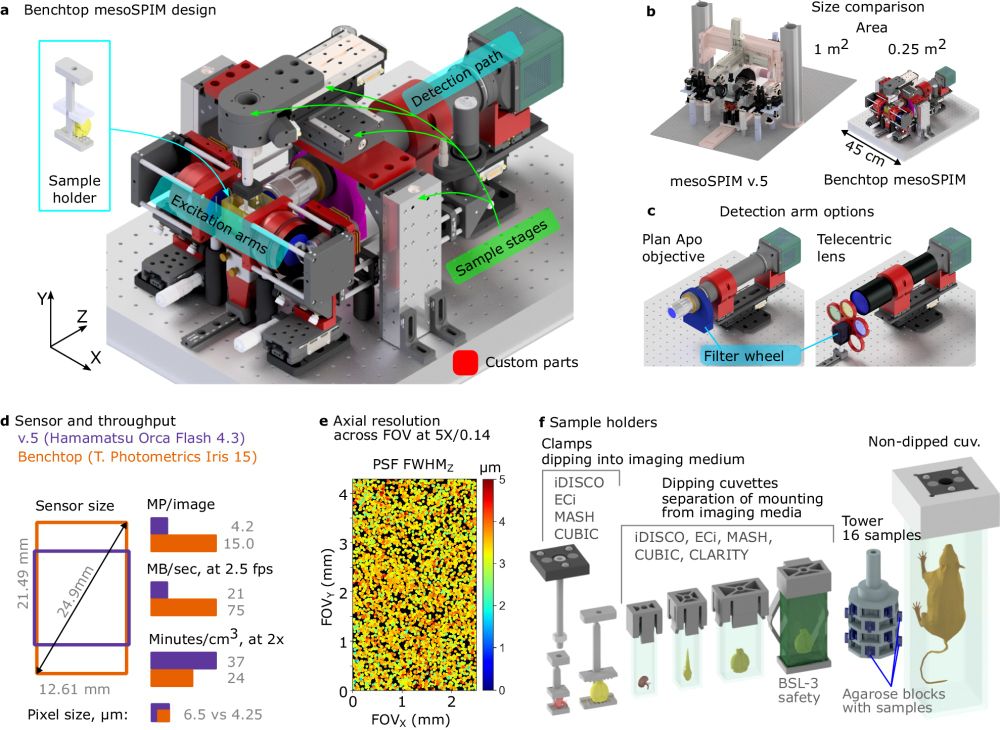
Benchtop mesoSPIM: a next-generation open-source light-sheet microscope for cleared samples - Nature Communications
In 2015, we launched the mesoSPIM initiative, an open-source project for making light-sheet microscopy of large cleared tissues more accessible. Meanwhile, the demand for imaging larger samples at hig...
link.springer.com
January 20, 2025 at 10:07 AM
The next-generation open-source "Benchtop" #mesoSPIM light-sheet microscope, with open access to everyone. Find the detailed blueprints on how to build your own, and examples of applications, from neuroscience to astrophysics!
link.springer.com/article/10.1...
link.springer.com/article/10.1...