




Philippe Le Mercier, ViralZone
@viralzone.bsky.social
Virologist
Here we go: a method to predict symmetric protein complexes—exactly what’s needed to reconstruct full viral capsids from AlphaFold models.

Scalable prediction of symmetric protein complex structures [updated]
...by a physics-based method that handles arbitrarily large complexes, critical for advancing drug discovery.
...by a physics-based method that handles arbitrarily large complexes, critical for advancing drug discovery.


February 5, 2026 at 5:00 PM
Here we go: a method to predict symmetric protein complexes—exactly what’s needed to reconstruct full viral capsids from AlphaFold models.
Rabies an increasing threat in Ukraine - The Lancet Infectious Diseases www.thelancet.com/journals/lan...

Rabies an increasing threat in Ukraine
Cases of rabies infection in animals and animal bites in humans have been increasing
in Ukraine since Russia's invasion of the country in February, 2022. Ed Holt reports.
www.thelancet.com
February 4, 2026 at 3:40 PM
Rabies an increasing threat in Ukraine - The Lancet Infectious Diseases www.thelancet.com/journals/lan...
Nipah virus is a long-known zoonosis, spilling over from fruit bats and capable of human-to-human spread. Small outbreaks occur almost every year, especially in Kerala, India.
In the recent West Bengal outbreak, the unknown source of infection has led to heightened precautions.
In the recent West Bengal outbreak, the unknown source of infection has led to heightened precautions.

January 30, 2026 at 10:45 AM
Nipah virus is a long-known zoonosis, spilling over from fruit bats and capable of human-to-human spread. Small outbreaks occur almost every year, especially in Kerala, India.
In the recent West Bengal outbreak, the unknown source of infection has led to heightened precautions.
In the recent West Bengal outbreak, the unknown source of infection has led to heightened precautions.
Reposted by Philippe Le Mercier, ViralZone

FoldMason is out now in @science.org. It generates accurate multiple structure alignments for thousands of protein structures in seconds. Great work by Cameron L. M. Gilchrist and @milot.bsky.social.
📄 www.science.org/doi/10.1126/...
🌐 search.foldseek.com/foldmason
💾 github.com/steineggerla...
📄 www.science.org/doi/10.1126/...
🌐 search.foldseek.com/foldmason
💾 github.com/steineggerla...

Multiple protein structure alignment at scale with FoldMason
Protein structure is conserved beyond sequence, making multiple structural alignment (MSTA) essential for analyzing distantly related proteins. Computational prediction methods have vastly extended ou...
www.science.org
January 30, 2026 at 6:11 AM
FoldMason is out now in @science.org. It generates accurate multiple structure alignments for thousands of protein structures in seconds. Great work by Cameron L. M. Gilchrist and @milot.bsky.social.
📄 www.science.org/doi/10.1126/...
🌐 search.foldseek.com/foldmason
💾 github.com/steineggerla...
📄 www.science.org/doi/10.1126/...
🌐 search.foldseek.com/foldmason
💾 github.com/steineggerla...
Reposted by Philippe Le Mercier, ViralZone

Rift Valley Fever continues to spread among humans, livestock, & wildlife throughout west Africa. Learn more about the wide-ranging impacts of this disease at an upcoming webinar on Jan 20 hosted by @buceid.bsky.social & @onehealthinstitute.bsky.social VISTA program.
bostonu.zoom.us/webinar/regi...
bostonu.zoom.us/webinar/regi...

January 12, 2026 at 8:07 PM
Rift Valley Fever continues to spread among humans, livestock, & wildlife throughout west Africa. Learn more about the wide-ranging impacts of this disease at an upcoming webinar on Jan 20 hosted by @buceid.bsky.social & @onehealthinstitute.bsky.social VISTA program.
bostonu.zoom.us/webinar/regi...
bostonu.zoom.us/webinar/regi...
Reposted by Philippe Le Mercier, ViralZone

Reposted by Philippe Le Mercier, ViralZone
The infection enigma: why some people die from typically harmless germs
www.nature.com/articles/d41... @nature.com @dianakwon.bsky.social
www.nature.com/articles/d41... @nature.com @dianakwon.bsky.social

January 14, 2026 at 7:01 PM
The infection enigma: why some people die from typically harmless germs
www.nature.com/articles/d41... @nature.com @dianakwon.bsky.social
www.nature.com/articles/d41... @nature.com @dianakwon.bsky.social
Reposted by Philippe Le Mercier, ViralZone
Zoom seminar:
Drawing on recent mechanistic and genetic studies, Prof Andres Merits' talk will highlight how #alphavirus #replication complex function intersects with innate #immune sensing and restriction, offering fresh perspectives on virus–host co-evolution and antiviral targeting. All welcome!
Drawing on recent mechanistic and genetic studies, Prof Andres Merits' talk will highlight how #alphavirus #replication complex function intersects with innate #immune sensing and restriction, offering fresh perspectives on virus–host co-evolution and antiviral targeting. All welcome!

January 13, 2026 at 8:01 AM
Zoom seminar:
Drawing on recent mechanistic and genetic studies, Prof Andres Merits' talk will highlight how #alphavirus #replication complex function intersects with innate #immune sensing and restriction, offering fresh perspectives on virus–host co-evolution and antiviral targeting. All welcome!
Drawing on recent mechanistic and genetic studies, Prof Andres Merits' talk will highlight how #alphavirus #replication complex function intersects with innate #immune sensing and restriction, offering fresh perspectives on virus–host co-evolution and antiviral targeting. All welcome!
Reposted by Philippe Le Mercier, ViralZone

New "PanMAN" tool for pangenomics compresses millions of genomes into a tiny fraction of storage space: 8 million SARS-CoV-2 sequences in 366MB! Builds on pathogen tracking tools pioneered @ucsantacruz.bsky.social. Will improve public health response & vaccine development. doi.org/10.1038/s415...

January 12, 2026 at 5:52 PM
New "PanMAN" tool for pangenomics compresses millions of genomes into a tiny fraction of storage space: 8 million SARS-CoV-2 sequences in 366MB! Builds on pathogen tracking tools pioneered @ucsantacruz.bsky.social. Will improve public health response & vaccine development. doi.org/10.1038/s415...
From inert nutshell to transcriptional factory: a remarkable discovery showing how a simple viral capsid springs to life upon access to NTPs in the infected cell.

January 9, 2026 at 10:58 AM
From inert nutshell to transcriptional factory: a remarkable discovery showing how a simple viral capsid springs to life upon access to NTPs in the infected cell.
Reposted by Philippe Le Mercier, ViralZone

Very interesting paper from the beautiful city of York, which provides a mechanistic explanation for the epidemiological link between BK polyomavirus infection/replication in kidney transplant recipients, and subsequent urothelial carcinoma. pubmed.ncbi.nlm.nih.gov/41337590/

Virus-induced APOBEC3 transmutagenesis in bladder cancer initiation - PubMed
Carcinogenesis in human urothelium is driven by a high burden of mutations caused by the antiviral "APOBEC3" (apolipoprotein B mRNA editing enzyme, catalytic subunit-like 3) cytosine deaminase enzymes; however, there is no established viral etiology. BK polyomavirus (BKPyV) is a ubiquitous childhood …
pubmed.ncbi.nlm.nih.gov
January 9, 2026 at 8:24 AM
Very interesting paper from the beautiful city of York, which provides a mechanistic explanation for the epidemiological link between BK polyomavirus infection/replication in kidney transplant recipients, and subsequent urothelial carcinoma. pubmed.ncbi.nlm.nih.gov/41337590/
Reposted by Philippe Le Mercier, ViralZone

📢Join us for the next ECR #Viromics Webinar
"Ocean physics, phytoplankton-virus interactions and the carbon cycle: implications for aggregation and export"
🎙️Dr. Kay Bidle, Rutgers University, USA
🗓️14 Jan 2026, 4 PM CET
📍Online/Zoom (register for login details)
👉 evbc.uni-jena.de/events/ecr-v...
"Ocean physics, phytoplankton-virus interactions and the carbon cycle: implications for aggregation and export"
🎙️Dr. Kay Bidle, Rutgers University, USA
🗓️14 Jan 2026, 4 PM CET
📍Online/Zoom (register for login details)
👉 evbc.uni-jena.de/events/ecr-v...

January 9, 2026 at 9:39 AM
📢Join us for the next ECR #Viromics Webinar
"Ocean physics, phytoplankton-virus interactions and the carbon cycle: implications for aggregation and export"
🎙️Dr. Kay Bidle, Rutgers University, USA
🗓️14 Jan 2026, 4 PM CET
📍Online/Zoom (register for login details)
👉 evbc.uni-jena.de/events/ecr-v...
"Ocean physics, phytoplankton-virus interactions and the carbon cycle: implications for aggregation and export"
🎙️Dr. Kay Bidle, Rutgers University, USA
🗓️14 Jan 2026, 4 PM CET
📍Online/Zoom (register for login details)
👉 evbc.uni-jena.de/events/ecr-v...
Reposted by Philippe Le Mercier, ViralZone

#RNAi is an ancestral #antiviral system that degrades viral RNA, but what about in #cnidarians? @yehumoran.bsky.social &co show that #Nematostella has an siRNA-mediated antiviral response that lacks 2ary amplification & functions as a short-term antiviral mechanism @plosbiology.org 🧪 plos.io/3N192OD
![dsRNA injection to N. vectensis zygotes triggers mild and transient gene knockdown. Top: Schematic representation of the dsRNA carrying eGFP sequence used in this study and of the transgene of the actin::eGFP line [40]. Bottom left: Heterozygous actin::eGFP embryos showing dimmer eGFP fluorescence 24 hpi of dsRNA carrying eGFP sequence (left) compared to scrambled eGFP sequence (right). Scale bars represent 500 µm. Bottom right: No difference in eGFP fluorescence of heterozygous actin::eGFP embryos is exhibited 72 hpi of dsRNA carrying eGFP sequence (left) compared to scrambled eGFP sequence (right). Scale bars represent 500 µm.](https://cdn.bsky.app/img/feed_thumbnail/plain/did:plc:5522ztebtekoor5efelihqhb/bafkreibcytm7tkd5lfkqqb3opea5ptwopbn3yzlw633irru3v6eq2azxtq@jpeg)
January 7, 2026 at 5:32 PM
#RNAi is an ancestral #antiviral system that degrades viral RNA, but what about in #cnidarians? @yehumoran.bsky.social &co show that #Nematostella has an siRNA-mediated antiviral response that lacks 2ary amplification & functions as a short-term antiviral mechanism @plosbiology.org 🧪 plos.io/3N192OD
Reposted by Philippe Le Mercier, ViralZone

The fundamental problem with GISAID is this - data on the platform are neither open, nor FAIR.
Such data - key for combating infectious diseases - are, by a large margin, paid for by taxpayers and hence must be openly available to all.
With GISAID, they are not.
www.science.org/content/arti...
Such data - key for combating infectious diseases - are, by a large margin, paid for by taxpayers and hence must be openly available to all.
With GISAID, they are not.
www.science.org/content/arti...

Fresh conflicts erupt around giant database for flu and COVID-19 sequences
Critics say “autocratic” behavior by GISAID could hamper response to a future pandemic
www.science.org
January 7, 2026 at 5:23 PM
The fundamental problem with GISAID is this - data on the platform are neither open, nor FAIR.
Such data - key for combating infectious diseases - are, by a large margin, paid for by taxpayers and hence must be openly available to all.
With GISAID, they are not.
www.science.org/content/arti...
Such data - key for combating infectious diseases - are, by a large margin, paid for by taxpayers and hence must be openly available to all.
With GISAID, they are not.
www.science.org/content/arti...
Deeply saddened by the sudden passing of Amos Bairoch. He introduced me to bioinformatics 22 years ago and helped shape our field with resources like Swiss-Prot, Cellosaurus, and ViralZone. I’ve lost a friend, and the community has lost a visionary.
We are deeply saddened to share the passing of Amos Bairoch, pioneer of bioinformatics and co-founder of SIB. His lifelong commitment for high-quality, open data transformed global research. We honour his legacy by continuing to build the future of bioinformatics.

Amos Bairoch, Swiss pioneer of bioinformatics, passes away
We are deeply saddened to announce the passing of our co-founder and Group Leader Amos Bairoch. Emeritus professor at the University of Geneva, he shaped the development of bioinformatics over more th...
www.sib.swiss
December 3, 2025 at 11:23 AM
Deeply saddened by the sudden passing of Amos Bairoch. He introduced me to bioinformatics 22 years ago and helped shape our field with resources like Swiss-Prot, Cellosaurus, and ViralZone. I’ve lost a friend, and the community has lost a visionary.
Reposted by Philippe Le Mercier, ViralZone
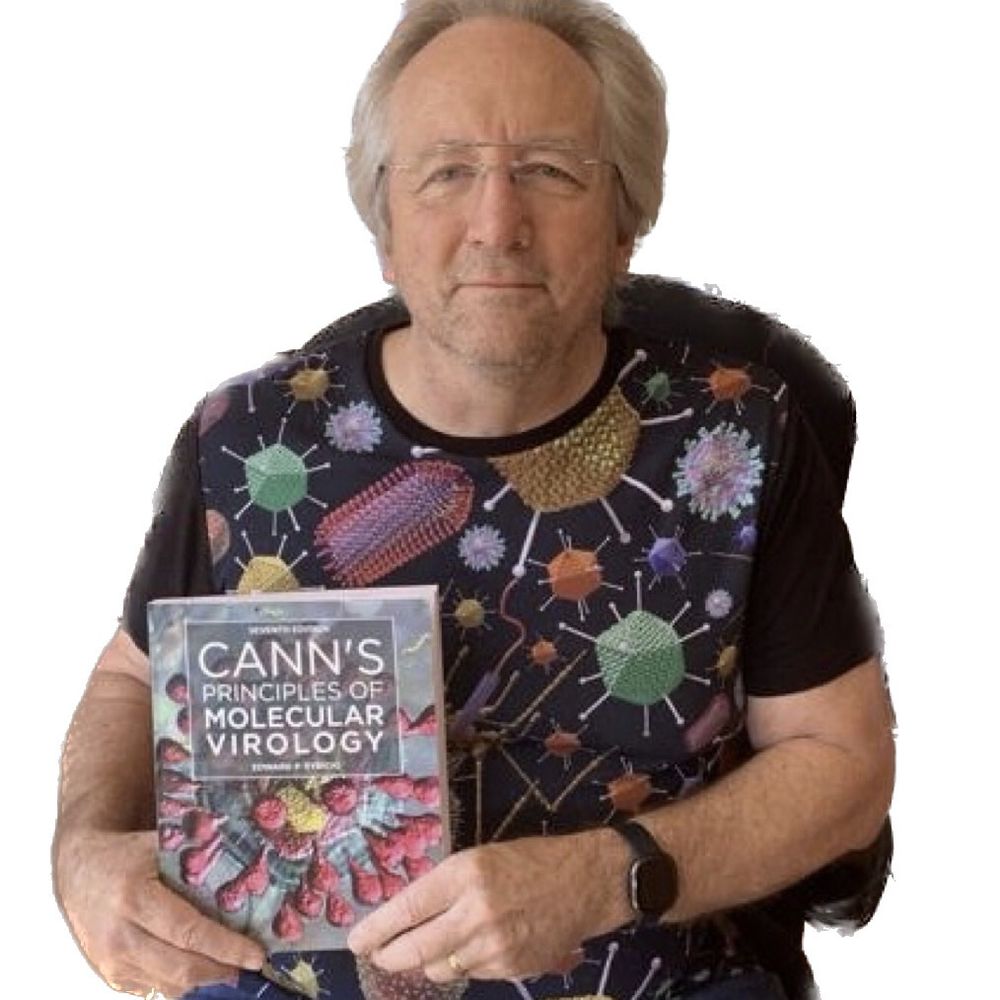
Interesting! I have been teaching the multiple origins of viruses since 1983, I will point out...😁
www.the-scientist.com/where-do-vir...
www.the-scientist.com/where-do-vir...

Where Do Viruses Come From?
Using genomics, evolutionary biologists test several hypotheses on the origin of viruses. New evidence suggests they may have emerged more times than previously thought.
www.the-scientist.com
December 2, 2025 at 9:03 AM
Interesting! I have been teaching the multiple origins of viruses since 1983, I will point out...😁
www.the-scientist.com/where-do-vir...
www.the-scientist.com/where-do-vir...
Reposted by Philippe Le Mercier, ViralZone

H5N1 in bats - what should we think about this?
@itingtu.bsky.social explains her recent preprint (a collaboration with multiple @cvrinfo.bsky.social groups) in a really nice interview with @science.org
www.science.org/content/arti...
@itingtu.bsky.social explains her recent preprint (a collaboration with multiple @cvrinfo.bsky.social groups) in a really nice interview with @science.org
www.science.org/content/arti...
November 26, 2025 at 3:40 PM
H5N1 in bats - what should we think about this?
@itingtu.bsky.social explains her recent preprint (a collaboration with multiple @cvrinfo.bsky.social groups) in a really nice interview with @science.org
www.science.org/content/arti...
@itingtu.bsky.social explains her recent preprint (a collaboration with multiple @cvrinfo.bsky.social groups) in a really nice interview with @science.org
www.science.org/content/arti...
What role will structural modeling play in the future of phylogenetics?
Find out at the Australasian Protein Structural Phylogenetics Meeting (APSPM).
Find out at the Australasian Protein Structural Phylogenetics Meeting (APSPM).

Registration for #APSPM2026 closes soon.
Everyone’s welcome! whether you study evolution, structure, or computational methods, join us in Brisbane (and online) Feb 16–18, 2026 to learn how protein structure meets phylogenetics.
biosig.lab.uq.edu.au/strphy26
@official-smbe.bsky.social
Everyone’s welcome! whether you study evolution, structure, or computational methods, join us in Brisbane (and online) Feb 16–18, 2026 to learn how protein structure meets phylogenetics.
biosig.lab.uq.edu.au/strphy26
@official-smbe.bsky.social

November 24, 2025 at 2:50 PM
What role will structural modeling play in the future of phylogenetics?
Find out at the Australasian Protein Structural Phylogenetics Meeting (APSPM).
Find out at the Australasian Protein Structural Phylogenetics Meeting (APSPM).
In addition to nearly 200,000 experimentally-determined PDB structures, RCSB.org now offers access to ~1 million Computed Structure Models (CSMs) from AlphaFoldDB and RoseTTAFold (from Model Archive)
Register for the Nov 24 Virtual Office Hour on Exploring CSMs at RCSB PDB
Learn how to use RCSB PDB features to navigate 3D Computed Structure Models from AlphaFold DB and ModelArchive
Learn how to use RCSB PDB features to navigate 3D Computed Structure Models from AlphaFold DB and ModelArchive

PDB101: Register for the Nov 24 Virtual Office Hour on Exploring CSMs at RCSB.org
PDB-101: Training, Outreach, and Education portal of RCSB PDB
pdb101.rcsb.org
November 21, 2025 at 9:57 AM
In addition to nearly 200,000 experimentally-determined PDB structures, RCSB.org now offers access to ~1 million Computed Structure Models (CSMs) from AlphaFoldDB and RoseTTAFold (from Model Archive)
ViralZone’s RSV circulating variants page now features updated resistance mutations and domain annotations for the F (Fusion) protein.
viralzone.expasy.org/11605
viralzone.expasy.org/11605

November 18, 2025 at 3:09 PM
ViralZone’s RSV circulating variants page now features updated resistance mutations and domain annotations for the F (Fusion) protein.
viralzone.expasy.org/11605
viralzone.expasy.org/11605
Flaviviruses are highly diverse, and their taxonomy is evolving into three families—Flaviviridae, Pestiviridae, and Hepaciviridae—with new genera added.
Cherry on top: structural modeling with FoldTree and Foldseek helped refine the classification.
www.nature.com/articles/s41...
Cherry on top: structural modeling with FoldTree and Foldseek helped refine the classification.
www.nature.com/articles/s41...

Taxonomic expansion and reorganization of Flaviviridae - Nature Microbiology
Analysis of RNA polymerase hallmark gene phylogenies supported by protein structure relationships of flaviviruses and ‘flavi-like’ viruses underpins the taxonomic expansion and reorganization of Flavi...
www.nature.com
November 18, 2025 at 2:21 PM
Flaviviruses are highly diverse, and their taxonomy is evolving into three families—Flaviviridae, Pestiviridae, and Hepaciviridae—with new genera added.
Cherry on top: structural modeling with FoldTree and Foldseek helped refine the classification.
www.nature.com/articles/s41...
Cherry on top: structural modeling with FoldTree and Foldseek helped refine the classification.
www.nature.com/articles/s41...
Reposted by Philippe Le Mercier, ViralZone

Epstein-Barr virus may drive autoimmunity in lupus by infecting and reprogramming memory B cells, according to a new #ScienceTranslationalMedicine analysis of patient-derived blood samples. https://scim.ag/49orb21

Epstein-Barr virus reprograms autoreactive B cells as antigen-presenting cells in systemic lupus erythematosus
Epstein-Barr virus reprograms autoreactive B cells as antigen-presenting cells to promote pathogenic antinuclear T and B cell responses in lupus.
scim.ag
November 17, 2025 at 7:00 PM
Epstein-Barr virus may drive autoimmunity in lupus by infecting and reprogramming memory B cells, according to a new #ScienceTranslationalMedicine analysis of patient-derived blood samples. https://scim.ag/49orb21
Reposted by Philippe Le Mercier, ViralZone

👉 Make sure to register for this webinar on 27 November, in which Emma Hodcroft will present “PathoPlexus: A Community-Driven Solution for Transparent and Equitable Viral Genomic Data Sharing”.
📢 Next Viruses in silico lecture:
🎙️ Pathoplexus: A Community-Driven Solution for Transparent and Equitable Viral Genomic Data Sharing
👩🔬 Emma Hodcroft @firefoxx66.bsky.social (@swisstph.ch @sib.swiss)
🗓️ 27 Nov 2025 🕑 4 PM CET
📍 Zoom - Register to receive login details
👉 tinyurl.com/VirInSilico
🎙️ Pathoplexus: A Community-Driven Solution for Transparent and Equitable Viral Genomic Data Sharing
👩🔬 Emma Hodcroft @firefoxx66.bsky.social (@swisstph.ch @sib.swiss)
🗓️ 27 Nov 2025 🕑 4 PM CET
📍 Zoom - Register to receive login details
👉 tinyurl.com/VirInSilico

November 18, 2025 at 10:17 AM
👉 Make sure to register for this webinar on 27 November, in which Emma Hodcroft will present “PathoPlexus: A Community-Driven Solution for Transparent and Equitable Viral Genomic Data Sharing”.
Reposted by Philippe Le Mercier, ViralZone
Viro3D delivers >85,000 AI-predicted protein structures for >4,400 viruses, expanding viral structural coverage 30-fold, enabling new insights to virus function/evolution.
#VirusBioinformatics #StructuralBiology🧬🔍
📄 doi.org/10.1038/s443...
👤EVBC members: Spyros Lytras, David Robertson, Joseph Hughes
#VirusBioinformatics #StructuralBiology🧬🔍
📄 doi.org/10.1038/s443...
👤EVBC members: Spyros Lytras, David Robertson, Joseph Hughes

Viro3D: a comprehensive database of virus protein structure predictions | Molecular Systems Biology
imageimageViro3D provides proteome-level, high confidence AI-protein structure predictions for
>4,400 viruses, allowing mapping of form and function across the human and animal
virosphere. Viro3D i...
doi.org
November 14, 2025 at 8:33 AM
Viro3D delivers >85,000 AI-predicted protein structures for >4,400 viruses, expanding viral structural coverage 30-fold, enabling new insights to virus function/evolution.
#VirusBioinformatics #StructuralBiology🧬🔍
📄 doi.org/10.1038/s443...
👤EVBC members: Spyros Lytras, David Robertson, Joseph Hughes
#VirusBioinformatics #StructuralBiology🧬🔍
📄 doi.org/10.1038/s443...
👤EVBC members: Spyros Lytras, David Robertson, Joseph Hughes
Reposted by Philippe Le Mercier, ViralZone

Upcoming seminar:
🎓Prof Andreas Pichlmair, @dzif.bsky.social
📢"Virus‐host interactomics identify pathogen restriction factors and highlight the importance of non-canonical regulatory processes for antiviral immunity"
📅 4:30-5:30PM, Thur 20 November
📍JCBC @cambridgebiocampus.bsky.social
#CITIID
🎓Prof Andreas Pichlmair, @dzif.bsky.social
📢"Virus‐host interactomics identify pathogen restriction factors and highlight the importance of non-canonical regulatory processes for antiviral immunity"
📅 4:30-5:30PM, Thur 20 November
📍JCBC @cambridgebiocampus.bsky.social
#CITIID

November 14, 2025 at 4:45 PM
Upcoming seminar:
🎓Prof Andreas Pichlmair, @dzif.bsky.social
📢"Virus‐host interactomics identify pathogen restriction factors and highlight the importance of non-canonical regulatory processes for antiviral immunity"
📅 4:30-5:30PM, Thur 20 November
📍JCBC @cambridgebiocampus.bsky.social
#CITIID
🎓Prof Andreas Pichlmair, @dzif.bsky.social
📢"Virus‐host interactomics identify pathogen restriction factors and highlight the importance of non-canonical regulatory processes for antiviral immunity"
📅 4:30-5:30PM, Thur 20 November
📍JCBC @cambridgebiocampus.bsky.social
#CITIID