



Stephen V Mahler
@svmahler.bsky.social
Behavioral Neuroscientist, Prof, ICAN co-Director, Ivan Pavlov fan.
Interested in rats, drugs, motivation circuits, orexin, VP, DREADDs, psychedelics, neurodevelopment, etc
https://faculty.sites.uci.edu/mahlerlab/
http://www.youtube.com/@stephenvmahler56
Interested in rats, drugs, motivation circuits, orexin, VP, DREADDs, psychedelics, neurodevelopment, etc
https://faculty.sites.uci.edu/mahlerlab/
http://www.youtube.com/@stephenvmahler56
Thrilled to experience @talliezee.bsky.social’s @ucibiosci.bsky.social Dean’s Distinguished Lecture today @ucirvine.bsky.social!
@ucirvinemedschool.bsky.social
@ucirvinemedschool.bsky.social

January 28, 2026 at 12:22 AM
Thrilled to experience @talliezee.bsky.social’s @ucibiosci.bsky.social Dean’s Distinguished Lecture today @ucirvine.bsky.social!
@ucirvinemedschool.bsky.social
@ucirvinemedschool.bsky.social
Reposted by Stephen V Mahler

On a call with NIH PO this morning - I knew NOSIs were no longer a thing, but wasn't aware they now have these "Highlighted Topics". Not clear how it exactly interfaces with funding and/or how you highlight alignment, but good to keep an eye on!
grants.nih.gov/funding/find...
grants.nih.gov/funding/find...
Highlighted Topics | Grants & Funding
grants.nih.gov
January 22, 2026 at 2:51 PM
On a call with NIH PO this morning - I knew NOSIs were no longer a thing, but wasn't aware they now have these "Highlighted Topics". Not clear how it exactly interfaces with funding and/or how you highlight alignment, but good to keep an eye on!
grants.nih.gov/funding/find...
grants.nih.gov/funding/find...

Hey ventral pallidum fans, see our new paper showing that #VP GABA neurons, known for reward, also regulate aversive motivation! Inhibiting these cells with #DREADDs potentiates active or passive defenses to threats, likely via LHb.
Congrats to Erica Ramirez & Marty Martinez!
doi.org/10.1016/j.yn...
Congrats to Erica Ramirez & Marty Martinez!
doi.org/10.1016/j.yn...
Redirecting
doi.org
January 21, 2026 at 7:22 PM
Hey ventral pallidum fans, see our new paper showing that #VP GABA neurons, known for reward, also regulate aversive motivation! Inhibiting these cells with #DREADDs potentiates active or passive defenses to threats, likely via LHb.
Congrats to Erica Ramirez & Marty Martinez!
doi.org/10.1016/j.yn...
Congrats to Erica Ramirez & Marty Martinez!
doi.org/10.1016/j.yn...
Reposted by Stephen V Mahler
Considering the impact of Multi-Year Funding at NIH drugmonkey.wordpress.com/2026/01/20/c...
Considering the impact of Multi-Year Funding at NIH
Somewhere in the back of my head I have been thinking that the worst impact of NIH allocating ~50% of funds via Multi-Year Funding would be FY2026 if, and that is a huge IF, the overall budget stay…
drugmonkey.wordpress.com
January 21, 2026 at 3:36 AM
Considering the impact of Multi-Year Funding at NIH drugmonkey.wordpress.com/2026/01/20/c...
Hugs or heroin?
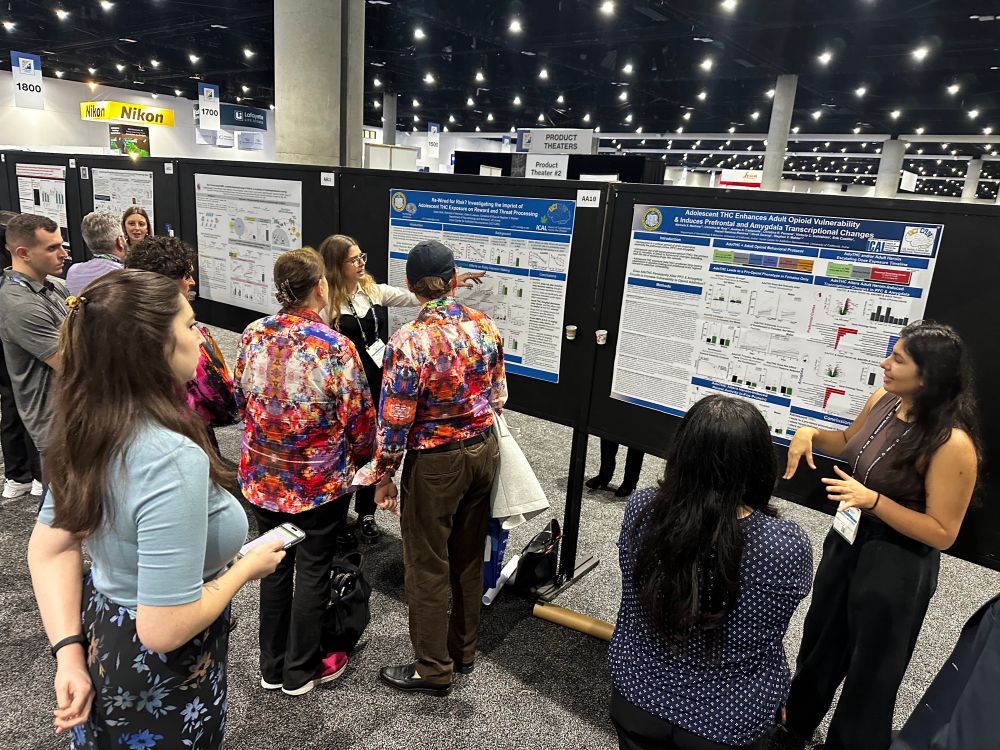
If you have to ask, or if you like #VP, or social reward brain mechanisms, or are looking for an awesome postdoc next year, you should probably come see Erica Ramirez’ poster tonight at #acnp2026!
w246
@acnporg.bsky.social
If you have to ask, or if you like #VP, or social reward brain mechanisms, or are looking for an awesome postdoc next year, you should probably come see Erica Ramirez’ poster tonight at #acnp2026!
w246
@acnporg.bsky.social
January 14, 2026 at 5:27 PM
Hugs or heroin?
If you have to ask, or if you like #VP, or social reward brain mechanisms, or are looking for an awesome postdoc next year, you should probably come see Erica Ramirez’ poster tonight at #acnp2026!
w246
@acnporg.bsky.social
If you have to ask, or if you like #VP, or social reward brain mechanisms, or are looking for an awesome postdoc next year, you should probably come see Erica Ramirez’ poster tonight at #acnp2026!
w246
@acnporg.bsky.social
Reposted by Stephen V Mahler

Big congrats to Steve Mahler’s group at UCI ICAL! 🎉
Their team published 3 major papers in 2025 — including one featured on the cover of the Journal of Neuroimmunology — advancing research on cannabinoids, addiction, and brain–immune interactions. Proud of this amazing work! 🧠✨
Their team published 3 major papers in 2025 — including one featured on the cover of the Journal of Neuroimmunology — advancing research on cannabinoids, addiction, and brain–immune interactions. Proud of this amazing work! 🧠✨

January 5, 2026 at 3:02 PM
Big congrats to Steve Mahler’s group at UCI ICAL! 🎉
Their team published 3 major papers in 2025 — including one featured on the cover of the Journal of Neuroimmunology — advancing research on cannabinoids, addiction, and brain–immune interactions. Proud of this amazing work! 🧠✨
Their team published 3 major papers in 2025 — including one featured on the cover of the Journal of Neuroimmunology — advancing research on cannabinoids, addiction, and brain–immune interactions. Proud of this amazing work! 🧠✨
Reposted by Stephen V Mahler


Reposted by Stephen V Mahler
This recent review revisits decades of research on kappa opioid receptors (KORs), critically assesses long-held assumptions & argues for a re-evaluation of existing frameworks to refine how KOR signaling is conceptualized & leveraged for treatment

Kappa opioid receptor control of motivated behavior revisited
Neuropsychopharmacology - Kappa opioid receptor control of motivated behavior revisited
www.nature.com
December 29, 2025 at 3:31 PM
This recent review revisits decades of research on kappa opioid receptors (KORs), critically assesses long-held assumptions & argues for a re-evaluation of existing frameworks to refine how KOR signaling is conceptualized & leveraged for treatment
Reposted by Stephen V Mahler

The best Christmas present this year was my lab’s first big data paper getting accepted today! A tour-de-force spearheaded by my talented first lab tech, who’s now continuing as a PhD student in my lab-- so proud of our team! 🙌 sciencedirect.com/science/articl…

December 25, 2025 at 7:59 PM
The best Christmas present this year was my lab’s first big data paper getting accepted today! A tour-de-force spearheaded by my talented first lab tech, who’s now continuing as a PhD student in my lab-- so proud of our team! 🙌 sciencedirect.com/science/articl…
Reposted by Stephen V Mahler
New Perspective from myself, Sarah Heilbronner and @myoo.bsky.social . “Rethinking the centrality of brain areas in understanding functional organization” in Nature Neuroscience. 🧵
rdcu.be/eVZ1A
rdcu.be/eVZ1A

Rethinking the centrality of brain areas in understanding functional organization
Nature Neuroscience - Parcellation of the cortex into functionally modular brain areas is foundational to neuroscience. Here, Hayden, Heilbronner and Yoo question the central status of brain areas...
rdcu.be
December 23, 2025 at 1:02 PM
New Perspective from myself, Sarah Heilbronner and @myoo.bsky.social . “Rethinking the centrality of brain areas in understanding functional organization” in Nature Neuroscience. 🧵
rdcu.be/eVZ1A
rdcu.be/eVZ1A
Reposted by Stephen V Mahler

In @elife.bsky.social: Sex differences in BNST signaling and BNST CRF in fear processing doi.org/10.7554/eLif...
Official version finally out. Thank you to reviewers, made it better!
Official version finally out. Thank you to reviewers, made it better!

Sex differences in BNST signaling and BNST CRF in fear processing
Critical differences in how the BNST responds to different types of fear across male and female mice.
doi.org
December 5, 2025 at 11:39 PM
In @elife.bsky.social: Sex differences in BNST signaling and BNST CRF in fear processing doi.org/10.7554/eLif...
Official version finally out. Thank you to reviewers, made it better!
Official version finally out. Thank you to reviewers, made it better!
Reposted by Stephen V Mahler
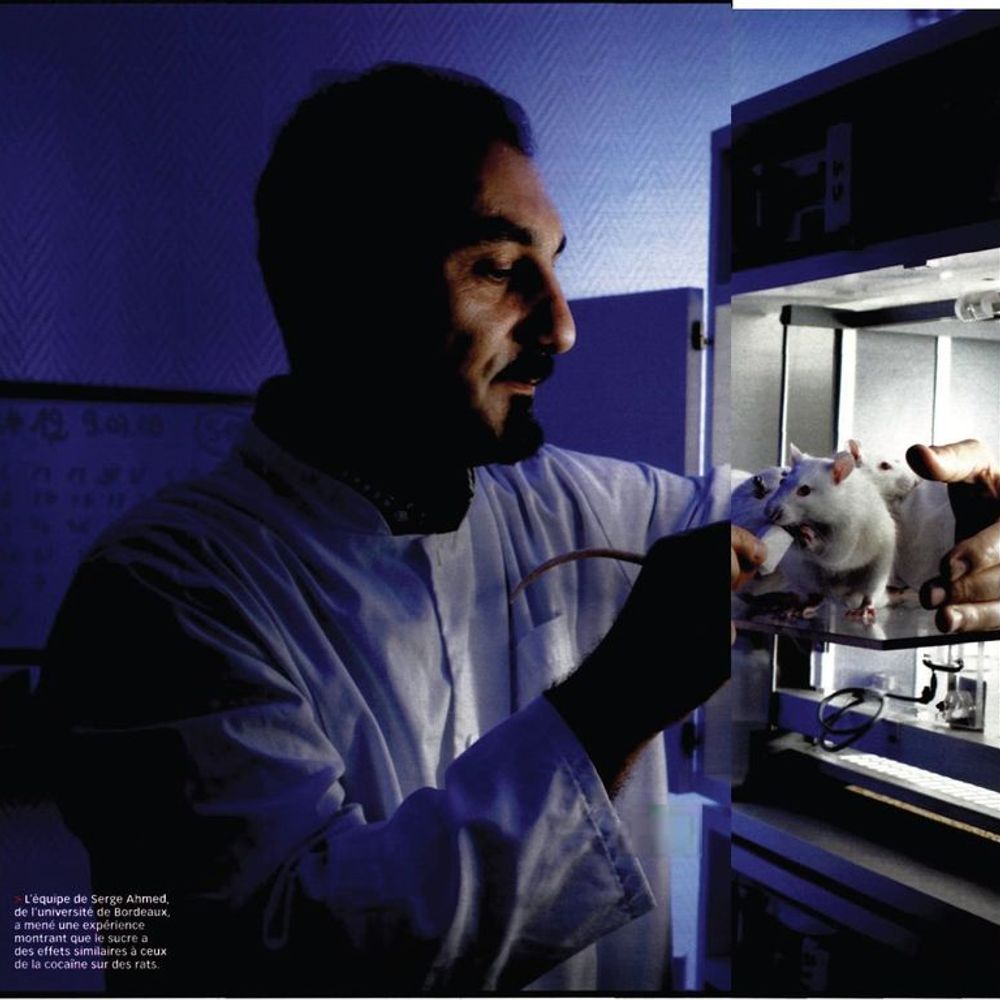
Role of mesolimbic circuitry in aversive signalling, pain relief and opioid use disorder
In this review, the authors explore how opioid use modifies heterogeneous VTA neuron populations, enhancing sensitivity to aversive stimuli and promoting negative affect
1/3
www.cell.com/neuron/abstr...
In this review, the authors explore how opioid use modifies heterogeneous VTA neuron populations, enhancing sensitivity to aversive stimuli and promoting negative affect
1/3
www.cell.com/neuron/abstr...

The role of mesolimbic circuitry in aversive signaling and opioid dependence
This review examines how chronic opioid use reshapes medial ventral tegmental area
circuits, increasing sensitivity to aversive stimuli, amplifying negative affect,
and reinforcing withdrawal-avoidanc...
www.cell.com
December 5, 2025 at 3:50 PM
Role of mesolimbic circuitry in aversive signalling, pain relief and opioid use disorder
In this review, the authors explore how opioid use modifies heterogeneous VTA neuron populations, enhancing sensitivity to aversive stimuli and promoting negative affect
1/3
www.cell.com/neuron/abstr...
In this review, the authors explore how opioid use modifies heterogeneous VTA neuron populations, enhancing sensitivity to aversive stimuli and promoting negative affect
1/3
www.cell.com/neuron/abstr...
Reposted by Stephen V Mahler
🙏 @sfnjournals.bsky.social now out! & while celltype &ephys are alike across sexes, behavioral functions and axon terminal distribution in NAc and brainwide diverge by sex and #stress. @ladenardo.bsky.social
#JNeurosci | Taniguchi, Goodpaster et al. found structural and functional differences between sexes in a reward-related brain pathway—a pathway that previous research showed is affected by early life adversity in males but not females.
https://doi.org/10.1523/JNEUROSCI.1239-25.2025
https://doi.org/10.1523/JNEUROSCI.1239-25.2025

December 1, 2025 at 9:14 PM
🙏 @sfnjournals.bsky.social now out! & while celltype &ephys are alike across sexes, behavioral functions and axon terminal distribution in NAc and brainwide diverge by sex and #stress. @ladenardo.bsky.social
Reposted by Stephen V Mahler
I am a little tired of being yelled at for this but apparently not tired about: heroin addiction is not RFK’s problem. He’s a sociopath. Most addicts aren’t. Honestly, walk into an NA meeting, grab the first person with a few years to be head of HHS and they’d probably do a better job than Bobby.

This is what happens when you put a privileged, 14 year heroin addict in charge of health. Duh
November 27, 2025 at 12:15 AM
I am a little tired of being yelled at for this but apparently not tired about: heroin addiction is not RFK’s problem. He’s a sociopath. Most addicts aren’t. Honestly, walk into an NA meeting, grab the first person with a few years to be head of HHS and they’d probably do a better job than Bobby.
Reposted by Stephen V Mahler

Want to combat the Thanksgiving food coma? Grab a cozy spot on the couch and read our new paper in Psychopharmacology, part of an upcoming special issue honoring the late Dr. Klaus Miczek's seminal contributions. Congrats co-first authors Aditi Buch & Ava Shipman! link.springer.com/article/10.1...

Single prolonged stress in mice: interactions between alcohol drinking, negative affect, and fear learning - Psychopharmacology
Rationale & objective Exposure to traumatic stressors can have detrimental effects on one’s well-being. Alcohol is often used as a coping mechanism to alleviate stress, leading to the development of a...
link.springer.com
November 26, 2025 at 7:08 PM
Want to combat the Thanksgiving food coma? Grab a cozy spot on the couch and read our new paper in Psychopharmacology, part of an upcoming special issue honoring the late Dr. Klaus Miczek's seminal contributions. Congrats co-first authors Aditi Buch & Ava Shipman! link.springer.com/article/10.1...
Reposted by Stephen V Mahler

New computational paper from the lab! Thanks to the reviewers for helping us improve this paper from the preprint version and Nucleic Acids Research for a smooth publication process.
Excited to share that our article on accurate sample deconvolution of pooled snRNA-seq data using sex-dependent gene expression patterns is live on NAR Genomics and Bioinformatics! 🎉
Check it out here: doi.org/10.1093/narg...
#NARGenomicsandBioinformatics #snRNAseq #Genomics #Bioinformatics
Check it out here: doi.org/10.1093/narg...
#NARGenomicsandBioinformatics #snRNAseq #Genomics #Bioinformatics
Validate User
doi.org
November 26, 2025 at 6:15 PM
New computational paper from the lab! Thanks to the reviewers for helping us improve this paper from the preprint version and Nucleic Acids Research for a smooth publication process.
Reposted by Stephen V Mahler

New lab paper drop, this one has been a long time coming! Driven by Rob Aukema (now a postdoc with Kerry Ressler) this paper in Science Advances answered the lingering question of what role the amygdala plays in stress-induced neuroendocrine responses.
www.science.org/doi/10.1126/...
www.science.org/doi/10.1126/...

A network of basolateral amygdala projection neurons contributes to stress-induced activation of the hypothalamic-pituitary-adrenal axis
A network of basolateral amygdala neurons, but not singular projections, contributes to the neuroendocrine response to stress.
www.science.org
November 25, 2025 at 10:13 PM
New lab paper drop, this one has been a long time coming! Driven by Rob Aukema (now a postdoc with Kerry Ressler) this paper in Science Advances answered the lingering question of what role the amygdala plays in stress-induced neuroendocrine responses.
www.science.org/doi/10.1126/...
www.science.org/doi/10.1126/...
Reposted by Stephen V Mahler
A great intro to academic conferencing.
Not sure how I missed this one.
scienceforeveryone.science/getting-the-...
Not sure how I missed this one.
scienceforeveryone.science/getting-the-...

Getting the most of out a scientific conference
A slightly unconventional guide to your first time
scienceforeveryone.science
November 26, 2025 at 4:47 AM
A great intro to academic conferencing.
Not sure how I missed this one.
scienceforeveryone.science/getting-the-...
Not sure how I missed this one.
scienceforeveryone.science/getting-the-...
Reposted by Stephen V Mahler

#eNeuro | Layer-Specific Glutamatergic Inputs and Parvalbumin Interneurons Modulate Early Life Stress-Induced Alterations in Prefrontal Glutamate Release during Fear Conditioning in Pre-adolescent Rats
vist.ly/4fmx5
vist.ly/4fmx5

November 22, 2025 at 11:29 PM
#eNeuro | Layer-Specific Glutamatergic Inputs and Parvalbumin Interneurons Modulate Early Life Stress-Induced Alterations in Prefrontal Glutamate Release during Fear Conditioning in Pre-adolescent Rats
vist.ly/4fmx5
vist.ly/4fmx5
Reposted by Stephen V Mahler
Finally dropped! fantastic collaboration with @ladenardo.bsky.social, whole-brain analyses of our novel CRH/GABA BLA-NAc projection shows impact of earlylife stress that are sex dependent & reflect reward behaviors www.jneurosci.org/content/earl... @thebalelab.bsky.social @kundakoviclab.bsky.social

November 21, 2025 at 5:49 PM
Finally dropped! fantastic collaboration with @ladenardo.bsky.social, whole-brain analyses of our novel CRH/GABA BLA-NAc projection shows impact of earlylife stress that are sex dependent & reflect reward behaviors www.jneurosci.org/content/earl... @thebalelab.bsky.social @kundakoviclab.bsky.social
Congrats!!
@ucirvine.bsky.social
@ucirvine.bsky.social

Congratulations to the recipients of the 2025 Science Education and Outreach Awards
These researchers are advancing neuroscience through groundbreaking discoveries, mentorship, & scientific excellence.
Listen to their remarks: vist.ly/4f8cn
#SfN25 #neurosky #neuroskyence
These researchers are advancing neuroscience through groundbreaking discoveries, mentorship, & scientific excellence.
Listen to their remarks: vist.ly/4f8cn
#SfN25 #neurosky #neuroskyence


November 20, 2025 at 3:30 AM
Congrats!!
@ucirvine.bsky.social
@ucirvine.bsky.social
Reposted by Stephen V Mahler
So stoked to have our image on the cover of this week's issue of Journal of Neuroscience!! @sfnjournals.bsky.social #JNeurosci #SfN25. Check out the final version of the paper here www.jneurosci.org/content/45/4...

Superior Colliculus Projections Drive Dopamine Neuron Activity and Movement But Not Value
To navigate dynamic environments, animals must rapidly integrate sensory information and respond appropriately to gather rewards and avoid threats. It is well established that dopamine (DA) neurons in...
www.jneurosci.org
November 19, 2025 at 6:15 PM
So stoked to have our image on the cover of this week's issue of Journal of Neuroscience!! @sfnjournals.bsky.social #JNeurosci #SfN25. Check out the final version of the paper here www.jneurosci.org/content/45/4...

Reposted by Stephen V Mahler

This paper was a pleasure to read as review editor! Congrats to the authors! For others, eNeuro has the best review process in town with a synthesized review by the editor in consultation with reviewers!
#eNeuro | The Ventral Pallidum Innervates a Distinct Subset of Midbrain Dopamine Neurons
vist.ly/4dgyn
vist.ly/4dgyn

The Ventral Pallidum Innervates a Distinct Subset of Midbrain Dopamine Neurons
Aberrant dopamine transmission is a hallmark of several psychiatric disorders. Dopamine neurons in the ventral tegmental area (VTA) display distinct activity states that are regulated by discrete afferent inputs. For example, burst firing requires excitatory input from the mesopontine tegmentum, while dopamine neuron population activity, defined as the number of spontaneously active dopamine neurons, is thought to be dependent on inhibitory drive from the ventral pallidum (VP). Rodent models used to study psychiatric disorders, such as psychosis, consistently exhibit elevated dopamine neuron population activity, due to decreased tonic inhibition from the VP. However, it remains unclear whether the VP can modulate all dopamine neurons or if only a specific subset of VTA dopamine neurons receive innervation from the VP to be recruited as required. This knowledge is critical for understanding dopamine regulation in normal and pathological conditions. Here, we used in vivo electrophysiology in male and female rats to record VTA dopamine neurons inhibited by electrical stimulation of the VP. Specifically, VP stimulation inhibited ∼22% of spontaneously active dopamine neurons; however, activation of the ventral hippocampus, a modulator of VTA population activity, increased the proportion to ∼48%. This increase suggests that VP selectively modulates a subset of dopamine neurons that can be recruited by afferent activation. Anterograde monosynaptic tracing revealed that approximately half of the VTA dopamine neurons receive input from the VP. Taken together, we demonstrate that a subset of VTA dopamine neurons receives monosynaptic input from the VP, providing valuable information regarding the regulation of VTA neuron activity.
doi.org
November 8, 2025 at 7:37 PM
This paper was a pleasure to read as review editor! Congrats to the authors! For others, eNeuro has the best review process in town with a synthesized review by the editor in consultation with reviewers!