




Prof. Abel Méndez
@profabelmendez.bsky.social
Planetary Astrobiologist and Director of the
@PlanetaryHabLab. http://astrodon.social/@profabelmendez #exoplanets #astrobiology #habitability
@PlanetaryHabLab. http://astrodon.social/@profabelmendez #exoplanets #astrobiology #habitability
Pinned

This is how our Wow! Signal research is going: new explanation, new properties, new signals. #WowSignal #AreciboWow #RadioAstronomy #SETI phl.upr.edu/wow/faq
We’re bringing the Big Ear telescope archive back to life. Hundreds of original technical documents—lost to time for decades—are being digitized and will be released in 2027 for the 50th anniversary of the Wow! Signal. #AreciboWow

February 17, 2026 at 4:35 PM
We’re bringing the Big Ear telescope archive back to life. Hundreds of original technical documents—lost to time for decades—are being digitized and will be released in 2027 for the 50th anniversary of the Wow! Signal. #AreciboWow
Reposted by Prof. Abel Méndez

Planetary Science Institute: What Cold-Water Geysers on Earth Reveal About the Habitability of Ocean Worlds www.psi.edu/blog/what-co...

What cold-water geysers on Earth reveal about the habitability of ocean worlds - Planetary Science Institute
Feb. 16, 2026, TUCSON, Ariz. – In the eastern Utah desert, carbon-dioxide-saturated water bubbles, sprays and foams from the ground. These cold-water geysers,
www.psi.edu
February 17, 2026 at 4:58 AM
Planetary Science Institute: What Cold-Water Geysers on Earth Reveal About the Habitability of Ocean Worlds www.psi.edu/blog/what-co...
Reposted by Prof. Abel Méndez
Columbia University: Scientists Capture the Clearest View Yet of a Star Collapsing Into a Black Hole news.columbia.edu/news/scienti...

Scientists Capture the Clearest View Yet of a Star Collapsing Into a Black Hole
The star, in the Andromeda galaxy, collapsed and disappeared without first exploding in a supernova.
news.columbia.edu
February 17, 2026 at 5:11 AM
Columbia University: Scientists Capture the Clearest View Yet of a Star Collapsing Into a Black Hole news.columbia.edu/news/scienti...
Reposted by Prof. Abel Méndez
Swiss Federal Technology Institute of Lausanne (EPFL): If Alien Signals Reached Earth, Why Haven’t We Seen Them? actu.epfl.ch/news/if-alie...

If alien signals reached Earth, why haven't we seen them?
For decades, scientists have searched the skies for signs of extraterrestrial technology. A study from EPFL asks a sharp question: if alien signals have already reached Earth without us noticing, what...
actu.epfl.ch
February 17, 2026 at 5:04 AM
Swiss Federal Technology Institute of Lausanne (EPFL): If Alien Signals Reached Earth, Why Haven’t We Seen Them? actu.epfl.ch/news/if-alie...
Reposted by Prof. Abel Méndez

Wilson et al. have found a system of four #exoplanets orbiting a red dwarf star, in the sequence: rocky - gaseous - gaseous - rocky again.
This spans the radius valley within a single system, and distinguishes between two different planet formation theories. ☄️🔭🧪
www.science.org/doi/10.1126/...
This spans the radius valley within a single system, and distinguishes between two different planet formation theories. ☄️🔭🧪
www.science.org/doi/10.1126/...

February 16, 2026 at 1:14 PM
Wilson et al. have found a system of four #exoplanets orbiting a red dwarf star, in the sequence: rocky - gaseous - gaseous - rocky again.
This spans the radius valley within a single system, and distinguishes between two different planet formation theories. ☄️🔭🧪
www.science.org/doi/10.1126/...
This spans the radius valley within a single system, and distinguishes between two different planet formation theories. ☄️🔭🧪
www.science.org/doi/10.1126/...
Did Obama Just Tell Us Aliens Are Real? www.forbes.com/sites/adamfr...

February 16, 2026 at 7:08 PM
Did Obama Just Tell Us Aliens Are Real? www.forbes.com/sites/adamfr...
I recently found this keychain among some old documents and materials from the Arecibo Observatory. I think it’s more than 30 years old. 🙂 #AreciboWow

February 16, 2026 at 5:23 PM
I recently found this keychain among some old documents and materials from the Arecibo Observatory. I think it’s more than 30 years old. 🙂 #AreciboWow
Reposted by Prof. Abel Méndez
VLITE Marks 11 Years of Capturing the Dynamic Radio Sky
A collaboration between the U.S. Naval Research Laboratory and the NRAO celebrates over a decade of commensal observing with the NSF Very Large Array. @usnrl.bsky.social
#Astronomy #RadioAstronomy
A collaboration between the U.S. Naval Research Laboratory and the NRAO celebrates over a decade of commensal observing with the NSF Very Large Array. @usnrl.bsky.social
#Astronomy #RadioAstronomy

VLITE Marks 11 Years of Capturing the Dynamic Radio Sky - National Radio Astronomy Observatory
The U.S. National Science Foundation National Radio Astronomy Observatory (NSF NRAO) and the U.S. Naval Research Laboratory (NRL) are celebrating the 11th anniversary of the VLA Low-band Ionosphere an...
public.nrao.edu
February 12, 2026 at 10:53 PM
VLITE Marks 11 Years of Capturing the Dynamic Radio Sky
A collaboration between the U.S. Naval Research Laboratory and the NRAO celebrates over a decade of commensal observing with the NSF Very Large Array. @usnrl.bsky.social
#Astronomy #RadioAstronomy
A collaboration between the U.S. Naval Research Laboratory and the NRAO celebrates over a decade of commensal observing with the NSF Very Large Array. @usnrl.bsky.social
#Astronomy #RadioAstronomy
Reposted by Prof. Abel Méndez

Four worlds around a small, dim star are challenging theories of planet formation

‘Inside-out’ planetary system perplexes astronomers
Four worlds around a small, dim star are challenging theories of planet formation
www.scientificamerican.com
February 12, 2026 at 8:26 PM
Four worlds around a small, dim star are challenging theories of planet formation
Reposted by Prof. Abel Méndez

Oh now this is VERY cool! Denis+ on “Cold and eccentric: a high-spectral resolution view of 51 Eri b with
VLT/HiRISE” where radial velocity measurements of the exoplanet enable a determination of the 3D orbit, and therefore you can calculate the PHASE as seen by Earth! #astrodon #exoplanet ☄
VLT/HiRISE” where radial velocity measurements of the exoplanet enable a determination of the 3D orbit, and therefore you can calculate the PHASE as seen by Earth! #astrodon #exoplanet ☄

February 12, 2026 at 3:44 AM
Oh now this is VERY cool! Denis+ on “Cold and eccentric: a high-spectral resolution view of 51 Eri b with
VLT/HiRISE” where radial velocity measurements of the exoplanet enable a determination of the 3D orbit, and therefore you can calculate the PHASE as seen by Earth! #astrodon #exoplanet ☄
VLT/HiRISE” where radial velocity measurements of the exoplanet enable a determination of the 3D orbit, and therefore you can calculate the PHASE as seen by Earth! #astrodon #exoplanet ☄
Reposted by Prof. Abel Méndez
‘Save the best for last 😋’, a little rocky planet discovered by our #ESACheops might think – born later than its gaseous sibling-planets, it might flip our understanding of how planets form upside down.
Our full story 👉 www.esa.int/Science_Expl...
🔭🧪
#exoplanets
#milkyway
#planetsci
Our full story 👉 www.esa.int/Science_Expl...
🔭🧪
#exoplanets
#milkyway
#planetsci

February 12, 2026 at 7:10 PM
‘Save the best for last 😋’, a little rocky planet discovered by our #ESACheops might think – born later than its gaseous sibling-planets, it might flip our understanding of how planets form upside down.
Our full story 👉 www.esa.int/Science_Expl...
🔭🧪
#exoplanets
#milkyway
#planetsci
Our full story 👉 www.esa.int/Science_Expl...
🔭🧪
#exoplanets
#milkyway
#planetsci
Reposted by Prof. Abel Méndez
🔭🧪 Mark your calendars & pre-order this incredibly exciting new book all about astrobiology (!!) and #exoplanets and much much more by the amazingly talented @toomanyspectra.bsky.social! I CANNOT wait to enjoy this first for myself and then gift it to everyone I know 🤩
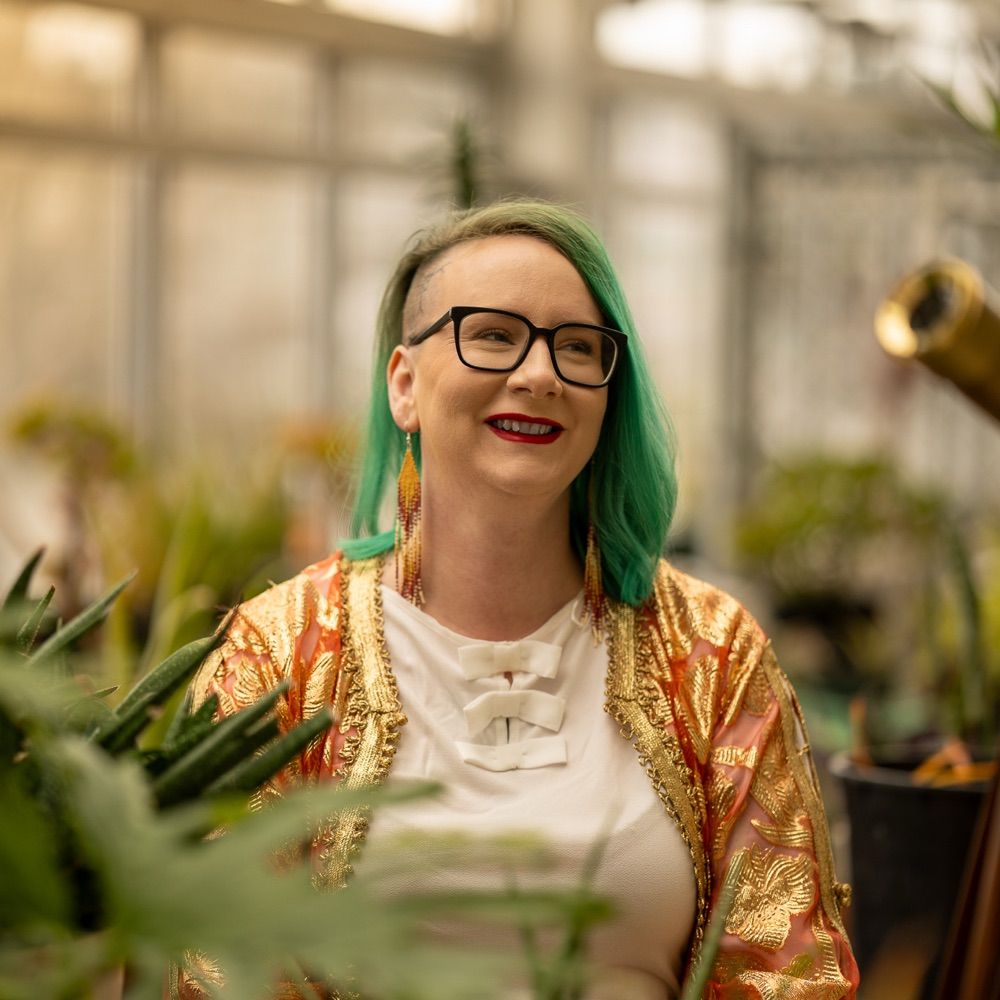
can’t believe it’s finally my turn to do this but:
COVER REVEAL!!
here is the long-awaited cover for CLOUDY WITH A CHANCE OF STARSHIPS by the incredibly talented Kamille Rodriguez
pre-order here: www.barnesandnoble.com/w/cloudy-wit...
COVER REVEAL!!
here is the long-awaited cover for CLOUDY WITH A CHANCE OF STARSHIPS by the incredibly talented Kamille Rodriguez
pre-order here: www.barnesandnoble.com/w/cloudy-wit...

February 11, 2026 at 9:03 PM
🔭🧪 Mark your calendars & pre-order this incredibly exciting new book all about astrobiology (!!) and #exoplanets and much much more by the amazingly talented @toomanyspectra.bsky.social! I CANNOT wait to enjoy this first for myself and then gift it to everyone I know 🤩
A Newly Discovered Nearby Planetary System around GJ 887 #RedDots arxiv.org/abs/2602.089...

RedDots: Multiplanet system around M dwarf GJ 887 in the solar neighborhood
GJ 887 is a bright M dwarf in the solar neighborhood with two currently reported nontransiting exoplanets with periods of $9~\mathrm{d}$ and $21~\mathrm{d,}$ along with an additional unconfirmed…
arxiv.org
February 11, 2026 at 3:31 PM
A Newly Discovered Nearby Planetary System around GJ 887 #RedDots arxiv.org/abs/2602.089...
Reposted by Prof. Abel Méndez
This is how our Wow! Signal research is going: new explanation, new properties, new signals. #WowSignal #AreciboWow #RadioAstronomy #SETI phl.upr.edu/wow/faq
February 10, 2026 at 2:53 AM
This is how our Wow! Signal research is going: new explanation, new properties, new signals. #WowSignal #AreciboWow #RadioAstronomy #SETI phl.upr.edu/wow/faq
Reposted by Prof. Abel Méndez

🔭☄️ #exoplanets

Very happy to advertise a Postdoctoral Research Associate in Exoplanet Science position with me and Christian Schwab at Macquarie University in Sydney.
We'll be working on applying machine learning & differentiable physics models to extremely precise radial velocity surveys.
We'll be working on applying machine learning & differentiable physics models to extremely precise radial velocity surveys.

Postdoctoral Research Associate in Exoplanet Science
PRIMARY DETAIL - Salary Package: $109,272 - $117,108 (HEW Level A.6-A.8) - plus 17% employer's superannuation contribution and annual leave loading. - Full time, 3 year fixed-term role - Macquarie Uni...
mq.wd3.myworkdayjobs.com
February 10, 2026 at 5:45 AM
🔭☄️ #exoplanets
Reposted by Prof. Abel Méndez
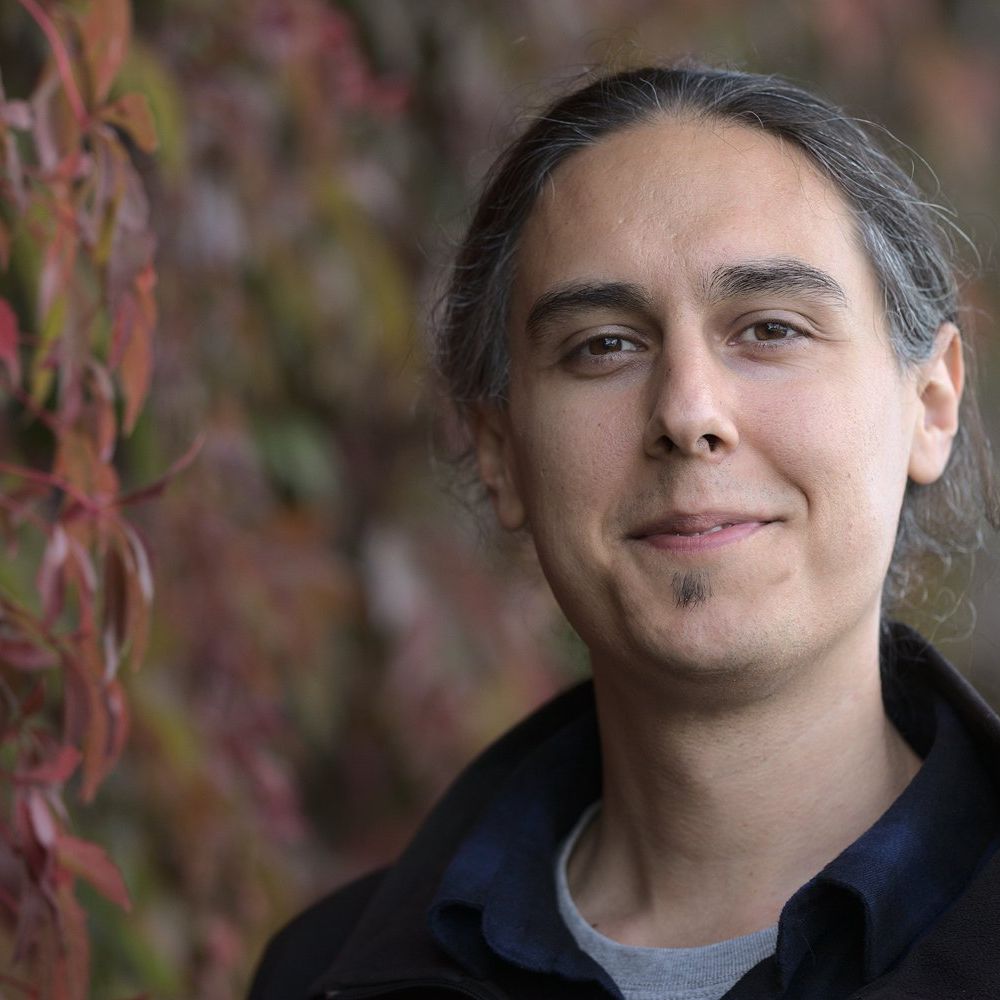
Paper day: I am extremely happy to announce our major discovery concerning the mysterious emergence of the first massive galaxies when the Universe was only 10% its current age:
www.mpifr-bonn.mpg.de/pressrelease...
#radioastronomy #extragalactic #astrosci 📡☄️🔭🧪
www.mpifr-bonn.mpg.de/pressrelease...
#radioastronomy #extragalactic #astrosci 📡☄️🔭🧪

How giant galaxies could form just 1.4 billion years after the Big Bang
Observations of the protocluster SPT2349-56 reveal how massive galaxies could form early in the Universe.
www.mpifr-bonn.mpg.de
February 10, 2026 at 10:44 AM
Paper day: I am extremely happy to announce our major discovery concerning the mysterious emergence of the first massive galaxies when the Universe was only 10% its current age:
www.mpifr-bonn.mpg.de/pressrelease...
#radioastronomy #extragalactic #astrosci 📡☄️🔭🧪
www.mpifr-bonn.mpg.de/pressrelease...
#radioastronomy #extragalactic #astrosci 📡☄️🔭🧪
Reposted by Prof. Abel Méndez
NEW: Breakthrough Listen, NSF Green Bank Telescope Probe Galactic Heart for Hidden Pulsars
Astronomers have discovered a possible millisecond pulsar, which would be the first found in the Milky Way's Galactic Center.
#Astronomy #RadioAstronomy #GreenBankTelescope #BreakthroughListen #SETI #Pulsars
Astronomers have discovered a possible millisecond pulsar, which would be the first found in the Milky Way's Galactic Center.
#Astronomy #RadioAstronomy #GreenBankTelescope #BreakthroughListen #SETI #Pulsars

Breakthrough Listen, NSF Green Bank Telescope Probe Galactic Heart for Hidden Pulsars - National Radio Astronomy Observatory
Astronomers from Breakthrough Listen have used the U.S. National Science Foundation National Radio Astronomy Observatory’s Green Bank Telescope (NSF...
public.nrao.edu
February 9, 2026 at 10:28 PM
NEW: Breakthrough Listen, NSF Green Bank Telescope Probe Galactic Heart for Hidden Pulsars
Astronomers have discovered a possible millisecond pulsar, which would be the first found in the Milky Way's Galactic Center.
#Astronomy #RadioAstronomy #GreenBankTelescope #BreakthroughListen #SETI #Pulsars
Astronomers have discovered a possible millisecond pulsar, which would be the first found in the Milky Way's Galactic Center.
#Astronomy #RadioAstronomy #GreenBankTelescope #BreakthroughListen #SETI #Pulsars
This is how our Wow! Signal research is going: new explanation, new properties, new signals. #WowSignal #AreciboWow #RadioAstronomy #SETI phl.upr.edu/wow/faq
February 10, 2026 at 2:53 AM
This is how our Wow! Signal research is going: new explanation, new properties, new signals. #WowSignal #AreciboWow #RadioAstronomy #SETI phl.upr.edu/wow/faq
Reposted by Prof. Abel Méndez
The Death Star was destroyed in 1977 — the same year the Wow! Signal appeared. Coincidence? 🤔✨ #StarWars #WowSignal
February 8, 2026 at 10:47 PM
The Death Star was destroyed in 1977 — the same year the Wow! Signal appeared. Coincidence? 🤔✨ #StarWars #WowSignal
Reposted by Prof. Abel Méndez
The Wow! Signal was not caused by a comet, despite proposals made a decade apart for different reasons. #WowSignal #3IAtlas #AreciboWow phl.upr.edu/wow/comet

February 8, 2026 at 9:28 PM
The Wow! Signal was not caused by a comet, despite proposals made a decade apart for different reasons. #WowSignal #3IAtlas #AreciboWow phl.upr.edu/wow/comet
Reposted by Prof. Abel Méndez

My digital drawing of Hickson Compact Group 44 (HCG 44) and its atomic hydrogen (HI) content. More details on its HI content can be read here: arxiv.org/pdf/1609.03775
#SciArt #procreate #radioastronomy #astronomy #science
#SciArt #procreate #radioastronomy #astronomy #science

February 7, 2026 at 6:14 AM
My digital drawing of Hickson Compact Group 44 (HCG 44) and its atomic hydrogen (HI) content. More details on its HI content can be read here: arxiv.org/pdf/1609.03775
#SciArt #procreate #radioastronomy #astronomy #science
#SciArt #procreate #radioastronomy #astronomy #science
Reposted by Prof. Abel Méndez

Radio Scintillation Observations of the Plasma Tail of Interstellar Comet 2I/Borisov, by P K Manoharan et al.* www.astro.gla.ac.uk/users/eduard...
#Astronomy #radioastronomy
#Astronomy #radioastronomy

Solar Radio Astronomy - CESRA
Comet 2I/Borisov was only the second interstellar object known to have entered the solar system. The highly eccentric, hyperbolic orbit of 2I/Borisov and its high inclination to the ecliptic plane dem...
www.astro.gla.ac.uk
February 7, 2026 at 7:17 AM
Radio Scintillation Observations of the Plasma Tail of Interstellar Comet 2I/Borisov, by P K Manoharan et al.* www.astro.gla.ac.uk/users/eduard...
#Astronomy #radioastronomy
#Astronomy #radioastronomy
Reposted by Prof. Abel Méndez

A colleague’s proposal on #exoplanets mass determination was evaluated as excellent, with no identifiable weaknesses… and yet got rejected. I am expecting an overcorrection next semester.

Been checking the science topics of the proposals approved by the ESO OPC for ESPRESSO. 75% of the time went to one type of proposal. Statistics-focused follow up of transiting systems. There isn't a single proposal focused on discoveries, atmospheres, or anything low-mass planets 🔭#exoplanets

February 6, 2026 at 5:11 PM
A colleague’s proposal on #exoplanets mass determination was evaluated as excellent, with no identifiable weaknesses… and yet got rejected. I am expecting an overcorrection next semester.
Reposted by Prof. Abel Méndez

⏰Time to Register for #sagan2026⏰
The hybrid workshop focuses on expected #exoplanet science from the @nasaromantelescope.bsky.social Galactic Bulge Time Domain Survey. Travel support requests for early-career participants are due 3/5. nexsci.caltech.edu/workshop/2026
🔭 #astrocode #instrumentation
The hybrid workshop focuses on expected #exoplanet science from the @nasaromantelescope.bsky.social Galactic Bulge Time Domain Survey. Travel support requests for early-career participants are due 3/5. nexsci.caltech.edu/workshop/2026
🔭 #astrocode #instrumentation

February 6, 2026 at 11:22 PM
⏰Time to Register for #sagan2026⏰
The hybrid workshop focuses on expected #exoplanet science from the @nasaromantelescope.bsky.social Galactic Bulge Time Domain Survey. Travel support requests for early-career participants are due 3/5. nexsci.caltech.edu/workshop/2026
🔭 #astrocode #instrumentation
The hybrid workshop focuses on expected #exoplanet science from the @nasaromantelescope.bsky.social Galactic Bulge Time Domain Survey. Travel support requests for early-career participants are due 3/5. nexsci.caltech.edu/workshop/2026
🔭 #astrocode #instrumentation
Reposted by Prof. Abel Méndez
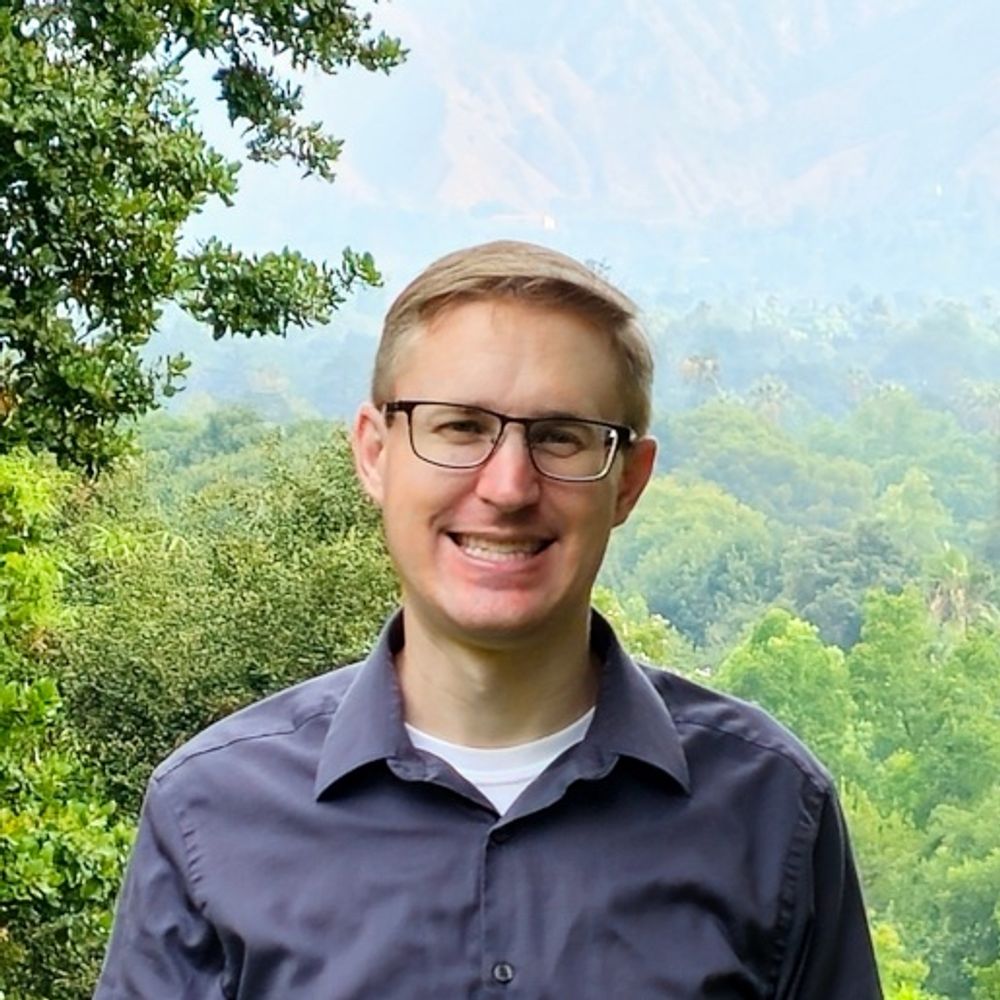
3 new videos are posted on YouTube for our Tour of the NASA #Exoplanet Archive series! 🔭🧪
Watch & subscribe: www.youtube.com/@NASAExoplanetArchive
Watch & subscribe: www.youtube.com/@NASAExoplanetArchive

NASA Exoplanet Archive
Learn how to use the free web services on the NASA Exoplanet Archive site to access datasets and conduct astronomical research.
More information:
https://exoplanetarchive.ipac.caltech.edu
www.youtube.com
February 7, 2026 at 1:29 AM
3 new videos are posted on YouTube for our Tour of the NASA #Exoplanet Archive series! 🔭🧪
Watch & subscribe: www.youtube.com/@NASAExoplanetArchive
Watch & subscribe: www.youtube.com/@NASAExoplanetArchive