




Paul Sharp
@paulbsharp.bsky.social
Assistant professor of psychology, Bar-Ilan University | computational cognitive science & psychiatry
🚨 Fully-funded PhDs and Postdocs - if interested, email CV to paul.sharp@biu.ac.il 🚨
Website: sharplabbiu.github.io
🚨 Fully-funded PhDs and Postdocs - if interested, email CV to paul.sharp@biu.ac.il 🚨
Website: sharplabbiu.github.io
Pinned
Paul Sharp
@paulbsharp.bsky.social
· Dec 18
🧵 If you're looking for a fully funded PhD or Postdoc in Computational Psychiatry, please reach out!
We are expanding the lab and tackling some big questions. Here is a thread on what we are currently up to: 👇
We are expanding the lab and tackling some big questions. Here is a thread on what we are currently up to: 👇
Reposted by Paul Sharp
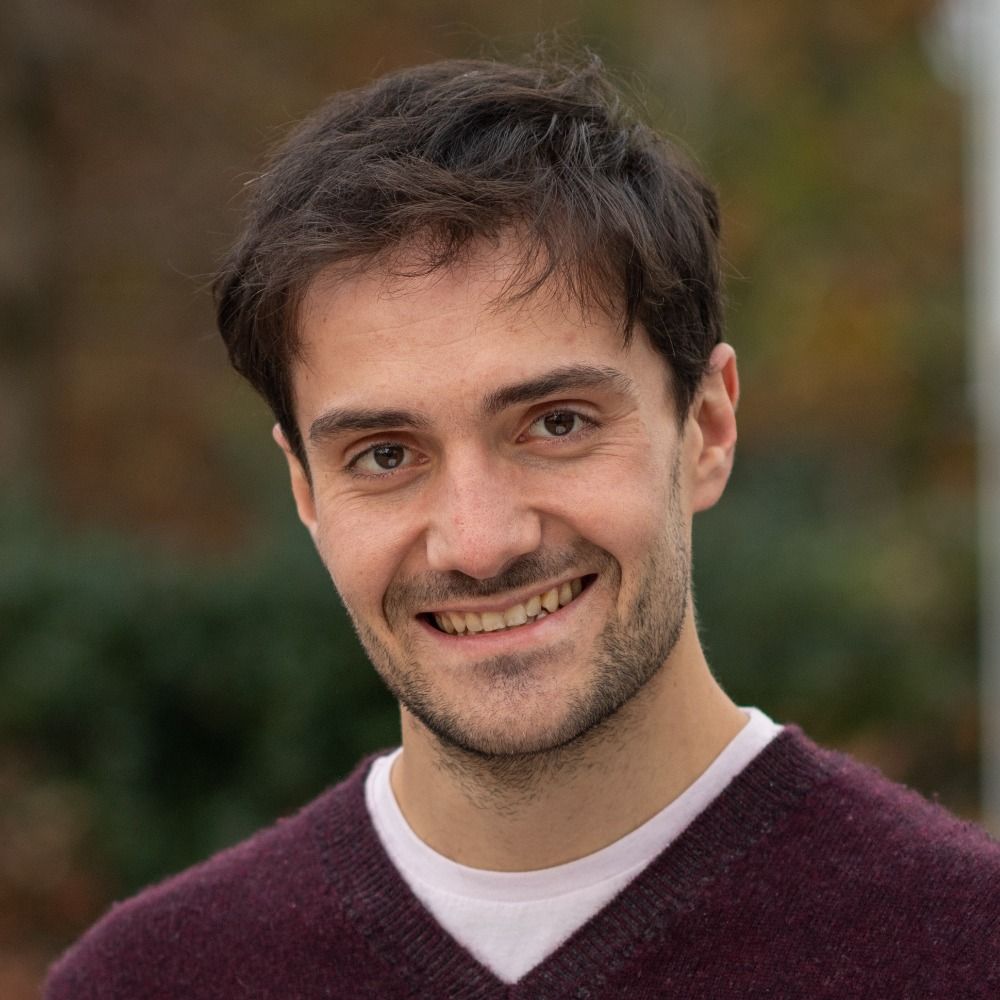
I'm excited to announce that I had my first (co-authored) book published today! "The Rational Use of Cognitive Resources" with Falk Lieder and Tom Griffiths (@cocoscilab.bsky.social ). You can read it for free! (see thread)

February 18, 2026 at 1:05 AM
I'm excited to announce that I had my first (co-authored) book published today! "The Rational Use of Cognitive Resources" with Falk Lieder and Tom Griffiths (@cocoscilab.bsky.social ). You can read it for free! (see thread)
Nice work! I'm curious @vijay-mkn.bsky.social if you had any measures of offline learning - that is, replay of the association in between external learning episodes. A la the argument for proponents of DYNA - we augment real experience with simulated experience when there's natural spacing.

Very excited to post our paper led by @daburke.bsky.social www.nature.com/articles/s41... where we uncover a simple mathematical rule underlying how brains learn that a cue predicts a reward. 1/26

Duration between rewards controls the rate of behavioral and dopaminergic learning - Nature Neuroscience
Cue–reward learning rate scales proportionally with the time between rewards. Consequently, learning over a fixed duration is independent of the number of trials. This challenges trial-based dopamine ...
www.nature.com
February 16, 2026 at 10:59 AM
Nice work! I'm curious @vijay-mkn.bsky.social if you had any measures of offline learning - that is, replay of the association in between external learning episodes. A la the argument for proponents of DYNA - we augment real experience with simulated experience when there's natural spacing.
hello friends! does anyone know of open data of an RL task (single- mult-armed bandit tasks) that also list (a variable) ITI per trial in humans?
#computationalcognitivescience #computationalpsychiatry
#computationalcognitivescience #computationalpsychiatry
February 13, 2026 at 11:32 AM
hello friends! does anyone know of open data of an RL task (single- mult-armed bandit tasks) that also list (a variable) ITI per trial in humans?
#computationalcognitivescience #computationalpsychiatry
#computationalcognitivescience #computationalpsychiatry
"Forward and backward prediction in learning and perception"
@predictivebrain.bsky.social @clarepress.bsky.social
nice to see our work situated within a broader research program on differences between learning & perceptual predictions
www.sciencedirect.com/science/arti...
@predictivebrain.bsky.social @clarepress.bsky.social
nice to see our work situated within a broader research program on differences between learning & perceptual predictions
www.sciencedirect.com/science/arti...

Forward and backward prediction in learning and perception
Predictive processing frameworks have emphasized the role of forward prediction as a critical ingredient for learning and perceptual inference. We ant…
www.sciencedirect.com
February 2, 2026 at 11:07 AM
"Forward and backward prediction in learning and perception"
@predictivebrain.bsky.social @clarepress.bsky.social
nice to see our work situated within a broader research program on differences between learning & perceptual predictions
www.sciencedirect.com/science/arti...
@predictivebrain.bsky.social @clarepress.bsky.social
nice to see our work situated within a broader research program on differences between learning & perceptual predictions
www.sciencedirect.com/science/arti...
Do people know if you submit to a journal that wants a blinded review if they also then ask you to remove links to your data? There's so many ways to discover someone's identity through open science practices, right? What are people's strategies here to preserve binding?
February 2, 2026 at 8:21 AM
Do people know if you submit to a journal that wants a blinded review if they also then ask you to remove links to your data? There's so many ways to discover someone's identity through open science practices, right? What are people's strategies here to preserve binding?
Reposted by Paul Sharp

Our experiences have countless details, and it can be hard to know which matter.
How can we behave effectively in the future when, right now, we don't know what we'll need?
Out today in @nathumbehav.nature.com , @marcelomattar.bsky.social and I find that people solve this by using episodic memory.
How can we behave effectively in the future when, right now, we don't know what we'll need?
Out today in @nathumbehav.nature.com , @marcelomattar.bsky.social and I find that people solve this by using episodic memory.

Episodic memory facilitates flexible decision-making via access to detailed events - Nature Human Behaviour
Nicholas and Mattar found that people use episodic memory to make decisions when it is unclear what will be needed in the future. These findings reveal how the rich representational capacity of episod...
www.nature.com
January 23, 2026 at 1:18 PM
Our experiences have countless details, and it can be hard to know which matter.
How can we behave effectively in the future when, right now, we don't know what we'll need?
Out today in @nathumbehav.nature.com , @marcelomattar.bsky.social and I find that people solve this by using episodic memory.
How can we behave effectively in the future when, right now, we don't know what we'll need?
Out today in @nathumbehav.nature.com , @marcelomattar.bsky.social and I find that people solve this by using episodic memory.
Reposted by Paul Sharp

arxiv.org/abs/2601.11432
I want to share an astonishing result. LLMs can "translate" Jabberwocky' texts like 'He dwushed a ghanc zawk” & even and even 'In the BLANK BLANK, BLANK BLANK has BLANK over any BLANK BLANK’s BLANK' This has profound consequence for thinking about.. 1/2
I want to share an astonishing result. LLMs can "translate" Jabberwocky' texts like 'He dwushed a ghanc zawk” & even and even 'In the BLANK BLANK, BLANK BLANK has BLANK over any BLANK BLANK’s BLANK' This has profound consequence for thinking about.. 1/2
arxiv.org
January 19, 2026 at 3:27 AM
arxiv.org/abs/2601.11432
I want to share an astonishing result. LLMs can "translate" Jabberwocky' texts like 'He dwushed a ghanc zawk” & even and even 'In the BLANK BLANK, BLANK BLANK has BLANK over any BLANK BLANK’s BLANK' This has profound consequence for thinking about.. 1/2
I want to share an astonishing result. LLMs can "translate" Jabberwocky' texts like 'He dwushed a ghanc zawk” & even and even 'In the BLANK BLANK, BLANK BLANK has BLANK over any BLANK BLANK’s BLANK' This has profound consequence for thinking about.. 1/2
Reposted by Paul Sharp

I'm looking to hire a postgraduate research associate in Computational Psychiatry for my new lab at Yale. Please see link below for details & help RT 🙏
postdocs.yale.edu/posts/2026-0...
postdocs.yale.edu/posts/2026-0...
Postgraduate Associate Position in Computational Psychiatry — Department of Psychiatry, School of Medicine
postdocs.yale.edu
January 13, 2026 at 1:49 PM
I'm looking to hire a postgraduate research associate in Computational Psychiatry for my new lab at Yale. Please see link below for details & help RT 🙏
postdocs.yale.edu/posts/2026-0...
postdocs.yale.edu/posts/2026-0...
Reposted by Paul Sharp

Really thrilled that this paper led by @neurozz.bsky.social is now published in its final version in @elife.bsky.social!!
This is a memory-focused (as opposed to RL-focused) account of the detailed characteristics of forward and backward awake and sleep replay!
elifesciences.org/articles/99931
This is a memory-focused (as opposed to RL-focused) account of the detailed characteristics of forward and backward awake and sleep replay!
elifesciences.org/articles/99931

A unifying account of replay as context-driven memory reactivation
A context-driven memory model simulates a wide range of characteristics of waking and sleeping hippocampal replay, providing a new account of how and why replay occurs.
elifesciences.org
January 15, 2026 at 1:57 PM
Really thrilled that this paper led by @neurozz.bsky.social is now published in its final version in @elife.bsky.social!!
This is a memory-focused (as opposed to RL-focused) account of the detailed characteristics of forward and backward awake and sleep replay!
elifesciences.org/articles/99931
This is a memory-focused (as opposed to RL-focused) account of the detailed characteristics of forward and backward awake and sleep replay!
elifesciences.org/articles/99931
Reposted by Paul Sharp

With some trepidation, I'm putting this out into the world:
gershmanlab.com/textbook.html
It's a textbook called Computational Foundations of Cognitive Neuroscience, which I wrote for my class.
My hope is that this will be a living document, continuously improved as I get feedback.
gershmanlab.com/textbook.html
It's a textbook called Computational Foundations of Cognitive Neuroscience, which I wrote for my class.
My hope is that this will be a living document, continuously improved as I get feedback.
January 9, 2026 at 1:27 AM
With some trepidation, I'm putting this out into the world:
gershmanlab.com/textbook.html
It's a textbook called Computational Foundations of Cognitive Neuroscience, which I wrote for my class.
My hope is that this will be a living document, continuously improved as I get feedback.
gershmanlab.com/textbook.html
It's a textbook called Computational Foundations of Cognitive Neuroscience, which I wrote for my class.
My hope is that this will be a living document, continuously improved as I get feedback.
Reposted by Paul Sharp

New study by @xrmasiso.bsky.social et al shows that spatial contexts with more reliable brain representations better support memory for future experiences within them, revealing how stable neural maps help the brain organize and recall life events.

Spatial contexts with reliable neural representations support reinstatement of subsequently placed objects - Nature Human Behaviour
This study shows that spatial contexts with more reliable brain representations better support memory for future experiences within them, revealing how stable neural maps help the brain organize and recall life events.
www.nature.com
January 2, 2026 at 5:38 PM
New study by @xrmasiso.bsky.social et al shows that spatial contexts with more reliable brain representations better support memory for future experiences within them, revealing how stable neural maps help the brain organize and recall life events.
Reposted by Paul Sharp

now out in Decision! 🎉 awspntest.apa.org/manuscript/2...
December 29, 2025 at 6:16 PM
now out in Decision! 🎉 awspntest.apa.org/manuscript/2...
Reposted by Paul Sharp

💥NEW PREPRINT💥: I’m excited to share our new work with
@cfcamerer.bsky.social and John O’Doherty!
We investigated how habit and motor automaticity are related across 5 datasets with 1,000+ participants, using a novel task and existing paradigms
(1/X)
doi.org/10.31234/osf...
@cfcamerer.bsky.social and John O’Doherty!
We investigated how habit and motor automaticity are related across 5 datasets with 1,000+ participants, using a novel task and existing paradigms
(1/X)
doi.org/10.31234/osf...
OSF
doi.org
December 24, 2025 at 8:48 PM
💥NEW PREPRINT💥: I’m excited to share our new work with
@cfcamerer.bsky.social and John O’Doherty!
We investigated how habit and motor automaticity are related across 5 datasets with 1,000+ participants, using a novel task and existing paradigms
(1/X)
doi.org/10.31234/osf...
@cfcamerer.bsky.social and John O’Doherty!
We investigated how habit and motor automaticity are related across 5 datasets with 1,000+ participants, using a novel task and existing paradigms
(1/X)
doi.org/10.31234/osf...
Reposted by Paul Sharp
📣🔥Submit your symposium (30 Jan) and poster (12 Feb) abstracts to the 2026 Computational Psychiatry Conference www.cpconf.org
Excited to announce new keynotes: @danisbassett.bsky.social Eyiyemisi Damisah @adredish.bsky.social Guillermo Horga, Frederike Petzschner. See you in New Haven! #CPConf2026
Excited to announce new keynotes: @danisbassett.bsky.social Eyiyemisi Damisah @adredish.bsky.social Guillermo Horga, Frederike Petzschner. See you in New Haven! #CPConf2026

Computational Psychiatry Conference
New Haven, USA (July 14-16, 2026)
www.cpconf.org
December 19, 2025 at 2:37 PM
📣🔥Submit your symposium (30 Jan) and poster (12 Feb) abstracts to the 2026 Computational Psychiatry Conference www.cpconf.org
Excited to announce new keynotes: @danisbassett.bsky.social Eyiyemisi Damisah @adredish.bsky.social Guillermo Horga, Frederike Petzschner. See you in New Haven! #CPConf2026
Excited to announce new keynotes: @danisbassett.bsky.social Eyiyemisi Damisah @adredish.bsky.social Guillermo Horga, Frederike Petzschner. See you in New Haven! #CPConf2026
🧵 If you're looking for a fully funded PhD or Postdoc in Computational Psychiatry, please reach out!
We are expanding the lab and tackling some big questions. Here is a thread on what we are currently up to: 👇
We are expanding the lab and tackling some big questions. Here is a thread on what we are currently up to: 👇
December 18, 2025 at 3:17 PM
🧵 If you're looking for a fully funded PhD or Postdoc in Computational Psychiatry, please reach out!
We are expanding the lab and tackling some big questions. Here is a thread on what we are currently up to: 👇
We are expanding the lab and tackling some big questions. Here is a thread on what we are currently up to: 👇
Reposted by Paul Sharp

People tend to be OK with unfair resource distributions when they stand to gain at another's expense. Can we teach people--via observational learning--to punish advantageous inequity?
Collaboration with Shen Zhang, @orielf.bsky.social, and Seb Hétu, out today:
elifesciences.org/articles/102...
Collaboration with Shen Zhang, @orielf.bsky.social, and Seb Hétu, out today:
elifesciences.org/articles/102...

Advantageous and disadvantageous inequality aversion can be taught through learning of others’ preferences
Like disadvantageous inequity aversion, advantageous inequity aversion can be learned by observing another’s fairness preferences.
elifesciences.org
December 12, 2025 at 3:29 PM
People tend to be OK with unfair resource distributions when they stand to gain at another's expense. Can we teach people--via observational learning--to punish advantageous inequity?
Collaboration with Shen Zhang, @orielf.bsky.social, and Seb Hétu, out today:
elifesciences.org/articles/102...
Collaboration with Shen Zhang, @orielf.bsky.social, and Seb Hétu, out today:
elifesciences.org/articles/102...
Reposted by Paul Sharp

New preprint w/ Malin Styrnal & @martinhebart.bsky.social
Have you ever computed noise ceilings to understand how well a model performs? We wrote a clarifying note on a subtle and common misapplication that can make models appear quite a lot better than they are.
osf.io/preprints/ps...
Have you ever computed noise ceilings to understand how well a model performs? We wrote a clarifying note on a subtle and common misapplication that can make models appear quite a lot better than they are.
osf.io/preprints/ps...
OSF
osf.io
December 4, 2025 at 6:53 PM
New preprint w/ Malin Styrnal & @martinhebart.bsky.social
Have you ever computed noise ceilings to understand how well a model performs? We wrote a clarifying note on a subtle and common misapplication that can make models appear quite a lot better than they are.
osf.io/preprints/ps...
Have you ever computed noise ceilings to understand how well a model performs? We wrote a clarifying note on a subtle and common misapplication that can make models appear quite a lot better than they are.
osf.io/preprints/ps...
Just watched great talks @ MIT's ARC prize. 1 main takeaway: pursuing intrinsic goals is a marker of human intelligence. Thus, it seems critical to explore this for comp psychiatry. What goals are crafted by self-focused attention in social anxiety? We need to do better to infer these hidden goals!

On Games -- and Play | ARC Prize @ MIT
YouTube video by ARC Prize
www.youtube.com
November 26, 2025 at 2:21 PM
Just watched great talks @ MIT's ARC prize. 1 main takeaway: pursuing intrinsic goals is a marker of human intelligence. Thus, it seems critical to explore this for comp psychiatry. What goals are crafted by self-focused attention in social anxiety? We need to do better to infer these hidden goals!
Got useful feedback! Check out our revised preprint on how humans learn to delay planning. We simulate our model w/ realistic costs to planning, retrieval, & maintenance to show why caching meta-control policies & replanning where control is necessary is resource-rational.
osf.io/preprints/ps...
osf.io/preprints/ps...
November 25, 2025 at 1:46 PM
Got useful feedback! Check out our revised preprint on how humans learn to delay planning. We simulate our model w/ realistic costs to planning, retrieval, & maintenance to show why caching meta-control policies & replanning where control is necessary is resource-rational.
osf.io/preprints/ps...
osf.io/preprints/ps...
Computational modelling power issues
What happens when we assume all individuals' behavior is generated from the same model?
False positives and influence of outliers!
#computationalpsychiatry
What happens when we assume all individuals' behavior is generated from the same model?
False positives and influence of outliers!
#computationalpsychiatry
In this study, Piray shows a problem of low statistical power in many studies that use Bayesian model selection with computational modelling in psychology and neuroscience.

Addressing low statistical power in computational modelling studies in psychology and neuroscience - Nature Human Behaviour
Piray shows a problem of low statistical power in many studies that use Bayesian model selection in the context of computational modelling in psychology and human neuroscience.
www.nature.com
November 22, 2025 at 5:30 PM
Computational modelling power issues
What happens when we assume all individuals' behavior is generated from the same model?
False positives and influence of outliers!
#computationalpsychiatry
What happens when we assume all individuals' behavior is generated from the same model?
False positives and influence of outliers!
#computationalpsychiatry
Reposted by Paul Sharp
📣🔥Thrilled to announce that 2026 Computational Psychiatry Conference will take place in New Haven, CT, btw July 14-16 -
www.cpconf.org
@robbrutledge.bsky.social @drrickadams.bsky.social @tobiasuhauser.bsky.social @docqhuys.bsky.social @clairegillan.bsky.social Sonia Bishop
More info to come soon!
www.cpconf.org
@robbrutledge.bsky.social @drrickadams.bsky.social @tobiasuhauser.bsky.social @docqhuys.bsky.social @clairegillan.bsky.social Sonia Bishop
More info to come soon!

November 21, 2025 at 7:27 PM
📣🔥Thrilled to announce that 2026 Computational Psychiatry Conference will take place in New Haven, CT, btw July 14-16 -
www.cpconf.org
@robbrutledge.bsky.social @drrickadams.bsky.social @tobiasuhauser.bsky.social @docqhuys.bsky.social @clairegillan.bsky.social Sonia Bishop
More info to come soon!
www.cpconf.org
@robbrutledge.bsky.social @drrickadams.bsky.social @tobiasuhauser.bsky.social @docqhuys.bsky.social @clairegillan.bsky.social Sonia Bishop
More info to come soon!
Reposted by Paul Sharp
Ten Simple Rules for AI-Assisted Coding in Science arxiv.org/abs/2510.22254 - our latest, led by @ericwbridgeford.bsky.social

Ten Simple Rules for AI-Assisted Coding in Science
While AI coding tools have demonstrated potential to accelerate software development, their use in scientific computing raises critical questions about code quality and scientific validity. In this pa...
arxiv.org
October 28, 2025 at 1:12 PM
Ten Simple Rules for AI-Assisted Coding in Science arxiv.org/abs/2510.22254 - our latest, led by @ericwbridgeford.bsky.social
Reposted by Paul Sharp

Excited to share a new preprint, accepted as a spotlight at #NeurIPS2025!
Humans are imperfect decision-makers, and autonomous systems should understand how we deviate from idealized rationality
Our paper aims to address this! 👀🧠✨
arxiv.org/abs/2510.25951
a 🧵⤵️
Humans are imperfect decision-makers, and autonomous systems should understand how we deviate from idealized rationality
Our paper aims to address this! 👀🧠✨
arxiv.org/abs/2510.25951
a 🧵⤵️

Estimating cognitive biases with attention-aware inverse planning
People's goal-directed behaviors are influenced by their cognitive biases, and autonomous systems that interact with people should be aware of this. For example, people's attention to objects in their...
arxiv.org
November 13, 2025 at 1:20 PM
Excited to share a new preprint, accepted as a spotlight at #NeurIPS2025!
Humans are imperfect decision-makers, and autonomous systems should understand how we deviate from idealized rationality
Our paper aims to address this! 👀🧠✨
arxiv.org/abs/2510.25951
a 🧵⤵️
Humans are imperfect decision-makers, and autonomous systems should understand how we deviate from idealized rationality
Our paper aims to address this! 👀🧠✨
arxiv.org/abs/2510.25951
a 🧵⤵️
Reposted by Paul Sharp

Anxiety biases task generalization: https://osf.io/c2jz5
October 21, 2025 at 4:20 PM
Anxiety biases task generalization: https://osf.io/c2jz5
Inspiring!
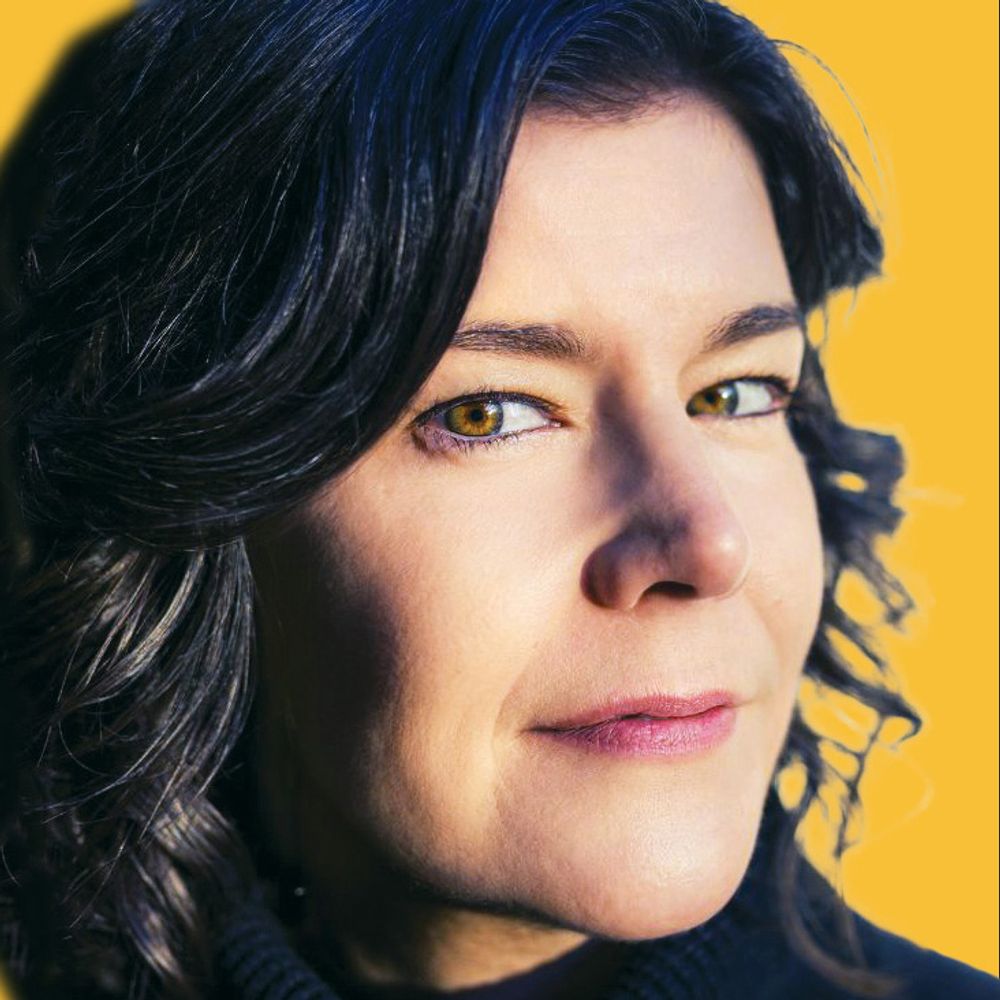
Wow. The first woman to receive tenure in Physics at Harvard dropped out of high school to form an alternative school with friends and later codiscovered the top quark and Higgs boson. (And psst: she supports PhD students & loves books).💙
www.physics.harvard.edu/people/facpa...
www.physics.harvard.edu/people/facpa...

Melissa Franklin | Department of Physics
www.physics.harvard.edu
October 30, 2025 at 4:51 AM
Inspiring!