


Elliot Smith
@neurosmith.bsky.social
Human neuronal computations during cognition, seizures, brain stimulation, etc… @ Utah. Www.neurosmiths.org
Reposted by Elliot Smith
Preprint alert!!! We recorded directly from the human ventral tegmental area (VTA), the principal source of cortical dopaminergic innervation, while patients performed an instrumental learning task. 🧵👇
www.biorxiv.org/content/10.6...
www.biorxiv.org/content/10.6...

January 28, 2026 at 2:29 PM
Preprint alert!!! We recorded directly from the human ventral tegmental area (VTA), the principal source of cortical dopaminergic innervation, while patients performed an instrumental learning task. 🧵👇
www.biorxiv.org/content/10.6...
www.biorxiv.org/content/10.6...
Reposted by Elliot Smith

🚨 #CCN2026 Proceedings submissions are open!
CCN 2026 again features an 8-page Proceedings track (alongside extended abstracts). Accepted papers will appear in CCN-Proceedings (CCN‑P) with DOIs on OpenReview.
CCN 2026 again features an 8-page Proceedings track (alongside extended abstracts). Accepted papers will appear in CCN-Proceedings (CCN‑P) with DOIs on OpenReview.
January 28, 2026 at 4:16 PM
🚨 #CCN2026 Proceedings submissions are open!
CCN 2026 again features an 8-page Proceedings track (alongside extended abstracts). Accepted papers will appear in CCN-Proceedings (CCN‑P) with DOIs on OpenReview.
CCN 2026 again features an 8-page Proceedings track (alongside extended abstracts). Accepted papers will appear in CCN-Proceedings (CCN‑P) with DOIs on OpenReview.
Reposted by Elliot Smith
How do people compute a sense of confidence? This question is usually addressed using very simple images because we don't know how complex stimuli are represented internally. In a new paper, we addressed this question using artificial neural networks (ANNs).
journals.plos.org/ploscompbiol...
journals.plos.org/ploscompbiol...

Using artificial neural networks to reveal the human confidence computation
Author summary Human decisions are accompanied by a sense of confidence which reflects the decision accuracy. Conventionally, human confidence has been studied using two-choice tasks with simple stimu...
journals.plos.org
January 26, 2026 at 7:18 PM
How do people compute a sense of confidence? This question is usually addressed using very simple images because we don't know how complex stimuli are represented internally. In a new paper, we addressed this question using artificial neural networks (ANNs).
journals.plos.org/ploscompbiol...
journals.plos.org/ploscompbiol...
Reposted by Elliot Smith

A year into Trump’s second presidential term, Nature presents a series of graphics that reveal the impact of his administration on science. 🧪

US science after a year of Trump: what has been lost and what remains
A series of graphics reveals how the Trump administration has sought historic cuts to science and the research workforce.
go.nature.com
January 26, 2026 at 2:02 PM
A year into Trump’s second presidential term, Nature presents a series of graphics that reveal the impact of his administration on science. 🧪
Reposted by Elliot Smith


Reposted by Elliot Smith
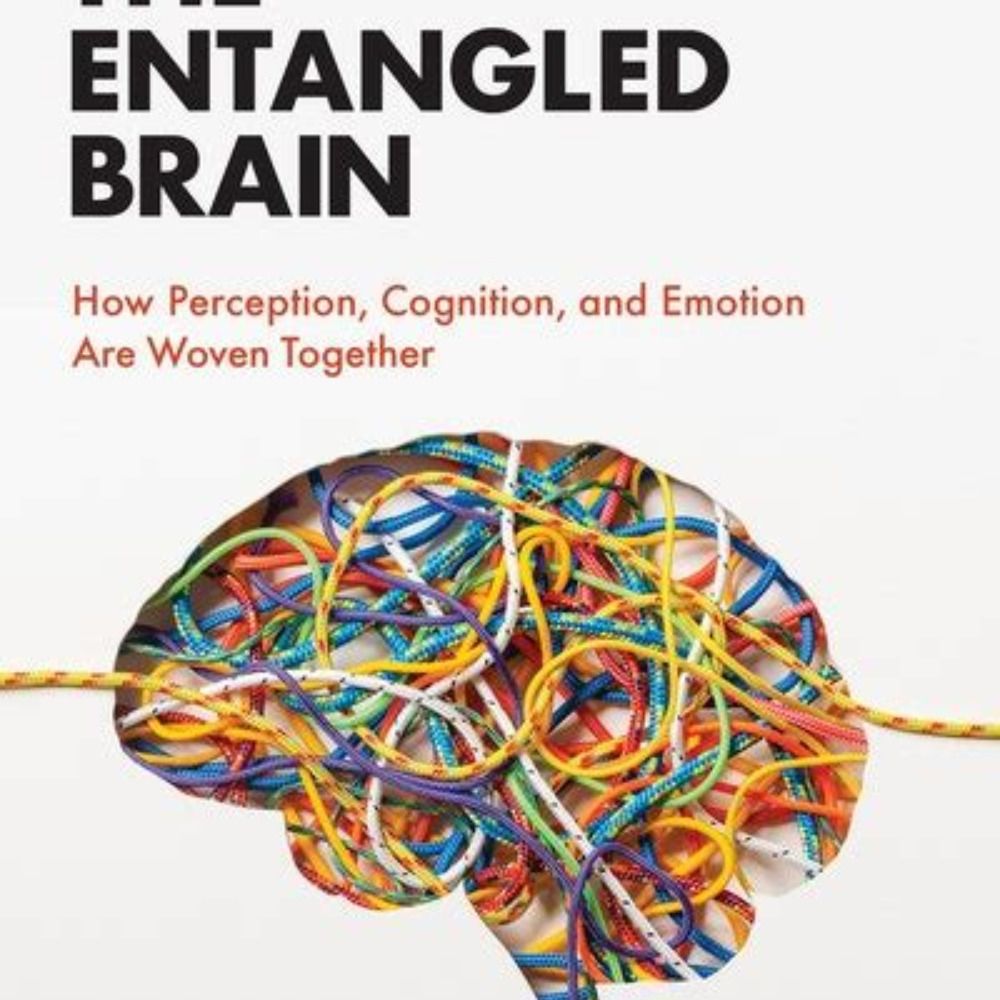
𝗛𝗼𝘄 𝗱𝗼 𝗯𝗿𝗮𝗶𝗻 𝗮𝗿𝗲𝗮𝘀 𝗿𝗲𝗹𝗮𝘁𝗲𝗱 𝘁𝗼 𝗳𝘂𝗻𝗰𝘁𝗶𝗼𝗻?
"High-resolution activity maps of PFC did NOT align with cytoarchitecturally defined subregions."
Key tenet in neuroscience is that cytoarchitectonic boundaries correspond to functional ones.
NB: study in the mouse
#neuroskyence
doi.org/10.1038/s415...
"High-resolution activity maps of PFC did NOT align with cytoarchitecturally defined subregions."
Key tenet in neuroscience is that cytoarchitectonic boundaries correspond to functional ones.
NB: study in the mouse
#neuroskyence
doi.org/10.1038/s415...

January 22, 2026 at 5:35 PM
𝗛𝗼𝘄 𝗱𝗼 𝗯𝗿𝗮𝗶𝗻 𝗮𝗿𝗲𝗮𝘀 𝗿𝗲𝗹𝗮𝘁𝗲𝗱 𝘁𝗼 𝗳𝘂𝗻𝗰𝘁𝗶𝗼𝗻?
"High-resolution activity maps of PFC did NOT align with cytoarchitecturally defined subregions."
Key tenet in neuroscience is that cytoarchitectonic boundaries correspond to functional ones.
NB: study in the mouse
#neuroskyence
doi.org/10.1038/s415...
"High-resolution activity maps of PFC did NOT align with cytoarchitecturally defined subregions."
Key tenet in neuroscience is that cytoarchitectonic boundaries correspond to functional ones.
NB: study in the mouse
#neuroskyence
doi.org/10.1038/s415...
Reposted by Elliot Smith

Ripple oscillations are central for memory and sleep.
But ripple detection in humans remains challenging. Here we introduce a simulation approach in @natcomms.nature.com as common ripple detectors mainly pick up 1/f noise and not genuine oscillations
👇
www.nature.com/articles/s41...
#neuroskyence
But ripple detection in humans remains challenging. Here we introduce a simulation approach in @natcomms.nature.com as common ripple detectors mainly pick up 1/f noise and not genuine oscillations
👇
www.nature.com/articles/s41...
#neuroskyence

Aperiodic 1/f noise drives ripple activity in humans - Nature Communications
How aperiodic 1/f noise drives ripple activity in human brain and impacts on ripple detections is not fully understood. Here authors show that ripple detections should be driven by the 1/f noise, whic...
www.nature.com
January 21, 2026 at 6:57 PM
Ripple oscillations are central for memory and sleep.
But ripple detection in humans remains challenging. Here we introduce a simulation approach in @natcomms.nature.com as common ripple detectors mainly pick up 1/f noise and not genuine oscillations
👇
www.nature.com/articles/s41...
#neuroskyence
But ripple detection in humans remains challenging. Here we introduce a simulation approach in @natcomms.nature.com as common ripple detectors mainly pick up 1/f noise and not genuine oscillations
👇
www.nature.com/articles/s41...
#neuroskyence
Reposted by Elliot Smith
New preprint from the lab, led by post-doc @cheolsoh.bsky.social and former post-doc Mario Hervault (now Asst Prof at UGrenoble).
The boys used synchronous intracranial recordings from the human subthalamic nucleus & EEG to study β bursts during global & selective response inhibition.
Details in 🧵
The boys used synchronous intracranial recordings from the human subthalamic nucleus & EEG to study β bursts during global & selective response inhibition.
Details in 🧵

Cortico-basal ganglia dynamics of global and selective response inhibition in humans https://www.biorxiv.org/content/10.64898/2026.01.20.700500v1
January 21, 2026 at 4:28 PM
New preprint from the lab, led by post-doc @cheolsoh.bsky.social and former post-doc Mario Hervault (now Asst Prof at UGrenoble).
The boys used synchronous intracranial recordings from the human subthalamic nucleus & EEG to study β bursts during global & selective response inhibition.
Details in 🧵
The boys used synchronous intracranial recordings from the human subthalamic nucleus & EEG to study β bursts during global & selective response inhibition.
Details in 🧵
Frontotemporal beta & gamma bursting in the human brain correlated with working memory functions.
Congrats to Walt et al. & @bkundu.bsky.social
www.sciencedirect.com/science/arti...
Congrats to Walt et al. & @bkundu.bsky.social
www.sciencedirect.com/science/arti...

Frontotemporal bursting supports human working memory
Cortical neural activity varies dynamically during memory periods, when relevant information is not present in the environment. But how those dynamics…
www.sciencedirect.com
January 21, 2026 at 5:44 PM
Frontotemporal beta & gamma bursting in the human brain correlated with working memory functions.
Congrats to Walt et al. & @bkundu.bsky.social
www.sciencedirect.com/science/arti...
Congrats to Walt et al. & @bkundu.bsky.social
www.sciencedirect.com/science/arti...
Reposted by Elliot Smith

How do we achieve few-shot generalization? New work led by @fabianrenz.bsky.social dives into the role of replay in learning and using structure to generalize reward. Dream team effort with Shany Grossman @nathanieldaw.bsky.social Peter Dayan & @doellerlab.bsky.social
www.biorxiv.org/content/10.6...
www.biorxiv.org/content/10.6...
www.biorxiv.org
January 18, 2026 at 3:33 PM
How do we achieve few-shot generalization? New work led by @fabianrenz.bsky.social dives into the role of replay in learning and using structure to generalize reward. Dream team effort with Shany Grossman @nathanieldaw.bsky.social Peter Dayan & @doellerlab.bsky.social
www.biorxiv.org/content/10.6...
www.biorxiv.org/content/10.6...
Has anyone actually been able to link their ORCID??? I’ve Ben trying everything over the past week and am pretty demoralized.
If you are submitting an NIH grant in February, you will be required to use SciENcv to prepare you biosketch.
IT IS MUCH WORSE THAN YOU CAN POSSIBLY IMAGINE.
Set aside *at least* 4 hours just to transfer an existing an biosketch into SciENcv.
IT IS MUCH WORSE THAN YOU CAN POSSIBLY IMAGINE.
Set aside *at least* 4 hours just to transfer an existing an biosketch into SciENcv.
January 17, 2026 at 11:09 PM
Has anyone actually been able to link their ORCID??? I’ve Ben trying everything over the past week and am pretty demoralized.
Reposted by Elliot Smith
Very important!
Full survey results show American public have high levels of confidence in scientists while revealing some partisan differences (including on how to fund science), but statements asserting lost trust should be read instead as intentional efforts to degrade trust.
www.pewresearch.org/science/2026...
www.pewresearch.org/science/2026...

January 16, 2026 at 7:15 PM
Very important!
Reposted by Elliot Smith
main goal for this year: find a new job! 🙂
looking for a role with fun & complex technical challenges & within a great community. my main expertise is in signal processing/EEG/MEG, but topic-wise I am quite flexible.
science/industry both great! starting mid-year. nschawor.github.io/cv
looking for a role with fun & complex technical challenges & within a great community. my main expertise is in signal processing/EEG/MEG, but topic-wise I am quite flexible.
science/industry both great! starting mid-year. nschawor.github.io/cv
January 16, 2026 at 10:14 AM
main goal for this year: find a new job! 🙂
looking for a role with fun & complex technical challenges & within a great community. my main expertise is in signal processing/EEG/MEG, but topic-wise I am quite flexible.
science/industry both great! starting mid-year. nschawor.github.io/cv
looking for a role with fun & complex technical challenges & within a great community. my main expertise is in signal processing/EEG/MEG, but topic-wise I am quite flexible.
science/industry both great! starting mid-year. nschawor.github.io/cv
Reposted by Elliot Smith

More than 200 published studies and at least seven ongoing clinical trials rely on potentially faulty brain network maps, according to a study published yesterday.
By @avaskham.bsky.social
#neuroskyence
www.thetransmitter.org/brain-imagin...
By @avaskham.bsky.social
#neuroskyence
www.thetransmitter.org/brain-imagin...

Methodological flaw may upend network mapping tool
The lesion network mapping method, used to identify disease-specific brain networks for clinical stimulation, produces a nearly identical network map for any given condition, according to a new study.
www.thetransmitter.org
January 16, 2026 at 3:18 PM
More than 200 published studies and at least seven ongoing clinical trials rely on potentially faulty brain network maps, according to a study published yesterday.
By @avaskham.bsky.social
#neuroskyence
www.thetransmitter.org/brain-imagin...
By @avaskham.bsky.social
#neuroskyence
www.thetransmitter.org/brain-imagin...
Reposted by Elliot Smith
I’m very happy to share the latest from my lab published in @Nature
Hippocampal neurons that initially encode reward shift their tuning over the course of days to precede or predict reward.
Full text here:
rdcu.be/eY5nh
Hippocampal neurons that initially encode reward shift their tuning over the course of days to precede or predict reward.
Full text here:
rdcu.be/eY5nh
January 14, 2026 at 9:32 PM
I’m very happy to share the latest from my lab published in @Nature
Hippocampal neurons that initially encode reward shift their tuning over the course of days to precede or predict reward.
Full text here:
rdcu.be/eY5nh
Hippocampal neurons that initially encode reward shift their tuning over the course of days to precede or predict reward.
Full text here:
rdcu.be/eY5nh
Reposted by Elliot Smith

When and why do modular representations emerge in neural networks?
@stefanofusi.bsky.social and I posted a preprint answering this question last year, and now it has been extensively revised, refocused, and generalized. Read more here: doi.org/10.1101/2024... (1/7)
@stefanofusi.bsky.social and I posted a preprint answering this question last year, and now it has been extensively revised, refocused, and generalized. Read more here: doi.org/10.1101/2024... (1/7)

January 9, 2026 at 7:06 PM
When and why do modular representations emerge in neural networks?
@stefanofusi.bsky.social and I posted a preprint answering this question last year, and now it has been extensively revised, refocused, and generalized. Read more here: doi.org/10.1101/2024... (1/7)
@stefanofusi.bsky.social and I posted a preprint answering this question last year, and now it has been extensively revised, refocused, and generalized. Read more here: doi.org/10.1101/2024... (1/7)
Reposted by Elliot Smith
Postdoctoral research position in #ComputationalPsychiatry and #EEG as part of relmed.ac.uk trial testing reinforcement learning as biomarker for antidepressant treatment response. www.ucl.ac.uk/work-at-ucl/... @uclbrainscience.bsky.social @mikebrowning.bsky.social @relmed.bsky.social

Antidepressant treatment shouldn't be a guessing game. RELMED is working towards using advanced research to predict which medication is most likely to help each person along their individual path to recovery.
relmed.ac.uk
December 21, 2025 at 9:40 PM
Postdoctoral research position in #ComputationalPsychiatry and #EEG as part of relmed.ac.uk trial testing reinforcement learning as biomarker for antidepressant treatment response. www.ucl.ac.uk/work-at-ucl/... @uclbrainscience.bsky.social @mikebrowning.bsky.social @relmed.bsky.social
Reposted by Elliot Smith

Yeah! Let's get this year started off right.
A new theoretical model for everyone's favorite sensitive and specific neural marker.
So why is it a marker of goals if it is called the Reward Positivity? 1/4
A new theoretical model for everyone's favorite sensitive and specific neural marker.
So why is it a marker of goals if it is called the Reward Positivity? 1/4

January 2, 2026 at 4:34 PM
Yeah! Let's get this year started off right.
A new theoretical model for everyone's favorite sensitive and specific neural marker.
So why is it a marker of goals if it is called the Reward Positivity? 1/4
A new theoretical model for everyone's favorite sensitive and specific neural marker.
So why is it a marker of goals if it is called the Reward Positivity? 1/4
Reposted by Elliot Smith
More news (not good) from NIH
The renewal request from National Institute of Neurological Diseases and Stroke Director Walter Koroshetz has been denied.
I guess the NIH_leadership™ needed another position to fill with their time-tested recruitment process.
The renewal request from National Institute of Neurological Diseases and Stroke Director Walter Koroshetz has been denied.
I guess the NIH_leadership™ needed another position to fill with their time-tested recruitment process.

December 27, 2025 at 4:17 PM
More news (not good) from NIH
The renewal request from National Institute of Neurological Diseases and Stroke Director Walter Koroshetz has been denied.
I guess the NIH_leadership™ needed another position to fill with their time-tested recruitment process.
The renewal request from National Institute of Neurological Diseases and Stroke Director Walter Koroshetz has been denied.
I guess the NIH_leadership™ needed another position to fill with their time-tested recruitment process.
Aperiodic exponent from intracranial recordings very accurately predicts depressive symptoms in epilepsy patients. Great work from Mark Libowitz in Ben Shofty’s lab.
www.biorxiv.org/content/10.6...
www.biorxiv.org/content/10.6...

Increased Aperiodic Exponents Track Depression Symptom Severity
Roughly one-third of patients with major depressive disorder (MDD) fail to respond to standard treatments and develop treatment-resistant MDD. For these patients, alternative therapies ofer additional...
www.biorxiv.org
December 27, 2025 at 5:11 AM
Aperiodic exponent from intracranial recordings very accurately predicts depressive symptoms in epilepsy patients. Great work from Mark Libowitz in Ben Shofty’s lab.
www.biorxiv.org/content/10.6...
www.biorxiv.org/content/10.6...
Feliz navidad from Oaxaca

December 26, 2025 at 12:22 AM
Feliz navidad from Oaxaca
Reposted by Elliot Smith
We took a stab at how to infer both the dynamics and control parameters of partially-observable systems.
It’s a nasty problem, but @vgeadah.bsky.social made tremendous progress, ending up with some really elegant formalisms.
It’s a nasty problem, but @vgeadah.bsky.social made tremendous progress, ending up with some really elegant formalisms.

In a system subject to unobserved control, can you infer both the underlying dynamics and the control objective? 🤔
A year ago, I was presenting our work at IEEE CDC on solving this problem for stochastic LQR.
arxiv.org/abs/2502.15014
Short 🧵 on the results, and how I think about them a year later.
A year ago, I was presenting our work at IEEE CDC on solving this problem for stochastic LQR.
arxiv.org/abs/2502.15014
Short 🧵 on the results, and how I think about them a year later.

December 18, 2025 at 6:51 PM
We took a stab at how to infer both the dynamics and control parameters of partially-observable systems.
It’s a nasty problem, but @vgeadah.bsky.social made tremendous progress, ending up with some really elegant formalisms.
It’s a nasty problem, but @vgeadah.bsky.social made tremendous progress, ending up with some really elegant formalisms.



Reposted by Elliot Smith
Thanks, Adrian! I’m excited to be starting a lab at the University of Utah (theluolab.org)!
We’re recruiting at all levels.
If you’re excited about neural computation, large-scale multi-region recordings, and machine learning, let’s talk!
And yes, the mountains are as incredible as they say!
We’re recruiting at all levels.
If you’re excited about neural computation, large-scale multi-region recordings, and machine learning, let’s talk!
And yes, the mountains are as incredible as they say!
November 20, 2025 at 8:51 PM
Thanks, Adrian! I’m excited to be starting a lab at the University of Utah (theluolab.org)!
We’re recruiting at all levels.
If you’re excited about neural computation, large-scale multi-region recordings, and machine learning, let’s talk!
And yes, the mountains are as incredible as they say!
We’re recruiting at all levels.
If you’re excited about neural computation, large-scale multi-region recordings, and machine learning, let’s talk!
And yes, the mountains are as incredible as they say!