



Ken Rice
@kenrice.bsky.social
Interested in #scicomm, in particular about astronomy and climate change. Professor of Computational Astrophysics and Head of Institute for Astronomy, Univ. of Edinburgh. Views own, of course.
Reposted by Ken Rice

UK Solar Physics early career researchers rightly deeply concerned at the savage cuts to #STFC science (and I'd add apparent contempt for their plight by #UKRI). They have an open letter... uksolphys.org/general-news...

Early Career Researchers Response to UKRI Investment Approach
Dear PhD students, PDRAs and early career researchers, You may be aware of a recent UKRI funding restructure announcement (there is a discussion here: . In STFC-funded science, particle physics, …
uksolphys.org
February 9, 2026 at 7:00 PM
UK Solar Physics early career researchers rightly deeply concerned at the savage cuts to #STFC science (and I'd add apparent contempt for their plight by #UKRI). They have an open letter... uksolphys.org/general-news...
Reposted by Ken Rice

The future of fundamental physics research in the UK is under serious threat because of the massive government cuts to STFC funding. Please read this open letter by advanced fellows.
advancedfellows-openletter-stfc.github.io/index.html
advancedfellows-openletter-stfc.github.io/index.html
Advanced Fellows Response to UKRI Investment Approach
advancedfellows-openletter-stfc.github.io
February 10, 2026 at 6:34 AM
The future of fundamental physics research in the UK is under serious threat because of the massive government cuts to STFC funding. Please read this open letter by advanced fellows.
advancedfellows-openletter-stfc.github.io/index.html
advancedfellows-openletter-stfc.github.io/index.html
Very interesting to see this laid out by someone who was, until very recently, on STFC's Science Board.
And incase you missed it, here is George Efstathiou (recently retired STFC Science Board member) going on the record about why it's come to this...
telescoper.blog/2026/02/06/t...
telescoper.blog/2026/02/06/t...

The STFC Funding Crisis – Guest Post by George Efstathiou
The following guest post by George Efstathiou is a response to the current STFC funding crisis I blogged about here, and specifically to a letter by the Executive Chair of STFC, Professor Michele D…
telescoper.blog
February 8, 2026 at 5:55 PM
Very interesting to see this laid out by someone who was, until very recently, on STFC's Science Board.
Reposted by Ken Rice

Thanks to @iansample.bsky.social at the Guardian for covering the devastating funding cuts that are being proposed for UK (astro)physics, and the dire impact these would have on young researchers. Will UKRI/STFC reconsider? Will the UKGov step in?🤞👩🔬🧪⚛️🔭
www.theguardian.com/science/2026...
www.theguardian.com/science/2026...
February 7, 2026 at 8:08 AM
Thanks to @iansample.bsky.social at the Guardian for covering the devastating funding cuts that are being proposed for UK (astro)physics, and the dire impact these would have on young researchers. Will UKRI/STFC reconsider? Will the UKGov step in?🤞👩🔬🧪⚛️🔭
www.theguardian.com/science/2026...
www.theguardian.com/science/2026...
I wrote something .... andthentheresphysics.wordpress.com/2026/02/08/s...

STFC funding crisis ….. again!
When I first came to work in the UK, Astronomy research was mostly funded through the Particle Physics and Astronomy Research Council (PPARC). In 2007, PPARC was merged with the Council for the Cen…
andthentheresphysics.wordpress.com
February 8, 2026 at 4:36 PM
I wrote something .... andthentheresphysics.wordpress.com/2026/02/08/s...
Reposted by Ken Rice
Some commentary on Koonin's ridiculous statements at this event: www.realclimate.org/index.php/ar...
February 7, 2026 at 6:47 PM
Some commentary on Koonin's ridiculous statements at this event: www.realclimate.org/index.php/ar...
Reposted by Ken Rice

Draconian cuts to physics by the UK government are unacceptable.
They damage the UK's science base and threaten our reputation as a reliable international scientific partner.
Prof @johnwomersley.bsky.social explains how *you* can stand up for physics.
Full talk: youtube.com/watch?v=hOSReagyPDg
⚛️🧪
They damage the UK's science base and threaten our reputation as a reliable international scientific partner.
Prof @johnwomersley.bsky.social explains how *you* can stand up for physics.
Full talk: youtube.com/watch?v=hOSReagyPDg
⚛️🧪
February 6, 2026 at 7:37 PM
Draconian cuts to physics by the UK government are unacceptable.
They damage the UK's science base and threaten our reputation as a reliable international scientific partner.
Prof @johnwomersley.bsky.social explains how *you* can stand up for physics.
Full talk: youtube.com/watch?v=hOSReagyPDg
⚛️🧪
They damage the UK's science base and threaten our reputation as a reliable international scientific partner.
Prof @johnwomersley.bsky.social explains how *you* can stand up for physics.
Full talk: youtube.com/watch?v=hOSReagyPDg
⚛️🧪
"....essential that the mechanisms by which re-prioritisation is implemented do not unintentionally concentrate risk onto people-based research and early-career pathways, particularly where facilities, infrastructure, and long-term operational commitments are funded alongside staffing and training."
🔊 Calling UK early career researches in astro, particle & nuclear physics. Please sign this open response to the proposed cuts at STFC ⚛️🧪🔭
"Protecting the UK's reputation as a science superpower requires not only investment, but continuity, confidence, and people"
✍️ ecr-openletter-stfc.github.io
"Protecting the UK's reputation as a science superpower requires not only investment, but continuity, confidence, and people"
✍️ ecr-openletter-stfc.github.io
An excellent open-letter enumerating the dangers to early career researchers and then wider society of proposed changes to UK science funding
ecr-openletter-stfc.github.io
Early-career researchers may like to add their signatures
🧪⚛️🔭 #AcademicSky #UKpol
ecr-openletter-stfc.github.io
Early-career researchers may like to add their signatures
🧪⚛️🔭 #AcademicSky #UKpol
February 6, 2026 at 3:51 PM
"....essential that the mechanisms by which re-prioritisation is implemented do not unintentionally concentrate risk onto people-based research and early-career pathways, particularly where facilities, infrastructure, and long-term operational commitments are funded alongside staffing and training."
Reposted by Ken Rice
🔊 Calling UK early career researches in astro, particle & nuclear physics. Please sign this open response to the proposed cuts at STFC ⚛️🧪🔭
"Protecting the UK's reputation as a science superpower requires not only investment, but continuity, confidence, and people"
✍️ ecr-openletter-stfc.github.io
"Protecting the UK's reputation as a science superpower requires not only investment, but continuity, confidence, and people"
✍️ ecr-openletter-stfc.github.io
An excellent open-letter enumerating the dangers to early career researchers and then wider society of proposed changes to UK science funding
ecr-openletter-stfc.github.io
Early-career researchers may like to add their signatures
🧪⚛️🔭 #AcademicSky #UKpol
ecr-openletter-stfc.github.io
Early-career researchers may like to add their signatures
🧪⚛️🔭 #AcademicSky #UKpol
Early Career Researchers Response to UKRI Investment Approach
ecr-openletter-stfc.github.io
February 6, 2026 at 10:25 AM
🔊 Calling UK early career researches in astro, particle & nuclear physics. Please sign this open response to the proposed cuts at STFC ⚛️🧪🔭
"Protecting the UK's reputation as a science superpower requires not only investment, but continuity, confidence, and people"
✍️ ecr-openletter-stfc.github.io
"Protecting the UK's reputation as a science superpower requires not only investment, but continuity, confidence, and people"
✍️ ecr-openletter-stfc.github.io
Reposted by Ken Rice
Also on BBC radio 4 yesterday: www.bbc.co.uk/sounds/play/...

BBC Inside Science - Where do forever chemicals come from? - BBC Sounds
New research on how forever chemicals get into our environment.
www.bbc.co.uk
February 6, 2026 at 11:20 AM
Also on BBC radio 4 yesterday: www.bbc.co.uk/sounds/play/...
Good letter by @chrislintott.bsky.social. www.ox.ac.uk/news/2026-02...

Expert Comment: Cuts to fundamental research will hurt the UK’s
Chris Lintott, Professor of Astrophysics at Oxford’s Department of Physics, responds to the news that University funding for astronomy and physics research will be cut by almost a third.
www.ox.ac.uk
February 6, 2026 at 10:42 AM
Good letter by @chrislintott.bsky.social. www.ox.ac.uk/news/2026-02...
👇

the four authors have well-known Climateball players
1/n
1/n
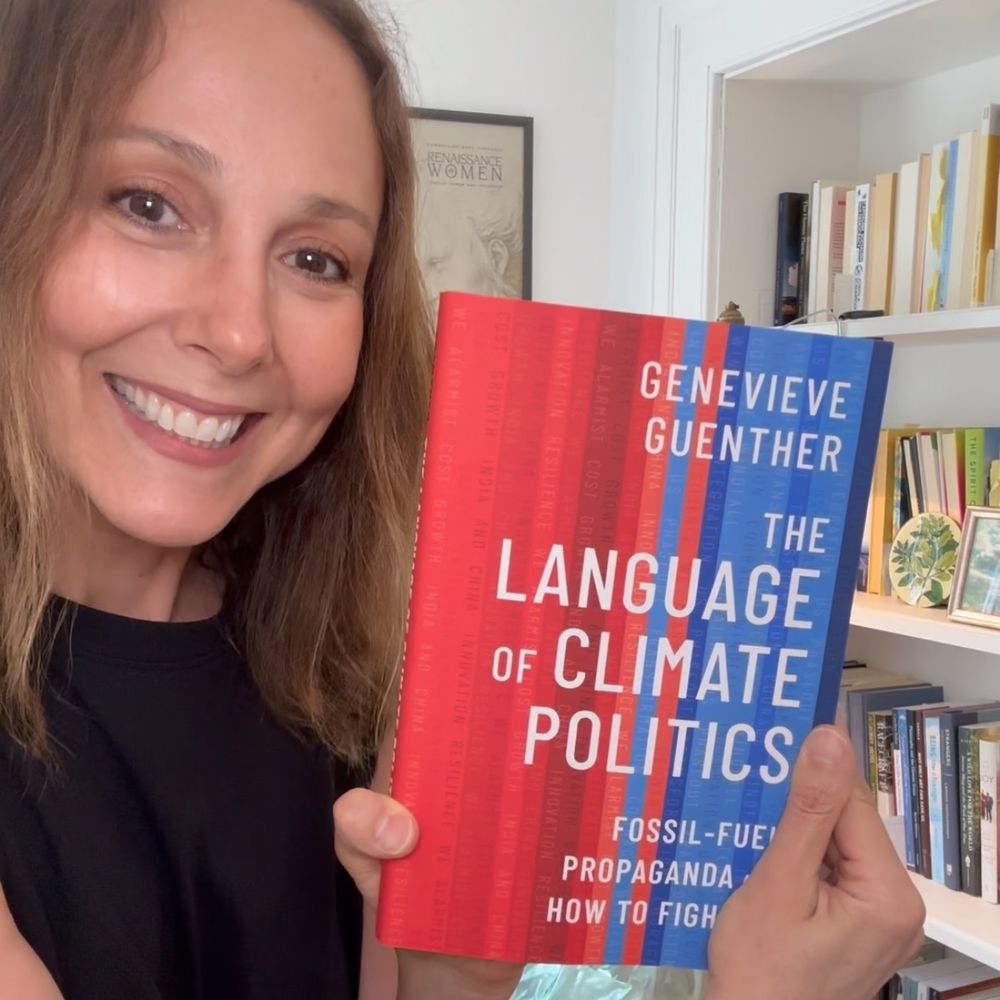
About this paper: as I show in The Language of Climate Politics—and as @noahqkaufman.bsky.social explained broadly in The Atlantic a few weeks ago—there is NO EVIDENCE that economic growth will continue at past rates (or even at all) if the planet heats up to unprecedented temperatures.
So...
1/2
So...
1/2
February 6, 2026 at 10:07 AM
👇
Reposted by Ken Rice

Listeners to Radio 4’s Inside Science today get an essay from me in defence of astronomy as pure research. Please listen in and let me know what you think.
Show starts 4.30pm GMT here: www.bbc.co.uk/programmes/b...
Show starts 4.30pm GMT here: www.bbc.co.uk/programmes/b...

BBC Radio 4 - BBC Inside Science
A weekly programme looking at the science that's changing our world.
www.bbc.co.uk
February 5, 2026 at 2:07 PM
Listeners to Radio 4’s Inside Science today get an essay from me in defence of astronomy as pure research. Please listen in and let me know what you think.
Show starts 4.30pm GMT here: www.bbc.co.uk/programmes/b...
Show starts 4.30pm GMT here: www.bbc.co.uk/programmes/b...
👇

"The #climate scientists we surveyed were unambiguous: current economic models can’t capture what matters most – the cascading failures & compounding shocks that define climate risk in a warmer world – & could undermine the foundations of economic growth” - Dr Jesse Abrams, @gsiexeter.bsky.social

Flawed economic models mean climate crisis could crash global economy, experts warn
States and financial bodies using modelling that ignores shocks from extreme weather and climate tipping points
www.theguardian.com
February 5, 2026 at 7:49 AM
👇
Reposted by Ken Rice

Recent assessments have found the last glacial maximum implies a climate sensitivity of 2.4C (1.4C to 5.0C): www.science.org/doi/...
And the Pliocene implies a sensitivity of 3.1C (2.3C to 4.7C): www.pnas.org/doi/10....
Paleoclimate evidence generally provides the strongest constraint on high ECS.
And the Pliocene implies a sensitivity of 3.1C (2.3C to 4.7C): www.pnas.org/doi/10....
Paleoclimate evidence generally provides the strongest constraint on high ECS.

February 2, 2026 at 6:51 PM
Recent assessments have found the last glacial maximum implies a climate sensitivity of 2.4C (1.4C to 5.0C): www.science.org/doi/...
And the Pliocene implies a sensitivity of 3.1C (2.3C to 4.7C): www.pnas.org/doi/10....
Paleoclimate evidence generally provides the strongest constraint on high ECS.
And the Pliocene implies a sensitivity of 3.1C (2.3C to 4.7C): www.pnas.org/doi/10....
Paleoclimate evidence generally provides the strongest constraint on high ECS.
👇

It’s impressively similar to the causes of the 2008-10 STFC crisis, but this time with twice as big a hole in the budget (£162M now vs £80M then). You would have hoped that lessons had been learned first time around, but it seems they were not.
February 2, 2026 at 8:50 AM
👇
Yes, I wondered why this was not being highlighted more. STFC is providing facilites used by researchers across most of the research councils. 👇

It would seem that @ukri.org has a very short memory. Since other research councils need the facilities that STFC is expected to deliver, such cost increases have previously been shared across research councils. 🔭🧪
(www.ukri.org/news/open-le...)
(www.ukri.org/news/open-le...)

February 2, 2026 at 8:49 AM
Yes, I wondered why this was not being highlighted more. STFC is providing facilites used by researchers across most of the research councils. 👇
Reposted by Ken Rice

Nobel winner and senior scientists slam cuts to UK physics.
www.researchprofessionalnews.com/rr-news-uk-r...
www.researchprofessionalnews.com/rr-news-uk-r...

Nobel winner and senior scientists slam cuts to UK physics - Research Professional News
Science and Technology Facilities Council’s £162 million cost-saving measures “will have catastrophic consequences”, government warned
www.researchprofessionalnews.com
February 1, 2026 at 10:06 AM
Nobel winner and senior scientists slam cuts to UK physics.
www.researchprofessionalnews.com/rr-news-uk-r...
www.researchprofessionalnews.com/rr-news-uk-r...
Reposted by Ken Rice
"A federal judge on Friday ruled the Energy Department violated the law when Secretary Chris Wright handpicked five researchers who reject the scientific consensus on climate change to work in secret on a sweeping government report on global warming."
Gift link.
Gift link.

A Secret Panel to Question Climate Science Was Unlawful, Judge Rules
www.nytimes.com
January 30, 2026 at 9:57 PM
"A federal judge on Friday ruled the Energy Department violated the law when Secretary Chris Wright handpicked five researchers who reject the scientific consensus on climate change to work in secret on a sweeping government report on global warming."
Gift link.
Gift link.
Reposted by Ken Rice

LOOKING FOR A NEW ACADEMIC OPPORTUNITY?
Regius Professorship in Meteorology & Climate Science - a role awarded to the University of Reading by Queen Elizabeth II
Seeking an exceptional academic leader who will shape the future of meteorology & climate science.
jobs.reading.ac.uk/Job/JobDetai...
Regius Professorship in Meteorology & Climate Science - a role awarded to the University of Reading by Queen Elizabeth II
Seeking an exceptional academic leader who will shape the future of meteorology & climate science.
jobs.reading.ac.uk/Job/JobDetai...
Regius Professorship in Meteorology and Climate Science:Whiteknights Reading UK
Interview date: from 23rd March 2026 onwards
jobs.reading.ac.uk
January 30, 2026 at 3:17 PM
LOOKING FOR A NEW ACADEMIC OPPORTUNITY?
Regius Professorship in Meteorology & Climate Science - a role awarded to the University of Reading by Queen Elizabeth II
Seeking an exceptional academic leader who will shape the future of meteorology & climate science.
jobs.reading.ac.uk/Job/JobDetai...
Regius Professorship in Meteorology & Climate Science - a role awarded to the University of Reading by Queen Elizabeth II
Seeking an exceptional academic leader who will shape the future of meteorology & climate science.
jobs.reading.ac.uk/Job/JobDetai...

Reposted by Ken Rice

New Science Technology & Facilities Council (STFC) letters confirm major funding reductions to areas including particle, nuclear and astrophysics, with a similar process expected for national facilities and labs. While investment in quantum, AI and green tech is welcome, the IOP warns cutting (1/3)

January 29, 2026 at 11:57 AM
New Science Technology & Facilities Council (STFC) letters confirm major funding reductions to areas including particle, nuclear and astrophysics, with a similar process expected for national facilities and labs. While investment in quantum, AI and green tech is welcome, the IOP warns cutting (1/3)
That we seem to be about to be hit by substantial cuts to the STFC budget, reminds that something similar happened about 16 years ago. At the time I was writing a blog that was read by almost noone. Looking back on what I wrote, I can see why 😀. 1/n
January 29, 2026 at 11:09 AM
That we seem to be about to be hit by substantial cuts to the STFC budget, reminds that something similar happened about 16 years ago. At the time I was writing a blog that was read by almost noone. Looking back on what I wrote, I can see why 😀. 1/n
Reposted by Ken Rice

A New STFC Funding Crisis
The outlook for UK astronomy now looks even more bleak than the dark days of the funding crisis following 2008. It looks like a return to the Bad Old Days.
The outlook for UK astronomy now looks even more bleak than the dark days of the funding crisis following 2008. It looks like a return to the Bad Old Days.
A New STFC Funding Crisis
The outlook for UK astronomy now looks even more bleak than the dark days of the funding crisis following 2008. It looks like a return to the Bad Old Days.
telescoper.blog
January 29, 2026 at 10:35 AM
A New STFC Funding Crisis
The outlook for UK astronomy now looks even more bleak than the dark days of the funding crisis following 2008. It looks like a return to the Bad Old Days.
The outlook for UK astronomy now looks even more bleak than the dark days of the funding crisis following 2008. It looks like a return to the Bad Old Days.
Reposted by Ken Rice

The Royal Astronomical Society is gravely concerned at the drastic cuts to support for UK astronomy outlined by the Science and Technology Facilities Council.
Read our statement 👉 ras.ac.uk/news-and-pre...
Read our statement 👉 ras.ac.uk/news-and-pre...

Proposed budget cuts a catastrophe for UK astronomy
The Royal Astronomical Society (RAS) is gravely concerned at the drastic cuts to support for UK astronomy outlined by the Science and Technology Facilities Council (...
ras.ac.uk
January 28, 2026 at 9:07 PM
The Royal Astronomical Society is gravely concerned at the drastic cuts to support for UK astronomy outlined by the Science and Technology Facilities Council.
Read our statement 👉 ras.ac.uk/news-and-pre...
Read our statement 👉 ras.ac.uk/news-and-pre...