



Kate Wong
@katewong.bsky.social
Senior editor at Scientific American. I write about human origins, animals past and present, wildlife conservation. Birder.
Reposted by Kate Wong
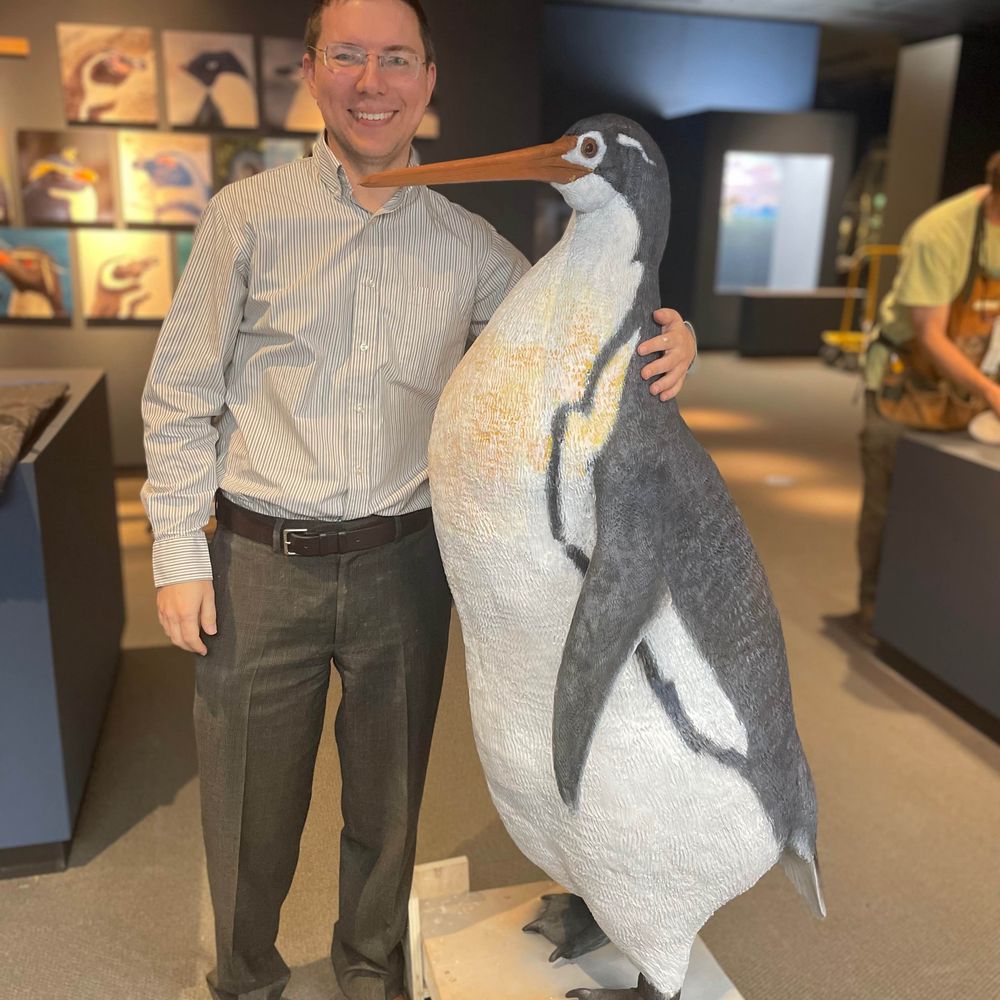
Just in time for #FossilFriday, meet Rhynchaeites mcfaddeni, a little fossil ibis from the Green River Formation. The holotype looks delightfully like a hieroglyph!
Published today in Journal of Paleontology
shorturl.at/qTUVi
Published today in Journal of Paleontology
shorturl.at/qTUVi

February 13, 2026 at 4:50 PM
Just in time for #FossilFriday, meet Rhynchaeites mcfaddeni, a little fossil ibis from the Green River Formation. The holotype looks delightfully like a hieroglyph!
Published today in Journal of Paleontology
shorturl.at/qTUVi
Published today in Journal of Paleontology
shorturl.at/qTUVi
Reposted by Kate Wong

Join me and @n8swick.bsky.social Nate Swick for some tricky IDs, bird banter and more, at @aba.org ABA's WTB LIVE, today at NOON central!
www.youtube.com/live/wMAkOk1...
www.youtube.com/live/wMAkOk1...

What's This Bird LIVE! February 13, 2026
YouTube video by American Birding Association
www.youtube.com
February 13, 2026 at 4:37 PM
Join me and @n8swick.bsky.social Nate Swick for some tricky IDs, bird banter and more, at @aba.org ABA's WTB LIVE, today at NOON central!
www.youtube.com/live/wMAkOk1...
www.youtube.com/live/wMAkOk1...
The Great Backyard Bird Count is here! I'm filling my feeders and figuring out where else I want to go birding this weekend. Here's how to join the fun and help scientists get a global view of bird populations before they undertake seasonal migration. #GBBC🪶🧪

Go bird-watching this weekend and support a global community science project
Avian enthusiasts around the world will identify and count birds from February 13 through February 16 as part of a massive community science project
www.scientificamerican.com
February 13, 2026 at 4:00 PM
The Great Backyard Bird Count is here! I'm filling my feeders and figuring out where else I want to go birding this weekend. Here's how to join the fun and help scientists get a global view of bird populations before they undertake seasonal migration. #GBBC🪶🧪
Reposted by Kate Wong

Ominous bird valentines.

February 12, 2026 at 2:18 PM
Ominous bird valentines.
Reposted by Kate Wong

I deeply appreciate scientists doing work that caters to my particular venn diagrams of personal interests, such as bird poop + ancient civilizations: 🧪 🏺 www.scientificamerican.com/article/this...

This ancient South American kingdom ran on bird poop
Maize farmers in Peru’s Chincha Valley were fertilizing their crops with seabird poop as early as the year 1250
www.scientificamerican.com
February 11, 2026 at 7:09 PM
I deeply appreciate scientists doing work that caters to my particular venn diagrams of personal interests, such as bird poop + ancient civilizations: 🧪 🏺 www.scientificamerican.com/article/this...
Reposted by Kate Wong

Had a blast speaking to curler and geologist Derek Leung about the geology of curling rocks. 🥌 🧪

Why curling rocks come from just two spots on Earth
The rocks used in the Olympic sport of curling come from one island in Scotland and one quarry in Wales. What makes them so special?
www.scientificamerican.com
February 10, 2026 at 12:50 PM
Had a blast speaking to curler and geologist Derek Leung about the geology of curling rocks. 🥌 🧪
Reposted by Kate Wong
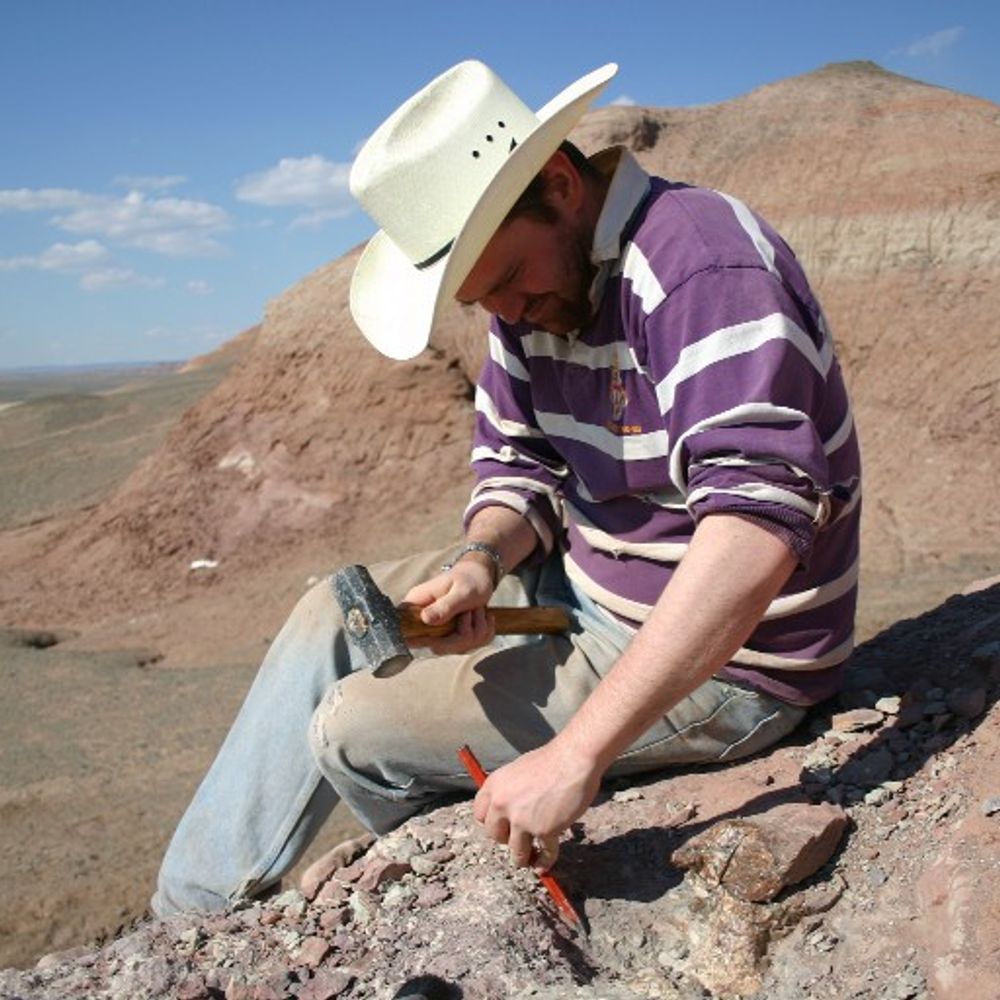
VOLUNTEER ON A DINOSAUR DIG: We run one of the only free dinosaur digs in the USA. We work public land and the fossils go in our public museum, forever. It's hard work, but we find some cool things. If this sounds like you, we're taking applications. Link in comms. #dinosaurs

February 4, 2026 at 10:17 PM
VOLUNTEER ON A DINOSAUR DIG: We run one of the only free dinosaur digs in the USA. We work public land and the fossils go in our public museum, forever. It's hard work, but we find some cool things. If this sounds like you, we're taking applications. Link in comms. #dinosaurs
Post snow shoveling reward: ibuprofen and a trial run of my nerdy new mug (T. rex and Deinonychus become fossils with the addition of a hot beverage.)🦖 🦕


January 26, 2026 at 9:24 PM
Post snow shoveling reward: ibuprofen and a trial run of my nerdy new mug (T. rex and Deinonychus become fossils with the addition of a hot beverage.)🦖 🦕
Reposted by Kate Wong

pleased to share some 🧊ice🧊 counter-programming, courtesy of @meghanbartels.bsky.social, featuring a graphical guide to 21 different forms of ice (!!) by me 🧪https://www.scientificamerican.com/article/scientists-create-exotic-new-forms-of-ice-never-before-seen-on-earth/

The scientific quest to explore the hidden complexity of ice
Ice has many forms beyond the mundane stuff produced in a standard freezer
www.scientificamerican.com
January 23, 2026 at 7:52 PM
pleased to share some 🧊ice🧊 counter-programming, courtesy of @meghanbartels.bsky.social, featuring a graphical guide to 21 different forms of ice (!!) by me 🧪https://www.scientificamerican.com/article/scientists-create-exotic-new-forms-of-ice-never-before-seen-on-earth/
Reposted by Kate Wong

My feature is on the cover of @sciam.bsky.social !!
This is one of the more fascinating, maddening, mind-boggling stories I've reported in a long time. Please come on this journey with me.
This is one of the more fascinating, maddening, mind-boggling stories I've reported in a long time. Please come on this journey with me.

On the cover of our new issue--will brain science deliver answers about consciousness or hit another wall?

Inside the incredible, infuriating quest to explain consciousness
Will brain science deliver answers about consciousness or hit another wall?
www.scientificamerican.com
January 20, 2026 at 7:56 PM
My feature is on the cover of @sciam.bsky.social !!
This is one of the more fascinating, maddening, mind-boggling stories I've reported in a long time. Please come on this journey with me.
This is one of the more fascinating, maddening, mind-boggling stories I've reported in a long time. Please come on this journey with me.
Delightful news alert: An Austrian cow named Veronika has perfected the art of using a broom to scratch her itches—a finding that challenges the conventional wisdom about the intelligence of farm animals. #CowTools are real! 🐮 🧹 🧪

Meet Veronika, the first cow known to engage in flexible, multipurpose tool use
A pet cow named Veronika uses tools in a surprisingly sophisticated way—possibly because she has been allowed to live her best life
www.scientificamerican.com
January 19, 2026 at 4:40 PM
Delightful news alert: An Austrian cow named Veronika has perfected the art of using a broom to scratch her itches—a finding that challenges the conventional wisdom about the intelligence of farm animals. #CowTools are real! 🐮 🧹 🧪
This is such a cool finding--the oldest direct evidence of poisoned arrows. Poisoned hunting weapons were a game-changing innovation for our ancestors. Absolutely incredible that researchers found traces of plant toxins on these tiny arrowheads from 60,000 ago 🤯🏹 🧪

Humans Made Poisoned Arrowheads Thousands of Years Earlier Than Previously Thought
The use of poison on arrows marked a revolution in human hunting technology—new evidence suggests it happened tens of thousands of years earlier than previously known
www.scientificamerican.com
January 7, 2026 at 7:45 PM
This is such a cool finding--the oldest direct evidence of poisoned arrows. Poisoned hunting weapons were a game-changing innovation for our ancestors. Absolutely incredible that researchers found traces of plant toxins on these tiny arrowheads from 60,000 ago 🤯🏹 🧪
Meet the Puerto Rican Tody, my most wanted bird on a recent trip to Puerto Rico. It’s about 3 inches tall and has more Christmas energy per gram than any other bird I know. Happy merry, all 🎄

December 25, 2025 at 6:49 PM
Meet the Puerto Rican Tody, my most wanted bird on a recent trip to Puerto Rico. It’s about 3 inches tall and has more Christmas energy per gram than any other bird I know. Happy merry, all 🎄
Reposted by Kate Wong
This picture has been making the rounds again, and is being misidentified again.
This is a GOOSEFISH.
This is NOT a tasselled wobbegong shark.
It’s a great pic. I get why people are very excited about it. But it’s as easy to give it the right name as the wrong one.
fullfact.org/online/tasse...
This is a GOOSEFISH.
This is NOT a tasselled wobbegong shark.
It’s a great pic. I get why people are very excited about it. But it’s as easy to give it the right name as the wrong one.
fullfact.org/online/tasse...

December 8, 2025 at 12:30 PM
This picture has been making the rounds again, and is being misidentified again.
This is a GOOSEFISH.
This is NOT a tasselled wobbegong shark.
It’s a great pic. I get why people are very excited about it. But it’s as easy to give it the right name as the wrong one.
fullfact.org/online/tasse...
This is a GOOSEFISH.
This is NOT a tasselled wobbegong shark.
It’s a great pic. I get why people are very excited about it. But it’s as easy to give it the right name as the wrong one.
fullfact.org/online/tasse...
Reposted by Kate Wong
Please do yourselves a favor and listen to these birds mimic R2-D2. (And learn something about how some species are able to do it better than others!)
(by Kate Graham-Shaw for @sciam.bsky.social)
(by Kate Graham-Shaw for @sciam.bsky.social)

These Birds Learned to Tweet Like R2-D2. Listen to the Uncanny Results
The lovable Star Wars droid is helping to shed light on why some bird species are better at mimicking sounds than others
www.scientificamerican.com
November 19, 2025 at 4:39 PM
Please do yourselves a favor and listen to these birds mimic R2-D2. (And learn something about how some species are able to do it better than others!)
(by Kate Graham-Shaw for @sciam.bsky.social)
(by Kate Graham-Shaw for @sciam.bsky.social)
Reposted by Kate Wong

True nightmare fuel: Scientists just confirmed the first known death from a severe meat allergy caused by a tick bite.
The man, who died in 2024 after eating a burger, had alpha-gal syndrome, a bizarre disease triggered by tick bites.
www.scientificamerican.com/article/man-...
The man, who died in 2024 after eating a burger, had alpha-gal syndrome, a bizarre disease triggered by tick bites.
www.scientificamerican.com/article/man-...
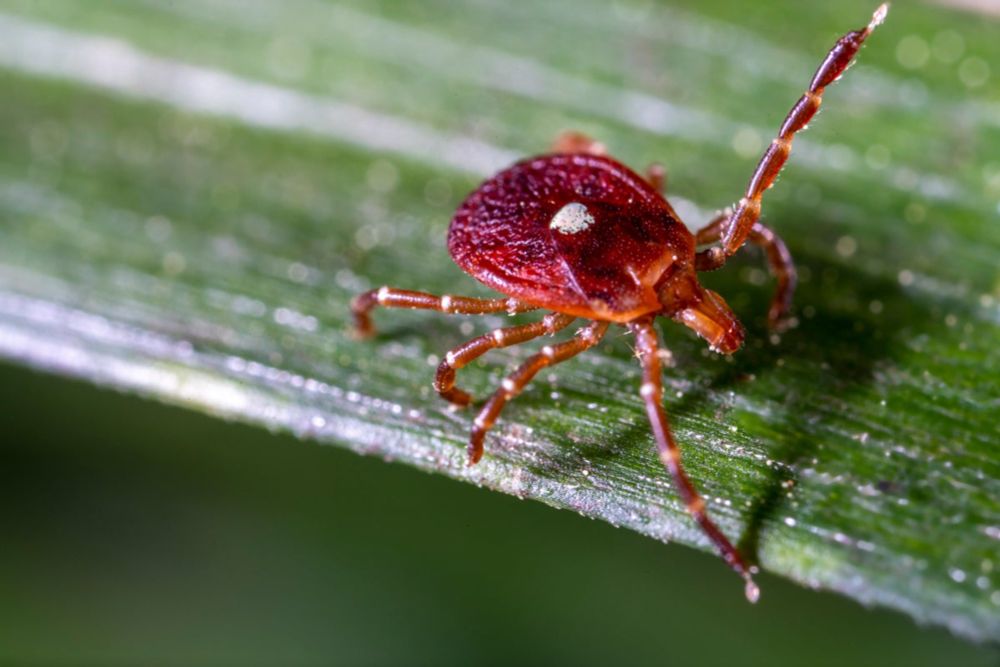
Man With Tick-Borne Meat Allergy Dies after Eating Burger
Lone star tick bites are the most common cause of alpha-gal syndrome, which causes severe allergic reactions to red meat
www.scientificamerican.com
November 14, 2025 at 6:51 PM
True nightmare fuel: Scientists just confirmed the first known death from a severe meat allergy caused by a tick bite.
The man, who died in 2024 after eating a burger, had alpha-gal syndrome, a bizarre disease triggered by tick bites.
www.scientificamerican.com/article/man-...
The man, who died in 2024 after eating a burger, had alpha-gal syndrome, a bizarre disease triggered by tick bites.
www.scientificamerican.com/article/man-...
🧪
A surprising diversity of dog shapes and sizes evolved long before the Victorians began making modern breeds

Dog Skull Analysis Rewrites Evolution of Humanity's Best Friend
A surprising diversity of dog shapes and sizes evolved long before the Victorians began making modern breeds
www.scientificamerican.com
November 13, 2025 at 9:33 PM
🧪
Reposted by Kate Wong

Clinicians are noticing a steady climb in diagnoses of ARFID, a type of eating disorder that presents as a food avoidance so persistent and pervasive it can cause severe malnutrition in kids and adults. More @sciam.bsky.social: www.scientificamerican.com/article/what...

ARFID Is More Than Picky Eating—And the Condition Is on the Rise
Avoidant/restrictive food intake disorder, or ARFID, can cause malnutrition and weight loss in children and adults even when body image is not a factor
www.scientificamerican.com
November 6, 2025 at 4:38 PM
Clinicians are noticing a steady climb in diagnoses of ARFID, a type of eating disorder that presents as a food avoidance so persistent and pervasive it can cause severe malnutrition in kids and adults. More @sciam.bsky.social: www.scientificamerican.com/article/what...
Reposted by Kate Wong

Now on @sciam.bsky.social: Did astronomers photograph UFOs orbiting Earth in the 1950s, years before human activity there? New peer-reviewed studies suggest the answer is “yes,” but skeptics say these conclusions are premature. By @astrojonny.bsky.social.
www.scientificamerican.com/article/did-...
www.scientificamerican.com/article/did-...

Some Scientists See UFOs in Old Telescope Data. Others See a Teachable Moment
New peer-reviewed research reporting strange lights in the pre-space-age sky is sparking curiosity and controversy
www.scientificamerican.com
October 28, 2025 at 1:20 PM
Now on @sciam.bsky.social: Did astronomers photograph UFOs orbiting Earth in the 1950s, years before human activity there? New peer-reviewed studies suggest the answer is “yes,” but skeptics say these conclusions are premature. By @astrojonny.bsky.social.
www.scientificamerican.com/article/did-...
www.scientificamerican.com/article/did-...
Reposted by Kate Wong

These were the dinosaurs that faced the asteroid.
Some of the last survivors. They lived in New Mexico, 66 million years ago. Among them was Alamosaurus, the size of a jetplane.
We unveiled them, and their true age, today in a new paper in
@science.org !
Some of the last survivors. They lived in New Mexico, 66 million years ago. Among them was Alamosaurus, the size of a jetplane.
We unveiled them, and their true age, today in a new paper in
@science.org !

October 23, 2025 at 6:32 PM
These were the dinosaurs that faced the asteroid.
Some of the last survivors. They lived in New Mexico, 66 million years ago. Among them was Alamosaurus, the size of a jetplane.
We unveiled them, and their true age, today in a new paper in
@science.org !
Some of the last survivors. They lived in New Mexico, 66 million years ago. Among them was Alamosaurus, the size of a jetplane.
We unveiled them, and their true age, today in a new paper in
@science.org !
Please enjoy this female Golden-crowned Kinglet eating a hover fly(?). I saw her in Cape May, New Jersey, the other day. Kinglets are usually pretty frenetic. This one was so focused on holding onto her meal that she slowed down enough for a photo. Look at her cute orange feet! 🪶
Image: Kate Wong
Image: Kate Wong

October 21, 2025 at 1:30 PM
Please enjoy this female Golden-crowned Kinglet eating a hover fly(?). I saw her in Cape May, New Jersey, the other day. Kinglets are usually pretty frenetic. This one was so focused on holding onto her meal that she slowed down enough for a photo. Look at her cute orange feet! 🪶
Image: Kate Wong
Image: Kate Wong
Reposted by Kate Wong

When did big multicellular organisms evolve — and how many times did it happen? In my first big print feature for @sciam.bsky.social, I wrote about *extremely* controversial 2.1 billion year old specimens from the Francevillain, and the question of how to recognize life on a basically alien planet

These Enigmatic ‘Fossils’ Could Rewrite the History of Life on Earth
Controversial evidence hints that complex life might have emerged hundreds of millions of years earlier than previously thought—and possibly more than once
www.scientificamerican.com
October 15, 2025 at 11:28 AM
When did big multicellular organisms evolve — and how many times did it happen? In my first big print feature for @sciam.bsky.social, I wrote about *extremely* controversial 2.1 billion year old specimens from the Francevillain, and the question of how to recognize life on a basically alien planet
Reposted by Kate Wong
Proud to share a new piece in Scientific American co-authored with the brilliant @lnwilson.bsky.social , edited by @katewong.bsky.social, and featuring this spectacular depiction of the endless daylight of the Cretaceous summer in Alaska by Chase Stone!
www.scientificamerican.com/article/how-...
www.scientificamerican.com/article/how-...

Bird Migration Is One of Nature’s Greatest Spectacles. Paleontologists Just Found Clues to Its Origin
Tiny fossils hint at when birds began making their mind-blowing journey to the Arctic to breed
www.scientificamerican.com
October 8, 2025 at 4:04 PM
Proud to share a new piece in Scientific American co-authored with the brilliant @lnwilson.bsky.social , edited by @katewong.bsky.social, and featuring this spectacular depiction of the endless daylight of the Cretaceous summer in Alaska by Chase Stone!
www.scientificamerican.com/article/how-...
www.scientificamerican.com/article/how-...
Reposted by Kate Wong

Six of the nine Nobel Prize winners this year work in the U.S.
Three of the six were born outside the U.S., which is the pattern most years. No country has benefited more from welcoming immigrants from around the world.
www.nobelprize.org
Three of the six were born outside the U.S., which is the pattern most years. No country has benefited more from welcoming immigrants from around the world.
www.nobelprize.org

The official website of the Nobel Prize - NobelPrize.org
The Nobel Prize rewards science, humanism and peace efforts. This is one of the central concepts in the will of Alfred Nobel, and it also permeates the outreach activities that have been developed for...
www.nobelprize.org
October 8, 2025 at 12:37 PM
Six of the nine Nobel Prize winners this year work in the U.S.
Three of the six were born outside the U.S., which is the pattern most years. No country has benefited more from welcoming immigrants from around the world.
www.nobelprize.org
Three of the six were born outside the U.S., which is the pattern most years. No country has benefited more from welcoming immigrants from around the world.
www.nobelprize.org
Wow—thank you @rebeccarhelm.bsky.social for investigating this video. When I saw it a few weeks ago I wondered whether it was legit. It’s absolutely incredible!

I get that the news cycle is packed right now, but I just heard from a colleague at the Smithsonian that this is fully a GIANT SQUID BEING EATEN BY A SPERM WHALE and it’s possibly the first ever confirmed video according to a friend at NOAA
10 YEAR OLD ME IS LOSING HER MIND (a thread 🧵)
10 YEAR OLD ME IS LOSING HER MIND (a thread 🧵)
September 24, 2025 at 9:37 PM
Wow—thank you @rebeccarhelm.bsky.social for investigating this video. When I saw it a few weeks ago I wondered whether it was legit. It’s absolutely incredible!