



Lee Billings
@leebillings.bsky.social
CHNOPS in ferruginous saline. Multicellular aerobic chemoheterotroph; symbiont of photosynthetic autotrophs. Descendant of stardust; aspiring good ancestor. Senior Editor, Scientific American. Signal: @lee_billings.81
Here’s a fun thought experiment, via @sciam.bsky.social: How big of a telescope would aliens need to see dinosaurs on Earth, from 66 million light-years away? @philplait.bsky.social’s back-of-the-envelope answer might surprise you.
www.scientificamerican.com/article/coul...
www.scientificamerican.com/article/coul...

Could aliens in another galaxy see dinosaurs on Earth?
How big would a telescope need to be to see Earth’s dinosaurs from 66 million light-years away? Think big—and then think bigger
www.scientificamerican.com
February 20, 2026 at 2:26 PM
Here’s a fun thought experiment, via @sciam.bsky.social: How big of a telescope would aliens need to see dinosaurs on Earth, from 66 million light-years away? @philplait.bsky.social’s back-of-the-envelope answer might surprise you.
www.scientificamerican.com/article/coul...
www.scientificamerican.com/article/coul...
Reposted by Lee Billings

What if Earth-sized HZ worlds don’t have exactly Earth-like climate feedbacks? Climate Chaos, Snowballs, run-aways - but also many temperate yet not-Earth-like worlds! Congrats to Chaucer Langbert on this cool study!
arxiv.org/abs/2602.10369 @uarizonalpl.bsky.social @stewardobservatory.bsky.social
arxiv.org/abs/2602.10369 @uarizonalpl.bsky.social @stewardobservatory.bsky.social

Not Earth-like Yet Temperate? More Generic Climate Feedback Configurations Still Allow Temperate Climates in Habitable Zone Exo-Earth Candidates
Earth's climate is influenced by over a dozen feedbacks, but only three dominate its long-term climate behavior. Models of the exoplanet habitable zone (HZ) assume that this is similar for other Earth...
arxiv.org
February 13, 2026 at 1:25 AM
What if Earth-sized HZ worlds don’t have exactly Earth-like climate feedbacks? Climate Chaos, Snowballs, run-aways - but also many temperate yet not-Earth-like worlds! Congrats to Chaucer Langbert on this cool study!
arxiv.org/abs/2602.10369 @uarizonalpl.bsky.social @stewardobservatory.bsky.social
arxiv.org/abs/2602.10369 @uarizonalpl.bsky.social @stewardobservatory.bsky.social
Reposted by Lee Billings

me: i hate myself
my therapist: why are you being so mean to yourself?
me: no you don't understand I'm just quoting Charles Darwin
my therapist: why are you being so mean to yourself?
me: no you don't understand I'm just quoting Charles Darwin
Happy birthday to one of my favourite haters, Charles Darwin

February 12, 2026 at 9:11 PM
me: i hate myself
my therapist: why are you being so mean to yourself?
me: no you don't understand I'm just quoting Charles Darwin
my therapist: why are you being so mean to yourself?
me: no you don't understand I'm just quoting Charles Darwin
Reposted by Lee Billings

Let me repeat what Katie says: YOU. CAN'T. REPEAL. A. SCIENTIFIC.FINDING. That's not how it works.

You can't... repeal... a scientific finding. At that point it's just called lying about it.

Breaking News: The Trump administration repealed the bedrock scientific finding that greenhouse gases threaten human life and well being, meaning that the EPA can no longer regulate them. nyti.ms/4rSszQu
February 12, 2026 at 9:05 PM
Let me repeat what Katie says: YOU. CAN'T. REPEAL. A. SCIENTIFIC.FINDING. That's not how it works.
Now on @sciam.bsky.social: “I got goosebumps when I saw it disappearing into darkness.”
Based on studies of a mysterious vanishing star in the galaxy of Andromeda, astronomers have found what may be the closest and best candidate for a newborn black hole.
www.scientificamerican.com/article/did-...
Based on studies of a mysterious vanishing star in the galaxy of Andromeda, astronomers have found what may be the closest and best candidate for a newborn black hole.
www.scientificamerican.com/article/did-...

How did an entire star vanish in the galaxy next door? A black hole may be to blame
A “disappearing” star in the Andromeda galaxy is the closest and best candidate for a newborn black hole that astronomers have ever seen
www.scientificamerican.com
February 12, 2026 at 7:13 PM
Now on @sciam.bsky.social: “I got goosebumps when I saw it disappearing into darkness.”
Based on studies of a mysterious vanishing star in the galaxy of Andromeda, astronomers have found what may be the closest and best candidate for a newborn black hole.
www.scientificamerican.com/article/did-...
Based on studies of a mysterious vanishing star in the galaxy of Andromeda, astronomers have found what may be the closest and best candidate for a newborn black hole.
www.scientificamerican.com/article/did-...
Reposted by Lee Billings

Back in 2017, astronomers watched as a comet drastically slowed its rotation from 26 to 40 hours.
Newly unearthed Hubble observations show it didn’t just slow, but stopped - then started going backwards.
Super fun study this. Story by me in the NYT.
www.nytimes.com/2026/02/11/s...
Newly unearthed Hubble observations show it didn’t just slow, but stopped - then started going backwards.
Super fun study this. Story by me in the NYT.
www.nytimes.com/2026/02/11/s...

This Comet Stopped Spinning. Then It Started Rotating Backward.
www.nytimes.com
February 12, 2026 at 2:25 AM
Back in 2017, astronomers watched as a comet drastically slowed its rotation from 26 to 40 hours.
Newly unearthed Hubble observations show it didn’t just slow, but stopped - then started going backwards.
Super fun study this. Story by me in the NYT.
www.nytimes.com/2026/02/11/s...
Newly unearthed Hubble observations show it didn’t just slow, but stopped - then started going backwards.
Super fun study this. Story by me in the NYT.
www.nytimes.com/2026/02/11/s...
Reposted by Lee Billings
David Hogg has written a white paper on doing astrophysics in the age of LLMs. It looks to be thought-provoking. My initial reaction is that either LLMs will destroy the field or they will force a reckoning with and re-imagining of the current system that often prioritizes output over quality. 🧪

Why do we do astrophysics?
At time of writing, large language models (LLMs) are beginning to obtain the ability to design, execute, write up, and referee scientific projects on the data-science side of astrophysics. What implic...
arxiv.org
February 12, 2026 at 3:58 AM
David Hogg has written a white paper on doing astrophysics in the age of LLMs. It looks to be thought-provoking. My initial reaction is that either LLMs will destroy the field or they will force a reckoning with and re-imagining of the current system that often prioritizes output over quality. 🧪
Reposted by Lee Billings
As I've said many times, this is an awful thing that we are doing to ourselves for no discernible reason.

"Everything is gambling now": How betting is taking over America
Gambling culture is enveloping American sports, politics, media and trading.
www.axios.com
February 10, 2026 at 8:34 PM
As I've said many times, this is an awful thing that we are doing to ourselves for no discernible reason.
Reposted by Lee Billings

Update on the post below: in a letter sent to Chile's Environmental Assessment Service on 6 February, AES Andes requested the withdrawal of INNA from evaluation.
This formally confirms that INNA is not going ahead.
🔭 🧪
This formally confirms that INNA is not going ahead.
🔭 🧪
AES Andes announced that it will step back from the project INNA, planned near our Paranal Observatory.
We welcome this and expect the project to be withdrawn from Chile's Environmental Assessment Service soon, which would formally confirm the cancelation: https://www.eso.org/public/news/eso2602
🔭 🧪
We welcome this and expect the project to be withdrawn from Chile's Environmental Assessment Service soon, which would formally confirm the cancelation: https://www.eso.org/public/news/eso2602
🔭 🧪

February 10, 2026 at 11:44 AM
Update on the post below: in a letter sent to Chile's Environmental Assessment Service on 6 February, AES Andes requested the withdrawal of INNA from evaluation.
This formally confirms that INNA is not going ahead.
🔭 🧪
This formally confirms that INNA is not going ahead.
🔭 🧪
Reposted by Lee Billings
From AIP FYI: "The FCC is fast-tracking a SpaceX proposal to launch more than one million data center satellites, which is now open for public comment" www.fcc.gov/document/sb-...
www.fcc.gov
February 9, 2026 at 7:04 PM
From AIP FYI: "The FCC is fast-tracking a SpaceX proposal to launch more than one million data center satellites, which is now open for public comment" www.fcc.gov/document/sb-...
Reposted by Lee Billings

SpaceX has added some more details about the second stage failure:
"off-nominal condition caused by a failed ignition due to a gas bubble in the transfer tube ahead of the planned deorbit burn"
Source: www.spacex.com/launches/sl-...
"off-nominal condition caused by a failed ignition due to a gas bubble in the transfer tube ahead of the planned deorbit burn"
Source: www.spacex.com/launches/sl-...

February 7, 2026 at 4:13 PM
SpaceX has added some more details about the second stage failure:
"off-nominal condition caused by a failed ignition due to a gas bubble in the transfer tube ahead of the planned deorbit burn"
Source: www.spacex.com/launches/sl-...
"off-nominal condition caused by a failed ignition due to a gas bubble in the transfer tube ahead of the planned deorbit burn"
Source: www.spacex.com/launches/sl-...
Now on @sciam.bsky.social: The Relativistic Heavy Ion Collider—the last great U.S. particle collider—is no more. But its end also signals a new beginning for the nation’s particle physics community.
www.scientificamerican.com/article/the-...
www.scientificamerican.com/article/the-...

U.S. physicists have bid farewell to the nation’s last remaining particle collider, which spun gold into revolutionary discoveries
After 25 years, Brookhaven National Laboratory’s Relativistic Heavy Ion Collider—the U.S.’s largest particle collider—has ceased operations, but its science lives on
www.scientificamerican.com
February 6, 2026 at 7:38 PM
Now on @sciam.bsky.social: The Relativistic Heavy Ion Collider—the last great U.S. particle collider—is no more. But its end also signals a new beginning for the nation’s particle physics community.
www.scientificamerican.com/article/the-...
www.scientificamerican.com/article/the-...
Reposted by Lee Billings
The Pandora satellite provides career training grounds while observing exoplanets
www.nature.com/articles/d41...
www.nature.com/articles/d41...

NASA’s latest telescope is a feat of early-career leadership
The Pandora satellite provides career training grounds while observing exoplanets.
www.nature.com
February 6, 2026 at 5:00 PM
The Pandora satellite provides career training grounds while observing exoplanets
www.nature.com/articles/d41...
www.nature.com/articles/d41...
Reposted by Lee Billings

So snakes keep turning up in places they should not be in India and it turns out they may be accidentally hoping a ride on trains. (And yes, I am pretty proud of this headline.) 🧪

Snakes on a train? King cobras may be riding the rails in India
A new study suggests king cobras may be accidentally boarding trains across India
www.scientificamerican.com
February 6, 2026 at 12:47 PM
So snakes keep turning up in places they should not be in India and it turns out they may be accidentally hoping a ride on trains. (And yes, I am pretty proud of this headline.) 🧪
Reposted by Lee Billings

Epstein files show a complicated relationship with science and journalism
Jeffrey Epstein aggressively sought access to publishers, mentions of Scientific American and other media in Department of Justice files show
www.scientificamerican.com/article/epst...
Jeffrey Epstein aggressively sought access to publishers, mentions of Scientific American and other media in Department of Justice files show
www.scientificamerican.com/article/epst...

Epstein files show a complicated relationship with science and journalism
Jeffrey Epstein aggressively sought access to publishers, mentions of Scientific American and other media in Department of Justice files show
www.scientificamerican.com
February 5, 2026 at 7:11 PM
Epstein files show a complicated relationship with science and journalism
Jeffrey Epstein aggressively sought access to publishers, mentions of Scientific American and other media in Department of Justice files show
www.scientificamerican.com/article/epst...
Jeffrey Epstein aggressively sought access to publishers, mentions of Scientific American and other media in Department of Justice files show
www.scientificamerican.com/article/epst...
Now on @sciam.bsky.social: 60 years ago, the USSR's Luna 9 became the first-ever spacecraft to soft-land on the moon. But no one knew Luna 9's exact landing site. Now, machine-learning, better cameras, and old-fashioned sleuthing may be about to find it. 🧪
www.scientificamerican.com/article/wher...
www.scientificamerican.com/article/wher...

Have we solved the mystery of a long-lost Soviet spacecraft, Luna 9?
Scientists have spent decades searching for the final resting place of Luna 9, the first spacecraft to soft-land on the moon. Now they’re on the cusp of finding it
www.scientificamerican.com
February 5, 2026 at 6:46 PM
Now on @sciam.bsky.social: 60 years ago, the USSR's Luna 9 became the first-ever spacecraft to soft-land on the moon. But no one knew Luna 9's exact landing site. Now, machine-learning, better cameras, and old-fashioned sleuthing may be about to find it. 🧪
www.scientificamerican.com/article/wher...
www.scientificamerican.com/article/wher...
Reposted by Lee Billings

With SpaceX / xAI and Google both proposing orbital data centers powered by sunlight in space, it's worth once again highlighting the significant sustainability and economic costs facing such projects.
www.scientificamerican.com/article/data...
www.scientificamerican.com/article/data...

Space-Based Data Centers Could Power AI with Solar Energy—At a Cost
Space-based computing offers easy access to solar power but presents its own environmental challenges
www.scientificamerican.com
February 3, 2026 at 10:07 PM
With SpaceX / xAI and Google both proposing orbital data centers powered by sunlight in space, it's worth once again highlighting the significant sustainability and economic costs facing such projects.
www.scientificamerican.com/article/data...
www.scientificamerican.com/article/data...
Reposted by Lee Billings
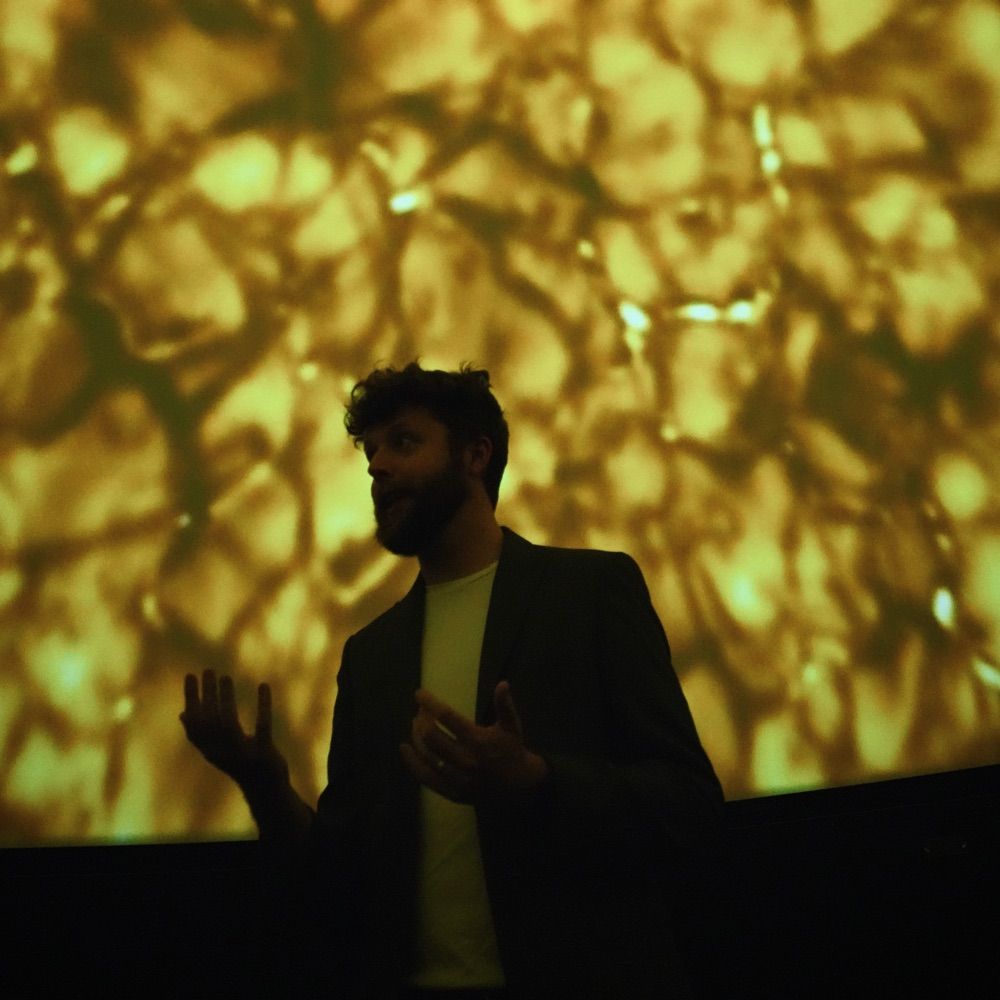
BREAKING: This is Richard Carrington, the first person to document solar flares on the Sun & suggest their influence on aurora at Earth. The largest solar storm on record, the Carrington Event, bares his name. But, there has been no photograph available of Carrington – until now!

January 31, 2026 at 10:20 PM
BREAKING: This is Richard Carrington, the first person to document solar flares on the Sun & suggest their influence on aurora at Earth. The largest solar storm on record, the Carrington Event, bares his name. But, there has been no photograph available of Carrington – until now!
Reposted by Lee Billings
The bots populating Moltbook apparently all come to sound like a familiar kind of internet denizen with delusions of philosophical grandeur. Manifestos and declarations all over the place.
Somebody created an Reddit clone exclusively populated by personal digital agents and let them interact with each other. It’s bonkers, fascinating and terrifying in equal measure.
www.forbes.com/sites/amirhu...
www.forbes.com/sites/amirhu...

An Agent Revolt: Moltbook Is Not A Good Idea
OpenClaw is a breakthrough AI assistant. Moltbook, its new social network for agents, is a security catastrophe waiting to happen. Here's why you should avoid it.
www.forbes.com
January 31, 2026 at 1:01 PM
The bots populating Moltbook apparently all come to sound like a familiar kind of internet denizen with delusions of philosophical grandeur. Manifestos and declarations all over the place.
Reposted by Lee Billings

NASA has selected Axiom Space for the next private astronaut mission to the ISS. The company flew the first four PAMs to the station.
www.nasa.gov/news-release...
www.nasa.gov/news-release...

NASA Selects Axiom Space for Fifth Private Mission to Space Station - NASA
NASA and Axiom Space have signed an order for the fifth private astronaut mission to the International Space Station, targeted to launch no earlier than
www.nasa.gov
January 30, 2026 at 11:37 PM
NASA has selected Axiom Space for the next private astronaut mission to the ISS. The company flew the first four PAMs to the station.
www.nasa.gov/news-release...
www.nasa.gov/news-release...
Reposted by Lee Billings

I wouldn’t have thought anything in this document dump would make me laugh, but Epstein getting banned from Xbox is pretty good
![To: 'eevacation mail.com 'eevacation@gmail.coml
From:
Sent hurl 1 / 1 : :
Subject: E-STOP: Message to Impacted Users
Title: Xbox LIVE - E-STOP: Message to Impacted Users
Xbox LIVE
E-STOP: Message to Impacted Users
Dear Xbox LIVE member,
This message is to notify you that Xbox LIVE has permanently suspended the Xbox LIVE
account associated with this email address. This action is based on the New York Attorney
GeneralAs partnership with Microsoft and other online gaming companies to remove New York
registered sex offenders from online gaming services to minimize the risk to others, particularly
children. As a result, any Xbox LIVE account associated with this email address will not be able
to connect to Xbox LIVE.
If you have an Xbox LIVE Gold subscription, or any unused Microsoft points, we are refunding
the remaining value of those to you within 30 days.
If you do not receive a refund within 30 days, or if you feel that you have been banned
incorrectly, please send Microsoft a notice using the process at www.xbox.com/notice.
Sincerely,
Xbox LIVE
[ ESTOP/P/I ]](https://cdn.bsky.app/img/feed_thumbnail/plain/did:plc:3lhbiajvxbvxr33ff64o2gic/bafkreiepjxjz42hpobdopqpgom2srzymfzoc6bczitgtqly44wtsqxp5eq@jpeg)
January 30, 2026 at 11:23 PM
I wouldn’t have thought anything in this document dump would make me laugh, but Epstein getting banned from Xbox is pretty good
Reposted by Lee Billings

You may have seen pictures, but have you ever seen video of a gigantic jet #TLE from space?
Astronaut Jeanette Epps captured this incredible sequence on July 20th, 2024 for the DTU/@science.esa.int Thor-Davis experiment. 🧪🔭
youtu.be/xN2J7_rOBJY
Credit: ESA/NASA/J. Epps
Processing: Simeon Schmauß
Astronaut Jeanette Epps captured this incredible sequence on July 20th, 2024 for the DTU/@science.esa.int Thor-Davis experiment. 🧪🔭
youtu.be/xN2J7_rOBJY
Credit: ESA/NASA/J. Epps
Processing: Simeon Schmauß
January 30, 2026 at 9:09 PM
You may have seen pictures, but have you ever seen video of a gigantic jet #TLE from space?
Astronaut Jeanette Epps captured this incredible sequence on July 20th, 2024 for the DTU/@science.esa.int Thor-Davis experiment. 🧪🔭
youtu.be/xN2J7_rOBJY
Credit: ESA/NASA/J. Epps
Processing: Simeon Schmauß
Astronaut Jeanette Epps captured this incredible sequence on July 20th, 2024 for the DTU/@science.esa.int Thor-Davis experiment. 🧪🔭
youtu.be/xN2J7_rOBJY
Credit: ESA/NASA/J. Epps
Processing: Simeon Schmauß
Now on @sciam.bsky.social: As most eyes are on NASA's Artemis II lunar mission, the agency is also prepping for the looming launch of Crew-12 astronauts to the ISS (and keeping mostly mum re: Crew-11's surprise early evac). By @clairehcameron.bsky.social
www.scientificamerican.com/article/nasa...
www.scientificamerican.com/article/nasa...

NASA stresses ISS crew safety as it gears up for next astronaut launch
After evacuating four astronauts from the ISS last month, NASA is looking ahead to its next crewed mission to the space station
www.scientificamerican.com
January 30, 2026 at 8:08 PM
Now on @sciam.bsky.social: As most eyes are on NASA's Artemis II lunar mission, the agency is also prepping for the looming launch of Crew-12 astronauts to the ISS (and keeping mostly mum re: Crew-11's surprise early evac). By @clairehcameron.bsky.social
www.scientificamerican.com/article/nasa...
www.scientificamerican.com/article/nasa...
Now on @sciam.bsky.social: Is the candidate exoplanet HD 137010 b another Earth, or just a mirage? We may never find out. (My guess: It's a genuine world, albeit one much too cold to be considered "Earthlike" by any non-astronomer.) By Joe Howlett.
www.scientificamerican.com/article/anot...
www.scientificamerican.com/article/anot...

Another Earth or a blip in the data? We may never find out
An exoplanet called HD 137010 b might be the closest thing astronomers have ever seen to “Earth 2.0.” The trouble is that it’s only been seen once—and may never be glimpsed again
www.scientificamerican.com
January 30, 2026 at 5:11 PM
Now on @sciam.bsky.social: Is the candidate exoplanet HD 137010 b another Earth, or just a mirage? We may never find out. (My guess: It's a genuine world, albeit one much too cold to be considered "Earthlike" by any non-astronomer.) By Joe Howlett.
www.scientificamerican.com/article/anot...
www.scientificamerican.com/article/anot...
Reposted by Lee Billings
Ok since I apparently have a little slice of Bluesky's attention regarding planets right now, allow me to rant a little.
This week's newsletter post is all about talking about exoplanets and why we might not want to call any of them "Earth-like" for a few decades 🧪🔭
This week's newsletter post is all about talking about exoplanets and why we might not want to call any of them "Earth-like" for a few decades 🧪🔭

Maybe don't call exoplanets "Earth-like" until the 2040s
A plea and a note on science communication
www.reviewertoo.com
January 29, 2026 at 8:49 PM
Ok since I apparently have a little slice of Bluesky's attention regarding planets right now, allow me to rant a little.
This week's newsletter post is all about talking about exoplanets and why we might not want to call any of them "Earth-like" for a few decades 🧪🔭
This week's newsletter post is all about talking about exoplanets and why we might not want to call any of them "Earth-like" for a few decades 🧪🔭
