


JJ
@jjodx.bsky.social
Engineer working on motor control/motor learning/aging in the department of Movement Sciences at KU Leuven (Belgium)🧠🧠🧠
Reposted by JJ
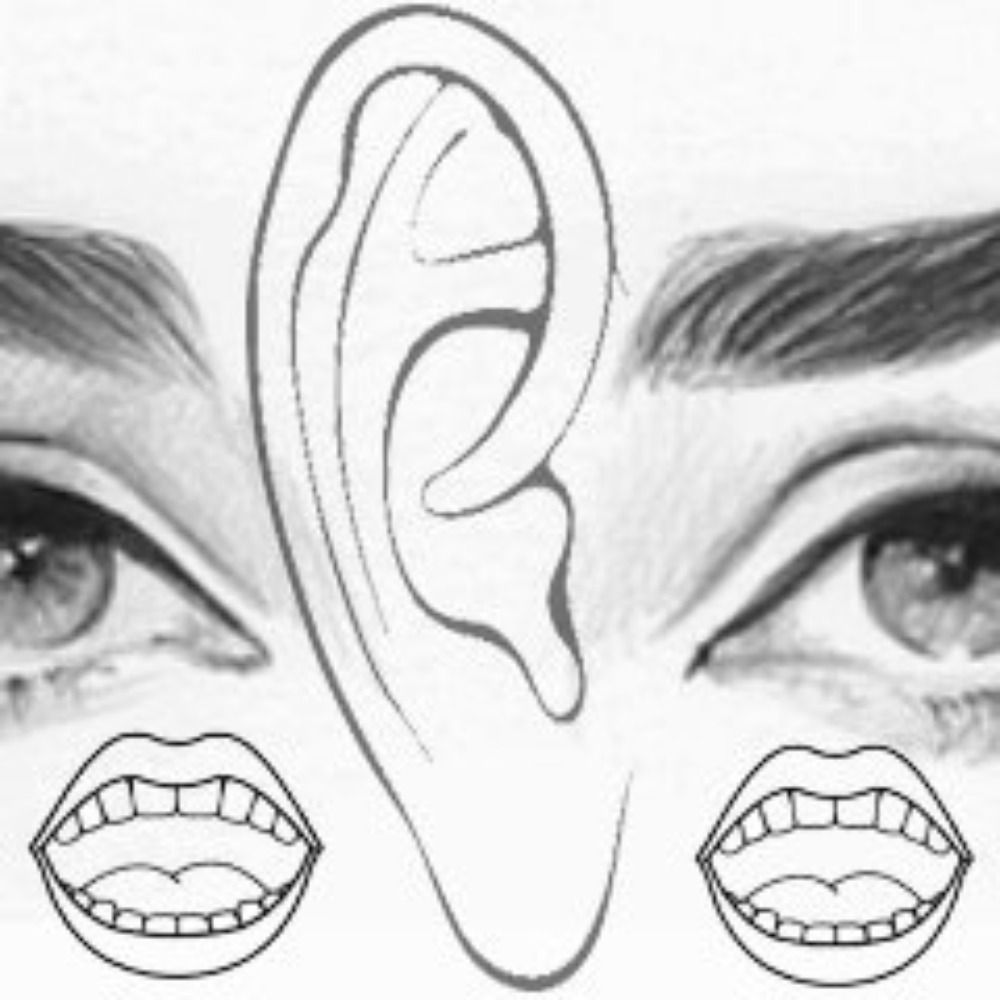
Sensorimotor Adaptation to a Nonuniform Formant Perturbation Is Preserved in Healthy Aging pubs.asha.org/doi/10.1044/... Examined effects of healthy aging on the magnitude of both adaptation to vowel centralisation smooshing (vowel distinction⬇️)& generalisation of this learning to untrained vowels

Sensorimotor Adaptation to a Nonuniform Formant Perturbation Is Preserved in Healthy Aging
Purpose: Young adult speakers can be induced to increase the acoustic contrast between
vowels through exposure to a nonuniform auditory “centrali...
pubs.asha.org
February 20, 2026 at 4:18 AM
Sensorimotor Adaptation to a Nonuniform Formant Perturbation Is Preserved in Healthy Aging pubs.asha.org/doi/10.1044/... Examined effects of healthy aging on the magnitude of both adaptation to vowel centralisation smooshing (vowel distinction⬇️)& generalisation of this learning to untrained vowels
My last preprint on tDCS:
Neither conventional nor HD tDCS boost motor sequence learning in healthy older individuals:
www.biorxiv.org/content/10.6...
Neither conventional nor HD tDCS boost motor sequence learning in healthy older individuals:
www.biorxiv.org/content/10.6...
February 20, 2026 at 12:08 PM
My last preprint on tDCS:
Neither conventional nor HD tDCS boost motor sequence learning in healthy older individuals:
www.biorxiv.org/content/10.6...
Neither conventional nor HD tDCS boost motor sequence learning in healthy older individuals:
www.biorxiv.org/content/10.6...
Reposted by JJ

At least one publisher supports PubPeer and the efforts of its volunteer contributors.
Despite SciGuardians hyperbole and falsehoods, Frontiers doesn't seem inclined to make rabid claims about fraud, RICO, and extortion. Otherwise they'd sue, not say "thank you."
Despite SciGuardians hyperbole and falsehoods, Frontiers doesn't seem inclined to make rabid claims about fraud, RICO, and extortion. Otherwise they'd sue, not say "thank you."

February 20, 2026 at 7:30 AM
At least one publisher supports PubPeer and the efforts of its volunteer contributors.
Despite SciGuardians hyperbole and falsehoods, Frontiers doesn't seem inclined to make rabid claims about fraud, RICO, and extortion. Otherwise they'd sue, not say "thank you."
Despite SciGuardians hyperbole and falsehoods, Frontiers doesn't seem inclined to make rabid claims about fraud, RICO, and extortion. Otherwise they'd sue, not say "thank you."
"the currency of scholarship—publication—is becoming increasingly detached from the notion that publication is meant to add to the sum of human knowledge. "

Improvements to methods should lead to more robust evidence and more rapid advances in knowledge. In their Perspective, Marcus Munafò & @mendelrandom.bsky.social look at why this hasn't been the case and what can be done about it #AcademicSky 🧪

Is scientific reform an unwinnable arms race?
Methodological improvements should, in theory, mean more robust evidence and inference, and more rapid advances in knowledge. However, these methods are often subsequently used in the pursuit of…
plos.io
February 18, 2026 at 8:06 AM
"the currency of scholarship—publication—is becoming increasingly detached from the notion that publication is meant to add to the sum of human knowledge. "
Me to my students: how many scientific studies with non-significant results did you encounter in your first four years of movement sciences ?
Students, realizing how weird this is: .... None....
Me: so, it always works? Scientists never fail?
Students, realizing how weird this is: .... None....
Me: so, it always works? Scientists never fail?
February 17, 2026 at 5:51 PM
Me to my students: how many scientific studies with non-significant results did you encounter in your first four years of movement sciences ?
Students, realizing how weird this is: .... None....
Me: so, it always works? Scientists never fail?
Students, realizing how weird this is: .... None....
Me: so, it always works? Scientists never fail?
Reposted by JJ

A new perspective on the confusing term of “cognitive reserve” from Rik Henson the importance of multiple brain measures in explaining why some people maintain their cognition into late life: https://doi.org/10.1177/23982128261422282

February 16, 2026 at 12:02 PM
A new perspective on the confusing term of “cognitive reserve” from Rik Henson the importance of multiple brain measures in explaining why some people maintain their cognition into late life: https://doi.org/10.1177/23982128261422282
Identifying motor learning deficits in neurological conditions: a critical analysis of a perennial problem
link.springer.com/article/10.1...
link.springer.com/article/10.1...

Identifying motor learning deficits in neurological conditions: a critical analysis of a perennial problem - Experimental Brain Research
Experimental Brain Research - Identifying deficits in motor learning has the potential to serve as an indicator of brain function in several neurological conditions. However, evidence for motor...
link.springer.com
February 16, 2026 at 1:47 PM
Identifying motor learning deficits in neurological conditions: a critical analysis of a perennial problem
link.springer.com/article/10.1...
link.springer.com/article/10.1...
For those who don't look at their social media during the week-ends...
New paper from the lab: we look at changes in cerebellar grey matter with aging and how it can account for changes in cerebellar function.
1. Cerebellar volumes from all regions decrease similarly
2. Topological organization stayed similar
3. No structure-function relationship was found
1. Cerebellar volumes from all regions decrease similarly
2. Topological organization stayed similar
3. No structure-function relationship was found

Aging is associated with uniform structural decline across cerebellar regions while preserving topological organization and showing no relation with sensorimotor function https://www.biorxiv.org/content/10.64898/2026.02.13.705695v1
February 16, 2026 at 12:43 PM
For those who don't look at their social media during the week-ends...
New paper from the lab: we look at changes in cerebellar grey matter with aging and how it can account for changes in cerebellar function.
1. Cerebellar volumes from all regions decrease similarly
2. Topological organization stayed similar
3. No structure-function relationship was found
1. Cerebellar volumes from all regions decrease similarly
2. Topological organization stayed similar
3. No structure-function relationship was found
Aging is associated with uniform structural decline across cerebellar regions while preserving topological organization and showing no relation with sensorimotor function https://www.biorxiv.org/content/10.64898/2026.02.13.705695v1
February 15, 2026 at 8:29 PM
New paper from the lab: we look at changes in cerebellar grey matter with aging and how it can account for changes in cerebellar function.
1. Cerebellar volumes from all regions decrease similarly
2. Topological organization stayed similar
3. No structure-function relationship was found
1. Cerebellar volumes from all regions decrease similarly
2. Topological organization stayed similar
3. No structure-function relationship was found
Consensus Paper: Models of Cerebellar Functions
link.springer.com/article/10.1...
link.springer.com/article/10.1...

February 13, 2026 at 8:28 AM
Consensus Paper: Models of Cerebellar Functions
link.springer.com/article/10.1...
link.springer.com/article/10.1...
Reposted by JJ

Game-changer for PD therapy! Our @Nature study shows targeting the SCAN network with non-invasive brain stimulation doubles efficacy—no surgery needed.
#Therapy #BrainScience #HealthTech
nature.com/articles/s41...
#Therapy #BrainScience #HealthTech
nature.com/articles/s41...
February 6, 2026 at 8:39 AM
Game-changer for PD therapy! Our @Nature study shows targeting the SCAN network with non-invasive brain stimulation doubles efficacy—no surgery needed.
#Therapy #BrainScience #HealthTech
nature.com/articles/s41...
#Therapy #BrainScience #HealthTech
nature.com/articles/s41...
Got one too... in my junk folder. Did not see why I would work for free and deleted it...

Perhaps you received a mysterious noreply email asking you to evaluate some publications 'for novelty'. Looked kinda dubious? Yup, that's the one.
So what's up with this 'metascience novelty indicators challenge'? 🧵
So what's up with this 'metascience novelty indicators challenge'? 🧵
February 9, 2026 at 4:20 PM
Got one too... in my junk folder. Did not see why I would work for free and deleted it...
What do you deserve when you are done correcting 650 exams?
January 27, 2026 at 8:45 PM
What do you deserve when you are done correcting 650 exams?
Reposted by JJ
Dear colleagues in science - it is time to stop normalising the emerging fascism of the US by attending conferences there as though everything is fine.
January 25, 2026 at 10:15 AM
Dear colleagues in science - it is time to stop normalising the emerging fascism of the US by attending conferences there as though everything is fine.
Reposted by JJ

"The cerebellar components of the human language network" www.cell.com/neuron/fullt...
@coltoncasto.bsky.social, Evelina Fedorenko & colleagues
@cp-neuron.bsky.social
@coltoncasto.bsky.social, Evelina Fedorenko & colleagues
@cp-neuron.bsky.social

January 22, 2026 at 11:00 PM
"The cerebellar components of the human language network" www.cell.com/neuron/fullt...
@coltoncasto.bsky.social, Evelina Fedorenko & colleagues
@cp-neuron.bsky.social
@coltoncasto.bsky.social, Evelina Fedorenko & colleagues
@cp-neuron.bsky.social
I like that idea. Rather than treating so many emails...

Tip 2: I scheduled regular on-call hours for collaborators. Once a week, I'm on Zoom for 2 hours. Instead of sending an email, colleagues can join the call and ask questions. The first one was yesterday, and indeed, it did save me answering an email and issues were fixed right away.
January 22, 2026 at 2:49 PM
I like that idea. Rather than treating so many emails...
I did a post-doc in the US years ago... Would not do it anymore. I don't even want to go to the US for a conference at this time.

I’ve been mentoring a student in Europe who I was hoping would come do a postdoc with our research group in Pittsburgh when she graduated. Today we had the conversation that she isn’t comfortable coming to the US anymore and is looking for options in Europe.
It’s sad and yet completely rational.
It’s sad and yet completely rational.
January 21, 2026 at 2:51 PM
I did a post-doc in the US years ago... Would not do it anymore. I don't even want to go to the US for a conference at this time.
Great Blueprint!

Here’s a thought that might make you tilt your head in curiosity: With every movement of your eyes, head, or body, the visual input to your eyes shifts! Nevertheless, it doesn't feel like the world does suddenly tilts sideways whenever you tilt your head. How can this be? TWEEPRINT ALERT! 🚨🧵 1/n

a husky puppy is laying on the floor with its tongue out and wearing a blue collar .
ALT: a husky puppy is laying on the floor with its tongue out and wearing a blue collar .
media.tenor.com
January 21, 2026 at 2:17 PM
Great Blueprint!
The cow study made it to the Belgian news channel...

January 21, 2026 at 2:14 PM
The cow study made it to the Belgian news channel...
Energy - duration trade-off during bird flight learning

Motor learning and adaptation in bird flight https://www.biorxiv.org/content/10.64898/2026.01.20.700397v1
January 21, 2026 at 2:12 PM
Energy - duration trade-off during bird flight learning
Given that I just submitted the European project that I was coordinating, it feels as if 2026 is only starting... I'm just 19days late...
▓░░░░░░░░░░░░░░░░░░░ 5.00%
January 19, 2026 at 8:38 PM
Given that I just submitted the European project that I was coordinating, it feels as if 2026 is only starting... I'm just 19days late...
Locomotor savings relies on attentional control of walking in older, but not younger adults.
www.biorxiv.org/content/10.6...
www.biorxiv.org/content/10.6...
Locomotor savings relies on attentional control of walking in older, but not younger adults
The ability to recall learned movements and rapidly adapt to environmental changes, known as locomotor savings, is crucial for mobility in community-dwelling older adults. However, the influence of aging on locomotor savings and the underlying mechanisms remains poorly understood. Attentional compensation is a particularly relevant mechanism because the control of automatic motor behaviors like walking tend to recruit more attentional/executive resources with aging. We hypothesize that locomotor savings is diminished with age and relies on attentional rather than automatic control of walking. To test this, we compared savings of a novel walking pattern learned on a split-belt treadmill, where each leg moves at a different speed, across multiple days in 21 older and 21 younger adults. Attentional control of walking was assessed by overground dual-task walking while prefrontal cortex (PFC) activity was recorded using functional near-infrared spectroscopy (fNIRS). We found that older adults exhibited less locomotor savings than younger adults after practice. Older adults also relied more on attentional resources during dual-task walking. Importantly, greater locomotor savings was associated with higher attentional control of walking in older adults, suggesting that the use of attentional resources during challenging walking facilitates the recall of previously learned movements. These results indicate that cognitive compensation strategies utilizing attentional resources are important neural mechanisms modulating locomotor savings. Understanding the role of cognitive compensation in locomotor savings may inform rehabilitation design to enhance mobility in older adults ensuring movement corrections practiced in clinical settings are saved for long-term benefit in daily life. Significance Statement Successfully navigating everyday environments requires adapting and recalling learned walking patterns, a process known as locomotor savings. We found that older adults showed locomotor savings across multiple days following structured practice, but to a lesser extent than younger adults. With aging, walking becomes less automatic and more reliant on attentional control, which is traditionally considered detrimental. Interestingly, we found that greater attentional control during walking was linked to better locomotor savings in older adults. These results suggest that attentional compensation during walking may support motor memory retrieval and adaptability in healthy aging, highlighting a potentially beneficial role of cognitive control in maintaining mobility during aging. ### Competing Interest Statement The authors have declared no competing interest. National Institutes of Health, 1R01AG089175-01, R90DA060340-02S1, K23AG076663, T32AG021885 National Science foundation, 2419849 Pittsburgh Pepper Center, P30AG024827
www.biorxiv.org
January 17, 2026 at 7:27 AM
Locomotor savings relies on attentional control of walking in older, but not younger adults.
www.biorxiv.org/content/10.6...
www.biorxiv.org/content/10.6...
Reposted by JJ

This week's sensorimotor superlab reading list is out https://superlab.ca/posts/2026-01-16-list318.html @andpru.bsky.social @diedrichsenjorn.bsky.social @gribblelab.org #neuroskyence #psychscisky #Sensorimotor
January 16, 2026 at 11:12 AM
This week's sensorimotor superlab reading list is out https://superlab.ca/posts/2026-01-16-list318.html @andpru.bsky.social @diedrichsenjorn.bsky.social @gribblelab.org #neuroskyence #psychscisky #Sensorimotor
Reposted by JJ

Very excited to share a new preprint - my first paper in the @mikeeconomo.bsky.social lab where we asked when and why the motor cortex is recruited for movement control:🧠👇https://www.biorxiv.org/content/10.64898/2026.01.13.699314v1

Dynamic engagement of the motor cortex in controlling movement
Neural circuits do not contribute equally or continuously to behavior. In mice, the motor cortex can be essential or dispensable for movement in different contexts, but how it is dynamically recruited...
www.biorxiv.org
January 15, 2026 at 3:27 PM
Very excited to share a new preprint - my first paper in the @mikeeconomo.bsky.social lab where we asked when and why the motor cortex is recruited for movement control:🧠👇https://www.biorxiv.org/content/10.64898/2026.01.13.699314v1
