



Tom Swetnam
@firescar.bsky.social
Tree-ring scientist, forest ecologist, forest fires, climate and human interactions. Regents Professor Emeritus Univ AZ; home in New Mexico.
Pinned
Tom Swetnam
@firescar.bsky.social
· Dec 11

The Jemez Mountains
The Jemez Mountains are a quintessential New Mexico landscape. For centuries, Pueblo, Spanish, and Anglo cultures have mixed and melded here. Many ancient vi...
www.unmpress.com
My forthcoming book on natural and cultural history in my home landscape is now available for pre-order on the University of New Mexico Press website. To be published April 2025. Description, table of contents, and blurbs are also here.
www.unmpress.com/978082636775...
www.unmpress.com/978082636775...
Reposted by Tom Swetnam

CONGRATULATIONS to Thomas W. Swetnam (@firescar.bsky.social), author of The Jemez Mountains: A Cultural and Natural History!
WINNER of the 2025
Southwest Book Award
from the Border Regional Library Association
📚💙 #NewMexico
WINNER of the 2025
Southwest Book Award
from the Border Regional Library Association
📚💙 #NewMexico

January 27, 2026 at 10:47 PM
CONGRATULATIONS to Thomas W. Swetnam (@firescar.bsky.social), author of The Jemez Mountains: A Cultural and Natural History!
WINNER of the 2025
Southwest Book Award
from the Border Regional Library Association
📚💙 #NewMexico
WINNER of the 2025
Southwest Book Award
from the Border Regional Library Association
📚💙 #NewMexico
Reposted by Tom Swetnam
Well, it's now official (per NOAA): Dec (and Nov-Dec) 2025 were the warmest such periods on record for Western U.S. (and also for most individual Western states). It has been an extraordinarily sustained period of winter warmth, and this eerily balmy winter continues into Jan.

January 14, 2026 at 3:57 AM
Well, it's now official (per NOAA): Dec (and Nov-Dec) 2025 were the warmest such periods on record for Western U.S. (and also for most individual Western states). It has been an extraordinarily sustained period of winter warmth, and this eerily balmy winter continues into Jan.
Reposted by Tom Swetnam
Snowpack across much of West was at record or near-record low levels for most of Dec. Despite recent local recovery--esp. in central/southern Sierra in California--it remains extremely low most everywhere else. Record low snowpack may return by later in Jan w/this pattern.

January 11, 2026 at 11:13 PM
Snowpack across much of West was at record or near-record low levels for most of Dec. Despite recent local recovery--esp. in central/southern Sierra in California--it remains extremely low most everywhere else. Record low snowpack may return by later in Jan w/this pattern.
The continued destruction of science by the US administration is beyond appalling and disgusting. This includes the withdrawal of the the US from IAI, Inter-American Institute for Global Change Research. This is a massive mistake and loss for all.

January 9, 2026 at 1:54 AM
The continued destruction of science by the US administration is beyond appalling and disgusting. This includes the withdrawal of the the US from IAI, Inter-American Institute for Global Change Research. This is a massive mistake and loss for all.
Reposted by Tom Swetnam

In December I received a deeply meaningful recognition for my research from AFE, especially to cap off the unhinged year that was 2025. I dedicate this award to all scientists - especially my fellow feds - who have been vilified and whose work has not been valued.
@afe-fireecology.bsky.social
@afe-fireecology.bsky.social


January 8, 2026 at 2:30 AM
In December I received a deeply meaningful recognition for my research from AFE, especially to cap off the unhinged year that was 2025. I dedicate this award to all scientists - especially my fellow feds - who have been vilified and whose work has not been valued.
@afe-fireecology.bsky.social
@afe-fireecology.bsky.social
Reposted by Tom Swetnam
New in @globalchangebio.bsky.social: thoughts from me & Jilmarie Stephens on recent study confirming that vegetation accumulation-to-desiccation cycles induced by wet-to-dry climate transitions increase wildfire severity in California's non-forested biomes. onlinelibrary.wiley....
January 6, 2026 at 4:50 PM
New in @globalchangebio.bsky.social: thoughts from me & Jilmarie Stephens on recent study confirming that vegetation accumulation-to-desiccation cycles induced by wet-to-dry climate transitions increase wildfire severity in California's non-forested biomes. onlinelibrary.wiley....
Reposted by Tom Swetnam

Threatening to dismantle NCAR, our premier weather and climate research institute (apparently) because Colorado refuses to pardon someone accused of tampering with voting machines is a sad example of our current kakistocracy in action… www.nytimes.com/2025...

December 17, 2025 at 6:34 PM
Threatening to dismantle NCAR, our premier weather and climate research institute (apparently) because Colorado refuses to pardon someone accused of tampering with voting machines is a sad example of our current kakistocracy in action… www.nytimes.com/2025...
Reposted by Tom Swetnam
Unbelievable. This would be a terrible blow to American science, writ large. It would decimate not only climate research, but also the kind of weather, wildfire, and disaster research that has underpinned half a century of progress in prediction, early warning, and increased resilience.

Exclusive: The Trump administration is moving to dismantle the National Center for Atmospheric Research in Colorado, according to a senior White House official, taking aim at one of the world's leading climate research labs.

Trump moves to dismantle major US climate research center in Colorado
The Trump administration is breaking up the National Center for Atmospheric Research, taking aim at one of the world's leading climate research labs.
bit.ly
December 17, 2025 at 2:49 AM
Unbelievable. This would be a terrible blow to American science, writ large. It would decimate not only climate research, but also the kind of weather, wildfire, and disaster research that has underpinned half a century of progress in prediction, early warning, and increased resilience.
Reposted by Tom Swetnam
A deeply dangerous — and blatantly retaliatory action against Colorado — by the Trump administration.
NCAR is one of the most renowned scientific facilities in the WORLD — where scientists perform cutting-edge research everyday.
We will fight this reckless directive with every legal tool we have.
NCAR is one of the most renowned scientific facilities in the WORLD — where scientists perform cutting-edge research everyday.
We will fight this reckless directive with every legal tool we have.
Exclusive: The Trump administration is moving to dismantle the National Center for Atmospheric Research in Colorado, according to a senior White House official, taking aim at one of the world's leading climate research labs.
Trump moves to dismantle major US climate research center in Colorado
The Trump administration is breaking up the National Center for Atmospheric Research, taking aim at one of the world's leading climate research labs.
bit.ly
December 17, 2025 at 3:23 AM
A deeply dangerous — and blatantly retaliatory action against Colorado — by the Trump administration.
NCAR is one of the most renowned scientific facilities in the WORLD — where scientists perform cutting-edge research everyday.
We will fight this reckless directive with every legal tool we have.
NCAR is one of the most renowned scientific facilities in the WORLD — where scientists perform cutting-edge research everyday.
We will fight this reckless directive with every legal tool we have.
Reposted by Tom Swetnam

NCAR is quite literally our global mothership.
Everyone who works in climate and weather has passed through its doors and benefited from its incredible resources.
Dismantling NCAR is like taking a sledgehammer to the keystone holding up our scientific understanding of the planet.
Unbelievable.
Everyone who works in climate and weather has passed through its doors and benefited from its incredible resources.
Dismantling NCAR is like taking a sledgehammer to the keystone holding up our scientific understanding of the planet.
Unbelievable.
Trump moves to dismantle major US climate research center in Colorado
The Trump administration is breaking up the National Center for Atmospheric Research, taking aim at one of the world's leading climate research labs.
www.usatoday.com
December 17, 2025 at 2:59 AM
NCAR is quite literally our global mothership.
Everyone who works in climate and weather has passed through its doors and benefited from its incredible resources.
Dismantling NCAR is like taking a sledgehammer to the keystone holding up our scientific understanding of the planet.
Unbelievable.
Everyone who works in climate and weather has passed through its doors and benefited from its incredible resources.
Dismantling NCAR is like taking a sledgehammer to the keystone holding up our scientific understanding of the planet.
Unbelievable.
Reposted by Tom Swetnam
As we all watch Ken Burn’s American Revolution on Public Broadcasting Service (PBS) this evening, remember that federal funding for this public programming has been cut by a president who aspires to be like the king patriots separated from nearly 250 years ago.

November 17, 2025 at 3:34 AM
As we all watch Ken Burn’s American Revolution on Public Broadcasting Service (PBS) this evening, remember that federal funding for this public programming has been cut by a president who aspires to be like the king patriots separated from nearly 250 years ago.
Reposted by Tom Swetnam
Prohibited activities include advising Chinese graduate students. For reference, a recent Georgetown report estimated 16% of STEM graduate students in the US are Chinese nationals.
This would take out entire fields at the knees, which is perhaps the point.
This would take out entire fields at the knees, which is perhaps the point.

“The prohibited activities would include joint research, co-authorship on papers, and advising a foreign graduate student or postdoctoral fellow. The language is retroactive, meaning any interactions during the previous 5 years could make a scientist ineligible for future federal funding.”

U.S. Congress considers sweeping ban on Chinese collaborations
Researchers speak out against proposal that would bar funding for U.S. scientists working with Chinese partners or training Chinese students
www.science.org
November 14, 2025 at 2:52 AM
Prohibited activities include advising Chinese graduate students. For reference, a recent Georgetown report estimated 16% of STEM graduate students in the US are Chinese nationals.
This would take out entire fields at the knees, which is perhaps the point.
This would take out entire fields at the knees, which is perhaps the point.
Reposted by Tom Swetnam
Final version now available #AmJBot @botsocamerica.bsky.social
Sequoia & Sequoiadendron: Two paleoendemic megatrees with different adaptive responses to high-severity fires
bsapubs.onlinelibrary.wiley.com/doi/10.1002/...
Plants are not adapted to fire, but to fire regimes
🧪🌍🔥🌳🌿🪴 #ecoevo #wildfire
Sequoia & Sequoiadendron: Two paleoendemic megatrees with different adaptive responses to high-severity fires
bsapubs.onlinelibrary.wiley.com/doi/10.1002/...
Plants are not adapted to fire, but to fire regimes
🧪🌍🔥🌳🌿🪴 #ecoevo #wildfire
Sequoia sempervirens (redwood; world's tallest tree) is well adapted to high-intensity crown fires (eg 2020), but Sequoiadendron giganteum (giant sequoia; world's most massive tree) is adapted to surface fires only!
bsapubs.onlinelibrary.wiley.com/doi/10.1002/...
🧪🌍🔥🌿🌳🔥🪴 @botsocamerica.bsky.social
bsapubs.onlinelibrary.wiley.com/doi/10.1002/...
🧪🌍🔥🌿🌳🔥🪴 @botsocamerica.bsky.social


November 1, 2025 at 7:24 PM
Final version now available #AmJBot @botsocamerica.bsky.social
Sequoia & Sequoiadendron: Two paleoendemic megatrees with different adaptive responses to high-severity fires
bsapubs.onlinelibrary.wiley.com/doi/10.1002/...
Plants are not adapted to fire, but to fire regimes
🧪🌍🔥🌳🌿🪴 #ecoevo #wildfire
Sequoia & Sequoiadendron: Two paleoendemic megatrees with different adaptive responses to high-severity fires
bsapubs.onlinelibrary.wiley.com/doi/10.1002/...
Plants are not adapted to fire, but to fire regimes
🧪🌍🔥🌳🌿🪴 #ecoevo #wildfire
Reposted by Tom Swetnam

Dr. Julie Edwards (@julieedtree.bsky.social) leads a new paper showing that high-resolution cellular-scale measurements (Quantitative Wood Anatomy) yield better temperature signals in Alaskan tree rings than even conventional MXD across all frequencies agupubs.onlinelibrary.wiley.com/doi/10.1029/...

Resolution and Frequency‐Dependent Climate Signals in an Arctic Tree‐Ring Temperature Reconstruction of the Last Millennium
Tree-ring density measurement resolution affects low-frequency trends in temperature reconstructions High-resolution anatomical maximum latewood density has stronger correlations with instrumenta...
agupubs.onlinelibrary.wiley.com
October 28, 2025 at 3:42 PM
Dr. Julie Edwards (@julieedtree.bsky.social) leads a new paper showing that high-resolution cellular-scale measurements (Quantitative Wood Anatomy) yield better temperature signals in Alaskan tree rings than even conventional MXD across all frequencies agupubs.onlinelibrary.wiley.com/doi/10.1029/...
Reposted by Tom Swetnam

When it comes to famous holes in the ground, northern Arizona has two: the #GrandCanyon and #MeteorCrater. New research suggests that these famous depressions might, in fact, be linked.

An Asteroid Impact May Have Led to Flooding near the Grand Canyon - Eos
There’s remarkable synchronicity between the timing of a paleolake in what is today Grand Canyon National Park and the formation of nearby Barringer Meteorite Crater.
eos.org
October 25, 2025 at 6:23 PM
When it comes to famous holes in the ground, northern Arizona has two: the #GrandCanyon and #MeteorCrater. New research suggests that these famous depressions might, in fact, be linked.
Reposted by Tom Swetnam
Back in the day, I was working a fire near a fancy ski resort. This was when $30 million homes were still unfathomable to me. This guy, who kept bragging that he had the President's personal phone number, came up and said he was going to write a check to pay for all the firefighter meals. 1/

October 25, 2025 at 3:57 PM
Back in the day, I was working a fire near a fancy ski resort. This was when $30 million homes were still unfathomable to me. This guy, who kept bragging that he had the President's personal phone number, came up and said he was going to write a check to pay for all the firefighter meals. 1/
Reposted by Tom Swetnam

Must read to see how a noted Atmospheric Scientist shifted on climate change ...thank you @revkin.bsky.social
revkin.substack.com/p/warming-wo...
revkin.substack.com/p/warming-wo...

Warming Worries of a Once-Doubtful Climate Scientist
Mike Wallace says reality is bad enough. Catastrophe-versus-hoax framing obscures the momentous dangers from unabated greenhouse-gas heating.
revkin.substack.com
October 17, 2025 at 5:25 PM
Must read to see how a noted Atmospheric Scientist shifted on climate change ...thank you @revkin.bsky.social
revkin.substack.com/p/warming-wo...
revkin.substack.com/p/warming-wo...
Reposted by Tom Swetnam
Increasing wildfire frequency decreases carbon storage and leads to regeneration failure in Alaskan boreal forests fireecology.springeropen.com/articles/10....
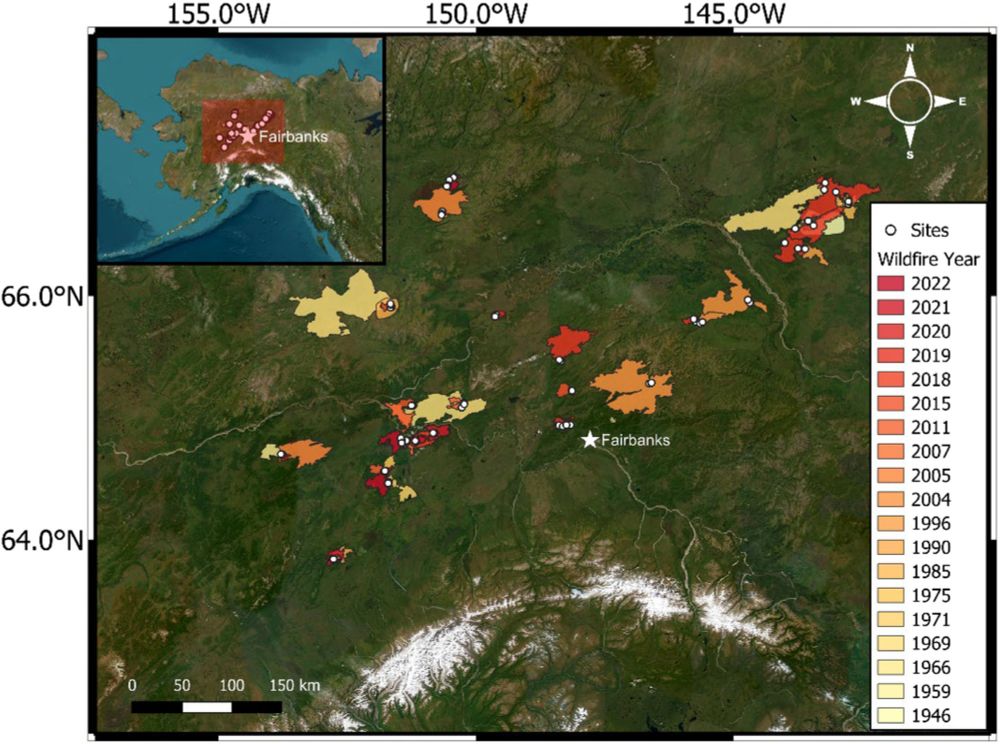
Increasing wildfire frequency decreases carbon storage and leads to regeneration failure in Alaskan boreal forests - Fire Ecology
Background The increasing size, severity, and frequency of wildfires is one of the most rapid ways climate warming could alter the structure and function of high-latitude ecosystems. Historically, boreal forests in western North America had fire return intervals (FRI) of 70–130 years, but shortened FRIs are becoming increasingly common under extreme weather conditions. Here, we quantified pre-fire and post-fire C pools and C losses and assessed post-fire seedling regeneration in long (> 70 years), intermediate (30–70 years), and short (< 30 years) FRIs, and triple (three fires in < 70 years) burns. As boreal forests store a significant portion of the global terrestrial carbon (C) pool, understanding the impacts of shortened FRIs on these ecosystems is critical for predicting the global C balance and feedbacks to climate. Results Using a spatially extensive dataset of 555 plots from 31 separate fires in Interior Alaska, our study demonstrates that shortened FRIs decrease the C storage capacity of boreal forests through loss of legacy C and regeneration failure. Total wildfire C emissions were similar among FRI classes, ranging from 2.5 to 3.5 kg C m−2. However, shortened FRIs lost proportionally more of their pre-fire C pools, resulting in substantially lower post-fire C pools than long FRIs. Shortened FRIs also resulted in the combustion of legacy C, defined as C that escaped combustion in one or more previous fires. We found that post-fire successional trajectories were impacted by FRI, with ~ 65% of short FRIs and triple burns experiencing regeneration failure. Conclusions Our study highlights the structural and functional vulnerability of boreal forests to increasing fire frequency. Shortened FRIs and the combustion of legacy C can shift boreal ecosystems from a net C sink or neutral to a net C source to the atmosphere and increase the risk of transitions to non-forested states. These changes could have profound implications for the boreal C-climate feedback and underscore the need for adaptive management strategies that prioritize the structural and functional resilience of boreal forest ecosystems to expected increases in fire frequency.
fireecology.springeropen.com
October 12, 2025 at 9:50 PM
Increasing wildfire frequency decreases carbon storage and leads to regeneration failure in Alaskan boreal forests fireecology.springeropen.com/articles/10....
Reposted by Tom Swetnam

🔥🌱 From the #AJB Special Issue: “Understanding novel #fire regimes using plant trait‐based approaches" 🌱🔥
#Sequoia and Sequoiadendron: Two paleoendemic megatrees with markedly different adaptive responses to recent high-severity fires
By Jon Keeley & @jgpausas.bsky.social
doi.org/10.1002/ajb2...
#Sequoia and Sequoiadendron: Two paleoendemic megatrees with markedly different adaptive responses to recent high-severity fires
By Jon Keeley & @jgpausas.bsky.social
doi.org/10.1002/ajb2...

September 25, 2025 at 5:00 PM
🔥🌱 From the #AJB Special Issue: “Understanding novel #fire regimes using plant trait‐based approaches" 🌱🔥
#Sequoia and Sequoiadendron: Two paleoendemic megatrees with markedly different adaptive responses to recent high-severity fires
By Jon Keeley & @jgpausas.bsky.social
doi.org/10.1002/ajb2...
#Sequoia and Sequoiadendron: Two paleoendemic megatrees with markedly different adaptive responses to recent high-severity fires
By Jon Keeley & @jgpausas.bsky.social
doi.org/10.1002/ajb2...
Reposted by Tom Swetnam
Published today: our new paper showing a 44-year trend of increasing global wildfire disasters (fatalities and economic losses) due to climate change-induced extreme weather. www.science.org/doi/10.1126/...
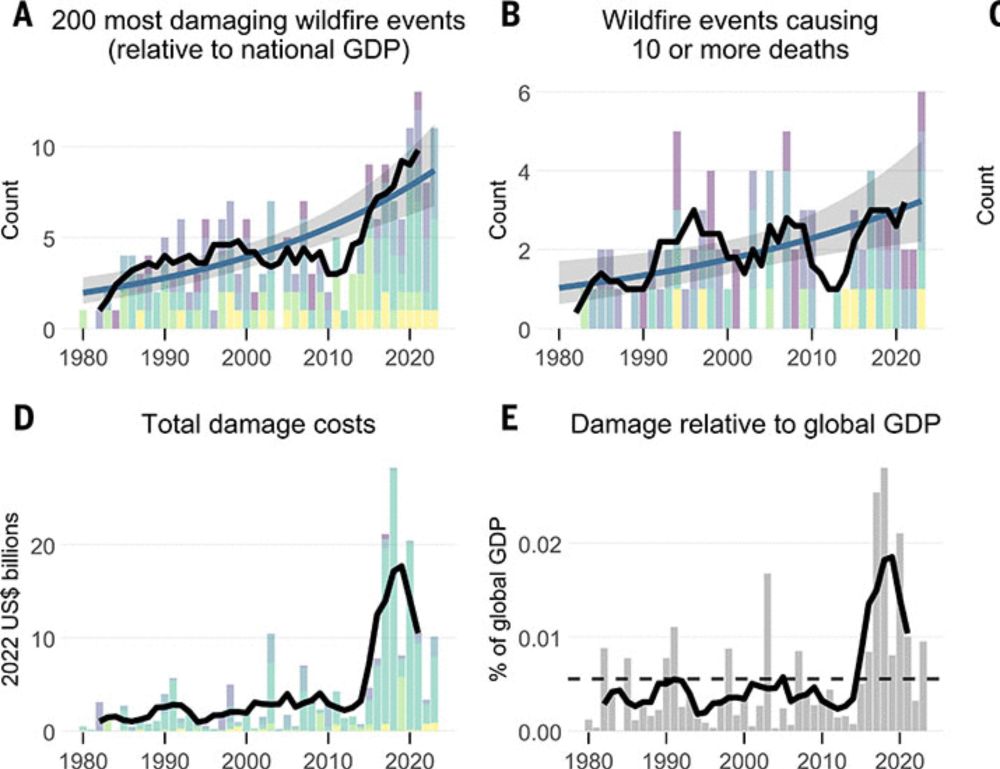
Climate-linked escalation of societally disastrous wildfires
Climate change and land mismanagement are creating increasingly fire-prone built and natural environments. However, despite worsening fire seasons, evidence is lacking globally for trends in socially ...
www.science.org
October 2, 2025 at 6:28 PM
Published today: our new paper showing a 44-year trend of increasing global wildfire disasters (fatalities and economic losses) due to climate change-induced extreme weather. www.science.org/doi/10.1126/...
Reposted by Tom Swetnam

National Academies of Science panel finds that: The EPA was right in 2009 (when it found that climate change driven by society’s emissions of greenhouse gases are endangering human health & lives), and that everything we've learned since has only made it more right.
arstechnica.com/science/2025...
arstechnica.com/science/2025...

Despite congressional threat, National Academies releases new climate report
Things have changed since 2009: We’re more certain about the problems.
arstechnica.com
September 19, 2025 at 9:49 PM
National Academies of Science panel finds that: The EPA was right in 2009 (when it found that climate change driven by society’s emissions of greenhouse gases are endangering human health & lives), and that everything we've learned since has only made it more right.
arstechnica.com/science/2025...
arstechnica.com/science/2025...
Reposted by Tom Swetnam
New Science Advances paper on the feedback loop between loss of snow feeding more wildfire, and wildfire resulting in earlier snowmelt. As to latter, in snow obs, under average conditions, snow melts earlier during 1st-yr postfire in 99%(!) of western snow zones.
www.science.org/doi/10.1126/...
www.science.org/doi/10.1126/...

Impact of current and warmer climate conditions on snow cover loss in burned forests
Wildfires are causing earlier snowmelt across the western US, and this effect would be exacerbated with projected warmer winters.
www.science.org
September 19, 2025 at 7:14 PM
New Science Advances paper on the feedback loop between loss of snow feeding more wildfire, and wildfire resulting in earlier snowmelt. As to latter, in snow obs, under average conditions, snow melts earlier during 1st-yr postfire in 99%(!) of western snow zones.
www.science.org/doi/10.1126/...
www.science.org/doi/10.1126/...
Reposted by Tom Swetnam
Changing Climate, Changing Fire: Understanding Ecosystem-Specific Fire–Climate Dynamics in Arizona and New Mexico journals.ametsoc.org/view/journal...
journals.ametsoc.org
September 16, 2025 at 10:50 PM
Changing Climate, Changing Fire: Understanding Ecosystem-Specific Fire–Climate Dynamics in Arizona and New Mexico journals.ametsoc.org/view/journal...
Reposted by Tom Swetnam

This is an archived government report that found that “Since 1990, far-right extremists have committed far more ideologically motivated homicides than far-left or radical Islamist extremists.”
It existed yesterday and is gone today.
It existed yesterday and is gone today.

What NIJ Research Tells Us About Domestic Terrorism
Militant, nationalistic, white supremacist violent extremism has increased in the United States. In fact, the number of far-right attacks continues to outpace all other types of terrorism and domestic...
web.archive.org
September 13, 2025 at 1:39 PM
This is an archived government report that found that “Since 1990, far-right extremists have committed far more ideologically motivated homicides than far-left or radical Islamist extremists.”
It existed yesterday and is gone today.
It existed yesterday and is gone today.
Reposted by Tom Swetnam
The Garnet Fire has burned through a place I have worked since 2002. A place I hold dear. We knew this wasn't a matter of if, but when. Unfortunately the leadership on the Sierra National Forest didn't have the same urgency that we did. My eulogy for Teakettle.
www.hurteaulab.org/blog/a-eulog...
www.hurteaulab.org/blog/a-eulog...
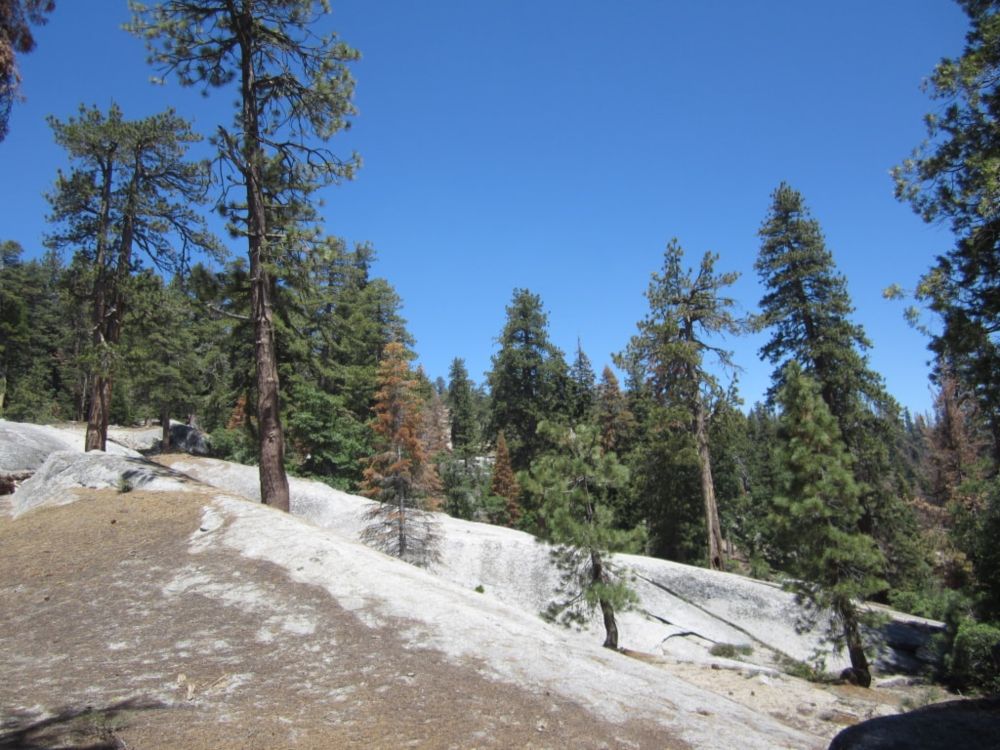
A Eulogy for Teakettle
Justice William O. Douglas, in his dissenting opinion of the Supreme Court’s decision in Sierra Club v. Morton, said “Contemporary public concern for protecting nature’s ecological equilibrium...
www.hurteaulab.org
September 8, 2025 at 11:53 PM
The Garnet Fire has burned through a place I have worked since 2002. A place I hold dear. We knew this wasn't a matter of if, but when. Unfortunately the leadership on the Sierra National Forest didn't have the same urgency that we did. My eulogy for Teakettle.
www.hurteaulab.org/blog/a-eulog...
www.hurteaulab.org/blog/a-eulog...