



Matt Doyle
@doylemt1.bsky.social
🇦🇺 Senior Lecturer at @sydneyuni.bsky.social and former NIHer. Research: Bacterial outer membrane biogenesis - membrane protein folding - protein translocation across membranes - novel antibiotics. He/him.
Pinned

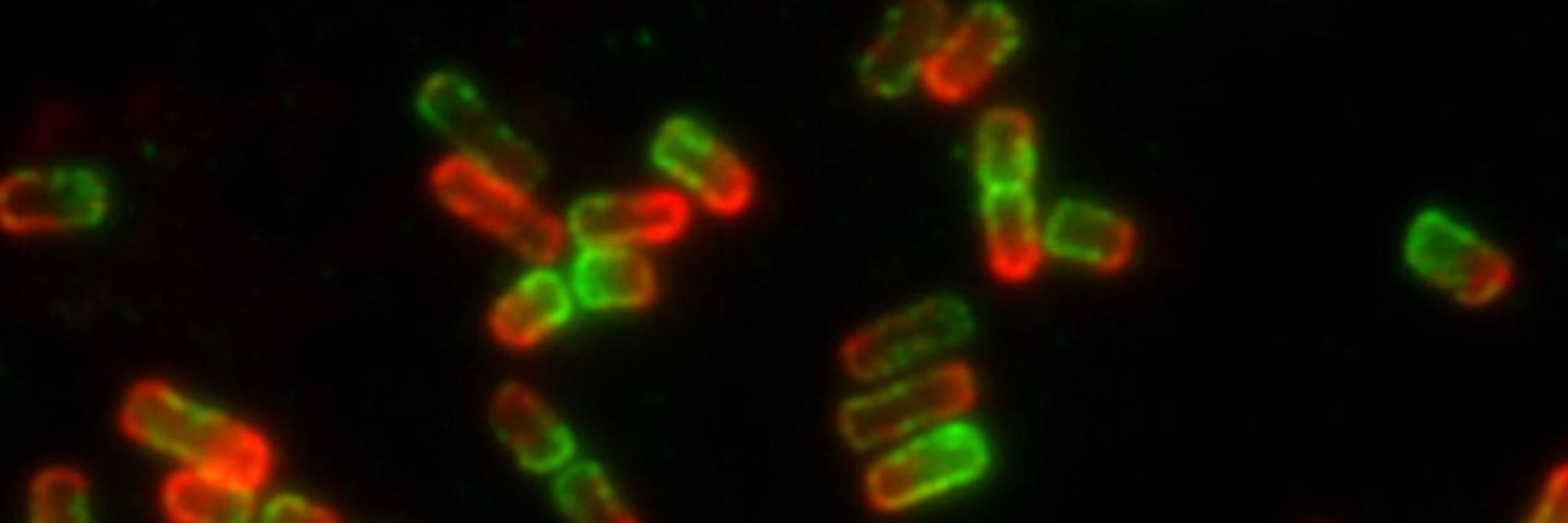
First inhibitor of a bacterial two-partner secretion system.
Two-partner secretion system transporter proteins (TpsB) are widely conserved across Gram-negative pathogens. TpsB family proteins secrete exoprotein virulence factors that perform a myriad of functions such as adhesion and immune modulation. Despite their incredible importance in bacterial infectious disease, TpsB inhibitors have not yet been discovered. Here, we describe a potent inhibitor of FhaC, a TpsB protein produced by Bordetella spp . FhaC secretes the exoprotein FhaB that is essential for the establishment of whooping cough. We designed a peptide called P1 that we predicted would prevent substrate binding and lock FhaC in a secretion-inactive state. Simulations and biochemical assays supported our hypothesis and identified interactions important for P1 binding to FhaC. Strikingly, we observed that the peptide strongly inhibited FhaB secretion from clinical isolates and broadly reduced correlates of virulence. Together, this work provides a strong case for further development of a novel class of anti-TpsB anti-virulence compounds. ### Competing Interest Statement The authors have declared no competing interest. National Institute of Allergy and Infectious Diseases, R21AI180112
www.biorxiv.org
💊 We are excited to share our preprint that describes an inhibitor of the widespread and highly conserved Two-Partner Secretion (TPS) system that is critical for Gram-negative pathogens to export a multitude of diverse virulence factors.
(1/6)
www.biorxiv.org/content/10.6...
(1/6)
www.biorxiv.org/content/10.6...
Reposted by Matt Doyle

Just noting that ARC is still on X/Twitter. Despite it now being clear that that platform produces child exploitation materials, they remain active there.
If you interact with ARC staff, I really think they need to answer this question. It's moved being simply "disconnected from researchers" to … 🤢
If you interact with ARC staff, I really think they need to answer this question. It's moved being simply "disconnected from researchers" to … 🤢
January 15, 2026 at 3:49 AM
Just noting that ARC is still on X/Twitter. Despite it now being clear that that platform produces child exploitation materials, they remain active there.
If you interact with ARC staff, I really think they need to answer this question. It's moved being simply "disconnected from researchers" to … 🤢
If you interact with ARC staff, I really think they need to answer this question. It's moved being simply "disconnected from researchers" to … 🤢
Reposted by Matt Doyle
The coolest finding of my PhD is finally out! E. coli has a 7th RND pump that is present in phylogroups B2/D/E/F but absent in A/B1/C. As a result EefABC has been absent in all K-12 RND studies! Co-authored by the very talented Dr. Lizzy Darby. @jessicamablair.bsky.social
doi.org/10.1099/mgen...
doi.org/10.1099/mgen...

The Resistance-Nodulation-Division efflux pump EefABC is highly conserved within lineages of E. coli commonly associated with infection
Resistance-nodulation-division (RND) efflux pumps confer multidrug resistance in Gram-negative bacteria and are critical for many physiological functions including virulence and biofilm formation. The...
doi.org
January 12, 2026 at 12:16 PM
The coolest finding of my PhD is finally out! E. coli has a 7th RND pump that is present in phylogroups B2/D/E/F but absent in A/B1/C. As a result EefABC has been absent in all K-12 RND studies! Co-authored by the very talented Dr. Lizzy Darby. @jessicamablair.bsky.social
doi.org/10.1099/mgen...
doi.org/10.1099/mgen...
💊 We are excited to share our preprint that describes an inhibitor of the widespread and highly conserved Two-Partner Secretion (TPS) system that is critical for Gram-negative pathogens to export a multitude of diverse virulence factors.
(1/6)
www.biorxiv.org/content/10.6...
(1/6)
www.biorxiv.org/content/10.6...
First inhibitor of a bacterial two-partner secretion system.
Two-partner secretion system transporter proteins (TpsB) are widely conserved across Gram-negative pathogens. TpsB family proteins secrete exoprotein virulence factors that perform a myriad of functions such as adhesion and immune modulation. Despite their incredible importance in bacterial infectious disease, TpsB inhibitors have not yet been discovered. Here, we describe a potent inhibitor of FhaC, a TpsB protein produced by Bordetella spp . FhaC secretes the exoprotein FhaB that is essential for the establishment of whooping cough. We designed a peptide called P1 that we predicted would prevent substrate binding and lock FhaC in a secretion-inactive state. Simulations and biochemical assays supported our hypothesis and identified interactions important for P1 binding to FhaC. Strikingly, we observed that the peptide strongly inhibited FhaB secretion from clinical isolates and broadly reduced correlates of virulence. Together, this work provides a strong case for further development of a novel class of anti-TpsB anti-virulence compounds. ### Competing Interest Statement The authors have declared no competing interest. National Institute of Allergy and Infectious Diseases, R21AI180112
www.biorxiv.org
January 13, 2026 at 7:02 AM
💊 We are excited to share our preprint that describes an inhibitor of the widespread and highly conserved Two-Partner Secretion (TPS) system that is critical for Gram-negative pathogens to export a multitude of diverse virulence factors.
(1/6)
www.biorxiv.org/content/10.6...
(1/6)
www.biorxiv.org/content/10.6...
Reposted by Matt Doyle
Happy to finally share the amazing results of our long-term collaboration with Karin Reinisch’s lab on how bridge lipid-transfer proteins (BLTPs) cooperate with partner proteins to orchestrate lipid delivery. A quick thread (1/7)
www.biorxiv.org/content/10.6...
www.biorxiv.org/content/10.6...
January 12, 2026 at 7:57 PM
Happy to finally share the amazing results of our long-term collaboration with Karin Reinisch’s lab on how bridge lipid-transfer proteins (BLTPs) cooperate with partner proteins to orchestrate lipid delivery. A quick thread (1/7)
www.biorxiv.org/content/10.6...
www.biorxiv.org/content/10.6...
Reposted by Matt Doyle
#ARCschedule Jan26 update
ARC announced huge delays & 3-month announcement windows (used to be 2 weeks).
Delay in months per scheme:
🔹LP25: 1–4
🔹IC/IH26: 1–4
🔹FT26: 1–3
🔹LP26: 2.5–5.5
🔹LE27: 2–5
🔹DE27: 1.5–4.5
🔹DP27: 3–6
Just … appalling. Unworkable.
Data ▶️ docs.google.com/spreadsheets...
ARC announced huge delays & 3-month announcement windows (used to be 2 weeks).
Delay in months per scheme:
🔹LP25: 1–4
🔹IC/IH26: 1–4
🔹FT26: 1–3
🔹LP26: 2.5–5.5
🔹LE27: 2–5
🔹DE27: 1.5–4.5
🔹DP27: 3–6
Just … appalling. Unworkable.
Data ▶️ docs.google.com/spreadsheets...

January 12, 2026 at 5:19 AM
#ARCschedule Jan26 update
ARC announced huge delays & 3-month announcement windows (used to be 2 weeks).
Delay in months per scheme:
🔹LP25: 1–4
🔹IC/IH26: 1–4
🔹FT26: 1–3
🔹LP26: 2.5–5.5
🔹LE27: 2–5
🔹DE27: 1.5–4.5
🔹DP27: 3–6
Just … appalling. Unworkable.
Data ▶️ docs.google.com/spreadsheets...
ARC announced huge delays & 3-month announcement windows (used to be 2 weeks).
Delay in months per scheme:
🔹LP25: 1–4
🔹IC/IH26: 1–4
🔹FT26: 1–3
🔹LP26: 2.5–5.5
🔹LE27: 2–5
🔹DE27: 1.5–4.5
🔹DP27: 3–6
Just … appalling. Unworkable.
Data ▶️ docs.google.com/spreadsheets...
Reposted by Matt Doyle
⁉️The ARC has delayed outcomes of ALL grants 1–4 months & increased scheduled outcome windows from 2 weeks to 3 months!
This reverses 4 years of progress in providing greater certainty & ability to plan for researchers, their families & unis.
Their excuse? Security checks under new ARC legislation👇
This reverses 4 years of progress in providing greater certainty & ability to plan for researchers, their families & unis.
Their excuse? Security checks under new ARC legislation👇

January 12, 2026 at 1:17 AM
⁉️The ARC has delayed outcomes of ALL grants 1–4 months & increased scheduled outcome windows from 2 weeks to 3 months!
This reverses 4 years of progress in providing greater certainty & ability to plan for researchers, their families & unis.
Their excuse? Security checks under new ARC legislation👇
This reverses 4 years of progress in providing greater certainty & ability to plan for researchers, their families & unis.
Their excuse? Security checks under new ARC legislation👇
Reposted by Matt Doyle
The ARC’s processes are back to being farcical, @jasonclaremp.bsky.social
You advocated for a streamlined, efficient, faster ARC, but all that progress has been undone.
How can they claim to fund “innovation” with more than a year between initial proposal & outcomes? It should be 6 months, not 16!
You advocated for a streamlined, efficient, faster ARC, but all that progress has been undone.
How can they claim to fund “innovation” with more than a year between initial proposal & outcomes? It should be 6 months, not 16!
⁉️The ARC has delayed outcomes of ALL grants 1–4 months & increased scheduled outcome windows from 2 weeks to 3 months!
This reverses 4 years of progress in providing greater certainty & ability to plan for researchers, their families & unis.
Their excuse? Security checks under new ARC legislation👇
This reverses 4 years of progress in providing greater certainty & ability to plan for researchers, their families & unis.
Their excuse? Security checks under new ARC legislation👇
January 12, 2026 at 1:34 AM
The ARC’s processes are back to being farcical, @jasonclaremp.bsky.social
You advocated for a streamlined, efficient, faster ARC, but all that progress has been undone.
How can they claim to fund “innovation” with more than a year between initial proposal & outcomes? It should be 6 months, not 16!
You advocated for a streamlined, efficient, faster ARC, but all that progress has been undone.
How can they claim to fund “innovation” with more than a year between initial proposal & outcomes? It should be 6 months, not 16!
Reposted by Matt Doyle
ARC’s new schedule is at www.arc.gov.au/funding-rese...
It will now take A YEAR, or more, for researchers to know whether their grants are successful or not.
For example, early-career researchers are to submit DECRA proposals 11 March this year but they may not be announced 'til 9 March NEXT YEAR!
It will now take A YEAR, or more, for researchers to know whether their grants are successful or not.
For example, early-career researchers are to submit DECRA proposals 11 March this year but they may not be announced 'til 9 March NEXT YEAR!
January 12, 2026 at 1:17 AM
ARC’s new schedule is at www.arc.gov.au/funding-rese...
It will now take A YEAR, or more, for researchers to know whether their grants are successful or not.
For example, early-career researchers are to submit DECRA proposals 11 March this year but they may not be announced 'til 9 March NEXT YEAR!
It will now take A YEAR, or more, for researchers to know whether their grants are successful or not.
For example, early-career researchers are to submit DECRA proposals 11 March this year but they may not be announced 'til 9 March NEXT YEAR!
Reposted by Matt Doyle

Our paper on the human carnitine transporter OCTN2 (SLC22A5) is out in @natcomms.nature.com! We solved structures of OCTN2 in multiple states and explored how carnitine transport is Na⁺-dependent, providing a framework for understanding SPCD disease causing variants and drug interactions.

Structural basis of sodium ion-dependent carnitine transport by OCTN2
Nature Communications - Carnitine uptake by OCTN2 supports fatty acid metabolism. Here, authors report cryo-EM structures of human OCTN2, revealing the mechanism of sodium ion-dependent carnitine...
rdcu.be
January 8, 2026 at 12:05 AM
Our paper on the human carnitine transporter OCTN2 (SLC22A5) is out in @natcomms.nature.com! We solved structures of OCTN2 in multiple states and explored how carnitine transport is Na⁺-dependent, providing a framework for understanding SPCD disease causing variants and drug interactions.
Reposted by Matt Doyle

Congrats to #USYD's A/Prof Yu Heng Lau for landing a $958,564 ARC Discovery grant to develop tiny protein cages to improve how plants use carbon, water & nutrients + boost crop yields. Sydney Analytical + Sydney Mass Spectrometry look forward to continuing our collaboration.
@yuhenglau.bsky.social
@yuhenglau.bsky.social

November 12, 2025 at 1:13 AM
Congrats to #USYD's A/Prof Yu Heng Lau for landing a $958,564 ARC Discovery grant to develop tiny protein cages to improve how plants use carbon, water & nutrients + boost crop yields. Sydney Analytical + Sydney Mass Spectrometry look forward to continuing our collaboration.
@yuhenglau.bsky.social
@yuhenglau.bsky.social


Reposted by Matt Doyle
Between 2018–2023, antibiotic resistance increased in over 40% of the pathogen–antibiotic combinations monitored, with an average annual rise of 5–15%.
Resistance is highest in the WHO South-East Asian & Eastern Mediterranean Regions, where 1 in 3 reported infections were resistant 👉 bit.ly/438Ta1u
Resistance is highest in the WHO South-East Asian & Eastern Mediterranean Regions, where 1 in 3 reported infections were resistant 👉 bit.ly/438Ta1u

October 15, 2025 at 8:00 AM
Between 2018–2023, antibiotic resistance increased in over 40% of the pathogen–antibiotic combinations monitored, with an average annual rise of 5–15%.
Resistance is highest in the WHO South-East Asian & Eastern Mediterranean Regions, where 1 in 3 reported infections were resistant 👉 bit.ly/438Ta1u
Resistance is highest in the WHO South-East Asian & Eastern Mediterranean Regions, where 1 in 3 reported infections were resistant 👉 bit.ly/438Ta1u
Reposted by Matt Doyle
Our paper on the Bacteroidota BAM complex is out in @natmicrobiol.nature.com! With @madejmar.bsky.social
We found that BAM in Bacteroides and Porphyromonas gingivalis has a distinct architecture from BAM in Proteobacteria.
doi.org/10.1038/s415...
We found that BAM in Bacteroides and Porphyromonas gingivalis has a distinct architecture from BAM in Proteobacteria.
doi.org/10.1038/s415...

Structure of a distinct β-barrel assembly machinery complex in the Bacteroidota - Nature Microbiology
Structural and functional characterization of the β-barrel assembly machinery complex in Bacteroidota reveals a distinct, seven-component complex with a large extracellular domain that may enable β-barrel–surface lipoprotein complex assembly.
doi.org
October 2, 2025 at 6:20 AM
Our paper on the Bacteroidota BAM complex is out in @natmicrobiol.nature.com! With @madejmar.bsky.social
We found that BAM in Bacteroides and Porphyromonas gingivalis has a distinct architecture from BAM in Proteobacteria.
doi.org/10.1038/s415...
We found that BAM in Bacteroides and Porphyromonas gingivalis has a distinct architecture from BAM in Proteobacteria.
doi.org/10.1038/s415...
Reposted by Matt Doyle

Thanks for coming Doyle lab! It was great to have you here.
October 1, 2025 at 8:06 AM
Thanks for coming Doyle lab! It was great to have you here.
Reposted by Matt Doyle

Congratulations to all our poster and speaker prize winners!! 🏆🏆🏆


October 1, 2025 at 2:54 AM
Congratulations to all our poster and speaker prize winners!! 🏆🏆🏆
Reposted by Matt Doyle
And that's a wrap! A huge shout out goes to our conference chair Michael Landsberg @dr-berger.bsky.social and the rest of the organizing committee for putting together such a vibrant #ASBMB2025! See you all at #ComBio2026!

October 1, 2025 at 3:23 AM
And that's a wrap! A huge shout out goes to our conference chair Michael Landsberg @dr-berger.bsky.social and the rest of the organizing committee for putting together such a vibrant #ASBMB2025! See you all at #ComBio2026!
Very proud of both my students @itzfredz.bsky.social (Alfred Hartojo) and @alanaheisenhuth.bsky.social (Alanah Eisenhuth) for presenting their research at ASBMB2025. Also congrats to Alfred for his poster prize! 👏🏆

October 1, 2025 at 3:59 AM
Very proud of both my students @itzfredz.bsky.social (Alfred Hartojo) and @alanaheisenhuth.bsky.social (Alanah Eisenhuth) for presenting their research at ASBMB2025. Also congrats to Alfred for his poster prize! 👏🏆
Reposted by Matt Doyle

The outer membrane of Gram-negative bacteria blocks many antibiotics. Our latest work reveals that L-type pyocins bypass this barrier by inactivating the BAM complex, killing Pseudomonas aeruginosa without entering the cell, providing a new blueprint for beating antibiotic resistance.

A Protein Antibiotic Inhibits the BAM Complex to Kill Without Cell Entry
Many antibiotics are ineffective against Gram-negative pathogens such as Pseudomonas aeruginosa because they cannot penetrate the bacterial outer membrane. Here, we show that protein antibiotics calle...
www.biorxiv.org
September 20, 2025 at 9:29 AM
The outer membrane of Gram-negative bacteria blocks many antibiotics. Our latest work reveals that L-type pyocins bypass this barrier by inactivating the BAM complex, killing Pseudomonas aeruginosa without entering the cell, providing a new blueprint for beating antibiotic resistance.
Reposted by Matt Doyle
This is an amazing paper led by the Grinter lab on bacterial protein antibiotics called pyocins and the mechanism by which they inhibit the BAM outer membrane complex. @rhyswg.bsky.social, @knottrna.bsky.social, @debnathghosal.bsky.social, @doylemt1.bsky.social, @fabianmunder.bsky.social

A Protein Antibiotic Inhibits the BAM Complex to Kill Without Cell Entry
Many antibiotics are ineffective against Gram-negative pathogens such as Pseudomonas aeruginosa because they cannot penetrate the bacterial outer membrane. Here, we show that protein antibiotics calle...
www.biorxiv.org
September 20, 2025 at 8:46 AM
This is an amazing paper led by the Grinter lab on bacterial protein antibiotics called pyocins and the mechanism by which they inhibit the BAM outer membrane complex. @rhyswg.bsky.social, @knottrna.bsky.social, @debnathghosal.bsky.social, @doylemt1.bsky.social, @fabianmunder.bsky.social
Reposted by Matt Doyle

📣 New paper alert! Just out in Cell Reports! pubmed.ncbi.nlm.nih.gov/40644298/
Thrilled to share that we have discovered a brand-new anti-phage defense system! Bacteria have evolved various defense strategies (CRISPR etc) to counter phage attacks. We found a new one - fascinating and dramatic
⚔️🦠❄️🔬
Thrilled to share that we have discovered a brand-new anti-phage defense system! Bacteria have evolved various defense strategies (CRISPR etc) to counter phage attacks. We found a new one - fascinating and dramatic
⚔️🦠❄️🔬
August 2, 2025 at 3:01 PM
📣 New paper alert! Just out in Cell Reports! pubmed.ncbi.nlm.nih.gov/40644298/
Thrilled to share that we have discovered a brand-new anti-phage defense system! Bacteria have evolved various defense strategies (CRISPR etc) to counter phage attacks. We found a new one - fascinating and dramatic
⚔️🦠❄️🔬
Thrilled to share that we have discovered a brand-new anti-phage defense system! Bacteria have evolved various defense strategies (CRISPR etc) to counter phage attacks. We found a new one - fascinating and dramatic
⚔️🦠❄️🔬
Reposted by Matt Doyle

PINK1 Parkinson's Disease Research Team @wehi-research.bsky.social is a finalist in the @unsw.edu.au Eureka Prize for Scientific Research.
Learn more: youtu.be/senXARXzO20
#EurekaPrizes @komanderlab.bsky.social @zhongyangan.bsky.social @sylviecallegari.bsky.social @nskirk.bsky.social
Learn more: youtu.be/senXARXzO20
#EurekaPrizes @komanderlab.bsky.social @zhongyangan.bsky.social @sylviecallegari.bsky.social @nskirk.bsky.social

July 31, 2025 at 12:00 AM
PINK1 Parkinson's Disease Research Team @wehi-research.bsky.social is a finalist in the @unsw.edu.au Eureka Prize for Scientific Research.
Learn more: youtu.be/senXARXzO20
#EurekaPrizes @komanderlab.bsky.social @zhongyangan.bsky.social @sylviecallegari.bsky.social @nskirk.bsky.social
Learn more: youtu.be/senXARXzO20
#EurekaPrizes @komanderlab.bsky.social @zhongyangan.bsky.social @sylviecallegari.bsky.social @nskirk.bsky.social
Reposted by Matt Doyle
Thoughts from our own Tom Rapoport on the role of basic science in curing disease. magazine.hms.harvard.edu/articles/rev...
“Revolutionary Science Comes from Unexpected Angles”
magazine.hms.harvard.edu
July 29, 2025 at 4:00 PM
Thoughts from our own Tom Rapoport on the role of basic science in curing disease. magazine.hms.harvard.edu/articles/rev...
Reposted by Matt Doyle

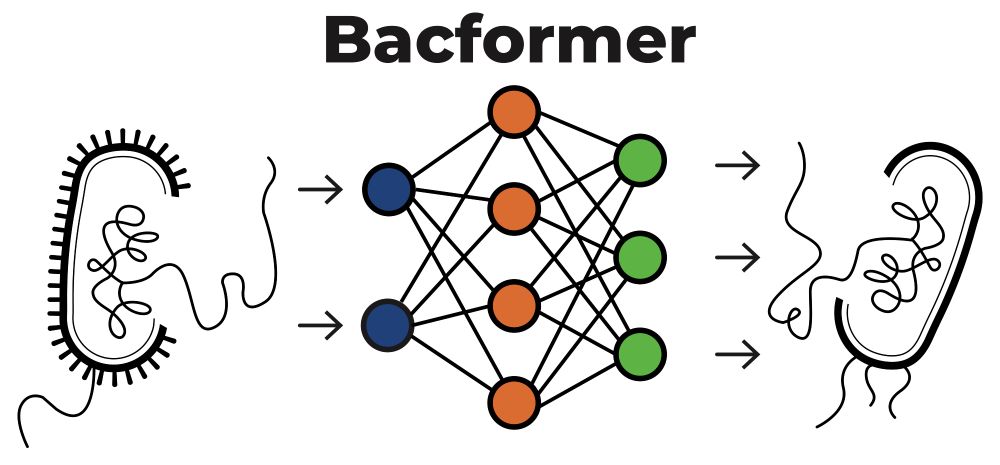
💥 Excited to introduce Bacformer 🦠 - the first foundation model for bacterial genomics. Bacformer represents genomes as sequences of ordered proteins, learning the “grammar” of how genes are arranged, interact and evolve.
Preprint 📝: biorxiv.org/content/10.1...
🧵 1/n
Preprint 📝: biorxiv.org/content/10.1...
🧵 1/n
July 21, 2025 at 9:56 AM
💥 Excited to introduce Bacformer 🦠 - the first foundation model for bacterial genomics. Bacformer represents genomes as sequences of ordered proteins, learning the “grammar” of how genes are arranged, interact and evolve.
Preprint 📝: biorxiv.org/content/10.1...
🧵 1/n
Preprint 📝: biorxiv.org/content/10.1...
🧵 1/n
Reposted by Matt Doyle

Introducing Latent-X — our all-atom frontier AI model for protein binder design.
State-of-the-art lab performance, widely accessible via the Latent Labs Platform.
Free tier: platform.latentlabs.com
Blog: latentlabs.com/latent-x/
Technical report: tinyurl.com/latent-X
State-of-the-art lab performance, widely accessible via the Latent Labs Platform.
Free tier: platform.latentlabs.com
Blog: latentlabs.com/latent-x/
Technical report: tinyurl.com/latent-X
July 22, 2025 at 6:21 AM
Introducing Latent-X — our all-atom frontier AI model for protein binder design.
State-of-the-art lab performance, widely accessible via the Latent Labs Platform.
Free tier: platform.latentlabs.com
Blog: latentlabs.com/latent-x/
Technical report: tinyurl.com/latent-X
State-of-the-art lab performance, widely accessible via the Latent Labs Platform.
Free tier: platform.latentlabs.com
Blog: latentlabs.com/latent-x/
Technical report: tinyurl.com/latent-X
Reposted by Matt Doyle

The costs of #antimicrobial resistance 🦠 continue to rise 📈. The Center for Global Development reports that by 2050 #AMR could shrink the global economy by US$1.7T.
Improving treatments and funding development of new antimicrobials 💊 could save millions of lives and billions in healthcare costs.
Improving treatments and funding development of new antimicrobials 💊 could save millions of lives and billions in healthcare costs.

Forecasting the Fallout from AMR: Economic Impacts of Antimicrobial Resistance in Humans
Antimicrobial resistance (AMR) is a growing global health crisis that threatens to undo decades of progress in medicine. This tool allows you to explore the potential impact of different interventions...
www.cgdev.org
July 20, 2025 at 9:31 PM
The costs of #antimicrobial resistance 🦠 continue to rise 📈. The Center for Global Development reports that by 2050 #AMR could shrink the global economy by US$1.7T.
Improving treatments and funding development of new antimicrobials 💊 could save millions of lives and billions in healthcare costs.
Improving treatments and funding development of new antimicrobials 💊 could save millions of lives and billions in healthcare costs.