


Dr Cyril Pernet
@cyrilrpernet.bsky.social
NeuroInformatics, NeuroImaging, Stats #openscience #opendata #publicdata -- leading https://publicneuro.eu/
put my stuff on https://github.com/CPernet/
see also http://cpernet.github.io
--- pour mes amis francophone aussi: https://lavieen202025.github.io/
put my stuff on https://github.com/CPernet/
see also http://cpernet.github.io
--- pour mes amis francophone aussi: https://lavieen202025.github.io/
Reposted by Dr Cyril Pernet

Improvements to methods should lead to more robust evidence and more rapid advances in knowledge. In their Perspective, Marcus Munafò & @mendelrandom.bsky.social look at why this hasn't been the case and what can be done about it #AcademicSky 🧪

Is scientific reform an unwinnable arms race?
Methodological improvements should, in theory, mean more robust evidence and inference, and more rapid advances in knowledge. However, these methods are often subsequently used in the pursuit of…
plos.io
February 13, 2026 at 8:55 AM
Improvements to methods should lead to more robust evidence and more rapid advances in knowledge. In their Perspective, Marcus Munafò & @mendelrandom.bsky.social look at why this hasn't been the case and what can be done about it #AcademicSky 🧪
Reposted by Dr Cyril Pernet
Interested in cortical wave dynamics? Check out our review on the physics, physiology, and psychology of cortical waves led by J Cruddas with @jchrispang.bsky.social, out now in
@cp-neuron.bsky.social:
www.sciencedirect.com/science/arti...
@cp-neuron.bsky.social:
www.sciencedirect.com/science/arti...


February 9, 2026 at 11:56 PM
Interested in cortical wave dynamics? Check out our review on the physics, physiology, and psychology of cortical waves led by J Cruddas with @jchrispang.bsky.social, out now in
@cp-neuron.bsky.social:
www.sciencedirect.com/science/arti...
@cp-neuron.bsky.social:
www.sciencedirect.com/science/arti...
Reposted by Dr Cyril Pernet
I wrote an perspectives piece relevant to the structural atlasing endeavors. Structural atlases are not the end of the story. This perspective calls for models that take into account the flexible functional organization within this fixed architecture.
www.frontiersin.org/journals/neu...
www.frontiersin.org/journals/neu...

Frontiers | Structure–function relationships across scales: implications for atlases
Neuroscience aims to understand how the structural and functional organization of the brain relates to behavior. Structural studies at the cellular level est...
www.frontiersin.org
February 9, 2026 at 1:53 PM
I wrote an perspectives piece relevant to the structural atlasing endeavors. Structural atlases are not the end of the story. This perspective calls for models that take into account the flexible functional organization within this fixed architecture.
www.frontiersin.org/journals/neu...
www.frontiersin.org/journals/neu...
Reposted by Dr Cyril Pernet
“From mapping to explaining brain function: the generative theoretical ambition of SPM” - our article in Cerebral Cortex forms part of our 30(ish) year celebration of SPM.
academic.oup.com/cercor/artic...
academic.oup.com/cercor/artic...

SPM—30 years and beyond
Abstract. This paper marks the 30th anniversary of the Statistical Parametric Mapping (SPM) software and the journal Cerebral Cortex: two modest milestones
academic.oup.com
September 15, 2025 at 7:14 AM
“From mapping to explaining brain function: the generative theoretical ambition of SPM” - our article in Cerebral Cortex forms part of our 30(ish) year celebration of SPM.
academic.oup.com/cercor/artic...
academic.oup.com/cercor/artic...
''We show that BOLD signal variability represents a spatially heterogeneous, central property of multi-scale multi-modal brain organization'' cool

Now in press one of my last PhD projects! We traced the neurobiological profile of fMRI BOLD signal variability, a measure that has been related to age, behaviour, disease status, but had not yet been fully contextualised within the brain's multiscale architecture. www.nature.com/articles/s41...
The biological role of local and global fMRI BOLD signal variability in multiscale human brain organization - Nature Communications
Baracchini et al. reveal that temporal variability in fMRI brain signals encodes biologically meaningful information across spatial and temporal scales, highlighting its role in healthy brain function...
www.nature.com
February 2, 2026 at 8:12 PM
''We show that BOLD signal variability represents a spatially heterogeneous, central property of multi-scale multi-modal brain organization'' cool
Reposted by Dr Cyril Pernet
How are energy #metabolism pathways distributed across the #cortex? @alaindagher.bsky.social &co map five pathways in the human #brain, linking metabolic organization with brain structural & functional properties, as well as developmental dynamics @plosbiology.org 🧪 plos.io/4c1JVp8

February 2, 2026 at 5:25 PM
How are energy #metabolism pathways distributed across the #cortex? @alaindagher.bsky.social &co map five pathways in the human #brain, linking metabolic organization with brain structural & functional properties, as well as developmental dynamics @plosbiology.org 🧪 plos.io/4c1JVp8
Reposted by Dr Cyril Pernet

youtu.be/VTten2dzOjo -- J'explore le rôle des graisses sur le poids, la santé cardiovasculaire et le cerveau, en distinguant clairement les graisses saturées et insaturées, le cholestérol et les lipoprotéines, le sucre et l'inflammation.

Le gras est-il vraiment mauvais pour la santé ?
YouTube video by La Vie En 2.0
youtu.be
February 1, 2026 at 2:19 PM
youtu.be/VTten2dzOjo -- J'explore le rôle des graisses sur le poids, la santé cardiovasculaire et le cerveau, en distinguant clairement les graisses saturées et insaturées, le cholestérol et les lipoprotéines, le sucre et l'inflammation.
Reposted by Dr Cyril Pernet

Everything that RFK Jr, Jay Bhattacharya and fellow anti-vaccine zealots have said about COVID vaccines is garbage, as proven by world class, international scientific studies.
A Swedish study of nearly 60,000 women finds COVID-19 vaccines don't affect fertility. The additional evidence may not persuade all wome. Public attitudes about vaccines, Dr. Tara Smith said, “tend to be based on vibes and feelings," not data.
www.cidrap.umn.edu/covid-19/lar...
www.cidrap.umn.edu/covid-19/lar...

Large study finds COVID-19 shots don’t affect fertility
www.cidrap.umn.edu
January 30, 2026 at 2:39 AM
Everything that RFK Jr, Jay Bhattacharya and fellow anti-vaccine zealots have said about COVID vaccines is garbage, as proven by world class, international scientific studies.

Reposted by Dr Cyril Pernet
Vous en avez marre des GAFAM et de l’ultra dépendance aux services US ? Voici des solutions, toutes présentes dans notre fiction en accès libre « GAFAM : 24h dans la peau d’un repenti ».
Si vous avez des suggestions, n’hésitez pas à en donner en commentaires 🙏🏼
Si vous avez des suggestions, n’hésitez pas à en donner en commentaires 🙏🏼

January 24, 2026 at 8:52 AM
Vous en avez marre des GAFAM et de l’ultra dépendance aux services US ? Voici des solutions, toutes présentes dans notre fiction en accès libre « GAFAM : 24h dans la peau d’un repenti ».
Si vous avez des suggestions, n’hésitez pas à en donner en commentaires 🙏🏼
Si vous avez des suggestions, n’hésitez pas à en donner en commentaires 🙏🏼
all day updating websites, reports, grant summaries, etc ..

a man in a suit and tie is sitting on a couch and saying `` somebody get me a drink please '' .
ALT: a man in a suit and tie is sitting on a couch and saying `` somebody get me a drink please '' .
media.tenor.com
January 23, 2026 at 4:04 PM
all day updating websites, reports, grant summaries, etc ..
glass half full pov "technical fixes [..] may offer reassurance, but they can’t solve the deeper cultural pressures in science that reward speed and novelty over care and verification" deep fake in science may push toward getting back to slow science (hopefully - hcommons.org?get_group_do...)

Editorial by NEJM AI Editor-in-Chief Isaac Kohane, MD, PhD: The H-Index of Suspicion: How Culture, Incentives, and AI Challenge Scientific Integrity nejm.ai/4bipl3q
#AI #MedSky #MLSky
#AI #MedSky #MLSky


January 22, 2026 at 7:36 AM
glass half full pov "technical fixes [..] may offer reassurance, but they can’t solve the deeper cultural pressures in science that reward speed and novelty over care and verification" deep fake in science may push toward getting back to slow science (hopefully - hcommons.org?get_group_do...)
Reposted by Dr Cyril Pernet

I just created a series of seven deep-dive videos about AI, which I've posted to youtube and now here. 😊
Targeted to laypeople, they explore how LLMs work, what they can do, and what impacts they have on learning, well-being, disinformation, the workplace, the economy, and the environment.
Targeted to laypeople, they explore how LLMs work, what they can do, and what impacts they have on learning, well-being, disinformation, the workplace, the economy, and the environment.

Part 1: How do LLMs work?
YouTube video by Andrew Perfors
www.youtube.com
January 22, 2026 at 12:45 AM
I just created a series of seven deep-dive videos about AI, which I've posted to youtube and now here. 😊
Targeted to laypeople, they explore how LLMs work, what they can do, and what impacts they have on learning, well-being, disinformation, the workplace, the economy, and the environment.
Targeted to laypeople, they explore how LLMs work, what they can do, and what impacts they have on learning, well-being, disinformation, the workplace, the economy, and the environment.
WTF

US Secretary of Treasury Scott Bessent:
What I am urging everyone here to do is sit back, take a deep breath, and let things play out. The worst thing countries can do is escalate against the United States.
What I am urging everyone here to do is sit back, take a deep breath, and let things play out. The worst thing countries can do is escalate against the United States.
January 20, 2026 at 3:55 PM
WTF
"Neither norm is perfect. Both can lead to collaboration failures." but "When researchers know their actual contributions will be reflected in author ordering, they are more likely to pursue valuable joint work." also tells me important to discuss this early on in a collaboration
Some fields list authors alphabetically. Others use norms like "senior last". Others use order to signify relative contributions. In a new paper with @kevinzollman.com, we model the evolution of these norms, and then look at which type of norm is best for science. doi.org/10.1098/rsos...

The evolution of scientific credit: when authorship norms impede collaboration
Abstract. Scientific authorship norms vary dramatically across disciplines, from contribution-sensitive systems where first author is the greatest contribu
doi.org
January 12, 2026 at 7:04 AM
"Neither norm is perfect. Both can lead to collaboration failures." but "When researchers know their actual contributions will be reflected in author ordering, they are more likely to pursue valuable joint work." also tells me important to discuss this early on in a collaboration
Reposted by Dr Cyril Pernet

How likely is ‘likely’? Does ‘likely’ have a higher probability than ‘probable’? I put together a quick quiz so you can see how you interpret probability phrases, then see how you compare with others: probability.kucharski.io

January 3, 2026 at 4:15 PM
How likely is ‘likely’? Does ‘likely’ have a higher probability than ‘probable’? I put together a quick quiz so you can see how you interpret probability phrases, then see how you compare with others: probability.kucharski.io
having read that, and because I am a whole brain imager, I am wondering, are (almost) all the MEEG and fMRI signals we measure active inhibition? @fmri-today.bsky.social @practicalfmri.bsky.social @benhayden.bsky.social @danielemarinazzo.bsky.social @robertoostenveld.bsky.social
super cool study: www.cell.com/neuron/fullt...

A latent pool of neurons silenced by sensory-evoked inhibition can be recruited to enhance perception
Gauld et al. use all-optical interrogation to probe sparse coding in the barrel cortex.
They find that targeted photostimulation of task-silent neurons evokes perceptual
choice bias and that these neu...
www.cell.com
January 4, 2026 at 7:35 AM
having read that, and because I am a whole brain imager, I am wondering, are (almost) all the MEEG and fMRI signals we measure active inhibition? @fmri-today.bsky.social @practicalfmri.bsky.social @benhayden.bsky.social @danielemarinazzo.bsky.social @robertoostenveld.bsky.social
super cool study: www.cell.com/neuron/fullt...
A latent pool of neurons silenced by sensory-evoked inhibition can be recruited to enhance perception
Gauld et al. use all-optical interrogation to probe sparse coding in the barrel cortex.
They find that targeted photostimulation of task-silent neurons evokes perceptual
choice bias and that these neu...
www.cell.com
January 4, 2026 at 7:29 AM
super cool study: www.cell.com/neuron/fullt...
J'ai une nouvelle video en francais :-) base la superbe revue de Buabang et al 2024 www.cell.com/trends/cogni...
January 3, 2026 at 8:14 AM
J'ai une nouvelle video en francais :-) base la superbe revue de Buabang et al 2024 www.cell.com/trends/cogni...
Reposted by Dr Cyril Pernet
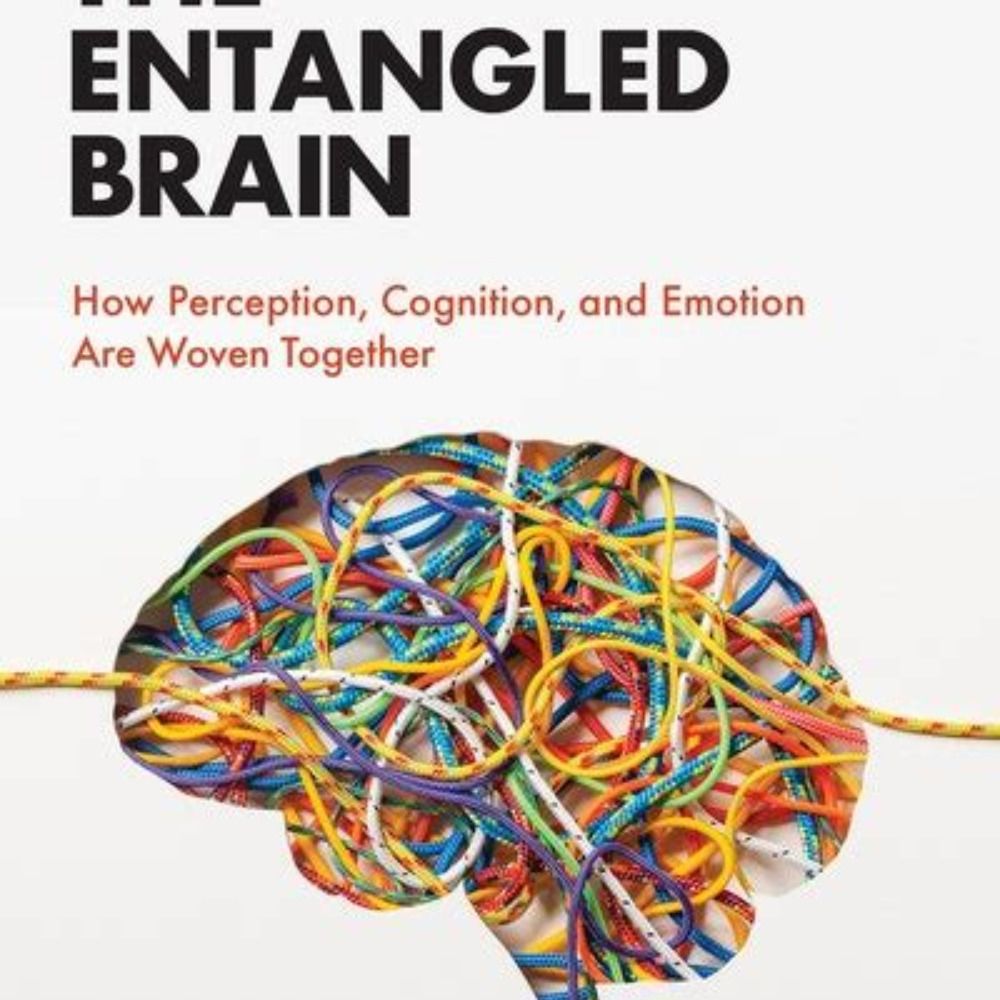
𝗧𝗵𝗲 𝗘𝗻𝘁𝗮𝗻𝗴𝗹𝗲𝗱 𝗕𝗿𝗮𝗶𝗻
Annual reminder that the book is open access.
How do we think of the brain as a deeply interconnected system with highly distributed, non hierarchical processing.
Want to learn about the brain from a fresh perspective?
#neuroskyence
mitpress.mit.edu/978026254460...
Annual reminder that the book is open access.
How do we think of the brain as a deeply interconnected system with highly distributed, non hierarchical processing.
Want to learn about the brain from a fresh perspective?
#neuroskyence
mitpress.mit.edu/978026254460...

The Entangled Brain
Popular neuroscience accounts often focus on specific mind-brain aspects like addiction, cognition, or memory, but The Entangled Brain tackles a much bigger ...
mitpress.mit.edu
December 28, 2025 at 5:56 PM
𝗧𝗵𝗲 𝗘𝗻𝘁𝗮𝗻𝗴𝗹𝗲𝗱 𝗕𝗿𝗮𝗶𝗻
Annual reminder that the book is open access.
How do we think of the brain as a deeply interconnected system with highly distributed, non hierarchical processing.
Want to learn about the brain from a fresh perspective?
#neuroskyence
mitpress.mit.edu/978026254460...
Annual reminder that the book is open access.
How do we think of the brain as a deeply interconnected system with highly distributed, non hierarchical processing.
Want to learn about the brain from a fresh perspective?
#neuroskyence
mitpress.mit.edu/978026254460...
Hey whole brain imaging people .. if, like me, you need to revise a little your knowledge of patch clamp (so you can read cell recording papers and interpret better), I can only recommend this quick 7 min video youtu.be/ECcwCUeboFs?...

December 26, 2025 at 8:17 AM
Hey whole brain imaging people .. if, like me, you need to revise a little your knowledge of patch clamp (so you can read cell recording papers and interpret better), I can only recommend this quick 7 min video youtu.be/ECcwCUeboFs?...
Reposted by Dr Cyril Pernet

New Perspective from myself, Sarah Heilbronner and @myoo.bsky.social . “Rethinking the centrality of brain areas in understanding functional organization” in Nature Neuroscience. 🧵
rdcu.be/eVZ1A
rdcu.be/eVZ1A

Rethinking the centrality of brain areas in understanding functional organization
Nature Neuroscience - Parcellation of the cortex into functionally modular brain areas is foundational to neuroscience. Here, Hayden, Heilbronner and Yoo question the central status of brain areas...
rdcu.be
December 23, 2025 at 1:02 PM
New Perspective from myself, Sarah Heilbronner and @myoo.bsky.social . “Rethinking the centrality of brain areas in understanding functional organization” in Nature Neuroscience. 🧵
rdcu.be/eVZ1A
rdcu.be/eVZ1A
Reposted by Dr Cyril Pernet

This report in Nature on the costs of competing for & administering scientific grants is shocking: "In other words, European taxpayers will have spent more on the funding process than on the funding itself, and the scientific ecosystem has been drained." www.nature.com/articles/d41... 🧪

Point of no returns: researchers are crossing a threshold in the fight for funding
With so little money to go round, the costs of competing for grants can exceed what the grants are worth. When that happens, nobody wins.
www.nature.com
December 19, 2025 at 6:46 PM
This report in Nature on the costs of competing for & administering scientific grants is shocking: "In other words, European taxpayers will have spent more on the funding process than on the funding itself, and the scientific ecosystem has been drained." www.nature.com/articles/d41... 🧪
Reposted by Dr Cyril Pernet
The brain’s energy landscape as a potential window into brain health
www.nature.com/articles/d41...
(study led by Martin Picard and Michel Thiebaut de Schotten)
www.nature.com/articles/d41...
(study led by Martin Picard and Michel Thiebaut de Schotten)

First map of human brain mitochondria is ‘groundbreaking’ achievement
Hundreds of cubes of human brain tissue help scientists to chart the energy-making capabilities of various brain regions.
www.nature.com
March 27, 2025 at 9:08 AM
The brain’s energy landscape as a potential window into brain health
www.nature.com/articles/d41...
(study led by Martin Picard and Michel Thiebaut de Schotten)
www.nature.com/articles/d41...
(study led by Martin Picard and Michel Thiebaut de Schotten)
Reposted by Dr Cyril Pernet
fMRI signals “up,” but neural metabolism might be going “down.”
In our @natneuro.nature.com paper, we demonstrate that about 40% of voxels with robust BOLD responses exhibit opposite oxygen metabolism, revealing two distinct hemodynamic modes.
rdcu.be/eUPO8
funds @erc.europa.eu
#neuroskyence 🧵:
In our @natneuro.nature.com paper, we demonstrate that about 40% of voxels with robust BOLD responses exhibit opposite oxygen metabolism, revealing two distinct hemodynamic modes.
rdcu.be/eUPO8
funds @erc.europa.eu
#neuroskyence 🧵:

December 16, 2025 at 3:43 PM
fMRI signals “up,” but neural metabolism might be going “down.”
In our @natneuro.nature.com paper, we demonstrate that about 40% of voxels with robust BOLD responses exhibit opposite oxygen metabolism, revealing two distinct hemodynamic modes.
rdcu.be/eUPO8
funds @erc.europa.eu
#neuroskyence 🧵:
In our @natneuro.nature.com paper, we demonstrate that about 40% of voxels with robust BOLD responses exhibit opposite oxygen metabolism, revealing two distinct hemodynamic modes.
rdcu.be/eUPO8
funds @erc.europa.eu
#neuroskyence 🧵: