


Charles Tallack
@charlestallack.bsky.social
Senior Fellow @HealthFdn. Ex-Whitehall civil servant & NHS England.
Love ideas, numbers, analysis, evidence, debate and challenge. Views my own.
Love ideas, numbers, analysis, evidence, debate and challenge. Views my own.
Reposted by Charles Tallack

Great analysis. It was also clear from the beginning it wouldn't work. Guy's and St Thomas's was the model for all this, but after starting the programme the trust's wait times fell slower than the national average and the theatre staff went on strike...
On 14 January Wes Streeting said that waiting lists had fallen three times faster in 20 areas of the country where crack teams had been deployed. We’ve looked at this claim and have questions. 🧵
www.gov.uk/government/n...
www.gov.uk/government/n...

Waiting lists cut 3 times faster in highest joblessness areas
Waiting lists in 20 areas in England fall 3 times faster than the national average thanks to experts deployed by government to help supercharge NHS care.
www.gov.uk
February 6, 2026 at 10:24 AM
Great analysis. It was also clear from the beginning it wouldn't work. Guy's and St Thomas's was the model for all this, but after starting the programme the trust's wait times fell slower than the national average and the theatre staff went on strike...
Reposted by Charles Tallack

Excellent thread as the Health Foundation adds further evidence the government are not being entirely transparent with claims of reduced waiting lists
Fixing the NHS requires an honest appraisal of the challenges so we can allocate resources appropriately.
The gov really needs to do better
Fixing the NHS requires an honest appraisal of the challenges so we can allocate resources appropriately.
The gov really needs to do better
On 14 January Wes Streeting said that waiting lists had fallen three times faster in 20 areas of the country where crack teams had been deployed. We’ve looked at this claim and have questions. 🧵
www.gov.uk/government/n...
www.gov.uk/government/n...
Waiting lists cut 3 times faster in highest joblessness areas
Waiting lists in 20 areas in England fall 3 times faster than the national average thanks to experts deployed by government to help supercharge NHS care.
www.gov.uk
February 6, 2026 at 9:57 AM
Excellent thread as the Health Foundation adds further evidence the government are not being entirely transparent with claims of reduced waiting lists
Fixing the NHS requires an honest appraisal of the challenges so we can allocate resources appropriately.
The gov really needs to do better
Fixing the NHS requires an honest appraisal of the challenges so we can allocate resources appropriately.
The gov really needs to do better
Reposted by Charles Tallack
This is really fascinating. Reads like a detective story, offers striking insights into the numbers on waiting lists.
Our full analysis is here:
www.health.org.uk/features-and...
www.health.org.uk/features-and...
www.health.org.uk
February 5, 2026 at 6:36 PM
This is really fascinating. Reads like a detective story, offers striking insights into the numbers on waiting lists.
On 14 January Wes Streeting said that waiting lists had fallen three times faster in 20 areas of the country where crack teams had been deployed. We’ve looked at this claim and have questions. 🧵
www.gov.uk/government/n...
www.gov.uk/government/n...
Waiting lists cut 3 times faster in highest joblessness areas
Waiting lists in 20 areas in England fall 3 times faster than the national average thanks to experts deployed by government to help supercharge NHS care.
www.gov.uk
February 5, 2026 at 2:29 PM
On 14 January Wes Streeting said that waiting lists had fallen three times faster in 20 areas of the country where crack teams had been deployed. We’ve looked at this claim and have questions. 🧵
www.gov.uk/government/n...
www.gov.uk/government/n...
What explains the divergence between consumer confidence of the over- and under-50s? @faisalislam.bsky.social for BBC
www.bbc.co.uk/news/article...
www.bbc.co.uk/news/article...

January 17, 2026 at 10:46 AM
What explains the divergence between consumer confidence of the over- and under-50s? @faisalislam.bsky.social for BBC
www.bbc.co.uk/news/article...
www.bbc.co.uk/news/article...
Reposted by Charles Tallack

DHSC published its impact statement for the 10 Year Health Plan this week (yes, that is 6 months after it published the plan)
It's more measured and clear-eyed than the original document and quite a contrast to some of the effusive optimism in the plan
Some of the things that caught my eye 👇
It's more measured and clear-eyed than the original document and quite a contrast to some of the effusive optimism in the plan
Some of the things that caught my eye 👇

January 15, 2026 at 10:25 AM
DHSC published its impact statement for the 10 Year Health Plan this week (yes, that is 6 months after it published the plan)
It's more measured and clear-eyed than the original document and quite a contrast to some of the effusive optimism in the plan
Some of the things that caught my eye 👇
It's more measured and clear-eyed than the original document and quite a contrast to some of the effusive optimism in the plan
Some of the things that caught my eye 👇
The government says its ban on junk food ads will reduce the number of children living with obesity by 20,000 and remove 7.2 billion calories from diets. These numbers show that the ban is a step in the right direction. But they also reveal that it's a very small step.
www.gov.uk/government/n...
www.gov.uk/government/n...
Landmark junk food ad ban to protect kids' health
Children will be protected from exposure to junk food ads under new regulations, in a bid to tackle childhood obesity.
www.gov.uk
January 6, 2026 at 10:57 AM
The government says its ban on junk food ads will reduce the number of children living with obesity by 20,000 and remove 7.2 billion calories from diets. These numbers show that the ban is a step in the right direction. But they also reveal that it's a very small step.
www.gov.uk/government/n...
www.gov.uk/government/n...
Long A&E waits are usually the result of a lack of free hospital beds. With 11% (13,000) beds, each day, occupied by patients who are "medically fit for discharge", reducing delayed discharges offers the opportunity to create more capacity without adding more beds.
December 15, 2025 at 2:01 PM
Long A&E waits are usually the result of a lack of free hospital beds. With 11% (13,000) beds, each day, occupied by patients who are "medically fit for discharge", reducing delayed discharges offers the opportunity to create more capacity without adding more beds.
How does the UK’s health compare? Researchers at LSHTM recently answered this by comparing age-standardised mortality rates (ASMR) across countries. This placed the UK 4th worst for females and 6th worst for males, out of 20. Surprisingly, UK does better than Netherlands (F) and Denmark (M).

December 14, 2025 at 2:57 PM
How does the UK’s health compare? Researchers at LSHTM recently answered this by comparing age-standardised mortality rates (ASMR) across countries. This placed the UK 4th worst for females and 6th worst for males, out of 20. Surprisingly, UK does better than Netherlands (F) and Denmark (M).
Reposted by Charles Tallack

National programmes can help to drive improvements across health and care – how can they become more effective? This blog post from @charlestallack.bsky.social explores a new framework developed to support better early planning for large-scale change programme. Read more: ths.im/3XyEIge

December 5, 2025 at 3:16 PM
National programmes can help to drive improvements across health and care – how can they become more effective? This blog post from @charlestallack.bsky.social explores a new framework developed to support better early planning for large-scale change programme. Read more: ths.im/3XyEIge
Intersectionality describes how demographic disadvantages can interact to amplify inequalities. But how to model this?
New from colleagues in our analysis team: a case study of GP appmts & patient experience, illustrating the MAIDHA intersectional modelling approach.
medium.com/healthfdn-da...
New from colleagues in our analysis team: a case study of GP appmts & patient experience, illustrating the MAIDHA intersectional modelling approach.
medium.com/healthfdn-da...

Intersectional modelling in health policy: a case study on remote GP appointments and patient…
Across nearly all aspects of health and health care, there are disparities between different demographic groups. These are often the result…
medium.com
October 15, 2025 at 4:13 PM
Intersectionality describes how demographic disadvantages can interact to amplify inequalities. But how to model this?
New from colleagues in our analysis team: a case study of GP appmts & patient experience, illustrating the MAIDHA intersectional modelling approach.
medium.com/healthfdn-da...
New from colleagues in our analysis team: a case study of GP appmts & patient experience, illustrating the MAIDHA intersectional modelling approach.
medium.com/healthfdn-da...
Reposted by Charles Tallack

Those confidence intervals in full!

September 9, 2025 at 10:22 AM
Those confidence intervals in full!
At the end of July, the government said that it had delivered 4.6 million extra appointments since it came to power, more than double its manifesto pledge of 2 million.
www.gov.uk/government/n...
www.gov.uk/government/n...
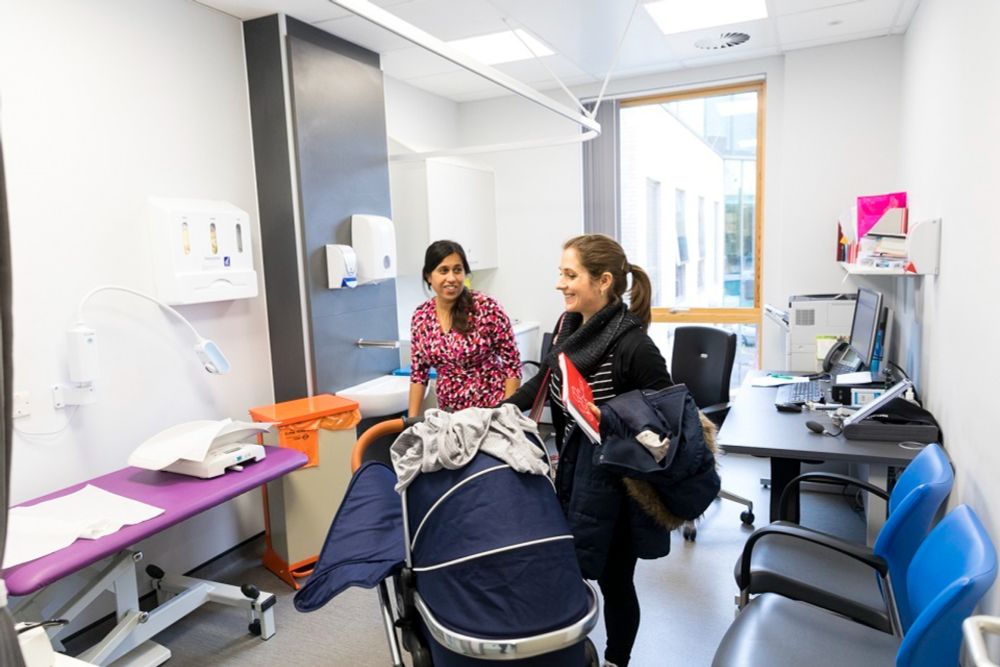
Millions more appointments as more than 2,000 extra GPs recruited
Boost is part of Plan for Change to rebuild the NHS by shifting healthcare from hospitals into the community and ending the 8am scramble.
www.gov.uk
August 11, 2025 at 7:17 AM
At the end of July, the government said that it had delivered 4.6 million extra appointments since it came to power, more than double its manifesto pledge of 2 million.
www.gov.uk/government/n...
www.gov.uk/government/n...
Reposted by Charles Tallack

How can the government meet its commitment to halve the gap in healthy life expectancy between regions?
Reading this excellent summary of some of the @healthfoundation.bsky.social latest analysis from @charlestallack.bsky.social would be a good place to start!
⬇️⬇️⬇️
Reading this excellent summary of some of the @healthfoundation.bsky.social latest analysis from @charlestallack.bsky.social would be a good place to start!
⬇️⬇️⬇️
In its 10 Year Health Plan, the government recommitted to halving the gap in healthy life expectancy (HLE) between the poorest and richest regions. But how? Our new analysis with the ONS points to the underlying factors which any plan will need to take account of. 🧵
July 23, 2025 at 8:54 PM
How can the government meet its commitment to halve the gap in healthy life expectancy between regions?
Reading this excellent summary of some of the @healthfoundation.bsky.social latest analysis from @charlestallack.bsky.social would be a good place to start!
⬇️⬇️⬇️
Reading this excellent summary of some of the @healthfoundation.bsky.social latest analysis from @charlestallack.bsky.social would be a good place to start!
⬇️⬇️⬇️
Reposted by Charles Tallack

Policy exchange, backed by Sajid Javid, think we need to switch the NHS funding model to social insurance, and introduce new charges for NHS services, like to see a GP
policyexchange.org.uk/publication/...
These are not new ideas, but they are bad ideas
A thread with some evidence
policyexchange.org.uk/publication/...
These are not new ideas, but they are bad ideas
A thread with some evidence

The NHS – a Suitable Case for Treatment? - Policy Exchange
Download Publication Online Reader ‘The NHS – a Suitable Case for Treatment?’ makes the case that the NHS is not fit for purpose and is in urgent need of reform.The report finds that NHS performance r...
policyexchange.org.uk
July 23, 2025 at 8:06 PM
Policy exchange, backed by Sajid Javid, think we need to switch the NHS funding model to social insurance, and introduce new charges for NHS services, like to see a GP
policyexchange.org.uk/publication/...
These are not new ideas, but they are bad ideas
A thread with some evidence
policyexchange.org.uk/publication/...
These are not new ideas, but they are bad ideas
A thread with some evidence
In its 10 Year Health Plan, the government recommitted to halving the gap in healthy life expectancy (HLE) between the poorest and richest regions. But how? Our new analysis with the ONS points to the underlying factors which any plan will need to take account of. 🧵
July 19, 2025 at 8:53 AM
In its 10 Year Health Plan, the government recommitted to halving the gap in healthy life expectancy (HLE) between the poorest and richest regions. But how? Our new analysis with the ONS points to the underlying factors which any plan will need to take account of. 🧵
Important re NHS 10 Year Plan:
"making the plan happen with the resources on offer will be tough. Health spending will grow by 2.8% a year real between 25/26 & 28/29 – lower than historic average (3.7%) & much lower than Labour’s last period in government (6.8%)"
www.health.org.uk/press-office...
"making the plan happen with the resources on offer will be tough. Health spending will grow by 2.8% a year real between 25/26 & 28/29 – lower than historic average (3.7%) & much lower than Labour’s last period in government (6.8%)"
www.health.org.uk/press-office...
www.health.org.uk
July 3, 2025 at 3:40 PM
Important re NHS 10 Year Plan:
"making the plan happen with the resources on offer will be tough. Health spending will grow by 2.8% a year real between 25/26 & 28/29 – lower than historic average (3.7%) & much lower than Labour’s last period in government (6.8%)"
www.health.org.uk/press-office...
"making the plan happen with the resources on offer will be tough. Health spending will grow by 2.8% a year real between 25/26 & 28/29 – lower than historic average (3.7%) & much lower than Labour’s last period in government (6.8%)"
www.health.org.uk/press-office...
The Labour government’s most prominent commitment on health is to get waiting times back to 18 weeks by the end of the Parliament. Are they on track? We looked at this for last night’s Peston show youtu.be/yc-9Psk3gk8?... 🧵

PESTON LIVE - 02/07/2025
YouTube video by Peston
youtu.be
July 3, 2025 at 10:34 AM
The Labour government’s most prominent commitment on health is to get waiting times back to 18 weeks by the end of the Parliament. Are they on track? We looked at this for last night’s Peston show youtu.be/yc-9Psk3gk8?... 🧵
The BBC reports that the government is about to launch a drive to use genomics and AI to predict disease earlier and "revolutionise prevention".
www.bbc.com/news/article...
www.bbc.com/news/article...

NHS plans to DNA test all babies in England to assess disease risk
Scheme is part of the government's 10-year plan for the NHS in England aimed at easing pressure on services.
www.bbc.com
June 21, 2025 at 8:46 PM
The BBC reports that the government is about to launch a drive to use genomics and AI to predict disease earlier and "revolutionise prevention".
www.bbc.com/news/article...
www.bbc.com/news/article...
No, BBC Chris Mason: the NHS does not make up 40% of day to day government spending. You've left out spending on pensions, benefits, debt interest etc. When you include those, the figure is less than half that.
www.bbc.com/news/article...
www.bbc.com/news/article...

Chris Mason: Reeves's spending priorities leave little wiggle room
The chancellor's focus on the NHS and defence will mean a spending squeeze elsewhere, writes the BBC's political editor.
www.bbc.com
June 11, 2025 at 6:22 AM
No, BBC Chris Mason: the NHS does not make up 40% of day to day government spending. You've left out spending on pensions, benefits, debt interest etc. When you include those, the figure is less than half that.
www.bbc.com/news/article...
www.bbc.com/news/article...
In January a record 11% of patients attending major A&Es waited more than 12h+.
How much was poor NHS performance this winter due to "exceptional pressure" with "mammoth demand" from a quademic of winter illnesses?
This and more in our new analysis:
How much was poor NHS performance this winter due to "exceptional pressure" with "mammoth demand" from a quademic of winter illnesses?
This and more in our new analysis:

April 28, 2025 at 12:02 PM
In January a record 11% of patients attending major A&Es waited more than 12h+.
How much was poor NHS performance this winter due to "exceptional pressure" with "mammoth demand" from a quademic of winter illnesses?
This and more in our new analysis:
How much was poor NHS performance this winter due to "exceptional pressure" with "mammoth demand" from a quademic of winter illnesses?
This and more in our new analysis:
Reposted by Charles Tallack

Good thread on a common and quite important statistical error, on many topics other than health (eg education).
If a system is genuinely equitable, then variations in the system's effectiveness don't "explain" much. Doesn't mean systems don't matter!
If a system is genuinely equitable, then variations in the system's effectiveness don't "explain" much. Doesn't mean systems don't matter!
Sarah Neville in the FT on lunch with Amanda Pritchard: "The NHS contributes between 10 and 20 per cent to people’s health, she says — a figure I find startlingly low"
This widely quoted figure is startlingly low because it's probably wrong.🧵
www.ft.com/content/5cf4...
This widely quoted figure is startlingly low because it's probably wrong.🧵
www.ft.com/content/5cf4...

April 26, 2025 at 9:27 AM
Good thread on a common and quite important statistical error, on many topics other than health (eg education).
If a system is genuinely equitable, then variations in the system's effectiveness don't "explain" much. Doesn't mean systems don't matter!
If a system is genuinely equitable, then variations in the system's effectiveness don't "explain" much. Doesn't mean systems don't matter!
Reposted by Charles Tallack

Found the whole interview irritatingingly insoucient given the state of the NHS. But I really got worried when she said this which is so obviously wrong.
Sarah Neville in the FT on lunch with Amanda Pritchard: "The NHS contributes between 10 and 20 per cent to people’s health, she says — a figure I find startlingly low"
This widely quoted figure is startlingly low because it's probably wrong.🧵
www.ft.com/content/5cf4...
This widely quoted figure is startlingly low because it's probably wrong.🧵
www.ft.com/content/5cf4...
April 26, 2025 at 9:00 AM
Found the whole interview irritatingingly insoucient given the state of the NHS. But I really got worried when she said this which is so obviously wrong.
Sarah Neville in the FT on lunch with Amanda Pritchard: "The NHS contributes between 10 and 20 per cent to people’s health, she says — a figure I find startlingly low"
This widely quoted figure is startlingly low because it's probably wrong.🧵
www.ft.com/content/5cf4...
This widely quoted figure is startlingly low because it's probably wrong.🧵
www.ft.com/content/5cf4...
April 26, 2025 at 8:55 AM
Sarah Neville in the FT on lunch with Amanda Pritchard: "The NHS contributes between 10 and 20 per cent to people’s health, she says — a figure I find startlingly low"
This widely quoted figure is startlingly low because it's probably wrong.🧵
www.ft.com/content/5cf4...
This widely quoted figure is startlingly low because it's probably wrong.🧵
www.ft.com/content/5cf4...
Reposted by Charles Tallack

This echoes a clear theme in my research: there can sometimes be an imperative to present a project as a success, which then makes it harder to learn from an inconclusive or unsuccessful finding. Inconclusive findings are just as important as successes, as is learning why something didn't go to plan
The response from DHSC and NHSE to our analysis, dismisses the evidence, and doubles down on the claims. This isn't encouraging. If the NHS is to improve we need an evidence-informed approach to change, openness to challenge and honesty about what is and isn’t working.

April 18, 2025 at 7:08 AM
This echoes a clear theme in my research: there can sometimes be an imperative to present a project as a success, which then makes it harder to learn from an inconclusive or unsuccessful finding. Inconclusive findings are just as important as successes, as is learning why something didn't go to plan