



Charlie Hale
@charleshale.bsky.social
PhD student in the Buckler Lab at Cornell. Genomics, evolution, agriculture.
Pinned
Charlie Hale
@charleshale.bsky.social
· Dec 16

Our paper is out in MBE! doi.org/10.1093/molb...
We tracked TF binding site evolution across 589 grass species, and found that while binding preferences are pretty stable over 80 million years of evolution, individual binding sites have turned over a lot.
Thread here: bsky.app/profile/char...
We tracked TF binding site evolution across 589 grass species, and found that while binding preferences are pretty stable over 80 million years of evolution, individual binding sites have turned over a lot.
Thread here: bsky.app/profile/char...
Reposted by Charlie Hale

Hale et al. analysed >500 grass genomes to support a “stable motifs, variable binding sites” model of cis-regulatory evolution that involves turnover of thousands of individual binding sites while preserving TF binding preferences.
🔗 doi.org/10.1093/molbev/msaf324
#evobio #molbio #PlantSky
🔗 doi.org/10.1093/molbev/msaf324
#evobio #molbio #PlantSky

Widespread turnover of a conserved cis-regulatory code across 589 grass species
Abstract. The growing availability of genomes from non-model organisms offers new opportunities to identify functional loci underlying trait variation thro
doi.org
January 23, 2026 at 10:11 AM
Hale et al. analysed >500 grass genomes to support a “stable motifs, variable binding sites” model of cis-regulatory evolution that involves turnover of thousands of individual binding sites while preserving TF binding preferences.
🔗 doi.org/10.1093/molbev/msaf324
#evobio #molbio #PlantSky
🔗 doi.org/10.1093/molbev/msaf324
#evobio #molbio #PlantSky
Reposted by Charlie Hale
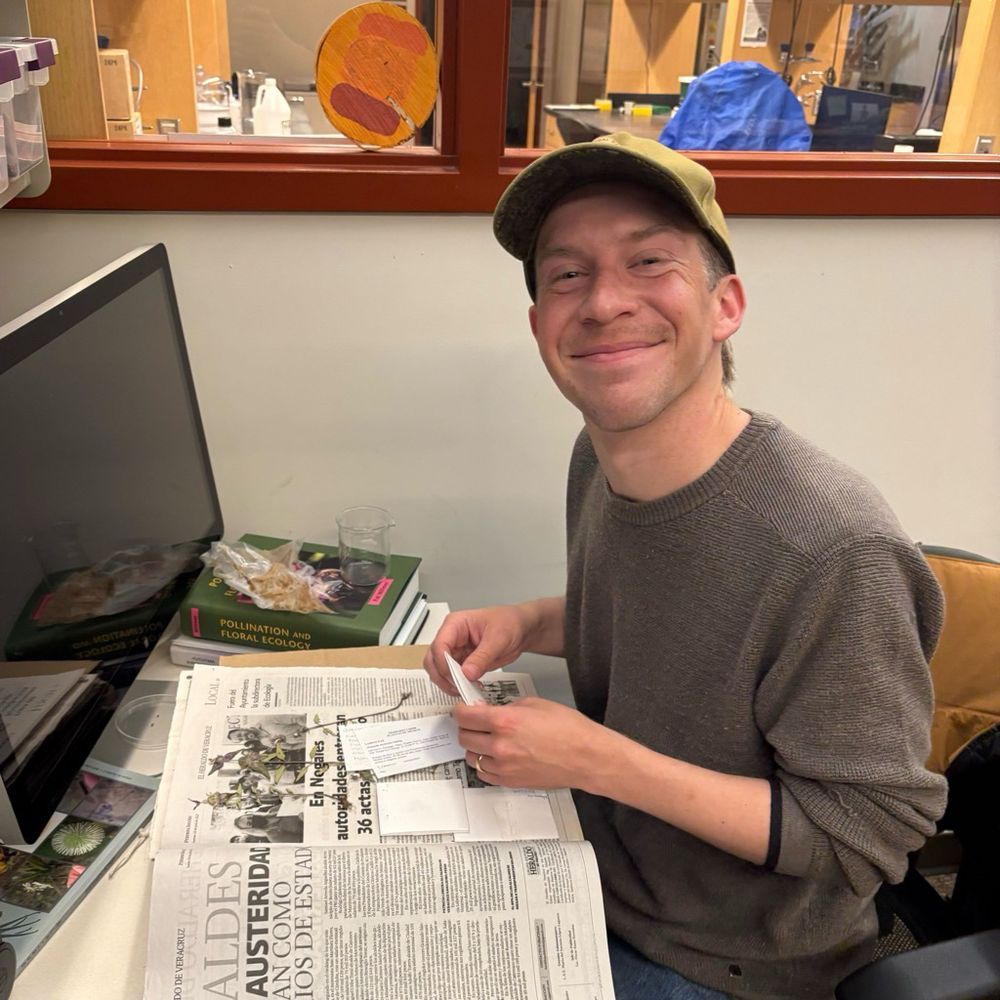
I wrote in the most recent issue of Arnoldia about using @inaturalist.bsky.social and, more generally, about the continuing role of natural history in motivating questions in evo bio + my excitement about community science for unlocking new scales of analysis: arboretum.harvard.edu/arnoldia-sto...


January 9, 2026 at 4:26 PM
I wrote in the most recent issue of Arnoldia about using @inaturalist.bsky.social and, more generally, about the continuing role of natural history in motivating questions in evo bio + my excitement about community science for unlocking new scales of analysis: arboretum.harvard.edu/arnoldia-sto...
Reposted by Charlie Hale

Year 1 data on congestion pricing in Manhattan…
* Vehicle traffic: -11%
* Foot traffic: +3.4%
* Storefront vacancy: -0.9%
* Pollution: -22%
* Revenue for mass transit: $548M
So YES this has been a huge success.
* Vehicle traffic: -11%
* Foot traffic: +3.4%
* Storefront vacancy: -0.9%
* Pollution: -22%
* Revenue for mass transit: $548M
So YES this has been a huge success.


December 23, 2025 at 2:00 PM
Year 1 data on congestion pricing in Manhattan…
* Vehicle traffic: -11%
* Foot traffic: +3.4%
* Storefront vacancy: -0.9%
* Pollution: -22%
* Revenue for mass transit: $548M
So YES this has been a huge success.
* Vehicle traffic: -11%
* Foot traffic: +3.4%
* Storefront vacancy: -0.9%
* Pollution: -22%
* Revenue for mass transit: $548M
So YES this has been a huge success.
Our paper is out in MBE! doi.org/10.1093/molb...
We tracked TF binding site evolution across 589 grass species, and found that while binding preferences are pretty stable over 80 million years of evolution, individual binding sites have turned over a lot.
Thread here: bsky.app/profile/char...
We tracked TF binding site evolution across 589 grass species, and found that while binding preferences are pretty stable over 80 million years of evolution, individual binding sites have turned over a lot.
Thread here: bsky.app/profile/char...
December 16, 2025 at 8:45 PM
Our paper is out in MBE! doi.org/10.1093/molb...
We tracked TF binding site evolution across 589 grass species, and found that while binding preferences are pretty stable over 80 million years of evolution, individual binding sites have turned over a lot.
Thread here: bsky.app/profile/char...
We tracked TF binding site evolution across 589 grass species, and found that while binding preferences are pretty stable over 80 million years of evolution, individual binding sites have turned over a lot.
Thread here: bsky.app/profile/char...
Reposted by Charlie Hale
"cis-regulatory evolution involves turnover of thousands of individual binding site instances while largely preserving transcription factors’ binding preferences."
From: academic.oup.com/mbe/advance-...
From: academic.oup.com/mbe/advance-...

Widespread turnover of a conserved cis-regulatory code across 589 grass species
Abstract. The growing availability of genomes from non-model organisms offers new opportunities to identify functional loci underlying trait variation thro
academic.oup.com
December 16, 2025 at 7:40 PM
"cis-regulatory evolution involves turnover of thousands of individual binding site instances while largely preserving transcription factors’ binding preferences."
From: academic.oup.com/mbe/advance-...
From: academic.oup.com/mbe/advance-...
Reposted by Charlie Hale

Identification of Freezing Tolerance QTLs in Tripsacum dactyloides Using Open-Pollinated Bulk Segregant Analysis https://www.biorxiv.org/content/10.64898/2025.12.10.693030v1
December 13, 2025 at 2:32 AM
Identification of Freezing Tolerance QTLs in Tripsacum dactyloides Using Open-Pollinated Bulk Segregant Analysis https://www.biorxiv.org/content/10.64898/2025.12.10.693030v1
Reposted by Charlie Hale

Made a site comparing the sizes of living things :)
The great Julius Csotonyi spent 5 months painting over 60 illustrations for the site, no ai used
> neal.fun/size-of-life/
The great Julius Csotonyi spent 5 months painting over 60 illustrations for the site, no ai used
> neal.fun/size-of-life/
December 10, 2025 at 4:03 PM
Made a site comparing the sizes of living things :)
The great Julius Csotonyi spent 5 months painting over 60 illustrations for the site, no ai used
> neal.fun/size-of-life/
The great Julius Csotonyi spent 5 months painting over 60 illustrations for the site, no ai used
> neal.fun/size-of-life/
Reposted by Charlie Hale
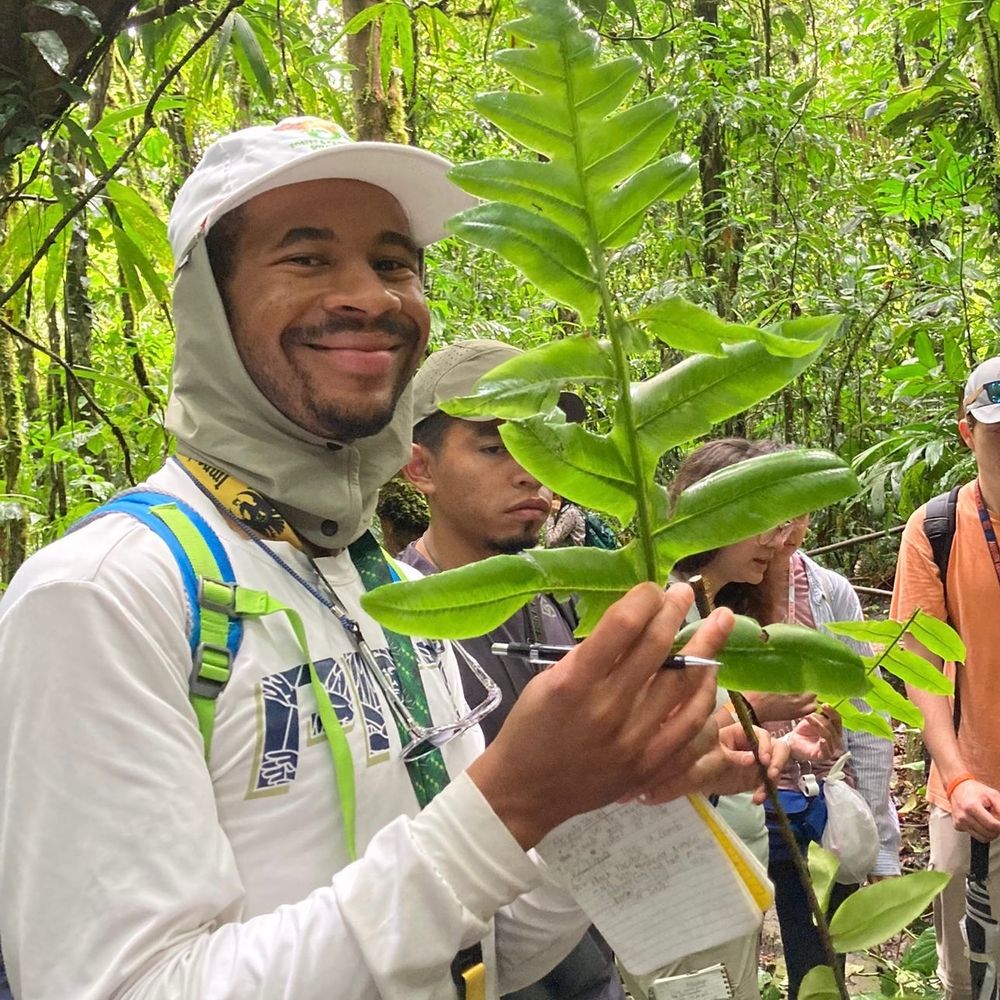
Are you planning to attend Botany 2025? Consider applying to be a PLANTS mentor! You'll be paired with another mentor to help your mentee network, comprehend talks, and discuss grad school and careers, all while making them feel welcome in the botany community. (1/2)

January 8, 2025 at 6:24 PM
Are you planning to attend Botany 2025? Consider applying to be a PLANTS mentor! You'll be paired with another mentor to help your mentee network, comprehend talks, and discuss grad school and careers, all while making them feel welcome in the botany community. (1/2)
Reposted by Charlie Hale

Lineage-specific evolution of regulatory landscapes in polyploid plant and its diploid progenitors https://www.biorxiv.org/content/10.64898/2025.12.04.692133v1
December 5, 2025 at 9:31 PM
Lineage-specific evolution of regulatory landscapes in polyploid plant and its diploid progenitors https://www.biorxiv.org/content/10.64898/2025.12.04.692133v1
Reposted by Charlie Hale

Super proud of @alyssa-phillips.bsky.social 's paper, now out on biorxiv! She resolves the origin(s) of polyploid big blue-stem, a dominant species in the midwest tall-grass prairie. Her common garden analysis also informs on environmental adaptation and hints at the impacts of polyploidy.

The origins and adaptive consequences of polyploidy in a dominant prairie grass
Polyploidy is ubiquitous across North American prairies, which provide essential ecosystem services and rich soil for agriculture. Yet the mechanism driving polyploid abundance is unclear. Multiple hy...
www.biorxiv.org
November 26, 2025 at 5:54 AM
Super proud of @alyssa-phillips.bsky.social 's paper, now out on biorxiv! She resolves the origin(s) of polyploid big blue-stem, a dominant species in the midwest tall-grass prairie. Her common garden analysis also informs on environmental adaptation and hints at the impacts of polyploidy.
Reposted by Charlie Hale
Available now in @asn-amnat.bsky.social ! Taking on some big-scale natural history: processed >40k @inaturalist.bsky.social images of Monarda fistulosa using computer vision to query for flower presence and phenotype flower color: doi.org/10.1086/739413
November 14, 2025 at 6:29 PM
Available now in @asn-amnat.bsky.social ! Taking on some big-scale natural history: processed >40k @inaturalist.bsky.social images of Monarda fistulosa using computer vision to query for flower presence and phenotype flower color: doi.org/10.1086/739413
Reposted by Charlie Hale

To quote my friend @drkatemarvel.bsky.social, climate change won't make humanity extinct but we can do better than "not extinct". Raise your standards people!

October 28, 2025 at 8:46 PM
To quote my friend @drkatemarvel.bsky.social, climate change won't make humanity extinct but we can do better than "not extinct". Raise your standards people!
Reposted by Charlie Hale

We are seeking speakers for #pag33 hosted in San Diego: Jan 9th at 10:30am. Talk to us about your current/planned efforts to develop genomic resources for threatened/endangered species! @ebpgenome.bsky.social - hosted by @uconneeb.bsky.social @nanoporetech.com Abstracts by Oct 27th! 🧬 🦜 🌱 🐛 🐢

October 16, 2025 at 4:57 PM
We are seeking speakers for #pag33 hosted in San Diego: Jan 9th at 10:30am. Talk to us about your current/planned efforts to develop genomic resources for threatened/endangered species! @ebpgenome.bsky.social - hosted by @uconneeb.bsky.social @nanoporetech.com Abstracts by Oct 27th! 🧬 🦜 🌱 🐛 🐢
Reposted by Charlie Hale
Most public transit systems depend largely on fare revenue to fund basic operations, but ridership never recovered after the pandemic. I wrote about 3 major transit systems that are facing a fiscal cliff, and the somewhat lackadaisical political response to the crisis. heatmap.news/politics/chi...

October 20, 2025 at 9:30 PM
Most public transit systems depend largely on fare revenue to fund basic operations, but ridership never recovered after the pandemic. I wrote about 3 major transit systems that are facing a fiscal cliff, and the somewhat lackadaisical political response to the crisis. heatmap.news/politics/chi...
Reposted by Charlie Hale
Yun et al. leveraged RNA-seq data to model gene expression variation in the grass Brachypodium distachyon and its response to soil drying, identifying genotypic, environmental, and G×E effects on physiological, metabolic, and gene expression traits.
🔗 doi.org/10.1093/molbev/msaf218
#evobio #molbio
🔗 doi.org/10.1093/molbev/msaf218
#evobio #molbio

October 21, 2025 at 9:19 AM
Yun et al. leveraged RNA-seq data to model gene expression variation in the grass Brachypodium distachyon and its response to soil drying, identifying genotypic, environmental, and G×E effects on physiological, metabolic, and gene expression traits.
🔗 doi.org/10.1093/molbev/msaf218
#evobio #molbio
🔗 doi.org/10.1093/molbev/msaf218
#evobio #molbio
@prereview.bsky.social is a great model for broadening participation in the review process!

Community Reviews are science in real time!
Check out this new and recent example of open feedback in action: Hale et al.’s preprint got reviewed by a community-organized group through PREreview and then the authors replied to it.
📄 doi.org/10.1101/2025...
#OpenScience #Preprints #CommunityReview
Check out this new and recent example of open feedback in action: Hale et al.’s preprint got reviewed by a community-organized group through PREreview and then the authors replied to it.
📄 doi.org/10.1101/2025...
#OpenScience #Preprints #CommunityReview

September 18, 2025 at 5:21 PM
@prereview.bsky.social is a great model for broadening participation in the review process!
Reposted by Charlie Hale
Our paper showing that variation in transcription factor binding sites underlies the majority of additive genetic variance for phenotypic variation in maize is finally out!
Sadly they didn't use our suggested cover image below (made by the inimitable Andi Kur).
www.nature.com/articles/s41...
Sadly they didn't use our suggested cover image below (made by the inimitable Andi Kur).
www.nature.com/articles/s41...

August 11, 2025 at 2:29 PM
Our paper showing that variation in transcription factor binding sites underlies the majority of additive genetic variance for phenotypic variation in maize is finally out!
Sadly they didn't use our suggested cover image below (made by the inimitable Andi Kur).
www.nature.com/articles/s41...
Sadly they didn't use our suggested cover image below (made by the inimitable Andi Kur).
www.nature.com/articles/s41...
Reposted by Charlie Hale

SPEECHLESS duplication in grasses expands potential for environmentalregulation of stomatal development https://www.biorxiv.org/content/10.1101/2025.07.29.667563v1
July 30, 2025 at 11:02 PM
SPEECHLESS duplication in grasses expands potential for environmentalregulation of stomatal development https://www.biorxiv.org/content/10.1101/2025.07.29.667563v1
Reposted by Charlie Hale
"We found that TF orthologues from distant species retain
nearly identical binding preferences, while on the same timescales the gain and loss of TFBSs are widespread."
From: www.nature.com/articles/s41...
nearly identical binding preferences, while on the same timescales the gain and loss of TFBSs are widespread."
From: www.nature.com/articles/s41...
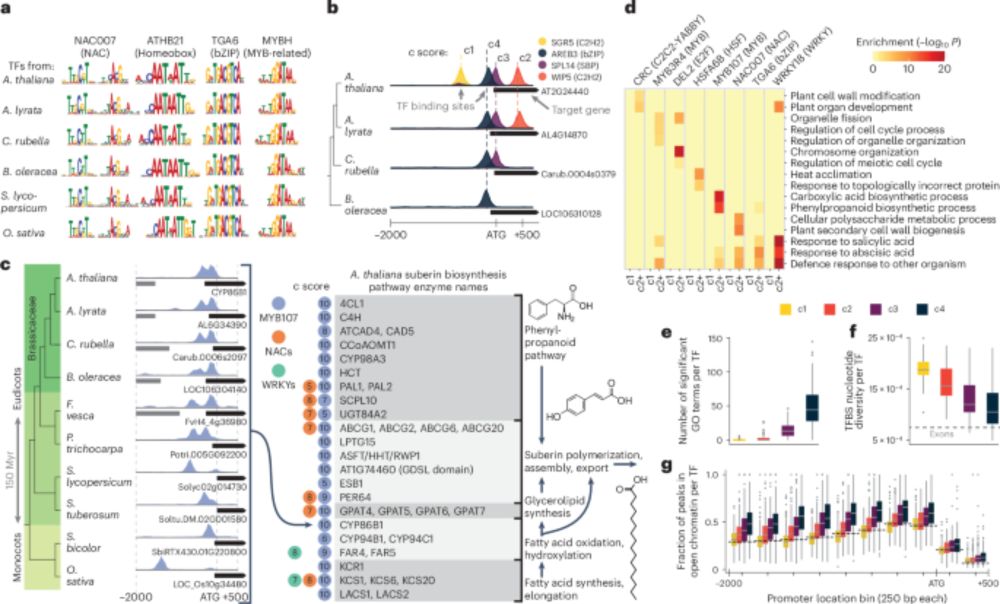
Recruitment, rewiring and deep conservation in flowering plant gene regulation - Nature Plants
A highly scalable approach is used to generate 3,000 genome-wide maps of transcription factor binding in ten flowering plants, along with multi-species single-nucleus RNA-seq atlases. Together, the re...
www.nature.com
July 21, 2025 at 12:09 PM
"We found that TF orthologues from distant species retain
nearly identical binding preferences, while on the same timescales the gain and loss of TFBSs are widespread."
From: www.nature.com/articles/s41...
nearly identical binding preferences, while on the same timescales the gain and loss of TFBSs are widespread."
From: www.nature.com/articles/s41...
Reposted by Charlie Hale

Conservation of chromatin states and their association with transcription factors in land plants https://www.biorxiv.org/content/10.1101/2025.07.12.664529v1
July 18, 2025 at 5:33 AM
Conservation of chromatin states and their association with transcription factors in land plants https://www.biorxiv.org/content/10.1101/2025.07.12.664529v1
Reposted by Charlie Hale
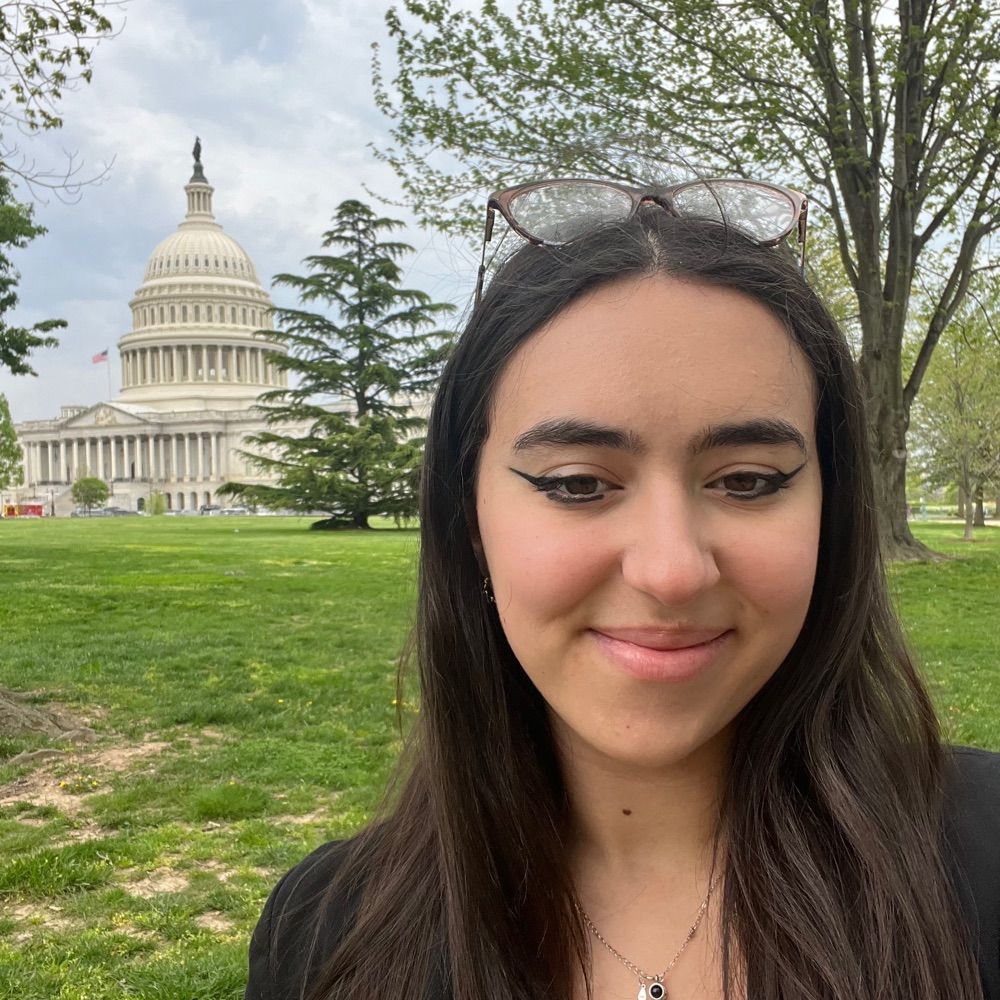
So grateful to be one of the 500+ early-career scientists returning to their roots this month. The SNAP team behind this campaign has been such a blast to work with! @snapcoalition.bsky.social
Check out my piece in the Marietta Daily Journal, as well as other national coverage: bit.ly/3HXlfB4
Check out my piece in the Marietta Daily Journal, as well as other national coverage: bit.ly/3HXlfB4
June 16, 2025 at 8:09 PM
So grateful to be one of the 500+ early-career scientists returning to their roots this month. The SNAP team behind this campaign has been such a blast to work with! @snapcoalition.bsky.social
Check out my piece in the Marietta Daily Journal, as well as other national coverage: bit.ly/3HXlfB4
Check out my piece in the Marietta Daily Journal, as well as other national coverage: bit.ly/3HXlfB4
Reposted by Charlie Hale

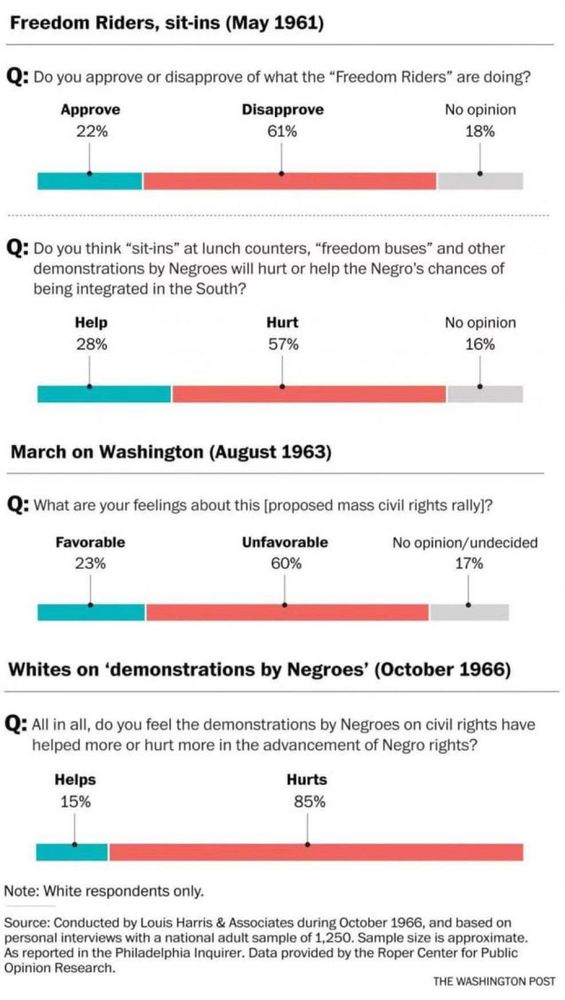
I just like to post these data from time to time to puncture the mythological aura of mid 20th c protests. They were less popular than pretty much any 21st c mass action & people criticizing them used the same lines. Protest is about people coming together, shaping narratives, & building power.
June 14, 2025 at 7:02 PM
I just like to post these data from time to time to puncture the mythological aura of mid 20th c protests. They were less popular than pretty much any 21st c mass action & people criticizing them used the same lines. Protest is about people coming together, shaping narratives, & building power.
Reposted by Charlie Hale
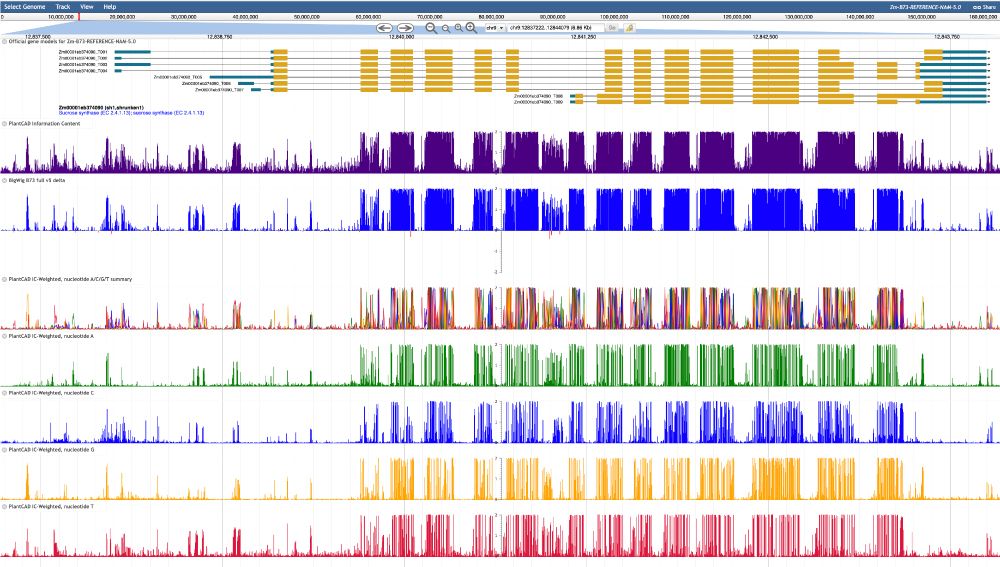
We're excited to share PlantCAD browser tracks: a new, unpublished dataset integrating AI techniques for plant genome analysis. Explore it here: github.com/andorfc/Plan...
We welcome the community's feedback and innovative use cases for this data!
We welcome the community's feedback and innovative use cases for this data!
June 6, 2025 at 2:48 PM
We're excited to share PlantCAD browser tracks: a new, unpublished dataset integrating AI techniques for plant genome analysis. Explore it here: github.com/andorfc/Plan...
We welcome the community's feedback and innovative use cases for this data!
We welcome the community's feedback and innovative use cases for this data!
Reposted by Charlie Hale

URGENT: FlyBase has lost practically all its funding overnight; even user fees are tied up in denied grant funding. 🤬🤯
Any lab using @flybase.bsky.social please donate using the link in post below.
This incredible community, on whose backs our #Drosophila labs depend, can't be left out to dry.
Any lab using @flybase.bsky.social please donate using the link in post below.
This incredible community, on whose backs our #Drosophila labs depend, can't be left out to dry.

My lab studies bacterial infections. We spend a lot of time looking at (or for) species-specific genetic and genomic databases for hosts and microbes. FlyBase is the best of all—there is literally no comparison. Its existence is under threat. Please donate.
www.philanthropy.cam.ac.uk/give-to-camb...
www.philanthropy.cam.ac.uk/give-to-camb...
Drosophila Genetic Database
The Drosophila Genetic Database, FlyBase, is on the brink of collapse due to the sudden termination of the FlyBase NIH grant, which includes salaries for 5 literature curators based at the University ...
www.philanthropy.cam.ac.uk
June 3, 2025 at 5:20 PM
URGENT: FlyBase has lost practically all its funding overnight; even user fees are tied up in denied grant funding. 🤬🤯
Any lab using @flybase.bsky.social please donate using the link in post below.
This incredible community, on whose backs our #Drosophila labs depend, can't be left out to dry.
Any lab using @flybase.bsky.social please donate using the link in post below.
This incredible community, on whose backs our #Drosophila labs depend, can't be left out to dry.
Reposted by Charlie Hale

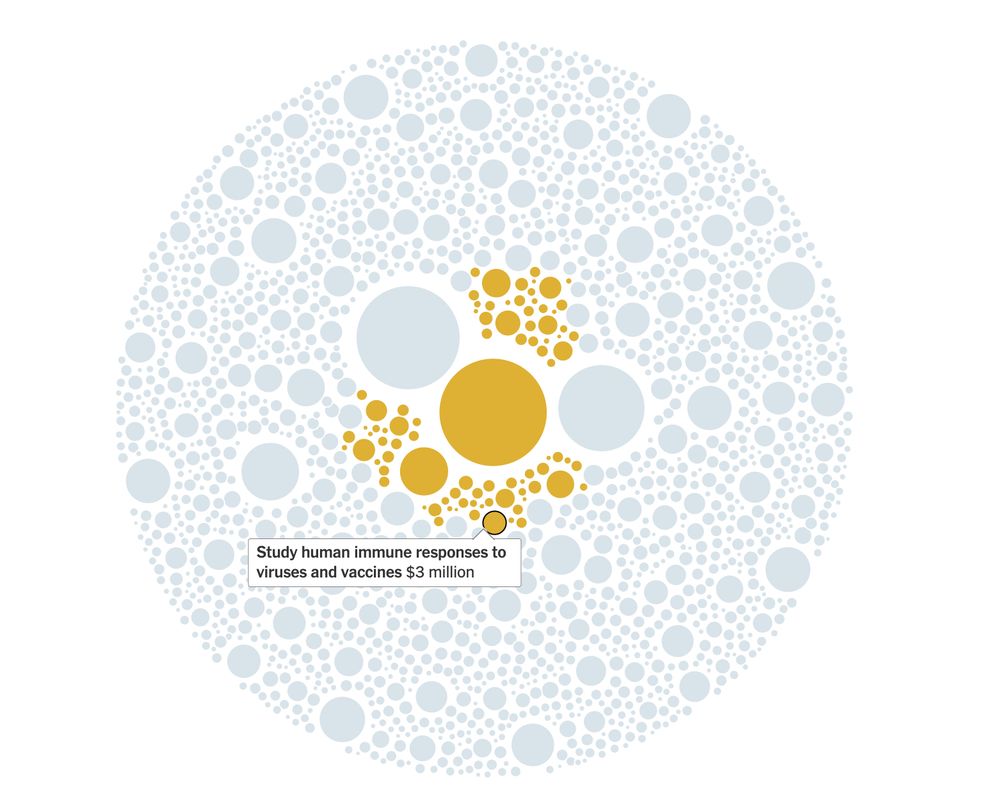
“I would like to cure brain cancer. I think that's not particularly controversial.” Be that as it may, the NIH terminated that scientist's grant. Here's a huge survey of the 2,500 grants that NIH has killed or delayed...so far. Gift link: nyti.ms/43Jz1yJ
June 4, 2025 at 2:30 PM
“I would like to cure brain cancer. I think that's not particularly controversial.” Be that as it may, the NIH terminated that scientist's grant. Here's a huge survey of the 2,500 grants that NIH has killed or delayed...so far. Gift link: nyti.ms/43Jz1yJ