



Carl de Boer
@carldeboer.bsky.social
Assistant Professor, UBC school of Biomedical Engineering. Trying to enable personalized medicine by solving gene regulatory code.
Reposted by Carl de Boer

Our paper on the evolution of XIST regulatory network in primates is now published in Science Advances! Check out the paper www.science.org/doi/10.1126/... or a digest of our findings emmanuelczt.github.io/posts/2026/0... A short 🧵 of our main findings 👇

Remodeling of XIST regulatory landscape during primate evolution
How gene regulation strategies rapidly evolve across short evolutionary timescales is explored.
www.science.org
January 28, 2026 at 3:48 PM
Our paper on the evolution of XIST regulatory network in primates is now published in Science Advances! Check out the paper www.science.org/doi/10.1126/... or a digest of our findings emmanuelczt.github.io/posts/2026/0... A short 🧵 of our main findings 👇
Reposted by Carl de Boer

We're testing AlphaGenome.
It's a very valuable step forward towards the goal of identifying functional non-coding variants (FNCVs) causing human diseases.
Congrats to @avsecz.bsky.social and the team for this landmark publication.
www.nature.com/articles/s41...
It's a very valuable step forward towards the goal of identifying functional non-coding variants (FNCVs) causing human diseases.
Congrats to @avsecz.bsky.social and the team for this landmark publication.
www.nature.com/articles/s41...

Advancing regulatory variant effect prediction with AlphaGenome - Nature
AlphaGenome, a deep learning model that inputs 1-Mb DNA sequence to predict functional genomic tracks at single-base resolution across diverse modalities, outperforms existing models in variant effect...
www.nature.com
January 28, 2026 at 6:05 PM
We're testing AlphaGenome.
It's a very valuable step forward towards the goal of identifying functional non-coding variants (FNCVs) causing human diseases.
Congrats to @avsecz.bsky.social and the team for this landmark publication.
www.nature.com/articles/s41...
It's a very valuable step forward towards the goal of identifying functional non-coding variants (FNCVs) causing human diseases.
Congrats to @avsecz.bsky.social and the team for this landmark publication.
www.nature.com/articles/s41...
Reposted by Carl de Boer
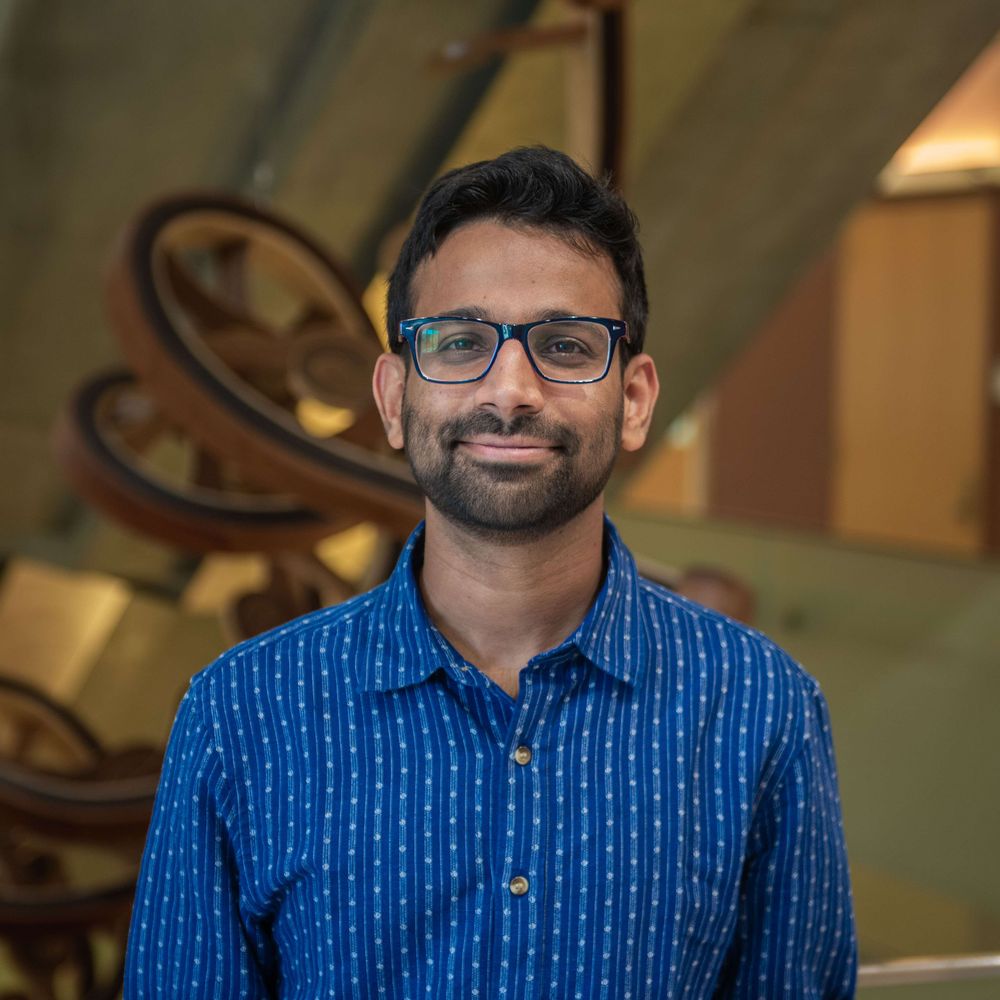
Happy to share that our review on mammalian genome writing with Jack Atwater, Ran Brosh, Jef Boeke, @jshendure.bsky.social and Matt Maurano is now out in @cellpress.bsky.social!
www.sciencedirect.com/science/arti...
www.sciencedirect.com/science/arti...

Mammalian genome writing: Unlocking new length scales for genome engineering
The ability to design and engineer mammalian genomes across arbitrary length scales would transform biology and medicine. Such capabilities would enab…
www.sciencedirect.com
January 23, 2026 at 7:12 PM
Happy to share that our review on mammalian genome writing with Jack Atwater, Ran Brosh, Jef Boeke, @jshendure.bsky.social and Matt Maurano is now out in @cellpress.bsky.social!
www.sciencedirect.com/science/arti...
www.sciencedirect.com/science/arti...
Reposted by Carl de Boer

Deadline TODAY January 23 - please join the Systems Biology: Global Regulation of Gene Expression meeting in beautiful @cshlnews.bsky.social (March 11-14). Register and submit your abstract here: meetings.cshl.edu/meetings.asp.... Please Repost!

Systems Biology: Global Regulation of Gene Expression
Cold Spring Harbor Laboratory Meetings & Courses -- a private, non-profit institution with research programs in cancer, neuroscience, plant biology, genomics, bioinformatics.
meetings.cshl.edu
January 23, 2026 at 8:36 AM
Deadline TODAY January 23 - please join the Systems Biology: Global Regulation of Gene Expression meeting in beautiful @cshlnews.bsky.social (March 11-14). Register and submit your abstract here: meetings.cshl.edu/meetings.asp.... Please Repost!
Reposted by Carl de Boer
Metabolites can be quantified using a combination of aptamers and DNA barcodes go.nature.com/42BbXTQ
rdcu.be/eZ8BP
rdcu.be/eZ8BP

Quantifying metabolites using structure-switching aptamers coupled to DNA sequencing - Nature Biotechnology
Metabolites can be quantified using a combination of aptamers and DNA barcodes.
go.nature.com
January 22, 2026 at 3:34 AM
Metabolites can be quantified using a combination of aptamers and DNA barcodes go.nature.com/42BbXTQ
rdcu.be/eZ8BP
rdcu.be/eZ8BP
Reposted by Carl de Boer
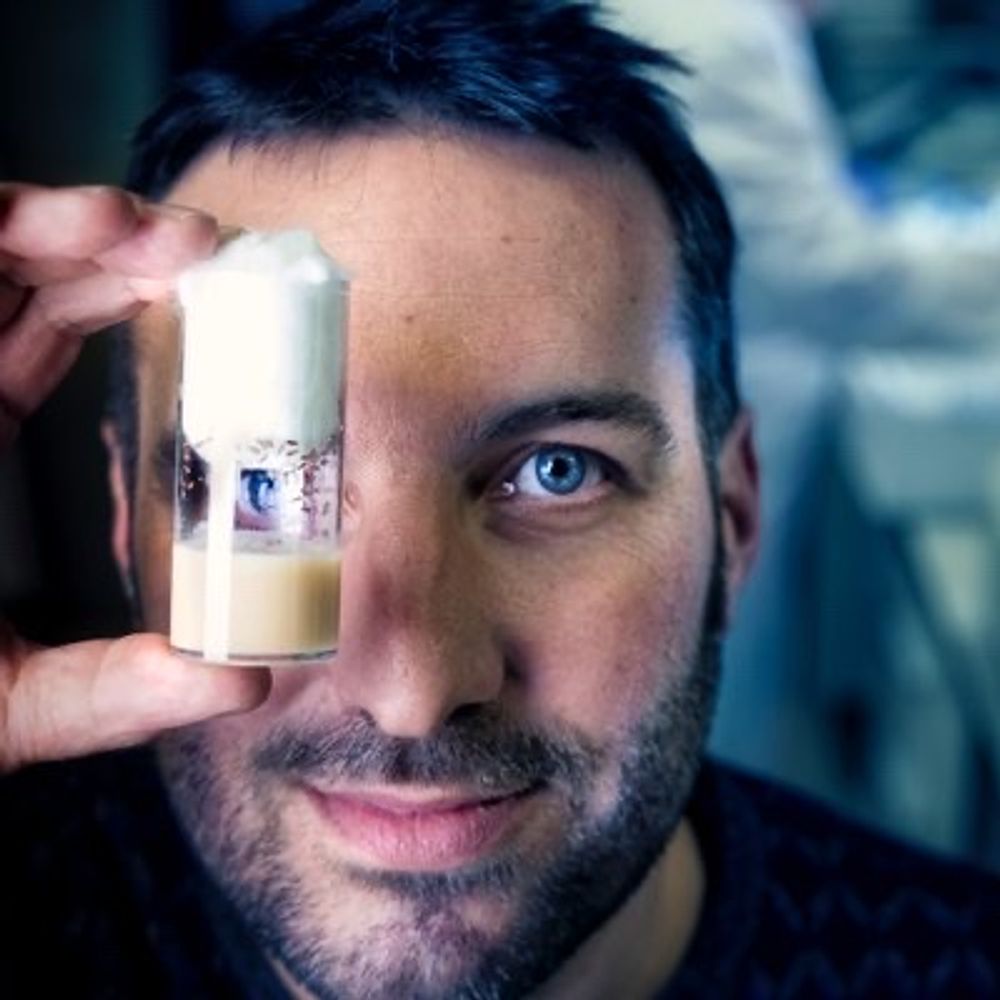
TF-MINDI is out! A new method to learn cis-regulatory codes through rich embeddings of TF binding sites. TF-MINDI decomposes motif neighbourhoods, and works downstream of any sequence-to-function deep learning model. We deeply study the enhancer code in human neural development, check out the thread

January 15, 2026 at 12:32 PM
TF-MINDI is out! A new method to learn cis-regulatory codes through rich embeddings of TF binding sites. TF-MINDI decomposes motif neighbourhoods, and works downstream of any sequence-to-function deep learning model. We deeply study the enhancer code in human neural development, check out the thread
Dear American Friends, I’m here with an uncomfortable message: watching in horror is not good enough. Sitting idly by makes you complicit. Things will keep getting worse until Americans act.
January 10, 2026 at 3:11 PM
Dear American Friends, I’m here with an uncomfortable message: watching in horror is not good enough. Sitting idly by makes you complicit. Things will keep getting worse until Americans act.
Reposted by Carl de Boer

1/ We found that deep sequence models memorize atomic facts "geometrically" -- not as an associative lookup table as often imagined.
This opens up practical questions on reasoning/memory/discovery, and also poses a theoretical "memorization puzzle."
This opens up practical questions on reasoning/memory/discovery, and also poses a theoretical "memorization puzzle."
January 8, 2026 at 8:31 PM
1/ We found that deep sequence models memorize atomic facts "geometrically" -- not as an associative lookup table as often imagined.
This opens up practical questions on reasoning/memory/discovery, and also poses a theoretical "memorization puzzle."
This opens up practical questions on reasoning/memory/discovery, and also poses a theoretical "memorization puzzle."
Reposted by Carl de Boer
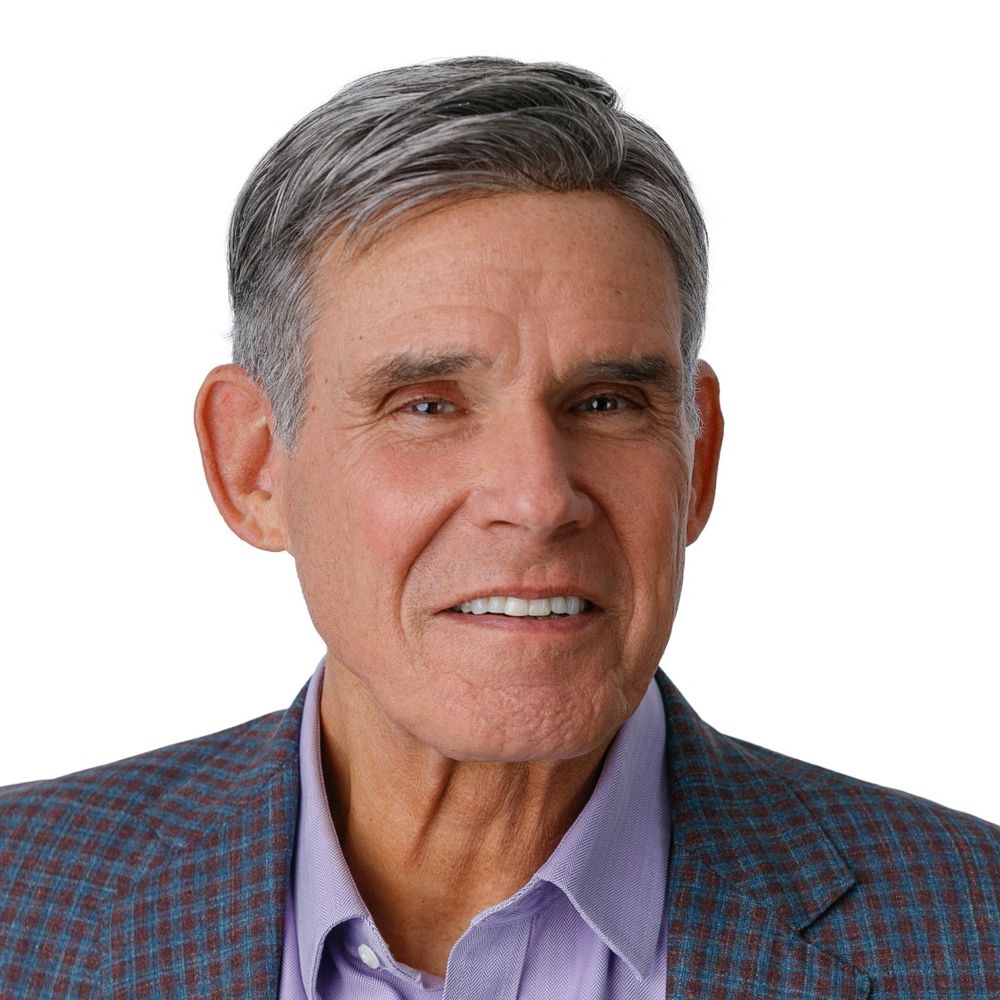
Vaccines, the most impressive public health intervention in medical history, and where we could be headed if there was not efforts to negate truth, facts, and evidence
A great, open-access, review and perspective by @scientificdiscovery.dev
A great, open-access, review and perspective by @scientificdiscovery.dev

January 7, 2026 at 8:17 PM
Vaccines, the most impressive public health intervention in medical history, and where we could be headed if there was not efforts to negate truth, facts, and evidence
A great, open-access, review and perspective by @scientificdiscovery.dev
A great, open-access, review and perspective by @scientificdiscovery.dev
Reposted by Carl de Boer
Looking to start your lab in generative biology / AI?
Come join us at the @sangerinstitute.bsky.social
Sanger is core-funded so you can generate data at scale to train the next generation of models and understanding. Design/Engineering/Chemistry/Proteins/Pathways!
pls RT
tinyurl.com/GenGenFaculty
Come join us at the @sangerinstitute.bsky.social
Sanger is core-funded so you can generate data at scale to train the next generation of models and understanding. Design/Engineering/Chemistry/Proteins/Pathways!
pls RT
tinyurl.com/GenGenFaculty
Group Leader - Generative Biology and AI
Do you want to help us improve human health and understand life on Earth? Make your mark by shaping the future to enable or deliver life-changing science to solve some of humanity’s greatest challenge...
tinyurl.com
January 1, 2026 at 12:08 PM
Looking to start your lab in generative biology / AI?
Come join us at the @sangerinstitute.bsky.social
Sanger is core-funded so you can generate data at scale to train the next generation of models and understanding. Design/Engineering/Chemistry/Proteins/Pathways!
pls RT
tinyurl.com/GenGenFaculty
Come join us at the @sangerinstitute.bsky.social
Sanger is core-funded so you can generate data at scale to train the next generation of models and understanding. Design/Engineering/Chemistry/Proteins/Pathways!
pls RT
tinyurl.com/GenGenFaculty
Reposted by Carl de Boer

Blog post: Just quit
Quitting projects in science is hard, but we should be doing a lot more of it.
open.substack.com/pub/arjunraj...
Quitting projects in science is hard, but we should be doing a lot more of it.
open.substack.com/pub/arjunraj...

Just quit
Quitting projects in science is hard, but we should be doing a lot more of it.
open.substack.com
December 30, 2025 at 3:02 PM
Blog post: Just quit
Quitting projects in science is hard, but we should be doing a lot more of it.
open.substack.com/pub/arjunraj...
Quitting projects in science is hard, but we should be doing a lot more of it.
open.substack.com/pub/arjunraj...
Reposted by Carl de Boer

Genome-scale perturb-seq in primary human CD4+ T cells maps context-specific regulators of T cell programs and human immune traits https://www.biorxiv.org/content/10.64898/2025.12.23.696273v1
December 24, 2025 at 5:31 PM
Genome-scale perturb-seq in primary human CD4+ T cells maps context-specific regulators of T cell programs and human immune traits https://www.biorxiv.org/content/10.64898/2025.12.23.696273v1
Reposted by Carl de Boer
Our preprint "Predictive design of tissue-specific mammalian enhancers that function in vivo in the mouse embryo" is on bioRxiv: www.biorxiv.org/content/10.6... . Amazing collaboration by @shenzhichen1999.bsky.social, Vincent Loubiere (@impvienna.bsky.social,@viennabiocenter.bsky.social),... (1/2)

Predictive design of tissue-specific mammalian enhancers that function in vivo in the mouse embryo
Enhancers control tissue-specific gene expression across metazoans. Although deep learning has enabled enhancer prediction and design in mammalian cell lines and invertebrate systems, it remains uncle...
www.biorxiv.org
December 24, 2025 at 3:06 PM
Our preprint "Predictive design of tissue-specific mammalian enhancers that function in vivo in the mouse embryo" is on bioRxiv: www.biorxiv.org/content/10.6... . Amazing collaboration by @shenzhichen1999.bsky.social, Vincent Loubiere (@impvienna.bsky.social,@viennabiocenter.bsky.social),... (1/2)
Reposted by Carl de Boer

www.cell.com/cell/fulltex...
On how ~neutrally evolving CAG repeats over the lifespan eventually exerts neurodegenerative phenotype in Huntington’s disease.
On how ~neutrally evolving CAG repeats over the lifespan eventually exerts neurodegenerative phenotype in Huntington’s disease.
December 21, 2025 at 10:05 PM
www.cell.com/cell/fulltex...
On how ~neutrally evolving CAG repeats over the lifespan eventually exerts neurodegenerative phenotype in Huntington’s disease.
On how ~neutrally evolving CAG repeats over the lifespan eventually exerts neurodegenerative phenotype in Huntington’s disease.
Reposted by Carl de Boer
👋@sbmeubc.bsky.social and @bccancerfdn.bsky.social are seeking a successful candidate for the Dr. Connie Eaves Chair in Cancer Stem Cell Research (Professor or Associate Professor with tenure). Please apply if you have innovative engineering solutions and technologies!
www.nature.com/naturecareer...
www.nature.com/naturecareer...

Associate Professor (tenure) or Professor (tenure) Dr. Connie Eaves Chair, Cancer Stem Cell Research - Vancouver, British Columbia (CA) job with School of Biomedical Engineering, UBC | 12849033
Invite applications for a full-time faculty position at the rank of Associate Professor or Professor with tenure in Cancer Stem Cell Research at UBC.
www.nature.com
December 16, 2025 at 11:29 PM
👋@sbmeubc.bsky.social and @bccancerfdn.bsky.social are seeking a successful candidate for the Dr. Connie Eaves Chair in Cancer Stem Cell Research (Professor or Associate Professor with tenure). Please apply if you have innovative engineering solutions and technologies!
www.nature.com/naturecareer...
www.nature.com/naturecareer...
Reposted by Carl de Boer
Our latest preprint revisits the classic model of mutation-selection balance.
Do human recessive genes fit Haldane's 100-year old model?
This work is by the wonderful @jonj-udd.bsky.social, and co-mentored by @jeffspence.github.io
www.biorxiv.org/content/10.6...
Do human recessive genes fit Haldane's 100-year old model?
This work is by the wonderful @jonj-udd.bsky.social, and co-mentored by @jeffspence.github.io
www.biorxiv.org/content/10.6...

Allele Frequencies at Recessive Disease Genes are Mainly Determined by Pleiotropic Effects in Heterozygotes
The classic theory of mutation-selection balance predicts the equilibrium frequency of genetic variation under negative selection. The model predicts a simple relationship between the total frequency ...
www.biorxiv.org
December 13, 2025 at 4:45 PM
Our latest preprint revisits the classic model of mutation-selection balance.
Do human recessive genes fit Haldane's 100-year old model?
This work is by the wonderful @jonj-udd.bsky.social, and co-mentored by @jeffspence.github.io
www.biorxiv.org/content/10.6...
Do human recessive genes fit Haldane's 100-year old model?
This work is by the wonderful @jonj-udd.bsky.social, and co-mentored by @jeffspence.github.io
www.biorxiv.org/content/10.6...
Reposted by Carl de Boer

Great opportunity! Deadline DEC 17
The CIFAR MacMillan Multiscale Human School explores interdisciplinary models to build a virtual twin that accurately capture development. cifar.ca/next-generat...
@smbmathbiology.bsky.social
@stemcellnetwork.ca
@the-node.bsky.social
@biologists.bsky.social
The CIFAR MacMillan Multiscale Human School explores interdisciplinary models to build a virtual twin that accurately capture development. cifar.ca/next-generat...
@smbmathbiology.bsky.social
@stemcellnetwork.ca
@the-node.bsky.social
@biologists.bsky.social

CIFAR MacMillan Multiscale Human School - CIFAR
Follow Us FaceBook Twitter YouTube LinkedIn Instagram CIFAR MacMillan Multiscale Human School The CIFAR MacMillan Multiscale Human School brings together PhD students and postdoctoral fellows […]
cifar.ca
November 29, 2025 at 1:12 PM
Great opportunity! Deadline DEC 17
The CIFAR MacMillan Multiscale Human School explores interdisciplinary models to build a virtual twin that accurately capture development. cifar.ca/next-generat...
@smbmathbiology.bsky.social
@stemcellnetwork.ca
@the-node.bsky.social
@biologists.bsky.social
The CIFAR MacMillan Multiscale Human School explores interdisciplinary models to build a virtual twin that accurately capture development. cifar.ca/next-generat...
@smbmathbiology.bsky.social
@stemcellnetwork.ca
@the-node.bsky.social
@biologists.bsky.social
Reposted by Carl de Boer
After a huge amount of work w/ @alex-stark.bsky.social's group, a new version of our Ledidi preprint is now out!
In an era of AI-designed proteins, the next leap will be controlling when, where, and how much of these proteins are expressed in living cells.
www.biorxiv.org/content/10.1...
In an era of AI-designed proteins, the next leap will be controlling when, where, and how much of these proteins are expressed in living cells.
www.biorxiv.org/content/10.1...

Programmatic design and editing of cis-regulatory elements
The development of modern genome editing and DNA synthesis has enabled researchers to edit DNA sequences with high precision but has left unsolved the problem of designing these edits. We introduce Le...
www.biorxiv.org
December 10, 2025 at 3:18 PM
After a huge amount of work w/ @alex-stark.bsky.social's group, a new version of our Ledidi preprint is now out!
In an era of AI-designed proteins, the next leap will be controlling when, where, and how much of these proteins are expressed in living cells.
www.biorxiv.org/content/10.1...
In an era of AI-designed proteins, the next leap will be controlling when, where, and how much of these proteins are expressed in living cells.
www.biorxiv.org/content/10.1...
Reposted by Carl de Boer
🧬🎉Join us on Dec 17th for our last session of 2025! 🎉🧬Two fantastic talks on transcriptional regulation:
🔬JB Lalanne on developmental enhancers (and starting a lab in 2025?)
🔬 @rberrens.bsky.social on transposable elements in development
📋Register here: us06web.zoom.us/webinar/regi...
🔬JB Lalanne on developmental enhancers (and starting a lab in 2025?)
🔬 @rberrens.bsky.social on transposable elements in development
📋Register here: us06web.zoom.us/webinar/regi...

December 11, 2025 at 6:54 PM
🧬🎉Join us on Dec 17th for our last session of 2025! 🎉🧬Two fantastic talks on transcriptional regulation:
🔬JB Lalanne on developmental enhancers (and starting a lab in 2025?)
🔬 @rberrens.bsky.social on transposable elements in development
📋Register here: us06web.zoom.us/webinar/regi...
🔬JB Lalanne on developmental enhancers (and starting a lab in 2025?)
🔬 @rberrens.bsky.social on transposable elements in development
📋Register here: us06web.zoom.us/webinar/regi...
Reposted by Carl de Boer
GWAS has been an incredible discovery tool for human genetics: it regularly identifies *causal* links from 1000s of SNPs to any given trait. But mechanistic interpretation is usually difficult.
Our latest work on causal models for this is out yesterday:
www.nature.com/articles/s41...
A short🧵:
Our latest work on causal models for this is out yesterday:
www.nature.com/articles/s41...
A short🧵:

Causal modelling of gene effects from regulators to programs to traits - Nature
Approaches combining genetic association and Perturb-seq data that link genetic variants to functional programs to traits are described.
www.nature.com
December 11, 2025 at 5:54 PM
GWAS has been an incredible discovery tool for human genetics: it regularly identifies *causal* links from 1000s of SNPs to any given trait. But mechanistic interpretation is usually difficult.
Our latest work on causal models for this is out yesterday:
www.nature.com/articles/s41...
A short🧵:
Our latest work on causal models for this is out yesterday:
www.nature.com/articles/s41...
A short🧵:
Reposted by Carl de Boer
We are hiring a PhD intern for Summer 2026 in ML for regulatory genomics at ReLU/BRAID/Genentech! Work on DNA sequence models for the noncoding genome (e.g. DNA design, models of MPRA and genetic variants)! 🥳

2026 Summer Intern - Biology Research | AI Development in South San Francisco, California, United States of America | Students & Graduates at Genentech
Apply for 2026 Summer Intern - Biology Research | AI Development job with Genentech in South San Francisco, California, United States of America. Students & Graduates at Genentech
lnkd.in
December 10, 2025 at 10:10 PM
We are hiring a PhD intern for Summer 2026 in ML for regulatory genomics at ReLU/BRAID/Genentech! Work on DNA sequence models for the noncoding genome (e.g. DNA design, models of MPRA and genetic variants)! 🥳
I wrote a guide on constructive peer review. This is a polished version of an internal guide I had for my group. Of course, constructive feedback is welcome, peers!
deboer.bme.ubc.ca/2025/12/09/g...
deboer.bme.ubc.ca/2025/12/09/g...
December 9, 2025 at 6:38 PM
I wrote a guide on constructive peer review. This is a polished version of an internal guide I had for my group. Of course, constructive feedback is welcome, peers!
deboer.bme.ubc.ca/2025/12/09/g...
deboer.bme.ubc.ca/2025/12/09/g...
Reposted by Carl de Boer
I'm guest-editing a collection on "Enhancer-promoter interactions" at Genome Biology. Please send us your exciting stories!
link.springer.com/collections/...
link.springer.com/collections/...
Enhancer-promoter interactions
Genome Biology is calling for submissions to our Collection on enhancer-promoter interactions.
Enhancer–promoter interactions are central to the regulation ...
link.springer.com
November 25, 2025 at 10:55 AM
I'm guest-editing a collection on "Enhancer-promoter interactions" at Genome Biology. Please send us your exciting stories!
link.springer.com/collections/...
link.springer.com/collections/...
Reposted by Carl de Boer

We are looking for a postdoctoral fellow to work on induced proximity 🤜🤛 and functional genomics! Join our team in Toronto 🇨🇦 to tackle major challenges in oncology and neurodegeneration. www.nature.com/naturecareer...
POSTDOCTORAL FELLOW - Toronto (City), Ontario (CA) job with Taipale Lab, Donnelly Centre, University of Toronto | 12849004
The Taipale lab in the Donnelly CCBR and University of Toronto is looking for a highly motivated Postdoctoral Fellow
www.nature.com
November 19, 2025 at 5:51 PM
We are looking for a postdoctoral fellow to work on induced proximity 🤜🤛 and functional genomics! Join our team in Toronto 🇨🇦 to tackle major challenges in oncology and neurodegeneration. www.nature.com/naturecareer...
Reposted by Carl de Boer

We are pleased to announce a new preprint by @mlweilert.bsky.social: “Widespread low-affinity motifs enhance chromatin accessibility and regulatory potential in mESCs” (www.biorxiv.org/content/10.1...). See summary and longer recap below:
(TLDR; low-affinity motifs matter as pioneers!)
(TLDR; low-affinity motifs matter as pioneers!)

Widespread low-affinity motifs enhance chromatin accessibility and regulatory potential in mESCs
Low-affinity transcription factor (TF) motifs are an important element of the cis-regulatory code, yet they are notoriously difficult to map and mechanistically incompletely understood, limiting our a...
www.biorxiv.org
November 19, 2025 at 8:57 PM
We are pleased to announce a new preprint by @mlweilert.bsky.social: “Widespread low-affinity motifs enhance chromatin accessibility and regulatory potential in mESCs” (www.biorxiv.org/content/10.1...). See summary and longer recap below:
(TLDR; low-affinity motifs matter as pioneers!)
(TLDR; low-affinity motifs matter as pioneers!)