




Andrey Chetverikov
@achetverikov.bsky.social
Associate Professor in Cognitive Psychology at the University of Bergen, Norway. I study decision-making and biases in perception and visual working memory, with occasional forays into higher level decisions. https://andreychetverikov.org
Pinned

Noise in Competing Representations Determines the Direction of Memory Biases
Our memories are reconstructions, prone to errors. Historically treated as a mere nuisance, memory errors have recently gained attention when found to be systematically shifted away from or towards no...
www.biorxiv.org
@shansmann-roth.bsky.social and I finally finished our paper confirming a unique prediction of the Demixing Model (DM): inter-item biases in #visualworkingmemory depend on the _relative_ noise of targets and non-targets, potentially going in opposing directions. 🧵1/9
www.biorxiv.org/content/10.6...
www.biorxiv.org/content/10.6...
Reposted by Andrey Chetverikov

I do want to shout-out my fellow sociologists, who have collectively created a discipline so woke that not a single one of our introductory textbooks can make it past Florida's censors.
Great work everyone.
Great work everyone.

February 6, 2026 at 3:00 PM
I do want to shout-out my fellow sociologists, who have collectively created a discipline so woke that not a single one of our introductory textbooks can make it past Florida's censors.
Great work everyone.
Great work everyone.
With all due respect to the authors, isn't it a bit early to raise alarm? People are different, some don't show "standard" effects. And if you take a bunch of parameters, you'll find some unique patterns. I mean, very strong conclusions based on 36 participants with 2-6 (!) suspected bots.

Recent work has shown how vulnerable online survey research is to LLMs. Motivated by this, we examined our online Posner cueing data from Prolific. It's concerning. We now must carefully consider when (or whether?) online behavioral data can be trusted.
see our comment:
www.pnas.org/doi/10.1073/...
see our comment:
www.pnas.org/doi/10.1073/...
February 19, 2026 at 10:10 PM
With all due respect to the authors, isn't it a bit early to raise alarm? People are different, some don't show "standard" effects. And if you take a bunch of parameters, you'll find some unique patterns. I mean, very strong conclusions based on 36 participants with 2-6 (!) suspected bots.
Reposted by Andrey Chetverikov

Set-Size Scaling Effects in Visual Working Memory Models Identify the Decoding Rule Used in Retrieval: https://osf.io/6wk73
February 16, 2026 at 2:03 PM
Set-Size Scaling Effects in Visual Working Memory Models Identify the Decoding Rule Used in Retrieval: https://osf.io/6wk73
Reposted by Andrey Chetverikov

This is easily the funniest thing I’ve seen in academia in a while.
I’m not sure what the VSS version would be if one went over the time limit for a talk. Thoughts?
I’m not sure what the VSS version would be if one went over the time limit for a talk. Thoughts?

I propose to make universal the old policy of the Blackfriars conference at the American Shakespeare Center:
If you do not end your paper on time, you will be forced to exit, pursued by a bear. Literally, a bear will come take your paper from you.
If you do not end your paper on time, you will be forced to exit, pursued by a bear. Literally, a bear will come take your paper from you.
February 17, 2026 at 2:03 AM
This is easily the funniest thing I’ve seen in academia in a while.
I’m not sure what the VSS version would be if one went over the time limit for a talk. Thoughts?
I’m not sure what the VSS version would be if one went over the time limit for a talk. Thoughts?
Reposted by Andrey Chetverikov

Compositional data (proportions that sum to 1) behave in ways standard models aren’t built for
I walk through why Dirichlet regression is often the right tool & what extra insight it gives using a real ex of eyetracking
#Dirichlet #r #brms #guide #eyetracking
open.substack.com/pub/mzlotean...
I walk through why Dirichlet regression is often the right tool & what extra insight it gives using a real ex of eyetracking
#Dirichlet #r #brms #guide #eyetracking
open.substack.com/pub/mzlotean...

February 9, 2026 at 4:05 PM
Compositional data (proportions that sum to 1) behave in ways standard models aren’t built for
I walk through why Dirichlet regression is often the right tool & what extra insight it gives using a real ex of eyetracking
#Dirichlet #r #brms #guide #eyetracking
open.substack.com/pub/mzlotean...
I walk through why Dirichlet regression is often the right tool & what extra insight it gives using a real ex of eyetracking
#Dirichlet #r #brms #guide #eyetracking
open.substack.com/pub/mzlotean...
Reposted by Andrey Chetverikov
Ok researchers rise and shine, it's groundhog day - what better way to get you up to date with what has been going on at the FORRT Replication Hub? forrt.org/replication-...

February 2, 2026 at 9:45 AM
Ok researchers rise and shine, it's groundhog day - what better way to get you up to date with what has been going on at the FORRT Replication Hub? forrt.org/replication-...
Dear colleagues, please use decipherable axis titles or at least write in the caption what your Greek letters mean precisely =)

January 31, 2026 at 4:42 PM
Dear colleagues, please use decipherable axis titles or at least write in the caption what your Greek letters mean precisely =)
I'm curious though if different scoring is a) intentional and b) linked to different interpretation. Do people make a new score because they want to interpret IGT differently?

How many versions of the Iowa Gambling Task (IGT) exist? And how much does this affect research using the IGT? More than you might think. 🧵
Methodological Flexibility in the Iowa Gambling Task Undermines Interpretability: A Meta-method Review: https://osf.io/4g3vr
January 26, 2026 at 9:15 AM
I'm curious though if different scoring is a) intentional and b) linked to different interpretation. Do people make a new score because they want to interpret IGT differently?
I'm thinking of where to put the data and code for our recent preprint. Usually, I use OSF but it would be nice to be able to upload / update directly from VSCode. So is Github -> OSF the best way?
January 23, 2026 at 11:42 AM
I'm thinking of where to put the data and code for our recent preprint. Usually, I use OSF but it would be nice to be able to upload / update directly from VSCode. So is Github -> OSF the best way?
A weird column in Nature. First, I find it weird that "two years of academic work" are equated with ChatGPT chat history. Also, hello, backups are useful?
www.nature.com/articles/d41...
www.nature.com/articles/d41...

When two years of academic work vanished with a single click
After turning off ChatGPT’s ‘data consent’ option, Marcel Bucher lost the work behind grant applications, teaching materials and publication drafts. Here’s what happened next.
www.nature.com
January 23, 2026 at 10:58 AM
A weird column in Nature. First, I find it weird that "two years of academic work" are equated with ChatGPT chat history. Also, hello, backups are useful?
www.nature.com/articles/d41...
www.nature.com/articles/d41...
Vision people, we must investigate!
With most psychedelic drugs, you never know what you're going to get. But this mysterious mushroom from China - without fail - causes users to hallucinate tiny people: crawling up walls, popping out from under furniture and marching under doors. www.bbc.com/future/artic...

'They saw them on their dishes when eating': The mushroom making people hallucinate dozens of tiny humans
Only recently described by science, the mysterious mushrooms are found in different parts of the world, but they give people the same exact visions.
www.bbc.com
January 22, 2026 at 7:38 PM
Vision people, we must investigate!
Reposted by Andrey Chetverikov

Here’s a thought that might make you tilt your head in curiosity: With every movement of your eyes, head, or body, the visual input to your eyes shifts! Nevertheless, it doesn't feel like the world does suddenly tilts sideways whenever you tilt your head. How can this be? TWEEPRINT ALERT! 🚨🧵 1/n

a husky puppy is laying on the floor with its tongue out and wearing a blue collar .
ALT: a husky puppy is laying on the floor with its tongue out and wearing a blue collar .
media.tenor.com
January 21, 2026 at 12:28 PM
Here’s a thought that might make you tilt your head in curiosity: With every movement of your eyes, head, or body, the visual input to your eyes shifts! Nevertheless, it doesn't feel like the world does suddenly tilts sideways whenever you tilt your head. How can this be? TWEEPRINT ALERT! 🚨🧵 1/n
Reposted by Andrey Chetverikov

We're running a 5th edition of the always-exciting UCL Summer School on Consciousness and Metacognition this year, 8th-10th July 2026 in London. Accommodation and travel expenses are covered.
For more information and how to apply, check out metacoglab.org/summer-schoo...
For more information and how to apply, check out metacoglab.org/summer-schoo...
Summer School - About — the MetaLab
metacoglab.org
January 20, 2026 at 5:07 PM
We're running a 5th edition of the always-exciting UCL Summer School on Consciousness and Metacognition this year, 8th-10th July 2026 in London. Accommodation and travel expenses are covered.
For more information and how to apply, check out metacoglab.org/summer-schoo...
For more information and how to apply, check out metacoglab.org/summer-schoo...
Reposted by Andrey Chetverikov

This is great - it's about time someone updated the discourse on LLM energy usage to reflect that coding agents use massively more prompts than occasional questions to ChatGPT
Simon estimates that a day of coding agent usage comes out close to the energy needed to run a dishwasher
Simon estimates that a day of coding agent usage comes out close to the energy needed to run a dishwasher

Whenever I read discourse on AI energy/water use that focuses on the "median query," I can't help but feel misled. Coding agents like Claude Code send hundreds of longer-than-median queries every session, and I run dozens of sessions a day.
On my blog: www.simonpcouch.com/blog/2026-01...
On my blog: www.simonpcouch.com/blog/2026-01...

January 20, 2026 at 11:10 PM
This is great - it's about time someone updated the discourse on LLM energy usage to reflect that coding agents use massively more prompts than occasional questions to ChatGPT
Simon estimates that a day of coding agent usage comes out close to the energy needed to run a dishwasher
Simon estimates that a day of coding agent usage comes out close to the energy needed to run a dishwasher
Reposted by Andrey Chetverikov

main goal for this year: find a new job! 🙂
looking for a role with fun & complex technical challenges & within a great community. my main expertise is in signal processing/EEG/MEG, but topic-wise I am quite flexible.
science/industry both great! starting mid-year. nschawor.github.io/cv
looking for a role with fun & complex technical challenges & within a great community. my main expertise is in signal processing/EEG/MEG, but topic-wise I am quite flexible.
science/industry both great! starting mid-year. nschawor.github.io/cv
January 16, 2026 at 10:14 AM
main goal for this year: find a new job! 🙂
looking for a role with fun & complex technical challenges & within a great community. my main expertise is in signal processing/EEG/MEG, but topic-wise I am quite flexible.
science/industry both great! starting mid-year. nschawor.github.io/cv
looking for a role with fun & complex technical challenges & within a great community. my main expertise is in signal processing/EEG/MEG, but topic-wise I am quite flexible.
science/industry both great! starting mid-year. nschawor.github.io/cv
Dear statistical hivemind, can anyone explain how can plots like this arise when individual differences in two conditions are plotted? Like when estimates in one condition seem to be reversed around some mean compared to another condition. Is it smth about GLMM effects plotted instead of raw data?

January 15, 2026 at 2:42 PM
Dear statistical hivemind, can anyone explain how can plots like this arise when individual differences in two conditions are plotted? Like when estimates in one condition seem to be reversed around some mean compared to another condition. Is it smth about GLMM effects plotted instead of raw data?
Reposted by Andrey Chetverikov

I am happy to share that our preprint “𝗪𝗼𝗿𝗸𝗶𝗻𝗴 𝘄𝗶𝘁𝗵 𝗖𝗶𝗿𝗰𝘂𝗹𝗮𝗿 𝗗𝗮𝘁𝗮: 𝗔 𝗧𝘂𝘁𝗼𝗿𝗶𝗮𝗹 𝗳𝗼𝗿 𝗖𝗼𝗴𝗻𝗶𝘁𝗶𝘃𝗲 𝗮𝗻𝗱 𝗕𝗲𝗵𝗮𝘃𝗶𝗼𝗿𝗮𝗹 𝗥𝗲𝘀𝗲𝗮𝗿𝗰𝗵” is now out.
Huge thanks to @bayslab.org, Julie de Falco, Zahara, @cjungerius.bsky.social, @ivntmc.bsky.social, Adam, and Xiaolu for the lovely collaboration.
doi.org/10.31234/osf...
Huge thanks to @bayslab.org, Julie de Falco, Zahara, @cjungerius.bsky.social, @ivntmc.bsky.social, Adam, and Xiaolu for the lovely collaboration.
doi.org/10.31234/osf...
OSF
doi.org
January 12, 2026 at 2:43 PM
I am happy to share that our preprint “𝗪𝗼𝗿𝗸𝗶𝗻𝗴 𝘄𝗶𝘁𝗵 𝗖𝗶𝗿𝗰𝘂𝗹𝗮𝗿 𝗗𝗮𝘁𝗮: 𝗔 𝗧𝘂𝘁𝗼𝗿𝗶𝗮𝗹 𝗳𝗼𝗿 𝗖𝗼𝗴𝗻𝗶𝘁𝗶𝘃𝗲 𝗮𝗻𝗱 𝗕𝗲𝗵𝗮𝘃𝗶𝗼𝗿𝗮𝗹 𝗥𝗲𝘀𝗲𝗮𝗿𝗰𝗵” is now out.
Huge thanks to @bayslab.org, Julie de Falco, Zahara, @cjungerius.bsky.social, @ivntmc.bsky.social, Adam, and Xiaolu for the lovely collaboration.
doi.org/10.31234/osf...
Huge thanks to @bayslab.org, Julie de Falco, Zahara, @cjungerius.bsky.social, @ivntmc.bsky.social, Adam, and Xiaolu for the lovely collaboration.
doi.org/10.31234/osf...
Reposted by Andrey Chetverikov

#BrainMeeting 🧠 Alert! 🎺
This Friday, January 16th, the Brain Meeting speaker will be Janneke Jehee giving a talk entitled "Uncertainty in perceptual decision-making"
In person or online. For more information:
www.fil.ion.ucl.ac.uk/event
This Friday, January 16th, the Brain Meeting speaker will be Janneke Jehee giving a talk entitled "Uncertainty in perceptual decision-making"
In person or online. For more information:
www.fil.ion.ucl.ac.uk/event

January 12, 2026 at 9:14 AM
#BrainMeeting 🧠 Alert! 🎺
This Friday, January 16th, the Brain Meeting speaker will be Janneke Jehee giving a talk entitled "Uncertainty in perceptual decision-making"
In person or online. For more information:
www.fil.ion.ucl.ac.uk/event
This Friday, January 16th, the Brain Meeting speaker will be Janneke Jehee giving a talk entitled "Uncertainty in perceptual decision-making"
In person or online. For more information:
www.fil.ion.ucl.ac.uk/event
Reposted by Andrey Chetverikov

For 15(!) years I’ve been teaching introductory #MRI to grad students, and struggled to find a textbook for a wide variety of backgrounds. I'm happy to share an online textbook I created, fully open source (including code for generating figures and plots shown):
larsonlab.github.io/MRI-educatio...
larsonlab.github.io/MRI-educatio...
Introduction to Principles of MRI — Principles of MRI
larsonlab.github.io
January 10, 2026 at 7:42 AM
For 15(!) years I’ve been teaching introductory #MRI to grad students, and struggled to find a textbook for a wide variety of backgrounds. I'm happy to share an online textbook I created, fully open source (including code for generating figures and plots shown):
larsonlab.github.io/MRI-educatio...
larsonlab.github.io/MRI-educatio...
Reposted by Andrey Chetverikov

🧠 Feature-specific predictive processing: What’s in a prediction error? 🧠
Perspective article w/ Cem Uran, @martinavinck.bsky.social & @predictivebrain.bsky.social now in @imagingneurosci.bsky.social, highlighting recent work on the nature of surprise reflected in visual prediction errors.
🧵👇
Perspective article w/ Cem Uran, @martinavinck.bsky.social & @predictivebrain.bsky.social now in @imagingneurosci.bsky.social, highlighting recent work on the nature of surprise reflected in visual prediction errors.
🧵👇

January 8, 2026 at 5:12 PM
🧠 Feature-specific predictive processing: What’s in a prediction error? 🧠
Perspective article w/ Cem Uran, @martinavinck.bsky.social & @predictivebrain.bsky.social now in @imagingneurosci.bsky.social, highlighting recent work on the nature of surprise reflected in visual prediction errors.
🧵👇
Perspective article w/ Cem Uran, @martinavinck.bsky.social & @predictivebrain.bsky.social now in @imagingneurosci.bsky.social, highlighting recent work on the nature of surprise reflected in visual prediction errors.
🧵👇
Reposted by Andrey Chetverikov
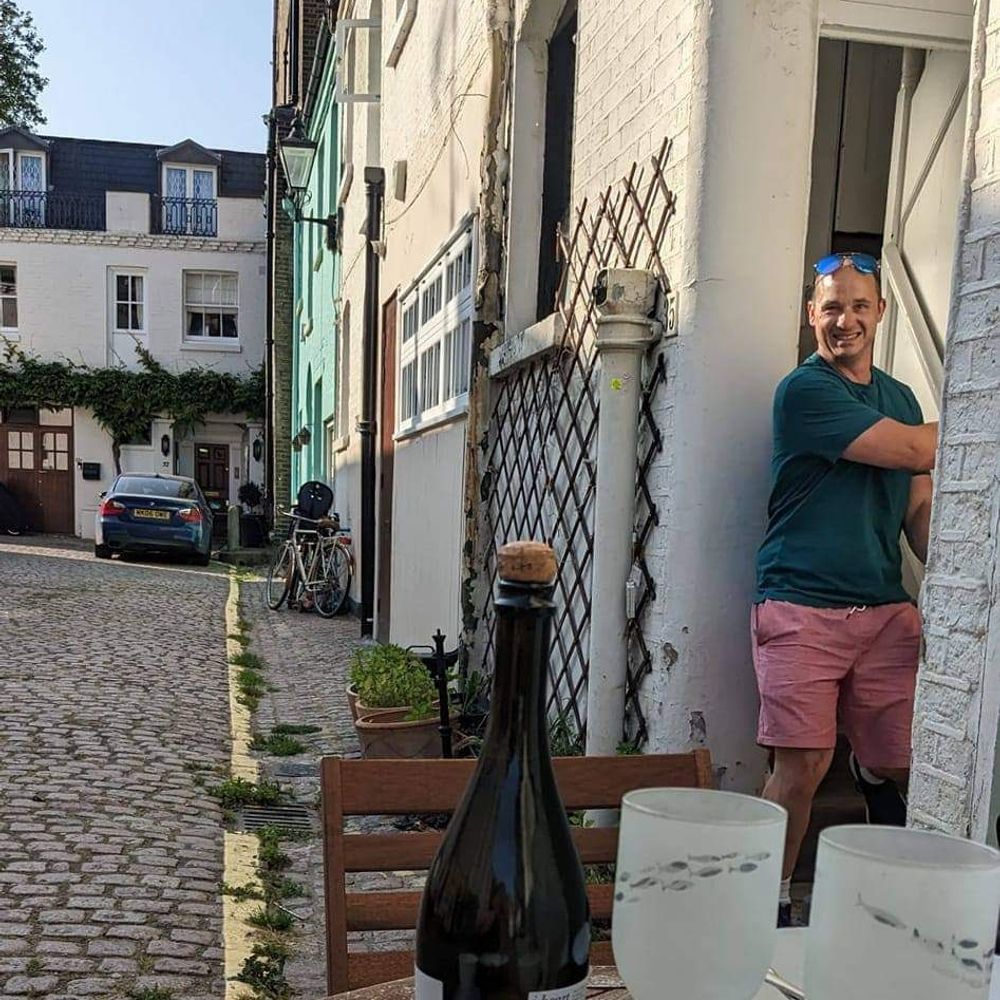
Leftmost goal isn't actually facing the camera

January 8, 2026 at 12:04 PM
Leftmost goal isn't actually facing the camera
Reposted by Andrey Chetverikov

This looks like a great opportunity!
The University of Vienna invites applications for at least 40 fully funded, 4-year doctoral positions in the social sciences, humanities and cultural studies.
careers.univie.ac.at/en/praedoc/p...
The University of Vienna invites applications for at least 40 fully funded, 4-year doctoral positions in the social sciences, humanities and cultural studies.
careers.univie.ac.at/en/praedoc/p...
Doctoral Recruitment Call 2026 — Social Sciences, Humanities & Cultural Studies
The University of Vienna invites applications for at least 40 fully funded, 4-year doctoral positions in the social sciences, humanities and cultural studies.
careers.univie.ac.at
January 8, 2026 at 11:10 AM
This looks like a great opportunity!
The University of Vienna invites applications for at least 40 fully funded, 4-year doctoral positions in the social sciences, humanities and cultural studies.
careers.univie.ac.at/en/praedoc/p...
The University of Vienna invites applications for at least 40 fully funded, 4-year doctoral positions in the social sciences, humanities and cultural studies.
careers.univie.ac.at/en/praedoc/p...
Happy back to work day for many of us =) Except of course the poor souls with deadlines in early January (hi there fellow ERC CoG writers). Anyhow, just reposting this in case you missed it in the holiday bliss.
@shansmann-roth.bsky.social and I finally finished our paper confirming a unique prediction of the Demixing Model (DM): inter-item biases in #visualworkingmemory depend on the _relative_ noise of targets and non-targets, potentially going in opposing directions. 🧵1/9
www.biorxiv.org/content/10.6...
www.biorxiv.org/content/10.6...
Noise in Competing Representations Determines the Direction of Memory Biases
Our memories are reconstructions, prone to errors. Historically treated as a mere nuisance, memory errors have recently gained attention when found to be systematically shifted away from or towards no...
www.biorxiv.org
January 5, 2026 at 2:56 PM
Happy back to work day for many of us =) Except of course the poor souls with deadlines in early January (hi there fellow ERC CoG writers). Anyhow, just reposting this in case you missed it in the holiday bliss.
Reposted by Andrey Chetverikov

Computational Social Scientists in the Nordics, unite!
🇩🇰🇫🇮🇳🇴🇸🇪🇮🇸
The brand new Nordic Society for CSS welcomes all researchers and practitioners based in the Nordics. The Society will promote student mobility, events, and education initiatives.
Join for free: nosocss.org/join.html.
🇩🇰🇫🇮🇳🇴🇸🇪🇮🇸
The brand new Nordic Society for CSS welcomes all researchers and practitioners based in the Nordics. The Society will promote student mobility, events, and education initiatives.
Join for free: nosocss.org/join.html.
January 5, 2026 at 7:57 AM
Computational Social Scientists in the Nordics, unite!
🇩🇰🇫🇮🇳🇴🇸🇪🇮🇸
The brand new Nordic Society for CSS welcomes all researchers and practitioners based in the Nordics. The Society will promote student mobility, events, and education initiatives.
Join for free: nosocss.org/join.html.
🇩🇰🇫🇮🇳🇴🇸🇪🇮🇸
The brand new Nordic Society for CSS welcomes all researchers and practitioners based in the Nordics. The Society will promote student mobility, events, and education initiatives.
Join for free: nosocss.org/join.html.
It's a sad state of affairs, but I don't think changing the evaluation approach is really the key. The problem is too little money, the scientific budgets stagnate or get cut. One thing I agree with though is that hype-driven topics ('GenAI for X') are a very bad way to spend money.

This report in Nature on the costs of competing for & administering scientific grants is shocking: "In other words, European taxpayers will have spent more on the funding process than on the funding itself, and the scientific ecosystem has been drained." www.nature.com/articles/d41... 🧪

Point of no returns: researchers are crossing a threshold in the fight for funding
With so little money to go round, the costs of competing for grants can exceed what the grants are worth. When that happens, nobody wins.
www.nature.com
January 2, 2026 at 10:46 AM
It's a sad state of affairs, but I don't think changing the evaluation approach is really the key. The problem is too little money, the scientific budgets stagnate or get cut. One thing I agree with though is that hype-driven topics ('GenAI for X') are a very bad way to spend money.