



Steve Fleming
@smfleming.bsky.social
Psychologist and neuroscientist at UCL https://metacoglab.org
Author, Know Thyself (2021) https://metacoglab.org/book
Dad and assistant to the Diplomat
Author, Know Thyself (2021) https://metacoglab.org/book
Dad and assistant to the Diplomat
At this week’s Consciousness Club we have @svangaal.bsky.social speaking on “Linking arousal state fluctuations and recurrent processing to conscious perception”
Looking forward to it!
All welcome, Wednesday 28th Jan 11am-1230pm UK time
metacoglab.org/consciousnes...
Looking forward to it!
All welcome, Wednesday 28th Jan 11am-1230pm UK time
metacoglab.org/consciousnes...

January 26, 2026 at 2:04 PM
At this week’s Consciousness Club we have @svangaal.bsky.social speaking on “Linking arousal state fluctuations and recurrent processing to conscious perception”
Looking forward to it!
All welcome, Wednesday 28th Jan 11am-1230pm UK time
metacoglab.org/consciousnes...
Looking forward to it!
All welcome, Wednesday 28th Jan 11am-1230pm UK time
metacoglab.org/consciousnes...
Reposted by Steve Fleming

A very comprehensive review of the genetics of personlity led by @tedmond.bsky.social This is a great onramp for those who haven't checked into psychiatric genetics or bahviour genetics in a while. www.annualreviews.org/content/jour...

Personality Genomics
Recent research advances have precipitated the era of personality genomics: the study of how variation in human DNA sequence predicts individual differences in characteristic patterns of thinking, fee...
www.annualreviews.org
January 22, 2026 at 10:15 AM
A very comprehensive review of the genetics of personlity led by @tedmond.bsky.social This is a great onramp for those who haven't checked into psychiatric genetics or bahviour genetics in a while. www.annualreviews.org/content/jour...
Reposted by Steve Fleming

#PhiMiSci published a new article in the special issue on structuralism: “Neurophenomenal structuralism and the role of computational context” by M. Paßler and A. Doerig.
It aims to challenges local structuralist theories that overlook the content-constituting role of computational context.
It aims to challenges local structuralist theories that overlook the content-constituting role of computational context.
Neurophenomenal structuralism and the role of computational context
| Philosophy and the Mind Sciences
Philosophy and the Mind Sciences (PhiMiSci) focuses on the interface between philosophy of mind, psychology, and cognitive neuroscience. PhiMiSci is a peer-reviewed, not-for-profit open-access journal...
philosophymindscience.org
January 19, 2026 at 7:10 AM
#PhiMiSci published a new article in the special issue on structuralism: “Neurophenomenal structuralism and the role of computational context” by M. Paßler and A. Doerig.
It aims to challenges local structuralist theories that overlook the content-constituting role of computational context.
It aims to challenges local structuralist theories that overlook the content-constituting role of computational context.
Reposted by Steve Fleming

Check out our *preprint* for some cool correlations with behavior (for foblique effect fans). For now, I’m just happy that these fun data are out in the world. It’s been a minute Chaipat Chunharas & I ventured to dissociate allocentric and retinocentric reference frames (7+ years ago?! 🤫)... 10/n
Visual representations in the human brain rely on a reference frame that is in between allocentric and retinocentric coordinates
Visual information in our everyday environment is anchored to an allocentric reference frame – a tall building remains upright even when you tilt your head, which changes the projection of the building on your retina from a vertical to a diagonal orientation. Does retinotopic cortex represent visual information in an allocentric or retinocentric reference frame? Here, we investigate which reference frame the brain uses by dissociating allocentric and retinocentric reference frames via a head tilt manipulation combined with electroencephalography (EEG). Nineteen participants completed between 1728–2880 trials during which they briefly viewed (150 ms) and then remembered (1500 ms) a randomly oriented target grating. In interleaved blocks of trials, the participant’s head was either kept upright, or tilted by 45º using a custom rotating chinrest. The target orientation could be decoded throughout the trial (using both voltage and alpha-band signals) when training and testing within head-upright blocks, and within head-tilted blocks. Importantly, we directly addressed the question of reference frames via cross-generalized decoding: If target orientations are represented in a retinocentric reference frame, a decoder trained on head-upright trials would predict a 45º offset in decoded orientation when tested on head-tilted trials (after all, a vertical building becomes diagonal on the retina after head tilt). Conversely, if target representations are allocentric and anchored to the real world, no such offset should be observed. Our analyses reveal that from the earliest stages of perceptual processing all the way throughout the delay, orientations are represented in between an allocentric and retinocentric reference frame. These results align with previous findings from physiology studies in non-human primates, and are the first to demonstrate that the human brain does not rely on a purely allocentric or retinocentric reference frame when representing visual information. ### Competing Interest Statement The authors have declared no competing interest. NIH Common Fund, https://ror.org/001d55x84, NEI R01-EY025872, NIMH R01-MH087214
www.biorxiv.org
January 21, 2026 at 12:45 PM
Check out our *preprint* for some cool correlations with behavior (for foblique effect fans). For now, I’m just happy that these fun data are out in the world. It’s been a minute Chaipat Chunharas & I ventured to dissociate allocentric and retinocentric reference frames (7+ years ago?! 🤫)... 10/n
We're running a 5th edition of the always-exciting UCL Summer School on Consciousness and Metacognition this year, 8th-10th July 2026 in London. Accommodation and travel expenses are covered.
For more information and how to apply, check out metacoglab.org/summer-schoo...
For more information and how to apply, check out metacoglab.org/summer-schoo...
Summer School - About — the MetaLab
metacoglab.org
January 20, 2026 at 5:07 PM
We're running a 5th edition of the always-exciting UCL Summer School on Consciousness and Metacognition this year, 8th-10th July 2026 in London. Accommodation and travel expenses are covered.
For more information and how to apply, check out metacoglab.org/summer-schoo...
For more information and how to apply, check out metacoglab.org/summer-schoo...
Reposted by Steve Fleming

Our new paper on different types of underconfidence in relation to anxiety symptoms and gender out now in Psychological Medicine 😊
doi.org/10.1017/S003...
with @smfleming.bsky.social
doi.org/10.1017/S003...
with @smfleming.bsky.social
Gender and anxiety reveal distinct computational sources of underconfidence | Psychological Medicine | Cambridge Core
Gender and anxiety reveal distinct computational sources of underconfidence - Volume 56
doi.org
January 15, 2026 at 8:56 PM
Our new paper on different types of underconfidence in relation to anxiety symptoms and gender out now in Psychological Medicine 😊
doi.org/10.1017/S003...
with @smfleming.bsky.social
doi.org/10.1017/S003...
with @smfleming.bsky.social
Reposted by Steve Fleming

Women and people with anxiety are both prone to low confidence in their own abilities, but a new study by Dr @sucharit.bsky.social and Prof @smfleming.bsky.social @uclpals.bsky.social @uclbrainscience.bsky.social has found that the two groups are prone to two distinct types of underconfidence

Two types of underconfidence linked to anxiety and gender
Women and people with anxiety are both prone to low confidence in their own abilities, but a new study by UCL researchers has found that the two groups are prone to two distinct types of underconfiden...
www.ucl.ac.uk
January 15, 2026 at 2:36 PM
Women and people with anxiety are both prone to low confidence in their own abilities, but a new study by Dr @sucharit.bsky.social and Prof @smfleming.bsky.social @uclpals.bsky.social @uclbrainscience.bsky.social has found that the two groups are prone to two distinct types of underconfidence
Reposted by Steve Fleming

New preprint: Confidence-accuracy dissociations in perceptual decision making. A review I was supposed to write 3 years ago for my VSS Young Investigator Award. Better late than never 😅 I tried to organize the literature and explore the likely mechanisms. Feedback welcome!
osf.io/preprints/ps...
osf.io/preprints/ps...
OSF
osf.io
January 13, 2026 at 6:13 PM
New preprint: Confidence-accuracy dissociations in perceptual decision making. A review I was supposed to write 3 years ago for my VSS Young Investigator Award. Better late than never 😅 I tried to organize the literature and explore the likely mechanisms. Feedback welcome!
osf.io/preprints/ps...
osf.io/preprints/ps...
Reposted by Steve Fleming

With some trepidation, I'm putting this out into the world:
gershmanlab.com/textbook.html
It's a textbook called Computational Foundations of Cognitive Neuroscience, which I wrote for my class.
My hope is that this will be a living document, continuously improved as I get feedback.
gershmanlab.com/textbook.html
It's a textbook called Computational Foundations of Cognitive Neuroscience, which I wrote for my class.
My hope is that this will be a living document, continuously improved as I get feedback.
January 9, 2026 at 1:27 AM
With some trepidation, I'm putting this out into the world:
gershmanlab.com/textbook.html
It's a textbook called Computational Foundations of Cognitive Neuroscience, which I wrote for my class.
My hope is that this will be a living document, continuously improved as I get feedback.
gershmanlab.com/textbook.html
It's a textbook called Computational Foundations of Cognitive Neuroscience, which I wrote for my class.
My hope is that this will be a living document, continuously improved as I get feedback.
Reposted by Steve Fleming

Looking forward to talk about our recent rapid invisible frequency tagging (RIFT) work as part of the Conscious Club - online talks organized by @smfleming.bsky.social, @nadinedijkstra.bsky.social, and others at UCL.
Tune in tomorrow (note the time below is in UK time)!
Tune in tomorrow (note the time below is in UK time)!
Looking forward to the first Consciousness Club of the year tomorrow!
@suryagayet.bsky.social will be talking to us about “Tracking perceptual competition with Rapid Invisible Frequency Tagging (RIFT)”
Wed 14th Jan at 11am UK time
All welcome, to join please see metacoglab.org/consciousnes...
@suryagayet.bsky.social will be talking to us about “Tracking perceptual competition with Rapid Invisible Frequency Tagging (RIFT)”
Wed 14th Jan at 11am UK time
All welcome, to join please see metacoglab.org/consciousnes...

January 13, 2026 at 9:35 AM
Looking forward to talk about our recent rapid invisible frequency tagging (RIFT) work as part of the Conscious Club - online talks organized by @smfleming.bsky.social, @nadinedijkstra.bsky.social, and others at UCL.
Tune in tomorrow (note the time below is in UK time)!
Tune in tomorrow (note the time below is in UK time)!
Reposted by Steve Fleming
Very excited about this! If you're interested in consciousness and state-of-the-art cognitive neuroscience, please come along!
Looking forward to the first Consciousness Club of the year tomorrow!
@suryagayet.bsky.social will be talking to us about “Tracking perceptual competition with Rapid Invisible Frequency Tagging (RIFT)”
Wed 14th Jan at 11am UK time
All welcome, to join please see metacoglab.org/consciousnes...
@suryagayet.bsky.social will be talking to us about “Tracking perceptual competition with Rapid Invisible Frequency Tagging (RIFT)”
Wed 14th Jan at 11am UK time
All welcome, to join please see metacoglab.org/consciousnes...
January 13, 2026 at 8:47 AM
Very excited about this! If you're interested in consciousness and state-of-the-art cognitive neuroscience, please come along!
Looking forward to the first Consciousness Club of the year tomorrow!
@suryagayet.bsky.social will be talking to us about “Tracking perceptual competition with Rapid Invisible Frequency Tagging (RIFT)”
Wed 14th Jan at 11am UK time
All welcome, to join please see metacoglab.org/consciousnes...
@suryagayet.bsky.social will be talking to us about “Tracking perceptual competition with Rapid Invisible Frequency Tagging (RIFT)”
Wed 14th Jan at 11am UK time
All welcome, to join please see metacoglab.org/consciousnes...
January 13, 2026 at 8:39 AM
Looking forward to the first Consciousness Club of the year tomorrow!
@suryagayet.bsky.social will be talking to us about “Tracking perceptual competition with Rapid Invisible Frequency Tagging (RIFT)”
Wed 14th Jan at 11am UK time
All welcome, to join please see metacoglab.org/consciousnes...
@suryagayet.bsky.social will be talking to us about “Tracking perceptual competition with Rapid Invisible Frequency Tagging (RIFT)”
Wed 14th Jan at 11am UK time
All welcome, to join please see metacoglab.org/consciousnes...
Reposted by Steve Fleming
Now you recall it, now you don’t: Working memory performance fluctuates with a theta rhythm
www.cell.com/neuron/abstr...
#neuroscience
www.cell.com/neuron/abstr...
#neuroscience

Now you recall it, now you don’t: Working memory performance fluctuates with a theta rhythm
In this issue of Neuron, Han et al. leverage a change-identification working memory
task coupled with electrophysiological recordings in the macaque frontal eye field
to show that information retrieva...
www.cell.com
January 10, 2026 at 1:47 PM
Now you recall it, now you don’t: Working memory performance fluctuates with a theta rhythm
www.cell.com/neuron/abstr...
#neuroscience
www.cell.com/neuron/abstr...
#neuroscience
The 3rd annual Minds and Machines Initiative meeting is this Tuesday 6th afternoon at UCL - all welcome!
To register and for more details, see www.uclmmi.com/uncategorize...
To register and for more details, see www.uclmmi.com/uncategorize...
Jan 6, 2026: The Third Annual MMI Meeting – Minds & Machines Initiative
www.uclmmi.com
January 3, 2026 at 3:26 PM
The 3rd annual Minds and Machines Initiative meeting is this Tuesday 6th afternoon at UCL - all welcome!
To register and for more details, see www.uclmmi.com/uncategorize...
To register and for more details, see www.uclmmi.com/uncategorize...
Reposted by Steve Fleming

Here is a list of our lab's recent outputs as either a poster or a talk at recent conferences in Australia (Cognitive Neuroscience, Neuroscience, Philosophy and Psychology). All downloadable / watchable on YouTube.
December 11, 2025 at 3:57 AM
Here is a list of our lab's recent outputs as either a poster or a talk at recent conferences in Australia (Cognitive Neuroscience, Neuroscience, Philosophy and Psychology). All downloadable / watchable on YouTube.
Reposted by Steve Fleming
This Thursday, 12pm (ET) The MIT Consciousness Club is thrilled to host:
Marisa Carrasco (Department of Psychology, New York University) - "Perception action dissociations as a window into consciousness"
Join us over Zoom, if you will. #neuroscience
sites.google.com/view/mit-con...
Marisa Carrasco (Department of Psychology, New York University) - "Perception action dissociations as a window into consciousness"
Join us over Zoom, if you will. #neuroscience
sites.google.com/view/mit-con...

December 9, 2025 at 5:46 PM
This Thursday, 12pm (ET) The MIT Consciousness Club is thrilled to host:
Marisa Carrasco (Department of Psychology, New York University) - "Perception action dissociations as a window into consciousness"
Join us over Zoom, if you will. #neuroscience
sites.google.com/view/mit-con...
Marisa Carrasco (Department of Psychology, New York University) - "Perception action dissociations as a window into consciousness"
Join us over Zoom, if you will. #neuroscience
sites.google.com/view/mit-con...
Reposted by Steve Fleming

Excited to announce our symposium on how AI and humans shape each other
“Humans and Artificial Minds: Mutual Influences”
9 Jan at ENS Paris.
Talks by @smfleming.bsky.social, Valeria Giardino, Silvia Tulli, @thecharleywu.bsky.social, Laurence Devillers & @summerfieldlab.bsky.social .
Program ↓
“Humans and Artificial Minds: Mutual Influences”
9 Jan at ENS Paris.
Talks by @smfleming.bsky.social, Valeria Giardino, Silvia Tulli, @thecharleywu.bsky.social, Laurence Devillers & @summerfieldlab.bsky.social .
Program ↓

December 10, 2025 at 10:40 AM
Excited to announce our symposium on how AI and humans shape each other
“Humans and Artificial Minds: Mutual Influences”
9 Jan at ENS Paris.
Talks by @smfleming.bsky.social, Valeria Giardino, Silvia Tulli, @thecharleywu.bsky.social, Laurence Devillers & @summerfieldlab.bsky.social .
Program ↓
“Humans and Artificial Minds: Mutual Influences”
9 Jan at ENS Paris.
Talks by @smfleming.bsky.social, Valeria Giardino, Silvia Tulli, @thecharleywu.bsky.social, Laurence Devillers & @summerfieldlab.bsky.social .
Program ↓
Reposted by Steve Fleming

Only one more week until the Brain and Cognition conference @brain-cognition-nl.bsky.social starts in Egmond aan Zee with @smfleming.bsky.social and Maryam Alimardhani as keynote speakers! www.societyforbrainandcognition.nl
Dutch Society for Brain and Cognition
www.societyforbrainandcognition.nl
December 10, 2025 at 11:20 AM
Only one more week until the Brain and Cognition conference @brain-cognition-nl.bsky.social starts in Egmond aan Zee with @smfleming.bsky.social and Maryam Alimardhani as keynote speakers! www.societyforbrainandcognition.nl
Reposted by Steve Fleming
When we see something that's moving, our memories about it end up projected forward in time: We remember it further along than it was. In a new paper in 𝘗𝘴𝘺𝘤𝘩𝘰𝘭𝘰𝘨𝘪𝘤𝘢𝘭 𝘚𝘤𝘪𝘦𝘯𝘤𝘦, out today and led by @dillonplunkett.bsky.social, we demonstrate that this happens even when there is 𝙣𝙤 𝙢𝙤𝙩𝙞𝙤𝙣 𝙬𝙝𝙖𝙩𝙨𝙤𝙚𝙫𝙚𝙧.🧵

Representational Momentum Transcends Motion
Dillon Plunkett & Jorge Morales (2025) Psychological Science
subjectivitylab.org
December 9, 2025 at 3:37 PM
When we see something that's moving, our memories about it end up projected forward in time: We remember it further along than it was. In a new paper in 𝘗𝘴𝘺𝘤𝘩𝘰𝘭𝘰𝘨𝘪𝘤𝘢𝘭 𝘚𝘤𝘪𝘦𝘯𝘤𝘦, out today and led by @dillonplunkett.bsky.social, we demonstrate that this happens even when there is 𝙣𝙤 𝙢𝙤𝙩𝙞𝙤𝙣 𝙬𝙝𝙖𝙩𝙨𝙤𝙚𝙫𝙚𝙧.🧵
Reposted by Steve Fleming

Happy to share our new and groundbreaking study on the relationship between conscious awareness and the sense of bodily self! With @brainself.bsky.social at @ki.se and out today in PNAS: www.pnas.org/doi/10.1073/...

Conscious awareness, sensory integration, and evidence accumulation in bodily self-perception | PNAS
Conscious awareness refers to the subjective experience of perceiving, thinking, and
feeling and the ability to report these experiences. These per...
www.pnas.org
December 4, 2025 at 6:14 PM
Happy to share our new and groundbreaking study on the relationship between conscious awareness and the sense of bodily self! With @brainself.bsky.social at @ki.se and out today in PNAS: www.pnas.org/doi/10.1073/...
Reposted by Steve Fleming

Recording of a talk on "Sensory Horizons and Visual Consciousness in Non-human Animals" (www.youtube.com/watch?v=z_Pz...) at the University of Michigan. Based on the recent BBS paper on sensory horizons and consciousness w/ @smfleming.bsky.social.

Sensory Horizons and Visual Consciousness in Non-Human Animal
YouTube video by Michigan Medicine
www.youtube.com
December 4, 2025 at 2:44 PM
Recording of a talk on "Sensory Horizons and Visual Consciousness in Non-human Animals" (www.youtube.com/watch?v=z_Pz...) at the University of Michigan. Based on the recent BBS paper on sensory horizons and consciousness w/ @smfleming.bsky.social.
Reposted by Steve Fleming

We are excited to announce that the Cognitive Computational Neuroscience meeting (CCN 2026) will be held at New York University from August 3–6, 2026.
2026.ccneuro.org
2026.ccneuro.org
December 3, 2025 at 10:01 AM
We are excited to announce that the Cognitive Computational Neuroscience meeting (CCN 2026) will be held at New York University from August 3–6, 2026.
2026.ccneuro.org
2026.ccneuro.org
Today! 👇
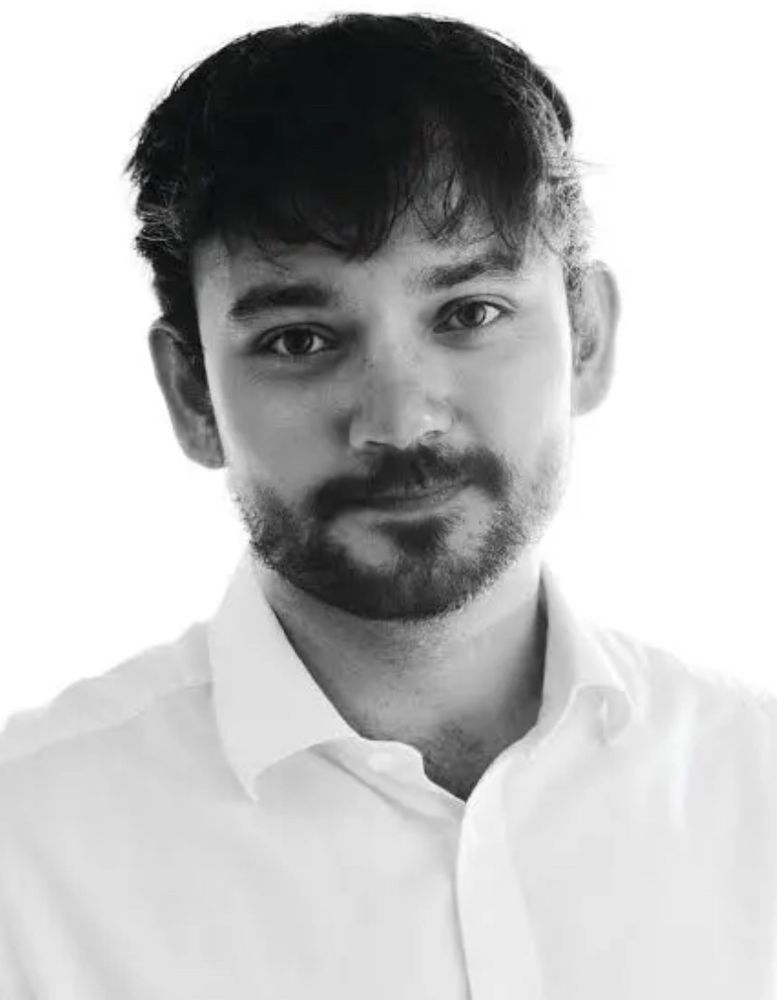
Last Consciousness Club of term tomorrow, Wed 3rd Dec 11am-1230pm UK time
Daniel Yon @danieljamesyon.bsky.social will be telling us about “The private life of public confidence”
Looking forward to it!
All welcome- for more info see metacoglab.org/consciousnes...
Daniel Yon @danieljamesyon.bsky.social will be telling us about “The private life of public confidence”
Looking forward to it!
All welcome- for more info see metacoglab.org/consciousnes...
December 3, 2025 at 8:36 AM
Today! 👇
Last Consciousness Club of term tomorrow, Wed 3rd Dec 11am-1230pm UK time
Daniel Yon @danieljamesyon.bsky.social will be telling us about “The private life of public confidence”
Looking forward to it!
All welcome- for more info see metacoglab.org/consciousnes...
Daniel Yon @danieljamesyon.bsky.social will be telling us about “The private life of public confidence”
Looking forward to it!
All welcome- for more info see metacoglab.org/consciousnes...
December 2, 2025 at 9:20 AM
Last Consciousness Club of term tomorrow, Wed 3rd Dec 11am-1230pm UK time
Daniel Yon @danieljamesyon.bsky.social will be telling us about “The private life of public confidence”
Looking forward to it!
All welcome- for more info see metacoglab.org/consciousnes...
Daniel Yon @danieljamesyon.bsky.social will be telling us about “The private life of public confidence”
Looking forward to it!
All welcome- for more info see metacoglab.org/consciousnes...
Reposted by Steve Fleming

The special issue celebrating John Duncan's retirement is now out! Check out all the gem articles here:
sciencedirect.com/special-issue/10QN6R7VQSM
and the editorial (see next figure in the thread for an entertaining analysis)
doi.org/10.1016/j.ne...
sciencedirect.com/special-issue/10QN6R7VQSM
and the editorial (see next figure in the thread for an entertaining analysis)
doi.org/10.1016/j.ne...

November 27, 2025 at 4:15 PM
The special issue celebrating John Duncan's retirement is now out! Check out all the gem articles here:
sciencedirect.com/special-issue/10QN6R7VQSM
and the editorial (see next figure in the thread for an entertaining analysis)
doi.org/10.1016/j.ne...
sciencedirect.com/special-issue/10QN6R7VQSM
and the editorial (see next figure in the thread for an entertaining analysis)
doi.org/10.1016/j.ne...