
elisa freschi
banner
elisafreschi.bsky.social
elisa freschi
@elisafreschi.bsky.social

Sanskrit (and) philosophy. Permanently in beta phase. Blogging at http://elisafreschi.com and http://indianphilosophyblog.org. Articles at PhilPapers Here to learn & share

Philosophy 47%
History 21%

On self-satisfaction as a criterion for knowing dharma in Kumārila: it could be that the person who has studied the Veda throughout their life is naturally inclined to do the right thing, because they remember in a non-discursive way some relevant Vedic passage.

Don't call the Pratyabhijñā school "Kashmir Śaivism, the majority of Śaivas in Kashmir were dualists!

This. Just think about the enormous amount of input LLMs need to behave as if they had "learnt" a language, whereas how babies learn a language out of a very limited set of training data (at most, hundreds of sentences a day, for about one year).
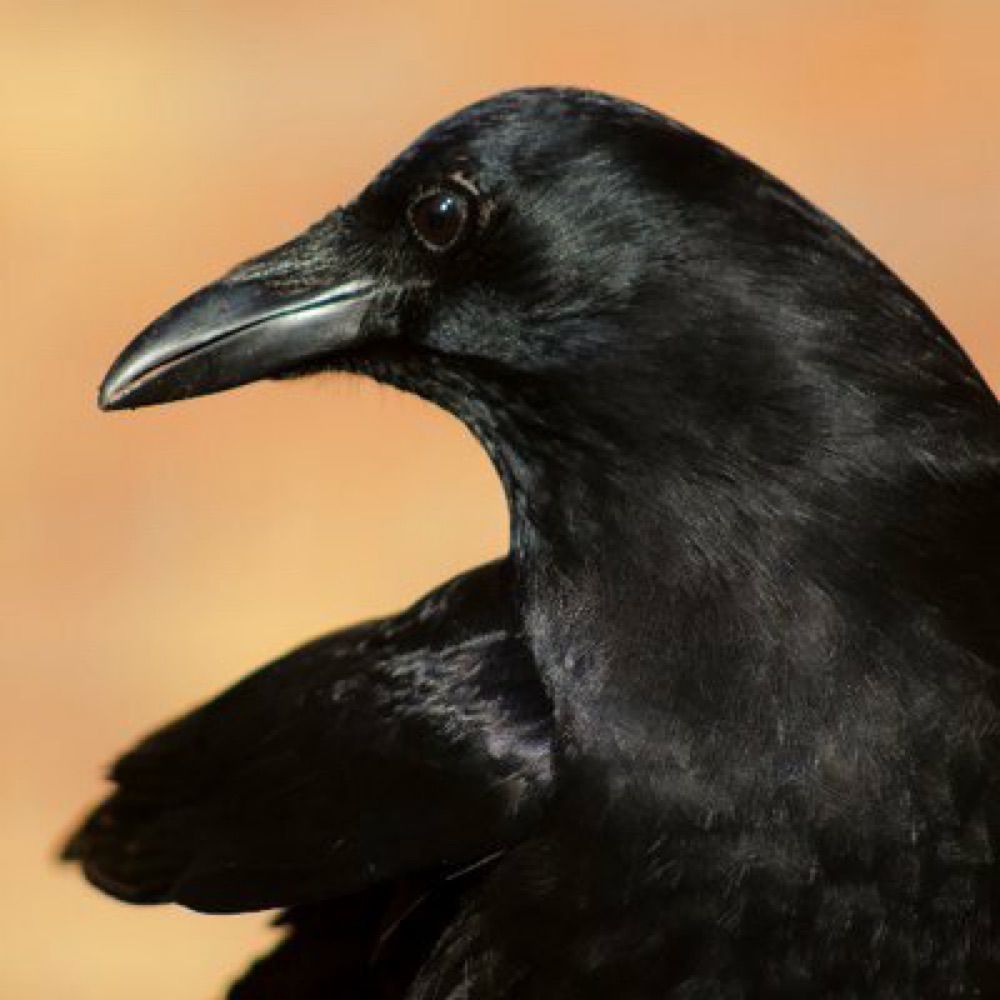
Been thinking a lot lately that humans and animals like crows possess brains with reasoning capacity on very low power inputs but despite enormous power requirements, LLMs have yet to show that ability, which might indicate that‘s entirely the wrong path to AGI.

Sanskrit philosophy is extremely sophisticated and I am convinced that we don't need to borrow categories from Euro-American philosophy to better understand it.
More below:
elisafreschi.com/2025/12/08/a...
A word of caution on philosophical methodology
Sanskrit philosophy is extremely sophisticated and I am convinced that we don’t need to borrow categories from Euro-American philosophy to better understand it. Parallels to Euro-American theories are...
elisafreschi.com

I probably don't care enough about team sports to be living in North America…:-)

Reposted by Elisa Freschi

Pro tip for people who post too much on here (like me):

you can put:

from:me

in the search bar, along with keywords, to search back through your own posts.
Philosophy group at Wageningen University is hiring an Assistant Professor in the Philosophy of the Life Sciences. Position is in the Philosophy (PHI) group led by @rachelankeny.bsky.social Deadline is 12 January 2026
www.wur.nl/en/vacancy/a...
#philsci #philjobs #philsky #hpbio
Assistant Professor in Philosophy of the Life Sciences
Are you seeking a challenging role in a nurturing and collegial setting that supports rigorous philosophical teaching and research as well as opportunities for productive collaborations with social an...
www.wur.nl

Reposted by Elisa Freschi

Been thinking a lot lately that humans and animals like crows possess brains with reasoning capacity on very low power inputs but despite enormous power requirements, LLMs have yet to show that ability, which might indicate that‘s entirely the wrong path to AGI.

Reposted by Elisa Freschi

3. I appealed to the joy of doing science—and got the predictable question:

Would you rather live in a world where AI cured cancer or live in a world where you personally get to do science?

But that's not the dilemma we face at all. There's no cause to think that AI could do anything of the sort.

Reposted by Wolfgang Behr

Call for applications for the
Friedrich Weller Prize 2026 (for works on Buddhism, China, India, published 2023--2025). For details, please see:
www.saw-leipzig.de/de/aktuelles...
Ausschreibung Friedrich-Weller-Preis 2026 — Sächsische Akademie der Wissenschaften
www.saw-leipzig.de

“Not all faculty are using AI or are comfortable using it. Change isn’t easy for any of us,” says McCrindle [associate dean of teaching and learning and the director of the Centre for Teaching and Learning at UofT]

—>Perhaps it's not that we resist change per se, but that we resist bad changes?

Reposted by Elisa Freschi

Church of St. Nicholas in Myra (modern Demre), where St. Nicholas was bishop

Today is the feast of St. Nicholas of Myra

BM: Things that are incredibly socially expensive, you would not be able to satisfy your desires for them, but even in capitalism people can't meet most of their needs and desires (most ppl have crap jobs and no money and not bc they are playing their part, but bc the system sucks!) (my summary)
10/

Starting to think that I will need to be re-educated because of liking tofu: "If you have expensive tastes, your needs will not. be catered, but nor will you care for them, if you are a good socialist." (summary mine)
9/

And who decides what is needed for human flourishing? Plastic surgery in case of people who are seriously depressed because of their appearance? (I am starting to worry about people deciding that my likes could be deemed unfit, e.g., tofu is superfluous, let's all eat animal proteins)
8/

I wonder, what happens to non-necessary resources, i.e., the ones that are not for the sake of essential needs, say luxury production? Should they be privately owned or not owned at all, because no one should have additional wealth?
7/

Much of the argument is genuine socialism, but with a new ethical reasoning, based on care ethics, behind it (my summary).
Could Keynes-like solidarity be compatible with markets? No, markets demand profit and using people.
6/

(As usual, the talk is much better than my notes)
Now: Private ownership is incompatible with collective control that is necessary for effective planning (how can we plan for society unless we can control resources etc.?).
5/

Stupid objection by me: Luxury goods can be seen as responding to some needs (social ones, for instance). At least until we have all been re-educated into recognising our essential needs.
4/

"Means of production" includes everything needed to take care of the needs of young and old people. So, expansive understanding. But they don't extend to resources that don't answer to needs, like chemical weapons or unneeded goods.

3/

His Scottish accent is fascinating (I am generally fascinated by people who do not feel the need to disguise themselves).

Currently listening to Barry Maguire on Socialism and the collective ownership of the means of production. Can Socialism still mean something distinctive, if separated from that ownership?
philosophy.utoronto.ca/event/colloq...
1/

Colloquium (Barry Maguire, Edinburgh) - Department of Philosophy
Barry Maguire (Edinburgh) is a professor of moral and political philosophy.
philosophy.utoronto.ca

Well, I listen mostly to Baroque music…
New from 404 Media: ChatGPT told a violent stalker to continue running his misogynistic and threat-filled podcast despite the “haters,” and to visit more gyms to find women. The man stalked women in multiple states, including touching and following from work

www.404media.co/chatgpt-spot...
ChatGPT Told a Violent Stalker to Embrace the 'Haters,' Indictment Says
A newly filed indictment claims a wannabe influencer used ChatGPT as his "therapist" and "best friend" in his pursuit of the "wife type," while harassing women so aggressively they had to miss work a...
www.404media.co
OpenAI knows this is a problem. it knows hundreds of thousands of people are using their product to dig deeper into delusion and make the people around them miserable and unsafe. and it does not care www.404media.co/chatgpt-spot...
ChatGPT Told a Violent Stalker to Embrace the 'Haters,' Indictment Says
A newly filed indictment claims a wannabe influencer used ChatGPT as his "therapist" and "best friend" in his pursuit of the "wife type," while harassing women so aggressively they had to miss work a...
www.404media.co

She said that these rivers with the constant overflows create events and a geography of impermanence that imposes itself on people exposed to it.
4/

Again, don't quote her through my summary, but someone asked whether this mobility across religious boundaries is due to the landscape itself. "Does this moral force belong to the river?" I would have guessed that the answer would have been no, but AP is braver than me.
3/

She is talking about the delta (of Brahmaputra and other two) as a line of continuity. (As usual, her talk is better than my random notes).
3

Currently listening to Ahona Panda's (great) talk titled "The Zamindar and the Gazi", on continuities and discontinuities in Bengal and East Bengal from 1793 to 1971.

www.eventbrite.ca/e/the-gazi-a...
1/
The Gazi and the Zamindar: Land and Language in the Bengal Delta, 1793-1905
A talk with Ahona Panda, historian of modern South Asia
www.eventbrite.ca