



Le pangénome de Brachypodium distachyon met en évidence la dynamique des éléments transposables dans l'espèce en lien avec des stress environnementaux

Le pangénome de Brachypodium distachyon met en évidence la dynamique des éléments transposables dans l'espèce en lien avec des stress environnementaux
Dans une étude publiée dans le journal Genome Biology, les scientifiques l’unité Génomique Info – URGI (INRAE/UPSaclay, Versailles) se sont intéressés au rôle des éléments transposables (ETs) dans l’adaptation des organismes à leur environnement. Les ETs, qui peuvent s’insérer indépendamment dans les génomes d’individus d’une même espèce, constituent une source importante de variabilité génétique sur laquelle la sélection naturelle peut agir.
Face à la disponibilité grandissante des génomes assemblés de novo et aux limites liées à l’utilisation d’un génome de référence unique, les chercheurs ont développé un nouvel outil pangénomique nommé panREPET. Ce pipeline permet d’identifier les insertions d’ETs partagées entre différents individus sans dépendre d’un génome de référence. Il fournit en outre la séquence précise et les coordonnées génomiques de chaque copie d’ET dans chaque génome analysé.
Les performances de panREPET ont été démontrées à travers l’analyse comparative de 42 génomes de Brachypodium distachyon, mettant en évidence ses avantages par rapport aux outils existants. Cette approche a permis de dater deux vagues majeures d’activité de transposition des ETs, survenues il y a environ 22 000 ans lors du Dernier Maximum Glaciaire et il y a 10 000 ans, au début de l’Holocène, période correspondant à la déglaciation de l’Europe. Par ailleurs, les chercheurs ont identifié plusieurs familles d’ETs dont l’activité récente est corrélée aux conditions climatiques.
Ces résultats suggèrent un lien étroit entre stress environnemental, changements climatiques majeurs et activation des éléments transposables.
Légende Figure : a) Boxplots showing the age distribution of TE insertions grouped by the number of accessions sharing them. Age is estimated from the maximum pairwise whole-genome SNP distance between accessions in a given TE clique. Red dashed lines mark the regions where the violin plots are widest, corresponding to peaks in TE insertion density. The widest sections of the violin plots are zoomed in b). b) Boxplots showing the age distribution of TE insertions according to the genetic clusters to which the accessions sharing each insertion belong. This panel corresponds to a) split into four TE insertion categories: (i) ancient but not conserved insertions; (ii) ancient and conserved insertions; (iii) recent insertions; and (iv) insertions that arose after cluster divergence. c) Clustermap showing TE family abundance according to TE insertion categories. Euclidean distance with Ward’s algorithm was used for clustering. Only families with more than 20 copies were retained for readability.
-> Contact : johann.confais@inrae.fr
sco.lt
February 17, 2026 at 10:49 AM
Le pangénome de Brachypodium distachyon met en évidence la dynamique des éléments transposables dans l'espèce en lien avec des stress environnementaux

Picture of the day: Cross section of a Brachypodium stem. Thick supporting tissues contrast with thinner growing regions, showing how cell wall structure is tuned to function.
#PlantWallK #COSTAction #PlantCellWall #PlantScience
#PlantWallK #COSTAction #PlantCellWall #PlantScience

February 17, 2026 at 10:07 AM
Picture of the day: Cross section of a Brachypodium stem. Thick supporting tissues contrast with thinner growing regions, showing how cell wall structure is tuned to function.
#PlantWallK #COSTAction #PlantCellWall #PlantScience
#PlantWallK #COSTAction #PlantCellWall #PlantScience

Después de dos semanas esperando el buen tiempo, por fin he podido ir a #Grazalema a visitar los experimentos de #Arabidopsis y #Brachypodium.
Este no es un río de los Pirineos, es el Majaceite a su paso por El Bosque en la Sierra de Cádiz
Este no es un río de los Pirineos, es el Majaceite a su paso por El Bosque en la Sierra de Cádiz
February 16, 2026 at 5:30 PM
Después de dos semanas esperando el buen tiempo, por fin he podido ir a #Grazalema a visitar los experimentos de #Arabidopsis y #Brachypodium.
Este no es un río de los Pirineos, es el Majaceite a su paso por El Bosque en la Sierra de Cádiz
Este no es un río de los Pirineos, es el Majaceite a su paso por El Bosque en la Sierra de Cádiz

Thank you very much, @anneroulin.bsky.social ! The resources available on Brachypodium distachyon were indeed a key factor in our decision to choose it as our model. I hope that this new data will reinforce the appeal of this model plant and strengthen the community around it. #goBrachy
February 16, 2026 at 12:23 PM
Thank you very much, @anneroulin.bsky.social ! The resources available on Brachypodium distachyon were indeed a key factor in our decision to choose it as our model. I hope that this new data will reinforce the appeal of this model plant and strengthen the community around it. #goBrachy
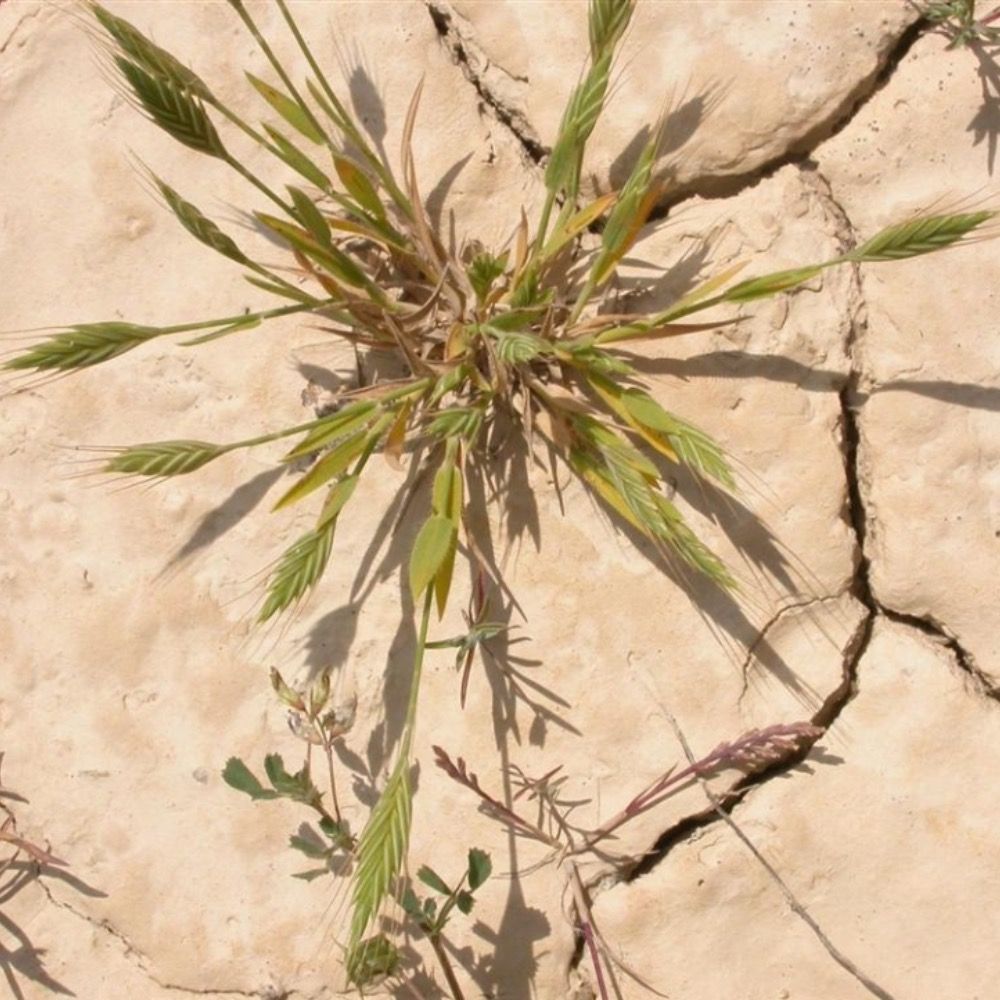
📣 A fantastic resource for the study of population genomics of transposable elements. Congratulations to all @johannconfais.bsky.social ! Also very happy to see the Brachypodium resource being used for this purpose!
It's 🌈🌈 again! #TEsky #goBrachy
It's 🌈🌈 again! #TEsky #goBrachy
🚨📢📄 Article in press in Genome Biology doi.org/10.1186/s130...
We introduce panREPET, a reference-free pipeline to detect shared transposable element (TE) insertions across pangenomes and retrace their evolutionary dynamics #TEsky 🧵👇
We introduce panREPET, a reference-free pipeline to detect shared transposable element (TE) insertions across pangenomes and retrace their evolutionary dynamics #TEsky 🧵👇

A reference-free pipeline for detecting shared transposable elements from pan-genomes to retrace their dynamics in a species - Genome Biology
Background The role of transposable elements (TEs) in host adaptation has gained interest in recent years. Individuals of the same species undergo independent TE insertions, providing genetic variabil...
doi.org
February 16, 2026 at 9:28 AM
📣 A fantastic resource for the study of population genomics of transposable elements. Congratulations to all @johannconfais.bsky.social ! Also very happy to see the Brachypodium resource being used for this purpose!
It's 🌈🌈 again! #TEsky #goBrachy
It's 🌈🌈 again! #TEsky #goBrachy
🌱 Application to 42 Brachypodium distachyon genomes
→ >18,000 shared TE insertions detected
→ population structure consistent with SNP-based analyses
→ fine-scale view of core, shell, cloud, and singleton TE insertions
→ >18,000 shared TE insertions detected
→ population structure consistent with SNP-based analyses
→ fine-scale view of core, shell, cloud, and singleton TE insertions
February 16, 2026 at 8:38 AM
🌱 Application to 42 Brachypodium distachyon genomes
→ >18,000 shared TE insertions detected
→ population structure consistent with SNP-based analyses
→ fine-scale view of core, shell, cloud, and singleton TE insertions
→ >18,000 shared TE insertions detected
→ population structure consistent with SNP-based analyses
→ fine-scale view of core, shell, cloud, and singleton TE insertions

Rainfall legacy effects on the rhizosphere bacterial diversity of Brachypodium ecotypes across an aridity gradient https://www.biorxiv.org/content/10.64898/2026.01.27.702010v1
January 30, 2026 at 10:33 PM
Rainfall legacy effects on the rhizosphere bacterial diversity of Brachypodium ecotypes across an aridity gradient https://www.biorxiv.org/content/10.64898/2026.01.27.702010v1

Rainfall legacy effects on the rhizosphere bacterial diversity of Brachypodium ecotypes across an aridity gradient https://www.biorxiv.org/content/10.64898/2026.01.27.702010v1
January 30, 2026 at 10:33 PM
Rainfall legacy effects on the rhizosphere bacterial diversity of Brachypodium ecotypes across an aridity gradient https://www.biorxiv.org/content/10.64898/2026.01.27.702010v1
brachypodium (12 letters)
January 23, 2026 at 5:33 PM
brachypodium (12 letters)

A new study in #G3journal investigates the BdAHL gene family in Brachypodium to expand our understanding of AHL gene function throughout different plant species while addressing current knowledge gaps. buff.ly/CicPGco

January 15, 2026 at 2:03 PM
A new study in #G3journal investigates the BdAHL gene family in Brachypodium to expand our understanding of AHL gene function throughout different plant species while addressing current knowledge gaps. buff.ly/CicPGco

Syrian Marbled White (Melanargia syriaca) (Oberthür 1894) Turkey
MW in Turkey were confusing, the genus split into 20 sp. and relevant subsp.
Larvae feed on Brachypodium sp. on the edge of woodland
I had 6 picture of Syrian MW and only 3 have been confirmed as possible
#Turkey #SyrianMarbledWhite
MW in Turkey were confusing, the genus split into 20 sp. and relevant subsp.
Larvae feed on Brachypodium sp. on the edge of woodland
I had 6 picture of Syrian MW and only 3 have been confirmed as possible
#Turkey #SyrianMarbledWhite


January 10, 2026 at 3:45 PM
Syrian Marbled White (Melanargia syriaca) (Oberthür 1894) Turkey
MW in Turkey were confusing, the genus split into 20 sp. and relevant subsp.
Larvae feed on Brachypodium sp. on the edge of woodland
I had 6 picture of Syrian MW and only 3 have been confirmed as possible
#Turkey #SyrianMarbledWhite
MW in Turkey were confusing, the genus split into 20 sp. and relevant subsp.
Larvae feed on Brachypodium sp. on the edge of woodland
I had 6 picture of Syrian MW and only 3 have been confirmed as possible
#Turkey #SyrianMarbledWhite
Root tip excision-induced exodermis lignification impacts lateral root emergence in Brachypodium distachyon
Bellande et al. @joopvermeer.bsky.social @tbadet.bsky.social @anneroulin.bsky.social @rootcap.bsky.social
nph.onlinelibrary.wiley.com/doi/10.1111/...
Bellande et al. @joopvermeer.bsky.social @tbadet.bsky.social @anneroulin.bsky.social @rootcap.bsky.social
nph.onlinelibrary.wiley.com/doi/10.1111/...

January 6, 2026 at 8:43 PM
Root tip excision-induced exodermis lignification impacts lateral root emergence in Brachypodium distachyon
Bellande et al. @joopvermeer.bsky.social @tbadet.bsky.social @anneroulin.bsky.social @rootcap.bsky.social
nph.onlinelibrary.wiley.com/doi/10.1111/...
Bellande et al. @joopvermeer.bsky.social @tbadet.bsky.social @anneroulin.bsky.social @rootcap.bsky.social
nph.onlinelibrary.wiley.com/doi/10.1111/...

🌏 RESEARCH 🌏
Drought and ⬆️ CO₂ reshape N status and polyamine metabolism, alongside shifts in Fe homeostasis and root sphingolipids, revealing coordinated nutrient regulation in Brachypodium distachyon under climate change stressors - Chang et al.
🔗 doi.org/10.1093/jxb/...
#PlantScience 🧪
Drought and ⬆️ CO₂ reshape N status and polyamine metabolism, alongside shifts in Fe homeostasis and root sphingolipids, revealing coordinated nutrient regulation in Brachypodium distachyon under climate change stressors - Chang et al.
🔗 doi.org/10.1093/jxb/...
#PlantScience 🧪

December 18, 2025 at 9:13 AM
🌏 RESEARCH 🌏
Drought and ⬆️ CO₂ reshape N status and polyamine metabolism, alongside shifts in Fe homeostasis and root sphingolipids, revealing coordinated nutrient regulation in Brachypodium distachyon under climate change stressors - Chang et al.
🔗 doi.org/10.1093/jxb/...
#PlantScience 🧪
Drought and ⬆️ CO₂ reshape N status and polyamine metabolism, alongside shifts in Fe homeostasis and root sphingolipids, revealing coordinated nutrient regulation in Brachypodium distachyon under climate change stressors - Chang et al.
🔗 doi.org/10.1093/jxb/...
#PlantScience 🧪
Amyloplasts of Brachypodium endosperm
Esch et al. @johninnescentre.bsky.social
nph.onlinelibrary.wiley.com/doi/10.1111/...
Esch et al. @johninnescentre.bsky.social
nph.onlinelibrary.wiley.com/doi/10.1111/...

December 15, 2025 at 3:35 PM
Amyloplasts of Brachypodium endosperm
Esch et al. @johninnescentre.bsky.social
nph.onlinelibrary.wiley.com/doi/10.1111/...
Esch et al. @johninnescentre.bsky.social
nph.onlinelibrary.wiley.com/doi/10.1111/...
Glech hed is interesting. Open edges to woodlands where deer duck in, along with browse-resistant Brachypodium sylvaticum.
November 30, 2025 at 10:49 PM
Glech hed is interesting. Open edges to woodlands where deer duck in, along with browse-resistant Brachypodium sylvaticum.

Testing three annual grasses native to Spain and invasive in California, this study shows that invasion success is not consistently linked to bigger, faster, or more fecund plants across ranges, and highlights a possible role for polyploidy in 𝐵𝑟𝑎𝑐ℎ𝑦𝑝𝑜𝑑𝑖𝑢𝑚 instead.
🔗 doi.org/10.3897/neob...
🔗 doi.org/10.3897/neob...

Invasive grasses do not always exhibit superior and faster plant life-history traits in the introduced range than in the native range
Many invasive plants are larger, and produce more seeds in populations from the introduced range compared to those from their native range. Annual invasive plants might also benefit in their introduce...
doi.org
November 28, 2025 at 8:11 AM
Testing three annual grasses native to Spain and invasive in California, this study shows that invasion success is not consistently linked to bigger, faster, or more fecund plants across ranges, and highlights a possible role for polyploidy in 𝐵𝑟𝑎𝑐ℎ𝑦𝑝𝑜𝑑𝑖𝑢𝑚 instead.
🔗 doi.org/10.3897/neob...
🔗 doi.org/10.3897/neob...
🍭🍃 RESEARCH 🍃🍭
Trehalose 6-phosphate, a sugar signalling metabolite, is mainly present in the bundle sheath cells of Setaria viridis leaves - Tonetti et al.
🔗 doi.org/10.1093/jxb/...
#PlantScience 🧪
Trehalose 6-phosphate, a sugar signalling metabolite, is mainly present in the bundle sheath cells of Setaria viridis leaves - Tonetti et al.
🔗 doi.org/10.1093/jxb/...
#PlantScience 🧪

November 27, 2025 at 10:33 AM
🍭🍃 RESEARCH 🍃🍭
Trehalose 6-phosphate, a sugar signalling metabolite, is mainly present in the bundle sheath cells of Setaria viridis leaves - Tonetti et al.
🔗 doi.org/10.1093/jxb/...
#PlantScience 🧪
Trehalose 6-phosphate, a sugar signalling metabolite, is mainly present in the bundle sheath cells of Setaria viridis leaves - Tonetti et al.
🔗 doi.org/10.1093/jxb/...
#PlantScience 🧪
Diversification in environmental responses enabled by duplicated grass stomatal regulator SPCH
Erberich et al. @stanfordstomata@bluesky
nph.onlinelibrary.wiley.com/share/TPBU7P...
Erberich et al. @stanfordstomata@bluesky
nph.onlinelibrary.wiley.com/share/TPBU7P...

November 10, 2025 at 11:17 PM
Diversification in environmental responses enabled by duplicated grass stomatal regulator SPCH
Erberich et al. @stanfordstomata@bluesky
nph.onlinelibrary.wiley.com/share/TPBU7P...
Erberich et al. @stanfordstomata@bluesky
nph.onlinelibrary.wiley.com/share/TPBU7P...

The developing leaf of the wild grass Brachypodium distachyon at single-cell resolution #SingleCell 🧪🧬🖥️
https://www.biorxiv.org/content/10.1101/2025.11.03.686118v1
https://www.biorxiv.org/content/10.1101/2025.11.03.686118v1
November 5, 2025 at 5:00 PM
The developing leaf of the wild grass Brachypodium distachyon at single-cell resolution #SingleCell 🧪🧬🖥️
https://www.biorxiv.org/content/10.1101/2025.11.03.686118v1
https://www.biorxiv.org/content/10.1101/2025.11.03.686118v1

Look at this remarkable preprint by @lbmountain.bsky.social, presenting a single-cell RNA-seq atlas of the developing Brachypodium distachyon leaf.
What a joy it was to watch Lea progress during the analysis and to continuously find more and more exciting facts about the developing leaf 🌾
What a joy it was to watch Lea progress during the analysis and to continuously find more and more exciting facts about the developing leaf 🌾
1/ Preprint alert:
🌾 The developing leaf of the wild grass Brachypodium distachyon at single-cell resolution
👉 doi.org/10.1101/2025...
A 70k-cell single-cell RNA-seq atlas of the developing grass leaf—from the shoot meristem to mature leaf tissues. @cerealcell.bsky.social @lbmountain.bsky.social
🌾 The developing leaf of the wild grass Brachypodium distachyon at single-cell resolution
👉 doi.org/10.1101/2025...
A 70k-cell single-cell RNA-seq atlas of the developing grass leaf—from the shoot meristem to mature leaf tissues. @cerealcell.bsky.social @lbmountain.bsky.social

November 5, 2025 at 3:00 PM
Look at this remarkable preprint by @lbmountain.bsky.social, presenting a single-cell RNA-seq atlas of the developing Brachypodium distachyon leaf.
What a joy it was to watch Lea progress during the analysis and to continuously find more and more exciting facts about the developing leaf 🌾
What a joy it was to watch Lea progress during the analysis and to continuously find more and more exciting facts about the developing leaf 🌾

2/ Our Brachypodium leaf atlas spans all major tissues.
UMAPs resolve epidermal, mesophyll, vascular, and meristematic compartments.
Known markers define cluster identities—revealing a coherent developmental continuum across the vegetative leaf.

November 5, 2025 at 12:32 PM
2/ Our Brachypodium leaf atlas spans all major tissues.
UMAPs resolve epidermal, mesophyll, vascular, and meristematic compartments.
Known markers define cluster identities—revealing a coherent developmental continuum across the vegetative leaf.
1/ Preprint alert:
🌾 The developing leaf of the wild grass Brachypodium distachyon at single-cell resolution
👉 doi.org/10.1101/2025...
A 70k-cell single-cell RNA-seq atlas of the developing grass leaf—from the shoot meristem to mature leaf tissues. @cerealcell.bsky.social @lbmountain.bsky.social
🌾 The developing leaf of the wild grass Brachypodium distachyon at single-cell resolution
👉 doi.org/10.1101/2025...
A 70k-cell single-cell RNA-seq atlas of the developing grass leaf—from the shoot meristem to mature leaf tissues. @cerealcell.bsky.social @lbmountain.bsky.social
November 5, 2025 at 12:32 PM
1/ Preprint alert:
🌾 The developing leaf of the wild grass Brachypodium distachyon at single-cell resolution
👉 doi.org/10.1101/2025...
A 70k-cell single-cell RNA-seq atlas of the developing grass leaf—from the shoot meristem to mature leaf tissues. @cerealcell.bsky.social @lbmountain.bsky.social
🌾 The developing leaf of the wild grass Brachypodium distachyon at single-cell resolution
👉 doi.org/10.1101/2025...
A 70k-cell single-cell RNA-seq atlas of the developing grass leaf—from the shoot meristem to mature leaf tissues. @cerealcell.bsky.social @lbmountain.bsky.social

The developing leaf of the wild grass Brachypodium distachyon at single-cell resolution https://www.biorxiv.org/content/10.1101/2025.11.03.686118v1
November 5, 2025 at 11:03 AM
The developing leaf of the wild grass Brachypodium distachyon at single-cell resolution https://www.biorxiv.org/content/10.1101/2025.11.03.686118v1
The developing leaf of the wild grass Brachypodium distachyon at single-cell resolution https://www.biorxiv.org/content/10.1101/2025.11.03.686118v1
November 5, 2025 at 11:03 AM
The developing leaf of the wild grass Brachypodium distachyon at single-cell resolution https://www.biorxiv.org/content/10.1101/2025.11.03.686118v1
Systems-level Plant Responses Reveal Pseudomonas-Mediated Growth Promotion in Brachypodium Under Nitrogen Limitation https://www.biorxiv.org/content/10.1101/2025.11.03.686263v1
November 4, 2025 at 8:04 PM
Systems-level Plant Responses Reveal Pseudomonas-Mediated Growth Promotion in Brachypodium Under Nitrogen Limitation https://www.biorxiv.org/content/10.1101/2025.11.03.686263v1